Decorative Floral Designs: A Simple Guide for Beautiful Spaces
Flowers have decorated homes, fabrics, and floors for as long as people have created art. A decorative floral design takes the beauty of real petals and turns it into a pattern you can paint, draw, or arrange almost anywhere. These motifs feel warm, fresh, and welcoming.
This guide keeps things simple and practical. You will learn where decorative floral patterns work best, how to pick colors, and easy ways to start your own. Whether you are decorating for a festival or just refreshing a corner of your home, there is a flower idea here for you.
What Is a Decorative Floral Design?
A decorative floral design is any pattern built around flowers, leaves, buds, and vines used to beautify a surface. It can be a single bloom or a flowing arrangement that wraps across a wall, a floor, or a piece of cloth.
These patterns are not meant to copy nature exactly. Instead, they shape petals and stems into balanced, repeating forms that please the eye. You will see them in many cultures, on pottery, textiles, doorways, and more.
The flower most people love to use is the lotus, but roses, marigolds, jasmine, and sunflowers all work beautifully too.
Where Decorative Floral Patterns Are Used
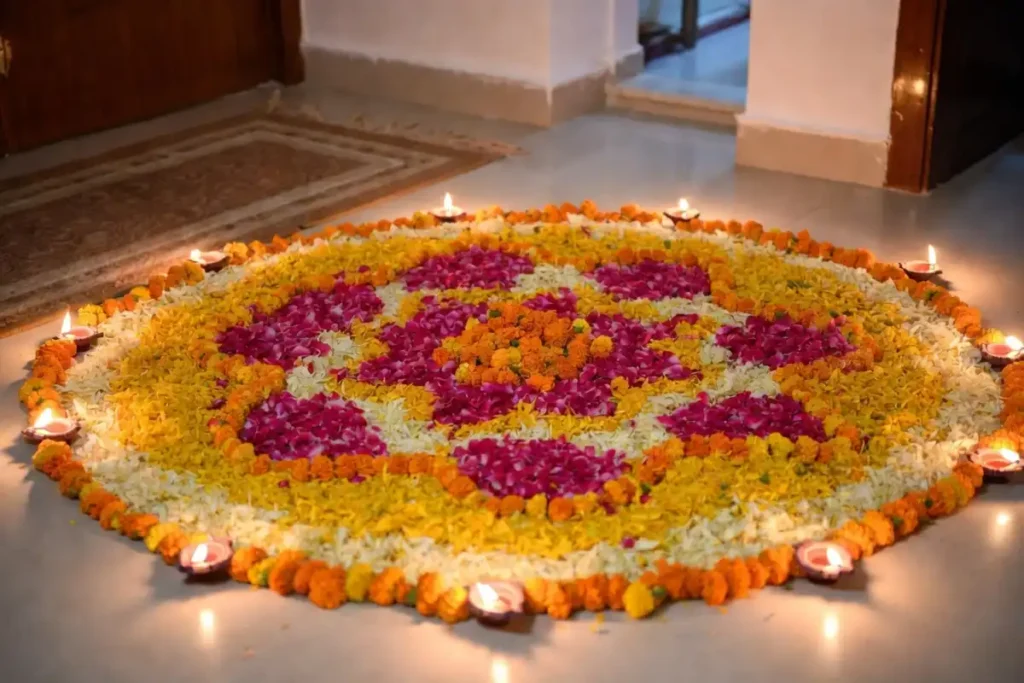
Floral motifs fit almost any setting because they feel timeless and friendly. A few common places include:
🖼️Walls and Ceilings
Painted borders or full murals add softness to a plain room.
🪔Floor Art
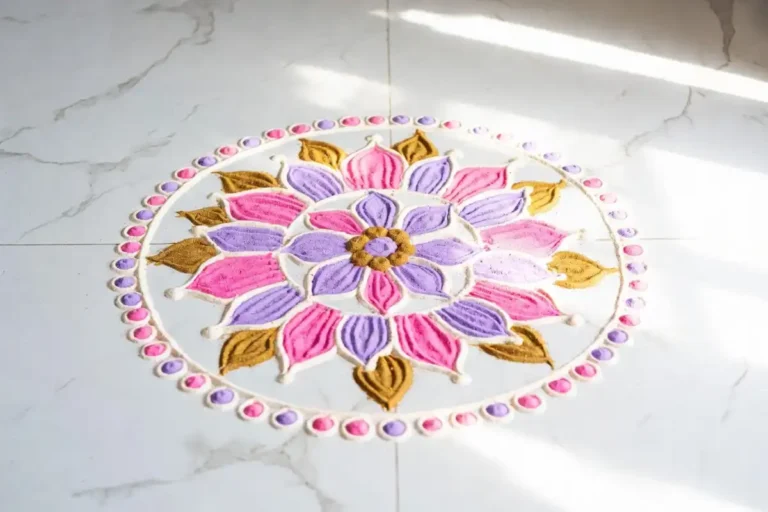
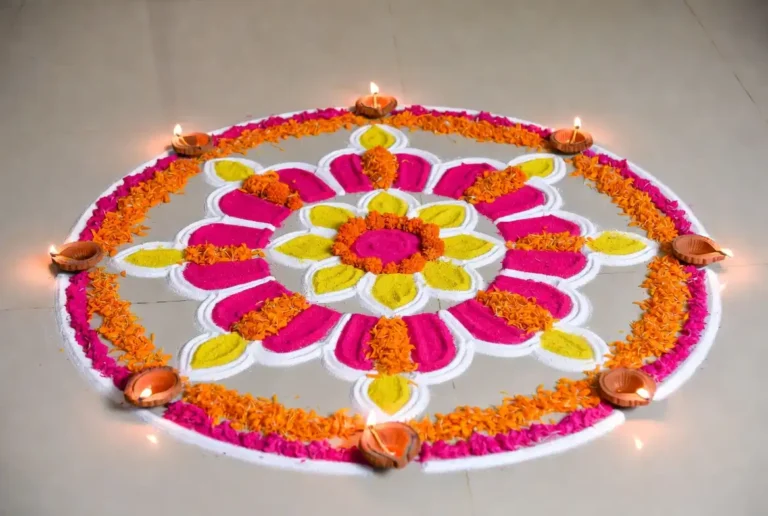
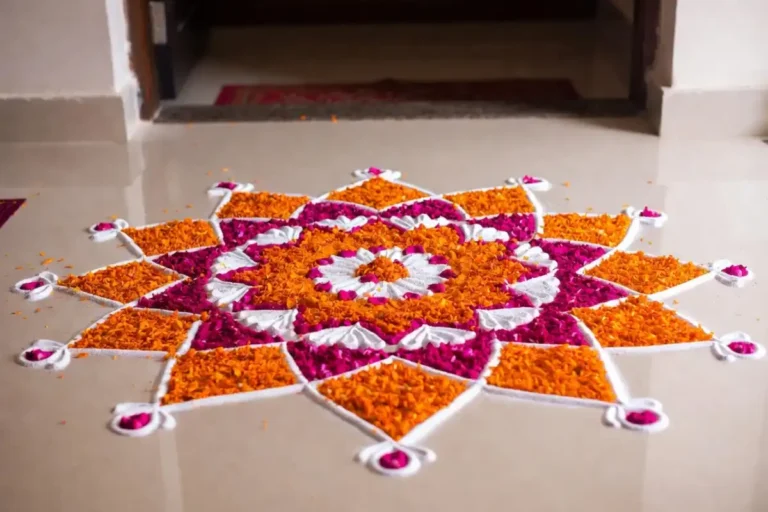
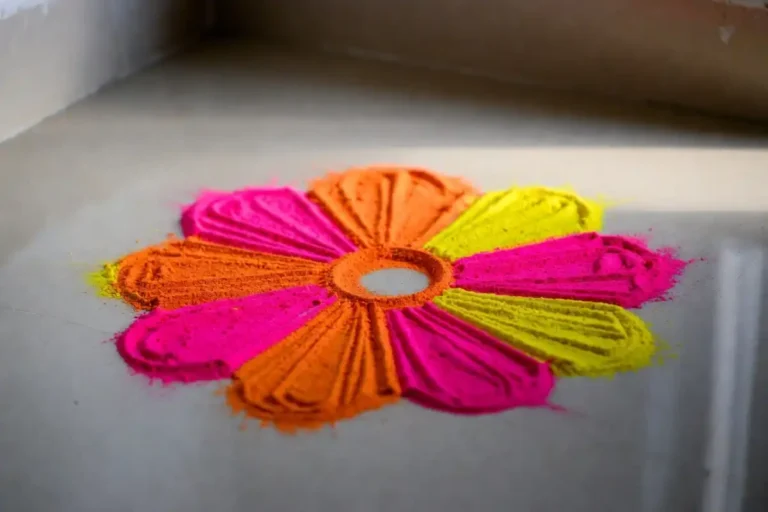
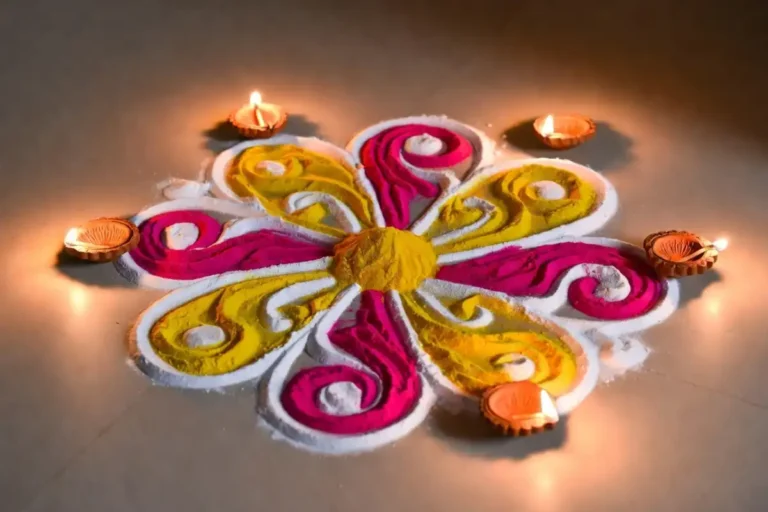
Rangoli and other floor designs often use flower shapes during festivals.
🧵Fabrics
Curtains, cushions, sarees, and bedsheets carry flower prints with ease.
🏺Pottery and Crafts
Vases, plates, and diyas look richer with painted petals.
💌Stationery and Cards
Small floral corners make handmade gifts feel personal.
If you enjoy floor art, this collection of aesthetic designs for every occasion offers plenty of fresh ideas to try.
Popular Types of Decorative Floral Motifs
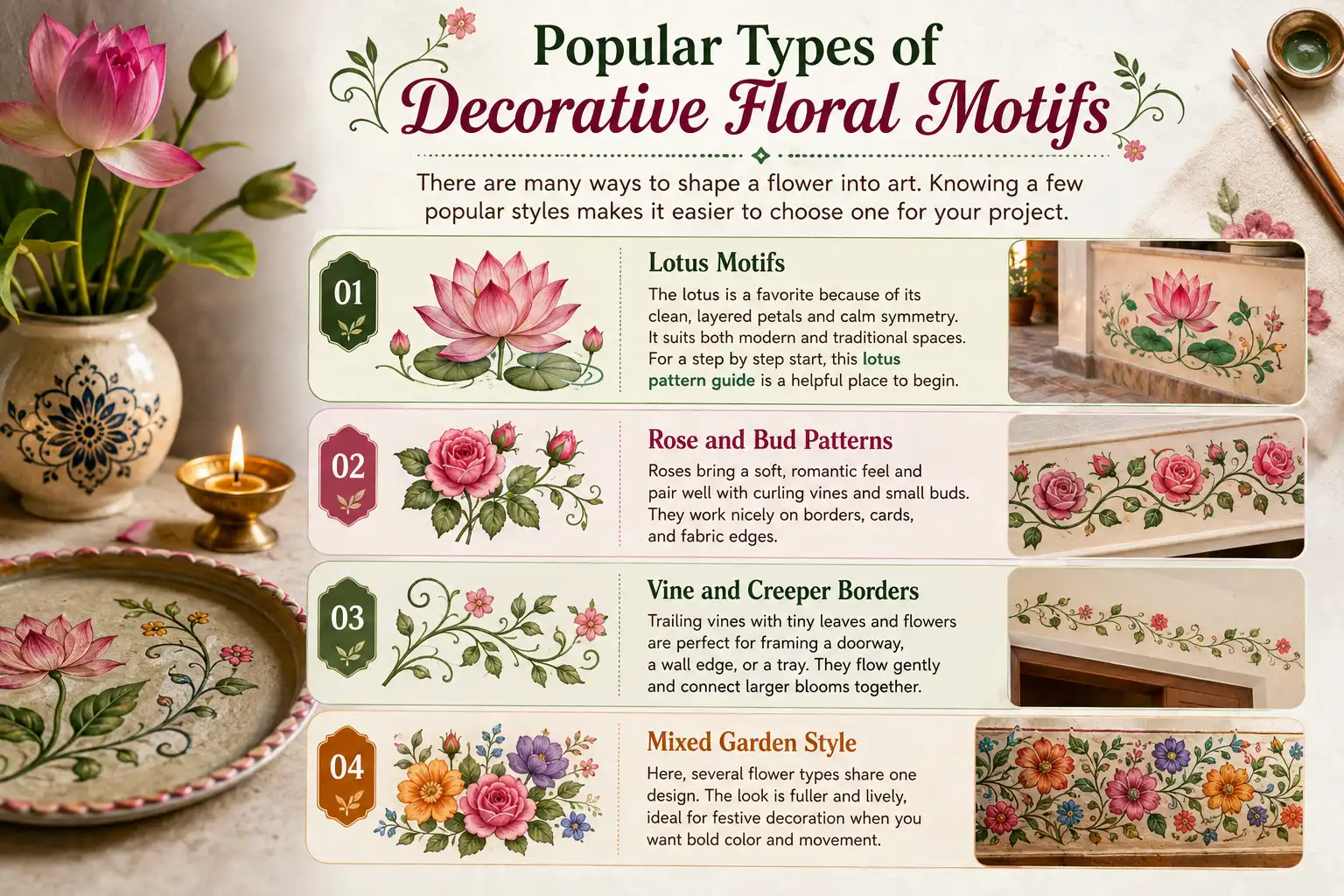
There are many ways to shape a flower into art. Knowing a few popular styles makes it easier to choose one for your project.
Lotus Motifs
The lotus is a favorite because of its clean, layered petals and calm symmetry. It suits both modern and traditional spaces. For a step by step start, this lotus pattern guide is a helpful place to begin.
Rose and Bud Patterns
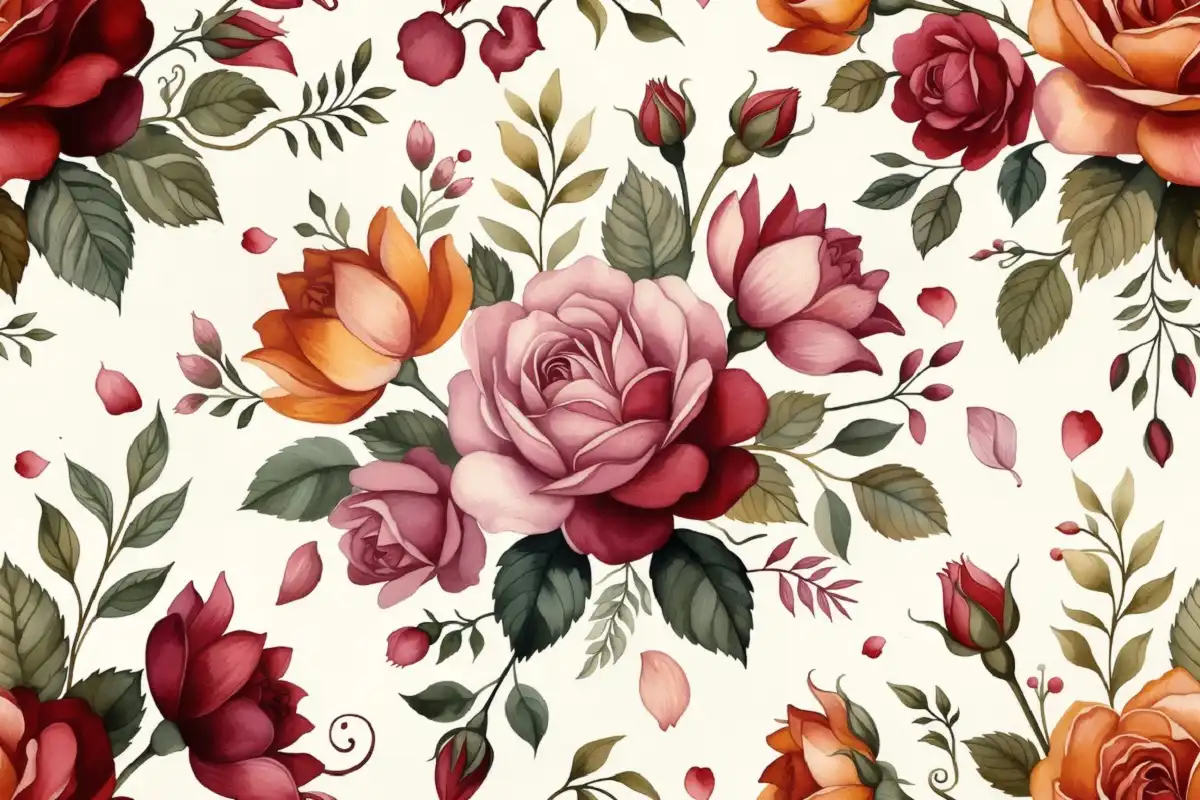
Roses bring a soft, romantic feel and pair well with curling vines and small buds. They work nicely on borders, cards, and fabric edges.
Vine and Creeper Borders
Trailing vines with tiny leaves and flowers are perfect for framing a doorway, a wall edge, or a tray. They flow gently and connect larger blooms together.
Mixed Garden Style
Here, several flower types share one design. The look is fuller and lively, ideal for festive decoration when you want bold color and movement.
How to Choose Colors for Your Decorative Floral Design
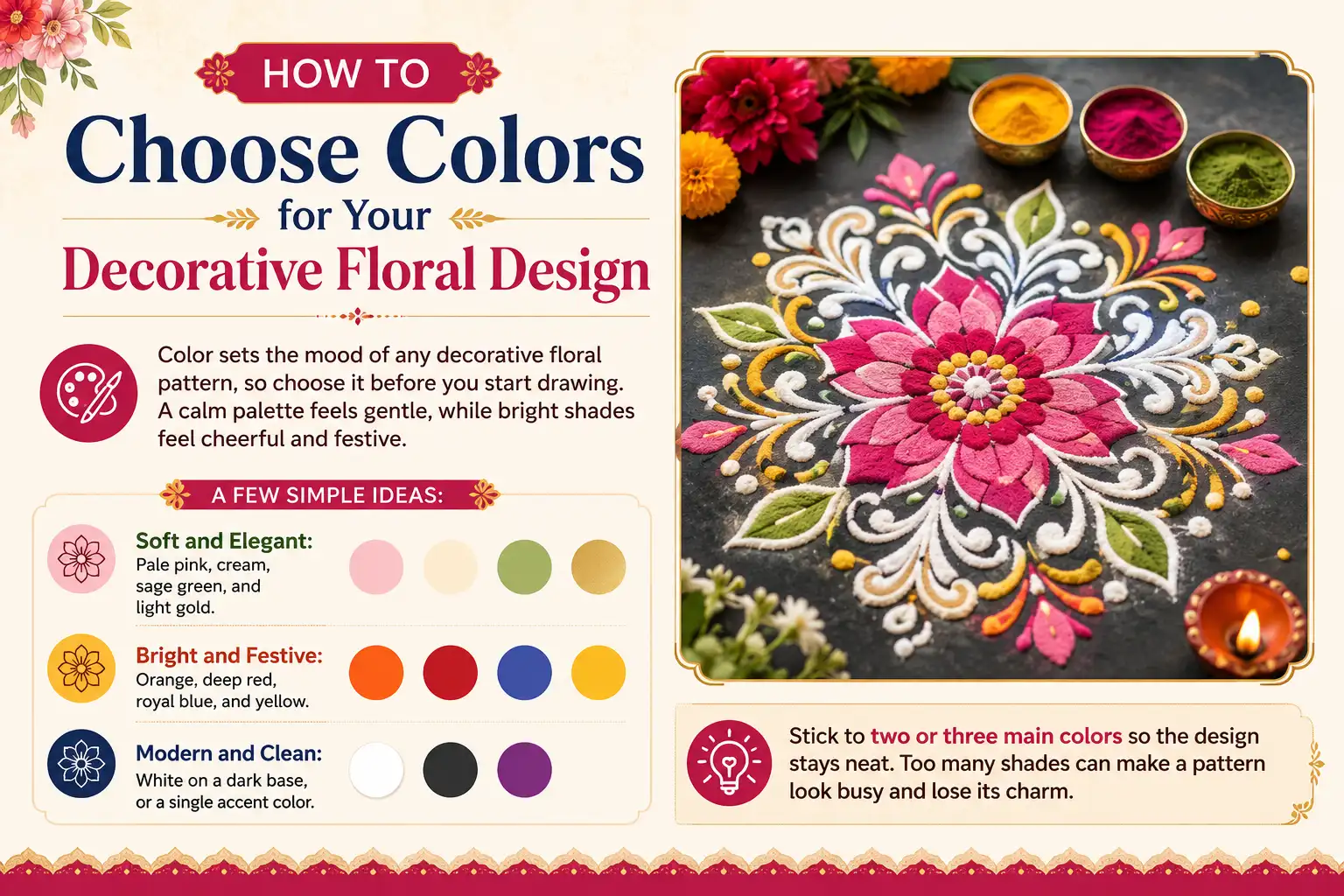
Color sets the mood of any decorative floral pattern, so choose it before you start drawing. A calm palette feels gentle, while bright shades feel cheerful and festive.
Stick to two or three main colors so the design stays neat. Too many shades can make a pattern look busy and lose its charm.
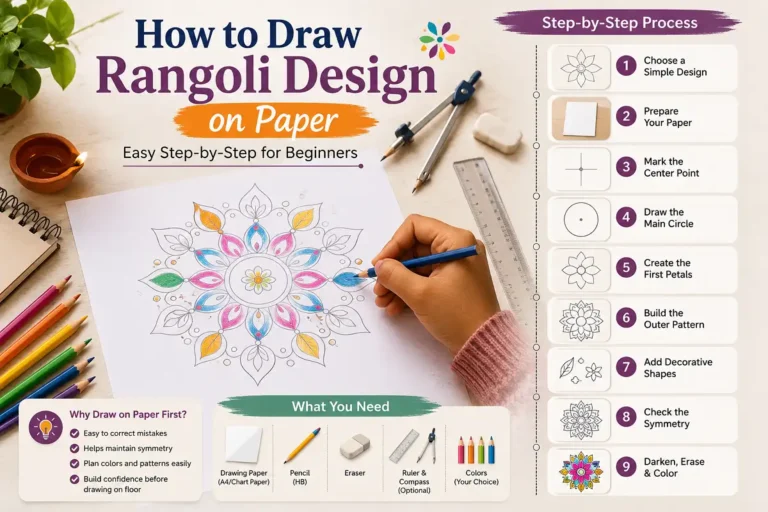
Easy Steps to Create Your Own Floral Pattern
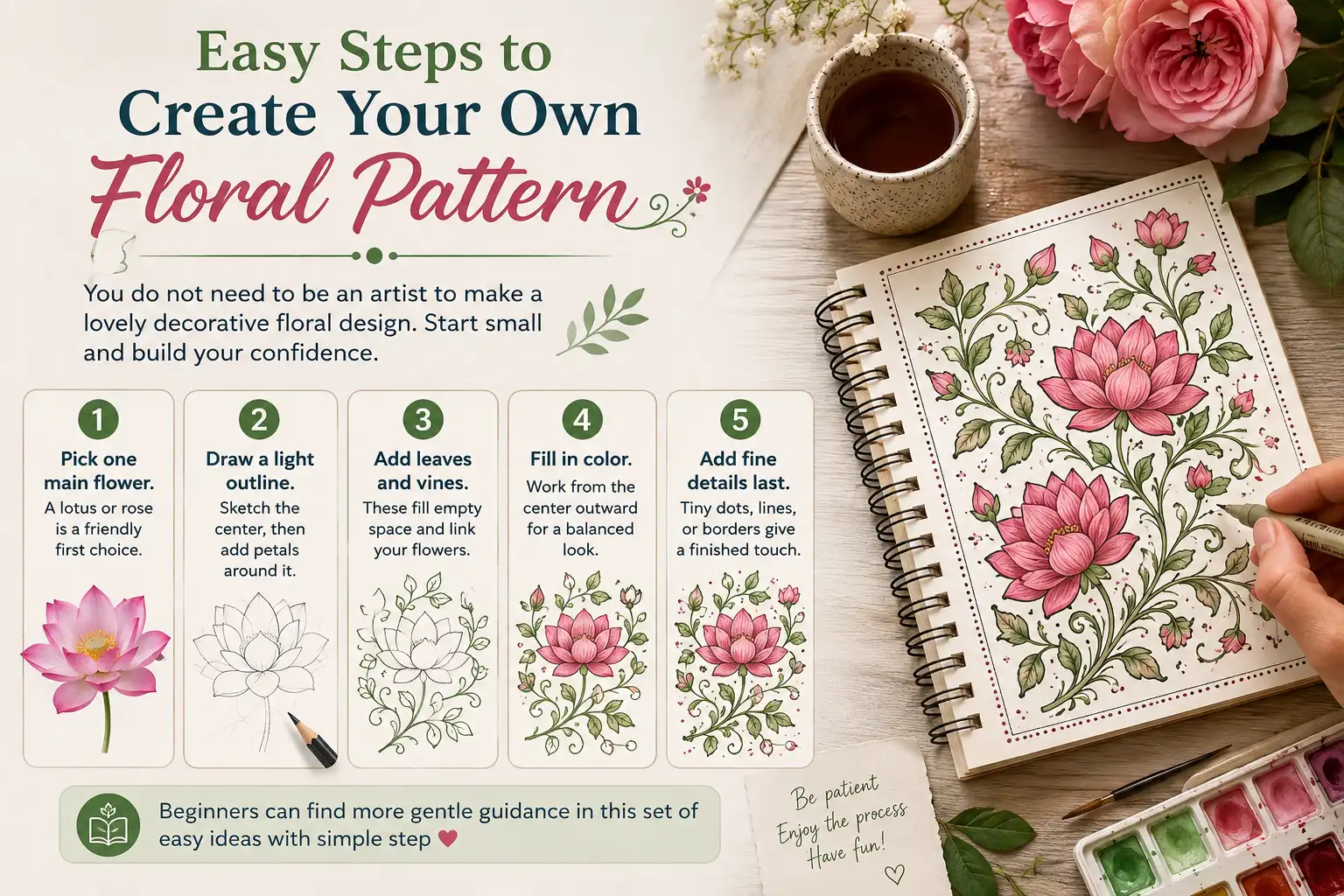
You do not need to be an artist to make a lovely decorative floral design. Start small and build your confidence.
Pick one main flower. A lotus or rose is a friendly first choice.
Draw a light outline. Sketch the center, then add petals around it.
Add leaves and vines. These fill empty space and link your flowers.
Fill in color. Work from the center outward for a balanced look.
Add fine details last. Tiny dots, lines, or borders give a finished touch.
Beginners can find more gentle guidance in this set of easy ideas with simple steps.
Tips to Keep Your Floral Decor Looking Fresh
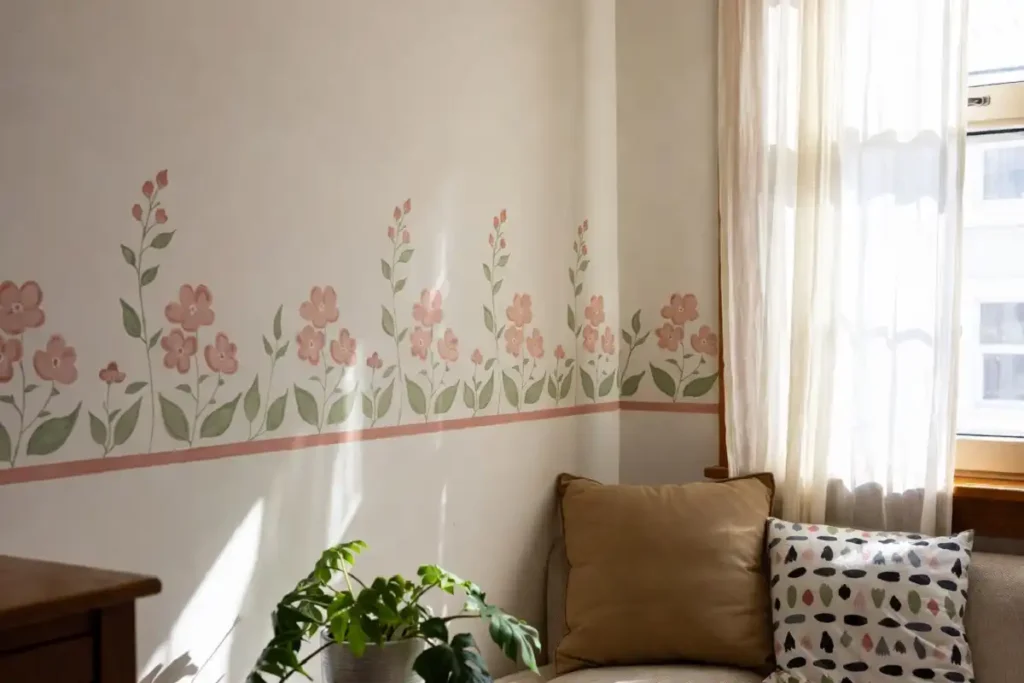
Good decoration is about balance, not just color. These small habits help any flower pattern shine.
- Leave some empty space so the design can breathe.
- Keep petals roughly even in size for a tidy result.
- Repeat one shape to create rhythm across the surface.
- Match the pattern size to the surface, smaller for cards, larger for walls.
To explore how flower motifs fit into wider design traditions, you can read about floral design history on Pinterest or browse the decorative arts collection at the Metropolitan Museum of Art. Both offer rich background and inspiration.
Conclusion
A decorative floral design is one of the easiest ways to bring warmth and beauty into any space. With just a few flower shapes, soft colors, and a little patience, you can decorate walls, floors, fabrics, and festive corners with charm.
Start with a single bloom, keep your palette simple, and let the petals guide your hand. Over time, your patterns will grow more confident and detailed.
The best part is that flower motifs never go out of style, so your effort always feels fresh. Pick one idea from this guide, gather your supplies, and enjoy creating a floral look that feels truly your own.
FAQs
What does decorative floral mean?
It means any design that uses flowers, leaves, and vines to beautify a surface. The shapes are arranged into balanced patterns rather than copying real plants exactly.
Which flowers are best for beginners?
Lotus and rose motifs are easiest for beginners because their petals follow a clear, simple shape. Once you feel comfortable, you can add leaves, buds, and trailing vines.
Where can I use a decorative floral design at home?
You can use it on walls, floors, fabrics, pottery, and handmade cards. It also suits festival decoration, doorways, and gift wrapping for a warm, personal touch.
How many colors should I use?
Two or three main colors usually look best. This keeps the pattern neat and lets the flower shapes stand out without feeling crowded.
Do I need special tools to start?
No, basic supplies are enough to begin. A pencil, simple paints or colored powder, and a steady hand will let you create a lovely floral pattern.