Floral Pattern: A Simple Guide to Designs, Uses, and Ideas
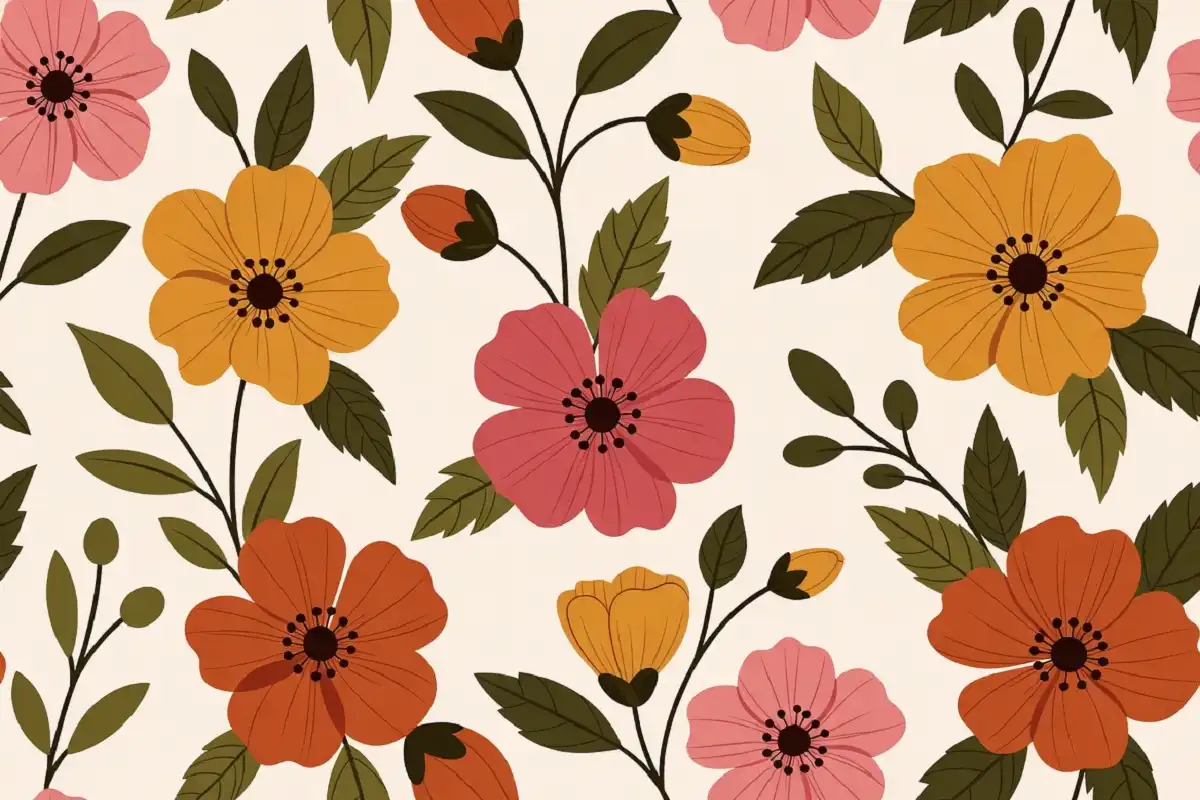
A floral pattern is one of the oldest and most loved designs in the world. It uses flowers, leaves, vines, and buds arranged in a pleasing way. You see it on fabrics, walls, dishes, greeting cards, and festive floor art. People enjoy it because it feels fresh, warm, and full of life.
This guide explains what a floral pattern is, the popular styles, and simple ways to use one at home. Whether you are decorating, drawing, or just curious, the ideas here are easy to follow and friendly for beginners.
What Is a Floral Pattern?
A floral pattern is a design built around flowers and plant shapes. It can repeat across a surface or sit as a single, standalone arrangement. The shapes may look realistic, or they may be simplified into clean curves and dots.
Across many cultures, flowers stand for beauty, growth, and good fortune. That is why a floral pattern appears in clothing, pottery, architecture, and seasonal decorations.
The style is flexible. You can make it bold and colorful, or soft and minimal. This is part of why a floral pattern fits almost any room or occasion.
Popular Types of Floral Patterns
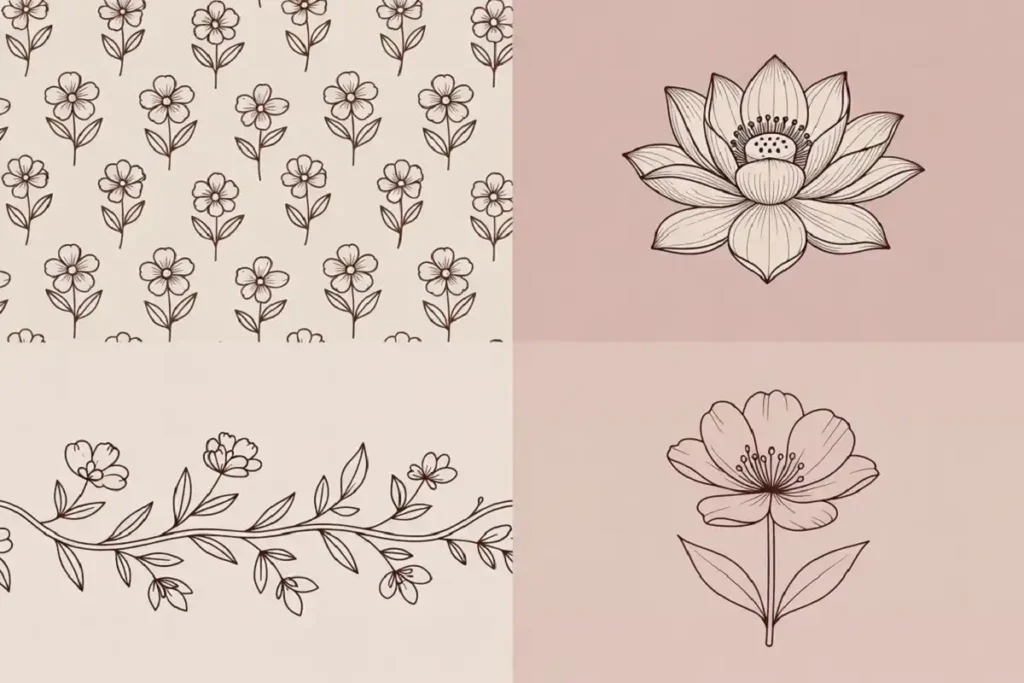
There are many ways to arrange flowers into a design. A few styles show up again and again.
Repeating Prints
Small flowers spread evenly across fabric or wallpaper.
Single Bloom Motifs
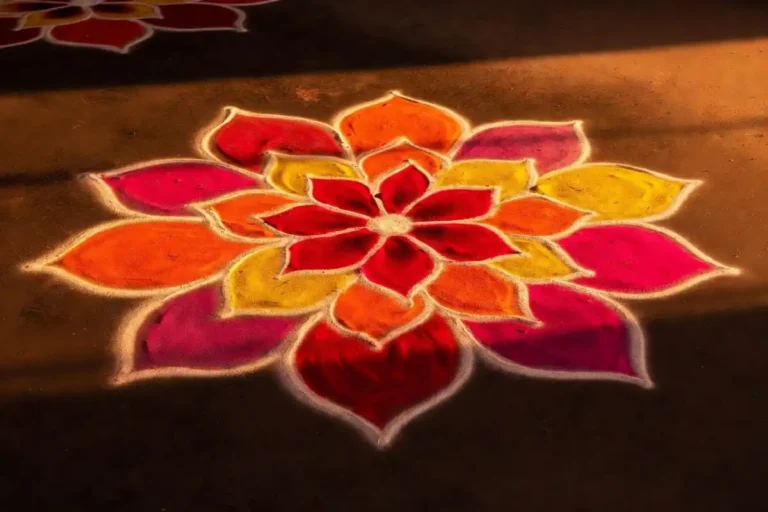
One large flower, like a lotus or rose, used as a focal point.
Vine and Trail Designs
Flowers linked by curving stems that flow across a border.
Geometric Florals
Flowers placed inside neat shapes such as squares or circles.
Minimal Line Florals
Simple outlines with little or no fill, popular in modern decor.
If you enjoy decorating your living space, this collection of floral designs for different home styles offers more inspiration.
Where Floral Patterns Are Used
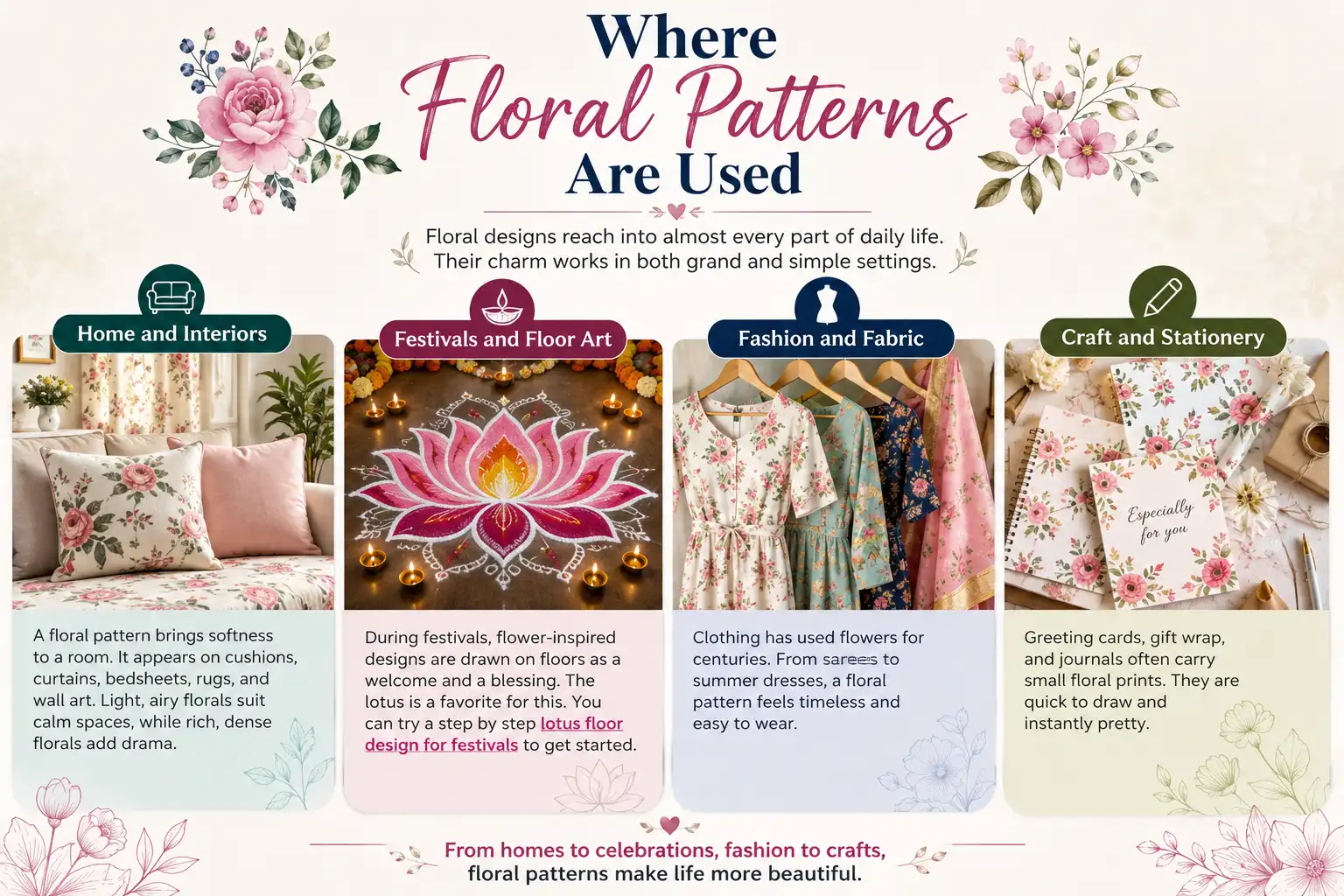
Floral designs reach into almost every part of daily life. Their charm works in both grand and simple settings.
🏡Home and Interiors
A floral pattern brings softness to a room. It appears on cushions, curtains, bedsheets, rugs, and wall art. Light, airy florals suit calm spaces, while rich, dense florals add drama.
🪔Festivals and Floor Art
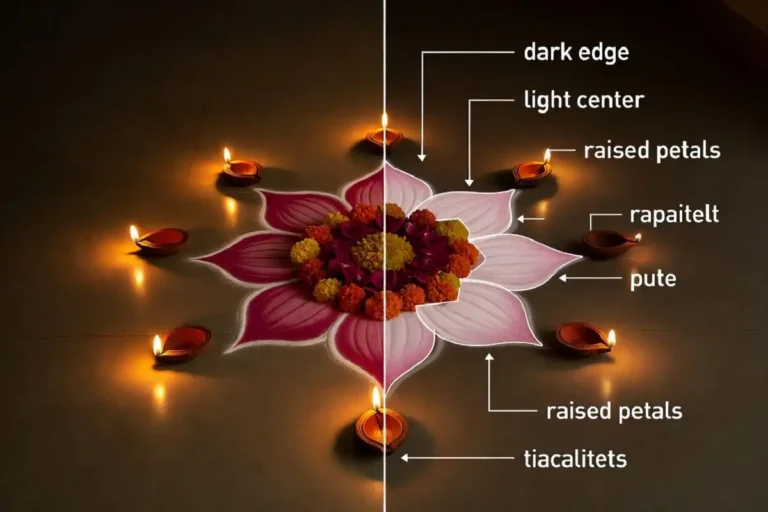
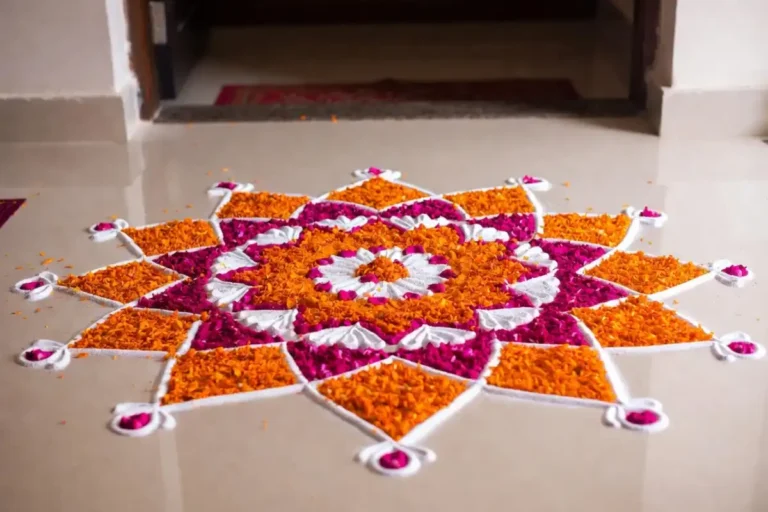
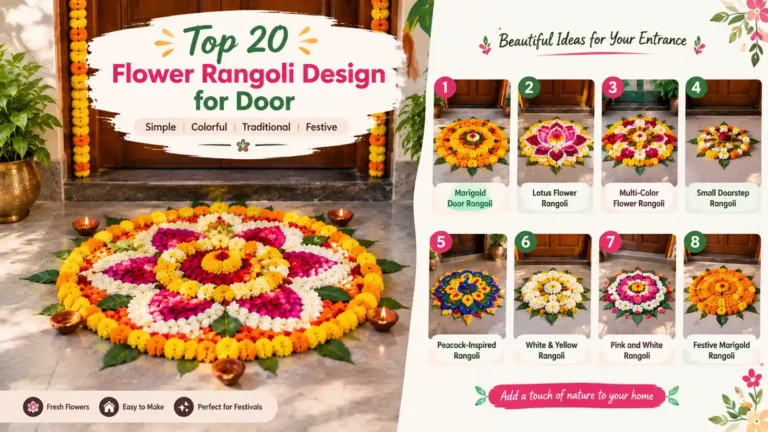
During festivals, flower-inspired designs are drawn on floors as a welcome and a blessing. The lotus is a favorite for this. Try a step by step lotus floor design for festivals to get started.
👗Fashion and Fabric
Clothing has used flowers for centuries. From sarees to summer dresses, a floral pattern feels timeless and easy to wear.
✏️Craft and Stationery
Greeting cards, gift wrap, and journals often carry small floral prints. They are quick to draw and instantly pretty.
How to Create Your Own Floral Pattern
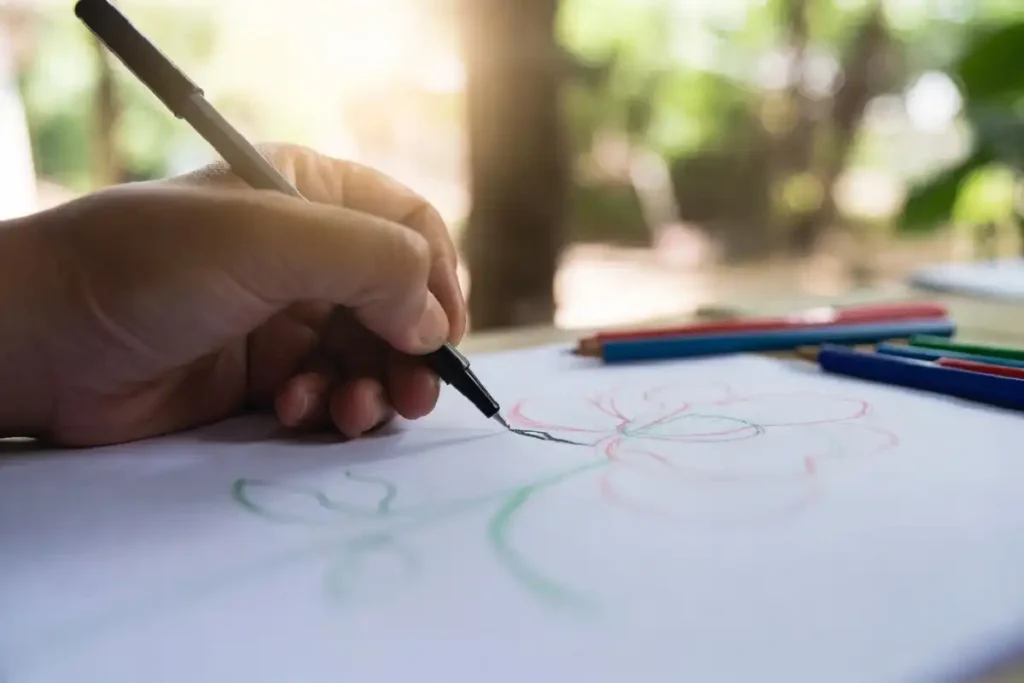
You do not need to be an artist to make a lovely design. A calm, step by step approach works best.
Pick a main flower. Choose one shape you like, such as a rose, daisy, or lotus.
Add leaves and stems. These fill space and connect the flowers.
Decide on a layout. Repeat the shape, or build one central bloom.
Choose your colors. Two or three shades usually look cleaner than many.
Refine the details. Add dots, lines, or small buds to finish the look.
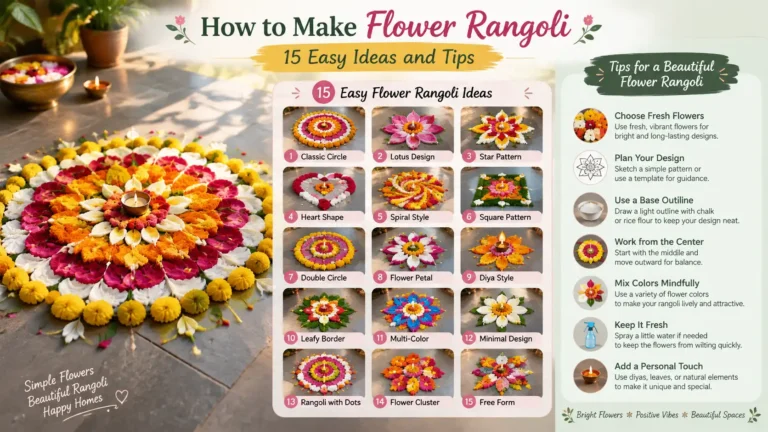
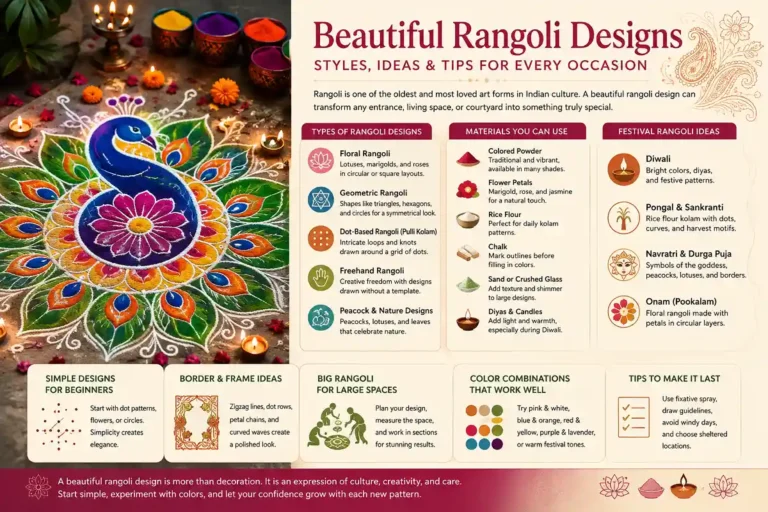
Beginners often find floor art a fun way to practice. This guide to easy design ideas for beginners breaks the process into simple steps.
Tips for Choosing the Right Floral Pattern
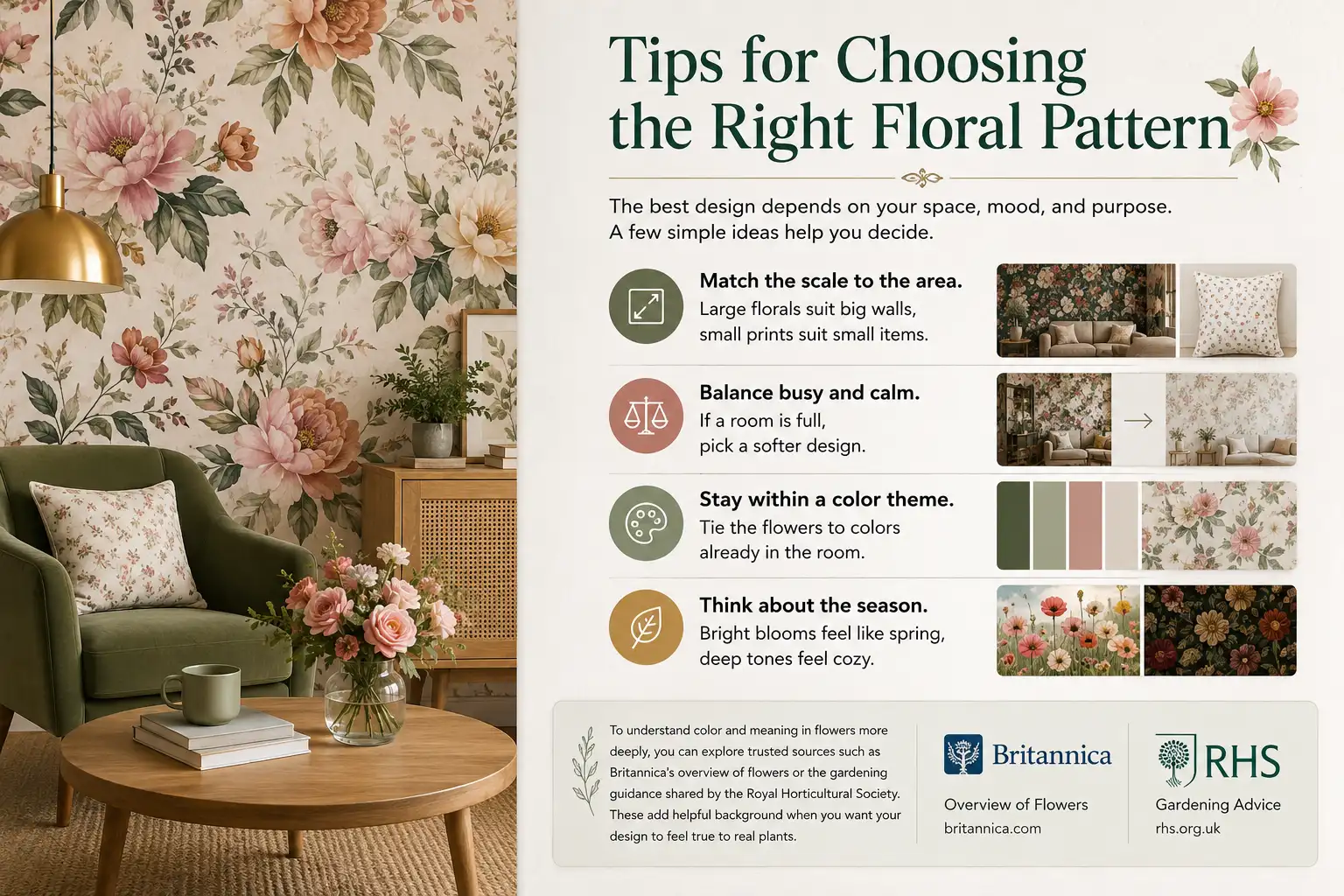
The best design depends on your space, mood, and purpose. A few simple ideas help you decide.
- Match the scale to the area. Large florals suit big walls, small prints suit small items.
- Balance busy and calm. If a room is full, pick a softer design.
- Stay within a color theme. Tie the flowers to colors already in the room.
- Think about the season. Bright blooms feel like spring, deep tones feel cozy.
To understand color and meaning in flowers more deeply, you can explore trusted sources such as Britannica’s overview of flowers or the gardening guidance shared by the Royal Horticultural Society. These add helpful background when you want your design to feel true to real plants.
Why Floral Patterns Stay Popular
Flowers never really go out of style. They connect us to nature, even indoors. A floral pattern can feel classic in one setting and modern in another, simply by changing the colors or spacing.
This flexibility is the real strength of the design. You can keep it gentle for a quiet bedroom or make it lively for a festive entrance. It welcomes both careful planning and free, playful creativity.
Conclusion
A floral pattern is a timeless way to add beauty, warmth, and a touch of nature to almost anything. It works on fabric, walls, paper, and festive floor art, and it suits both simple and grand settings. The best part is how forgiving it is.
You can start with one flower, play with colors, and slowly build a design that feels like your own. Whether you want a calm, minimal look or a bright, festive one, flowers give you room to create freely.
Take your time, trust your eye, and enjoy the process. With a little practice, a lovely floral pattern is well within your reach.
FAQs
What is a floral pattern?
A floral pattern is a design made from flowers, leaves, and plant shapes arranged in a pleasing way. It can repeat across a surface or appear as a single decorative arrangement.
Where can I use floral designs at home?
You can use them on cushions, curtains, bedsheets, rugs, wall art, and floor decorations. Soft prints suit calm rooms, while bold florals add energy to plain spaces.
Is a floral pattern hard to draw for beginners?
No, it is one of the easier designs to start with. Begin with one simple flower, add leaves, then repeat the shape until you feel comfortable with the layout.
Which flowers are best for a beginner design?
Roses, daisies, and the lotus are great choices because their shapes are clear and forgiving. Their rounded petals are easy to repeat and correct.
Do floral patterns suit modern decor?
Yes, they fit modern spaces well when you use minimal lines, fewer colors, and more open space. The same flower can look traditional or modern based on these small choices.