Ganesha Rangoli Design Ideas for Festivals and Home Decor
Ganesha rangoli design ideas turn any doorway into a warm, welcoming space during festivals. Drawing Lord Ganesha at the entrance year after year reveals which patterns, colors, and steps work best — this guide shares them all.
The best Ganesha rangoli design ideas combine a clear central face, a curved trunk, and bright festive colors. Start with a simple outline, then add lotus petals, diyas, and fine borders to finish the look.
Why Ganesha Is the First Choice for Rangoli
Ganesha is the remover of obstacles and the god of beginnings. That is why so many homes open a festival with his image on the floor. Drawing him first is meant to invite good fortune before anything else starts.
His form is also easy to recognize. The elephant head, the single tusk, and the round belly give you strong shapes to work with. Even a beginner can capture him with a few confident lines.
Ganesha appears across many Indian regions, from Maharashtra during Ganesh Chaturthi to South Indian homes during Diwali. This wide reach makes his rangoli a safe, respected choice for almost any occasion.
Each element of his image carries meaning too. The large ears remind us to listen well. The small mouth teaches us to speak less. Knowing this helps you draw with more care, since every shape has a purpose beyond decoration.
Simple Ganesha Rangoli Design Ideas for Beginners
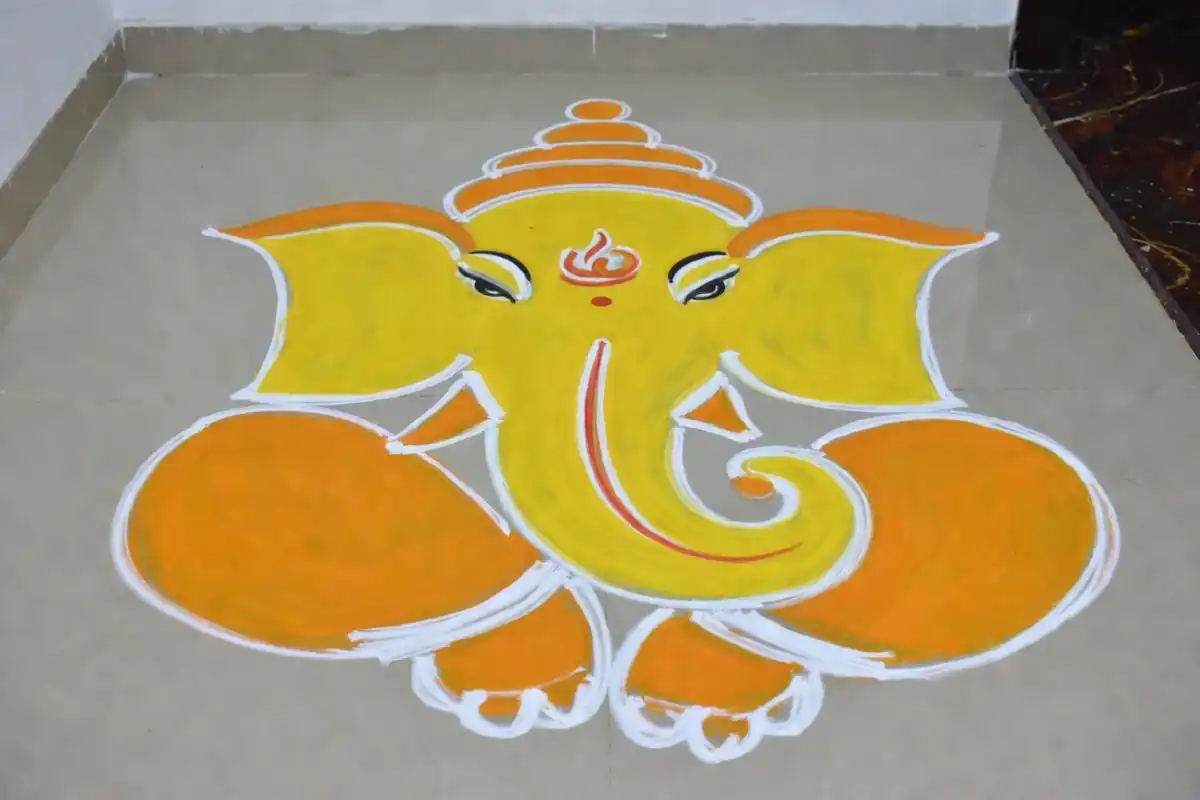
Beginner Ganesha rangoli design ideas focus on one clean face and minimal detail. Keep the shapes large. Avoid crowding the pattern with too many small elements.
Start with the trunk. Draw a soft curve that loops to one side. This single line sets the whole face in place. From there, add two ears as wide petal shapes on each side.
Next, sketch the crown above the head. A simple triangle or small dome works well. Fill the face with a warm yellow or soft orange, then outline everything in white for contrast.
If you want a truly quick version, try one of these simple Ganesha rangoli art styles that finish in under ten minutes. These use bold outlines and flat color blocks, so mistakes are easy to fix.
Tools You Need to Get Started
Beginner Ganesha rangoli design ideas need only a few basic tools. You do not have to buy anything fancy to start. Most of what you need is likely already in your home.
- White chalk for the outline and a small cone or squeeze bottle for fine lines
- A pinch bowl to help control powder flow with your fingers
- A soft brush or a folded tissue to smooth color between tones
- Small open bowls, one shade per bowl, so colors stay clean and within easy reach
A steady setup means fewer smudges and a calmer drawing session.
Ganesha Rangoli Design Ideas With Lotus and Petals
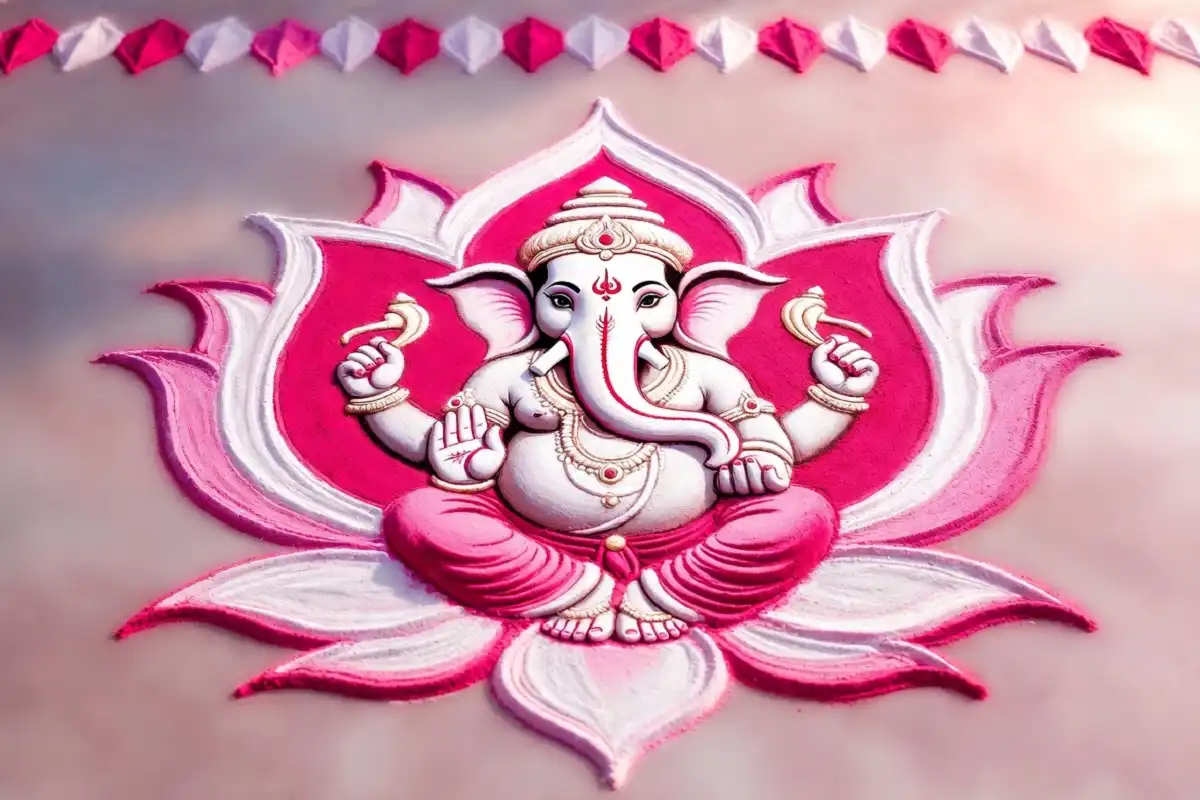
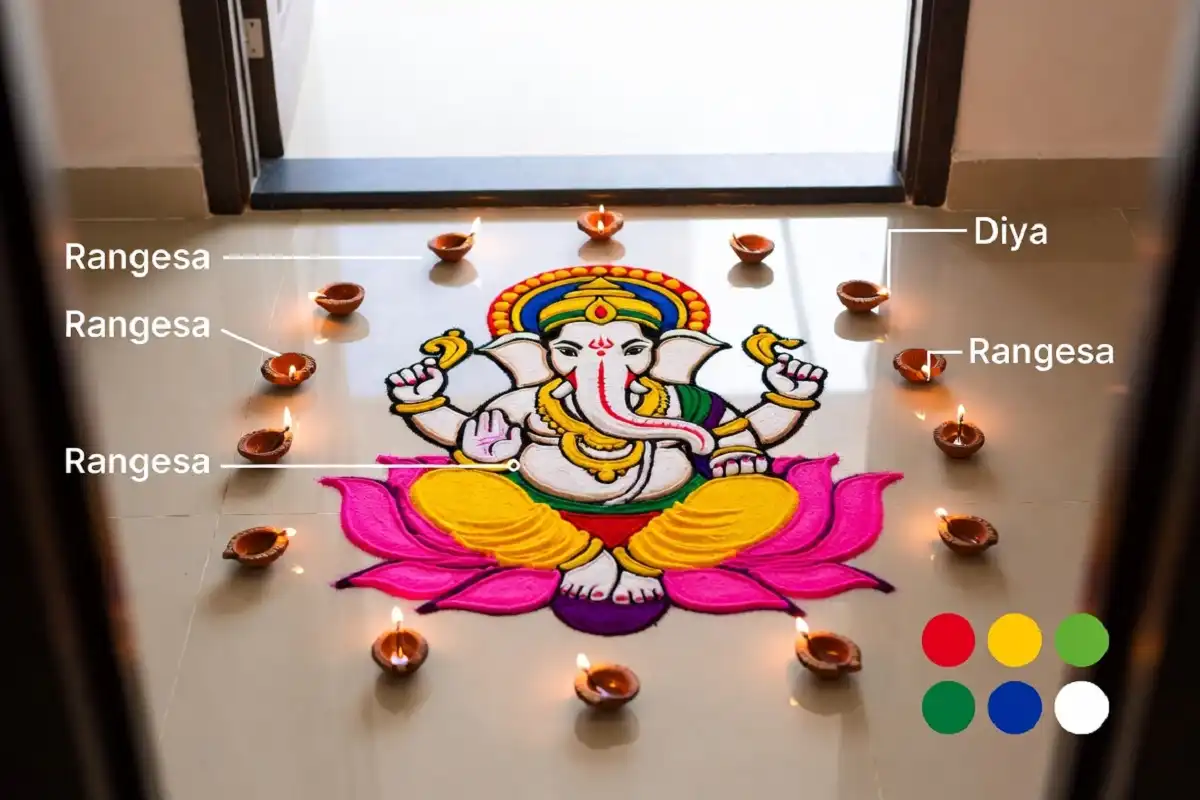
Adding a lotus base is one of the most popular Ganesha rangoli design ideas for festivals. The lotus sits under Ganesha and frames him like a throne. It also carries meaning, as the lotus stands for purity.
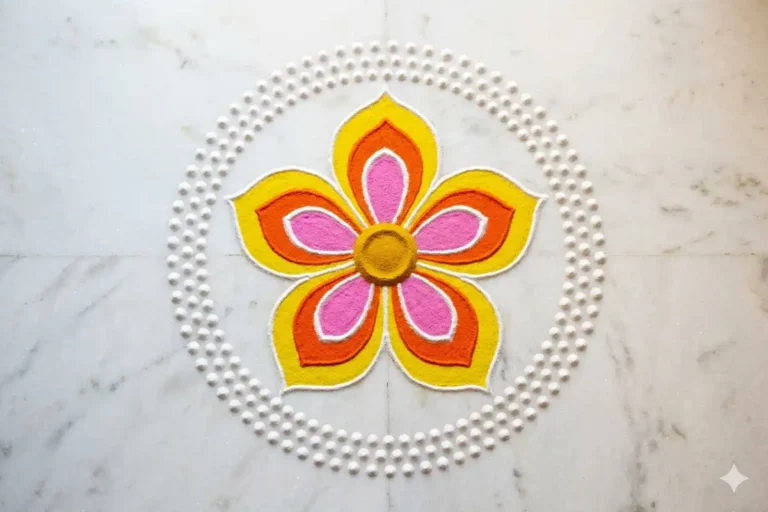
Draw the lotus first as a ring of pointed petals. Place Ganesha in the center, seated on the open bloom. Use pink and white for the petals to keep the flower soft and clean.
You can echo the petal shape in the border too. A ring of matching petals around the outer edge ties the whole design together. For more floral framing, these lotus rangoli design pattern steps pair well with a central Ganesha.
Festival-Ready Ganesha Rangoli Design Ideas
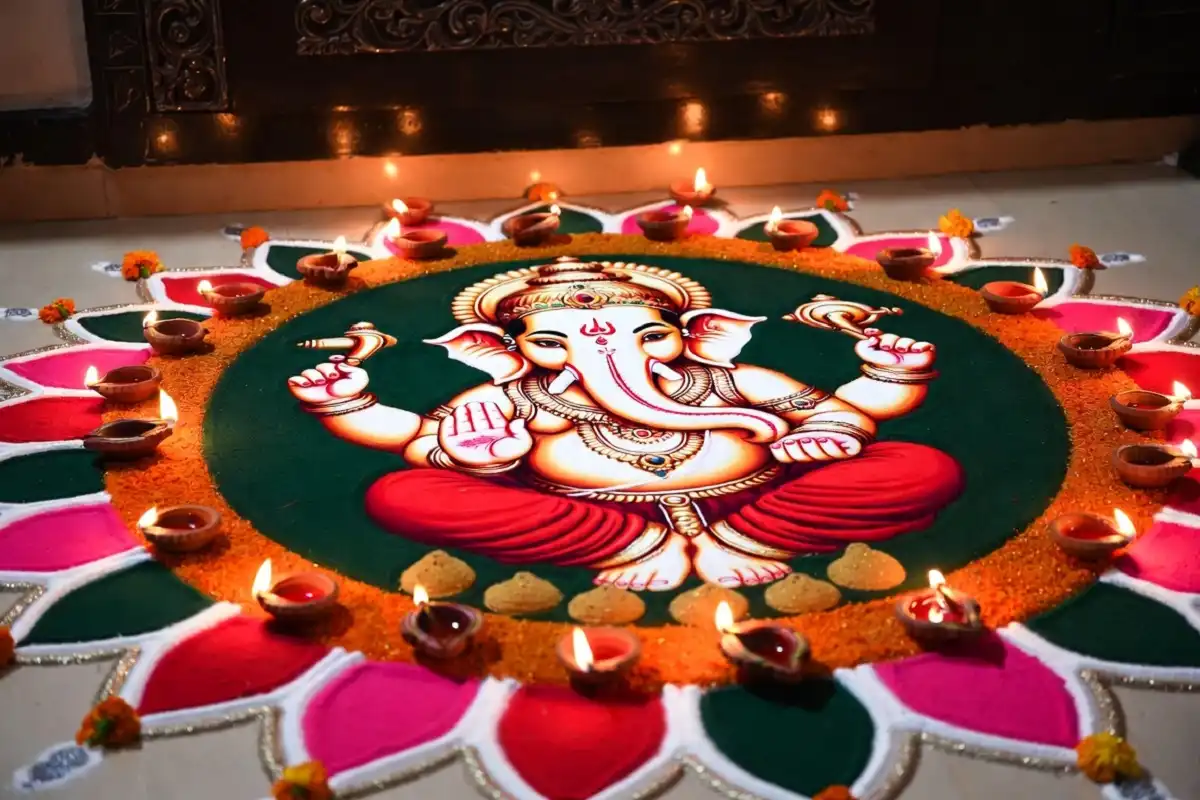
Festival Ganesha rangoli design ideas use brighter colors and larger layouts. During Ganesh Chaturthi, homes go bold with reds, deep greens, and gold. The scale grows to fill the full entrance.
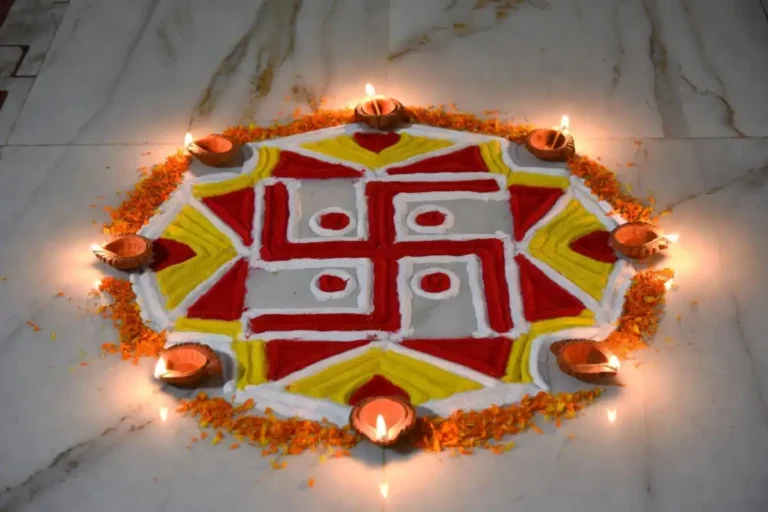
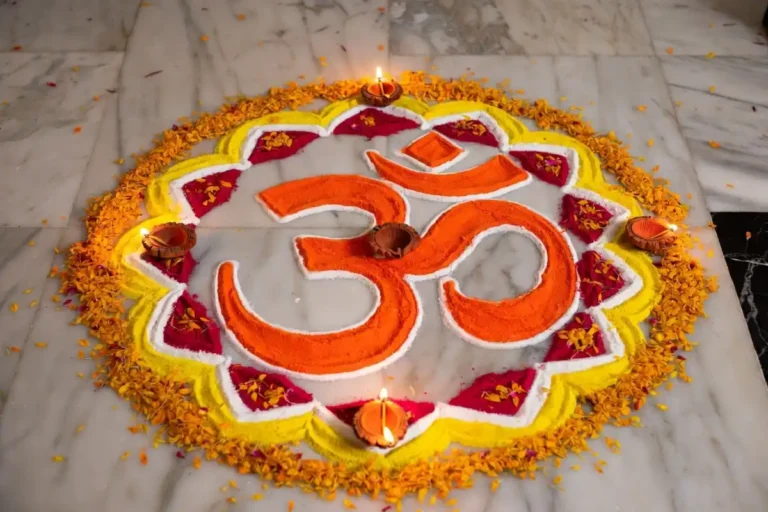
For Diwali, pair Ganesha with rows of diyas. Small oil lamps around the design catch candlelight beautifully after dark. Add a few dots of silver or gold powder for extra shine under the lamps.
Here is a quick color guide by festival:
| Festival | Best Colors | Key Add-ons |
|---|---|---|
| Ganesh Chaturthi | Red, green, gold | Modak shapes, marigold |
| Diwali | Orange, pink, yellow | Diyas, silver dots |
| Navratri | Multicolor bands | Small mirrors, beads |
| Housewarming | Soft pastels | Lotus base, kalash |
Modak, Ganesha’s favorite sweet, is a lovely detail to include. Draw a few small dumpling shapes near his hand or beside the base. This tiny touch makes the design feel personal and complete.
Ganesha Rangoli Design Ideas for Competitions
Competition Ganesha rangoli design ideas need symmetry, fine detail, and confident color blending. Judges look for clean lines and balanced proportions. Plan the layout on paper before you touch the floor.
Use a grid of dots to keep both sides even. Mark the center first, then measure outward equally. Shading is where big entries win, so blend two tones inside the trunk and crown for depth.
Add intricate jewelry to lift the piece. Fine chains, a beaded crown, and detailed anklets show skill. These small, careful touches separate a competition design from a home one.
Ganesha Rangoli Design Ideas Using Flower Petals
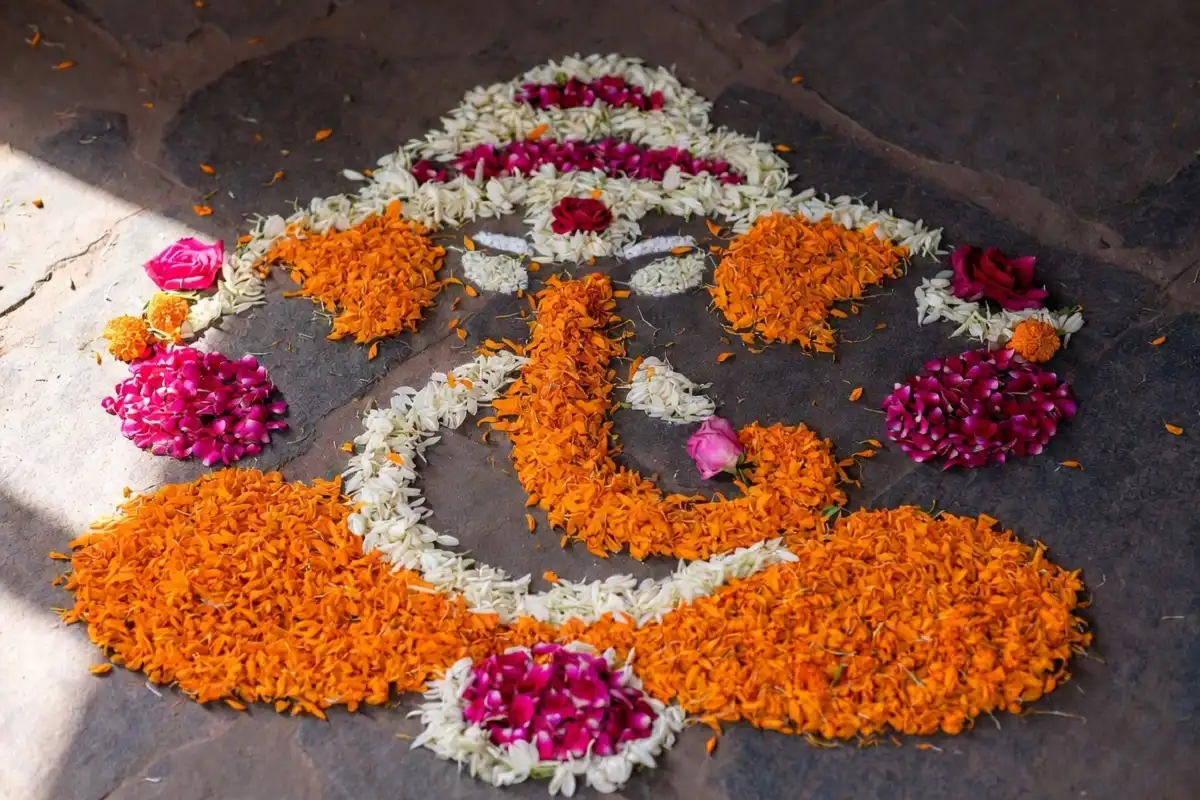
Fresh flower Ganesha rangoli design ideas skip powder entirely and use real petals. Marigold, rose, and jasmine give rich color and a natural scent. This style suits eco-friendly homes and looks stunning in photos.
Lay the outline with a thin trail of rice flour first. Then press petals along the lines to build each shape. Use orange marigold for the body and white jasmine for the crown edges.
Flower rangoli stays fresh for a day, so make it on the morning of your event. For a softer, smaller take, these small flower rangoli easy designs work well with a compact Ganesha at the center.
Modern and Traditional Ganesha Rangoli Design Ideas
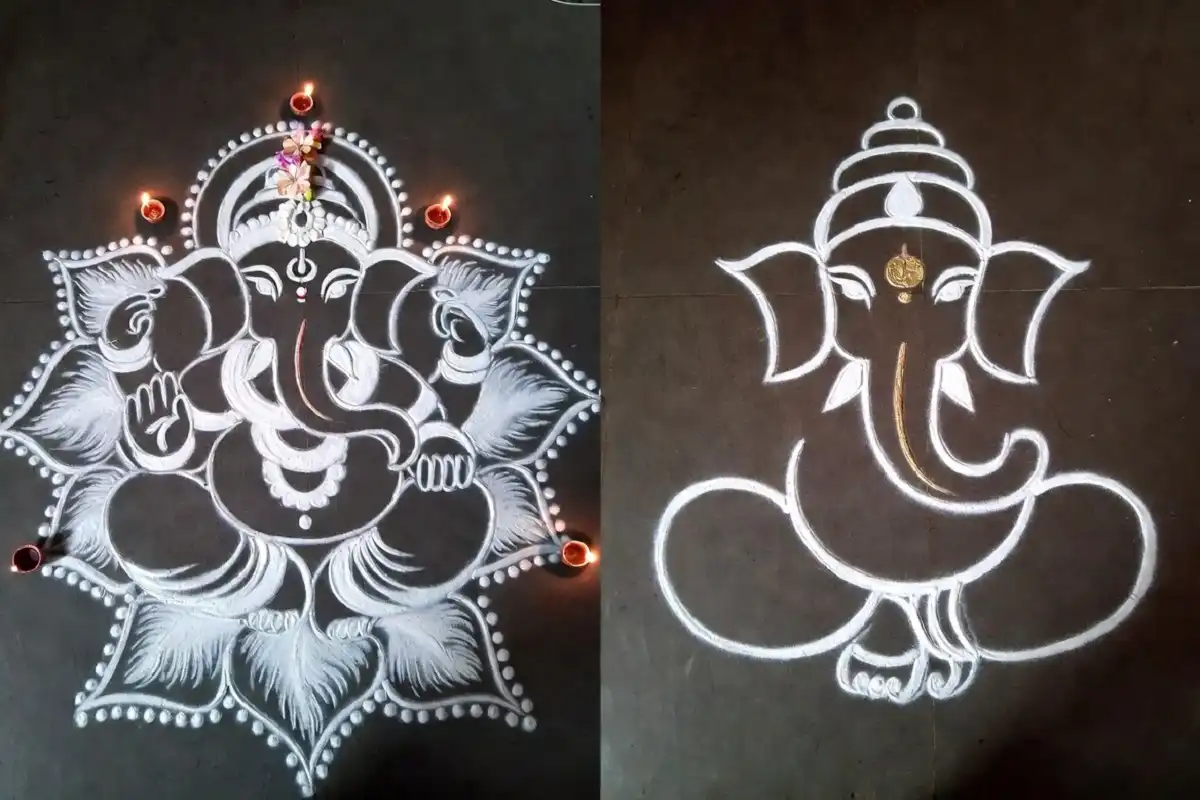
These patterns split into two broad styles: traditional and modern. Traditional layouts use symmetry, lotus thrones, and classic festival colors. Modern ones lean on clean lines, negative space, and bold single tones.
🪷 Traditional Style
Seat Ganesha on a full lotus and ring him with fine dot borders. Add diyas, a kalash, and small floral corners. This style suits Ganesh Chaturthi and formal pujas.
◻︎ Modern Style
Draw a minimal Ganesha face using just a few flowing strokes. Fill only the outline and leave the floor bare around it. A single accent color, like deep blue or gold, keeps it striking and simple.
You can blend both too. Keep the traditional lotus base but simplify the details on top. This mix gives you a fresh feel while holding on to the classic meaning.
Kids-Friendly Ganesha Rangoli Design Ideas
Kids-friendly Ganesha rangoli design ideas use big shapes, bright colors, and no fine detail. Children draw best with wide chalk and their fingers. Give them a simple face outline to fill in.
Let them use flat primary colors without blending. Sticker dots and glitter make the activity fun and forgiving. The goal is joy and confidence, not perfect symmetry.
This is a lovely way to teach the story of Ganesha while they draw. Keep the design small, around one foot, so they can finish it and feel proud.
How to Make a Ganesha Rangoli Step by Step
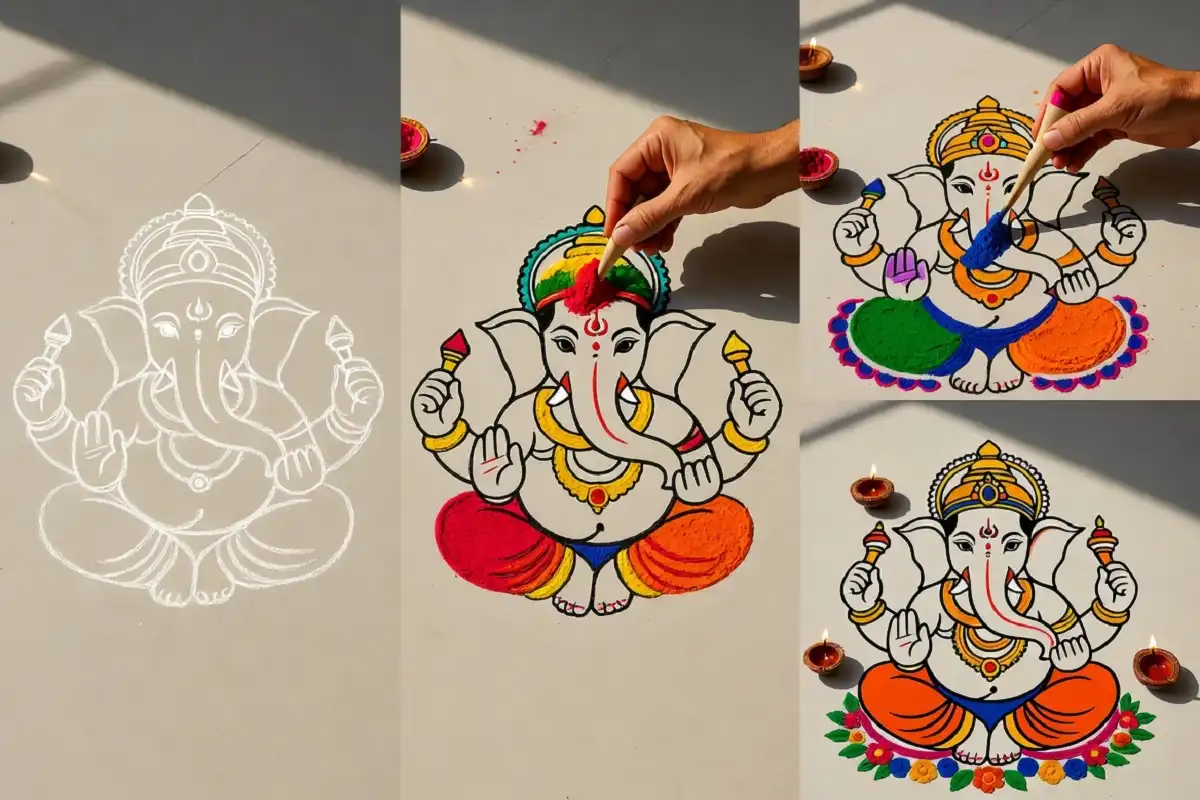
Making a Ganesha rangoli takes six clear steps, from outline to finish. Follow them in order and the design comes together cleanly. Do not rush the outline, as everything else builds on it.
Clean and lightly wet the floor so colors stick.
Sketch the trunk and face outline with white chalk or a thin flour line.
Add ears, crown, and body around that base.
Fill each section with your main colors.
Outline every shape in white to sharpen the edges.
Add finishing details like diyas, dots, and a border.
Keep a dry cloth nearby to fix slips fast. Work from the center outward so you never smudge finished areas. This order keeps your hands clean and your lines crisp.
Where to Place Your Ganesha Rangoli
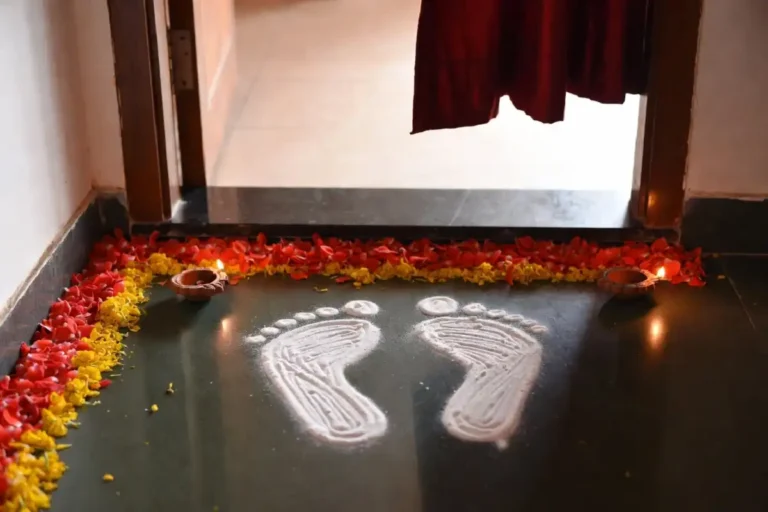
Placement matters as much as the design itself. The main door is the classic spot, since Ganesha welcomes guests and blessings in. Draw it just inside or right at the threshold.
Face the design so Ganesha looks toward anyone entering. This feels welcoming and follows common practice. If your entrance is narrow, a tall vertical layout fits better than a wide circle.
For a puja room or altar, a small Ganesha near the base of the setup works well. Keep it modest in size so it supports the space rather than dominating it. A compact design also stays cleaner in a spot with foot traffic nearby.
Outdoor courtyards give you the most freedom. Here you can go large and add flowing borders. Just check the weather first, since wind and rain undo powder work fast.
Choosing Colors for Your Ganesha Rangoli
The right colors make Ganesha rangoli design ideas feel festive and balanced. Warm tones like orange, yellow, and red suit his energy. Cool accents in blue or green add contrast without clashing.
Stick to three or four main colors. Too many shades make the design look busy and unclear. Use white as your outline color throughout, since it sharpens every edge.
For the trunk and crown, a light-to-dark blend adds a sense of depth. Start light at the top and deepen the shade lower down. This simple gradient gives flat powder a rounded, lifelike feel.
Common Mistakes to Avoid
- Starting too small. This is the most common mistake, leading to running out of room. Sketch the full outline before filling any color — this shows you the true size early.
- Crowding the face with detail. Leave space around the eyes and trunk so the features read clearly. A clean, simple Ganesha reads better than a cluttered one.
- Uneven sides. This breaks the whole look, so use dots or a center line to guide symmetry. Also avoid mixing too many bright colors, which flattens the design.
Restraint almost always looks more elegant.
How to Preserve and Photograph Your Design
A finished Ganesha rangoli fades fast, so preserving it takes a few smart steps. Powder designs last a day at most. Flower ones wilt even sooner in heat.
To help it last, spray a light mist of hairspray or a clear fixative from a distance. Hold the can high so the spray settles gently. This locks loose powder in place without disturbing the pattern.
For photos, shoot from directly above for the cleanest view. Natural morning light works best and avoids harsh shadows. Turn off your flash, which flattens the colors and creates glare on any glitter.
Simple Ganesha Rangoli Design Ideas for Beginners
Ganesha rangoli design ideas reward a clear plan and a steady hand more than fancy tools. Start with a strong outline, keep your colors few, and let the trunk and face lead.
Whether you choose powder, flowers, or a festive lotus base, a well-drawn Ganesha brings warmth and good fortune to any doorway.
Pick one style above and start simple. The detail will come with practice.
FAQs
Which direction should Ganesha face in rangoli?
Ganesha’s trunk direction carries meaning in tradition. A trunk curving to his left is the common, gentle choice for home rangoli. A right-curving trunk is considered more powerful and is used less often.
How long does a Ganesha rangoli take to make?
A simple home Ganesha takes twenty to forty minutes. Detailed festival or competition designs can take two hours or more. Beginner Ganesha rangoli design ideas with flat colors are the fastest to complete.
Can I make Ganesha rangoli without dots?
Yes, freehand Ganesha rangoli works well once you know the basic shapes. Dots only help with symmetry and spacing. Confident drawers often skip them and sketch the outline directly.
What size should a Ganesha rangoli be?
Match the size to your space. A one to two foot design suits most home entrances. Reserve large three foot or bigger layouts for festivals and open courtyards.