Rangoli Designs for Ganesh Chaturthi: A Complete Guide
Rangoli designs for Ganesh Chaturthi welcome Bappa into your home with color, devotion, and clean geometry. This guide covers motifs, colors, layouts, and step-by-step methods used every year, with ideas for every skill level and space.
The best rangoli designs for Ganesh Chaturthi feature Ganesha’s face, modak, lotus, and Om symbols in bright reds, yellows, and greens. Start with a dotted grid, sketch the outline, then fill with color powder or flower petals.
What Makes Rangoli Designs for Ganesh Chaturthi Special?
Rangoli designs for Ganesh Chaturthi carry religious meaning, not just decoration. Each shape honors Lord Ganesha, the remover of obstacles. The festival falls in late August or September, and homes across Maharashtra, Karnataka, and Goa mark it with fresh floor art at the entrance.
The entrance is treated as sacred space during these ten days. A well-made pattern signals respect and invites blessings. The colors stay warm and festive. Red marks auspiciousness. Yellow reflects turmeric and wisdom. Green shows renewal.
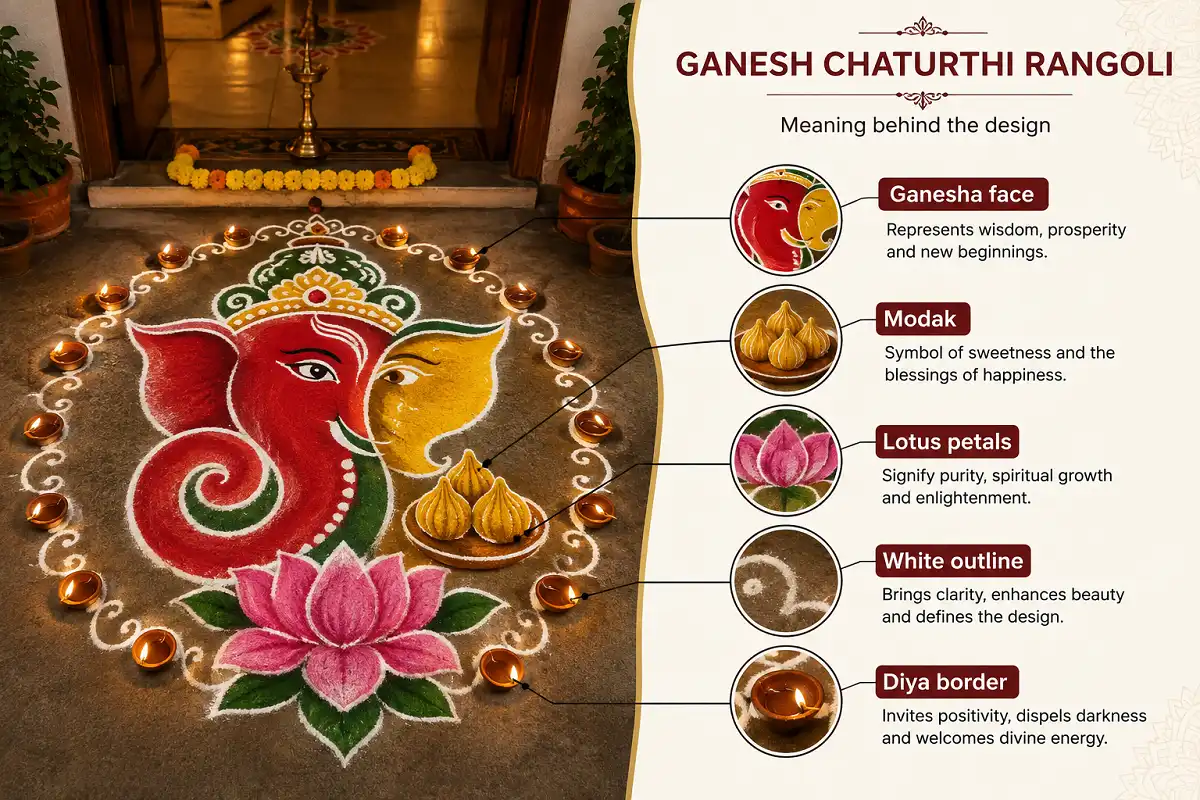
The most loved motifs are direct symbols of the deity. Ganesha’s silhouette sits at the center of most large patterns. Around it, artists add his trunk curl, his crown, and his vahana, the mouse. These details turn a simple drawing into a devotional piece.
Good rangoli designs for Ganesh Chaturthi also respond to the space around them. A grand doorway calls for a bold, layered pattern. A modest flat entrance suits a tight, single motif. Matching the design to the setting first, then choosing colors and detail, is the one habit that keeps every pattern looking planned rather than crammed.
Which Motifs Suit Ganesh Chaturthi Rangoli Best?
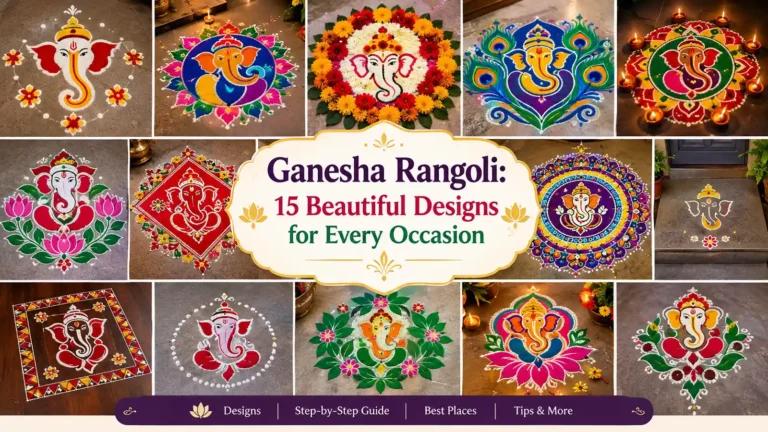
Ganesha’s face and modak are the two motifs that suit this festival best. Both connect straight to the deity and read clearly from a distance. Pairing them with lotus petals and a small Om creates balance. Here are the core motifs to return to each year:
🐘Ganesha Face
The centerpiece. Draw the trunk curving to one side, add two large ears, and top it with a jeweled crown.
🍬Modak
Bappa’s favorite sweet. A teardrop shape with pleats at the top. Cluster three or five together.
🌸Lotus
A symbol of purity. Works as a frame around the central figure or as corner accents.
🕉️Om and Swastik
Sacred symbols that fill empty space with meaning.
🐭Mouse (Mushak)
Ganesha’s vehicle. A small, playful detail near the base.
🪔Diya Rows
Lamp motifs that echo the festival’s light.
Beginners should start with the modak. It uses simple curves and forgives small mistakes. Once you gain confidence, move to the full face. For deeper motif ideas, this breakdown of creative Ganesha rangoli concepts shows how to combine these shapes into one layout.
Each motif also carries a message. The modak stands for the sweet reward of spiritual effort. The lotus shows purity rising above muddy water. The mouse reminds us to control desire, which Ganesha rides and masters. When you understand these meanings, your rangoli designs for Ganesh Chaturthi gain depth beyond their color. Devotees notice the difference at once.
How Do You Make Rangoli Designs for Ganesh Chaturthi Step by Step?
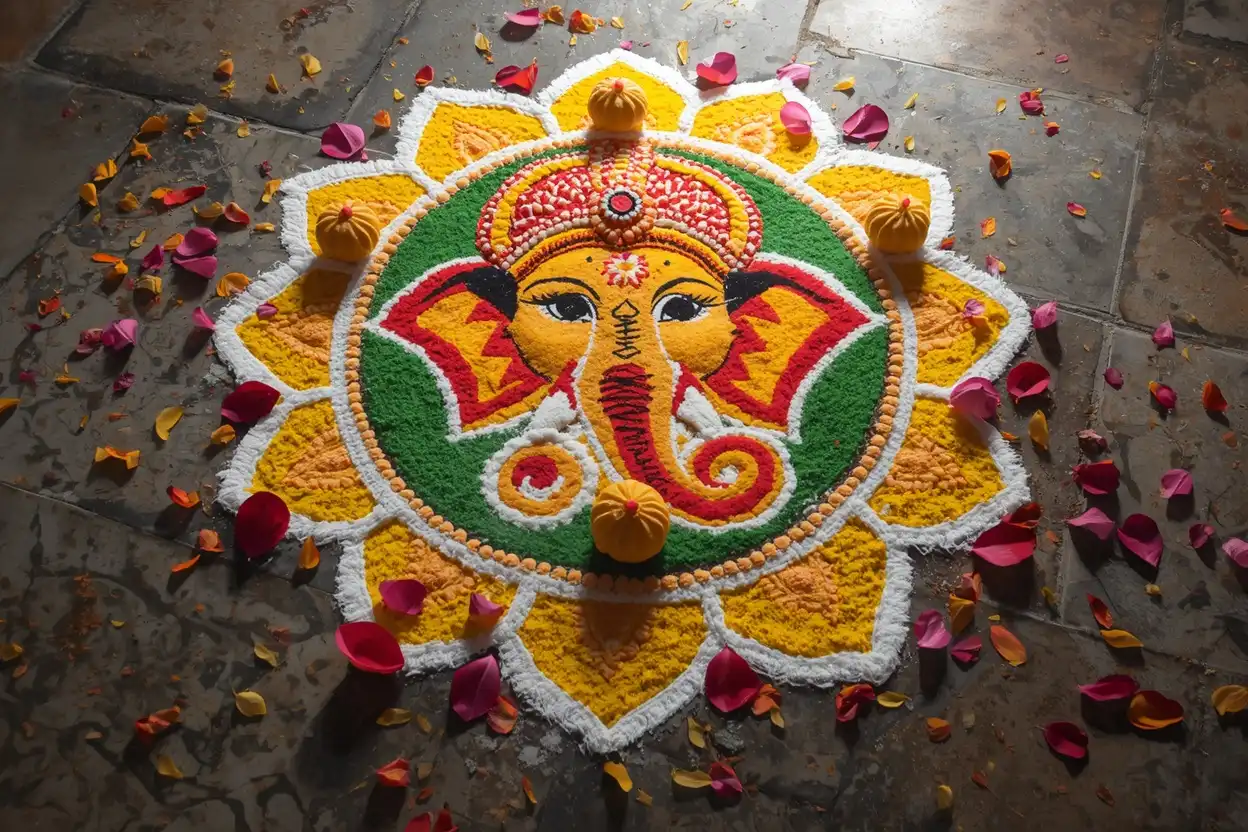
Making rangoli designs for Ganesh Chaturthi step by step starts with a clean, dry floor and a dotted grid. Sketch the outline first, then fill each section with color, working from the center outward. Follow this method for a reliable result:
Clean the Surface
Sweep and wipe the floor. Let it dry fully. Dust ruins color grip.
Plan the Grid
Place dots in an even matrix. A 9×9 grid suits a medium Ganesha face.
Sketch the Outline
Use white powder or chalk to draw the trunk, ears, and crown. Correct the shape now, before color.
Fill the Base Colors
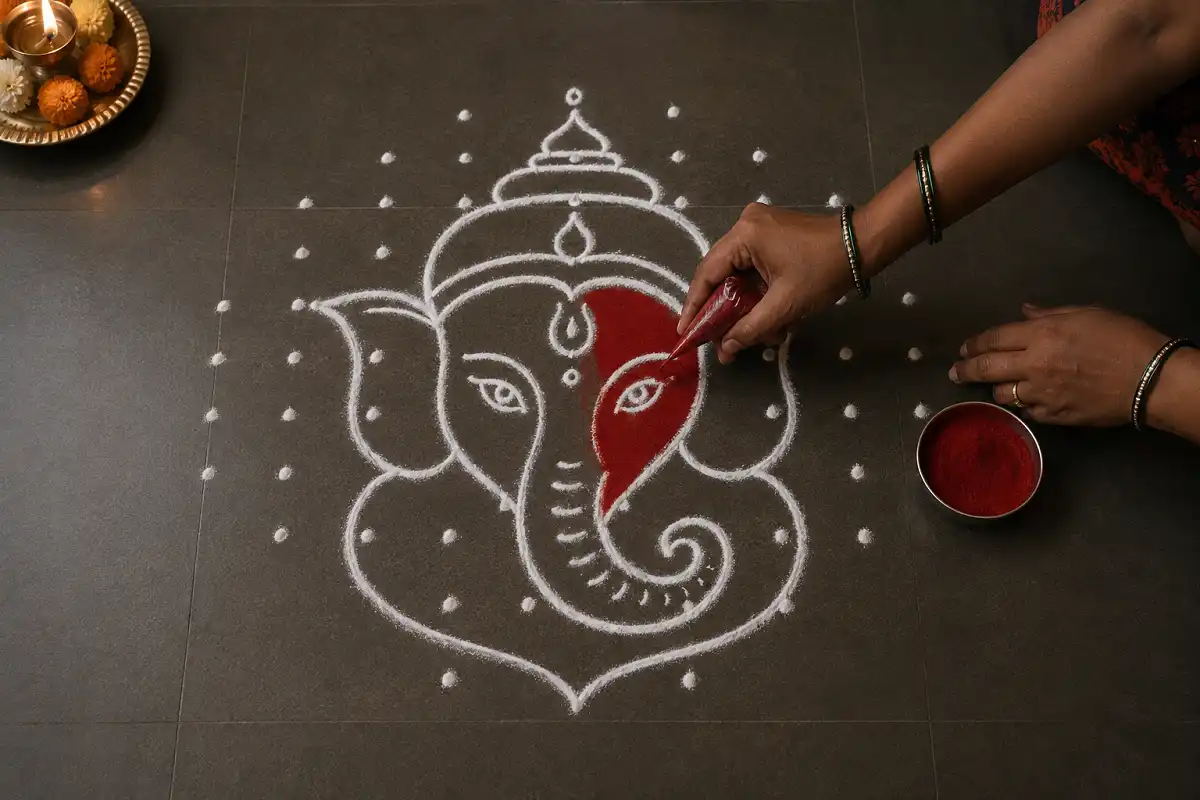
Add the largest color blocks first. Skin tones for the face, red for the crown.
Layer Details
Add eyes, jewelry, and shading. Use a cone or a steady pinch grip.
Outline in White
A crisp white border sharpens every edge and makes colors pop.
Finish with Accents
Place diyas, flowers, or a modak cluster at the corners.
Work slowly on the face. The eyes and trunk define the whole piece. If a line slips, brush it away and redo it. This guide to simple Ganesha floor art for festivals breaks each of these steps down further for first-timers.
The right tools make these steps easier. A plastic cone gives you thin, controlled lines for detail work. A fine sieve spreads powder in an even base layer. A small brush cleans up stray grains at the edges. You do not need an expensive kit to create striking rangoli designs for Ganesh Chaturthi. A few cones, a sieve, and steady hands are enough. Practice the trunk curve on paper before you commit it to the floor.
What Colors Work Best for Ganesh Chaturthi Rangoli?
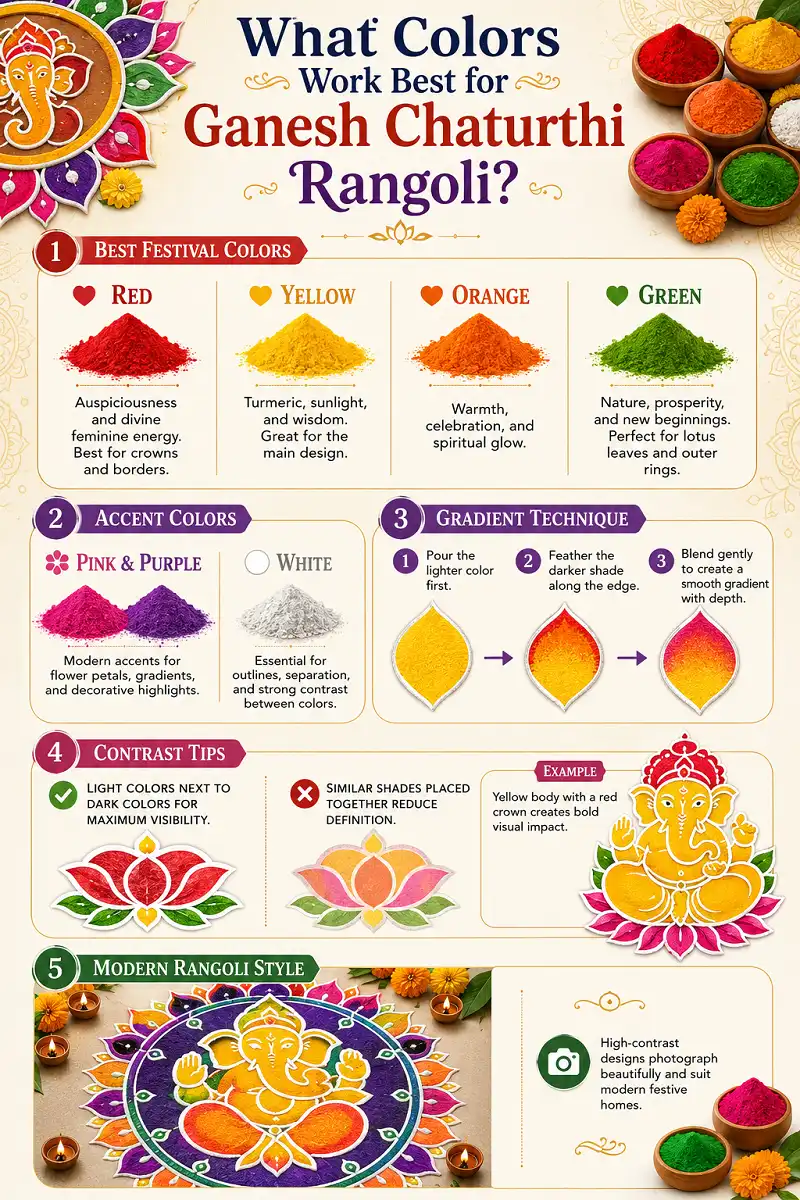
Red, yellow, orange, and green work best for Ganesh Chaturthi rangoli. These warm tones match the festival’s mood and stand out against stone or tile floors. Use white to separate and outline them. Color choice carries meaning during this festival:
❤️Red
Auspiciousness and the divine feminine energy. Use it for crowns and borders.
🟡Yellow and Orange
Turmeric, the sun, and wisdom. Ideal for the body and glow effects.
🟢Green
Nature and new beginnings. Good for lotus leaves and outer rings.
💗Pink and Purple
Modern accents for petals and gradients.
⚪White
The great separator. It outlines shapes and adds contrast.
Blending two shades within one petal creates a gradient look. Pour the lighter color first, then feather the darker tone at the edge. This trick adds depth without extra tools.
Contrast decides how far your pattern reads across a room. Place light colors next to dark ones, never two similar tones side by side. A yellow body against a red crown pops instantly. Modern rangoli designs for Ganesh Chaturthi often use bold color blocks with sharp white gaps between them. This clean, high-contrast style photographs well and suits today’s festive homes.
Which Rangoli Designs for Ganesh Chaturthi Fit Small Spaces?
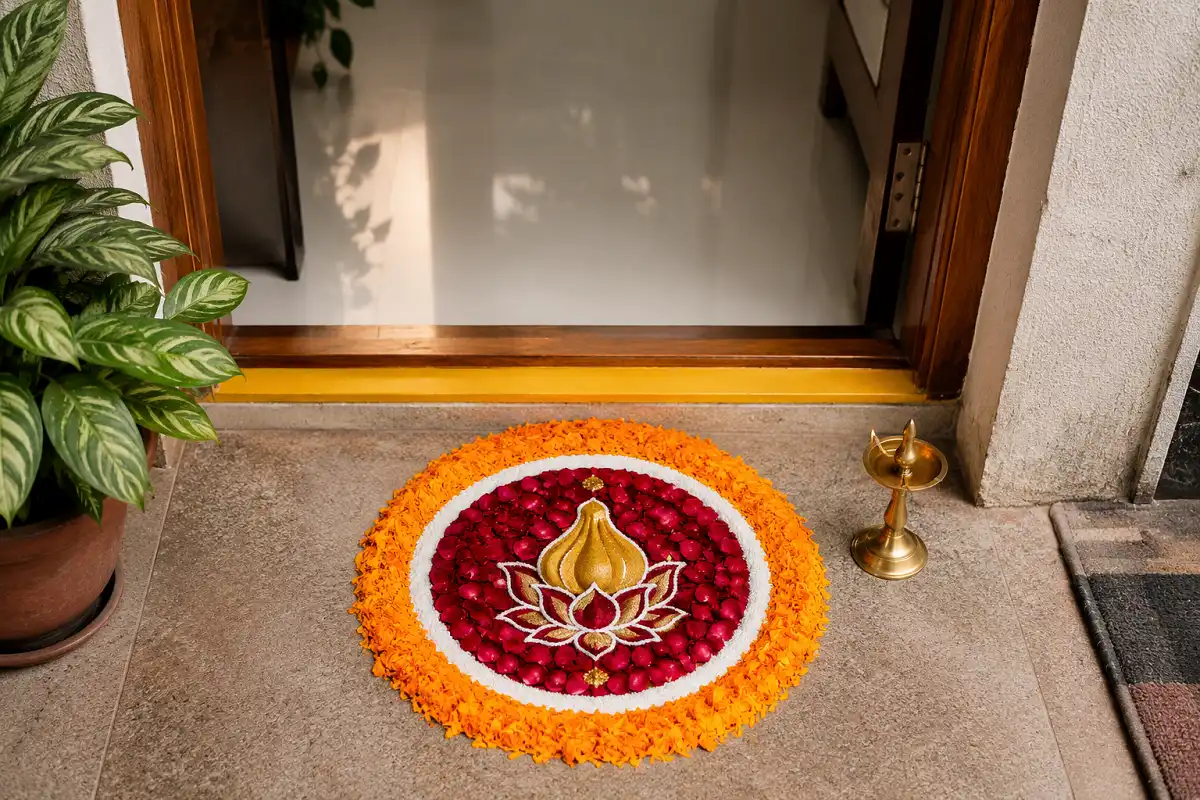
Compact, single-motif rangoli designs for Ganesh Chaturthi fit small spaces best. A lone modak, a small Ganesha face, or a lotus medallion covers a doorway without crowding it. Apartment entrances suit these tight, clean patterns.
For a balcony or a narrow flat door, keep the design under two feet wide. A circular border with a modak at the center reads well and takes ten minutes. You can also run a slim rangoli strip along one side of the threshold.
Flower petals shine in small formats. A ring of marigold with a rose-petal center needs no drawing skill. It looks rich and clears away in seconds. These notes on marigold floor patterns explain how to prep petals so they last the full day.
Small does not mean plain. Even compact rangoli designs for Ganesh Chaturthi can feel rich when you add a crisp white outline and one metallic accent. A dot of gold or silver powder at the center lifts the whole piece. Keeping small patterns simple in shape but sharp in finish suits busy mornings during the festival week.
How Can You Design a Large Ganesh Chaturthi Rangoli?
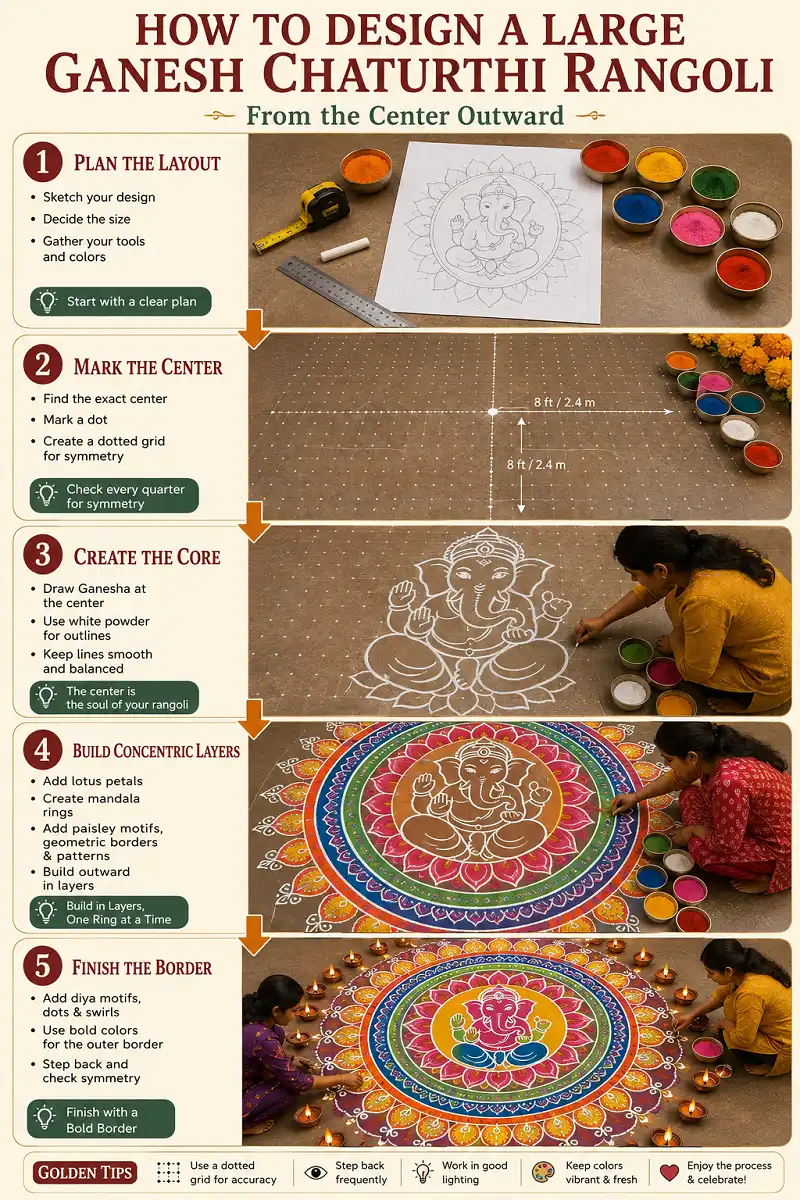
Design a large Ganesh Chaturthi rangoli by anchoring a central Ganesha figure and building outward in concentric layers. Use a big dotted grid for symmetry. Add borders, lotus rings, and diya rows to fill the width.
Large patterns reward planning. Sketch the full layout on paper first. Then mark the center point on the floor and measure equal distances outward. Symmetry breaks fast on big rangoli, so checking each quarter against the others as you go is essential. Grand rangoli designs for Ganesh Chaturthi work best when two people share the task, one filling color while the other outlines. Layer the design in clear zones:
◉Core
The Ganesha face or seated figure.
🌸First Ring
Lotus petals or a decorative mandala band.
◆Second Ring
Geometric borders, chains, or paisley.
🪔Outer Edge
Diya motifs, dots, and a bold color frame.
Rangoli designs for Ganesh Chaturthi at this scale often become the centerpiece of a home pandal. Keep the color transitions smooth. A large piece with muddy edges loses its impact, so the white outlining step matters even more here.
Can You Use Flowers for Ganesh Chaturthi Rangoli?
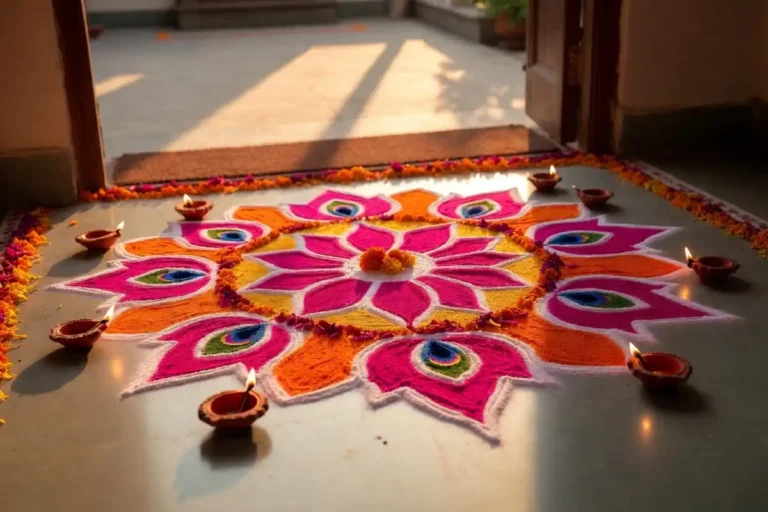
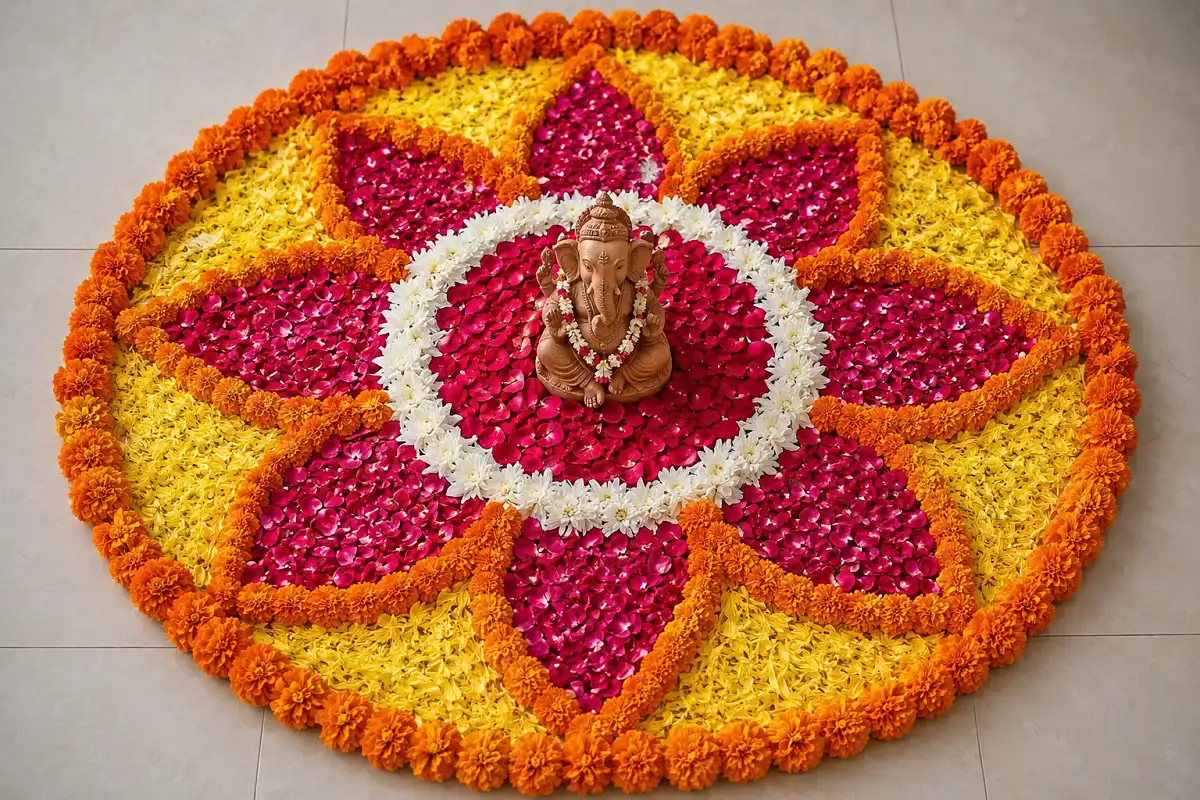
Yes, flowers make some of the most vibrant rangoli designs for Ganesh Chaturthi. Marigold, rose, and chrysanthemum petals create instant color and a natural fragrance that suits the puja space. Floral rangoli also stays eco-friendly.
Fresh flower rangoli, called pookalam in some regions, needs no fine drawing skill. You arrange petals inside marked sections. The result looks lush and full. Whole marigold heads work well for borders, and separated petals for filling.
Flowers suit devotees who want a quick, clean, and biodegradable option. They sweep up without staining the floor. Pair a lotus outline made of petals with a small clay Ganesha, and the setup feels complete. A lotus made from petals also links well with these festive lotus pattern ideas, which pair naturally with a Ganesha centerpiece.
Flower rangoli designs for Ganesh Chaturthi also cut down on cleanup and waste. You compost the petals afterward, so nothing harms the drain or the soil. Many families now choose this eco-friendly route for the whole ten days. It respects both the deity and the environment, which fits the spirit of the festival.
What Are Common Ganesh Chaturthi Rangoli Mistakes?
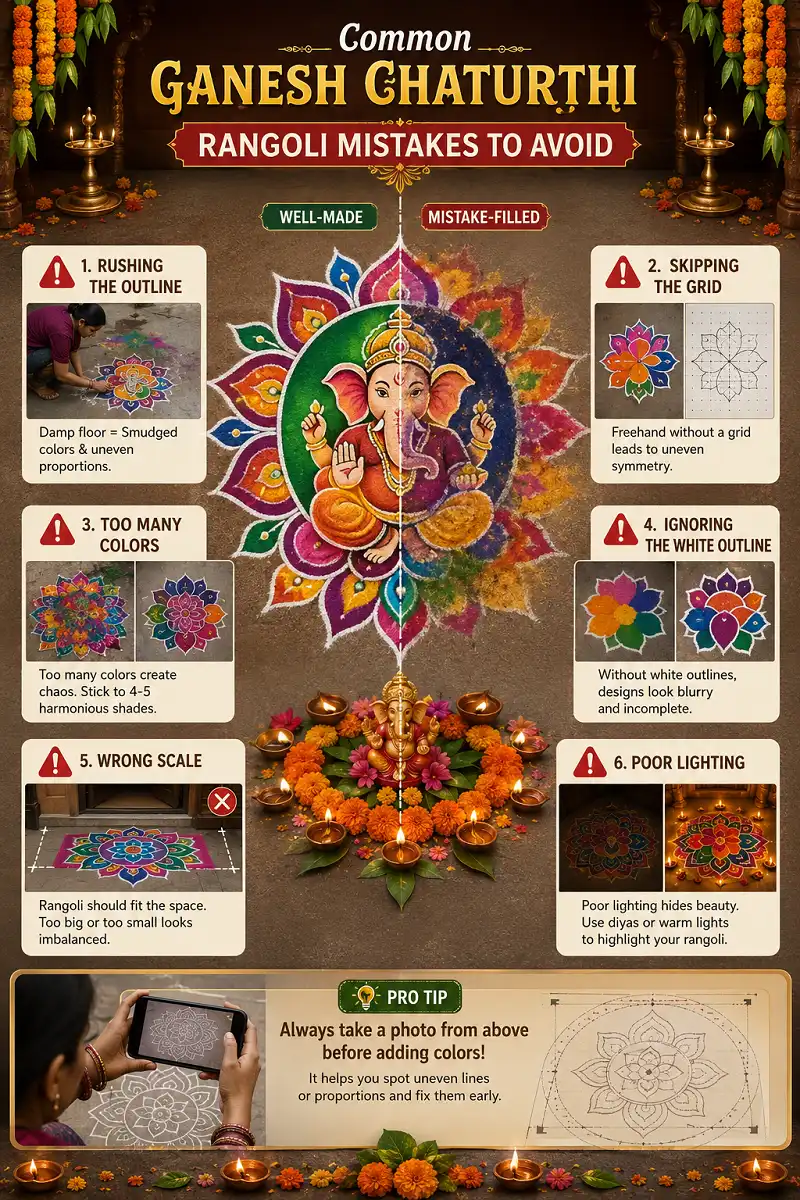
The most common mistake is rushing the outline before the floor is dry or the sketch is correct. A weak base ruins the color layer. Fixing proportions early saves the whole design. Most failed rangoli designs for Ganesh Chaturthi trace back to this single rushed step. Watch for these frequent errors:
- Skipping the grid. Freehand symmetry is hard. Dots keep both halves even.
- Overloading colors. Too many shades muddy the look. Stick to four or five.
- Ignoring the outline. White borders are not optional. They define every shape.
- Wrong scale. Measure your space first. A design that spills past the threshold looks unplanned.
- Poor lighting. Place diyas or a lamp nearby. Rangoli fades in dim corners.
Stepping back after the sketch stage helps too — a photo on your phone reveals crooked lines that the eye misses up close. This one check saves many patterns.
Tips to Make Your Rangoli Designs for Ganesh Chaturthi Last
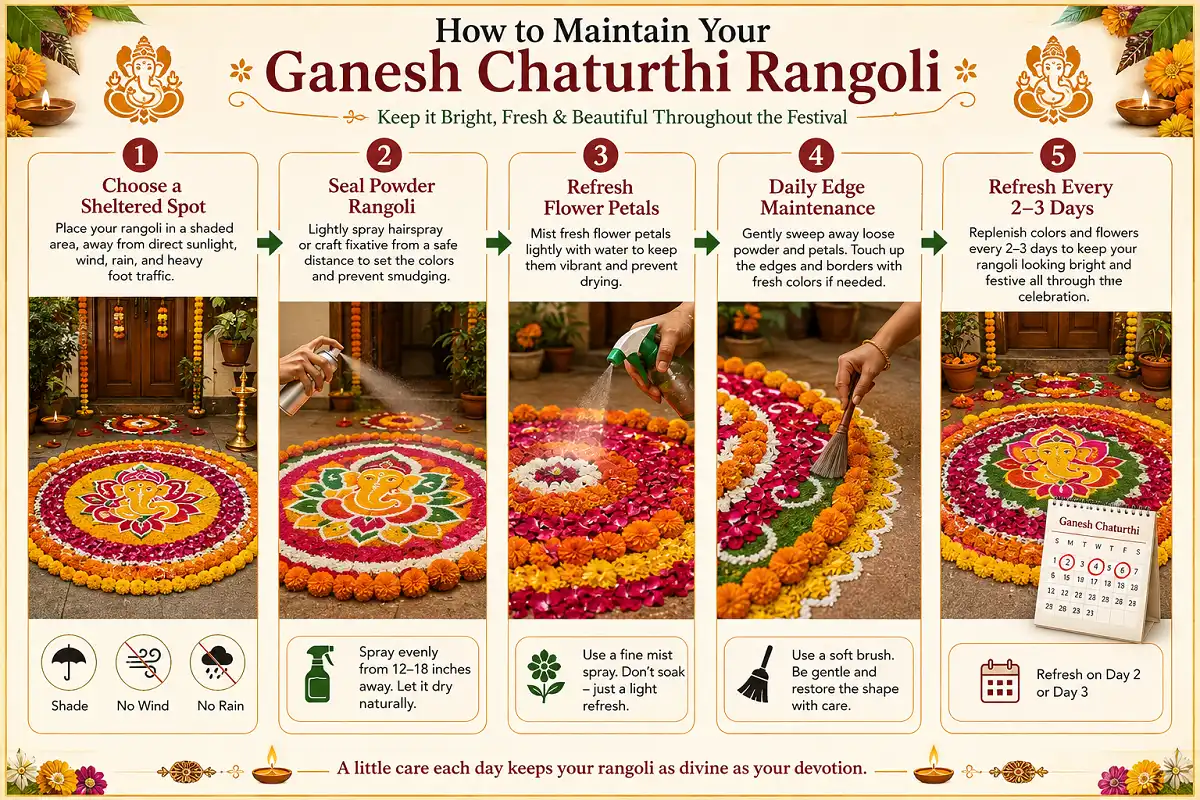
Sealed, sheltered rangoli lasts longest. Keep the design out of direct wind and foot traffic. A light mist of water on flower petals slows wilting through the day. A few practices extend the life of your work:
- Work on a shaded threshold, away from rain and harsh sun.
- For powder rangoli, a thin spray of hairspray or fixative locks the grains.
- Refresh flower petals with a damp cloth or a fine water spray.
- Sweep loose edges each morning and touch up the border.
During the ten-day festival, refreshing the design every two or three days keeps the entrance looking fresh without a full redo. Beautiful rangoli designs for Ganesh Chaturthi deserve this small daily care.
Where Can You Find More Ganesh Chaturthi Rangoli Ideas?
Pinterest holds the largest collection of festival rangoli references. Browse boards for layouts, color pairings, and motif combinations before you start. Save a few favorites and adapt them to your own space and skill.
Rangoli designs for Ganesh Chaturthi range from a five-minute modak to a grand pandal centerpiece. Pick the scale that fits your home and time. The devotion behind the pattern matters more than perfect lines.
Beautiful Rangoli Designs for Ganesh Chaturthi
Rangoli designs for Ganesh Chaturthi can turn a plain entrance into a beautiful and devotional welcome for Lord Ganesha, or Bappa. You don’t need an overly complicated pattern to create something meaningful. Start with a simple Ganesh motif, outline it with a clean white border, and gradually add traditional shapes, flowers, dots, and decorative details around it.
Warm colors such as red, orange, yellow, pink, and green can give the design a festive appearance while keeping the overall look balanced.
If you are creating rangoli throughout the ten-day celebration, choose patterns that are easy to refresh and maintain each day.
Most importantly, enjoy the creative process and let your rangoli become a colorful expression of devotion, celebration, and the joy of welcoming Bappa into your home.
FAQs
Which rangoli is best for Ganesh Chaturthi?
A central Ganesha face surrounded by lotus petals and a modak cluster is the most fitting choice. It reads clearly and honors the deity directly.
What is the easiest Ganesh Chaturthi rangoli for beginners?
A single modak or a flower-petal lotus is easiest. Both use simple shapes and forgive small errors, so first-timers finish with a clean result.
Can I make Ganesh rangoli without colors?
Yes. Use white rice flour for a traditional look, or arrange fresh flower petals. Both create beautiful, eco-friendly rangoli designs for Ganesh Chaturthi without any color powder.
How long does Ganesh Chaturthi last?
The festival runs for ten days. It begins on Ganesh Chaturthi and ends on Anant Chaturdashi with the visarjan, the immersion of the idol.