Simple Laxmi Rangoli Designs: Prosperity and Festivity
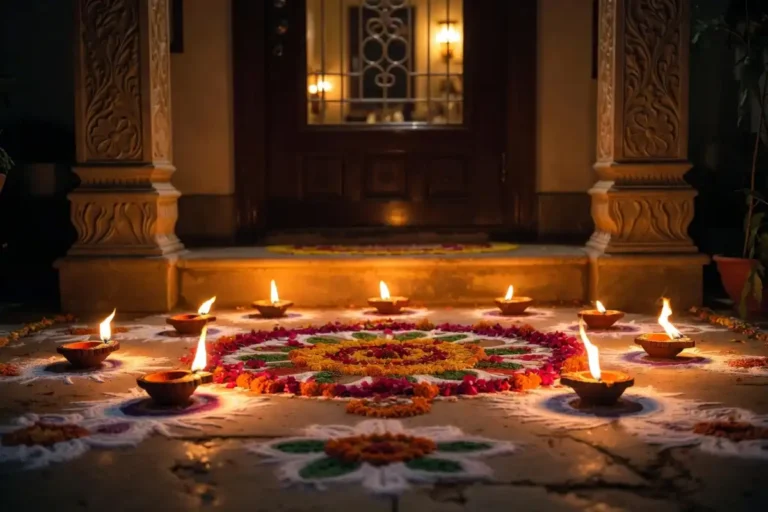
Indian festivities would not be the same without the elaborate and vibrant art form of Rangoli, especially during Diwali, the festival of lights. Simple Laxmi rangoli designs are particularly well-liked among the various varieties of Rangoli designs due to their association with the goddess of wealth and prosperity, Laxmi.
In order to bring wealth, joy, and good fortune into households, these designs are usually made around Diwali and other important Hindu holidays.
Laxmi Rangoli
Rangoli, a decorative art form created on the floor with colored powders, flowers, and other materials, is also referred to as Kolam or Alpana in different parts of India.
In particular, simple Laxmi rangoli designs are made to call upon the blessings of Goddess Laxmi, who is thought to bestow money, prosperity, and good fortune on households.
In order to invite the goddess and create a more fortunate atmosphere, the designs are usually painted at the entrance to houses or in places of worship.
Laxmi Rangoli Designs’ Importance
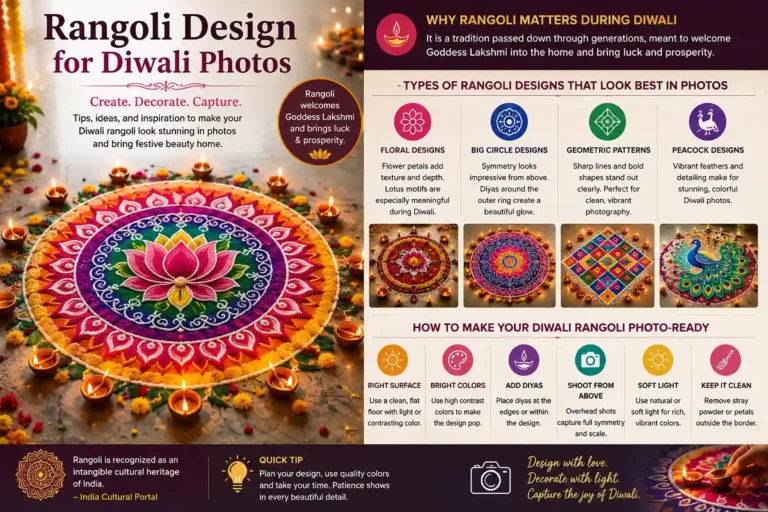
Simple Laxmi rangoli designs are more than just ornamental patterns. They are an essential component of India’s cultural fabric and have profound symbolic connotations. Coins, lotus blossoms, and the footprints of Goddess Laxmi are among the symbols of riches and success that are frequently incorporated into the patterns. These components are thought to bring prosperity, good fortune, and pleasant energy into the house.
Supplies Needed for Designs of Laxmi Rangoli
It’s crucial to collect the supplies you’ll need to make your simple Laxmi rangoli designs before beginning any designs. A list of some of the essential supplies needed to make Rangoli is provided below:
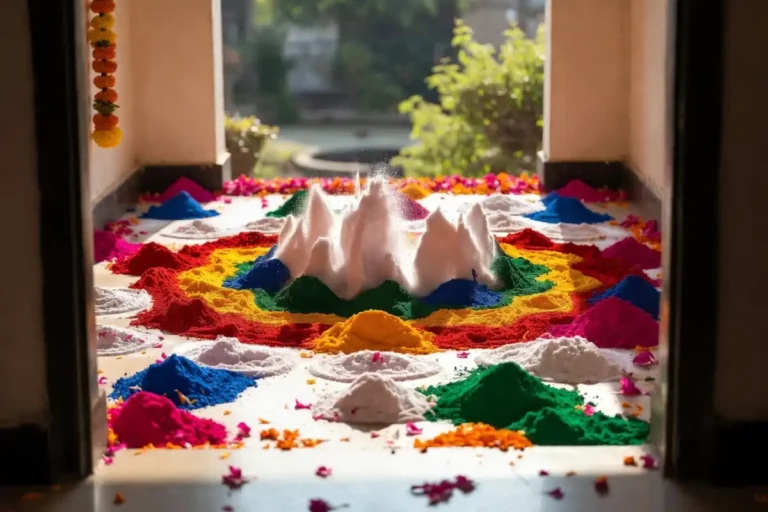
- Colored powders — The main ingredients for Rangoli creations, which come in a variety of hues.
- White powder or chalk — Used to add fine details or to outline the Rangoli.
- Flower petals — For more organic, traditional Rangoli, fresh or dried flower petals are frequently used to make designs.
- Rice flour — Because it is environmentally friendly and draws ants, which are seen as auspicious, rice flour is used to create designs in many places.
A Comprehensive Guide to Making an Easy Laxmi Rangoli
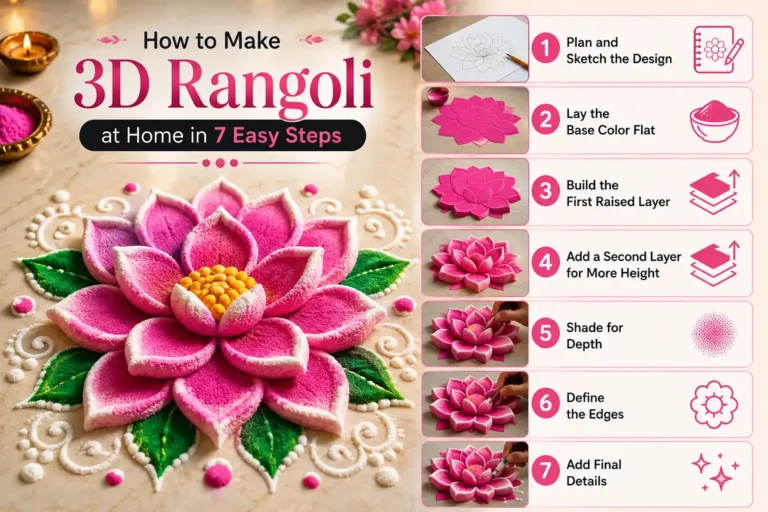
It is not difficult to create a stunning simple Laxmi rangoli design. Here is a straightforward, step-by-step tutorial to assist you in making your own design:
Select a Design
Choose a design that is appropriate for your level of expertise first. Choose a lotus flower design or basic geometric designs if you’re just starting off.
Clean the Area
Make sure the space is dry and clean before beginning to draw the Rangoli. Make sure the floor is smooth by wiping it down with a towel or broom.
Outline the Design
Outline the pattern lightly with white chalk or powder. Put the stencil on the ground and trace the design if you’re using one.
Easy Laxmi Rangoli Patterns for Novices
Simplicity is essential for people who are new to Rangoli art. You can attempt these simple Laxmi rangoli designs:
Laxmi Footprint Rangoli, Basic
The footsteps of Goddess Laxmi are designed in a straightforward but significant way. Chalk powder or rice flour are usually used for this. To finish the simple Laxmi rangoli design, you can add tiny dots or a few floral flourishes.
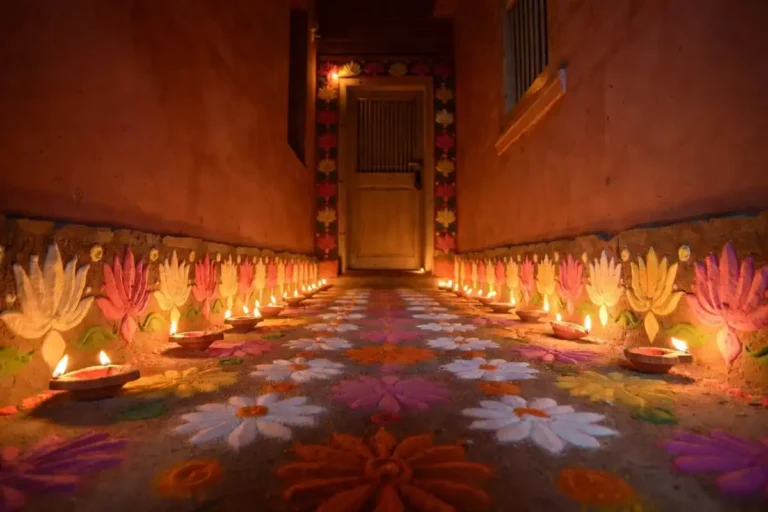
Rangoli of Lotus Flowers
The lotus represents prosperity and cleanliness. Sketch a basic lotus blossom with outward-facing petals. To represent the sun, fill the center with orange or yellow hues.
Simple Laxmi Rangoli Designs for Diwali
The lotus, Laxmi’s footprints, and even pictures of the goddess herself are frequently included in Rangoli decorations for Diwali. Here are a few simple Laxmi rangoli designs:
Designs for Floral Laxmi Rangoli
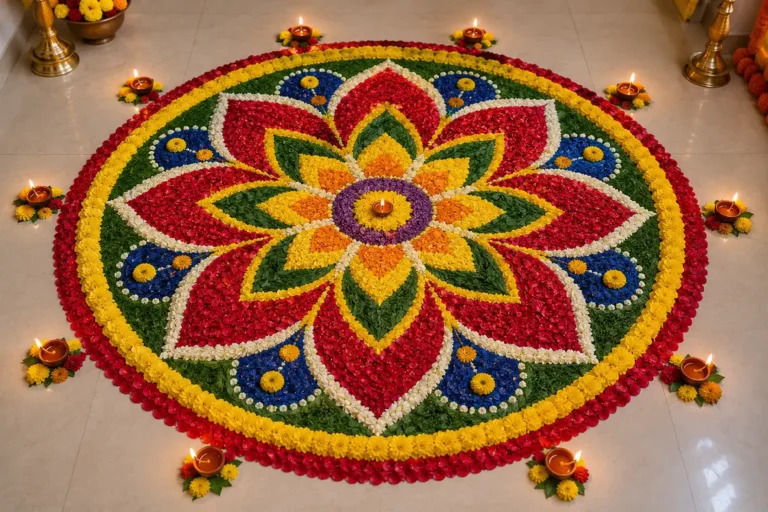
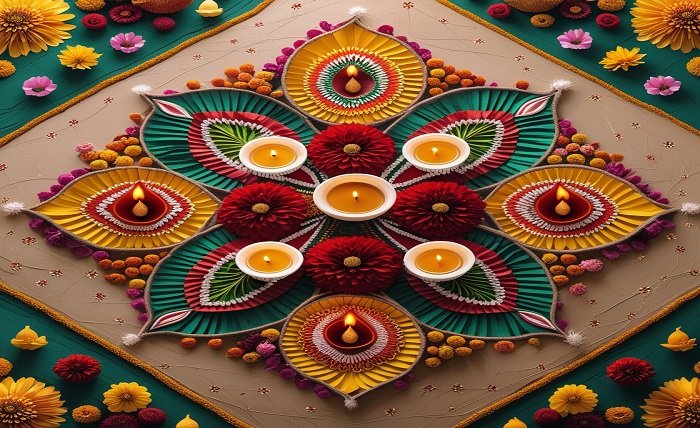
Because they symbolize the beauty of nature and are a customary method of calling upon the goddess’ favors, floral simple Laxmi rangoli designs are especially well-liked. Here are some suggestions for Laxmi Rangolis using flowers:
Customary Designs for Laxmi Rangoli
Deeply culturally significant components are frequently included in traditional Laxmi Rangoli designs, including:
Colors Believed to Draw Prosperity
Conclusion
Making simple Laxmi rangoli designs is a wonderful way to engage with the festival’s cultural and spiritual importance in addition to being a great way to adorn your home. There are many ways to make beautiful designs that will call forth the blessings of Goddess Laxmi and give your house a festive feel, regardless of your level of experience as a Rangoli artist.
FAQ
Q. How can a basic Laxmi Rangoli be prepared at home?
Select a straightforward pattern, such as a lotus or geometric forms, to create a basic Laxmi Rangoli. Use white chalk to outline it, then fill it in with colored powders and embellish the pattern with tiny embellishments called Diyas.
Q. Can I decorate Laxmi Rangoli with flowers?
Indeed, flowers like jasmine, marigold, and rose petals are frequently utilized to accentuate Laxmi Rangoli designs. They give the Rangoli a more organic and conventional feel.
Q. In terms of Laxmi Rangoli, what colors work best?
Since they are thought to draw prosperity and good energy, bright hues like gold, red, yellow, orange, and green are frequently utilized in Laxmi Rangoli designs.
Q. How can a basic Laxmi Rangoli be prepared at home?
Select a straightforward pattern, such as a lotus or geometric forms, to create a basic Laxmi Rangoli. Use white chalk to outline it, then fill it in with colored powders and embellish the pattern with tiny diyas.
Q. Can I decorate Laxmi Rangoli with flowers?
Yes, flowers like jasmine, marigold, and rose petals are frequently used to accentuate Laxmi Rangoli designs. They give the rangoli a more organic and traditional feel.
Q. What colors work best for Laxmi Rangoli?
Bright hues like gold, red, yellow, orange, and green are commonly used in Laxmi Rangoli designs, as they’re believed to draw prosperity and positive energy.
🪷 Ready to explore more festive patterns?
Explore Easy Lotus Rangoli Designs for Your Festive Home