Simple Holi Rangoli Designs for a Colorful Festival
Holi is the festival of colors, and nothing welcomes its spirit better than a bright design at your doorstep. A simple holi rangoli does not need fancy tools or years of practice. With a few basic shapes, some powdered colors, and a little patience, anyone can create a simple holi rangoli that feels festive and personal. This guide walks through easy patterns, helpful tips, and ideas that work well whether you are decorating for family or for guests.
Why Rangoli Matters During Holi
Rangoli has long been a part of Indian festivals, and Holi is no exception. The colors used in a simple holi rangoli often mirror the spirit of the festival itself, since Holi is built around throwing colored powder and celebrating the arrival of spring.
Drawing a simple holi rangoli before the celebrations begin is also seen as a way to welcome guests and mark the home as ready for the day. Unlike some other festival rangoli styles that focus on intricate detailing, a simple holi rangoli design leans into bold colors and playful shapes, which suits the lively mood of Holi.
Materials You Will Need
Before starting your simple holi rangoli, gather a few basic supplies. Most of these are easy to find at home or at a local store.
Rangoli colors (gulal or rangoli powder) in red, yellow, green, blue, and pink
A small bowl or plate for mixing colors if needed
A pencil or chalk for outlining (optional for beginners)
A flat, clean surface like a doorstep, courtyard, or balcony floor
Cotton or a small funnel for controlled color application
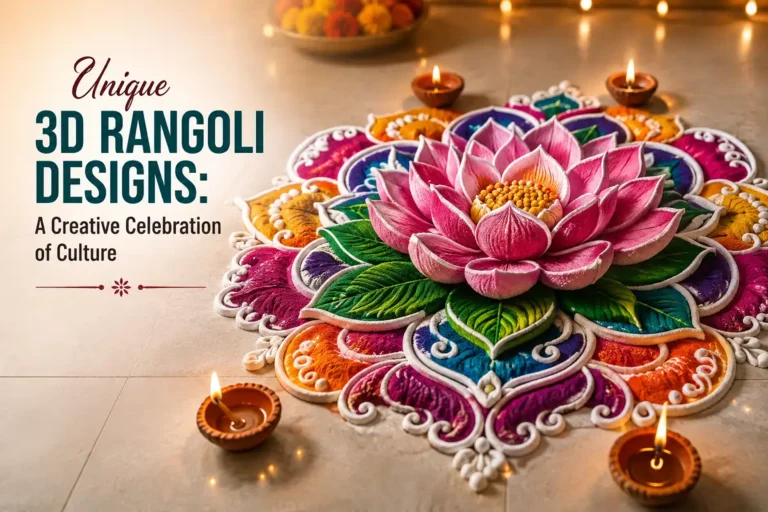
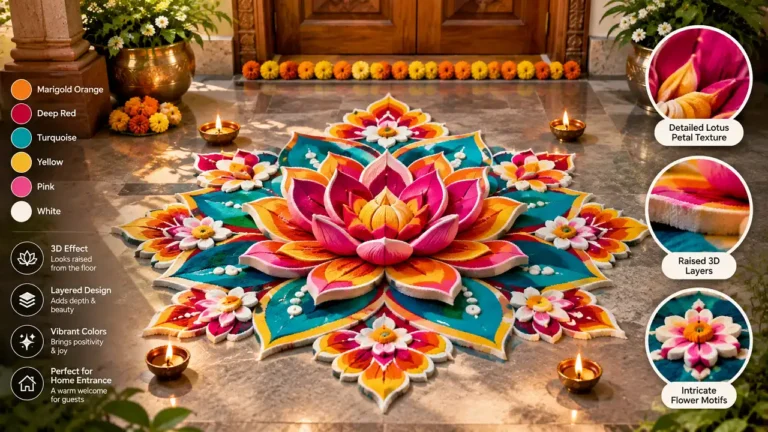
If you want a design with more dimension, you can look at small 3D rangoli ideas that use layered powder or small props to add depth without complicating the process.
Easy Patterns to Try
Circular Flower Pattern
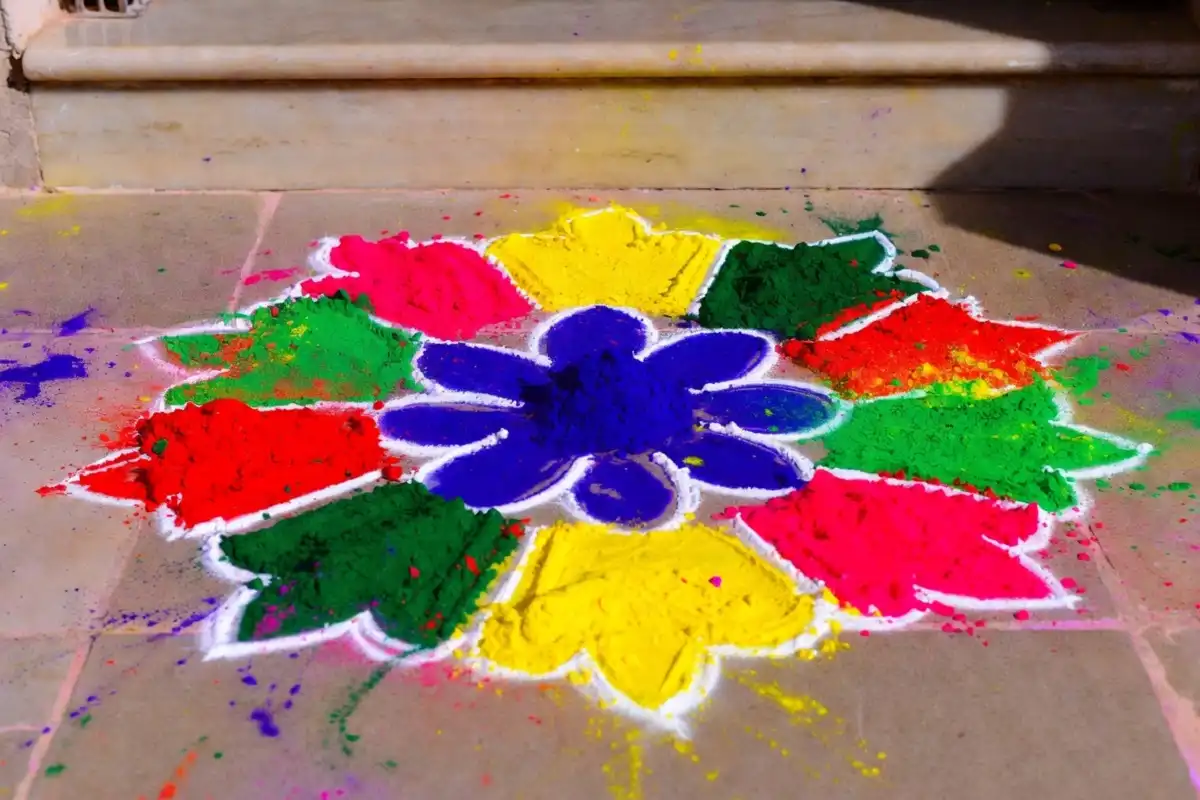
A circular design is one of the easiest starting points for a simple holi rangoli. Begin by drawing a small circle in the center, then add petal shapes around it using a contrasting color. Fill each petal with a different shade to capture the multicolor spirit of Holi.
This pattern works well near entryways since it draws the eye without overwhelming the space. It also takes less than 20 minutes once you get comfortable with the petal spacing.
Dots and Diya Design
For those who prefer a quicker option, a design built around dots and small diya shapes makes a good simple holi rangoli. Place dots in a grid pattern, then connect them loosely with curved lines. Add a small diya shape in the center filled with yellow or orange powder.
This style is forgiving for beginners because small mistakes blend into the overall pattern rather than standing out.
Geometric Color Blocks
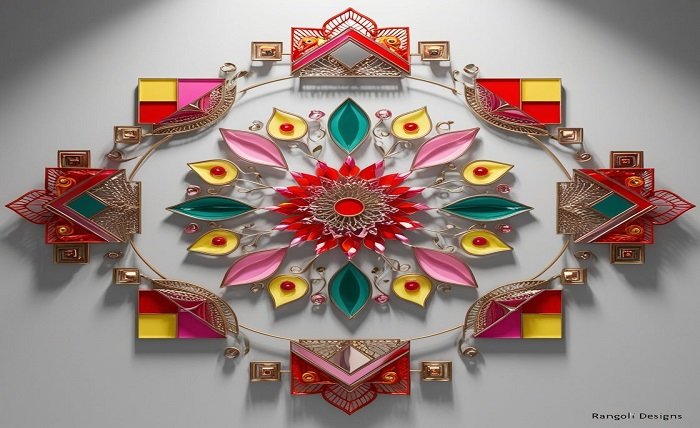
If you enjoy clean lines, try a geometric block pattern for your simple holi rangoli. Divide a square or rectangle into smaller sections using a ruler or straight edge, then fill each block with a different color. This approach is fast, looks modern, and avoids the need for freehand curves.
For those who enjoy this cleaner aesthetic, browsing modern simple rangoli designs can offer further inspiration on how to balance color and structure.
Peacock Feather Motif
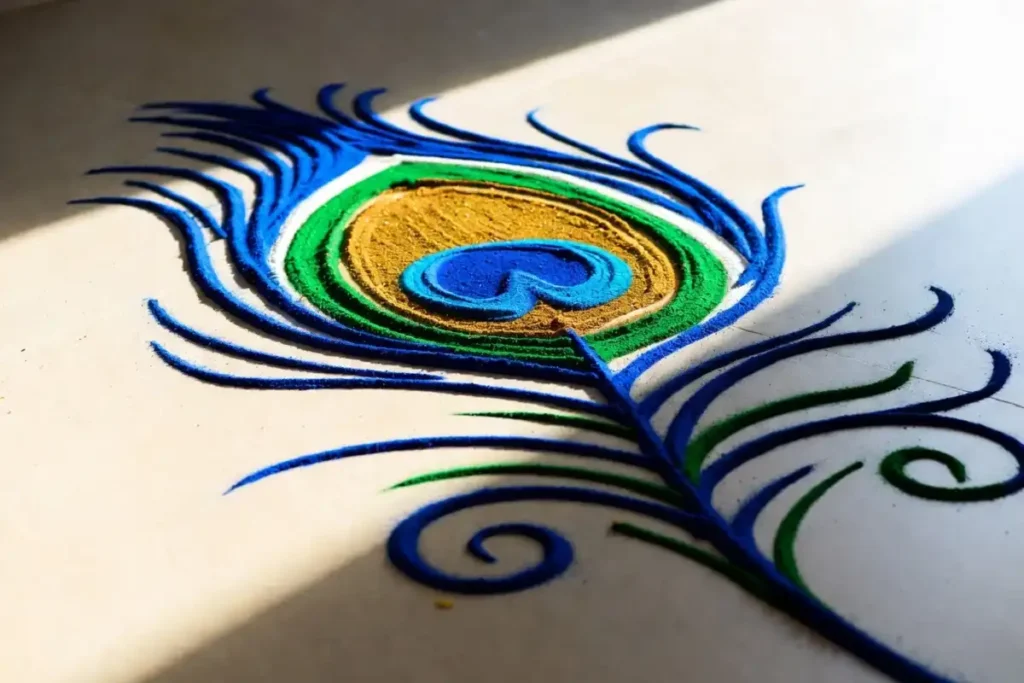
Peacock feathers are a popular theme for a simple holi rangoli because their natural colors already resemble festival shades. Sketch a simple curved feather outline, then fill it with layered greens, blues, and a touch of gold or yellow at the tip.
This design takes a bit more time but remains achievable for someone with basic drawing confidence.
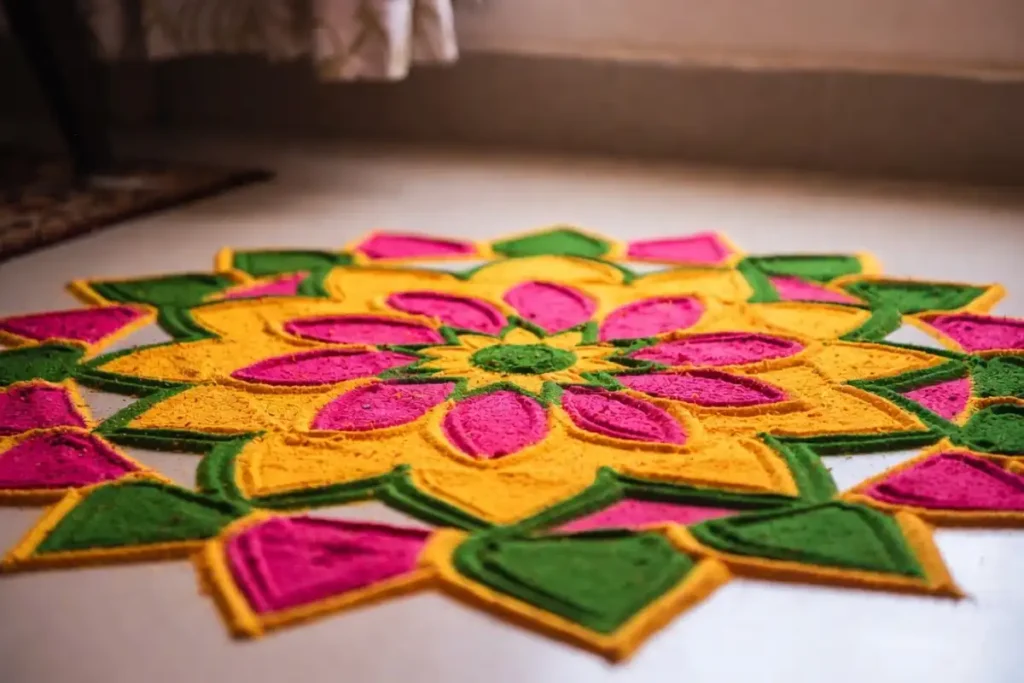
If you enjoy flower-based looks, these simple petal rangoli designs pair beautifully with light shading to add a gentle 3D touch.
Tips for a Clean Finish
A few small habits can make a noticeable difference in how your simple holi rangoli turns out.
Work from the center outward to keep proportions even
Use a funnel or rolled paper cone for fine lines
Let one color settle before adding an adjacent shade to avoid mixing
Keep a damp cloth nearby to wipe away any stray powder
Choose a flat, dry surface, since uneven ground can distort the pattern
If you are new to rangoli in general, starting with a minimal rangoli design before attempting a full Holi pattern can help build confidence with color control and spacing.
Choosing Colors That Reflect Holi
Holi is associated with specific colors that carry meaning, and these same shades work beautifully in a simple holi rangoli. Red often represents love and fertility, yellow stands for turmeric and prosperity, green reflects new beginnings and spring, and blue is linked to Krishna, a central figure in Holi traditions.
Four Shades, Four Associations
A simple palette can keep your rangoli bright, balanced, and connected to the spirit of the festival.
You do not need to use every color in one design. Picking three or four shades that complement each other usually creates a more balanced look than using the full spectrum at once.
You do not need to use every color in one design. Picking three or four shades that complement each other usually creates a more balanced look than using the full spectrum at once.
According to the Smithsonian’s overview of Holi , the festival’s colors are tied to seasonal change and community celebration, which is part of why rangoli designs during this time tend to be bright and energetic rather than muted.
Rangoli for Small Spaces
Not everyone has a large courtyard, and that is fine. A simple holi rangoli can still work well on apartment balconies or small entryways. Stick to a single focal shape, like a flower or a small sun motif, rather than attempting a wide, sprawling pattern.
A compact design also dries faster and uses less powder, which is helpful if you are short on time before guests arrive.
Involving Children in the Process
A simple holi rangoli is a great activity for families. Children often enjoy filling in color blocks once an adult has sketched the outline. Simple shapes like stars, hearts, or basic flowers give kids room to be creative without the pressure of precision.
This also turns rangoli making into a shared tradition rather than a solo task, which fits well with the social nature of Holi celebrations.
Maintaining Your Rangoli Through the Day
Holi celebrations often involve water and additional color play, which can affect an outdoor design. If you want your simple holi rangoli to last, consider placing it somewhere slightly protected, like under a covered porch, or plan to refresh it later in the day.
Some people choose to make a smaller pattern specifically for water-safe areas and save the larger design for indoor spaces where it will stay intact longer. If you are looking for more design inspiration beyond Holi, this collection of Indian symbol rangoli designs covers patterns suited to other occasions as well.
FAQs
Helpful answers for creating a simple, colorful Holi rangoli.
What is the easiest simple Holi rangoli for beginners?
A circular flower pattern, simple dot design, or geometric color-block pattern is a good starting point. These designs use basic shapes and allow you to focus on color placement rather than intricate detailing.
How many colors should I use in a Holi rangoli?
Three or four complementary shades are usually enough for a balanced design. Red, yellow, green, and blue can create a bright Holi-inspired palette without making the pattern feel overcrowded.
Can children help make a simple Holi rangoli?
Yes. Children can safely take part by filling in larger color blocks after an adult sketches the outline. Simple stars, hearts, and flowers give them room to experiment without requiring precise lines.
How can I keep a Holi rangoli clean?
Work on a flat, dry surface and let each color settle before adding the next shade. A damp cloth can help remove stray powder, while a funnel or rolled paper cone can give you better control over fine lines.
Can I make a simple Holi rangoli in a small apartment?
Yes. A compact flower, sun motif, or other single focal shape can work well on a balcony or small entryway. Smaller designs also use less powder and can be completed more quickly.
Conclusion
A simple holi rangoli does not require elaborate tools or advanced skills to look beautiful. With a few colors, a flat surface, and one of the patterns covered here, anyone can create a simple holi rangoli that fits the festive mood of the day.
Whether you choose a quick dot pattern or take more time with a peacock motif, the process itself is part of the celebration. Start small, experiment with color combinations, and let your simple holi rangoli grow more confident with each attempt.