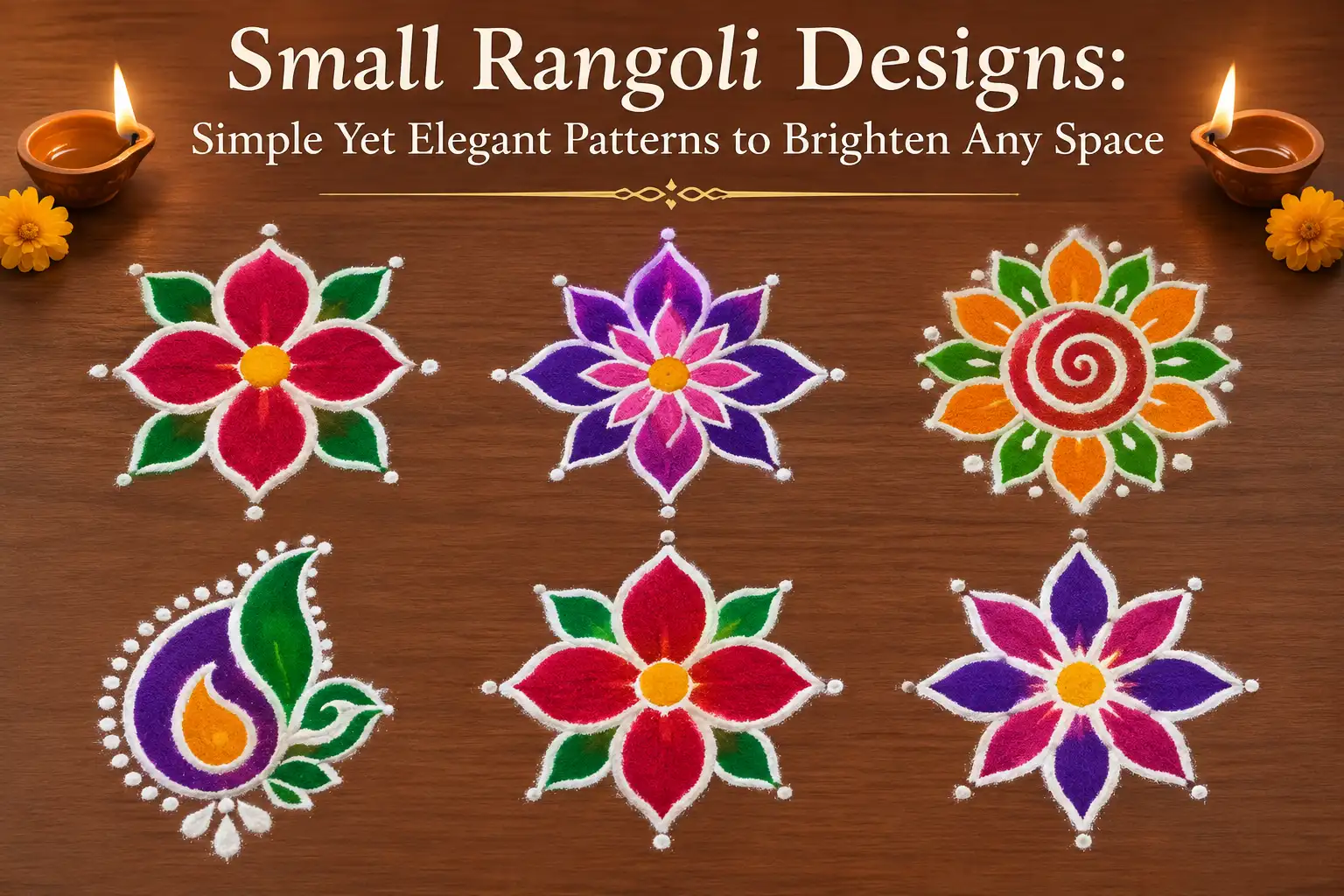
Small Rangoli Designs: Simple Yet Elegant Patterns to Brighten Any Space
Rangoli is an old Indian art form that is customarily made at home entrances to attract positive energy, prosperity, and good fortune. The technique entails utilising vivid colours to create complex patterns, frequently using rice, powders, or flower petals. Rangoli is particularly well-liked during holidays like Diwali, Pongal, and Onam, when it is used to welcome visitors and pay respect to the gods.
Although intricate, big Rangoli designs are breathtaking, small rangoli designs are becoming more and more popular. In addition to being quick to make, these smaller, simpler patterns add style to your house or place of business. Small Rangoli patterns are ideal for every event, regardless of your level of experience with the art or your desire for something simple yet elegant. They can have an equal impact to larger ones while taking up less room.
The beauty of small rangoli designs will be discussed in this blog post, along with the reasons they’re a fantastic option, detailed directions for creating them, and advice on honing your Rangoli techniques.
There are countless options for modest Rangoli designs, whether you’re celebrating an event or simply want to give your house a festive touch.
Rangoli’s Cultural Significance
With its origins firmly ingrained in Indian culture, Rangoli has long been a part of Indian customs. Aai, which implies mother or a god, and Rang, which suggests colour, are the Sanskrit terms from which the word Rangoli is shaped. Rangoli is thought to have been made to bring the gods into houses, and the vivid hues and designs were offered as a sacrifice to call forth prosperity, health, and benefits.
During festivals, Rangoli’s significance is most apparent. It is believed that Goddess Lakshmi, the deity of wealth, visits homes that are clean and beautifully decorated, therefore around Diwali, people make Rangolis in her honour. Small rangoli designs are utilised to highlight the celebrations and heighten the spiritual ambiance during holidays like Holi, Ganesh Chaturthi, and Makar Sankranti.
Small rangoli designs, which combine beauty, symmetry, and simplicity, have special significance during daily prayers and ceremonies. These designs are the ideal method to bring optimism into any setting because they not only improve a space’s visual attractiveness but also convey a feeling of cosiness and happiness.
They are a great option for both homes and offices because of their basic design, which makes them suitable for smaller settings.
Reasons for the Popularity of Small Rangoli Designs
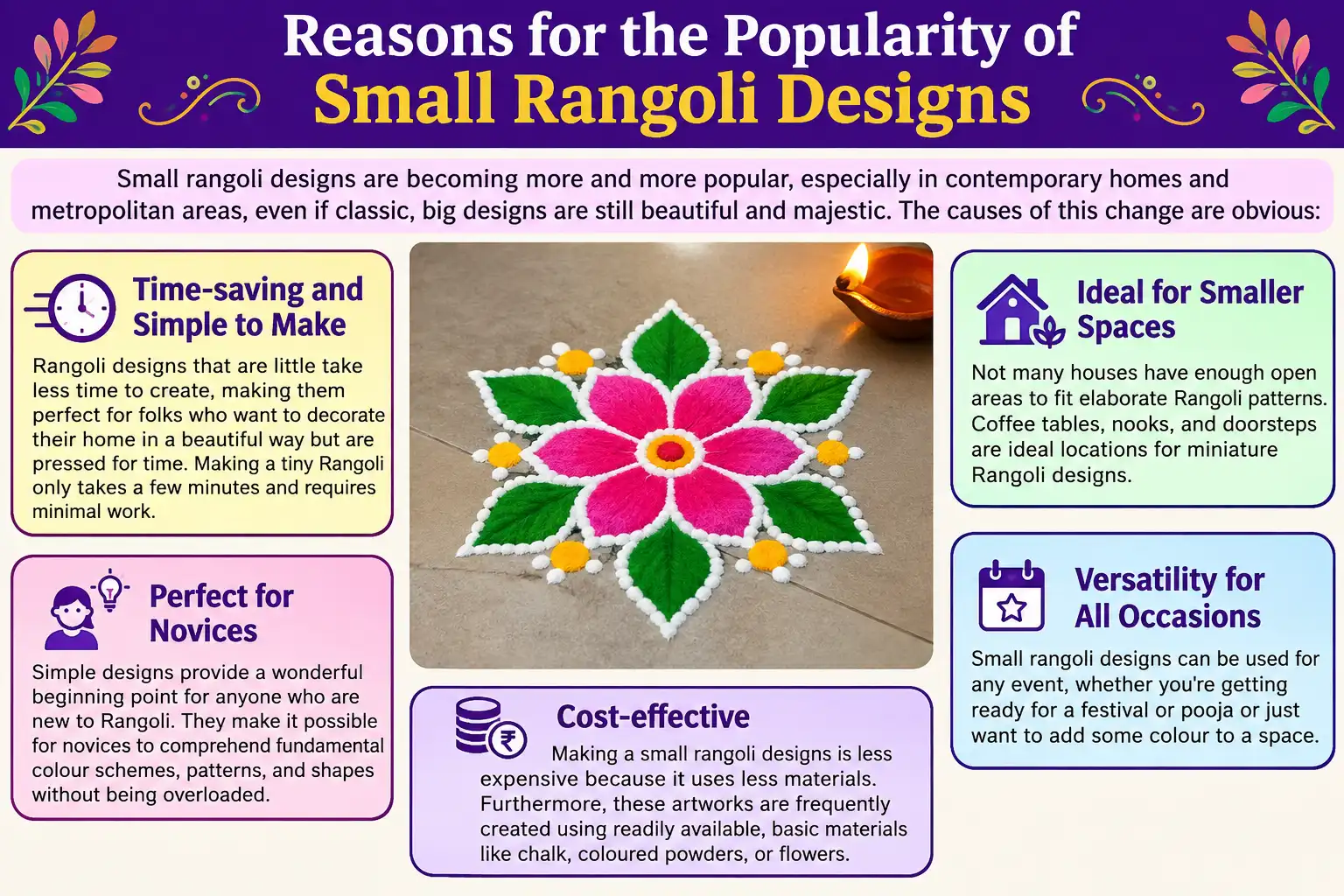
Small rangoli designs are becoming more and more popular, especially in contemporary homes and metropolitan areas, even if classic, big designs are still beautiful and majestic. The causes of this change are obvious:
Essential Supplies for Simple Rangoli Designs
There aren’t many specialised items needed to make small rangoli designs. The majority of Rangoli designs may be created using readily available, commonplace things. What you’ll need to make lovely little Rangoli designs is as follows:
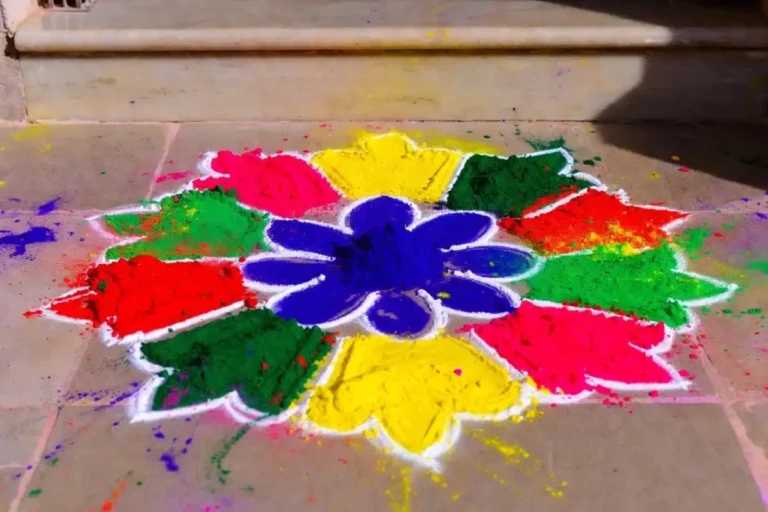
- Rangoli powder — This is the most widely used ingredient while creating Rangoli. You can easily buy pre-made Rangoli powders from any store, and they come in a variety of colours. If you want a more environmentally friendly solution, you can also use sawdust or coloured rice flour.
- White powder or chalk — Used to outline your design and make sure its edges are distinct. When filling in the colours, chalk or white powder can also be used as a guide.
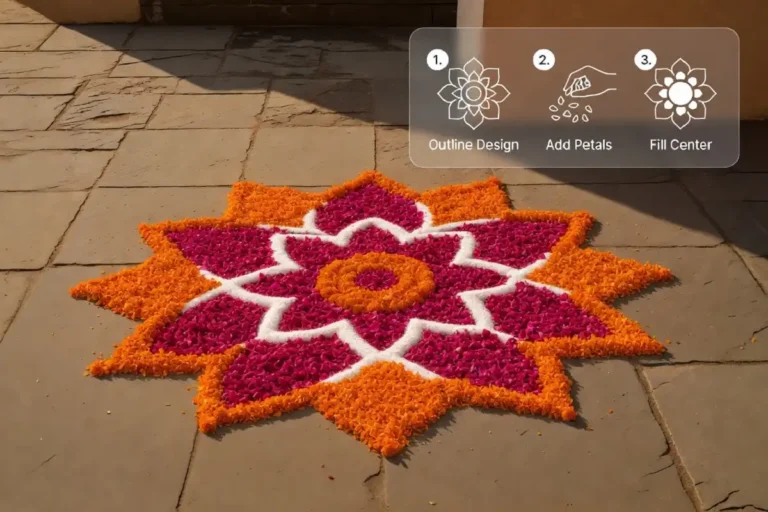
- Flower petals — An attractive and environmentally responsible substitute for Rangoli powder are fresh flower petals. They are ideal for special occasions since they give the design texture and aroma.
- Stencils — Rangoli stencils can be quite useful for novices or people who like accuracy. They can be filled with coloured powder and come in a variety of shapes, such as geometric designs, flowers, or stars.
- Rangoli brushes or trays — For finer details and accurate colour filling, a tiny brush might be useful. For dispersing the powder, some people also utilise flat trays.
- Additional decorative materials — You can embellish your Rangoli artwork with tiny beads, stones, or glitter to add even more texture and beauty.
Popular Designs for Small Rangolis to Try
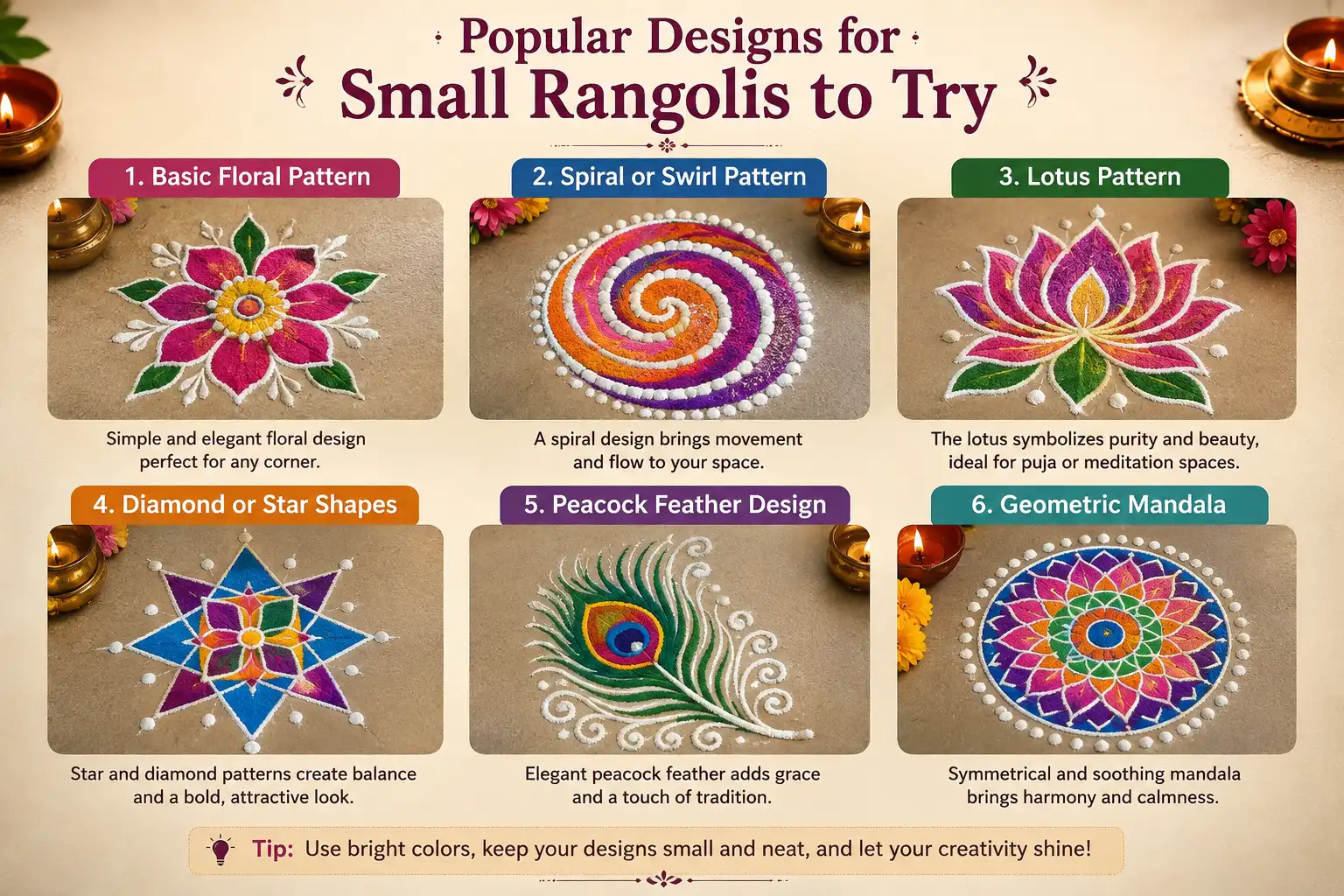
Let’s look at some of the most well-liked small rangoli designs that you can try now that you know what supplies to utilise. These patterns are simple to build and look amazing anywhere you decide to put them.
Basic Floral Pattern
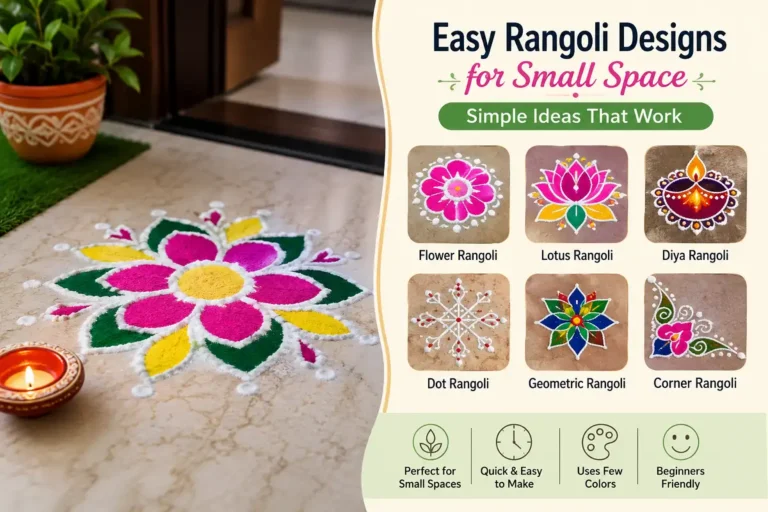
A traditional floral Rangoli pattern is understated yet sophisticated. Draw a tiny circle in the middle first, then surround it with petals. Depending on your taste, the design can be either free-form or symmetrical. Use a variety of hues for the petals to provide a striking and colourful impression. This style is ideal for small nooks and crannies in the house.
Spiral or Swirl Pattern
For a little Rangoli, a swirl or spiral makes an excellent geometric design. Draw a tiny spiral in the middle of your area to begin, then progressively enlarge it outward. To draw attention to the pattern, use contrasting colours to fill in the spaces between the spiral. There is a sense of movement and flow in this design.
The Lotus Pattern
In Indian tradition, the lotus represents beauty and purity. Drawing a central circle to symbolise the centre of the flower is the first step. Next, sketch petals all around the circle. For a gentle and tranquil appearance, the lotus can be filled with pink, crimson, or purple hues. This pattern is perfect for meditation areas or puja celebrations.
Diamond or Star Shapes
For a symmetrical, well-balanced design, a star-shaped Rangoli is ideal. You can sketch a little star in the middle and encircle it with diamonds or other tiny stars. This style is perfect for creating patterns that are bold and visually appealing but require less effort to finish.
Design of Peacock Feathers
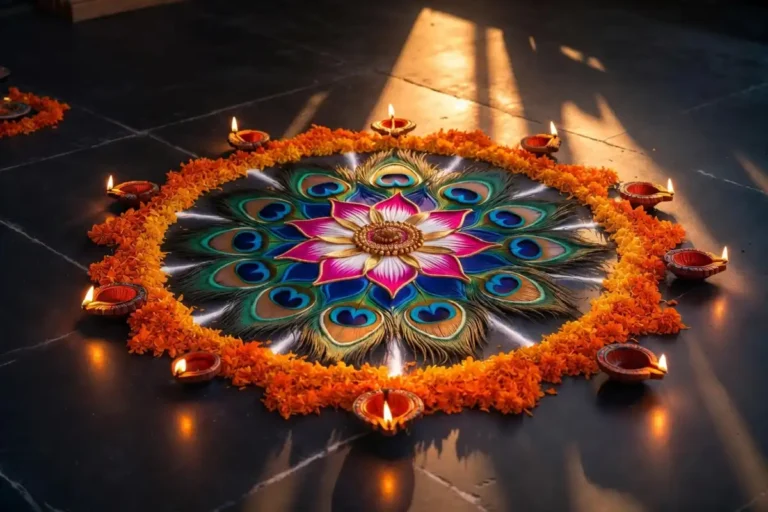
Peacocks are renowned for their grace and beauty, and a small rangoli design featuring peacock feathers is understated yet exquisite. Create a little feather form and fill it with gold, green, and blue hues. Small swirls or dots can be added to this design to improve its appearance and make it even more unique.
Mandala in Geometry
A mandala is a geometric, spiritual design that emphasises symmetry. You’ll draw a number of concentric circles and fill them with different colours to form a little rangoli plan. Because of their well-known relaxing properties, mandalas are perfect for serene settings like prayer rooms or meditation halls.
Easy and Elegant Small Rangoli Designs for Every Occasion
Adding vivid patterns that represent tradition, creativity, and happiness to your home is simple, elegant, and effective with small Rangoli designs. Small designs provide an elegant yet straightforward way to decorate a part of your house or create a Rangoli for a celebration or puja.
Their adaptability makes them ideal for every occasion because they can be set up anywhere, from tables to doorsteps. Anyone may build visually striking Rangolis that leave a lasting impact by utilising the proper supplies, rehearsing the procedures, and adding a few pointers.
FAQs
Q. For little Rangoli designs, what are the finest materials to use?
The ideal supplies include stencils for accuracy, flower petals for eco-friendly designs, chalk for outlining, and Rangoli powder. Additionally, you can use rice flour or coloured sand.
Q. How can I extend the lifespan of a little Rangoli design?
Use natural colours, such as rice flour, and keep a Rangoli in a dry, indoor location to extend its shelf life. Select longer-lasting, fresher flower petals if you’re using them.
Q. Can I use any surface to make small rangoli designs?
Small rangoli designs can be made on a variety of surfaces, such as walls, tables, and floors. To guarantee a decent outcome, simply make sure the surface is clean and level.
Q. Is it possible to reuse small rangoli designs?
Indeed, you may utilise stencils or templates again for different designs. If powder is being used, it can be gathered and kept for later use.
Q. Are little Rangoli patterns appropriate for every situation?
Of course! For everyday décor, festivals, poojas, weddings, and other festivities, little Rangoli designs are ideal. They are a fantastic option for every event because of their adaptability.
🌸 Ready to try more designs?
Explore Simple Rangoli Design Ideas for Diwali