The Art of 3D Rangoli: A Vibrant Tradition Reimagined
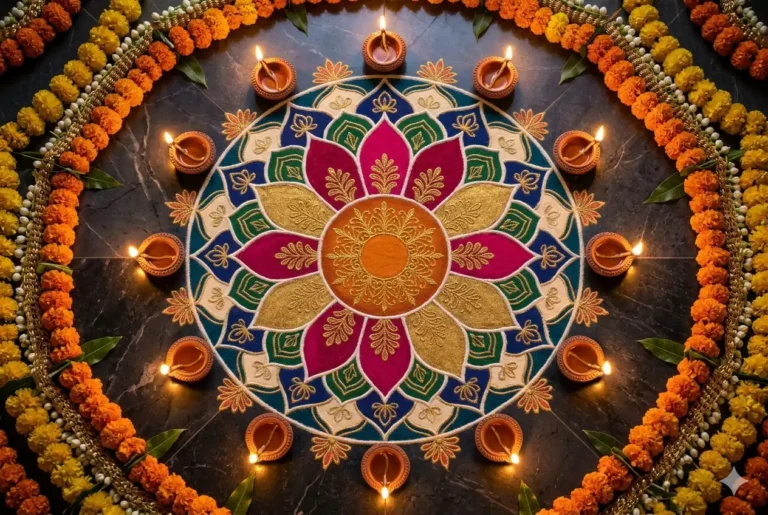
A classic Indian art form, rangoli has won over many people’s hearts with its vivid colors and detailed designs. Usually made for festivals, festivities, and other special occasions, it is a representation of welcome, wealth, and good fortune.
The advent of 3D rangoli has given this lovely art form a new depth, even if classic rangoli designs have been appreciated for generations. We will go into the intriguing realm of 3D rangoli in this blog article, covering its importance, methods, and much more.
3D Rangoli: What is it?
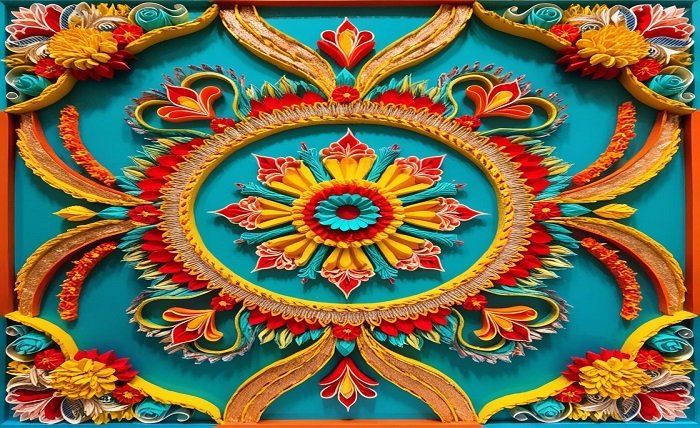
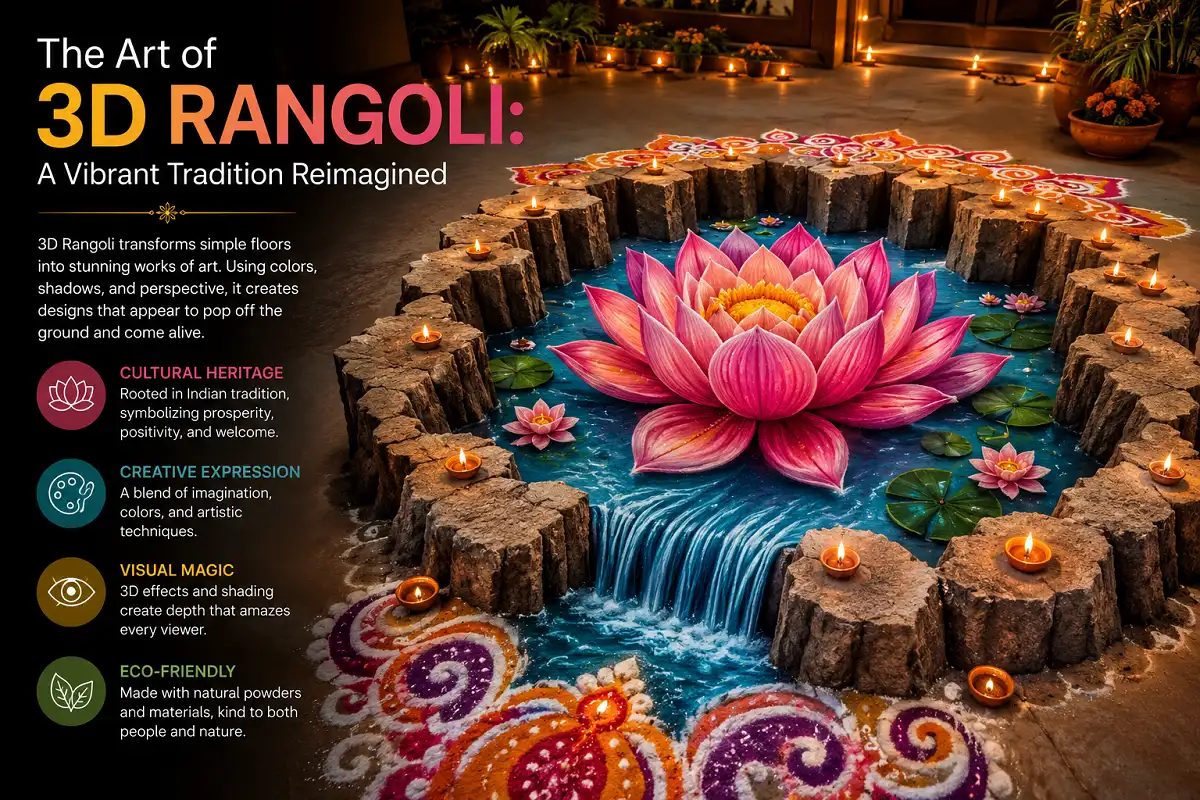
A contemporary take on the ancient art genre, 3D rangoli involves creating designs that appear three-dimensional by utilizing a variety of techniques.
In contrast to the flat patterns of traditional rangoli, 3D rangoli makes use of perspective, depth, and shadows to produce illusions that appear to rise out of the surface. By experimenting with different colors and shapes, this creative method enables artists to create works that are more dynamic and striking.
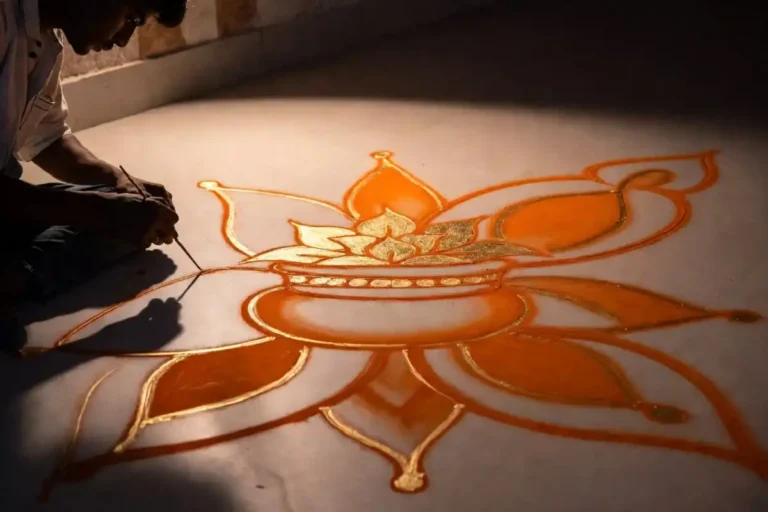
The key to creating a 3D rangoli is combining technique and creativity. To get the desired appearance, artists frequently utilize a range of materials, such as colored powders, flowers, and even clay. The possibilities for producing breathtaking rangoli designs have greatly increased because to technological improvements and the availability of a wider variety of materials.
The Importance of Rangoli in Indian Traditions
In Indian tradition, rangolis have a special position as a tool for celebration, self-expression, and spiritual bonding. Rangoli is traditionally made at a home’s door to greet guests and gods, particularly on holidays like Diwali, Pongal, and Onam. It’s common knowledge that the elaborate designs bestow wealth and good fortune upon households.
Cultural Background
Rangoli’s transformation into a three-dimensional shape preserves its fundamental principles while reflecting the shifting dynamics of culture. Because of the unique ways in which artists can express their creativity and connect with tradition, the art form will continue to hold relevance in today’s culture.
Methods for Making Three-D Rangoli
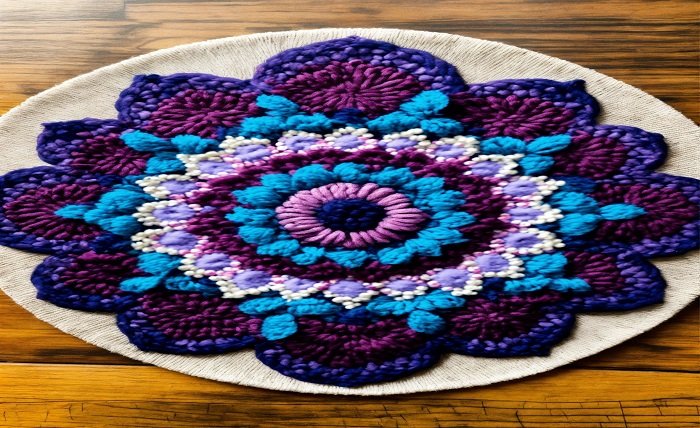
There are multiple strategies involved in creating 3D rangoli, which improve the designs’ visual impact. The following are some common techniques employed by artists to create the illusion of three dimensions:
-
Stacking
One of the most popular methods for creating 3D rangoli is layering. To add depth to their designs, artists apply several layers of colored powder or other materials. The design can give the impression that it is rising from the surface by adjusting the thickness of each layer, producing an amazing optical illusion.
-
Hueing and Combining
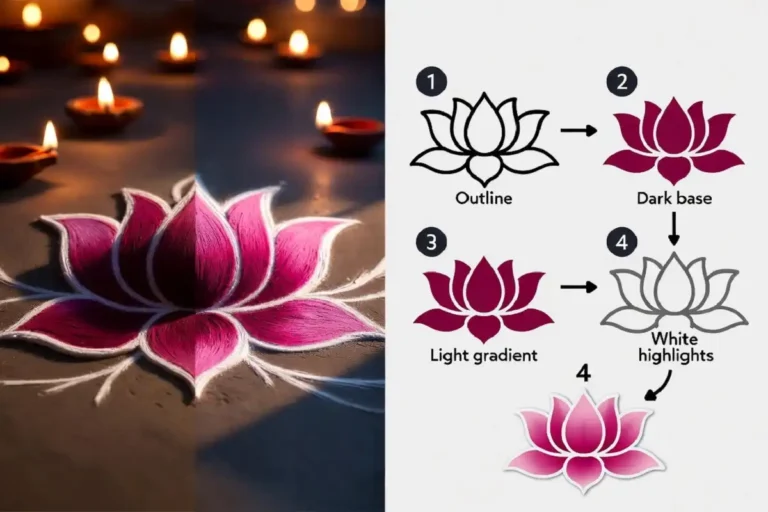
In order to give 3D rangoli dimension, shading is essential. To achieve a gradient effect, artists utilize lighter hues in the center and darker shades on the edges of their paintings. The design appears more lifelike and three-dimensional as a result of this mixing.
-
Utilizing Shadows
Rangoli’s 3D effect can be greatly improved by adding shadows. Artists can produce shadows that provide the impression of depth and dimension by carefully laying darker powders or by utilizing materials like charcoal or black sand.
-
Techniques of Perspective
Some artists use perspective tricks to provide the impression of depth and distance. This entails changing the scale and proportion of various design elements to provide the impression that certain portions are closer to others or farther away.
-
Including Objects
Three-dimensional items can be added by artists to their rangoli patterns for a more noticeable 3D impact. Small clay figurines, flowers, or even ornamental objects that fit well with the rangoli and improve its overall appeal could be included in this.
Components of 3D Rangoli
The components of 3D rangoli are essential to producing the intended results. A wide range of alternatives are available for artists to select from, depending on their preferences, availability, and the particular design they want to create. Here are a few materials that are often used:
Trendy 3D Rangoli Designs and Themes
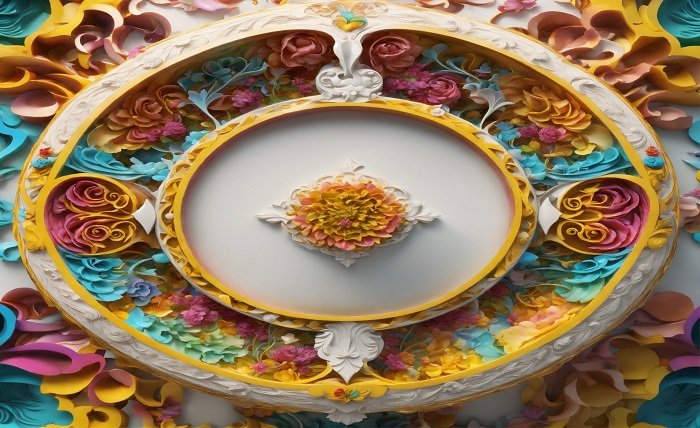
Designs for 3D Rangoli can be as simple as patterns or as complex as elaborate artwork. Here are a few well-liked concepts and themes that painters frequently work with:
Nature-theme rangoli depict flowers, leaves, and animals, layering petals and using brown and green hues to mimic plant life in three dimensions.
Traditional symbols take center stage during festivals — lotus flowers, peacocks, and diya (light) patterns are the most common motifs.
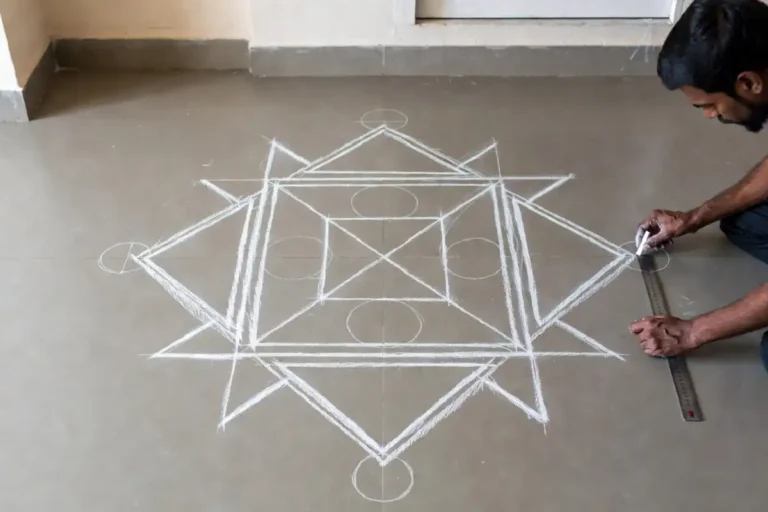
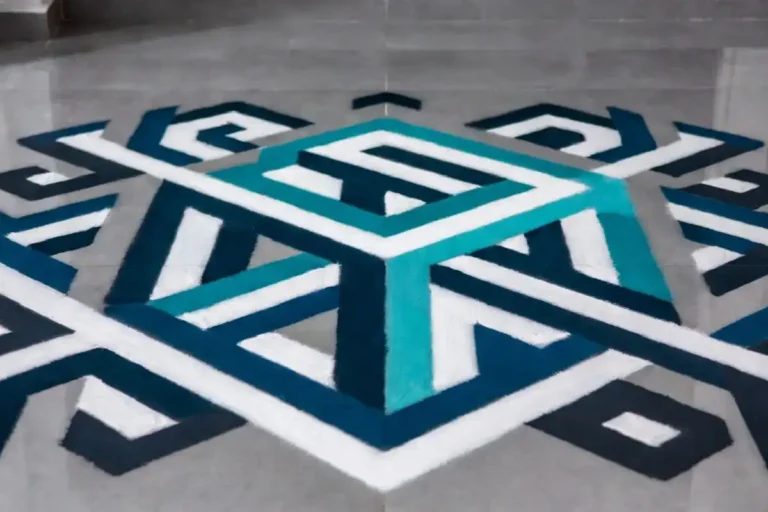
Classic rangoli designs get a contemporary edge as artists use 3D techniques to build complex, dynamic geometric forms.
Epic scenes from the Mahabharata and Ramayana come alive as artists use 3D technique to depict mythological characters and stories.
Abstract designs let artists express imagination freely, producing visually striking pieces with vivid hues and bold technique.
Summary
With the stunning combination of tradition and innovation that is 3D rangoli, artists may express their creativity in a dynamic and colorful way. This contemporary interpretation of the antiquated art form encourages the next generation to pursue their artistic potential while also preserving cultural importance. We see the development of this beloved custom as more people adopt 3D rangoli, guaranteeing that it will continue to be an essential aspect of Indian culture for many years to come.
Whether you are an experienced artist or a novice, playing around with 3D rangoli may be rather satisfying. You may produce breathtaking designs that enthrall and motivate others if you have a thorough understanding of the methods, supplies, and topics. So grab your paints and let your imagination go wild!
Read more about: Toonstream