Ganesha Rangoli: 15 Beautiful Designs for Every Occasion
Rangoli has always been more than just a beautiful floor decoration for me. I’m based in Kolkata, and I’ve spent the past eight years drawing, collecting, photographing, and documenting rangoli designs. My love for this traditional art began during childhood, when I would sit on the steps and watch my mother and grandmother create rangoli at our doorway every morning before sunrise.
I still remember how the patterns slowly came together, dot by dot and color by color. Those everyday moments helped me appreciate the patience, creativity, and tradition behind rangoli. Over the years, I’ve continued exploring different designs, practicing new patterns, and documenting the artwork I come across.
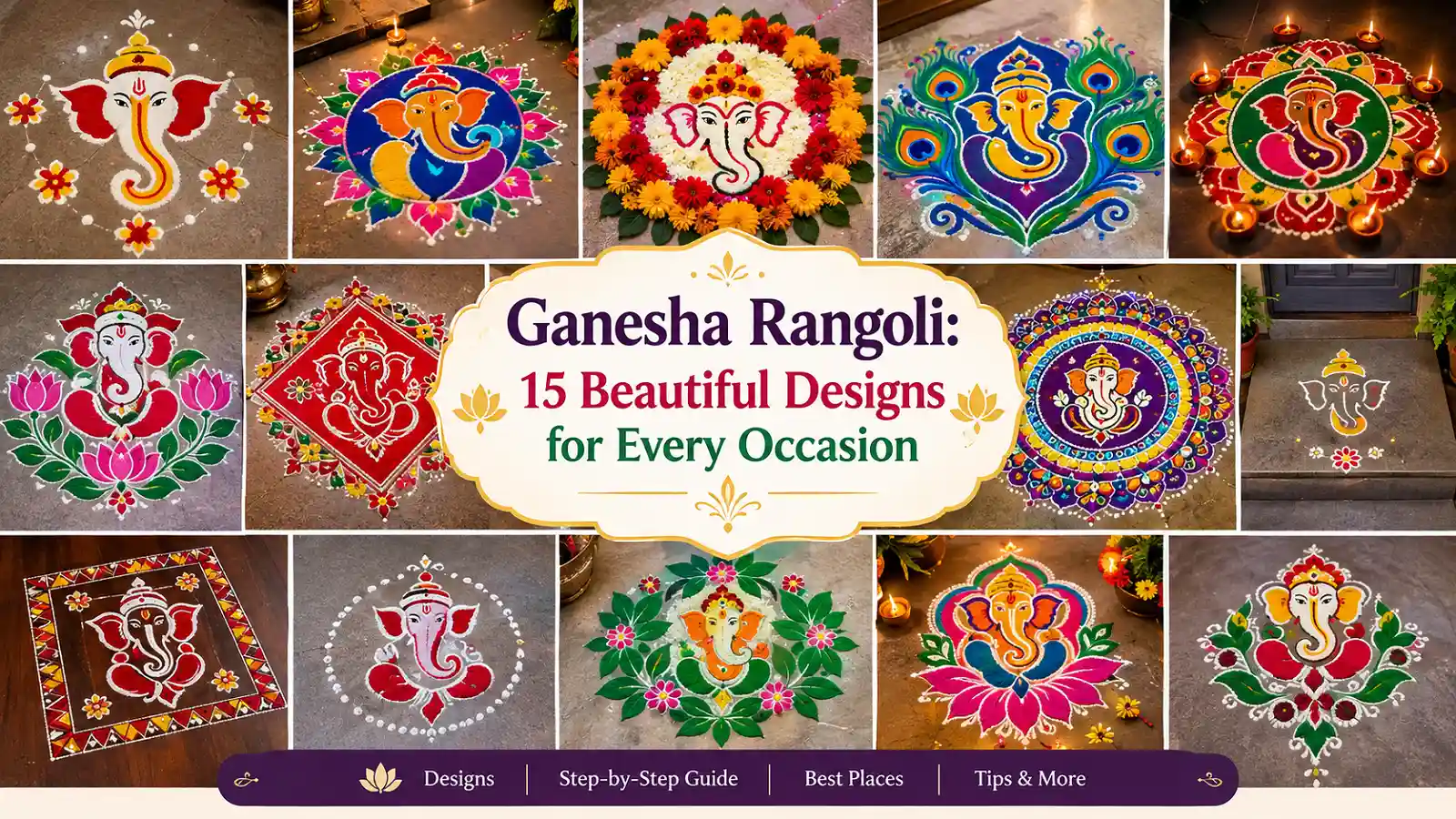
In this guide, I’m sharing 15 beautiful Ganesha Rangoli designs for beginners, experienced artists, and anyone who wants to decorate their home for a special occasion. Along with design ideas, I’ll explain how to create each pattern and where it works best.
Whether you are preparing for Ganesh Chaturthi, Diwali, a puja ceremony, or simply want to add a traditional touch to your entrance, these ideas can help you find a design that suits your space.
Simple Ganesha Rangoli Design
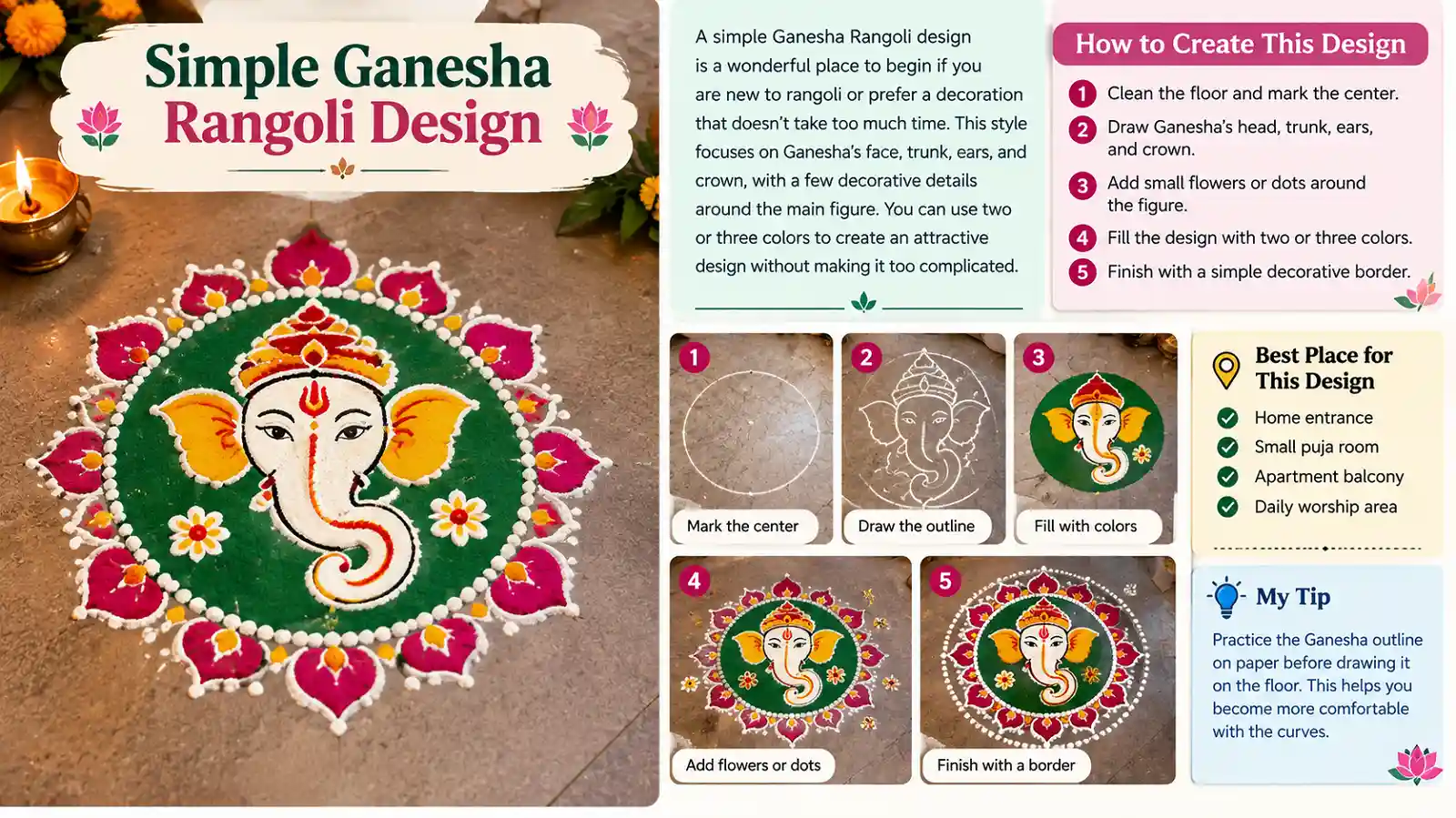
A simple Ganesha Rangoli design is a wonderful place to begin if you are new to rangoli or prefer a decoration that does not take too much time. From my experience practicing different patterns, I’ve found that starting with clear shapes and a manageable layout makes the drawing process more comfortable.
This style focuses on Ganesha’s face, trunk, ears, and crown, with a few decorative details around the main figure. You can use two or three colors to create an attractive design without making it too complicated.
How to Create This Design
Clean the floor and mark the center.
Draw Ganesha’s head, trunk, ears, and crown.
Add small flowers or dots around the figure.
Fill the design with two or three colors.
Finish with a simple decorative border.
Home entrance, small puja room, apartment balcony, and daily worship area.
Practice the Ganesha outline on paper before drawing it on the floor. This helps you become more comfortable with the curves.
Colorful Ganesha Rangoli
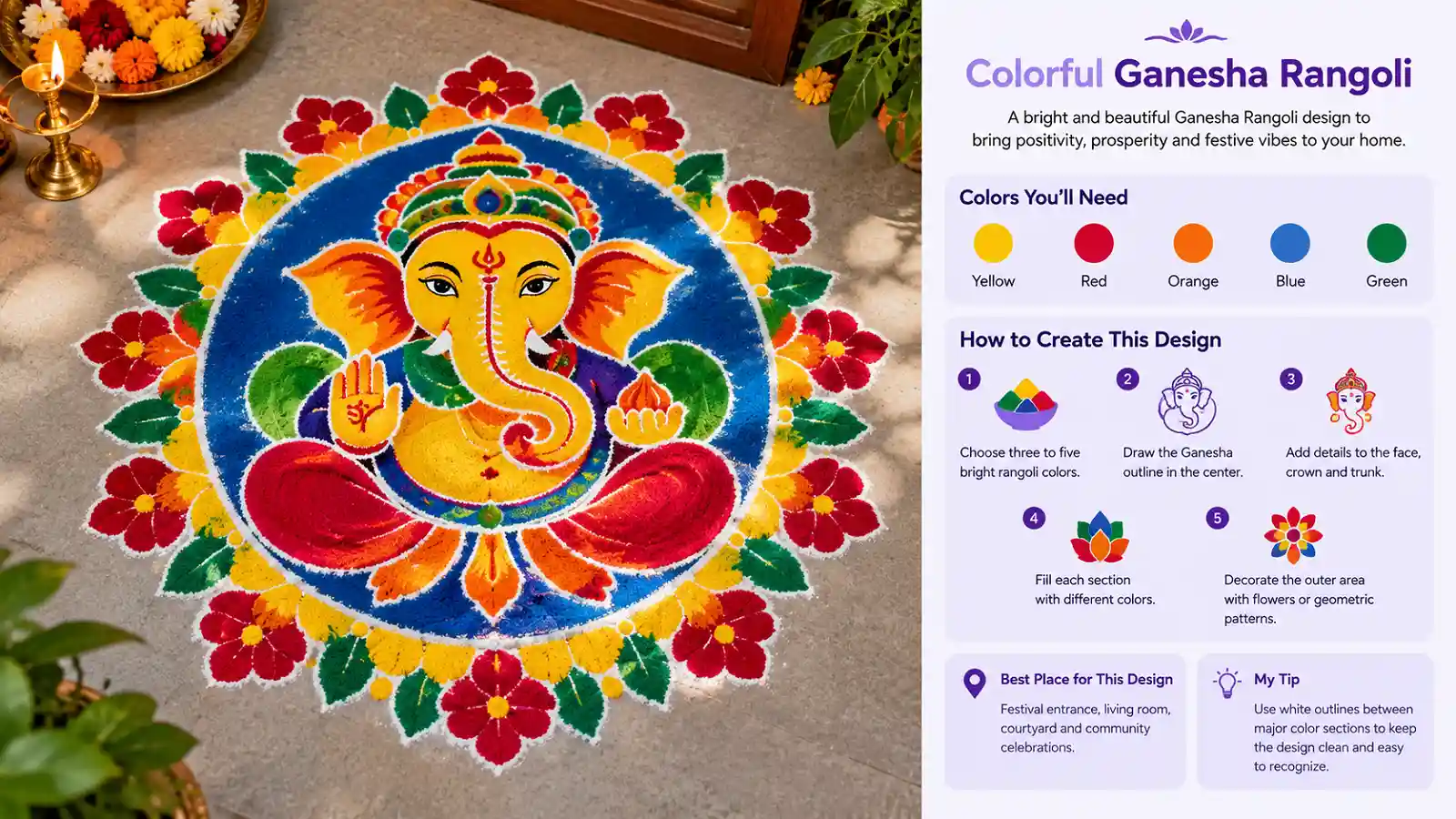
A colorful Ganesha Rangoli design is perfect for anyone who enjoys bright and creative festival decorations. I like how different color combinations can give the same basic design a completely different appearance.
You can use yellow, red, orange, blue, and green to highlight the central Ganesha figure. Adding contrasting shades to the crown, trunk, and surrounding patterns can make the artwork more expressive.
The key is to choose colors that complement one another rather than filling every section with too many shades.
How to Create This Design
Choose three to five bright rangoli colors.
Draw the Ganesha outline in the center.
Add details to the face, crown, and trunk.
Fill each section with different colors.
Decorate the outer area with flowers or geometric patterns.
Festival entrance, living room, courtyard, and community celebrations.
Use white outlines between major color sections to keep the design clean and easy to recognize.
Ganesha Rangoli with Flower Decoration
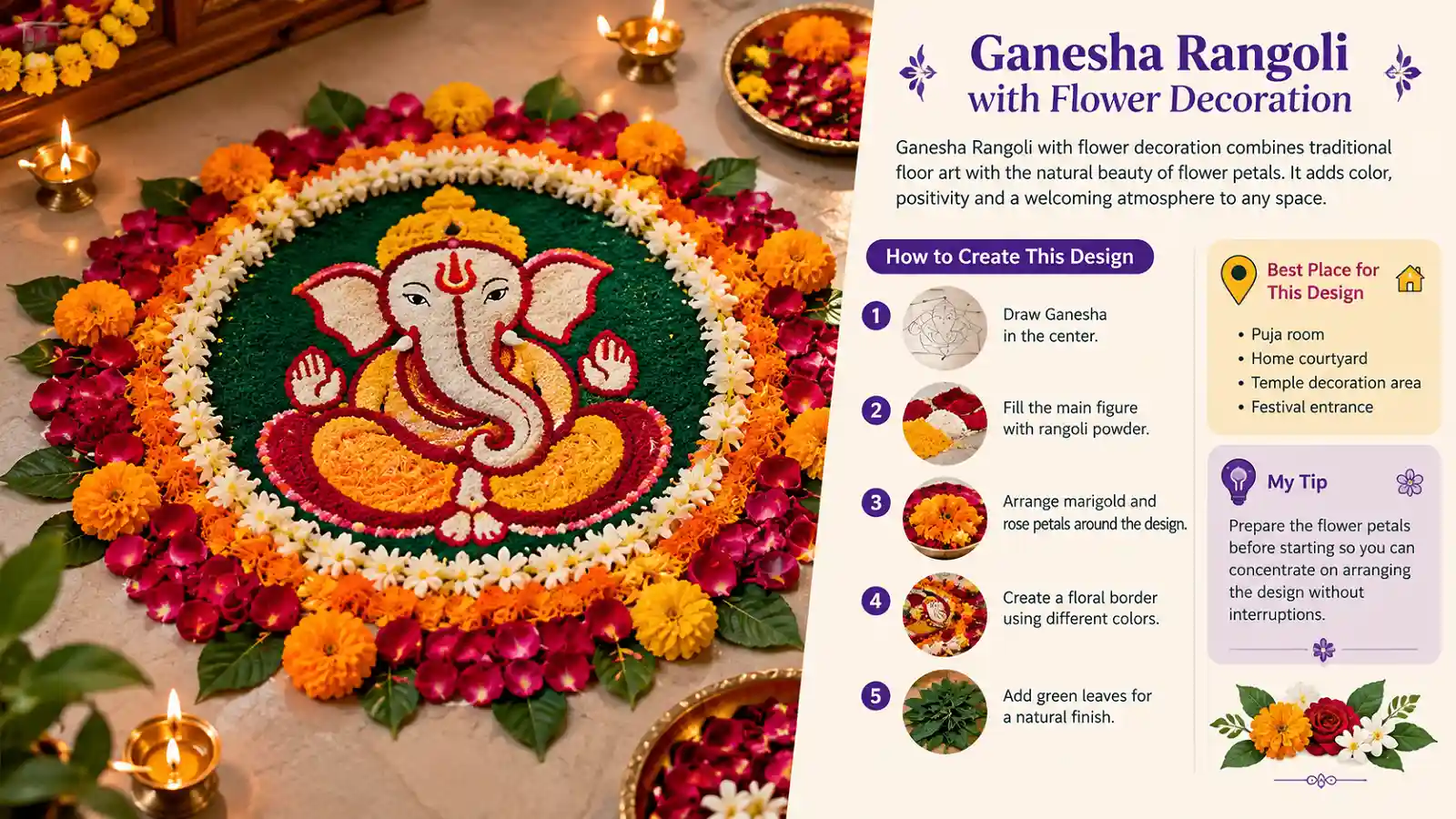
Ganesha Rangoli with flower decoration combines traditional floor art with the natural beauty of flower petals. This style reminds me of the festive decorations I have seen in homes, where flowers are used to add color and a welcoming atmosphere.
Marigold, rose, and jasmine petals can be arranged around the central Ganesha design. You can create a simple floral border or use different flowers to fill individual sections.
Flower rangoli is also a useful option if you prefer working with natural materials rather than only colored powder.
How to Create This Design
Draw Ganesha in the center.
Fill the main figure with rangoli powder.
Arrange marigold and rose petals around the design.
Create a floral border using different colors.
Add green leaves for a natural finish.
Puja room, home courtyard, temple decoration area, and festival entrance.
Prepare the flower petals before starting so you can concentrate on arranging the design without interruptions.
Peacock-Inspired Ganesha Rangoli
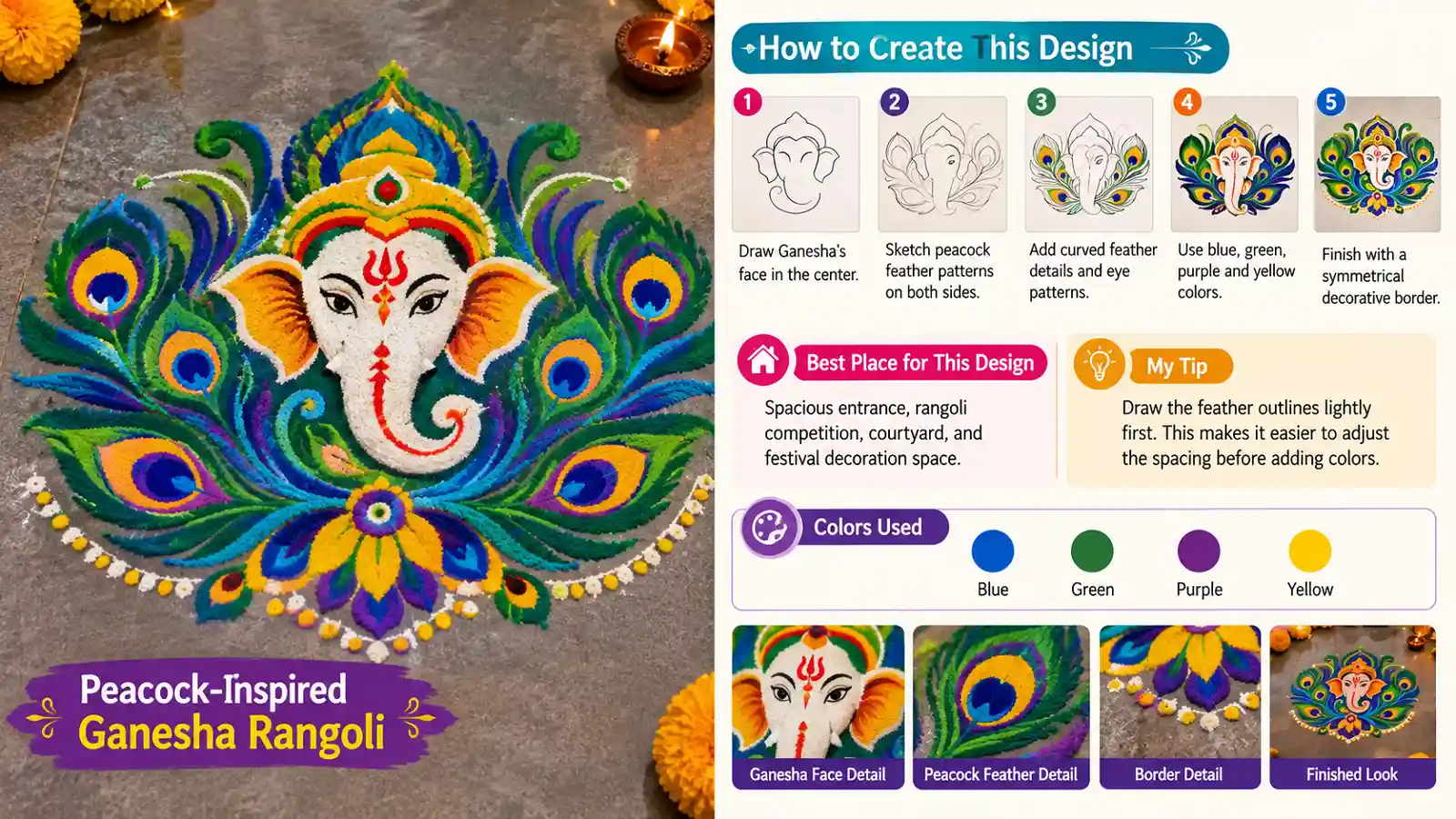
A peacock-inspired Ganesha Rangoli combines the traditional image of Lord Ganesha with colorful feather patterns. This is a good choice if you enjoy detailed artwork and want to try something beyond a basic central figure.
The curved feather shapes can create movement around the design, while blue, green, purple, and yellow add a festive appearance. You can make the peacock patterns simple or develop them into more detailed artwork depending on your experience.
How to Create This Design
Draw Ganesha’s face in the center.
Sketch peacock feather patterns on both sides.
Add curved feather details and eye patterns.
Use blue, green, purple, and yellow colors.
Finish with a symmetrical decorative border.
Spacious entrance, rangoli competition, courtyard, and festival decoration space.
Draw the feather outlines lightly first. This makes it easier to adjust the spacing before adding colors.
Ganesha Rangoli with Diya
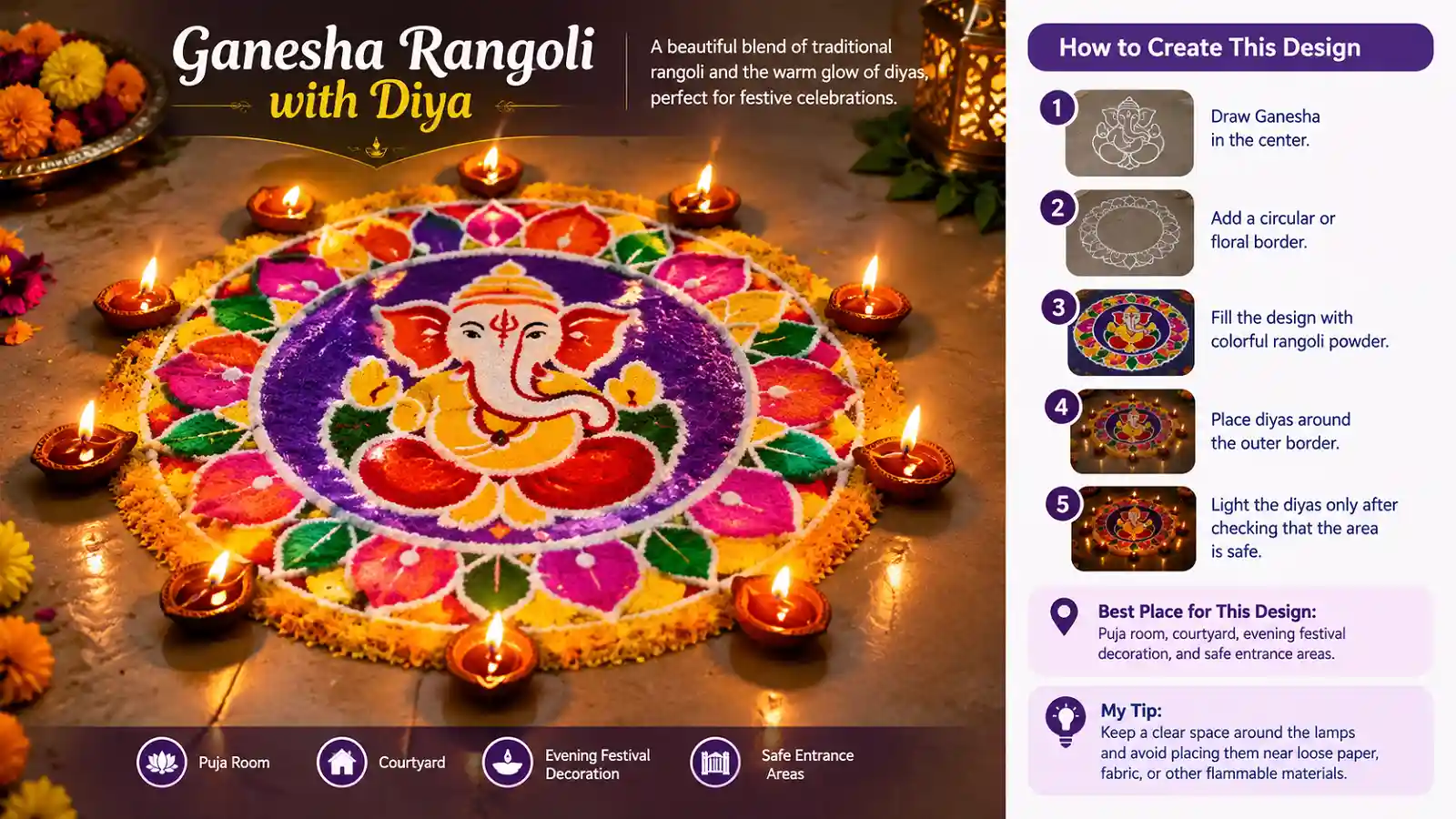
A Ganesha Rangoli with diyas brings together colorful floor art and the traditional glow of oil lamps. It can create a warm appearance during evening celebrations, especially when the surrounding area is decorated with flowers and festive lights.
I recommend completing the rangoli before placing the diyas. This helps prevent accidental smudging and gives you enough space to arrange the lamps safely.
How to Create This Design
Draw Ganesha in the center.
Add a circular or floral border.
Fill the design with colorful rangoli powder.
Place diyas around the outer border.
Light the diyas only after checking that the area is safe.
Puja room, courtyard, evening festival decoration, and safe entrance areas.
Keep a clear space around the lamps and avoid placing them near loose paper, fabric, or other flammable materials.
Easy Ganesha Rangoli with Dots
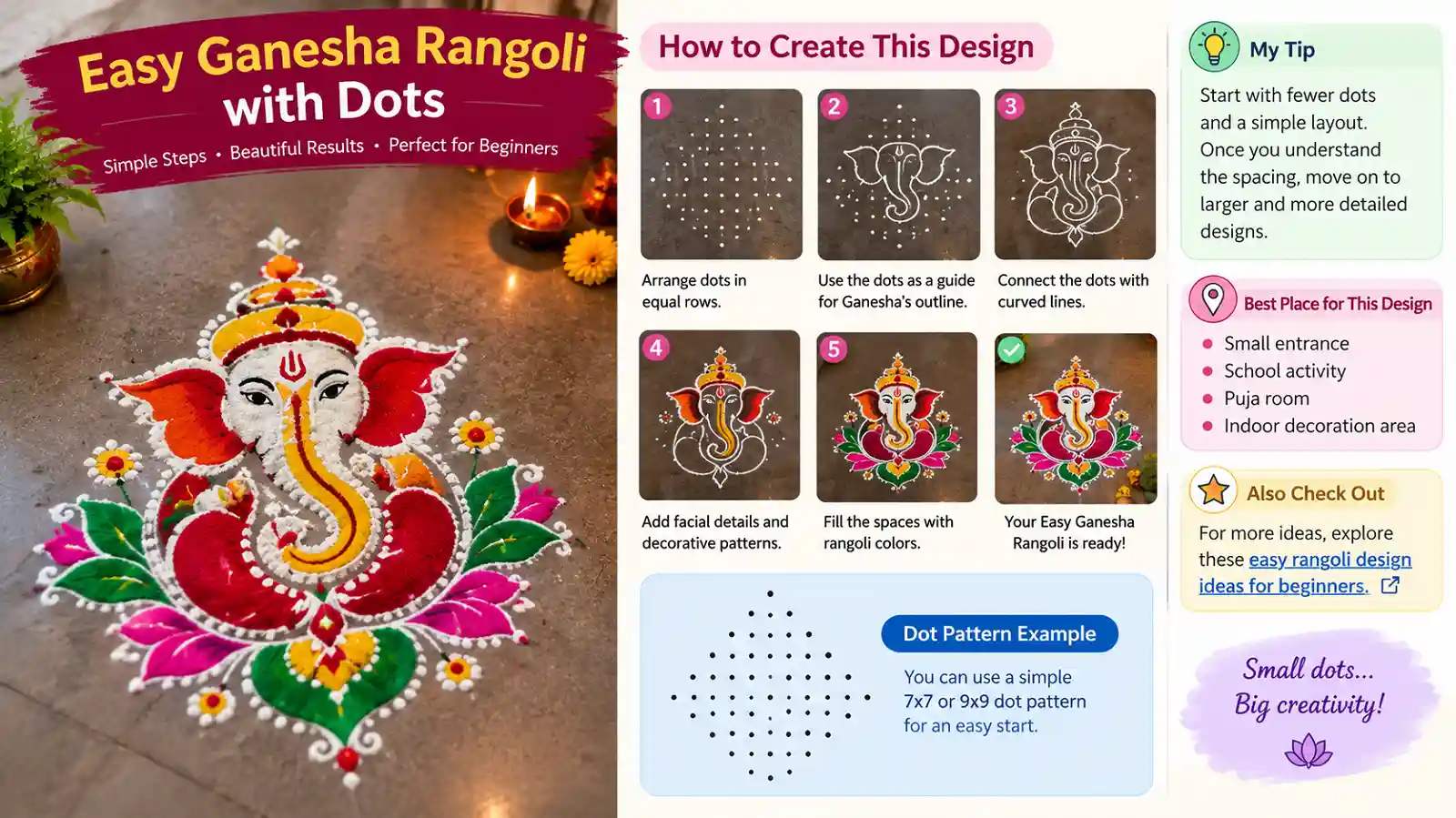
An easy Ganesha Rangoli with dots is a practical choice for beginners who want help with symmetry and spacing. Dot-based methods can make it easier to plan the outline before adding the smaller details.
You can arrange dots in rows and use them as guides for the trunk, ears, and decorative patterns. Once you become comfortable with the process, you can gradually try more detailed dot-based designs.
For additional inspiration, explore these easy rangoli design ideas for beginners.
How to Create This Design
Arrange dots in equal rows.
Use the dots as a guide for Ganesha’s outline.
Connect the dots with curved lines.
Add facial details and decorative patterns.
Fill the spaces with rangoli colors.
Small entrance, school activity, puja room, and indoor decoration area.
Start with fewer dots and a simple layout. Once you understand the spacing, move on to larger designs.
Large Ganesha Rangoli Design
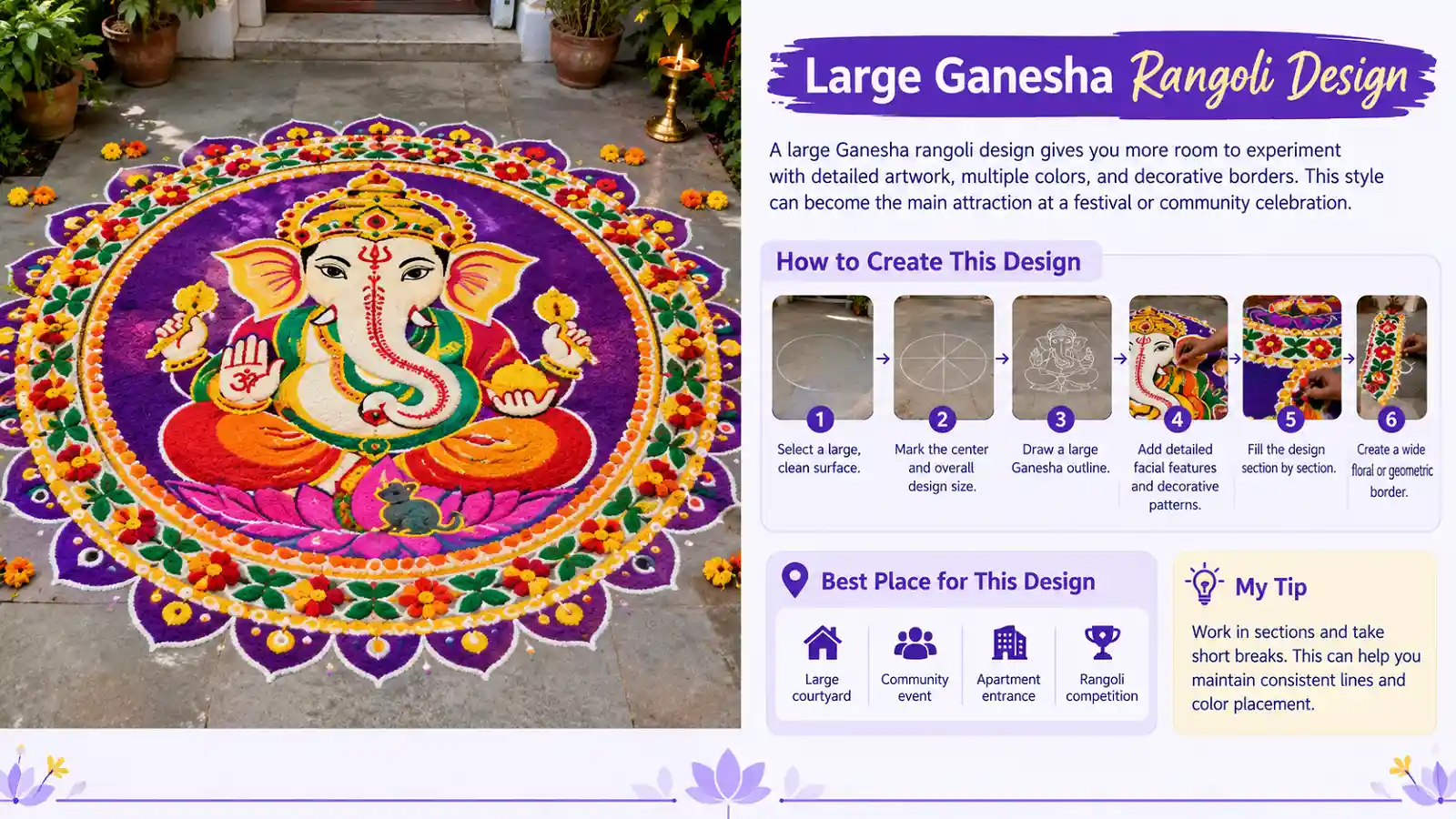
A large Ganesha Rangoli design gives you more room to experiment with detailed artwork, multiple colors, and decorative borders. This style can become the main attraction at a festival or community celebration.
When working on a larger design, planning is important. I prefer thinking about the overall layout before filling in the colors, because it helps prevent the artwork from becoming crowded.
How to Create This Design
Select a large, clean surface.
Mark the center and overall design size.
Draw a large Ganesha outline.
Add detailed facial features and decorative patterns.
Fill the design section by section.
Create a wide floral or geometric border.
Large courtyard, community event, apartment entrance, and rangoli competition.
Work in sections and take short breaks. This can help you maintain consistent lines and color placement.
Ganesha Rangoli with Lotus Flowers
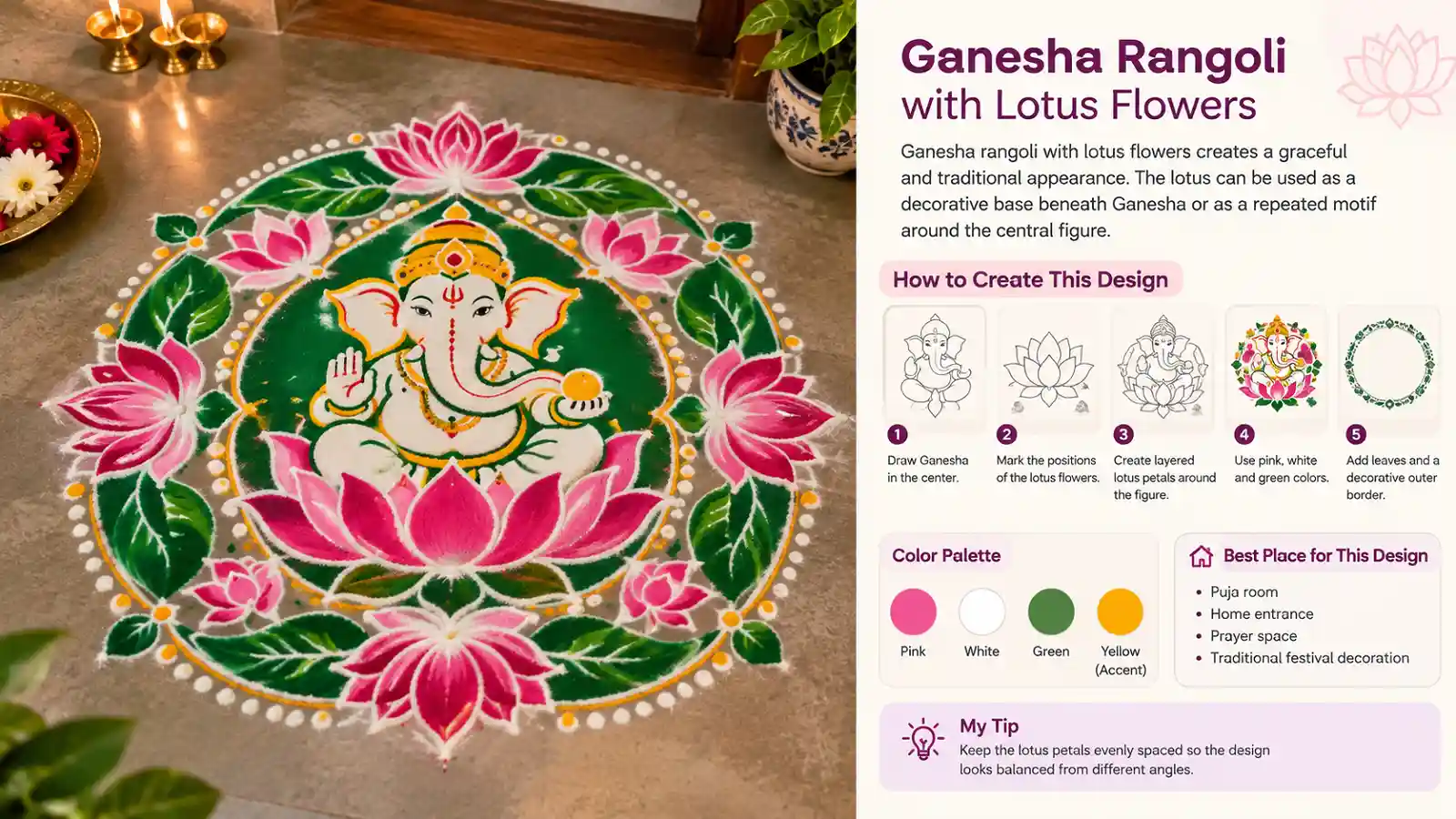
Ganesha Rangoli with lotus flowers creates a graceful and traditional appearance. The lotus can be used as a decorative base beneath Ganesha or as a repeated motif around the central figure.
I enjoy how floral patterns allow you to combine simple outlines with more detailed artwork. You can keep the lotus petals basic or add several layers for a fuller appearance.
How to Create This Design
Draw Ganesha in the center.
Mark the positions of the lotus flowers.
Create layered lotus petals around the figure.
Use pink, white, and green colors.
Add leaves and a decorative outer border.
Puja room, home entrance, prayer space, and traditional festival decoration.
Keep the lotus petals evenly spaced so the design looks balanced from different angles.
Traditional Ganesha Rangoli
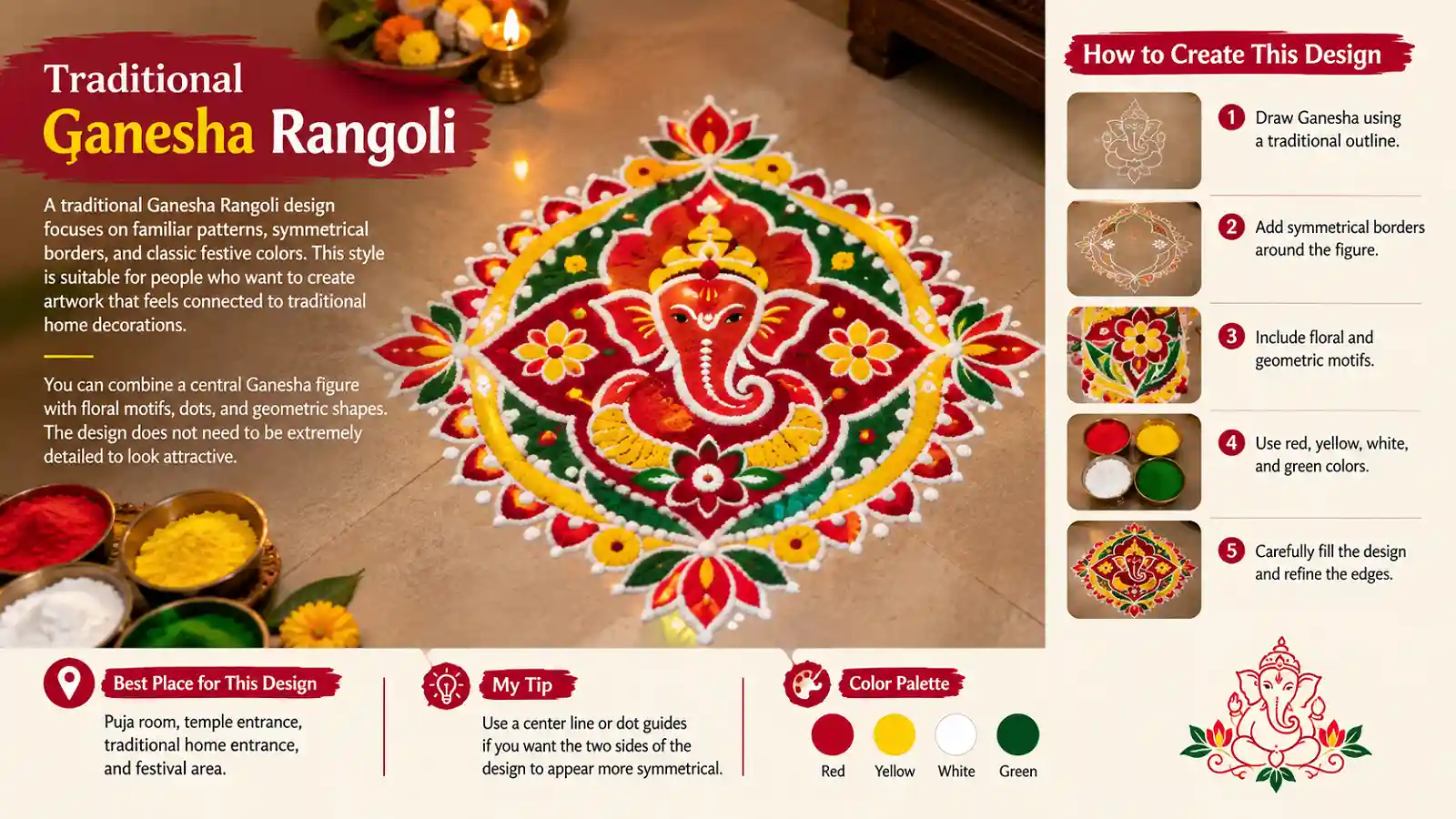
A traditional Ganesha Rangoli design focuses on familiar patterns, symmetrical borders, and classic festive colors. This style is suitable for people who want to create artwork that feels connected to traditional home decorations.
You can combine a central Ganesha figure with floral motifs, dots, and geometric shapes. The design does not need to be extremely detailed to look attractive.
How to Create This Design
Draw Ganesha using a traditional outline.
Add symmetrical borders around the figure.
Include floral and geometric motifs.
Use red, yellow, white, and green colors.
Carefully fill the design and refine the edges.
Puja room, temple entrance, traditional home entrance, and festival area.
Use a center line or dot guides if you want the two sides of the design to appear more symmetrical.
Ganesha Rangoli with Mandala Patterns
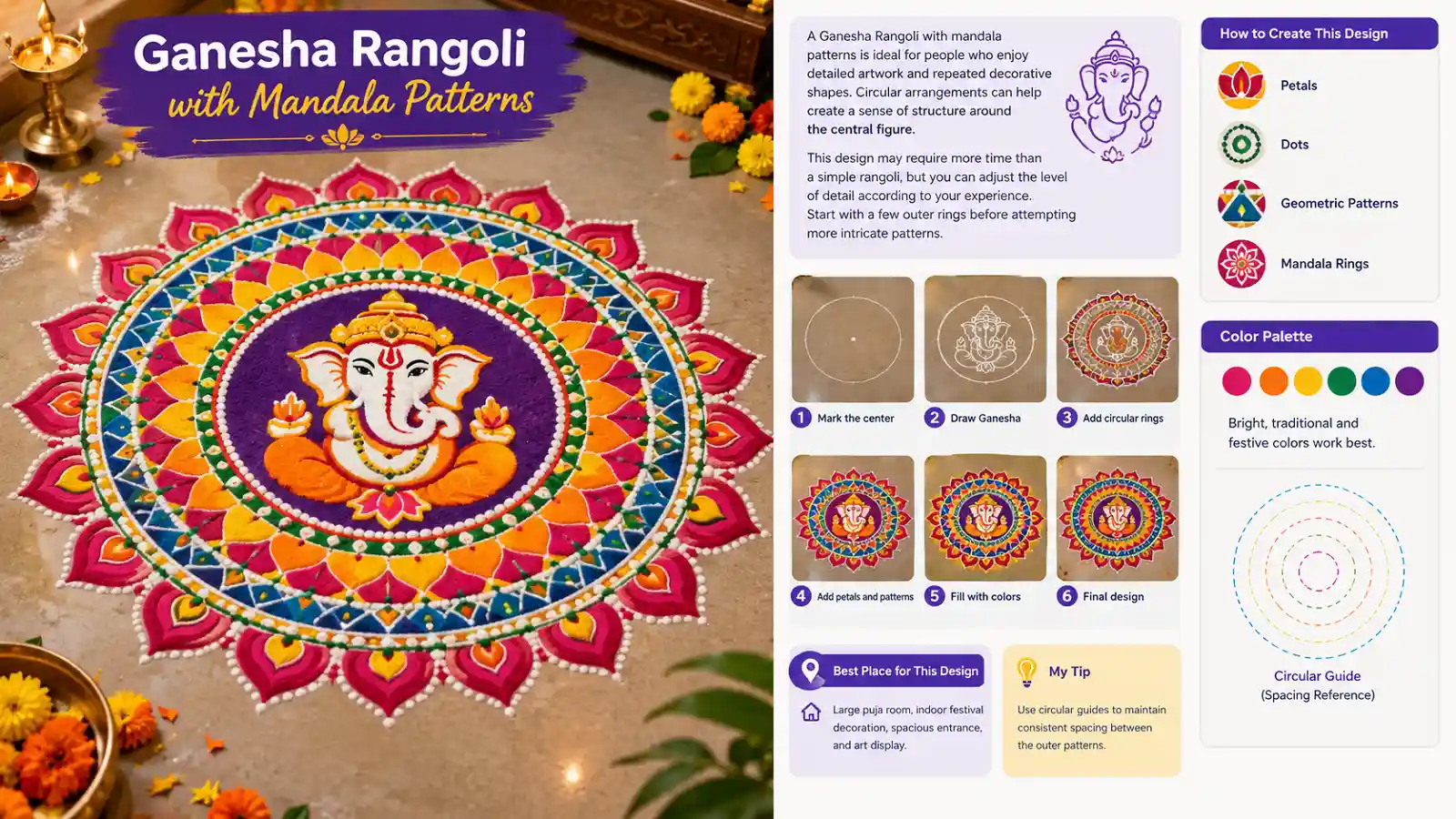
A Ganesha Rangoli with mandala patterns is ideal for people who enjoy detailed artwork and repeated decorative shapes. Circular arrangements can help create a sense of structure around the central figure.
This design may require more time than a simple rangoli, but you can adjust the level of detail according to your experience. Start with a few outer rings before attempting more intricate patterns.
How to Create This Design
Mark the center of your rangoli.
Draw Ganesha in the middle.
Create circular rings around the figure.
Add repeated petals, dots, and geometric patterns.
Fill each section with coordinated colors.
Check the spacing for a balanced design.
Large puja room, indoor festival decoration, spacious entrance, and art display.
Use circular guides to maintain consistent spacing between the outer patterns.
Small Ganesha Rangoli for Home Entrance
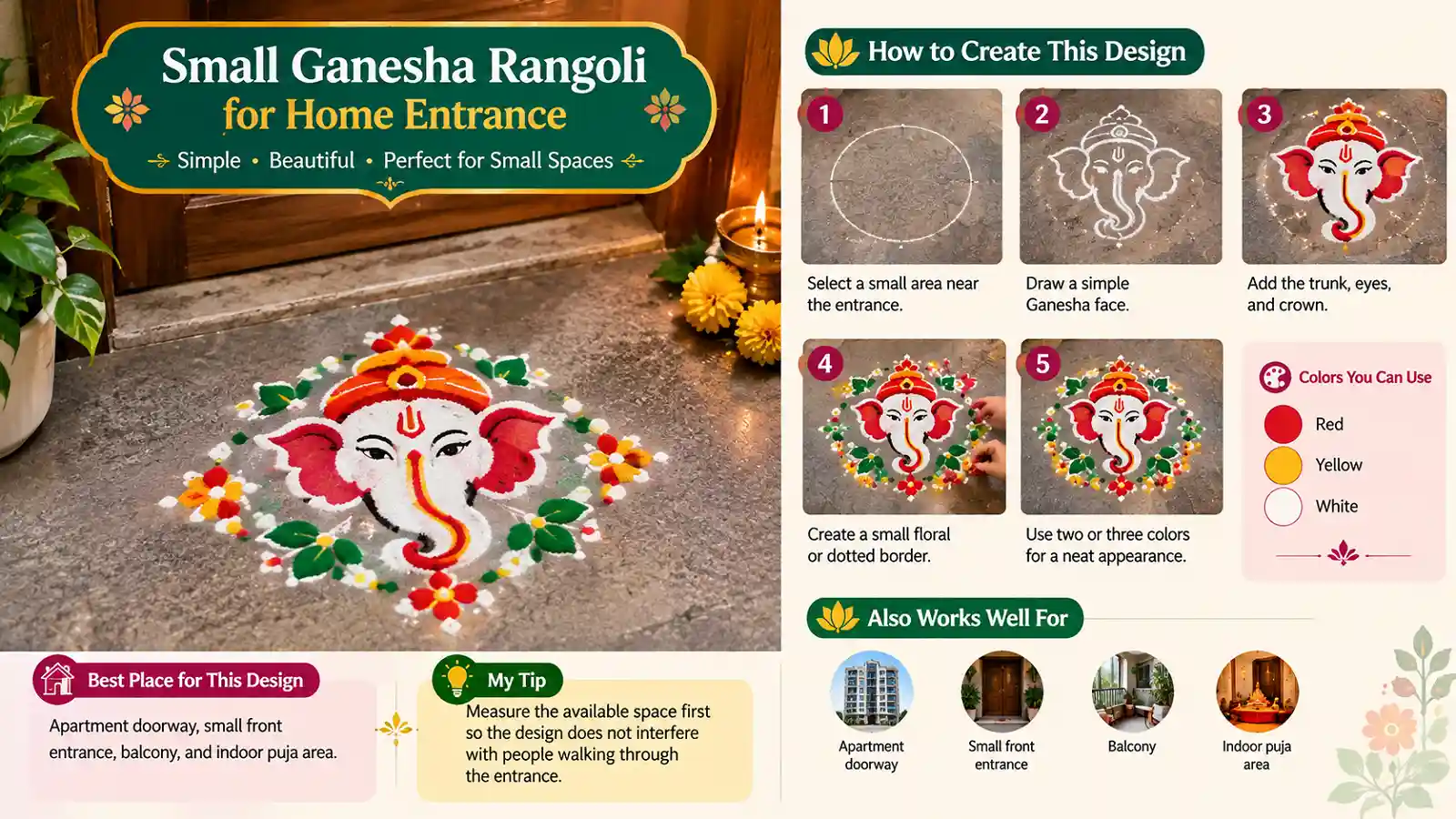
A small Ganesha Rangoli is a practical choice when you have limited space but still want to decorate your home. A compact design can include Ganesha’s face, crown, and a simple border.
This style works well when you want to create a quick decoration without using a large amount of rangoli powder. It is also easier to refresh when necessary.
How to Create This Design
Select a small area near the entrance.
Draw a simple Ganesha face.
Add the trunk, eyes, and crown.
Create a small floral or dotted border.
Use two or three colors for a neat appearance.
Apartment doorway, small front entrance, balcony, and indoor puja area.
Measure the available space first so the design does not interfere with people walking through the entrance.
Ganesha Rangoli with Geometric Borders
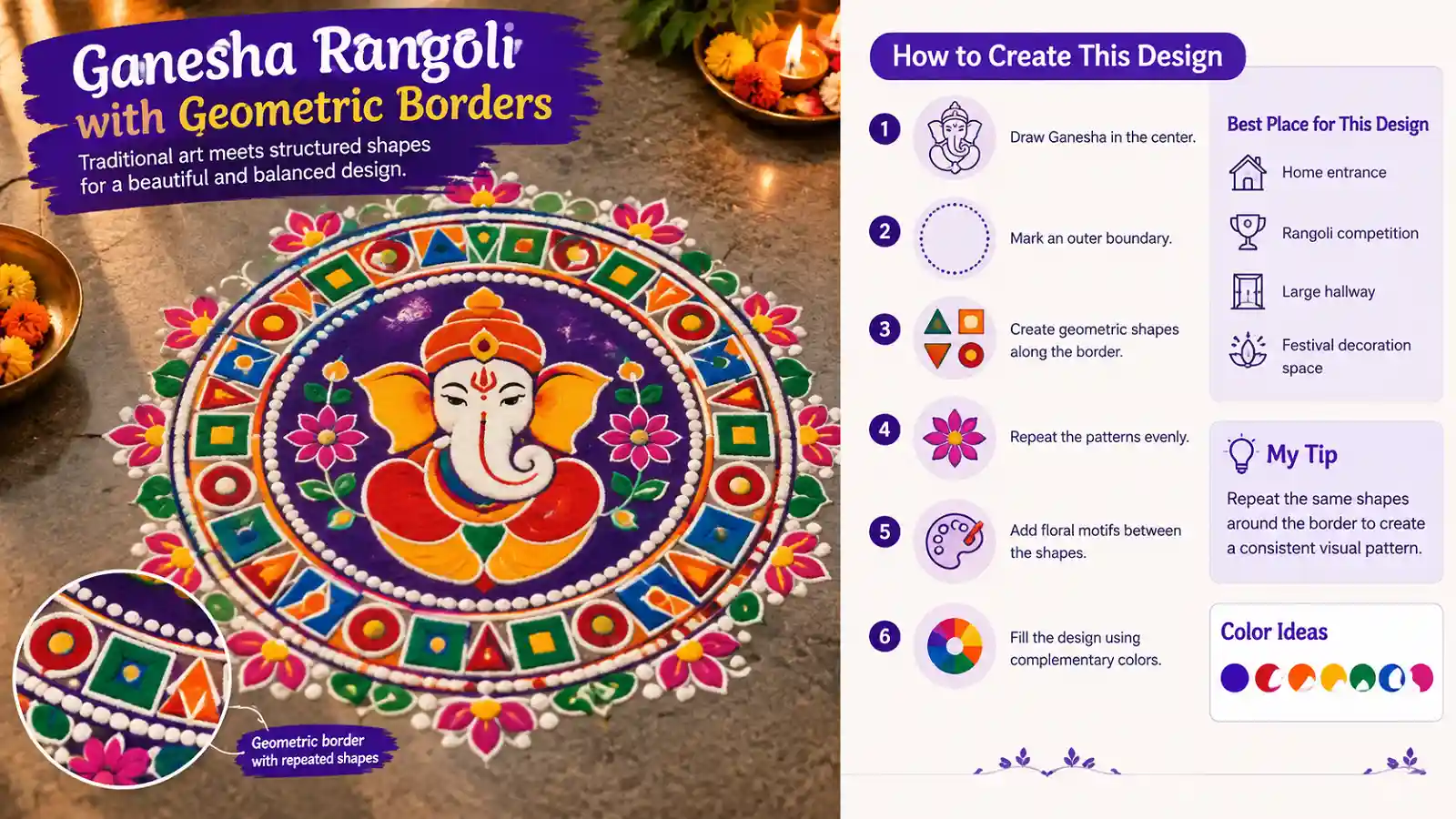
Ganesha Rangoli with geometric borders combines traditional artwork with structured shapes. Circles, triangles, squares, and repeated lines can give the design a neat and organized appearance.
You can choose a simple geometric border if you are a beginner or try a more detailed arrangement if you have experience with symmetrical patterns.
How to Create This Design
Draw Ganesha in the center.
Mark an outer boundary.
Create geometric shapes along the border.
Repeat the patterns evenly.
Add floral motifs between the shapes.
Fill the design using complementary colors.
Home entrance, rangoli competition, large hallway, and festival decoration space.
Repeat the same shapes around the border to create a consistent visual pattern.
White and Red Ganesha Rangoli
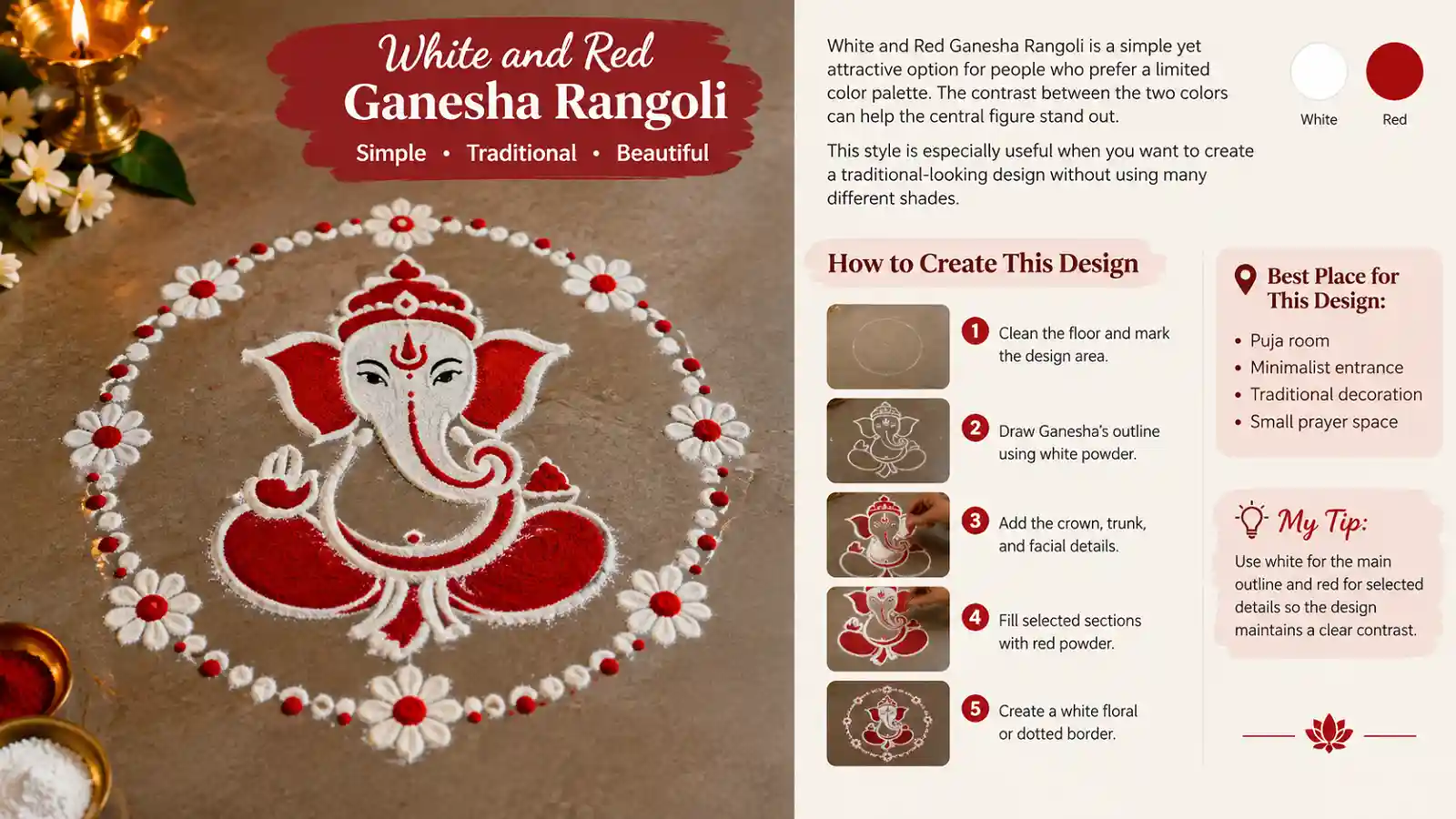
White and Red Ganesha Rangoli is a simple yet attractive option for people who prefer a limited color palette. The contrast between the two colors can help the central figure stand out.
This style is especially useful when you want to create a traditional-looking design without using many different shades.
How to Create This Design
Clean the floor and mark the design area.
Draw Ganesha’s outline using white powder.
Add the crown, trunk, and facial details.
Fill selected sections with red powder.
Create a white floral or dotted border.
Puja room, minimalist entrance, traditional decoration, and small prayer space.
Use white for the main outline and red for selected details so the design maintains a clear contrast.
Ganesha Rangoli with Leaf Patterns
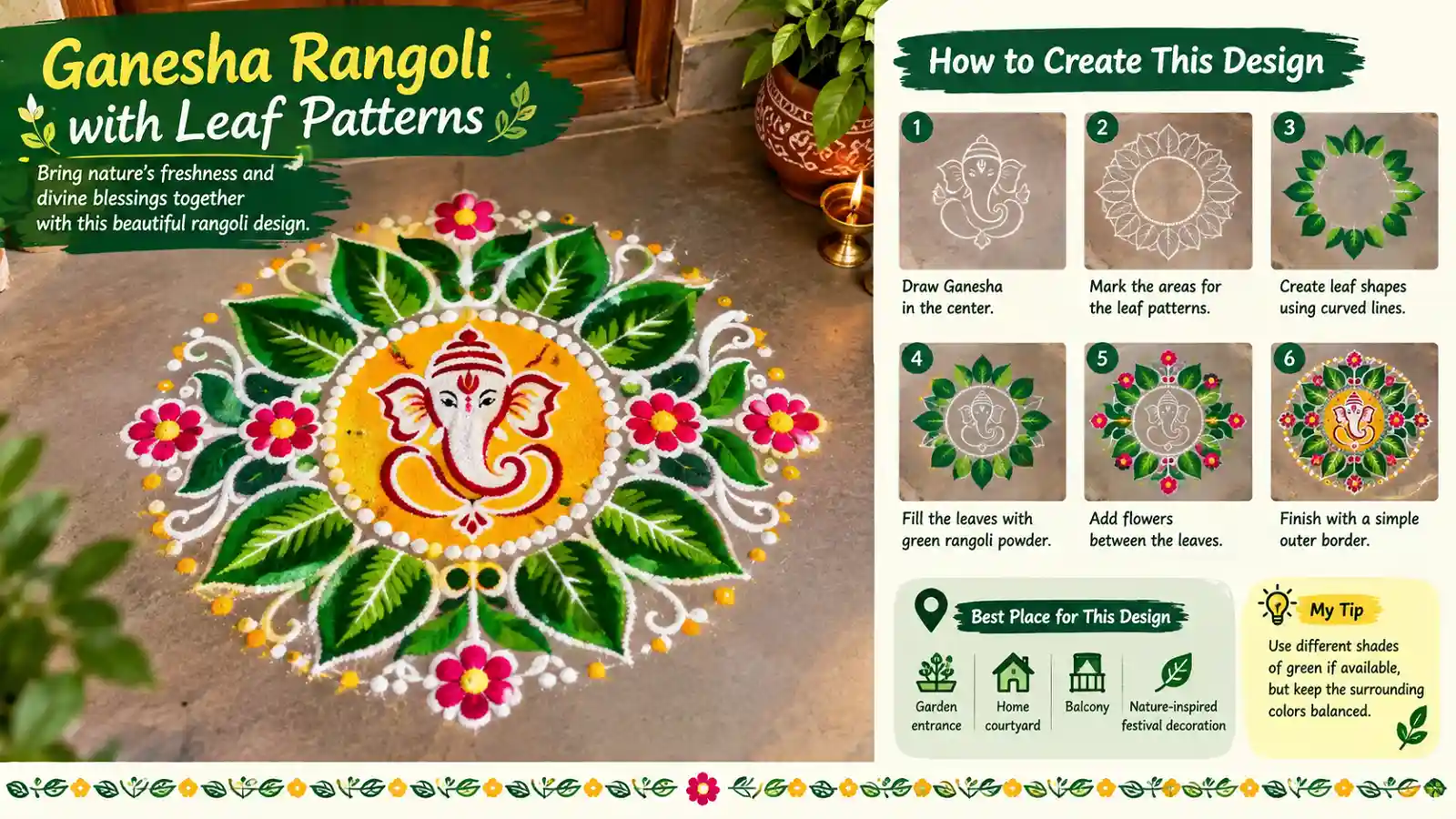
Ganesha Rangoli with leaf patterns is a lovely choice for anyone who prefers nature-inspired decorations. Green leaves can be combined with flowers, curved lines, and a simple central Ganesha figure.
You can create the leaf patterns freehand or use a light guide to maintain consistency. This design can be adapted for both small and large spaces.
How to Create This Design
Draw Ganesha in the center.
Mark the areas for the leaf patterns.
Create leaf shapes using curved lines.
Fill the leaves with green rangoli powder.
Add flowers between the leaves.
Finish with a simple outer border.
Garden entrance, home courtyard, balcony, and nature-inspired festival decoration.
Use different shades of green if available, but keep the surrounding colors balanced.
Creative Ganesha Rangoli for Festivals
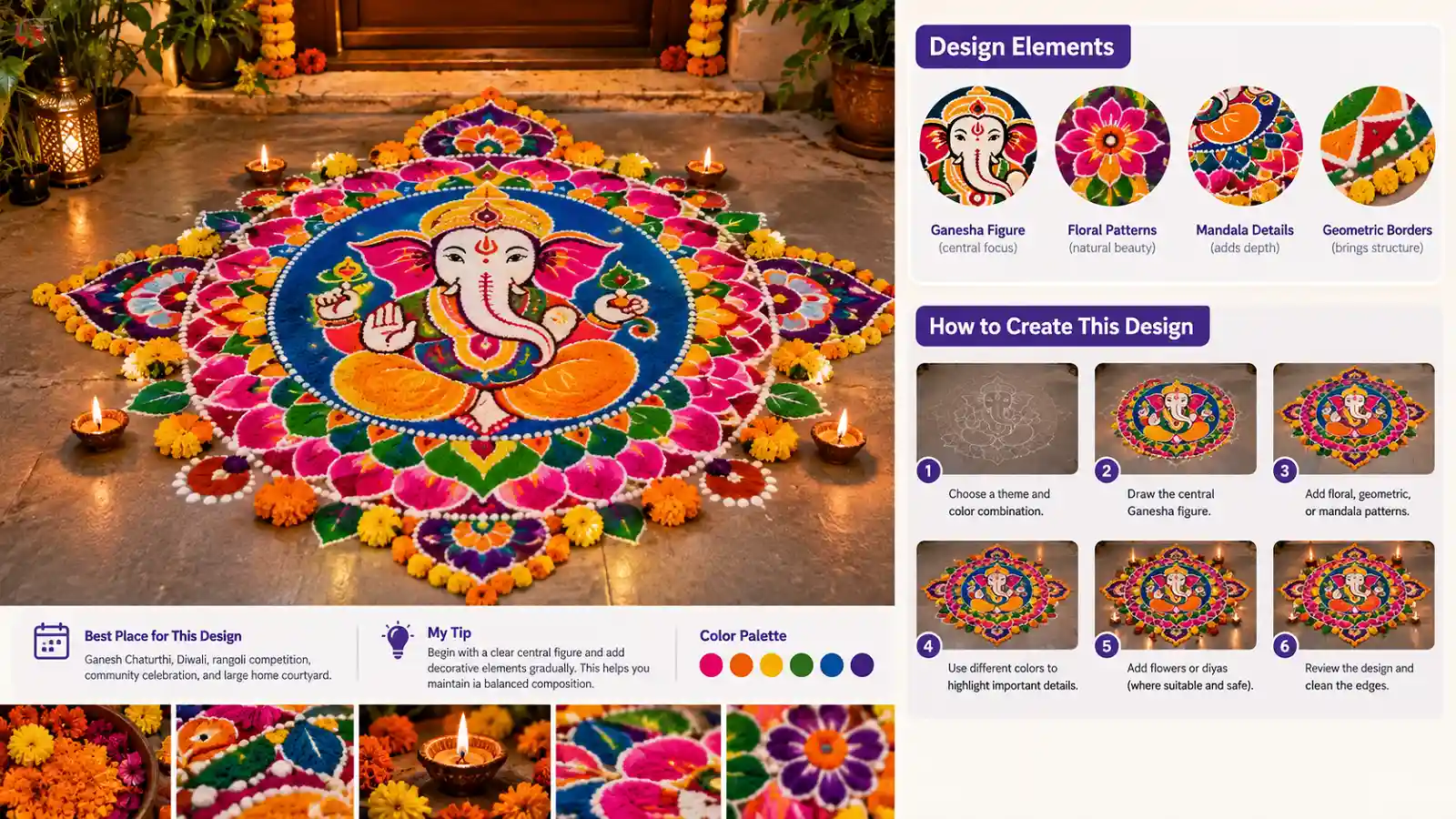
A creative Ganesha Rangoli for festivals gives you the freedom to combine different artistic ideas in one design. You can include floral patterns, mandala details, geometric borders, and colorful sections.
After years of drawing and documenting rangoli, I’ve come to appreciate how personal each design can be. You do not always need to follow one fixed pattern. Sometimes, combining familiar elements in your own way creates a design that feels more meaningful.
How to Create This Design
Choose a theme and color combination.
Draw the central Ganesha figure.
Add floral, geometric, or mandala patterns.
Use different colors to highlight important details.
Add flowers or diyas where suitable and safe.
Review the overall design and clean the edges.
Ganesh Chaturthi, Diwali, rangoli competition, community celebration, and large home courtyard.
Begin with a clear central figure and add decorative elements gradually. This helps you maintain a balanced composition.
How to Choose the Right Ganesha Rangoli Design
Choosing the right design depends on your available space, experience, and the occasion. A small entrance may suit a compact Ganesha face, while a large courtyard gives you more freedom to explore detailed patterns.
Here is a quick guide:
| Design Type | Recommended Place |
|---|---|
| Simple Ganesha Rangoli | Small entrance, puja room |
| Colorful Ganesha Rangoli | Festival entrance, living room |
| Flower Decoration | Puja room, courtyard |
| Peacock-Inspired | Spacious entrance, competition |
| Diya Rangoli | Safe evening decoration area |
| Dot-Based Rangoli | Small entrance, school activity |
| Large Ganesha Rangoli | Courtyard, community event |
| Lotus Rangoli | Puja room, prayer space |
| Traditional Rangoli | Temple entrance, home |
| Mandala Rangoli | Large indoor space, art display |
| Small Ganesha Rangoli | Apartment doorway |
| Geometric Border | Entrance, competition |
| White and Red Rangoli | Puja room, minimalist space |
| Leaf Pattern Rangoli | Garden entrance, courtyard |
| Creative Festival Rangoli | Festival venue, large entrance |
For more inspiration, you can also explore these beautiful rangoli designs for different occasions.
Tips for Creating a Beautiful Ganesha Rangoli
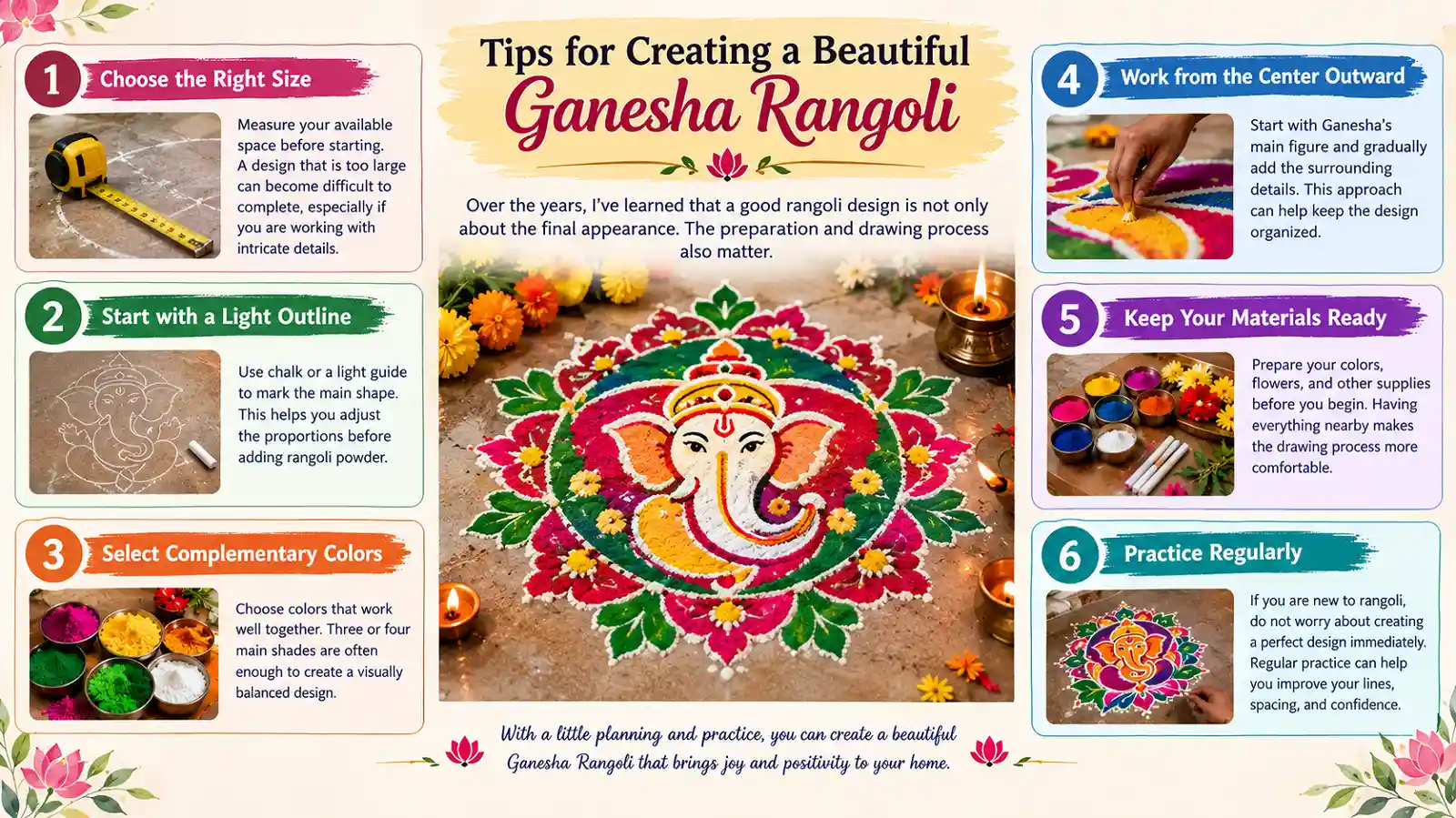
Over the years, I’ve learned that a good rangoli design is not only about the final appearance. The preparation and drawing process also matter.
Choose the Right Size
Measure your available space before starting. A design that is too large can become difficult to complete, especially if you are working with intricate details.
Start with a Light Outline
Use chalk or a light guide to mark the main shape. This helps you adjust the proportions before adding rangoli powder.
Select Complementary Colors
Choose colors that work well together. Three or four main shades are often enough to create a visually balanced design.
Work from the Center Outward
Start with Ganesha’s main figure and gradually add the surrounding details. This approach can help keep the design organized.
Keep Your Materials Ready
Prepare your colors, flowers, and other supplies before you begin. Having everything nearby makes the drawing process more comfortable.
Practice Regularly
If you are new to rangoli, do not worry about creating a perfect design immediately. Regular practice can help you improve your lines, spacing, and confidence.
Common Mistakes to Avoid
Even an experienced rangoli artist can encounter small challenges while working on a design. Here are a few things to watch for:
Crowding the design: Leave enough space around Ganesha’s face and trunk.
Uneven proportions: Use a center line or dot guides when needed.
Using too many colors: Choose a limited color palette for a cleaner appearance.
Skipping preparation: Clean the surface and arrange your materials before starting.
Working too quickly: Take your time with the main outline and detailed sections.
Remember, rangoli is a creative art form. Small imperfections are part of the learning process.
Where to Place Your Ganesha Rangoli
The placement of your rangoli depends on the space available and the purpose of your decoration.
Home Entrance
A Ganesha Rangoli near the entrance can create a welcoming and festive appearance. Choose a design that fits comfortably without obstructing the walkway.
Puja Room
A smaller, traditional design with floral details can complement a puja space. Keep the arrangement neat and ensure it does not interfere with the worship area.
Courtyard
A courtyard gives you more room to try larger patterns, detailed borders, and colorful decorations.
Festival Venue
For community celebrations or rangoli competitions, you can explore larger designs that include additional decorative elements.
Consider the surface, available space, foot traffic, and weather conditions before choosing your design location.
My Rangoli Journey and Final Inspiration
Creating Ganesha Rangoli is something I enjoy because it connects my present work with the memories I have from childhood. Growing up in Kolkata, I watched my mother and grandmother draw rangoli at our doorway before sunrise. Those simple moments helped shape my appreciation for this art, and I’ve continued exploring, practicing, and documenting rangoli over the past eight years.
The 15 designs in this guide offer different ways to experiment with Ganesha Rangoli, whether you prefer a simple outline, colorful artwork, flower decorations, or a more detailed festival design.
You do not need to create a perfect rangoli on your first attempt. Start with a pattern that matches your skill level, take your time, and enjoy the process of drawing. With practice, you can develop your own style and create designs that feel personal.
I hope these ideas inspire you to bring a little of this beautiful tradition into your own home.
FAQs
Which Ganesha Rangoli design is best for beginners?
A simple Ganesha face or dot-based design is a good starting point. These styles use basic shapes and allow you to practice the central outline before trying more detailed artwork.
What colors work well for Ganesha Rangoli?
Red, yellow, orange, white, green, and pink are popular choices for colorful rangoli designs. You can select shades based on your preferred style and the occasion.
Where should I place a Ganesha Rangoli?
Ganesha Rangoli can be created near a home entrance, in a courtyard, or in a suitable puja space. Choose a location that provides enough room and does not interfere with movement.
Can I make Ganesha Rangoli using flower petals?
Yes. Flower petals such as marigold and rose can be used to create decorative Ganesha Rangoli designs. Prepare the petals beforehand and arrange them carefully to maintain the pattern.
How can I make a large Ganesha Rangoli?
Start by planning the overall layout and marking the center. Draw the main Ganesha figure first, then add the surrounding patterns and fill the colors section by section.