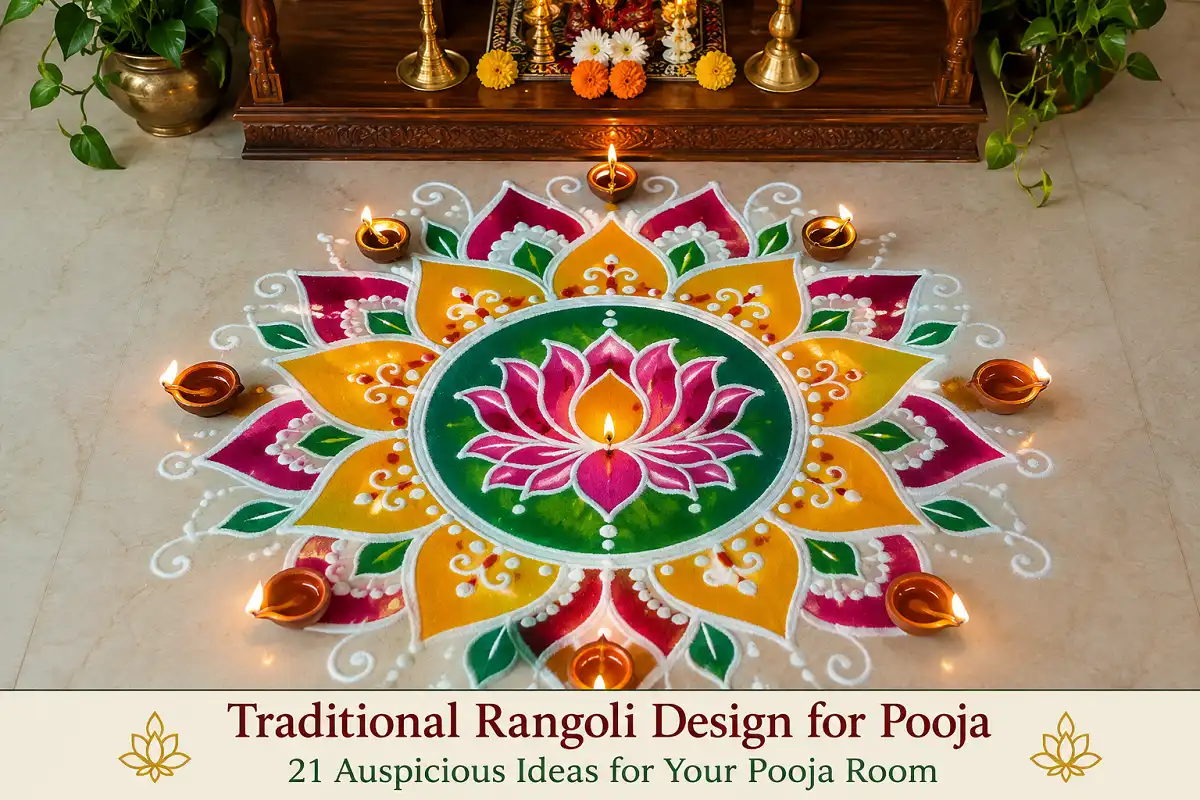
Traditional Rangoli Design for Pooja: 21 Auspicious Ideas for Your Pooja Room
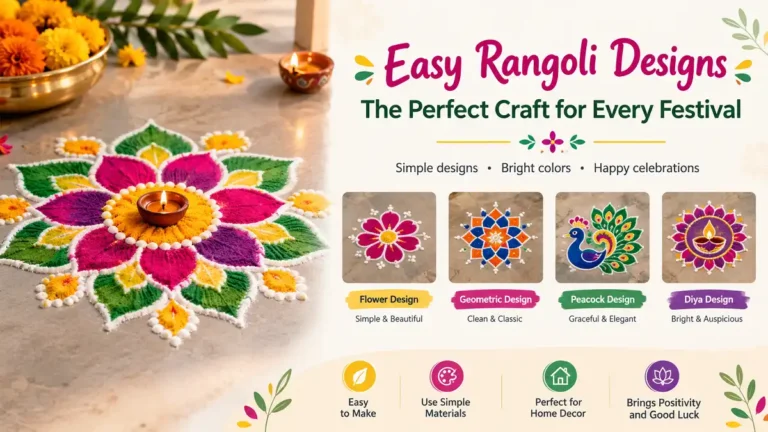
A beautiful traditional rangoli design for pooja can instantly make a prayer space feel more peaceful, welcoming and sacred. Whether you have a pooja room, a small home mandir, or simply a prayer corner, a carefully chosen rangoli adds a traditional touch without making the space feel crowded.
Traditional rangoli and Kolam designs have been passed down through generations, with different regions developing their own patterns and techniques. For pooja spaces, simple symmetrical designs, lotus motifs, diya patterns, dot-based Kolams and floral forms are especially popular.
Traditional examples also include designs such as Aishwarya Kolam, Kubera Kolam, Hridaya Kamalam and simple Padi Kolam styles. These traditional forms continue to be used in pooja rooms and other sacred spaces.
If you are looking for inspiration, here are 21 rangoli designs for pooja room that combine beauty, simplicity and timeless Indian tradition.
Why Choose a Traditional Rangoli Design for Pooja?
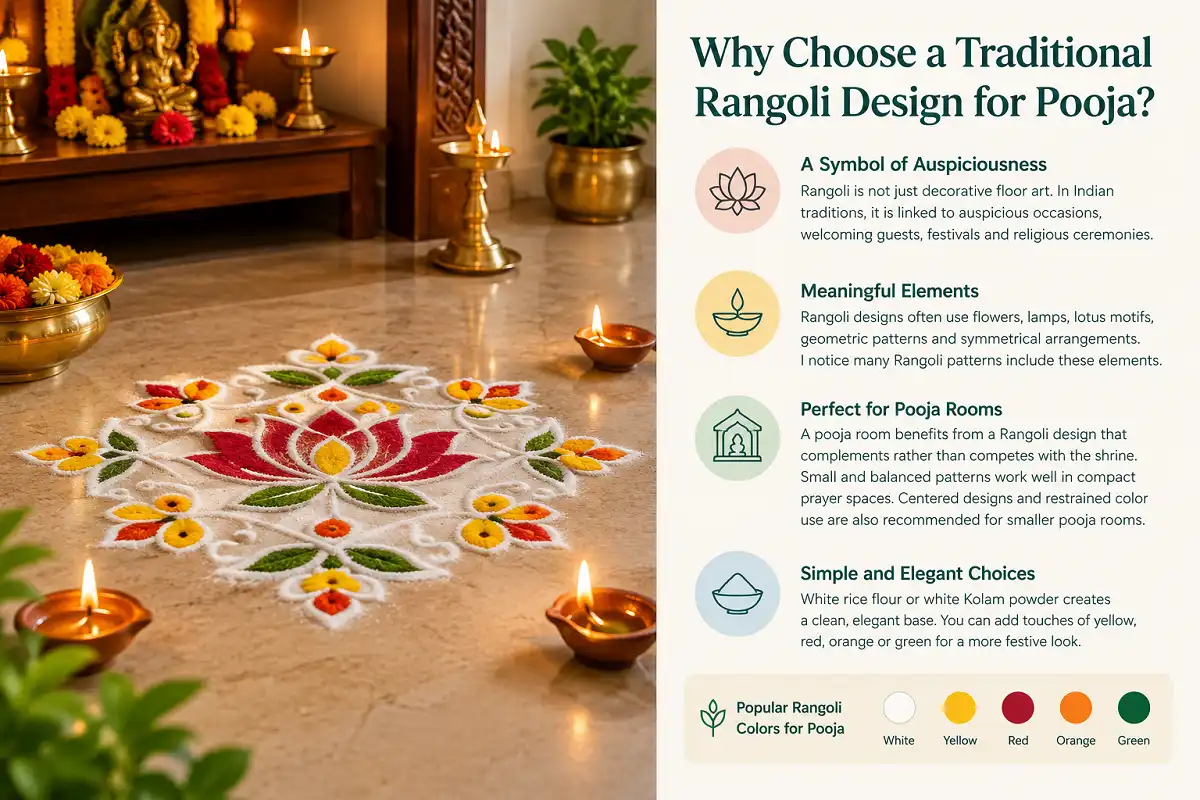
A calm, well-balanced rangoli sitting in front of the shrine — the kind of restrained, centered design this whole guide points you toward.
Rangoli is not just decorative floor art. In Indian traditions, Rangoli is linked to auspicious occasions, welcoming guests, festivals, and religious ceremonies. I have seen Rangoli used to welcome guests and to celebrate festivals.
Rangoli designs often use flowers, lamps, lotus motifs, geometric patterns, and symmetrical arrangements. I notice many Rangoli patterns include these elements.
A pooja room usually benefits from a Rangoli design that complements rather than competes with the shrine. Small and balanced Rangoli patterns are especially useful for compact prayer spaces. Recent design guidance also recommends centered Rangoli patterns and restrained use of color for smaller pooja rooms.
For an elegant appearance, white rice flour or white Kolam powder is an excellent choice. I like to add touches of yellow, red, orange, or green when I want a more festive Rangoli look.
21 Traditional Rangoli Design Ideas for Pooja
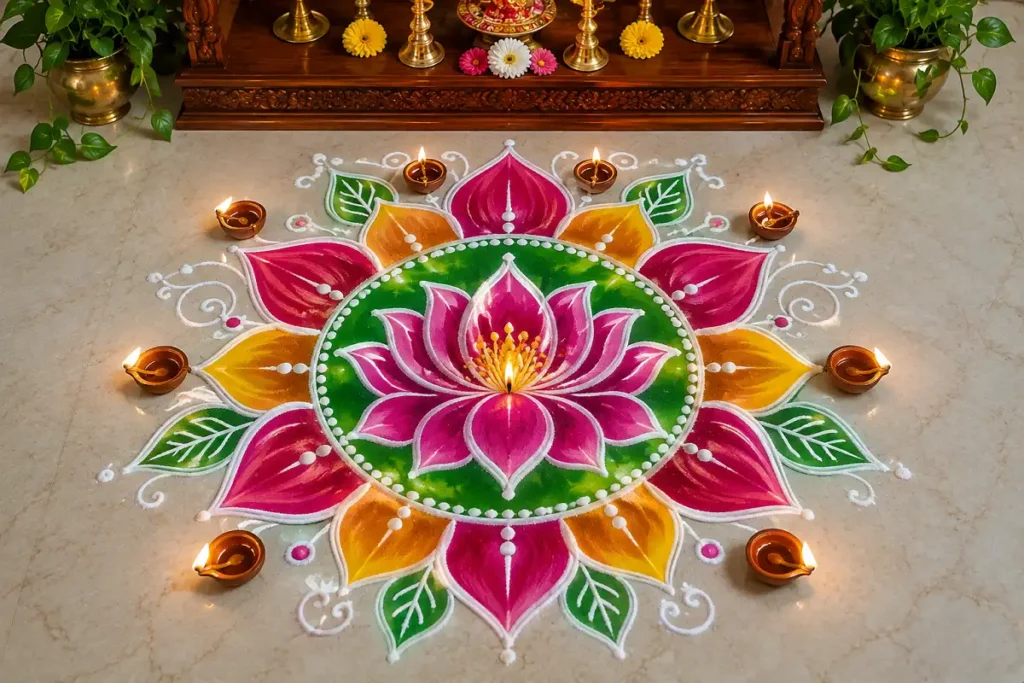
Traditional Lotus Rangoli Design
A lotus is one of the beautiful choices for a pooja room. Create a lotus with eight or sixteen petals and place lotus directly in front of the mandir.
You can keep the outline white for an appearance or fill lotus petals with pink and yellow. Add a few dots, around lotus outside to complete the design.
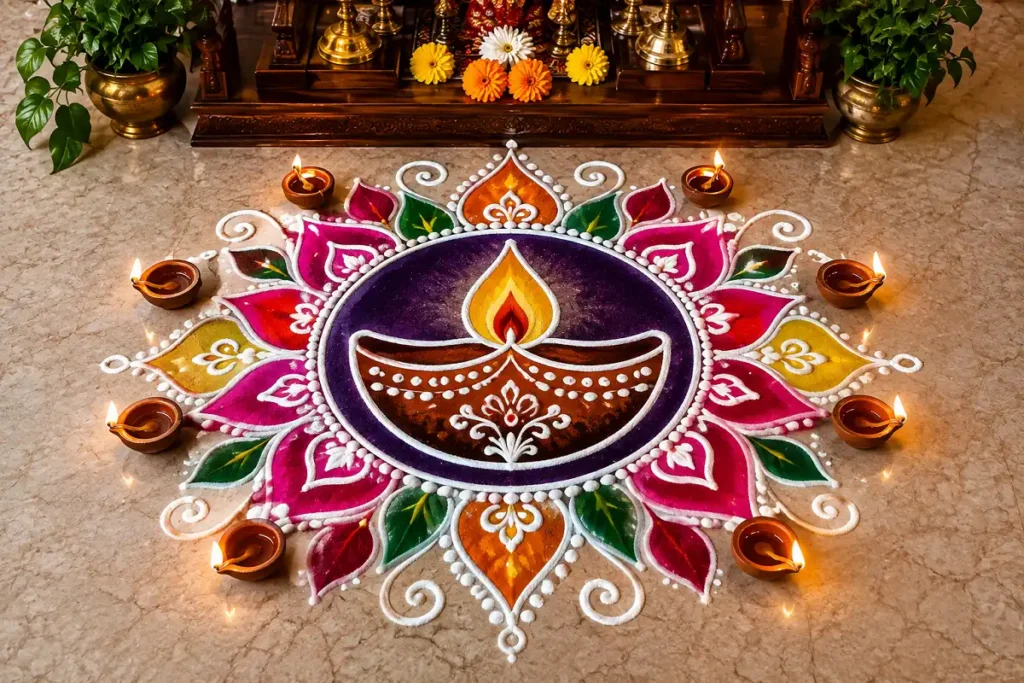
Diya Rangoli Design for Pooja
A rangoli that looks like a diya is perfect for creating a spiritual atmosphere.
Draw a diya then add curved lines, petals and tiny decorative dots around it. When you celebrate festivals such, as Diwali you can place diyas along the outer border.
The diya motif is often recommended for pooja‑room rangoli because it combines beauty with familiar spiritual symbolism.
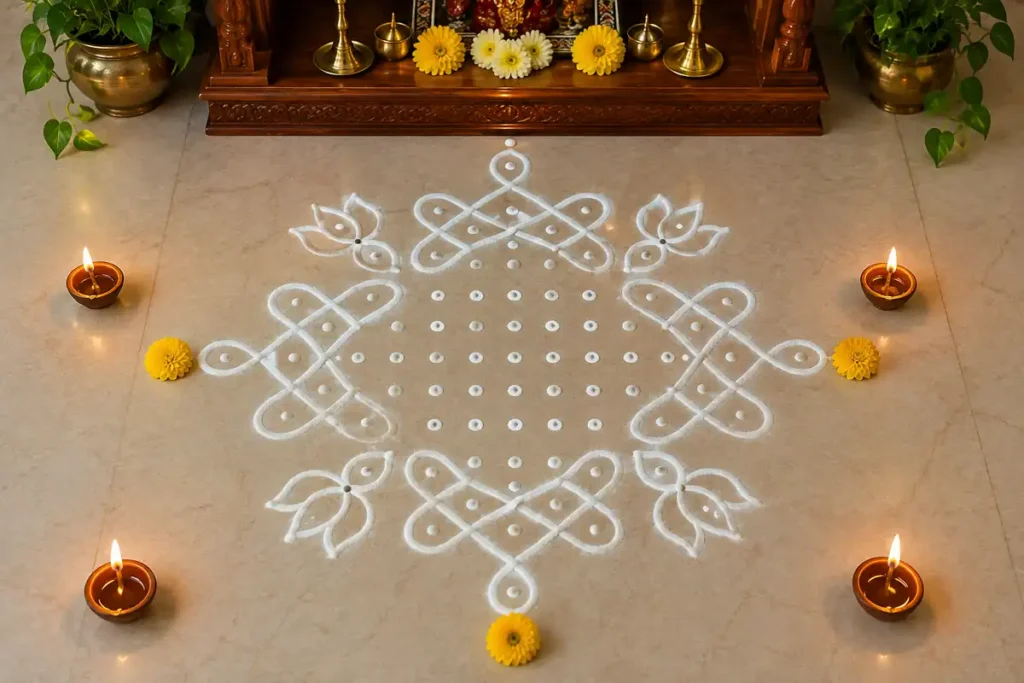
Simple Dot Rangoli for Pooja Room
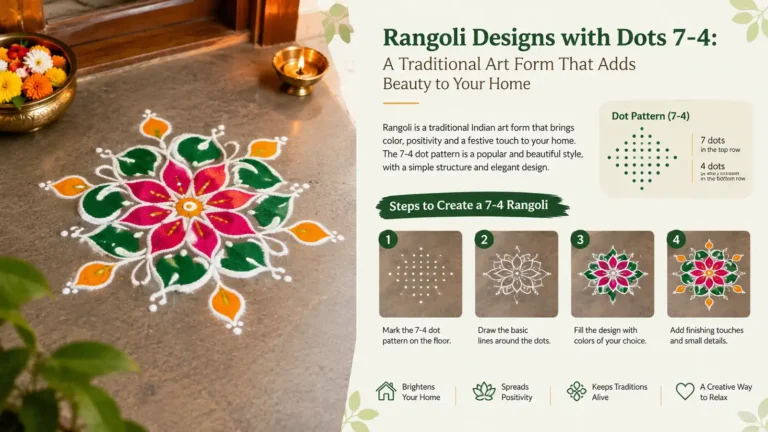
If you prefer techniques try a dot-based Kolam.
Begin with a symmetrical dot grid and connect the dots using curved lines. A 5 to 9 dot arrangement is particularly suitable for a pooja area.
Dot-based designs are a part of traditional Kolam and Muggulu styles and can be adapted to create both simple and elaborate patterns.
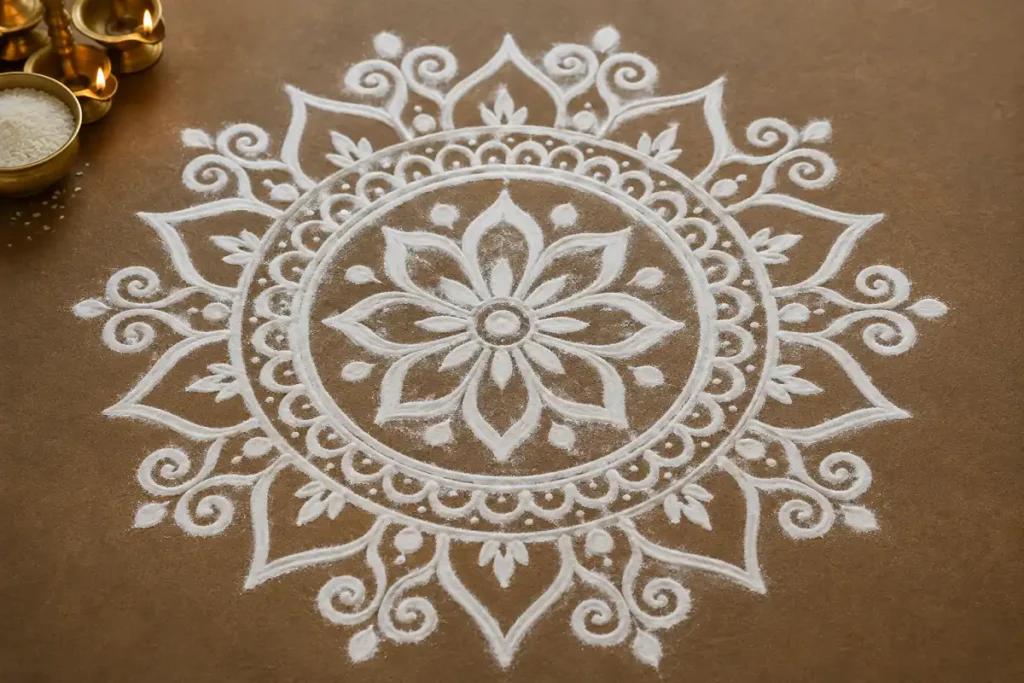
White Rice Flour Rangoli
For a traditional appearance use only white rice flour.
Create an geometric pattern directly in front of the shrine. The monochrome design looks elegant, calm and uncluttered.
White Kolam powder or rice flour is particularly suitable for pooja spaces where you want a traditional look without a large amount of color.
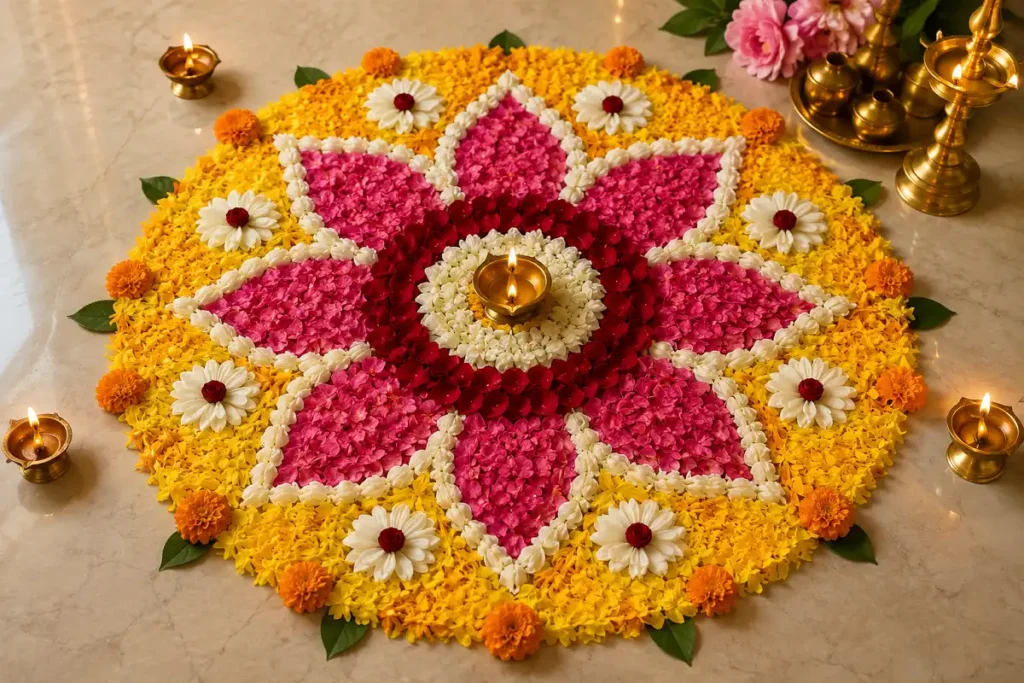
Floral Rangoli Design for Pooja
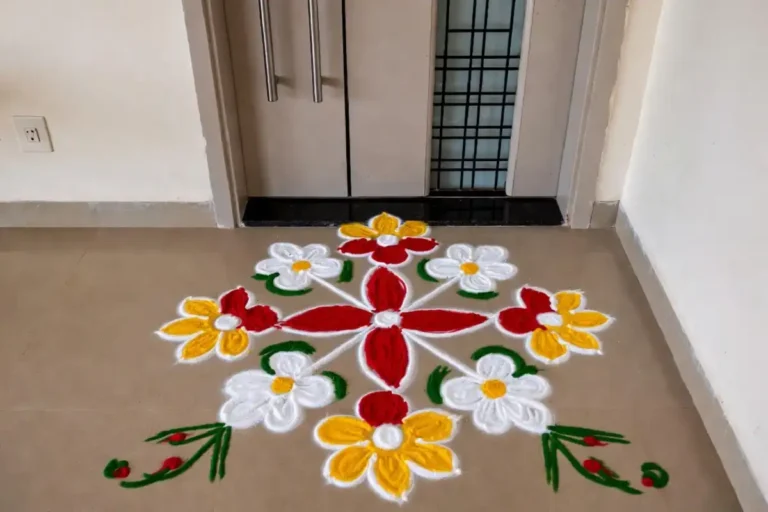
A floral rangoli can be made with one large central flower surrounded by leaves and smaller petals.
Use an arrangement to keep the rangoli symmetrical. Yellow, red, pink and white are choices for a festive version.
Floral patterns are among the choices for pooja-room rangoli because they create a soft decorative focus around the prayer area.
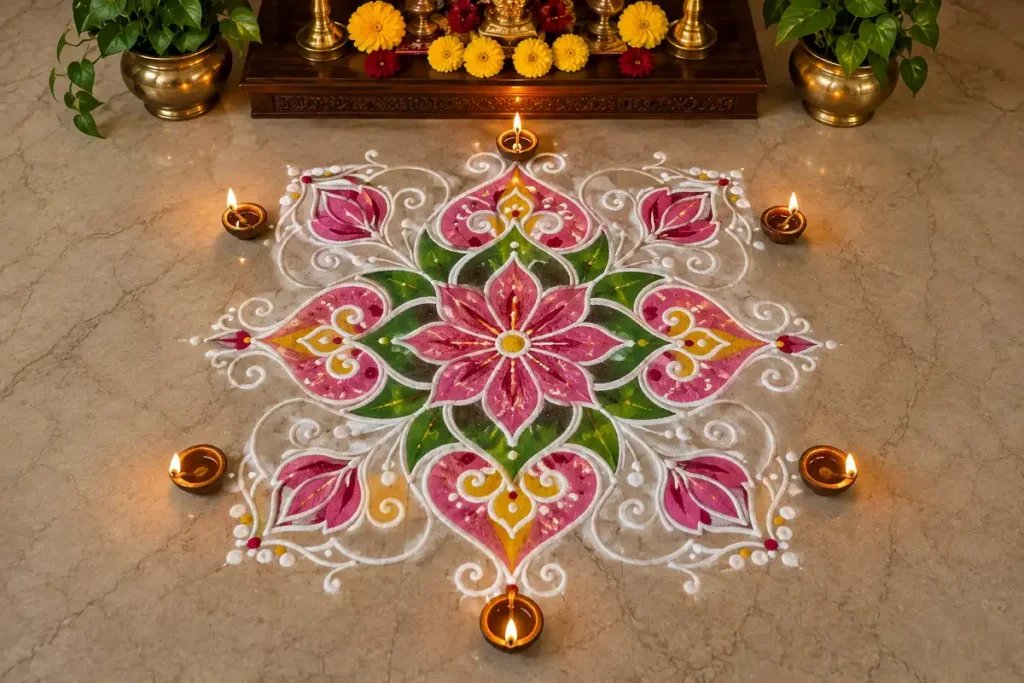
Hridaya Kamalam Inspired Rangoli
For a traditional and symbolic design try a Hridaya Kamalam-inspired pattern.
This design uses repeated petals and geometric symmetry to create a lotus- form. Traditional sources describe Hridaya Kamalam as a Kolam associated with pooja rooms Fridays, festivals and Tulsi worship.
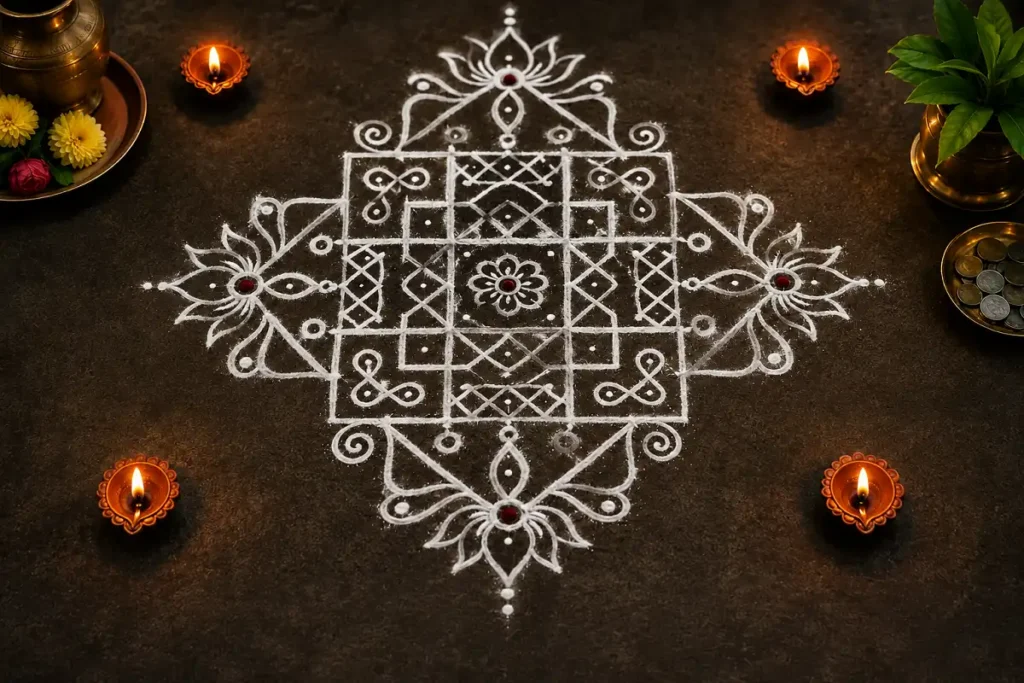
Kubera Kolam Rangoli
A Kubera Kolam is another option for a pooja room.
Use a dot pattern and connect the dots to create a balanced geometric design. A white design with an ochre border can produce a particularly traditional appearance.
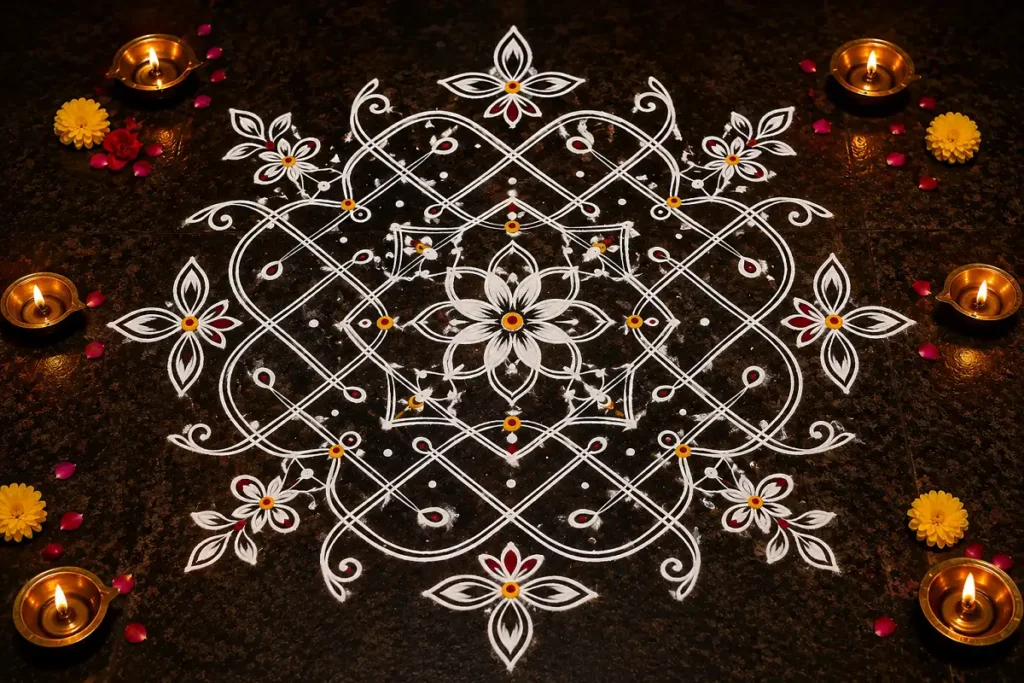
Aishwarya Kolam Design
Aishwarya Kolam is a choice when you want a traditional rangoli with dots.
The rangoli is based on arranged dots and symmetrical connecting lines. It works well as a small daily pooja rangoli.
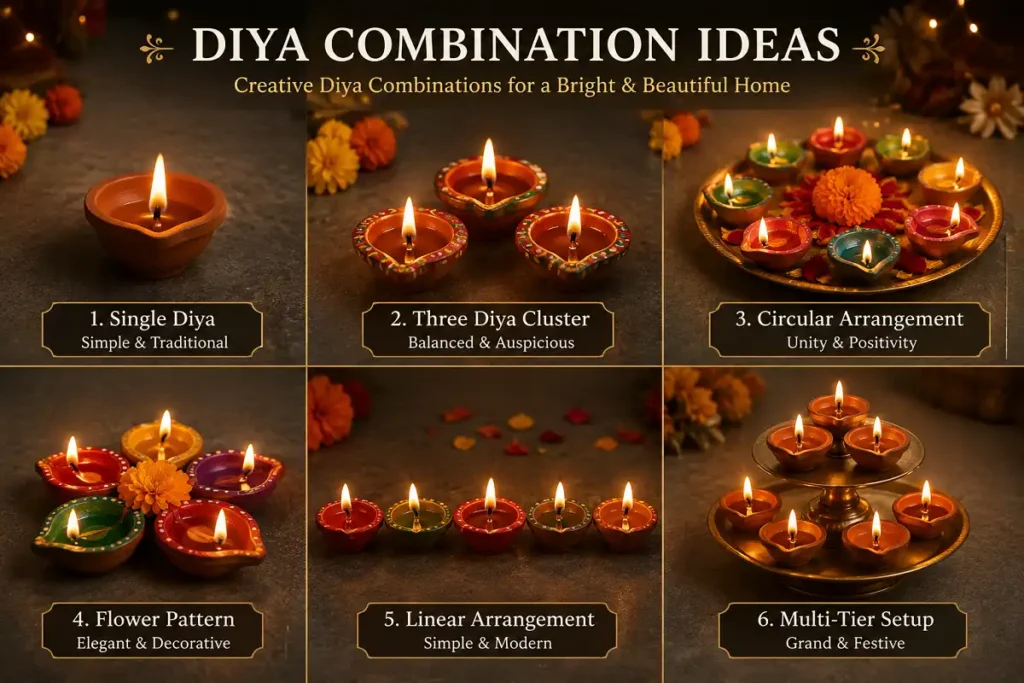
Diya Combination
Combine two classic motifs by placing a lotus in the center and small diyas around the outer edge.
This rangoli works well for Lakshmi Puja and Diwali. Keep the center open and use a circular border to prevent the rangoli from becoming too complicated.
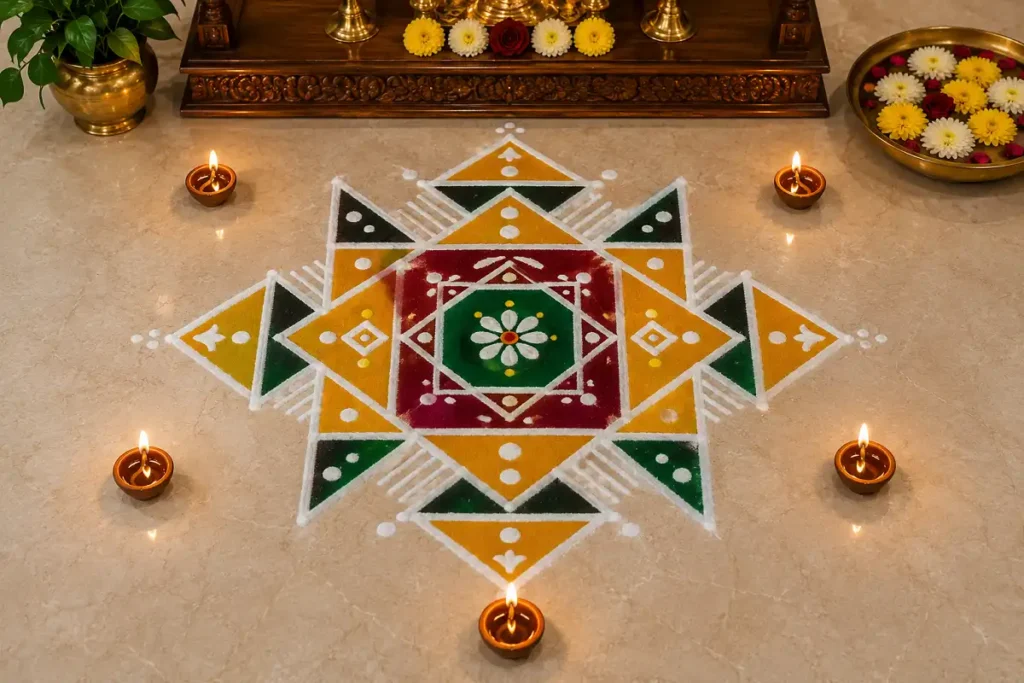
Traditional Geometric Rangoli
Not every traditional rangoli needs flowers.
Squares, diamonds, triangles, circles and repeated lines can create a geometric rangoli. Use powder with a small red or ochre border for a classic appearance.
Geometric rangoli is especially useful when you want a rangoli that looks neat and symmetrical in a prayer area.
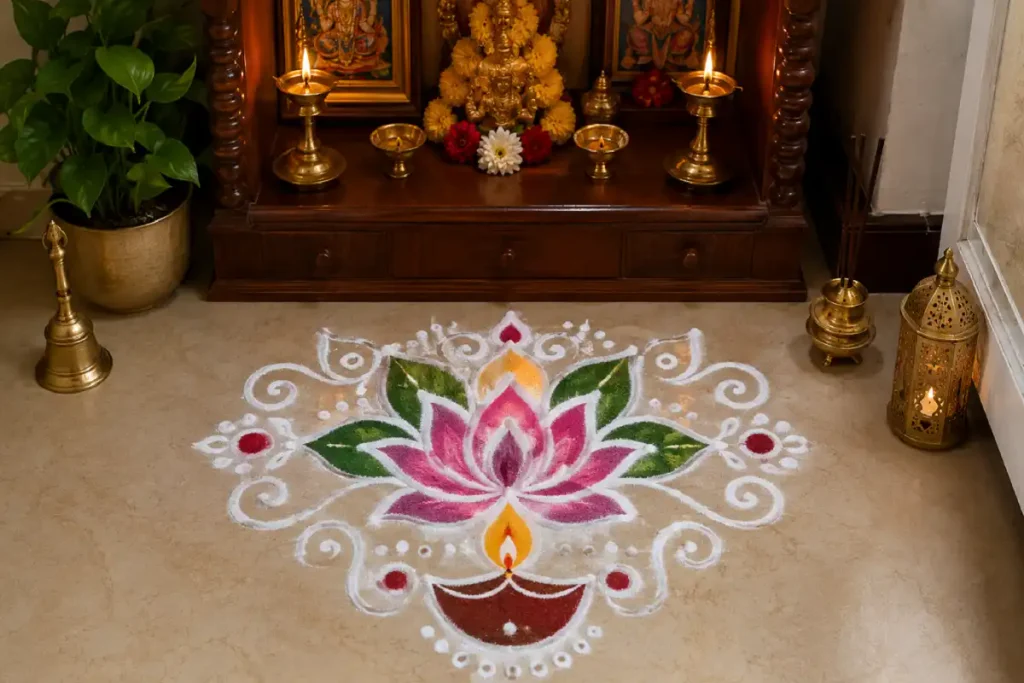
Small Pooja Room Rangoli
If your mandir is inside an apartment or has limited floor space choose a rangoli.
A small lotus, diya, eight-petal flower or 5-dot Kolam can provide decoration without taking over the walking area.
For compact pooja rooms smaller symmetrical rangoli are generally more practical than festival-style rangoli.
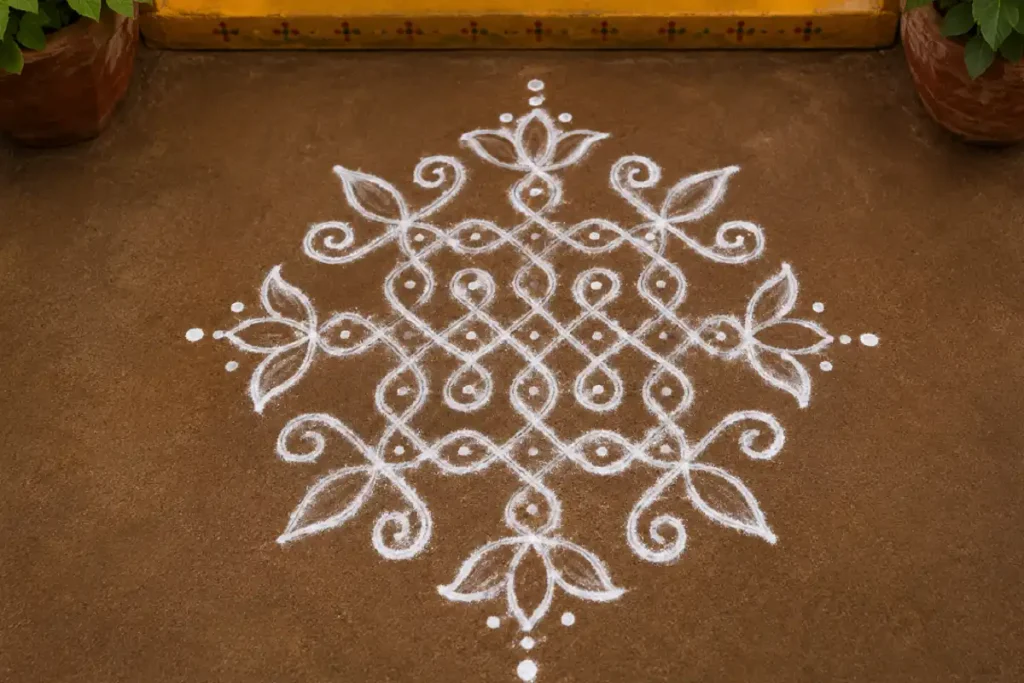
Traditional Padi Kolam
Padi Kolam is a choice if you prefer clean lines and geometric structure.
Create parallel lines and connect them into a symmetrical pattern. You can add a lotus or diya motif in the center.
Traditional Padi Kolam variations are used for pooja rooms and festival decorations making them a natural fit for this theme.
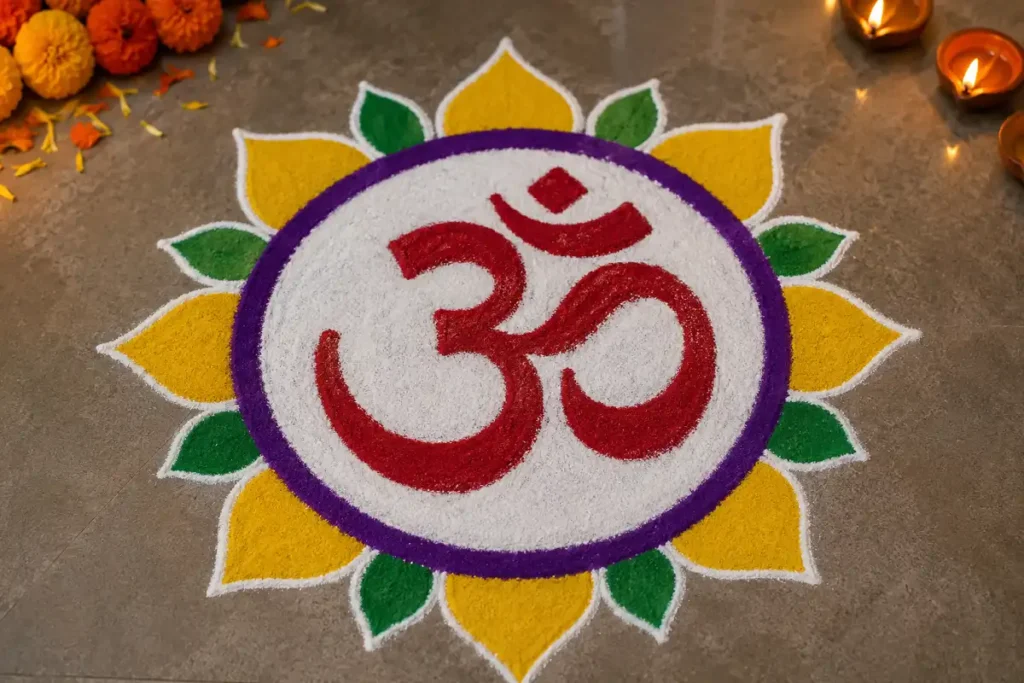
Simple Om Rangoli
Create an Om symbol in the center and surround it with dots, petals or a circular border.
This rangoli is particularly useful when you want a traditional rangoli that can be drawn quickly before daily prayer.
For a look use only white powder.
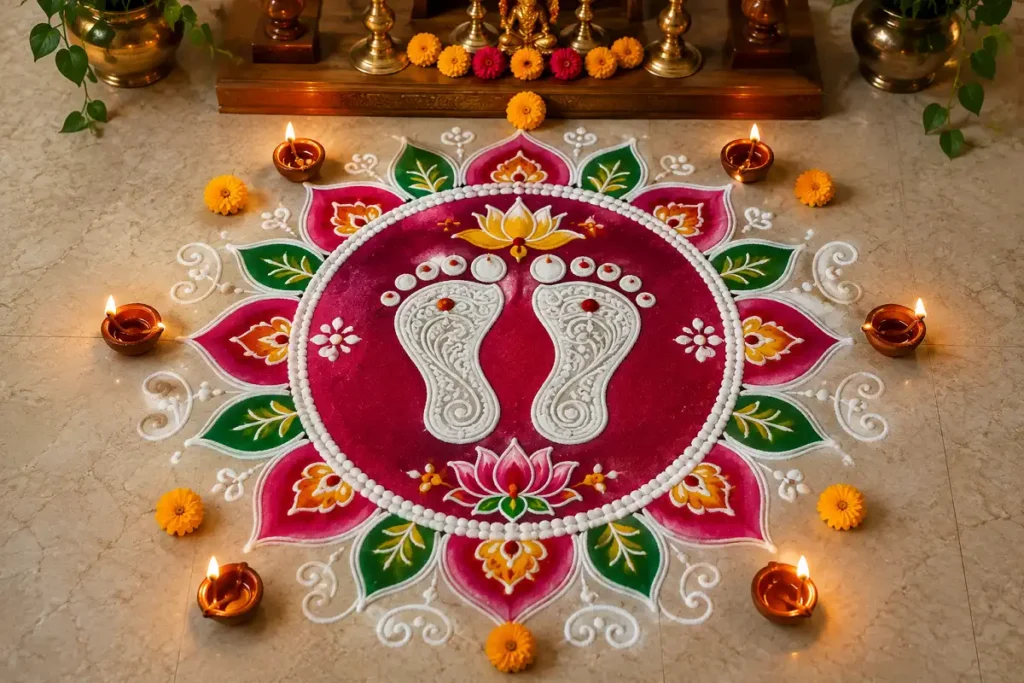
Lakshmi Footprint Rangoli
Lakshmi footprints can be incorporated into a pooja rangoli, especially for Lakshmi Puja.
Create a lotus at the center and place a pair of decorative footprints leading toward the shrine. Surround the rangoli with flowers or dots.
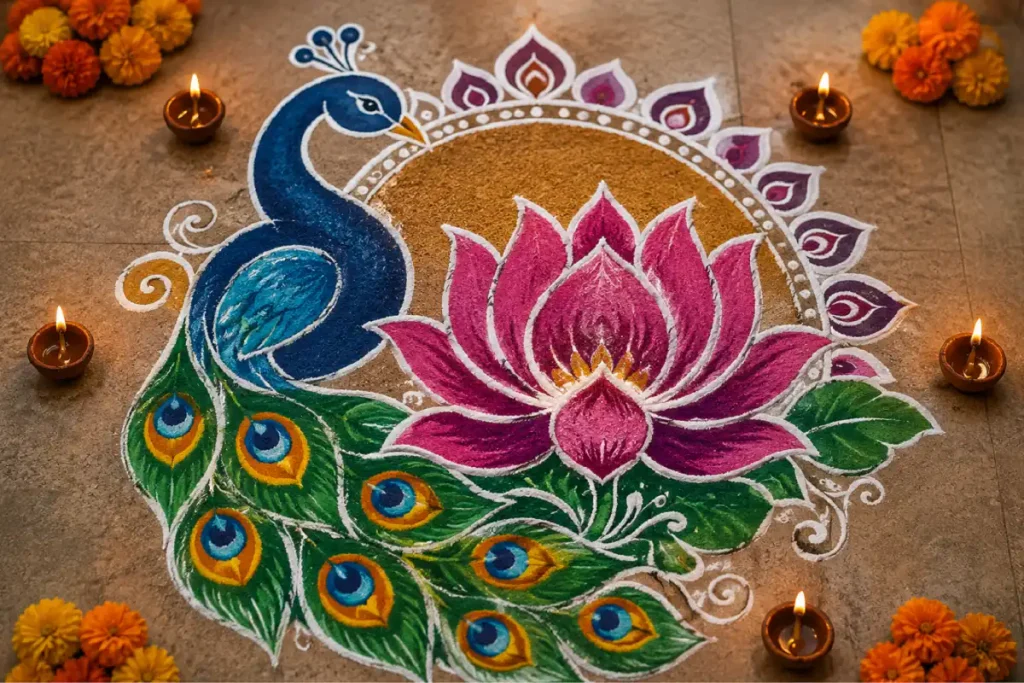
Peacock and Lotus Rangoli
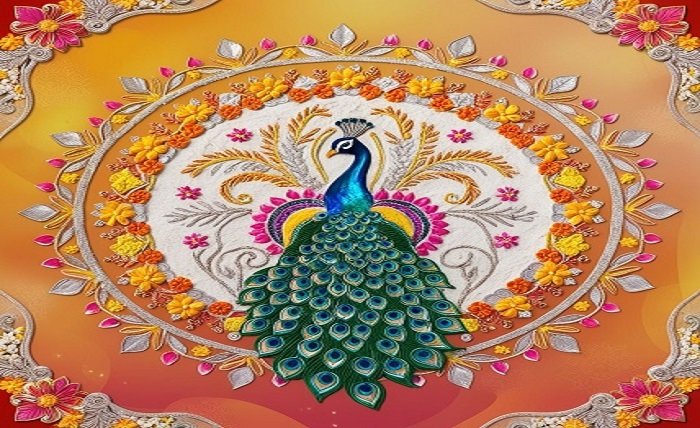
For a decorative traditional rangoli combine a simple peacock with lotus flowers.
Avoid complicated shading. Instead use outlines and a limited color palette to retain the traditional appearance.
This rangoli is better suited to pooja spaces or special occasions.
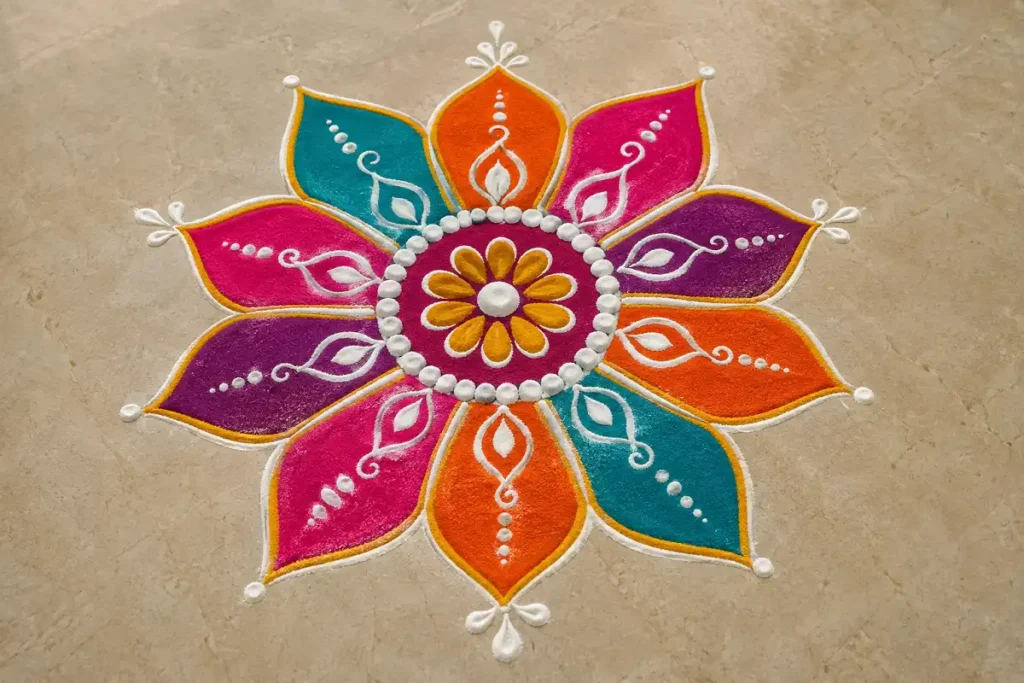
Eight-Petal Mandala Rangoli
An eight-petal mandala rangoli is simple enough for beginners. Still looks elegant.
Start with a circle add eight evenly spaced petals and finish with an outer ring of dots. You can leave it white. Fill alternate petals with traditional colors.
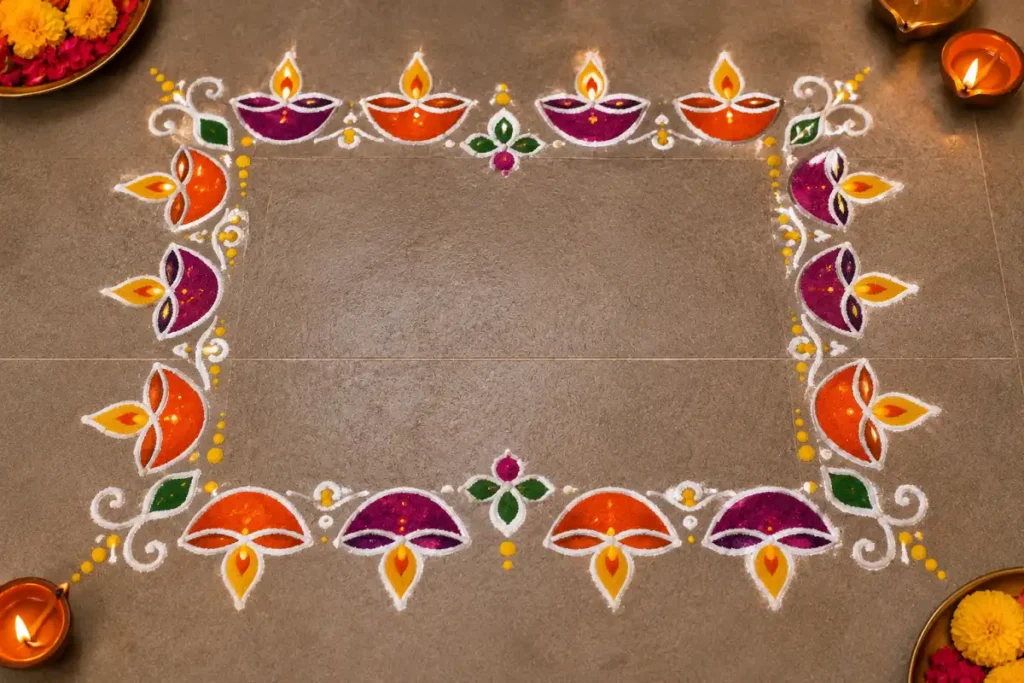
Diya Border Rangoli
Of creating a large central rangoli decorate the edge of the pooja area with a repeating diya border.
Draw diya shapes connected by floral or curved patterns. This rangoli is a choice when the floor space in front of the shrine is limited.
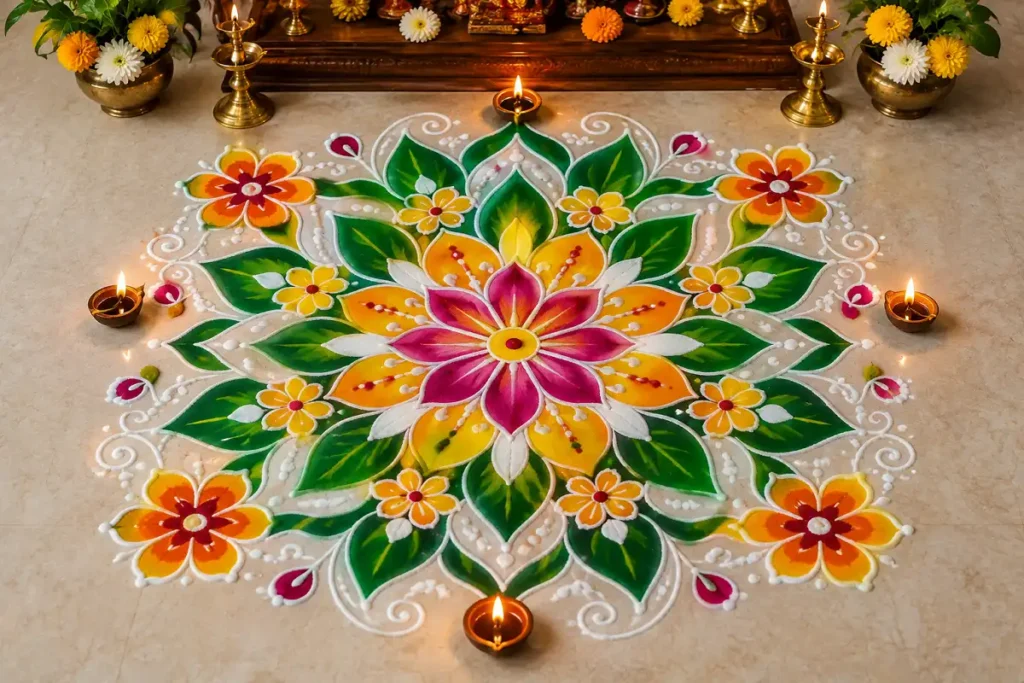
Traditional Flower and Leaf Rangoli
Draw a flower and surround it with four or eight leaf clusters.
Use white as the color and add small amounts of yellow and red. This rangoli gives a handmade appearance without looking too elaborate.
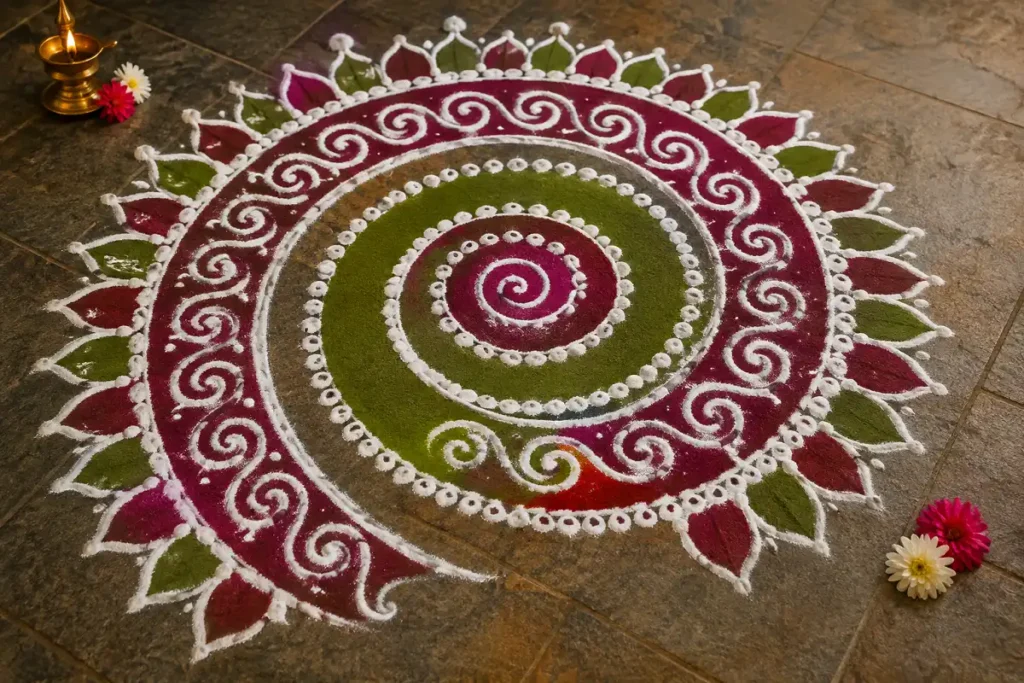
Spiral Kolam Rangoli
A spiral-based freehand Kolam can create a traditional look.
Start with a spiral in the center and extend curved patterns outward in four directions. Finish with a border.
Traditional pooja-room examples include freehand curved-line designs that can be adapted to different floor sizes.
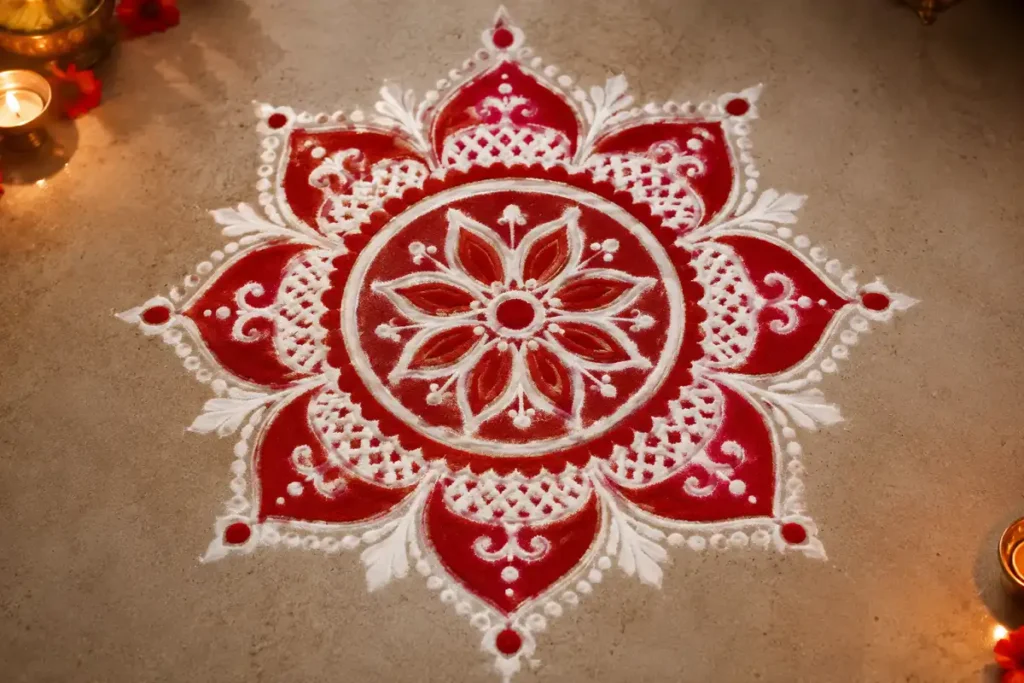
Traditional Red and White Rangoli
For a regional appearance combine white rangoli powder with a red or ochre border.
The contrast makes even a simple geometric or floral rangoli look distinctive. This rangoli is particularly effective on stone, tile or earthy-colored flooring.
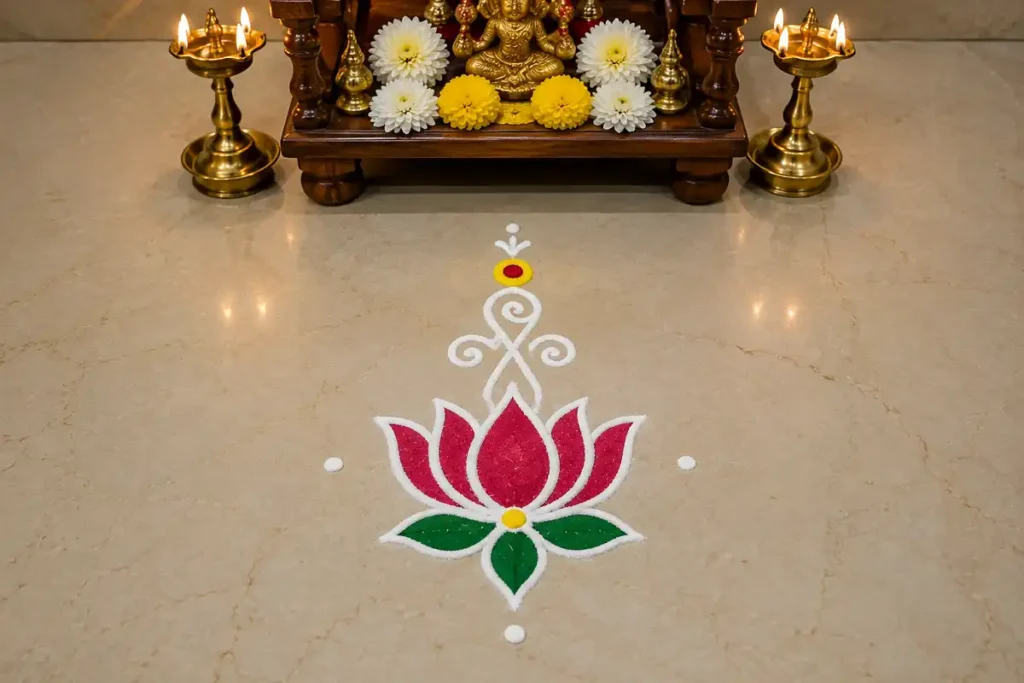
Minimal Daily Pooja Rangoli
Sometimes the best rangoli is the one you can actually draw every day.
Choose a central flower a few dots and a simple border. Keep the rangoli symmetrical. Use white rice flour.
A simple daily rangoli can take a few minutes while still giving the pooja area a traditional decorative touch. Recent guidance similarly emphasizes easy-to-redraw designs, for everyday prayer spaces.
How to Choose the Right Rangoli for Your Pooja Room
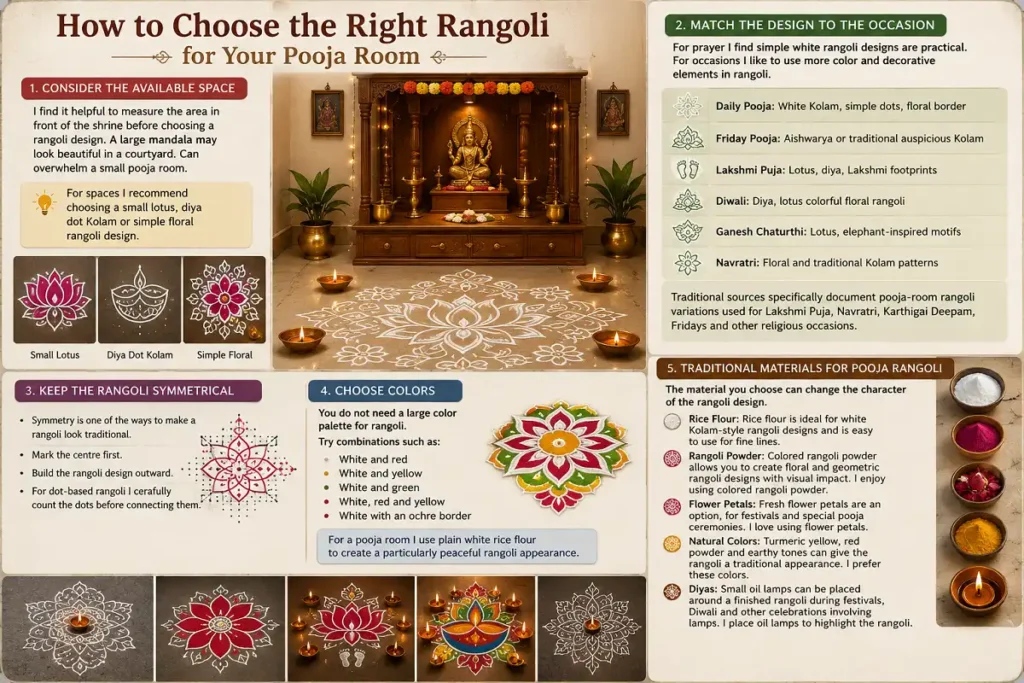
Space, occasion, symmetry, and color — the four factors below, side by side, to help you narrow down the 21 ideas above to the one that fits your room.
Consider the Available Space
I find it helpful to measure the area in front of the shrine before choosing a rangoli design. A large mandala may look beautiful in a courtyard. Can overwhelm a small pooja room.
For spaces I recommend choosing a small lotus, diya dot Kolam or simple floral rangoli design.
Match the Design to the Occasion
For prayer I find simple white rangoli designs are practical.
For occasions I like to use more color and decorative elements in rangoli.
- Daily Pooja: White Kolam, simple dots, floral border
- Friday Pooja: Aishwarya or traditional auspicious Kolam
- Lakshmi Puja: Lotus, diya, Lakshmi footprints
- Diwali: Diya, lotus colorful floral rangoli
- Ganesh Chaturthi: Lotus, elephant-inspired motifs
- Navratri: Floral and traditional Kolam patterns
Traditional sources specifically document pooja-room rangoli variations used for Lakshmi Puja, Navratri, Karthigai Deepam, Fridays and other religious occasions.
Keep the Rangoli Symmetrical
Symmetry is one of the ways to make a rangoli look traditional.
Mark the centre first. Build the rangoli design outward. For dot-based rangoli I carefully count the dots before connecting them.
Choose Colors
You do not need a large color palette for rangoli.
Try combinations such as:
- White and red
- White and yellow
- White and green
- White, red and yellow
- White with an ochre border
For a pooja room I use plain white rice flour to create a particularly peaceful rangoli appearance.
Traditional Materials for Pooja Rangoli
The material you choose can change the character of the rangoli design.
Ideal for white Kolam-style rangoli designs and is easy to use for fine lines.
Colored rangoli powder allows you to create floral and geometric rangoli designs with visual impact. I enjoy using colored rangoli powder.
Fresh flower petals are an option, for festivals and special pooja ceremonies. I love using flower petals.
Turmeric yellow, red powder and earthy tones can give the rangoli a traditional appearance. I prefer these colors.
Small oil lamps can be placed around a finished rangoli during festivals, Diwali and other celebrations involving lamps. I place oil lamps to highlight the rangoli.
Common Mistakes to Avoid
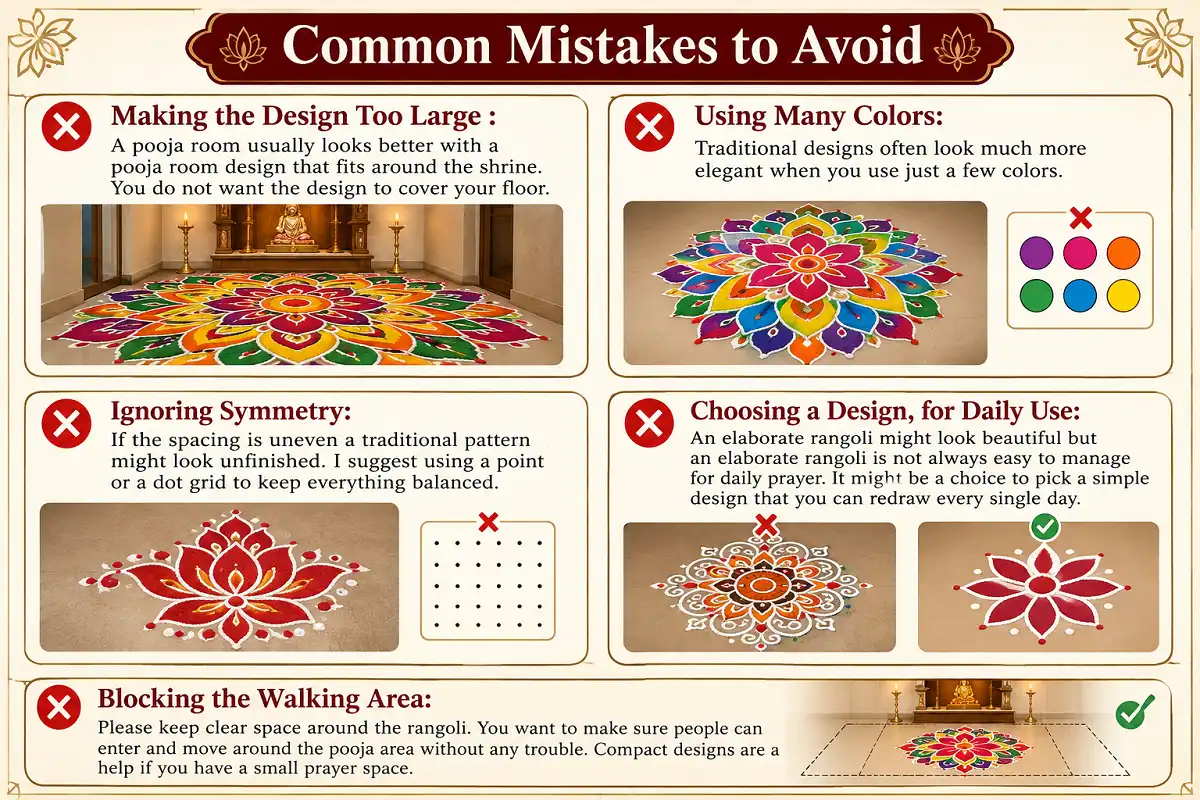
The five slip-ups below, laid out together, so you can check your own design against them before you finalize it.
Easy Color Combinations for Traditional Pooja Rangoli
| Rangoli Style | Recommended Colors | Best For |
|---|---|---|
| White Kolam | White | Daily Pooja |
| Lotus Rangoli | Pink, white, yellow | Lakshmi Puja |
| Diya Rangoli | Orange, yellow, red | Diwali |
| Floral Rangoli | Red, yellow, green | Festivals |
| Geometric Rangoli | White, red, ochre | Traditional Pooja |
| Flower Petal Rangoli | Natural flower colors | Special Pooja |
| Mandala Rangoli | White, pink, yellow | Pooja Room Decoration |
Traditional Rangoli Designs for a Peaceful Pooja Space
I find that a traditional rangoli design for pooja does not need to be complicated to be beautiful. In fact, some of the most timeless rangoli designs use nothing more than white rice flour, a few carefully placed dots, simple curves, and a symmetrical floral or geometric pattern.
Whether I prefer a rangoli design for pooja room, a lotus rangoli, a diya design, a simple Kolam, or an auspicious geometric pattern, I choose something that fits my space and feels natural to draw.
For prayer, I keep the rangoli simple and peaceful. For festivals such as Diwali, Lakshmi Puja, Navratri, or Ganesh Chaturthi, I make the rangoli more colorful and decorative.
The beauty of rangoli lies in its simplicity, symmetry, and connection to generations of Indian floor art traditions. With the right rangoli design, even a small pooja corner can become a beautiful part of my home.
FAQs
What is the best traditional rangoli design for pooja?
A simple lotus, diya, dot-based Kolam, floral rangoli or a traditional geometric pattern is a choice. If you want a rangoli design for everyday use a small and balanced white design is very easy to manage.
Which rangoli is best for a pooja room?
A small pooja room rangoli design that sits in front of your shrine is the best way to go. Many people love using lotus, diya, floral or dot-based Kolam designs for this.
Can I use a rangoli for daily pooja?
Yes you can. You can quickly draw a white rice-flour Kolam or a simple floral pattern every single day.
Which colors are best for pooja rangoli?
White is the classic color for many Kolam-inspired designs. You can also add red, yellow orange, pink or green when you want a pooja rangoli for festivals or special days.
Is a lotus rangoli for pooja?
Yes it is. A lotus is a choice, for a traditional pooja rangoli because a lotus looks very graceful and stays symmetrical. A lotus works well whether you are making a design or a big one.
Can I make a rangoli in a small pooja room?
Course you can. You should pick a 5–9 dot Kolam, a small lotus, a diya motif or a simple mandala. You want the traditional rangoli to look nice with your shrine of making the small space feel too crowded.