Simple and Easy Festive Floor Art Designs to Try
Floor art has been part of Indian homes for generations. Every festival season, families bring color to their doorsteps through patterns that welcome guests and celebrate the occasion.
Easy festive floor art lets anyone take part in this tradition, even without years of practice. Whether you use rangoli powder, flower petals, or chalk, the process is simple and deeply satisfying.
This guide walks you through beginner-friendly ideas, practical tips, and design choices that make your festival space truly feel alive.
Why Easy Festive Floor Art Belongs in Every Celebration
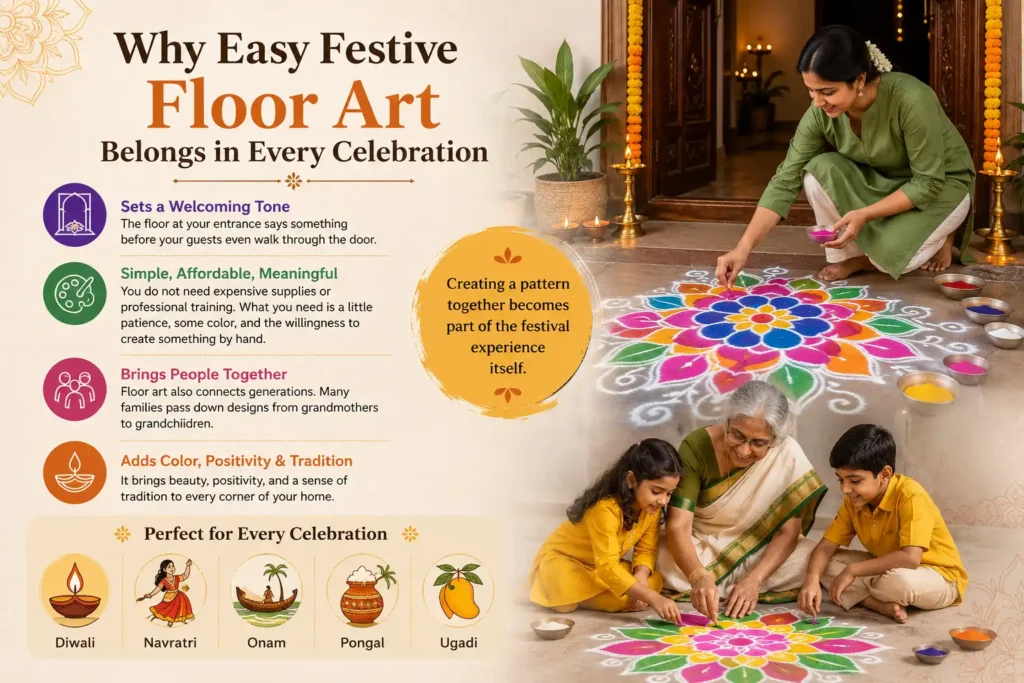
Festival decorations go beyond lights and sweets. The floor at your entrance says something before your guests even walk through the door.
Easy festive floor art sets a welcoming tone and brings warmth to any home during celebrations like Diwali, Navratri, Onam, Pongal, and Ugadi.
You do not need expensive supplies or professional training. What you need is a little patience, some color, and the willingness to create something by hand.
Floor art also connects generations. Many families pass down designs from grandmothers to grandchildren. Creating a pattern together becomes part of the festival experience itself.
How to Get Started with Easy Festive Floor Art
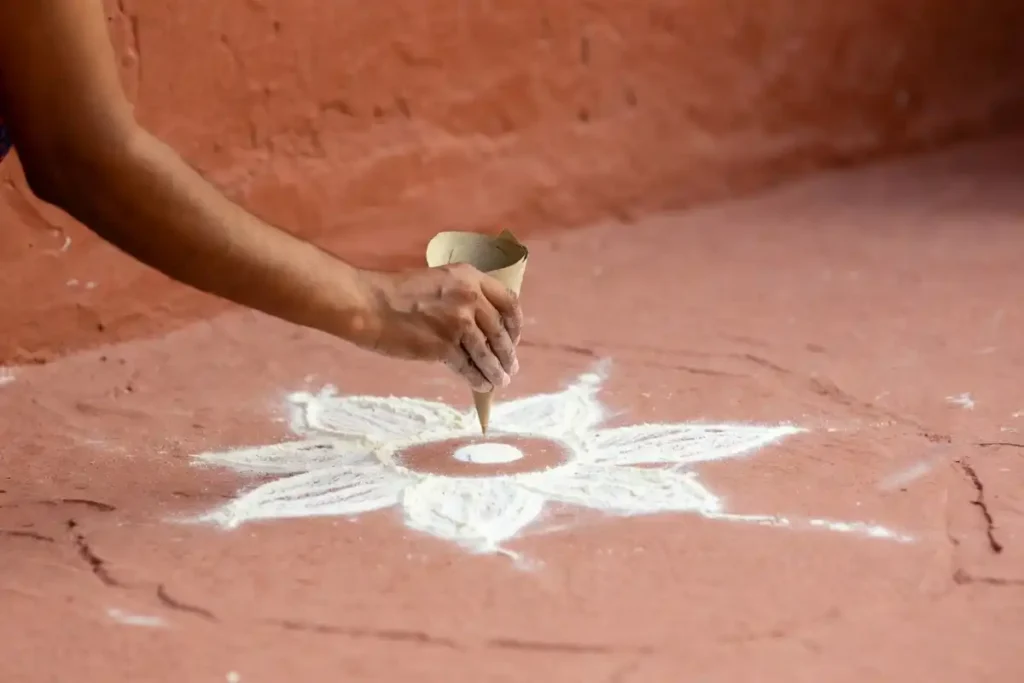
Starting is always the hardest part. But easy festive floor art becomes approachable once you break it into clear steps.
What you will need:
- Rangoli powder or chalk powder in multiple colors
- A small cone or squeeze bottle for fine lines
- A flat surface, preferably near the entrance or courtyard
- White powder or chalk to sketch the base outline
Basic steps to begin:
Clean and dry your floor area thoroughly before starting.
Lightly sketch your pattern with chalk or white powder first.
Fill in shapes from the center outward, one color at a time.
Use a thin stick or toothpick to fix any uneven edges.
Add final details like dots, petals, or border lines last.
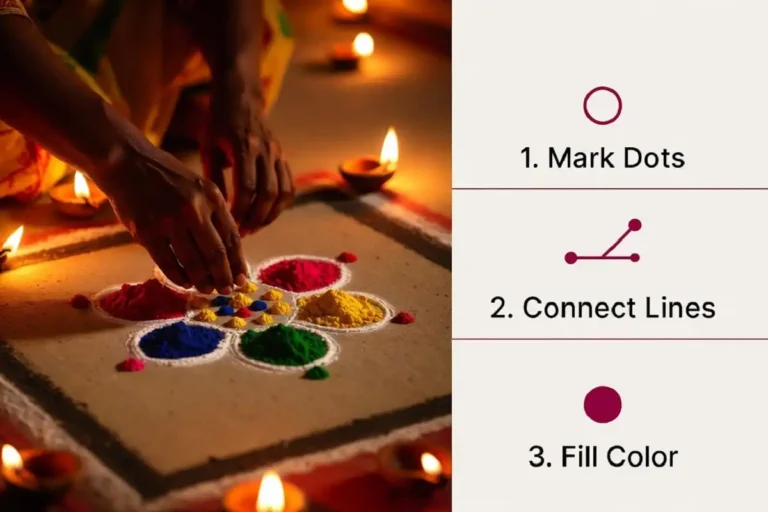
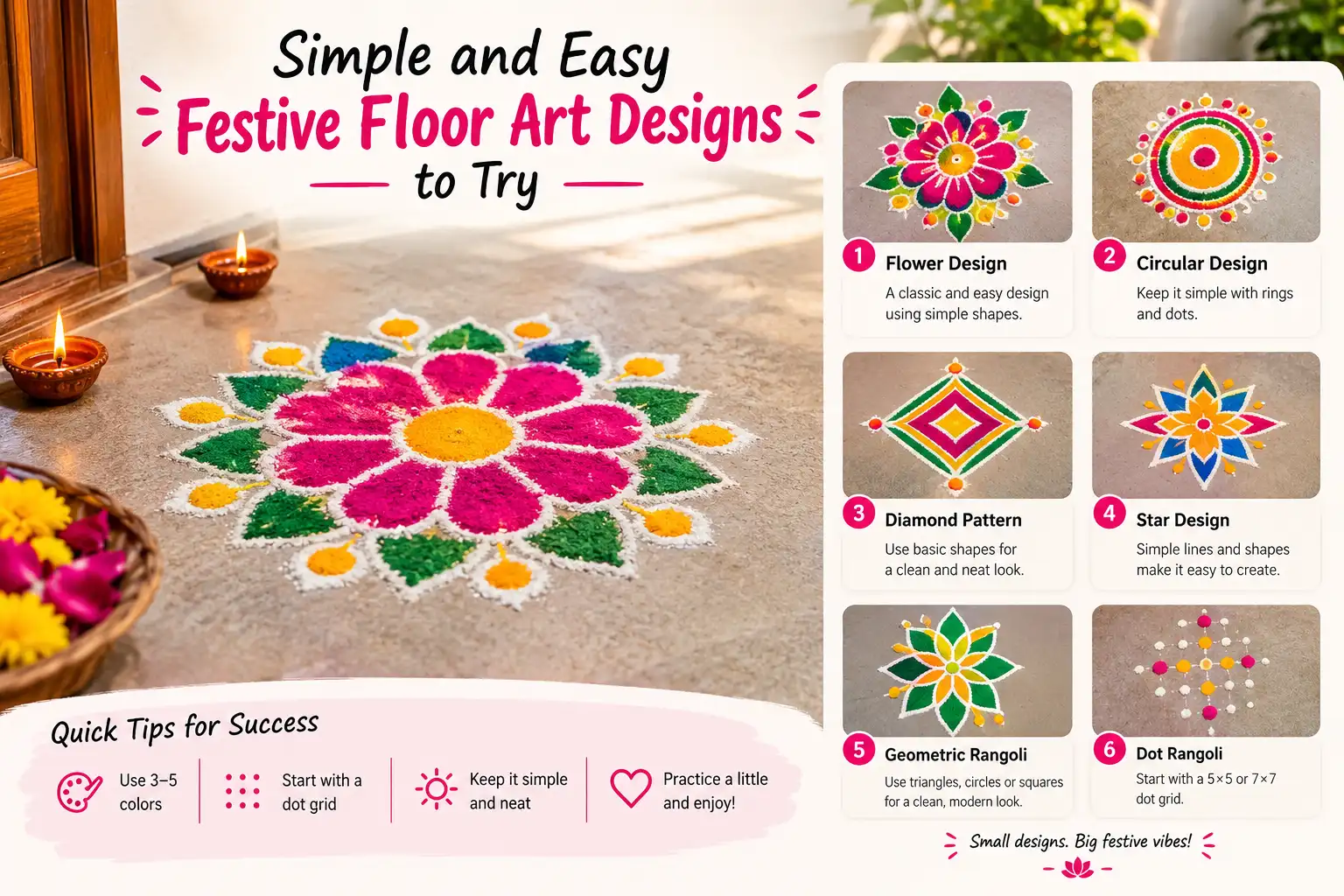
If you are trying rangoli for the first time, starting with a dot-grid method works very well. Place dots in a grid pattern, then connect them with curved or straight lines to form a design. This method gives structure to your work and helps you stay symmetrical. You can explore more beginner-friendly ideas at Beginner-Friendly Rangoli Art for step-by-step visual references.
Best Styles of Easy Festive Floor Art to Try
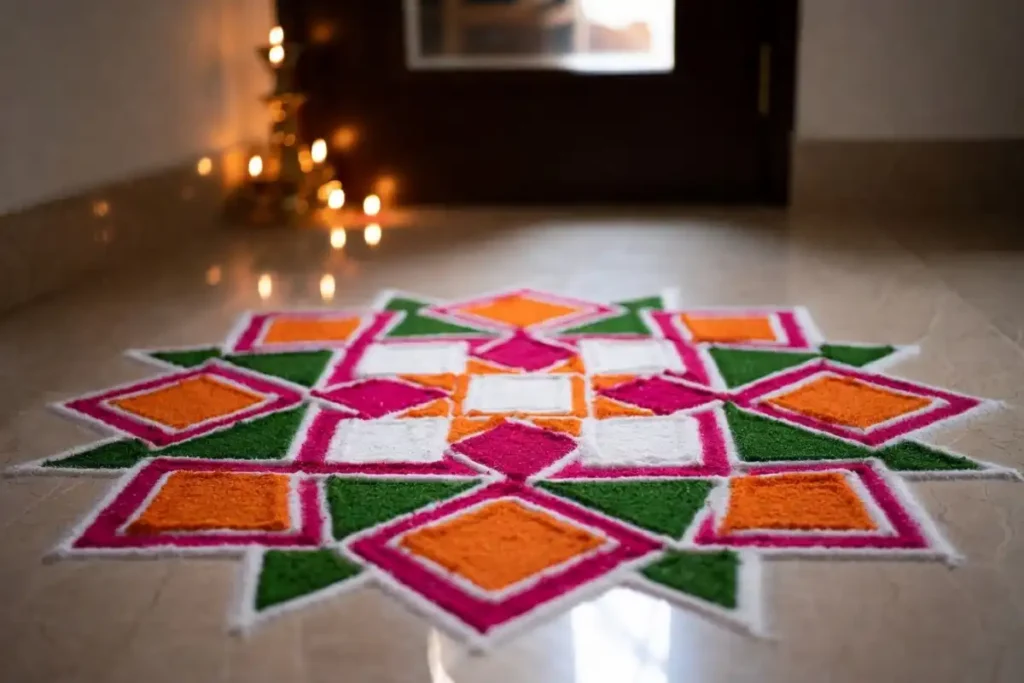
Not all floor art styles suit every space or skill level. Here are popular approaches that balance visual impact with ease of execution.
Floral Rangoli Patterns
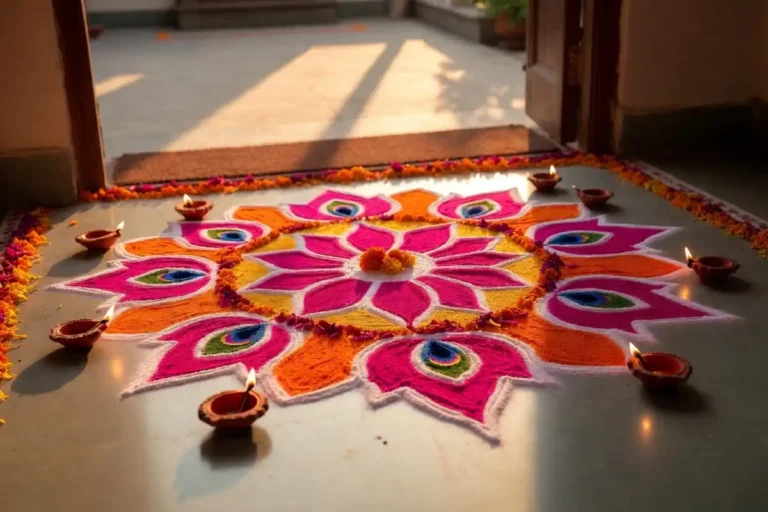
Flowers are the most forgiving shapes in floor art. Petals can vary slightly in size without looking wrong. A simple five-petal or eight-petal flower in two or three colors makes a complete design on its own. Use marigold yellow, rose pink, and white for a classic festival look, or real petals for a natural, fragrance-filled design.
Geometric Floor Designs
Squares, triangles, and diamonds arranged in a repeating grid are easy to control and look striking on any floor. This style works well for larger entrances where you want the design to fill more space without becoming too complex, and it holds up well throughout the day thanks to clean, defined edges.
Village-Inspired Traditional Motifs
Traditional designs from rural India often feature peacocks, lamps, leaves, and simple human forms. These motifs carry cultural meaning and look rich without being complicated. If you want to explore this style, Village Rangoli Easy offers a helpful collection of inspired patterns.
Dot and Line Designs
Kolam, a South Indian floor art tradition, is built entirely on dot-and-line geometry. A grid of dots becomes the skeleton, and lines wrap around them in loops and curves to form intricate-looking designs. This style is meditative to create and produces beautiful results even for newcomers.
Colors and Materials That Work Best
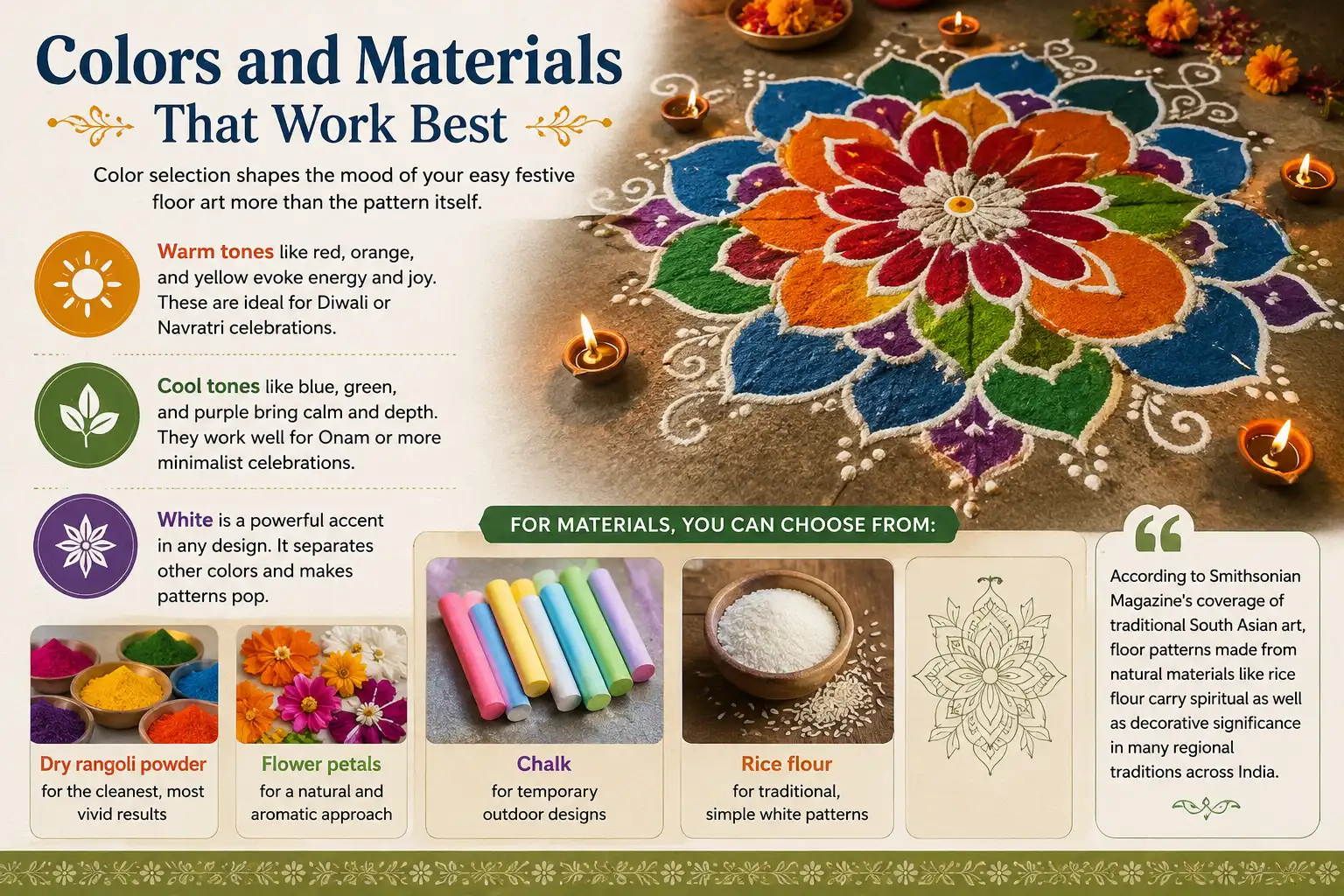
Color selection shapes the mood of your easy festive floor art more than the pattern itself.
Warm tones like red, orange, and yellow evoke energy and joy. These are ideal for Diwali or Navratri celebrations.
Cool tones like blue, green, and purple bring calm and depth. They work well for Onam or more minimalist celebrations.
White is a powerful accent in any design. It separates other colors and makes patterns pop.
For materials, you can choose from:
- Dry rangoli powder for the cleanest, most vivid results
- Flower petals for a natural and aromatic approach
- Chalk for temporary outdoor designs
- Rice flour for traditional, simple white patterns
Easy Festive Floor Art Without Stencils
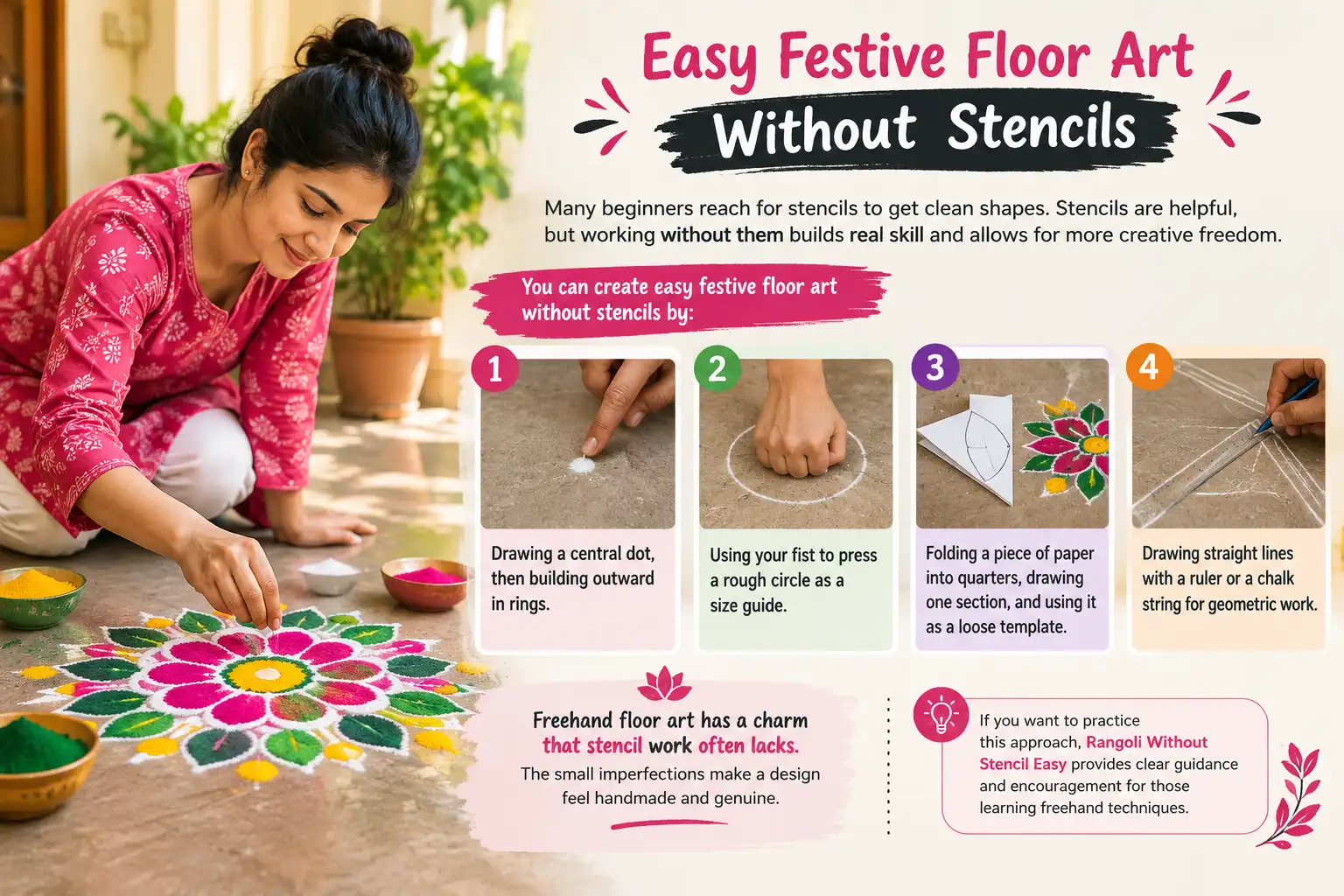
Many beginners reach for stencils to get clean shapes. Stencils are helpful, but working without them builds real skill and allows for more creative freedom.
You can create easy festive floor art without stencils by:
- Drawing a central dot, then building outward in rings
- Using your fist to press a rough circle as a size guide
- Folding a piece of paper into quarters, drawing one section, and using it as a loose template
- Drawing straight lines with a ruler or a chalk string for geometric work
Freehand floor art has a charm that stencil work often lacks. The small imperfections make a design feel handmade and genuine. If you want to practice this approach, Rangoli Without Stencil Easy provides clear guidance and encouragement for those learning freehand techniques.
Small Spaces and Easy Festive Floor Art
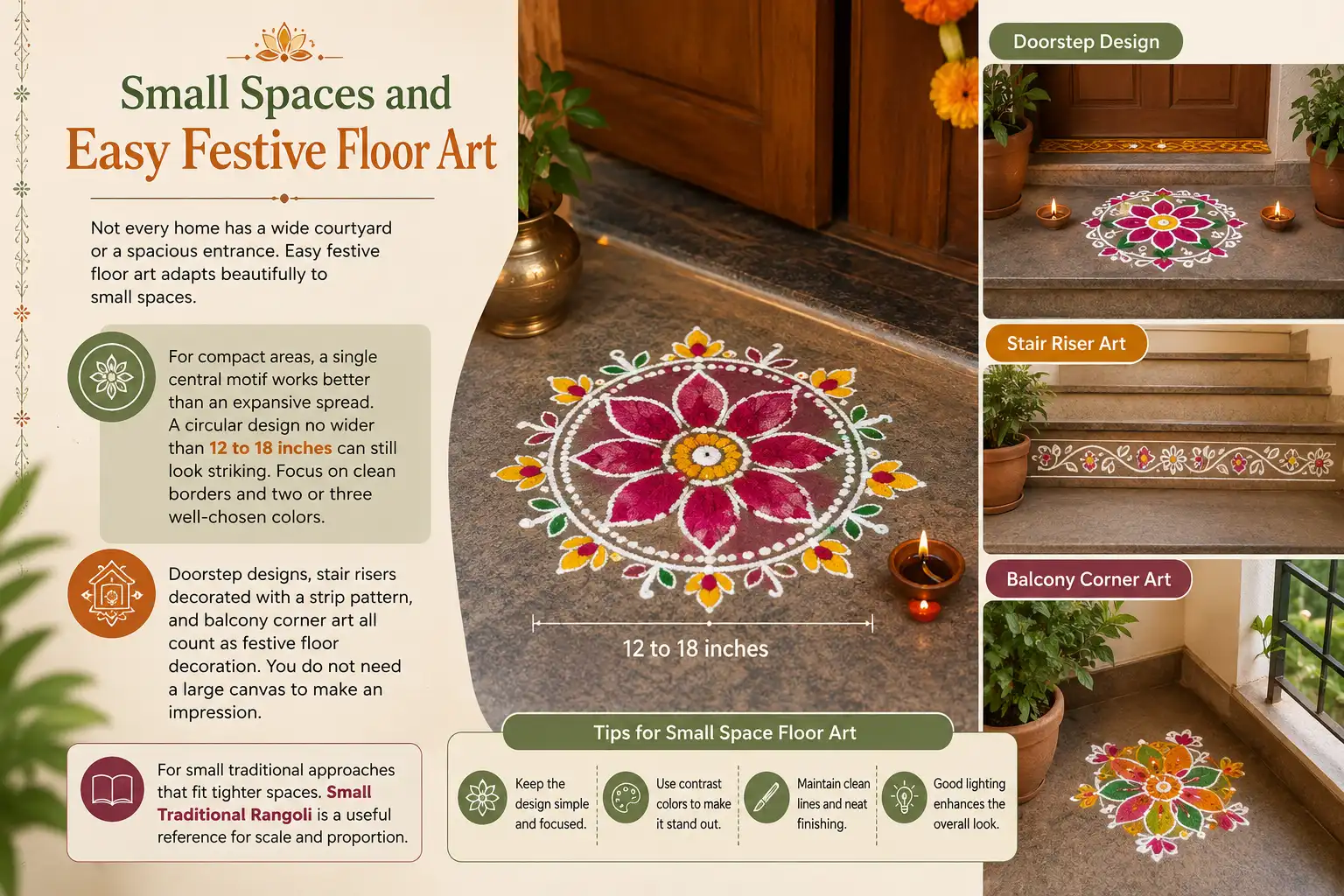
Not every home has a wide courtyard or a spacious entrance. Easy festive floor art adapts beautifully to small spaces.
For compact areas, a single central motif works better than an expansive spread. A circular design no wider than 12 to 18 inches can still look striking. Focus on clean borders and two or three well-chosen colors.
Doorstep designs, stair risers decorated with a strip pattern, and balcony corner art all count as festive floor decoration. You do not need a large canvas to make an impression.
For small traditional approaches that fit tighter spaces, Small Traditional Rangoli is a useful reference for scale and proportion.
Tips to Make Your Design Last Longer
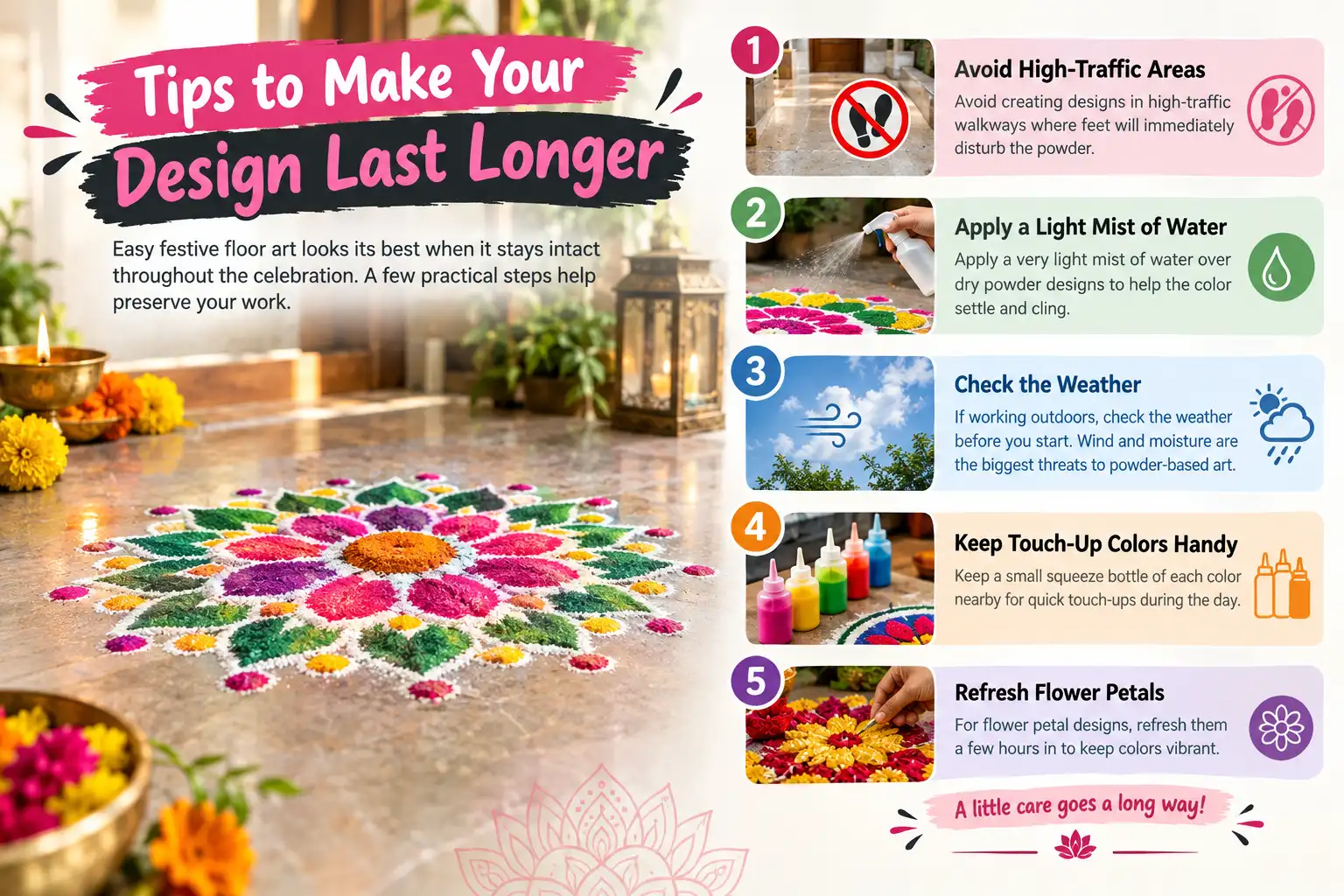
Easy festive floor art looks its best when it stays intact throughout the celebration. A few practical steps help preserve your work.
- Avoid creating designs in high-traffic walkways where feet will immediately disturb the powder.
- Apply a very light mist of water over dry powder designs to help the color settle and cling.
- If working outdoors, check the weather before you start. Wind and moisture are the biggest threats to powder-based art.
- Keep a small squeeze bottle of each color nearby for quick touch-ups during the day.
- For flower petal designs, refresh them a few hours in to keep colors vibrant.
Festive Floor Art for Different Occasions
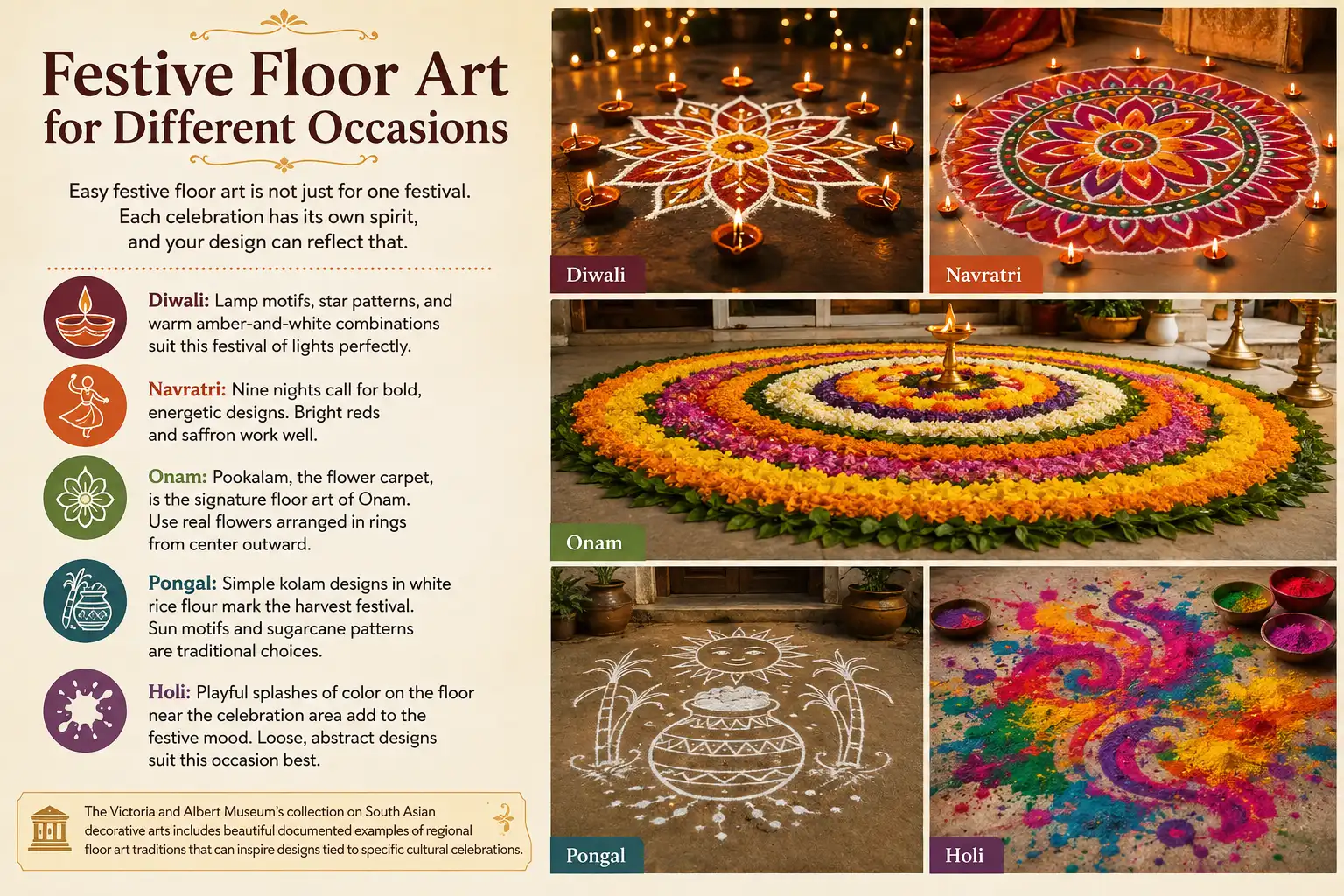
Easy festive floor art is not just for one festival. Each celebration has its own spirit, and your design can reflect that.
🪔Diwali
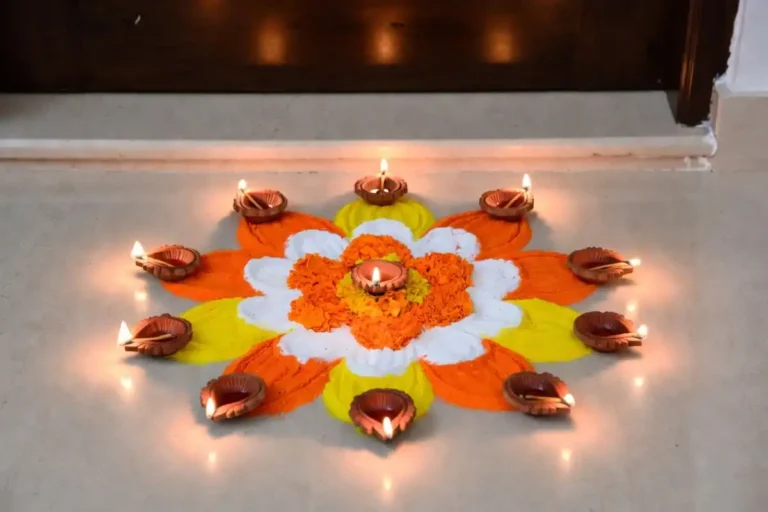
Lamp motifs, star patterns, and warm amber-and-white combinations suit this festival of lights perfectly.
🔥Navratri
Nine nights call for bold, energetic designs. Bright reds and saffron work well.
🌺Onam
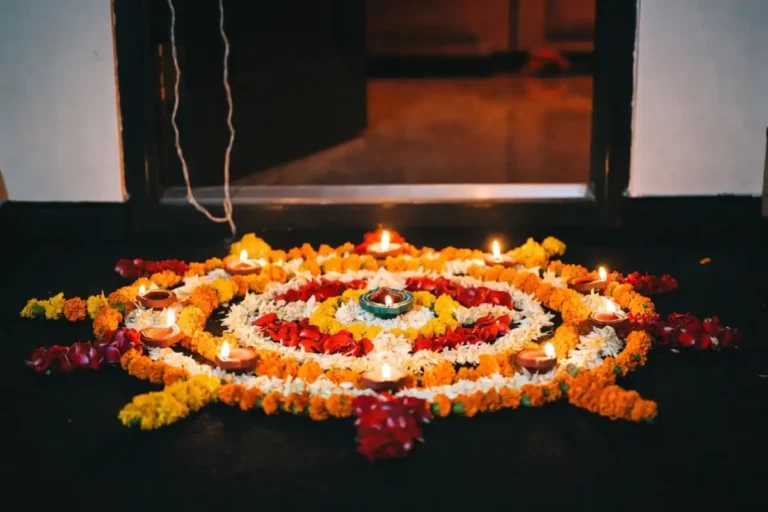
Pookalam, the flower carpet, is the signature floor art of Onam. Use real flowers arranged in rings from center outward.
☀️Pongal
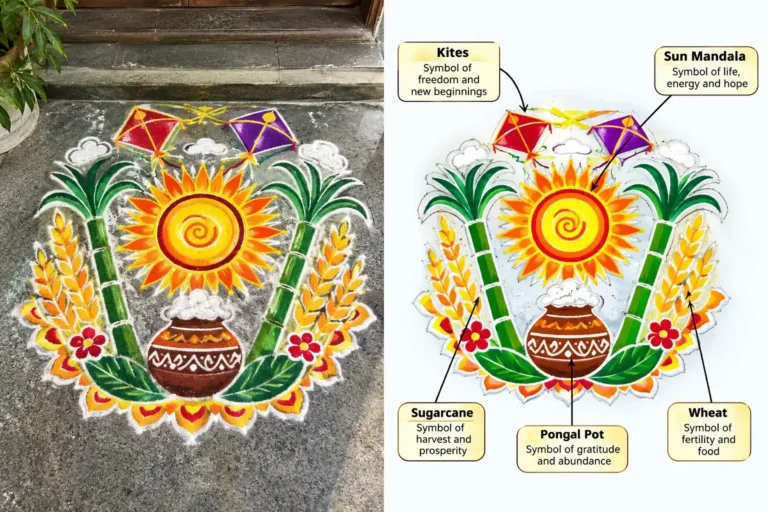
Simple kolam designs in white rice flour mark the harvest festival. Sun motifs and sugarcane patterns are traditional choices.
🎨Holi
Playful splashes of color on the floor near the celebration area add to the festive mood. Loose, abstract designs suit this occasion best.
The Victoria and Albert Museum’s collection on South Asian decorative arts includes beautiful documented examples of regional floor art traditions that can inspire designs tied to specific cultural celebrations.
Entrance Rangoli: Making a Strong First Impression
Your entrance is the first thing visitors see. Easy festive floor art placed at or near the front door creates an immediate sense of warmth and welcome.
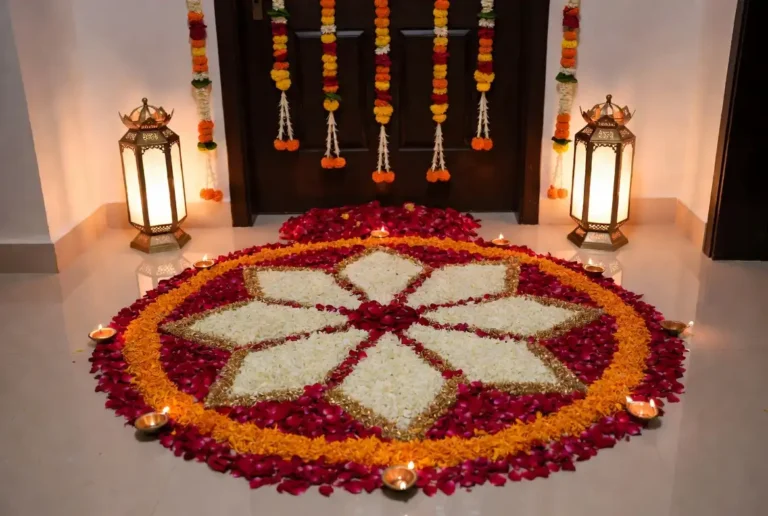
A strong entrance design does not need to be complicated. A circular floral pattern centered on the doorstep, flanked by two simple diyas or lamps, works for almost any festival. Keep the design symmetrical so it reads well from both sides as guests approach.
For ideas specifically suited to entrances, Colorful Entrance Rangoli covers placement and color choices that make a real difference.
Conclusion
Easy festive floor art is one of the most personal and creative ways to mark a celebration. It asks for no expensive tools, no prior training, and no large space. What it does ask for is a moment of focus and a desire to add beauty to your surroundings.
Whether you draw a simple floral circle on Diwali or lay out a petal carpet for Onam, the act of creating something by hand connects you to a tradition that has decorated homes across generations.
Start small, choose colors you love, and let the festival guide your design.
FAQs
What is easy festive floor art?
Easy festive floor art refers to decorative patterns made on floors using materials like rangoli powder, flower petals, chalk, or rice flour, created to celebrate festivals and welcome guests into a home or space.
Do I need special skills to create floor art for festivals?
No special skills are required. Anyone can create easy festive floor art by starting with simple shapes like circles, petals, or dots and gradually building toward more detailed patterns as confidence grows.
What materials are best for beginners?
Dry rangoli powder is the most forgiving and easy-to-control material for beginners. It comes in many colors, flows smoothly from a cone, and can be adjusted before it fully settles.
How long does festive floor art last?
Dry powder designs typically last one to two days indoors. Flower petal designs are more fragile and may need refreshing after several hours. Chalk-based outdoor art can fade within a day depending on weather.
Can I make festive floor art in a rented home?
Yes. Most materials used in easy festive floor art are removable with a broom and damp mop. Chalk and powder leave no permanent marks and are safe for most flooring types. Always test on a small area if unsure.
What is the easiest pattern to try as a first-timer?
A simple five-petal flower drawn around a central dot is one of the most accessible starting points. It is symmetrical, forgiving, and looks complete even with minimal detail.