Rangoli Designs With Diya Motif: Complete Guide for 2026
Rangoli designs with diya motif turn a plain floor into a glowing welcome for any festival. The diya, a small oil lamp, sits at the heart of Indian celebration, and readers often ask how to get the lamp shape just right.
A rangoli design with a diya motif places one or more lamp shapes at the center or along the border. You draw the diya body as a curved bowl, add a teardrop flame on top, then fill with color. Repeat the motif in a circle or line.
What Is a Diya Motif in Rangoli?
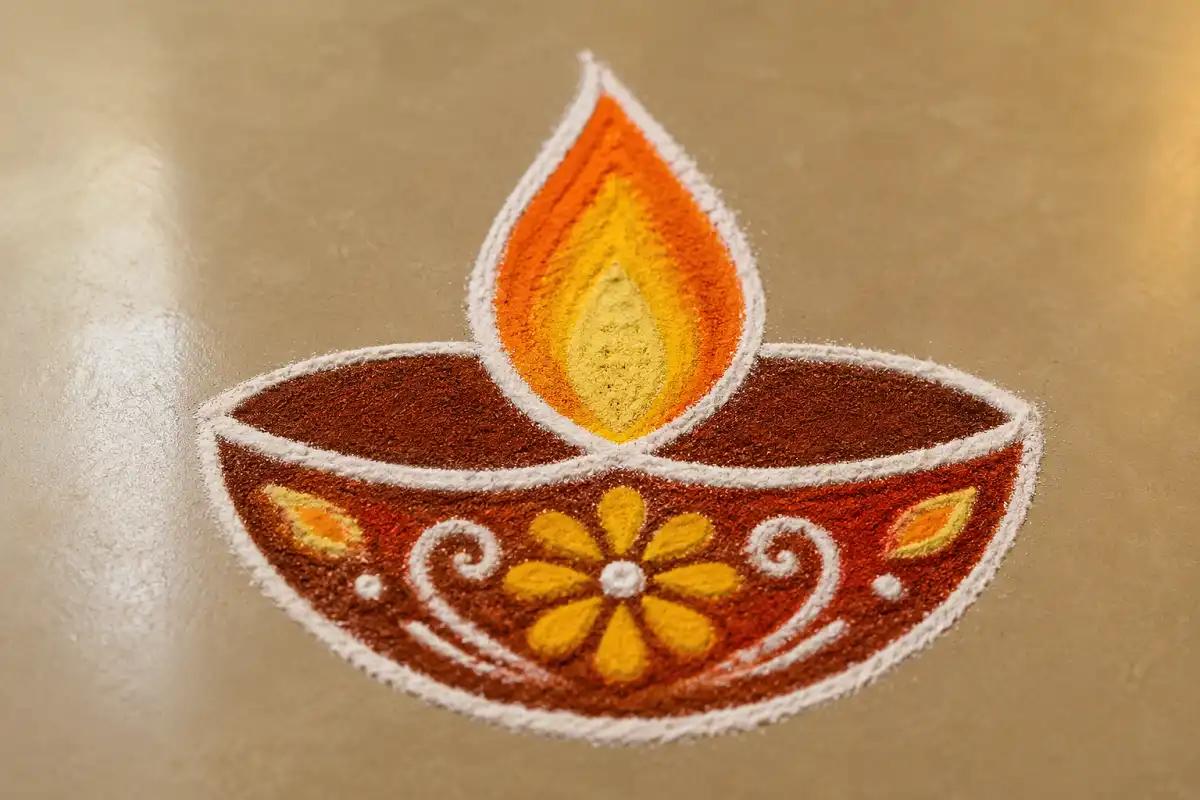
A diya motif is the stylized shape of a traditional oil lamp used inside a rangoli pattern. The lamp has two parts. The base is a shallow curved bowl. The flame is a pointed teardrop rising from one edge.
This motif carries meaning. The lit lamp stands for light winning over darkness. That is why rangoli designs with diya motif appear so often during Diwali and other festivals of light. You can learn more about the lamp itself from this overview of the traditional oil lamp on Wikipedia.
Why Rangoli Designs With Diya Motif Work So Well in Floor Art
Rangoli designs with diya motif work well because the lamp shape is simple and instantly recognized. A child can spot it. An elder connects it to decades of ritual. That shared reading makes it one of the strongest symbols in Indian floor art.
The shape also repeats cleanly. You can ring a central design with eight lamps. You can run a row of small diyas along a doorway. The motif fits circles, squares, and free borders with equal ease.
How to Draw a Basic Diya Rangoli Step by Step

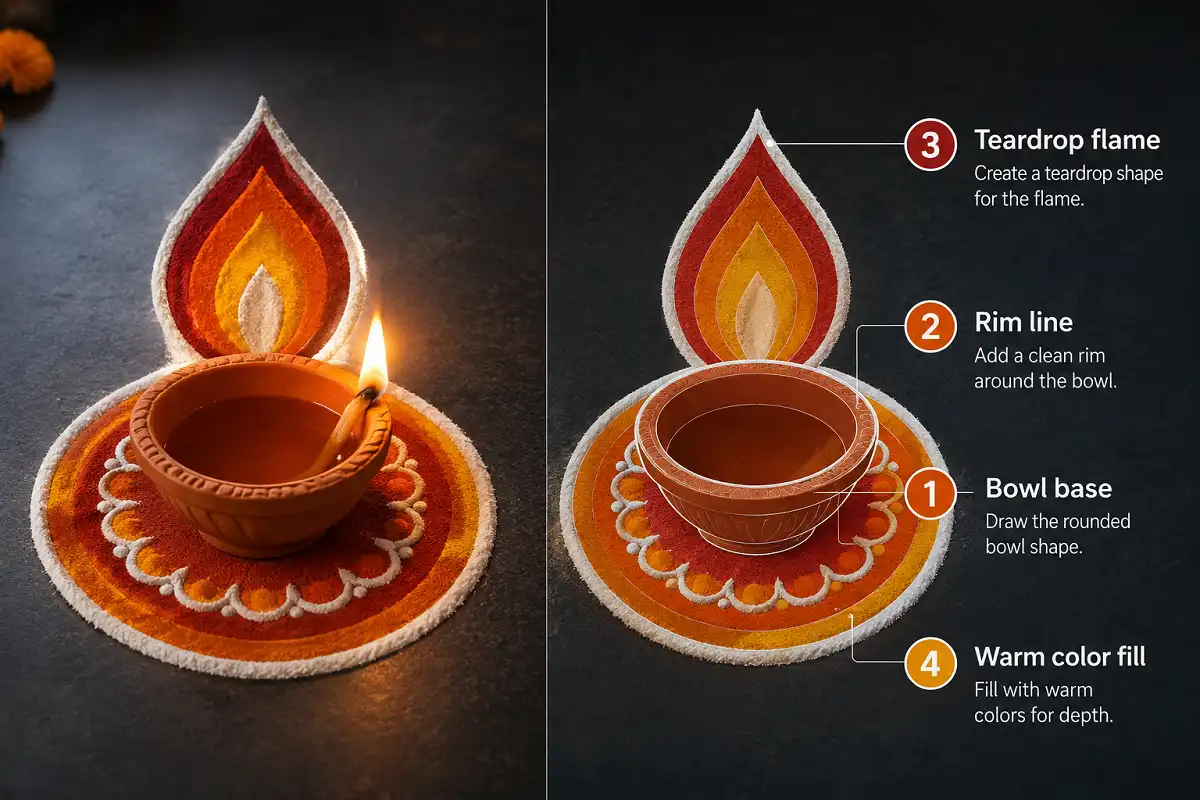
Start with the lamp base, then add the flame, then color. Here is the exact order to follow:
Mark the center. Place a dot where the diya body will sit.
Draw the bowl. Make a wide, shallow U or half-oval for the lamp base.
Add the rim. Draw a thin curved line across the top of the bowl to show the oil edge.
Shape the flame. Draw a teardrop above one side of the rim. Point it upward.
Outline first. Trace every line in white before adding color. This keeps edges sharp.
Fill the base. Use terracotta, deep red, or brown for the clay bowl.
Fill the flame. Layer yellow at the core, orange in the middle, and a touch of red at the tip.
Add a glow. Ring the flame with small yellow dots to suggest light.
Keep your hand steady on the flame. That single teardrop decides whether the lamp reads as lit or empty.
Popular Diya Rangoli Layouts
Most rangoli designs with diya motif use one of three layouts: the single centered lamp, the circular ring of lamps, or the border row. Each suits a different space and skill level.
Single Centered Diya
One large diya in the middle of a round rangoli. Good for beginners and small spaces. Surround it with petals or a simple dotted border.
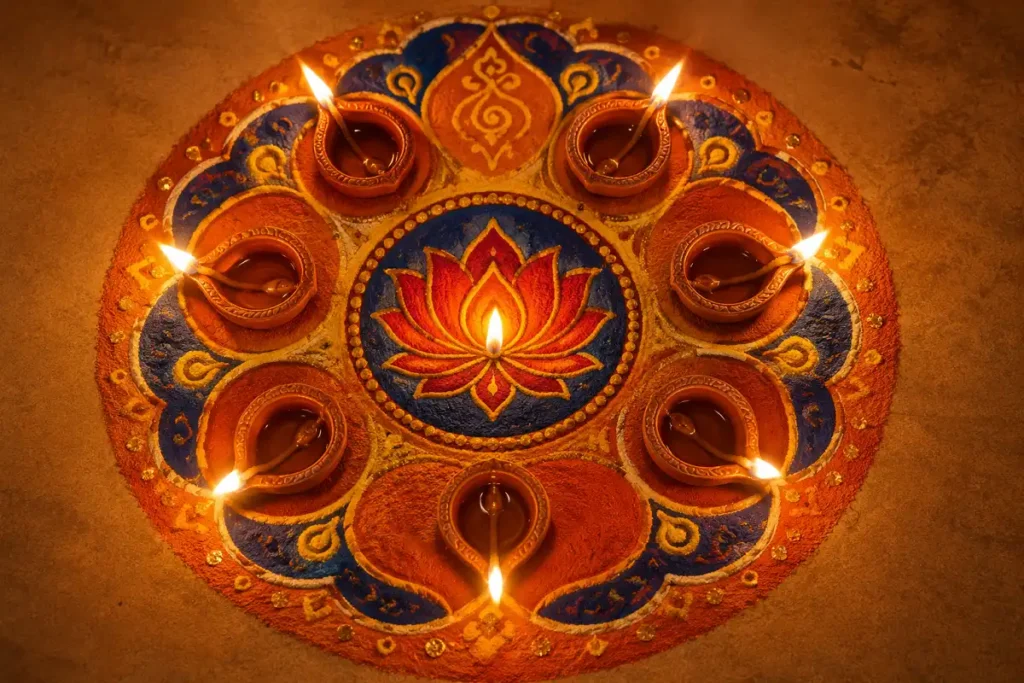
Circular Ring of Diyas
Six to twelve small lamps arranged in a circle, flames pointing outward. This creates a sun-like burst of light. It pairs beautifully with a lotus or mandala core.
Diya Border Row
A line of evenly spaced lamps running along a threshold or the edge of a larger design. This layout frames a doorway and guides the eye inward.
Diya With Rangoli and Real Lamps
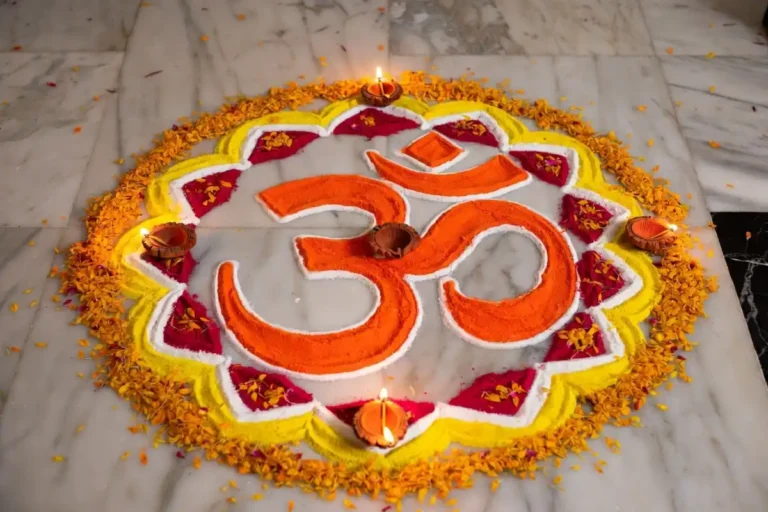
Draw the colored diya pattern, then place actual lit clay lamps on top of or beside the drawn shapes. The mix of powder art and real flame is stunning at night.
Best Colors for a Diya Motif
The best colors follow the real lamp. Use terracotta or brown for the clay body. Use a yellow-to-orange gradient for the flame. These natural tones make the motif believable.
For contrast, set the lamps against a dark background. Fine gold glitter on the flame catches candlelight and lamp light at night. If you want more festive palette ideas, these notes on choosing colors for diya-themed floor art cover seasonal combinations in detail.
When to Use Diya Rangoli
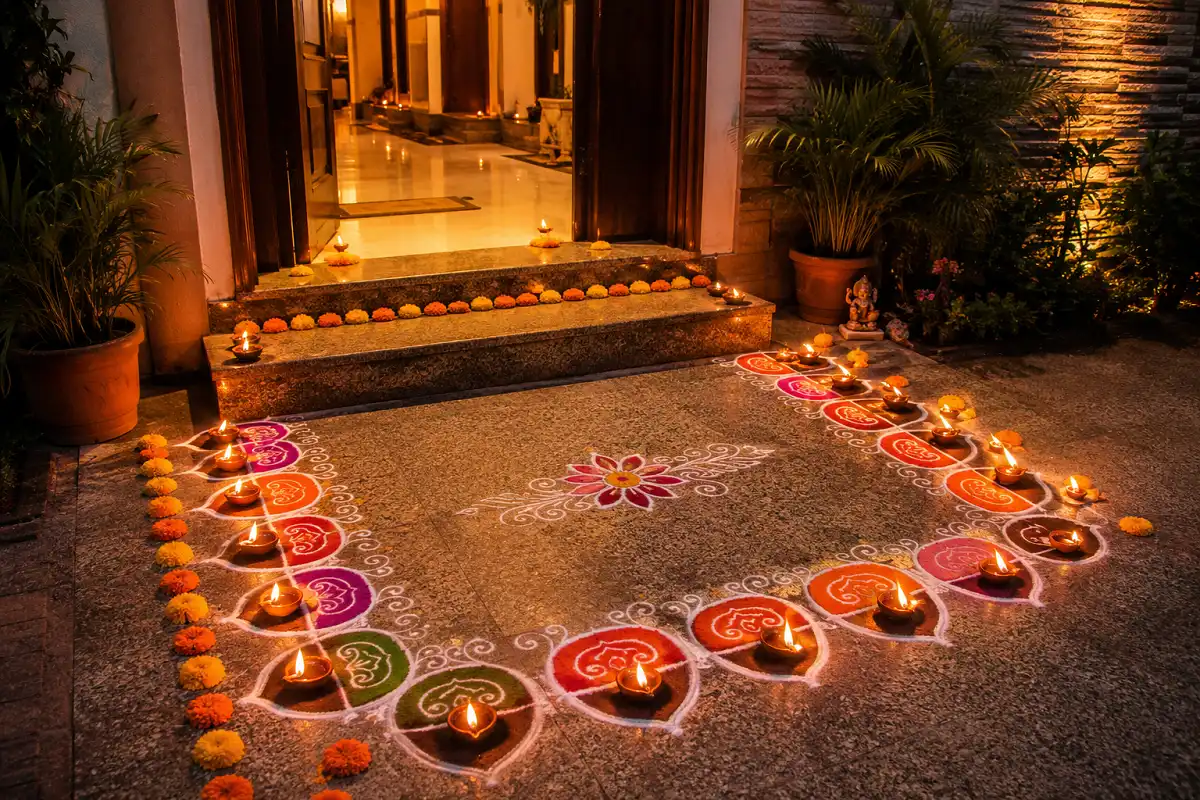
Use rangoli designs with diya motif for any festival of light, but they shine brightest at Diwali and Dev Deepawali. They also suit Karthika Deepam in the south and any lamp-lighting ceremony.
Diwali is the natural home for this motif. The whole festival centers on lamps. A diya rangoli at your entrance echoes the real lamps on your windowsill. For a full seasonal set, see these festive lamp and light rangoli ideas built for beginners.
Tips to Make Your Diya Rangoli Stand Out
Small choices separate a flat lamp from one that glows. These are the habits that help rangoli designs with diya motif look polished:
- Vary the lamp sizes in a border for rhythm — never make every diya identical.
- Angle a few flames slightly for a natural, flickering feel.
- Keep the flame colors warm and layered, never a single flat yellow.
- Finish with a clean outer ring so the whole piece looks intentional.
Common Mistakes to Avoid
- A flame that looks wrong. Too round and it reads as a balloon. Too thin and it reads as a leaf. Keep it a clean teardrop with a slightly curved point.
- Crowding too many lamps into a small space. Give each diya room to breathe.
- Using cold flame colors. A blue or green flame breaks the illusion of real fire.
- Skipping the white outline. Without it, the whole design looks flat.
Space your lamps, warm your colors, and always outline first.
Diya Rangoli Designs: Add Light and Tradition to Your Decor
Rangoli designs with diya motif stay popular because the lamp means something and looks beautiful at once.
Get the teardrop flame right, keep your colors warm, and outline before you fill.
Start with one centered lamp, then grow into rings and borders as your hand steadies. Done well, a diya rangoli greets every guest with light.
FAQs
What does a diya symbolize in rangoli?
A diya symbolizes the victory of light over darkness and knowledge over ignorance. In rangoli, it invites prosperity and marks the space as ready for celebration.
Can beginners make a diya rangoli?
Yes. Beginners can make rangoli designs with diya motif easily. A single centered lamp with a dotted border is one of the simplest festive patterns to start with. Master one lamp, then build outward into rings and rows.
Which festival is best for diya rangoli?
Diwali is the best fit because the whole festival celebrates lamps. Karthika Deepam and Dev Deepawali also suit the motif well.
How many diyas should a rangoli have?
There is no fixed number. A single lamp works for small spaces. Rings of six, eight, or twelve are common for larger designs. Odd numbers often look more balanced in a row.