Classic Rangoli Patterns for Home Entrance
Your entrance sets the tone for the whole house. Classic rangoli patterns for home entrance welcome guests, mark festivals, and carry meaning at the doorstep. I make these often, and I want to show you exactly how.
What Makes a Rangoli Pattern “Classic”?
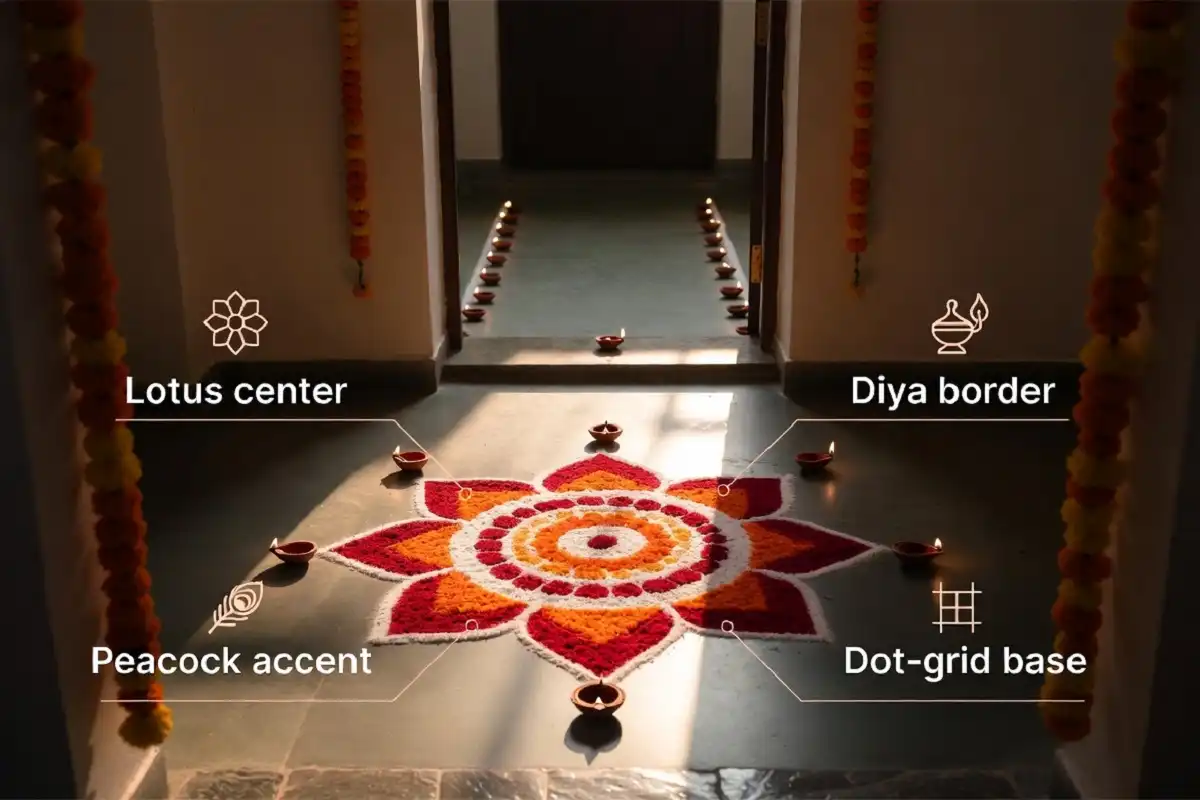
A classic pattern is one rooted in traditional Indian motifs passed down through generations. These designs are not random. Each shape carries meaning. The lotus stands for purity. The diya signals light over darkness. The peacock represents grace and rain.
Classic rangoli patterns for home entrance stay recognizable across regions. A woman in Tamil Nadu and one in Rajasthan may use different colors. Still, the core motifs remain the same. That shared language is what makes them classic.
These designs also follow structure. Most use symmetry. Many start from a central point and grow outward. This balance is the reason they look complete and calming at a doorway.
Best Classic Motifs for Your Doorstep
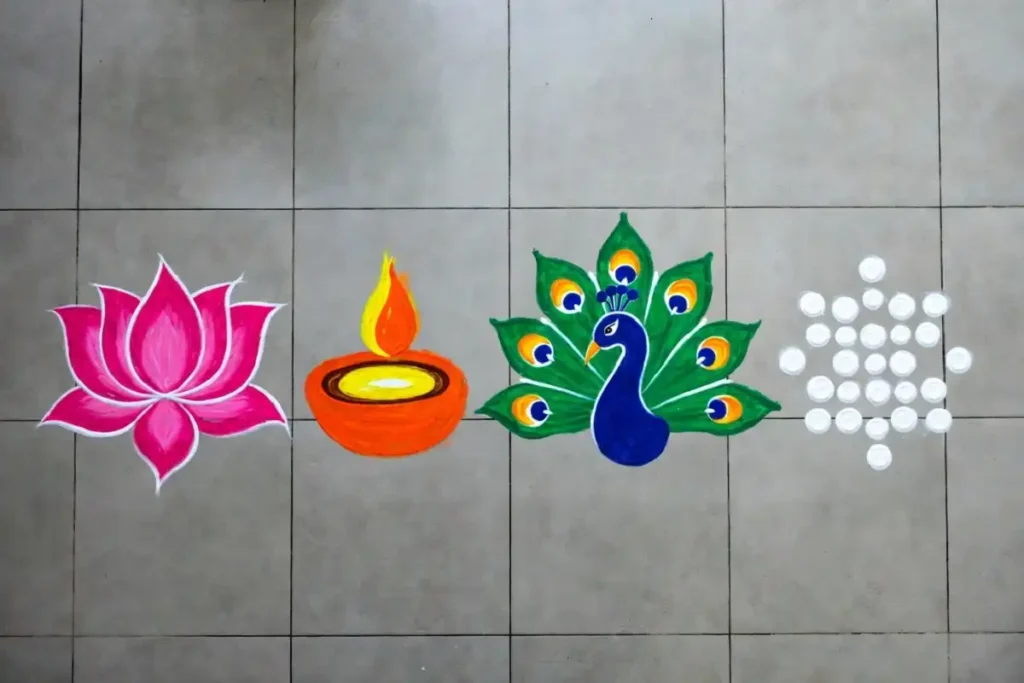
The strongest entrance designs come from a handful of time-tested motifs. Here are the ones I rely on most.
Lotus Rangoli
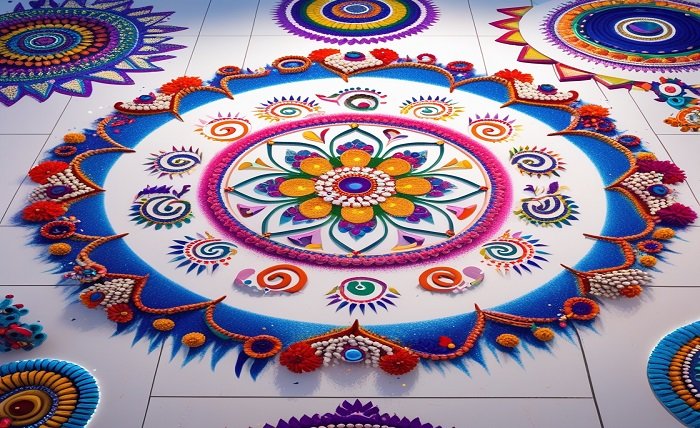
The lotus is the most loved entrance motif. It opens outward, which fits a doorway perfectly. You draw a center circle, then add petals in rings around it. Fill each petal with pink, white, or orange. The lotus suits both daily use and big festivals.
For step-by-step help, my guide on easy lotus rangoli for a festive home breaks down the petal layering.
Diya and Lamp Patterns
Diya motifs work best for Diwali and evening celebrations. A row of diyas along the border looks warm and simple. You can also place one large diya in the center. Add small flame shapes in yellow and orange above each lamp.
Peacock Designs
Peacock motifs bring movement to a still floor. The curved neck and open feathers fill space well. Draw the body on one side, then fan the tail across the entrance. Blue, green, and gold make the feathers pop.
If you are new to this motif, start with a peacock rangoli guide made for beginners .
Geometric and Dot Grids
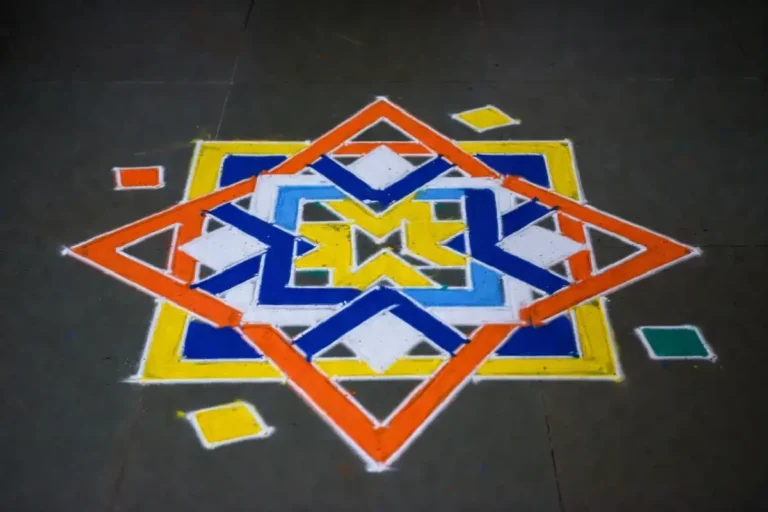
Geometric patterns use dots, lines, and repeated shapes. You place a dot grid first, then connect the dots into loops and stars. These designs are precise and clean. They suit modern entrances and small spaces. Squares, triangles, and hexagons all work here.
Which Materials Should You Use at the Entrance?
Use rice flour for daily designs and colored powder or flowers for festivals. Each material serves a different purpose at the doorway.
| Material | Best For | Main Benefit |
|---|---|---|
| Rice flour | Daily rangoli | Traditional, fine, and easy to control |
| Colored powder | Festivals | Bright colors and clean shapes |
| Flower petals | Special occasions | Fresh, fragrant, and decorative |
Rice flour is the traditional choice. It is white, fine, and easy to control. In South India, women draw kolam with rice flour every morning. It also feeds ants and birds, which carries its own meaning.
Colored powder, called gulal or rangoli color, gives bright festive results. It holds shape well and photographs beautifully. Buy fine-grain powder for smooth lines.
Flower petals suit fresh, fragrant designs. Marigold, rose, and jasmine are common. Petal rangoli lasts one day but looks stunning for guests. A marigold flower design is a reliable place to start.
How to Make Classic Rangoli Patterns for Home Entrance
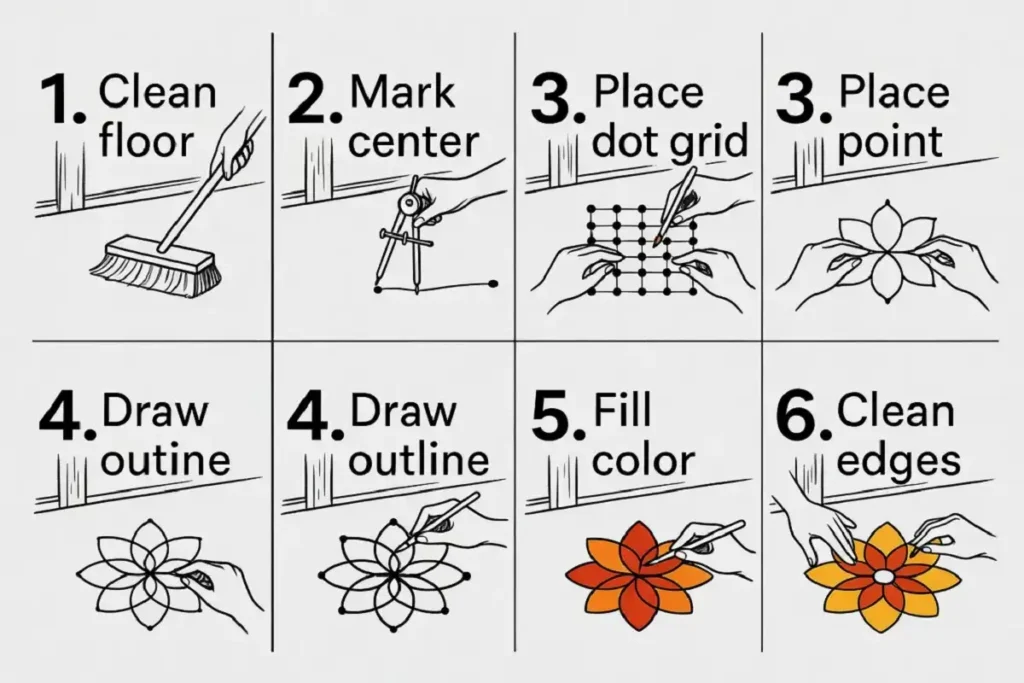
Clean the Entrance
Sweep and wipe the entrance. Any dust ruins the lines. Let the floor dry fully.
Find Your Center
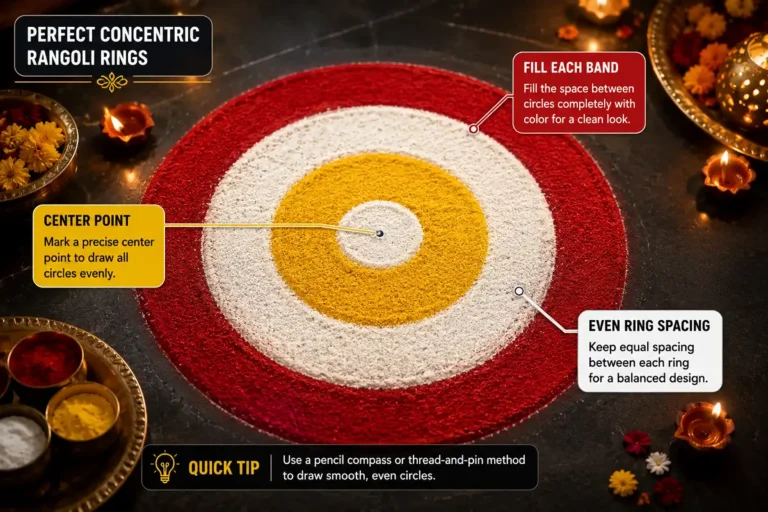
Most classic rangoli patterns for home entrance grow from the middle. Mark it lightly with chalk.
Place the Dot Grid
Place your dot grid if you use one. Dots keep the design even. Count them carefully so both sides match.
Draw the Outline
Use a steady hand or pinch the powder between your fingers. Work from the center out.
Fill the Colors
Start with the outline shade, then fill inner sections. Press gently for solid color.
Clean the Edges
A thin brush or a folded paper sharpens the border. This final step makes the design look finished.
Sizing the Design for Your Entrance
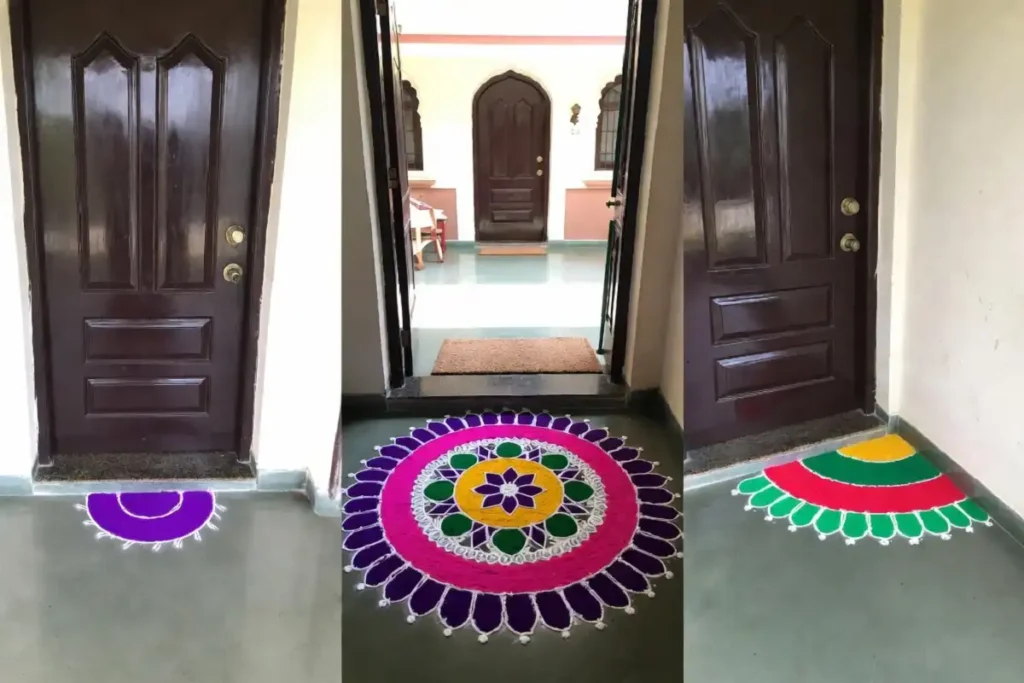
Match the rangoli size to your doorway width, leaving walking room on at least one side. A design that blocks the door frustrates everyone.
A half-circle against the threshold works well for a compact apartment door.
A full circular pattern centers nicely and creates a stronger focal point.
Corner designs suit L-shaped or tight spaces without blocking the walkway.
My ideas for rangoli at an apartment entrance cover small-space layouts in detail.
Keep proportion in mind. The rangoli should feel like part of the entrance, not a separate object dropped on the floor.
Colors That Suit a Home Entrance
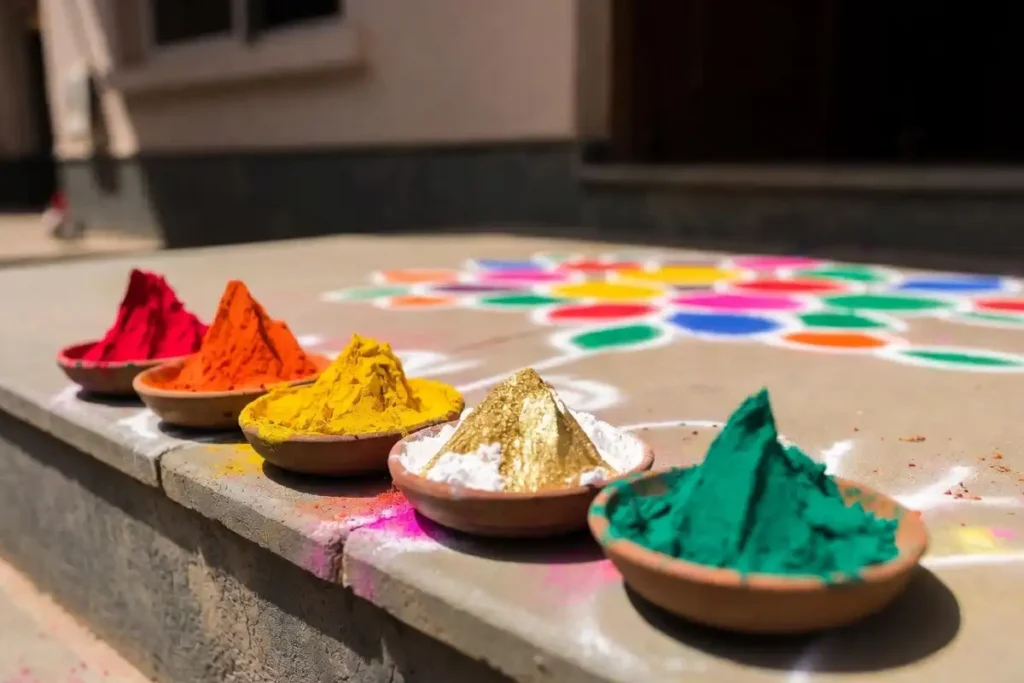
Choose colors that match the occasion and your floor tone. Bright shades read as festive. Soft shades read as calm and daily.
Red and orange are the most traditional. They signal auspicious energy and stand out on stone or tile. Yellow pairs well with both. White borders add contrast and make every color sharper.
For daily designs, stick to two or three colors. For festivals like Diwali, add gold, deep pink, and green. Too many colors on a small entrance look crowded, so build up slowly.
Keeping Your Rangoli Neat Through the Day
Tip: Seal the outer edge and place it slightly off the main walking path to help it last. Entrance rangoli faces feet, wind, and weather.
A light mist of water on colored powder helps it settle. Do not soak it. For flower rangoli, sprinkle a few drops to keep petals fresh. If wind is strong, choose a heavier material like flower petals over loose powder.
Classic rangoli patterns for home entrance are meant to be temporary. That is part of the tradition. Redrawing them is a daily or festival ritual, not a chore.
Last Notes
Classic rangoli patterns for home entrance are simple once you know the core motifs. Pick a lotus, diya, peacock, or geometric base. Choose the right material for the day. Size it to your door and keep the colors balanced. Practice a little, and your entrance will greet every guest with tradition and warmth.
FAQs
Which classic rangoli patterns for home entrance are easiest for beginners?
Simple dot-based flower designs and single-diya patterns are easiest. They need few colors and forgiving lines. Start small, then grow.
Are classic rangoli patterns for home entrance only for festivals?
No. Many households draw a small rangoli daily, especially in South India. Festivals just call for larger, brighter versions.
How long does an entrance rangoli last?
Powder designs last one to three days if undisturbed. Flower designs last about a day. Rice flour fades fastest but is easy to redraw.
Can I use stencils for classic patterns?
Yes, stencils help with symmetry and speed. Freehand gives more character, but stencils are fine for busy mornings or first attempts.