Rangoli with Concentric Circles: Beautiful Geometric Designs and Easy Ideas
Rangoli with concentric circles is one of the easiest ways to build a balanced, eye-catching floor design. You draw circles inside circles, then fill each ring with color and pattern. The result looks complex, but the method stays simple and approachable for anyone.
Rangoli with concentric circles means drawing several circles that share one center point. You space the rings evenly, then decorate each band with dots, petals, or geometric shapes. Start from the center and work outward for clean symmetry every time.
What Is Rangoli with Concentric Circles?
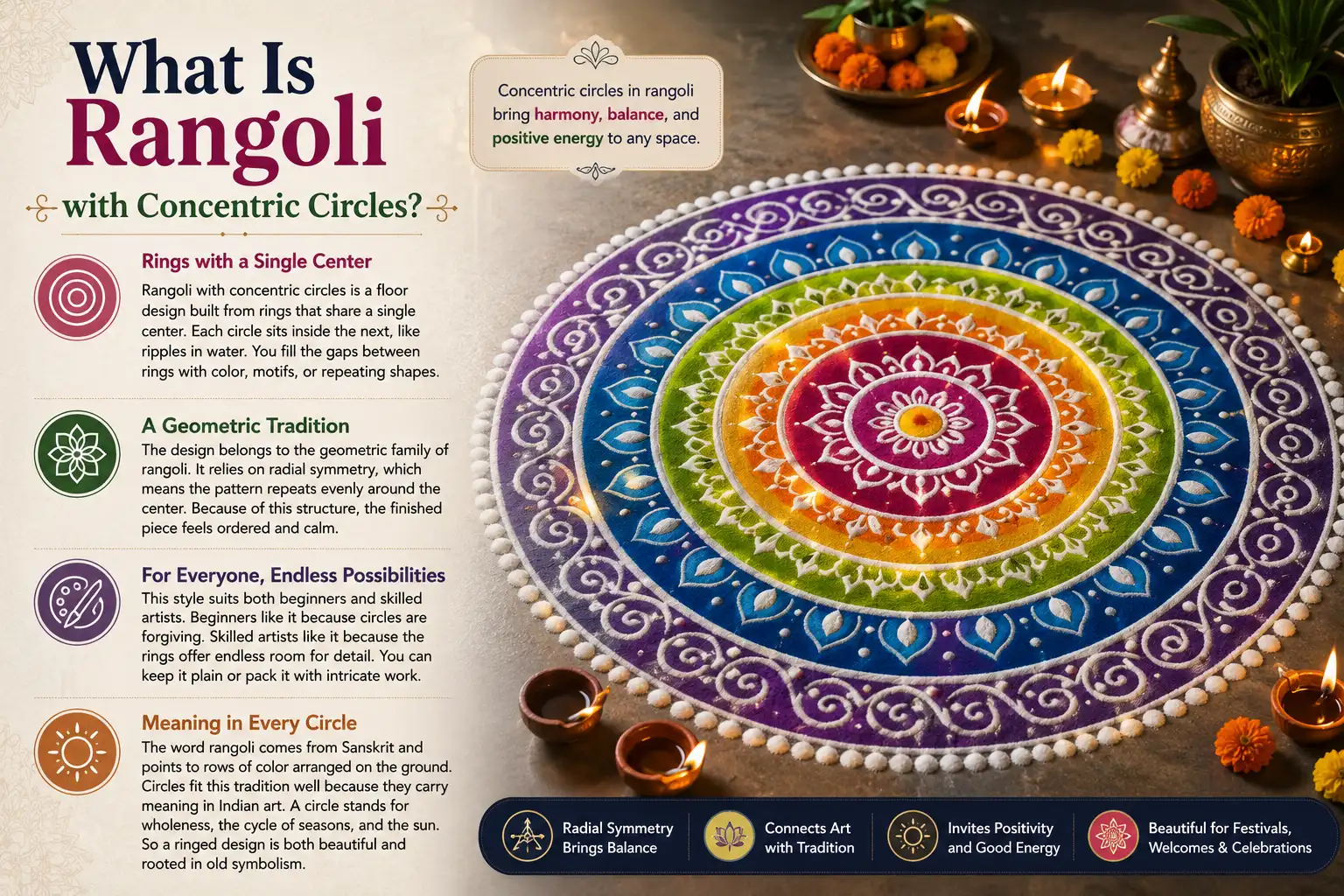
Rangoli with concentric circles is a floor design built from rings that share a single center. Each circle sits inside the next, like ripples in water. You fill the gaps between rings with color, motifs, or repeating shapes.
The design belongs to the geometric family of rangoli. It relies on radial symmetry, which means the pattern repeats evenly around the center. Because of this structure, the finished piece feels ordered and calm.
This style suits both beginners and skilled artists. Beginners like it because circles are forgiving. Skilled artists like it because the rings offer endless room for detail. You can keep it plain or pack it with intricate work.
The word rangoli comes from Sanskrit and points to rows of color arranged on the ground. Circles fit this tradition well because they carry meaning in Indian art. A circle stands for wholeness, the cycle of seasons, and the sun. So a ringed design is both beautiful and rooted in old symbolism.
Why Concentric Circles Work So Well in Rangoli
Concentric circles work because the human eye follows curves naturally. The rings pull attention toward the center, so the design feels focused. This makes even a simple layout look intentional.
The structure also forgives small mistakes. If one ring wobbles slightly, the surrounding circles hide it. Straight-line designs punish shaky hands, but curves stay soft and flexible.
Another reason is balance. Radial symmetry spreads weight evenly in every direction. As a result, the design never looks lopsided. You get harmony without measuring every point.
Finally, the ring layout scales easily. You add more circles for a bigger piece or fewer for a small one. The same method works for a doorstep or a festival hall floor. This flexibility is why rangoli with concentric circles stays a favorite across skill levels.
Materials You Need for Circle Rangoli
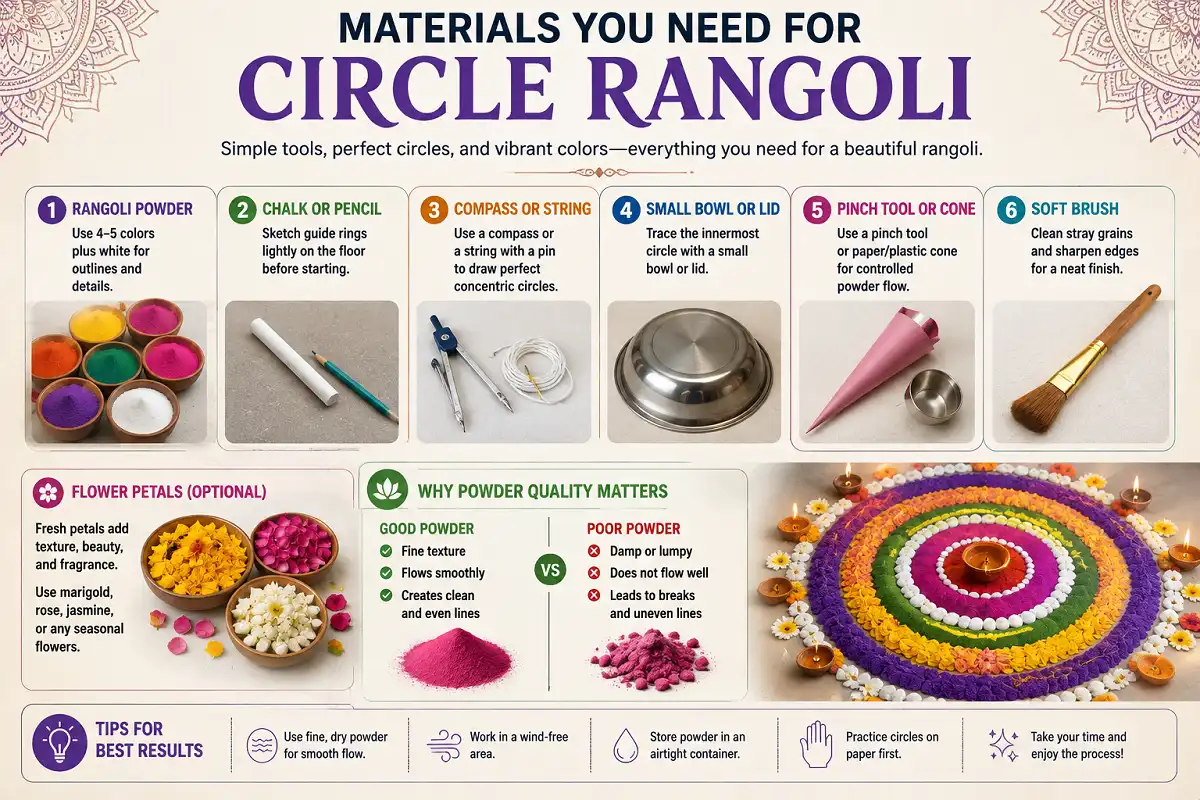
You need only a few basic tools to make rangoli with concentric circles. Most items already sit in a typical Indian home. Gather everything before you start so the flow stays smooth.
Here Is What I Keep Ready on My Tray
- Rangoli powder in four or five colors, plus white for outlines.
- Chalk or a pencil to sketch guide rings on the floor.
- A compass or a length of string with a pin to draw perfect circles.
- A small bowl or lid to trace the innermost circle.
- A pinch tool or cone for controlled powder flow.
- A soft brush to clean stray grains and sharpen edges.
Fresh flower petals also work well between rings. Marigold, rose, and jasmine add texture and scent. For festival pieces, I often mix powder with petals for depth.
The powder itself matters more than people think. Fine, dry powder flows in a smooth line. Damp or lumpy powder skips and clumps. So I sieve my colors once before a big design. This small step keeps every ring crisp.
How to Draw Perfect Concentric Circles
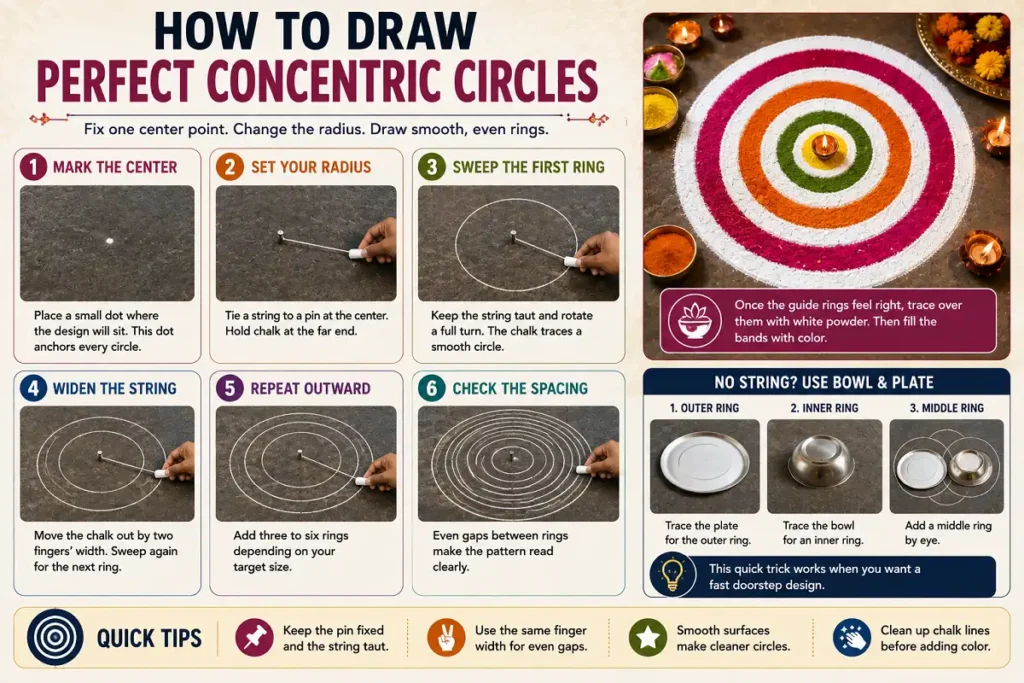
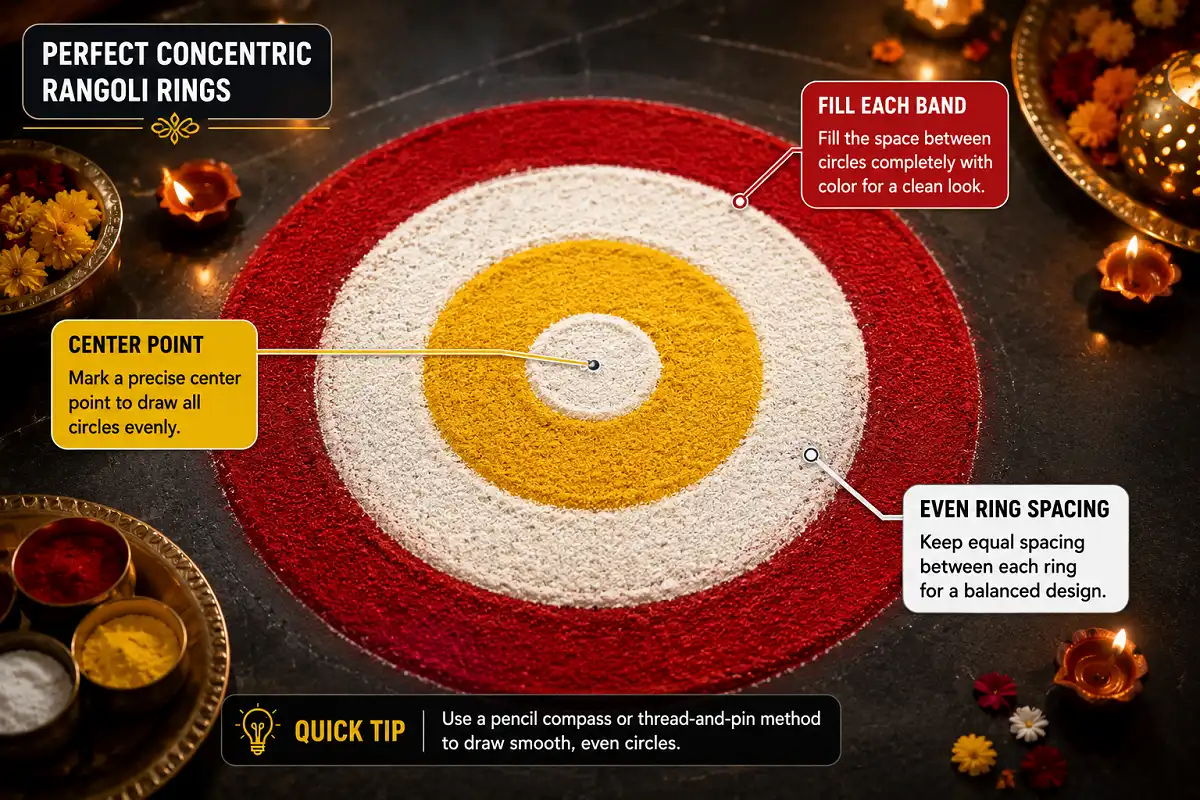
Draw perfect concentric circles by fixing one center point and rotating a string or compass around it. Keep the center pinned down. Adjust the string length for each new ring.
Mark the Center
Place a small dot where the design will sit. This dot anchors every circle.
Set Your Radius
Tie a string to a pin at the center. Hold chalk at the far end.
Sweep the First Ring
Keep the string taut and rotate a full turn. The chalk traces a smooth circle.
Widen the String
Move the chalk out by two fingers’ width. Sweep again for the next ring.
Repeat Outward
Add three to six rings depending on your target size.
Check the Spacing
Even gaps between rings make the pattern read clearly.
Once the guide rings feel right, you trace over them with white powder. Then you fill the bands with color. This sketch-first method keeps the whole rangoli with concentric circles neat and symmetrical.
If you have no string handy, a bowl and a plate still help. Trace the plate for the outer ring and the bowl for an inner ring. Then add a middle ring by eye. This quick trick works when you want a fast doorstep design.
Easy Concentric Circle Rangoli Ideas for Beginners
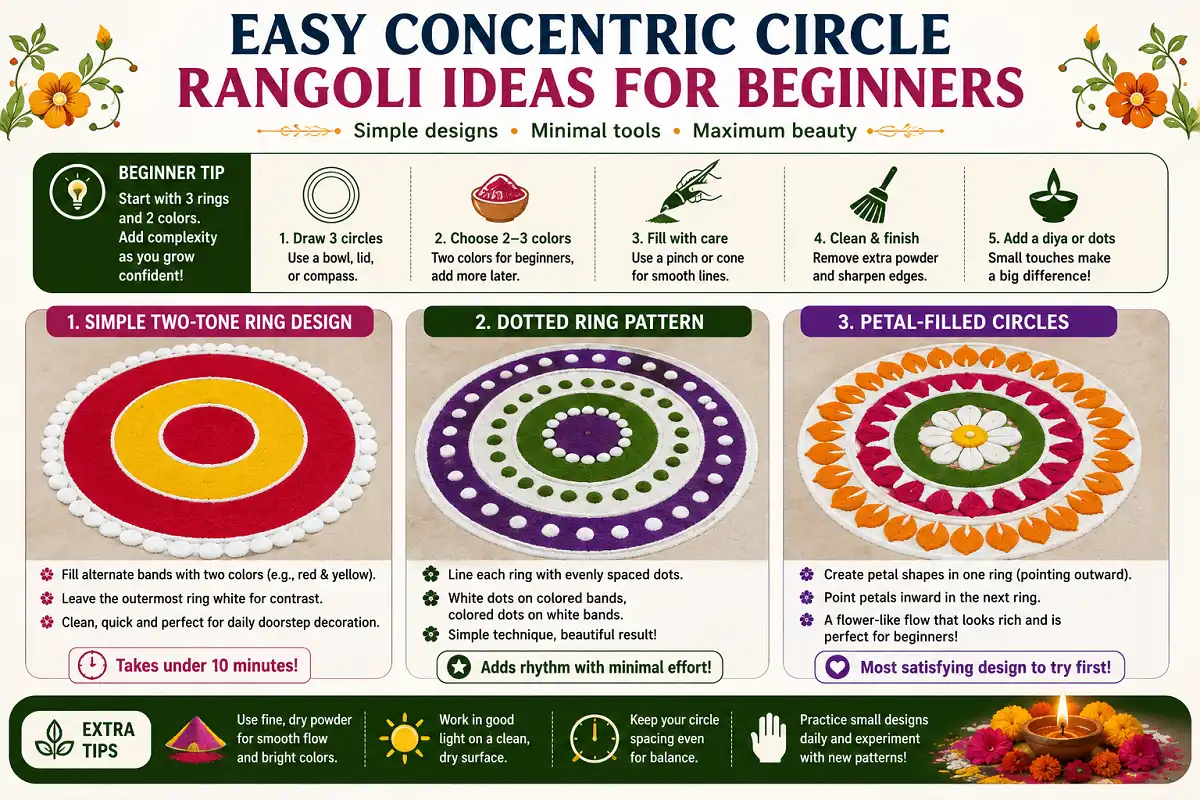
Beginners should start with three rings and two colors. This keeps the design manageable while still looking finished. Add complexity only after the basic layout feels comfortable.
Simple Two-Tone Ring Design
Fill alternate bands with two colors, such as red and yellow. Leave the outermost ring white for contrast. This clean look takes under ten minutes and suits daily doorstep decoration. A tidy circle rangoli for any occasion like this reads well even at small sizes.
Dotted Ring Pattern
Line each ring with evenly spaced dots in a contrasting shade. Place white dots on a colored band, then colored dots on a white band. The repeating dots add rhythm without extra skill. Many small rangoli patterns with dots build on this same idea.
Petal-Filled Circles
Arrange small petal shapes pointing outward in one ring. Point them inward in the next ring. This creates a flower-like flow that feels rich yet stays beginner-friendly. Beginners often find this the most satisfying rangoli with concentric circles to try first.
Advanced Rangoli with Concentric Circles Designs
Advanced rangoli with concentric circles combines rings with dense motifs and layered color blends. You add gradients, fine linework, and secondary patterns inside each band. These pieces reward patience and a steady hand.
Try blending two powders within a single ring for a gradient effect. Push dark color at the outer edge and light at the inner edge. The soft transition gives the ring real depth.
You can also insert a secondary pattern between the main rings. Small lotus buds, paisley shapes, or tiny triangles fit well here. This layering technique turns a plain circle grid into a detailed design. Skilled artists often combine these rings with peacock rangoli design ideas for festival displays.
For competition work, add a mandala core at the center. The mandala anchors the piece while the outer rings frame it. This pairing of mandala and rings is a favorite for large festival floors. A well-layered rangoli with concentric circles can carry a dozen rings when the artist plans the spacing well.
Adding Color and Symmetry to Circle Rangoli
Add color and symmetry by working one ring at a time and rotating around the center as you go. Fill a full band before moving to the next. This method keeps the color even and the symmetry tight.
Choose a color scheme before you begin. Warm tones like orange, red, and pink feel festive. Cool tones like blue, green, and purple feel calm. A mix of both creates energy, but keep one shade dominant.
Symmetry comes from repetition around the center. If you place four dots in the first quarter, repeat them in all four quarters. This four-fold approach makes rangoli with concentric circles look professionally balanced.
Contrast matters as much as color. Place light shades next to dark ones so each ring stands apart. White outlines between bands sharpen the whole design. Good geometric rangoli patterns for beginners always rely on this kind of clear separation.
Concentric Circle Rangoli for Festivals
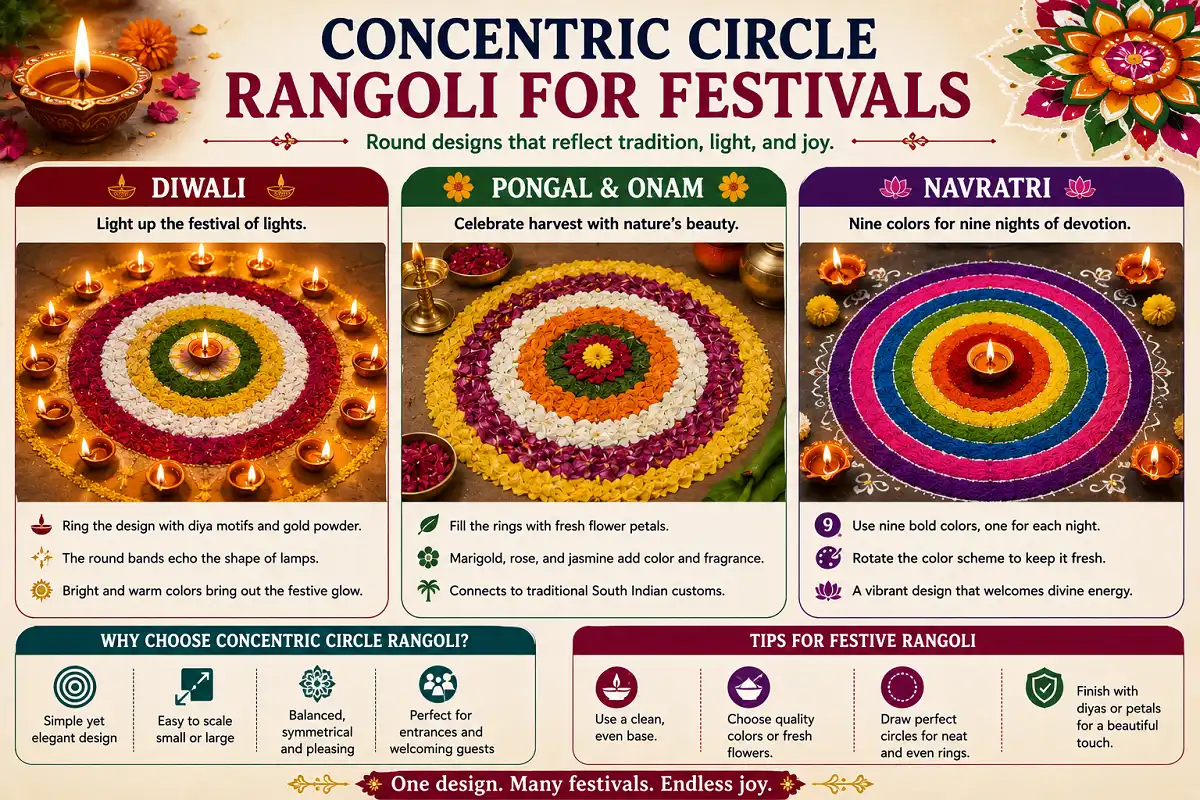
Concentric circle rangoli suits Diwali, Pongal, Onam, and Navratri beautifully. The round shape echoes diyas, the sun, and traditional mandalas. You scale the size and color to match each occasion.
Diwali
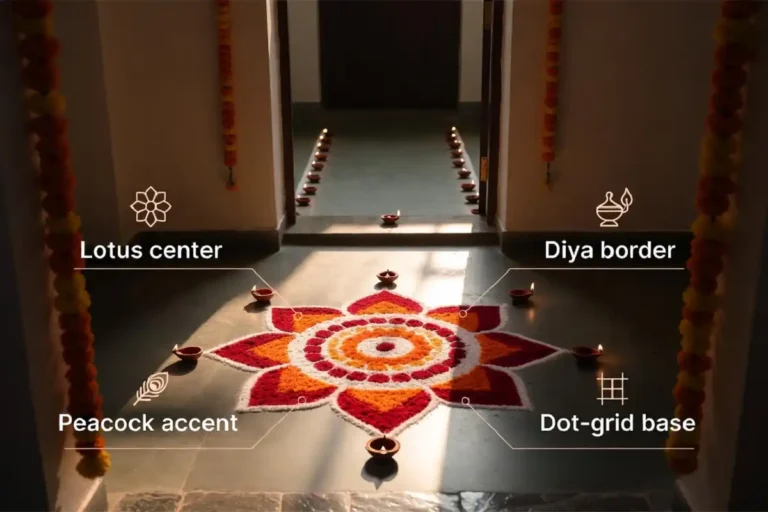
Ring the design with small diya motifs and gold powder. The circles frame the lamps and reflect the festive glow. Bright, warm colors work best here.
Pongal & Onam
Fresh flower petals fill the rings. Marigold and rose petals turn the rangoli into a fragrant, living design connected to older South Indian traditions.
Navratri
Use nine bold colors across the rings, one for each night. The rotating color scheme keeps the design fresh through the festival.
A rangoli with concentric circles suits Diwali because the round bands echo the shape of the lamps. A festive rangoli with concentric circles instantly lifts any entrance and greets every guest.
Regional Styles That Use Circular Designs
Circular rangoli appears across India under many names and forms. In Tamil Nadu, the kolam uses looping lines around dot grids. In Maharashtra, the rangoli often centers on a round lotus. Each region shapes the circle to its own taste.
South Indian kolam relies on curved lines that weave around dots. These curves naturally form rings and loops. So a concentric layout feels right at home in that tradition.
North Indian festival rangoli leans toward bold color blocks. Here the rings carry solid bands of powder rather than fine line art. Both approaches use the same circular base. Understanding these roots helps you place your own rangoli with concentric circles within a living art form. The practice, as described on Wikipedia’s rangoli page, spans nearly every Indian state.
Common Mistakes to Avoid
- Uneven ring spacing breaks the symmetry — measure your gaps or use consistent finger-widths. Even bands are the backbone of a clean circle design.
- Choosing too many colors often looks cluttered — stick to a tight palette of five shades or fewer and let contrast do the work.
- Rushing the center leads to a shaky innermost circle that throws off every ring around it — trace a bowl or lid to keep it crisp.
- Overfilling every band leaves no room for the eye to rest — a well-planned design balances busy rings with quiet ones.
Tips to Make Your Circle Rangoli Last Longer
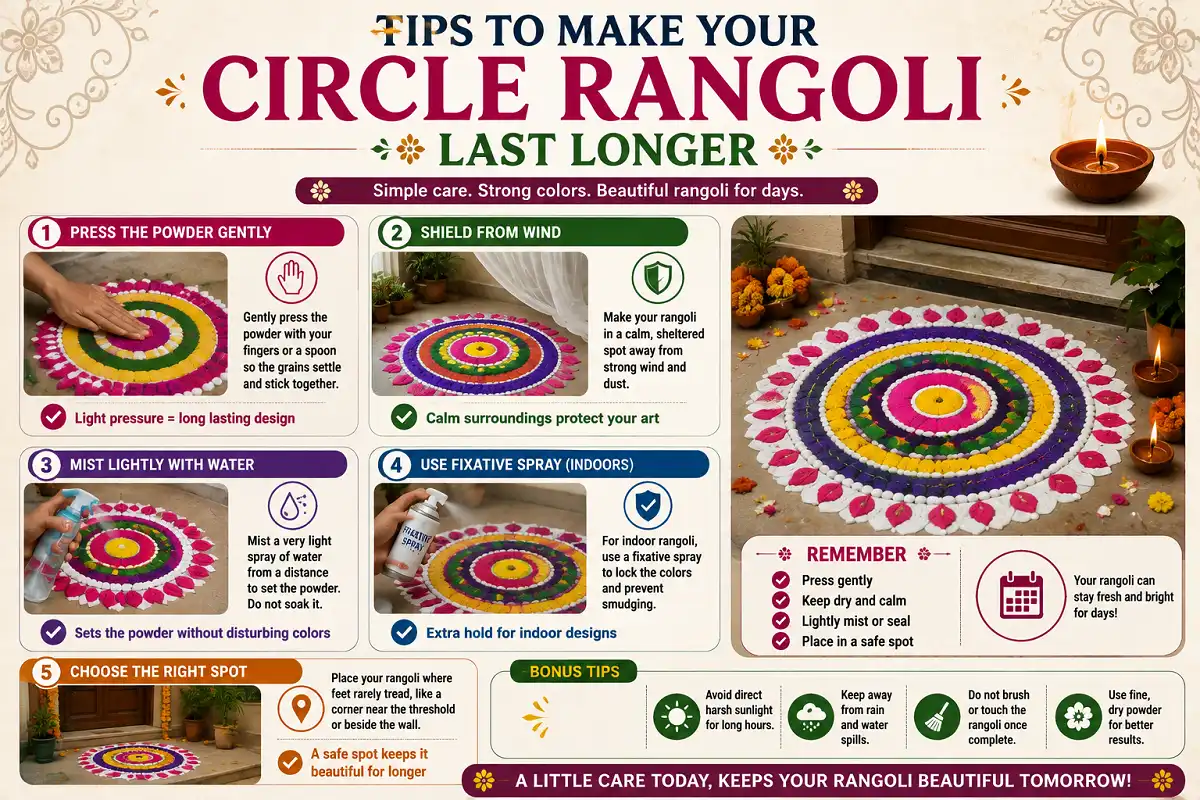
Make your circle rangoli last by pressing the powder gently and shielding it from wind. Light pressure helps grains settle and stick. A calm, sheltered spot protects the finished work.
Mist a very light spray of water over the powder to set it. Do this carefully so the colors do not run. A fixative spray also works for indoor pieces. A rangoli with concentric circles holds up especially well because the rings are wide and easy to protect.
For outdoor doorstep designs, place the rangoli where feet rarely tread. A corner near the threshold stays safe longer. With these steps, your design holds its shape for days.
Final Words
Rangoli with concentric circles gives you a reliable path to a balanced, striking floor design. You fix one center, sweep even rings, and fill each band with color and motif. Beginners get a forgiving start, while skilled artists get endless room to layer detail. Keep your spacing even, your palette tight, and your center crisp. With these habits, every circle design you make will look intentional and complete.
FAQs
How many circles should a concentric rangoli have?
Three to six rings work best for most designs. Three rings suit quick daily patterns. Five or six rings give festival pieces more room for detail.
Can beginners make rangoli with concentric circles easily?
Yes, beginners find this style very approachable. Circles hide small mistakes and the ring structure guides your hand. Start with three rings and two colors.
What is the best tool for drawing circles in rangoli?
A string tied to a center pin is the simplest tool. It draws perfect circles of any size. A compass or a traced bowl also works well.
Do concentric circle rangolis need dots?
No, dots are optional in this style. The rings themselves create the structure. Dots only add extra rhythm and decoration when you want them.
How long does a circle rangoli take to make?
A simple three-ring design takes about ten minutes. A detailed festival piece with many rings can take an hour or more. Your speed grows with practice.