Geometric Rangoli Designs: Beautiful Patterns for Every Occasion
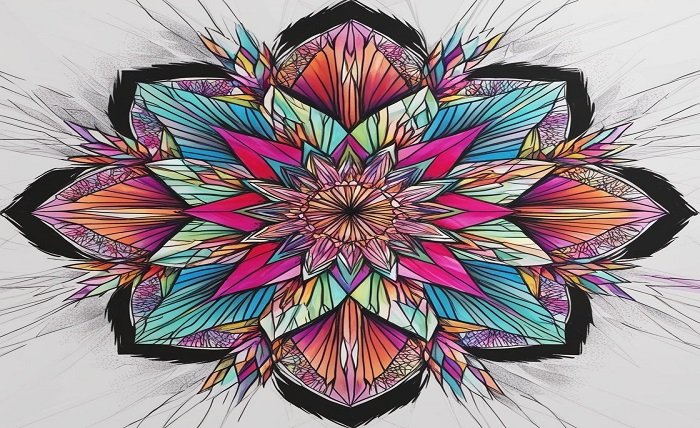
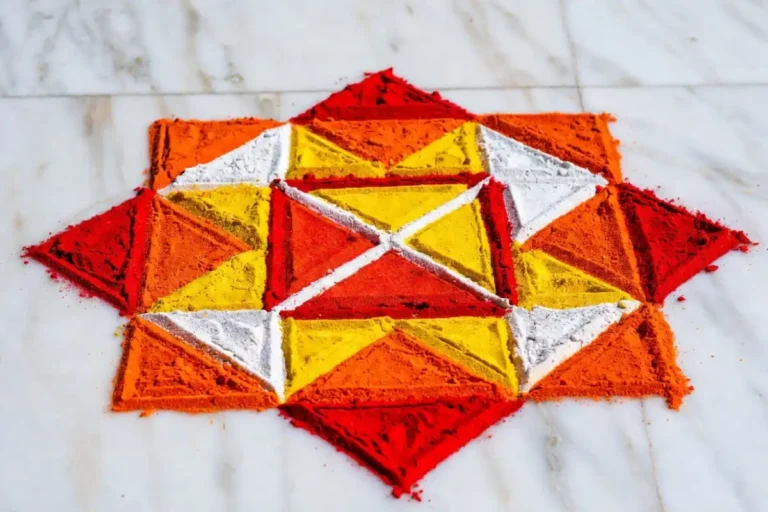
Geometric rangoli designs bring a clean, structured beauty to any floor space. Built on shapes like Geometric rangoli brings a clean, structured beauty to any floor space. Built on shapes like triangles, squares, circles, and hexagons, these patterns are both precise and creative. They suit every skill level, from beginners drawing simple grids to experienced artists layering complex forms. Whether you are preparing for Diwali, a wedding, or simply decorating your home entrance, geometric rangoli offers endless creative possibilities with a timeless visual appeal that never goes out of style.
Why Geometric Rangoli Designs Are So Popular
Geometric rangoli has stayed popular across generations for good reason. The shapes are universal and easy to recognize, yet they allow for deep artistic expression. Unlike freehand floral designs, geometric patterns follow a logical grid or radial structure, which makes them easier to plan and reproduce accurately.
They also photograph exceptionally well. The sharp lines and bold color contrasts create strong visual impact, making geometric rangoli a favorite for social media sharing and home decoration inspiration.
Another reason for their widespread appeal is flexibility. A simple six-pointed star can become a detailed mandala with the addition of a few more layers. This scalability means the same geometric concept works for a small doorstep or a large courtyard floor.
Core Shapes Used in Geometric Rangoli
The Five Building Blocks
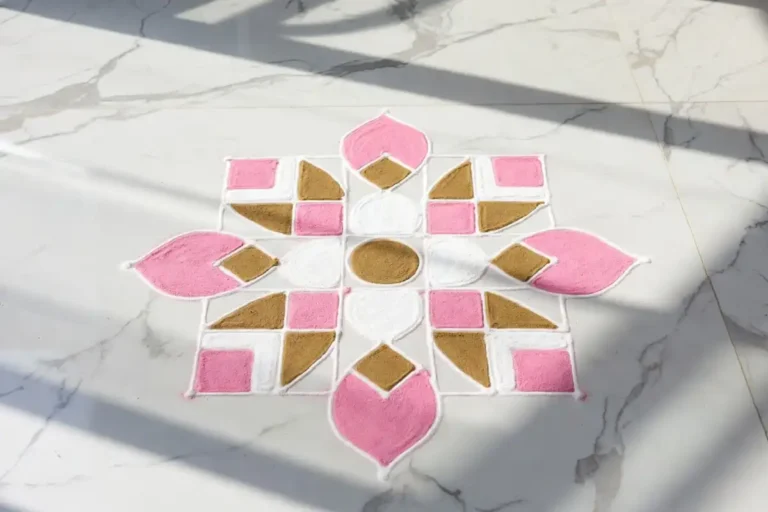
Triangles, squares, hexagons, circles, and dots — see how each shape behaves in a finished design before you commit chalk to floor.
Understanding the building blocks of geometric rangoli helps you create balanced, symmetrical designs with confidence.
Among the most versatile shapes in geometric rangoli. Pointing inward and outward alternately, they form star patterns and radial bursts. Two triangles overlapping create the classic six-pointed star that forms the heart of many traditional Indian floor designs.
Give designs a firm, grounded structure. Rotated at 45 degrees, a simple square becomes a dynamic diamond that adds movement to the overall pattern.
Tile together seamlessly, making them ideal for large floor areas. Each hexagon can be filled with a different color or subdivided into smaller triangles for additional detail.
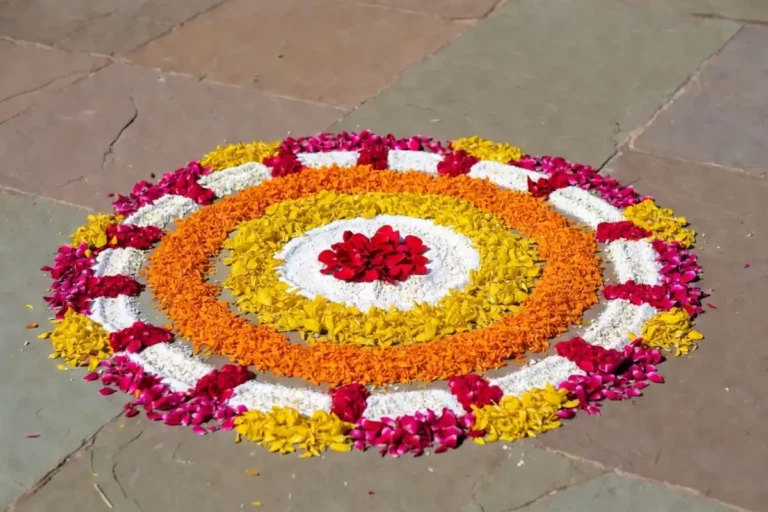
Work as framing devices. Concentric circles drawn around a central motif define and separate different zones of a design, adding depth and focus.
Used not just as decorative accents but as structural guides. In geometric rangoli, these dots become visible design elements that anchor the entire composition.
If you want to understand how individual shapes carry meaning and visual weight, this guide on geometric shapes, meaning, use, and design ideas is a helpful starting point.
How to Plan a Geometric Rangoli Design
Good planning makes the difference between a rangoli that looks polished and one that feels uneven. Here is a simple approach that works for most geometric designs.
Start with a center point. Mark the middle of your design space with a single dot. All radial geometric patterns grow outward from this point, so getting it right matters.
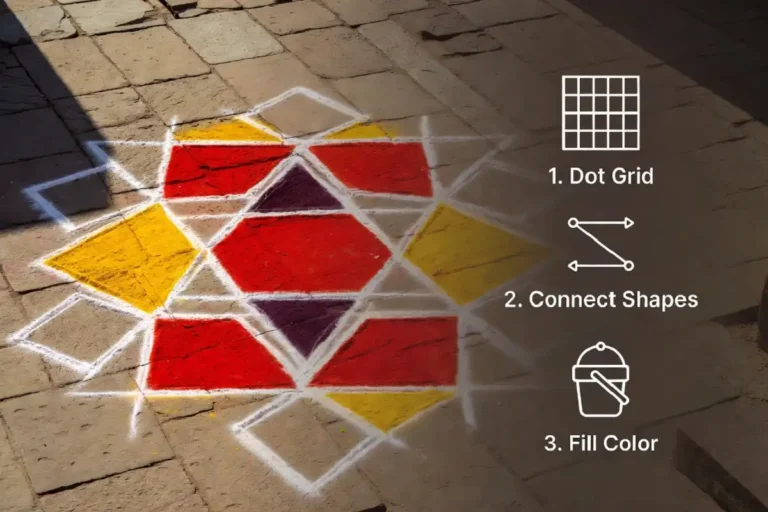
Draw a dot grid. Using chalk or a pencil, lightly mark an evenly spaced grid of dots. The spacing determines the scale of your shapes. Closer dots produce finer detail; wider spacing creates bold, larger forms.
Sketch the outline first. Connect your dots to form the basic shapes before adding color. This lets you spot any symmetry errors and correct them easily.
Work from the center outward. Fill in color starting from the middle and moving outward layer by layer. This prevents smudging and keeps the design neat.
Use contrasting colors at borders. Placing a light color next to a dark one at the edge of each shape makes the pattern pop visually.
Color Combinations That Work Well for Geometric Rangoli
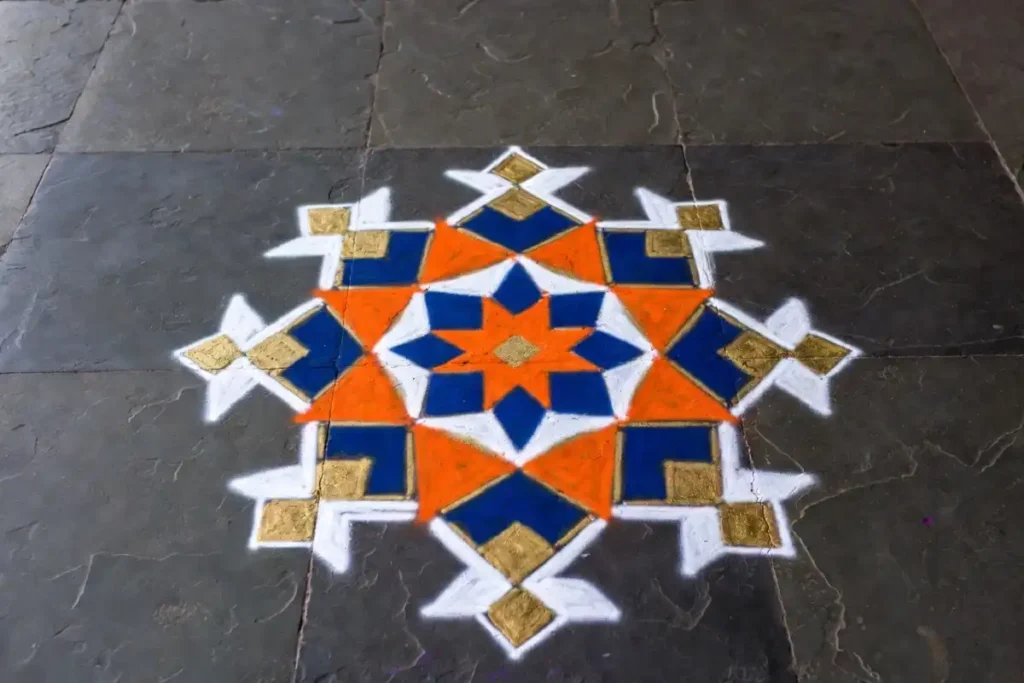
Color Pairings at a Glance
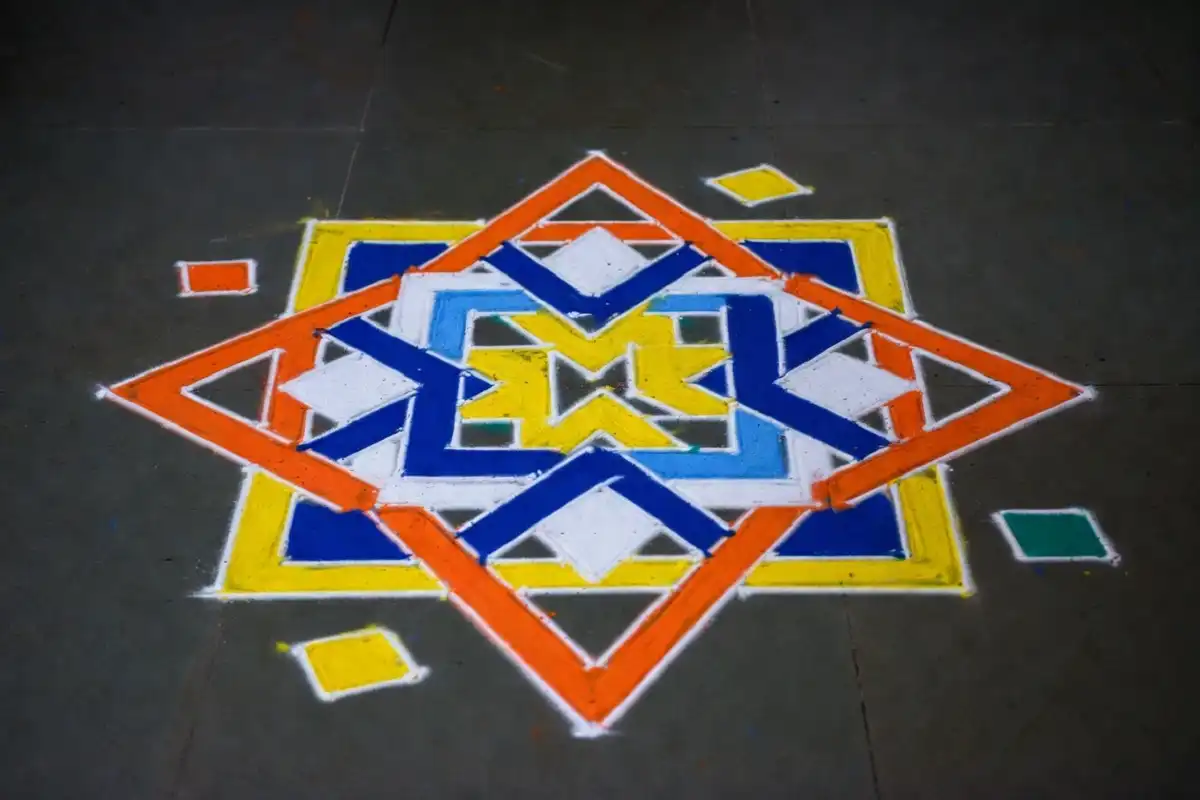
Orange and white, blue and turquoise, red and gold — a star-and-diamond layout showing how neighboring color choices shape the read of the whole design.
Color choice is just as important as the shapes themselves. In geometric rangoli, the colors define the structure. Each shape is usually filled with a single flat color, which means the combination of neighboring hues creates depth and contrast.
Some color pairings that consistently work well:
- Orange and white with a black outline for Diwali themes
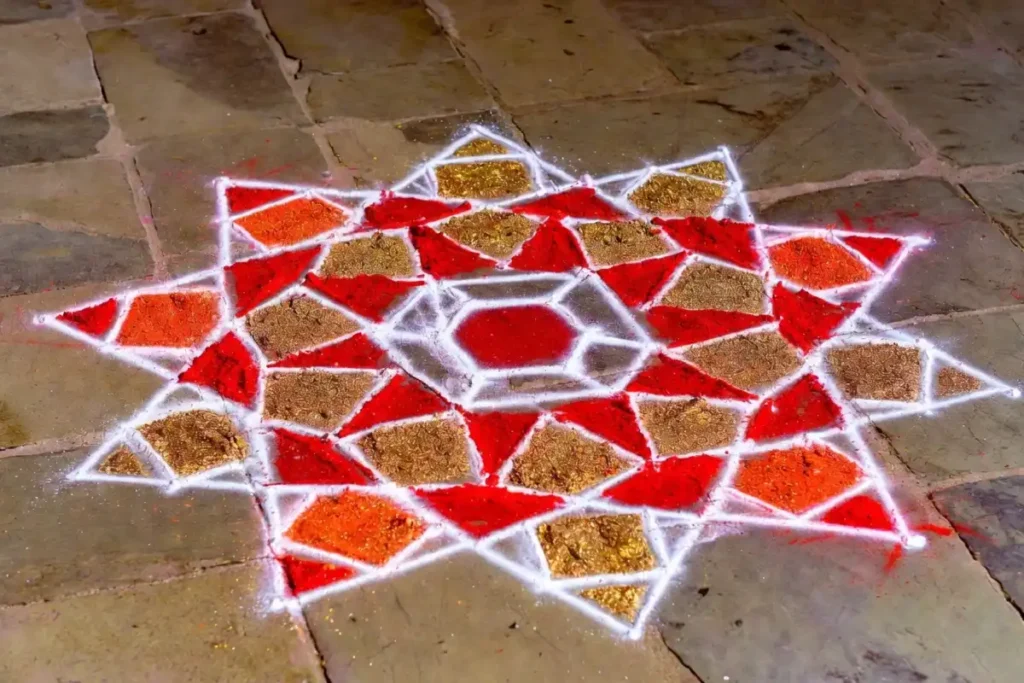
- Red and gold for wedding and festive occasions
- Blue, turquoise, and white for a fresh, modern look
- Yellow, green, and pink for spring festivals like Holi or Ugadi
- Monochrome shades of one color for a contemporary minimalist style
Avoid using more than five or six colors in a single design unless you are an experienced artist. Too many hues can make the geometric structure harder to read visually.
For additional color and pattern ideas, the resource on geometric design ideas for art, decor, and craft offers great visual references and practical inspiration.
Easy Geometric Rangoli Designs for Beginners
Starting simple is always the best approach. These beginner-friendly designs use basic shapes and require no special tools beyond a chalk pencil and colored powder.
Four-petal square grid: Draw a 5×5 dot grid, then connect alternating dots to form a series of squares rotated at 45 degrees. Fill each diamond shape with a different color. This is one of the quickest geometric designs to learn.
Six-pointed star: Mark a central dot and draw two equilateral triangles overlapping in opposite directions. Fill each triangle segment with a contrasting color. Add a circle around the outside to frame the design.
Concentric squares: Draw a small square in the center, then draw progressively larger squares around it, each rotated slightly. Fill each band with a different color for a spiral optical illusion effect.
Triangle pinwheel: Draw eight triangles radiating from a central point, each slightly rotated from the last. Use alternating dark and light colors to create a spinning visual effect.
These designs can be completed in under an hour and look impressive even at small sizes. Once you are comfortable with them, combining two or more into a larger composition becomes the natural next step.
Advanced Geometric Rangoli Techniques
For artists ready to move beyond basic shapes, several techniques add complexity and visual richness to geometric rangoli.
Interlocking grids: Overlay two different grids at different angles to create complex intersection patterns. A square grid overlapping a triangular grid produces unexpected new shapes at every crossing point.
Fractal subdivision: Take any shape and subdivide it into smaller versions of the same form. A large triangle divided into four smaller triangles, each divided again, creates a fractal-like depth that draws the eye inward.
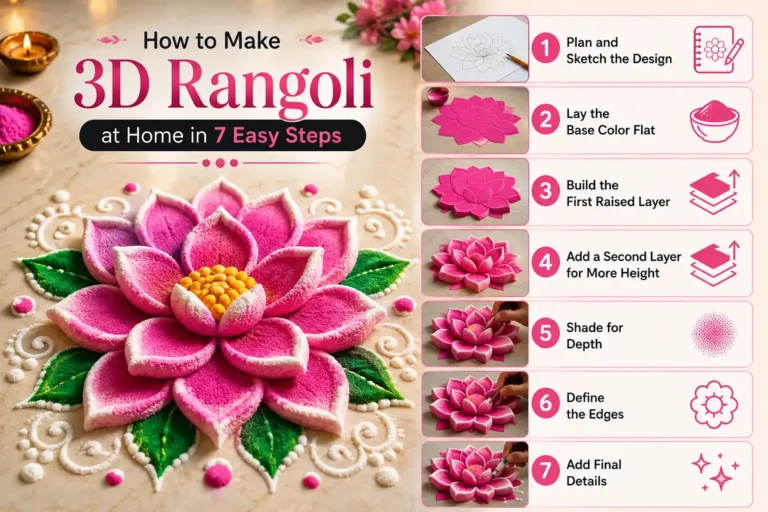
3D shading effects: By using two shades of the same color within a single shape, you can create the illusion of three-dimensional depth. Lighter shades on one face and darker on another simulate light falling across the design.
Mixed media additions: Flower petals, seeds, and diyas placed at key points add texture and celebrate the traditional nature of rangoli while keeping the geometric structure intact.
Traditional Indian geometric symbols carry deep cultural roots explored in detail by the Victoria and Albert Museum’s Indian textile pattern archive, which highlights how these shapes have been woven into South Asian art for centuries.
Geometric Rangoli for Festivals and Special Occasions
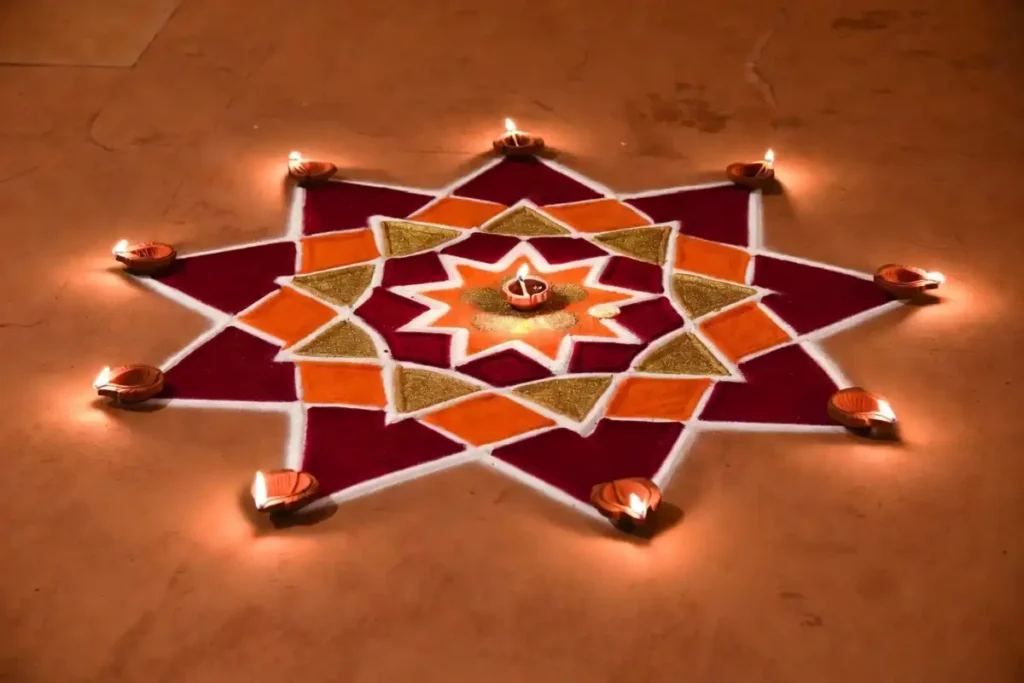
Diwali Star Pattern in Action
Deep red and gold with diyas framing the star — a real example of how the geometric structure adapts to a festival mood.
Different festivals call for slightly different approaches, even within the same style.
Understanding composition and visual balance in pattern work is also supported by the Getty’s guide to formal visual analysis, which covers how structure and symmetry function across art forms.
For further inspiration on combining pattern styles, the article on ornamental floral art patterns and color ideas shows how floral motifs can complement a geometric base design beautifully.
Tools and Materials for Geometric Rangoli
Having the right materials makes the process much smoother, especially when precision matters.
- Rangoli powder or colored sand for the main fill
- White chalk or rice flour for drawing the initial outline
- A compass or circular lid for accurate circles
- Ruler and set square for straight lines and right angles
- Fine-tipped squeeze bottles for detailed color work
- A small brush or stick for adjusting edges
Many artists also use a printed dot grid template as a guide before transferring the design to the floor.
Conclusion
Geometric rangoli designs offer a wonderful balance of structure and creativity. Whether you choose a simple star for a doorstep or an intricate mandala for a festival floor, the underlying logic of geometric shapes makes the design process approachable and rewarding. The patterns you create connect you to a centuries-old artistic tradition while giving you full freedom to express your own color sense and style. Start with basic shapes, practice your dot grids, and let the geometry guide you toward designs that are both precise and deeply personal.
FAQs
What makes geometric rangoli different from other styles?
Geometric rangoli is built on mathematical shapes like triangles, squares, and hexagons rather than organic forms like flowers or leaves. This gives it a structured, precise appearance that is distinct from floral or figurative styles.
Can beginners make geometric rangoli easily?
Yes, beginners can start with very simple designs. A basic six-pointed star or concentric square pattern requires only a dot grid and a few colors, making it accessible to anyone trying rangoli for the first time.
How long does a geometric rangoli design take to complete?
A simple small design can be finished in 30 to 60 minutes. More elaborate festival designs with multiple layers and many colors may take two to four hours depending on size and detail level.
What is the best surface for geometric rangoli?
Clean, flat, dry flooring works best. Stone, tile, and sealed concrete all hold rangoli powder well. Textured or damp surfaces make it harder to achieve clean lines.
How do you keep geometric rangoli from smudging?
Work from the center outward so your hands never rest on finished areas. Some artists lightly spray a fixative over completed sections to preserve them for longer periods.
Are there digital tools for planning geometric rangoli?
Yes, several grid-based drawing apps and vector design tools can help you plan before committing to the floor. This is especially useful for complex or large-scale designs.