Easy Simple New Year Rangoli Ideas at Home
Simple new year rangoli designs bring color and hope to your entrance on the first day of the year. You don’t need fancy tools or years of practice. A few dots, straight lines, and bright colors are enough to welcome the new year with style.
A simple new year rangoli uses a small dot grid, straight or curved lines, and three to four colors like red, yellow, green, and white. Small floral or geometric patterns near the entrance give a clean, festive look in under 30 minutes.
What Makes a Simple New Year Rangoli Design Work?
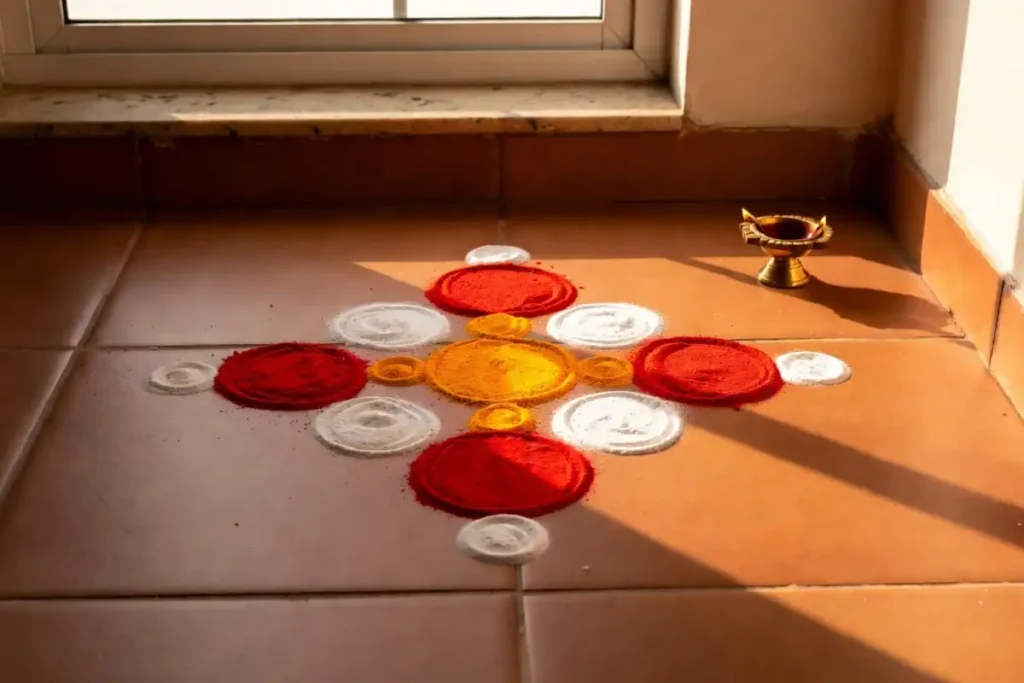
It works because it uses fewer dots, clean lines, and colors that don’t need blending. Keeping new year patterns light on detail helps them photograph well and finish fast, even in cold January mornings when the powder dries slower.
The design should also match the mood of the day. New Year is a fresh start, so open shapes like circles, suns, and stars suit it better than dense, layered motifs.
This keeps the pattern readable from a distance, which matters when guests walk in.
Materials You Need for New Year Rangoli
You need rangoli powder (gulal), a small measuring cup, chalk for the base outline, and a soft brush for corrections. Keep rice flour ready if you want an eco-friendly base instead of colored powder.
Fresh marigold petals work well when you want texture without extra colors. A basic stencil helps if your hand isn’t steady yet, but practicing free-hand once you’re comfortable is faster for daily use, not just festivals.
Easy Dot-Based Patterns for New Year
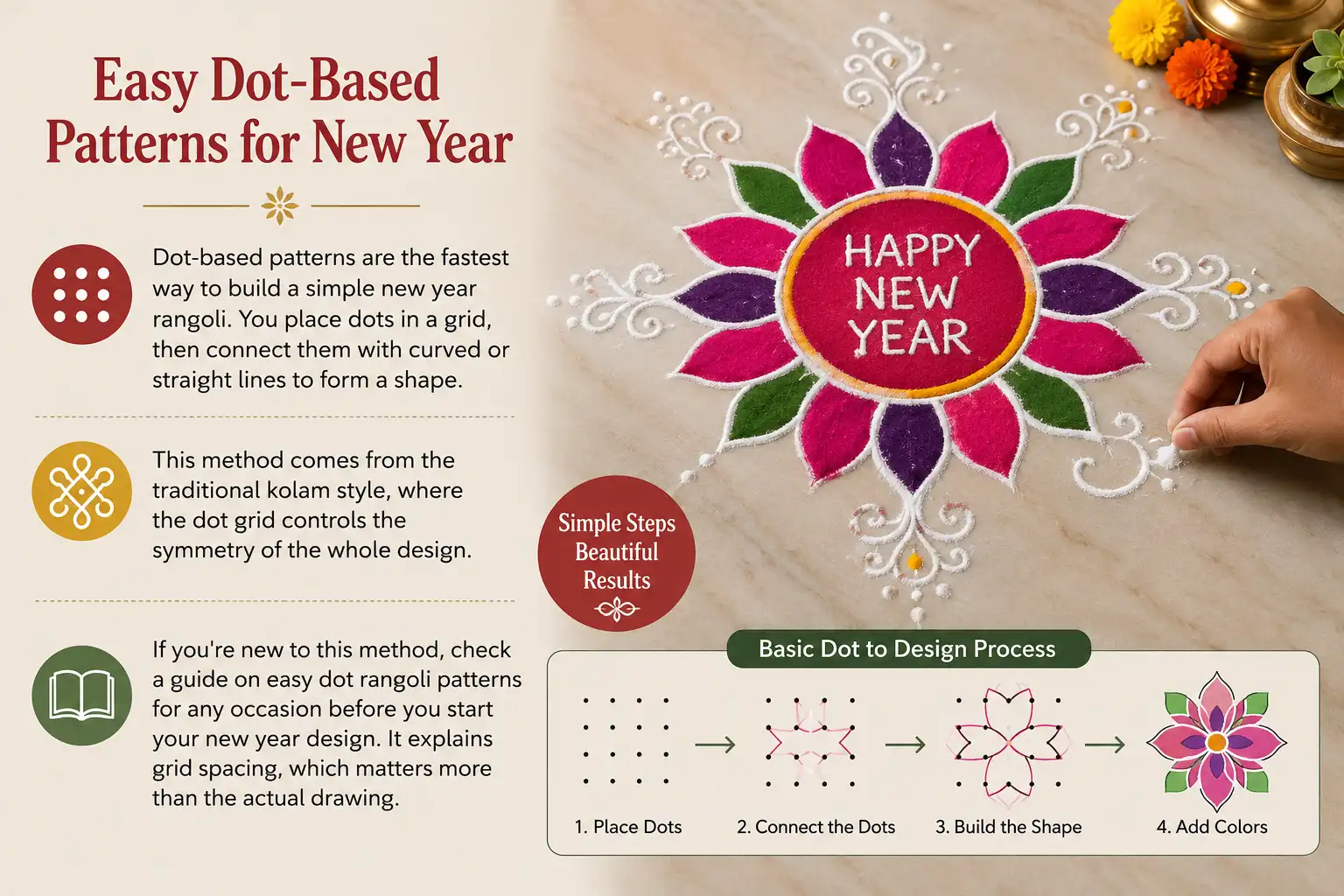
Dot-based patterns are the fastest way to build a simple new year rangoli. You place dots in a grid, then connect them with curved or straight lines to form a shape.
This method comes from the traditional kolam style, where the dot grid controls the symmetry of the whole design.
If you’re new to this method, check a guide on easy dot rangoli patterns for any occasion before you start your new year design. It explains grid spacing, which matters more than the actual drawing.
How Many Dots Do You Need for a Small Design?
You need a 5×5 or 7×7 dot grid for a small entrance design. A 5×5 grid finishes in about 15 minutes and suits apartment doorways. A 7×7 grid gives more room for curves but takes closer to 25 minutes.
Geometric Rangoli Ideas for the New Year
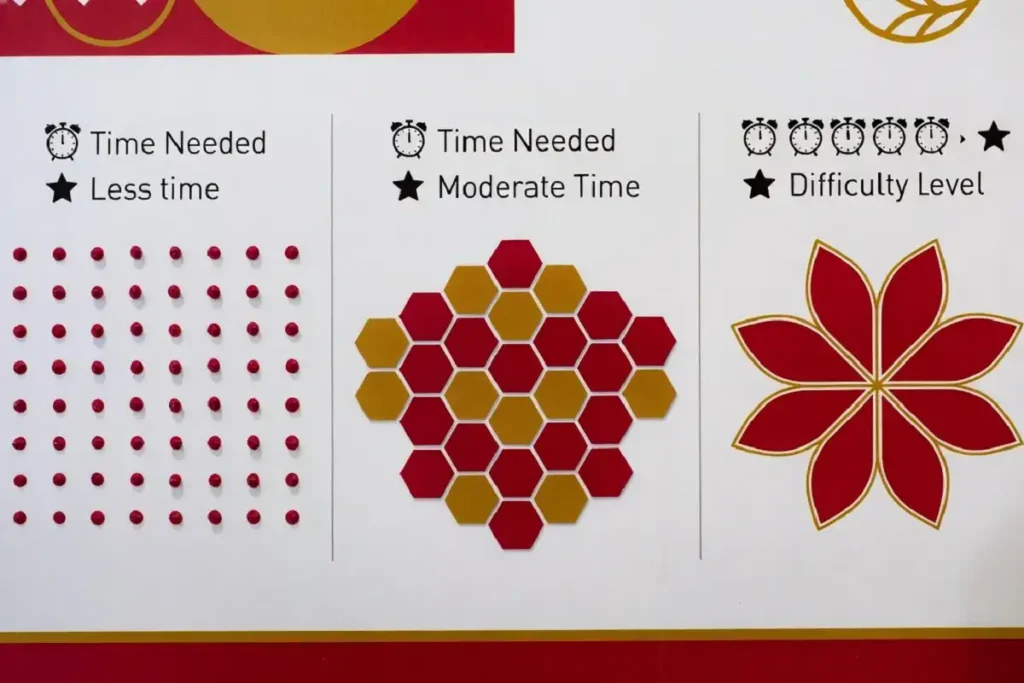
Geometric shapes make a simple new year rangoli look sharp without extra effort. Squares, triangles, and hexagons repeat easily, so you only need to master one shape and rotate it around a center point.
Concentric circles filled with alternating colors also work well for New Year, since the circle itself suggests continuity and cycles, fitting the theme of one year ending and another starting.
Stick to red, gold, and white for the color palette to keep the geometric look festive.
Floral Rangoli Patterns for New Year Beginners
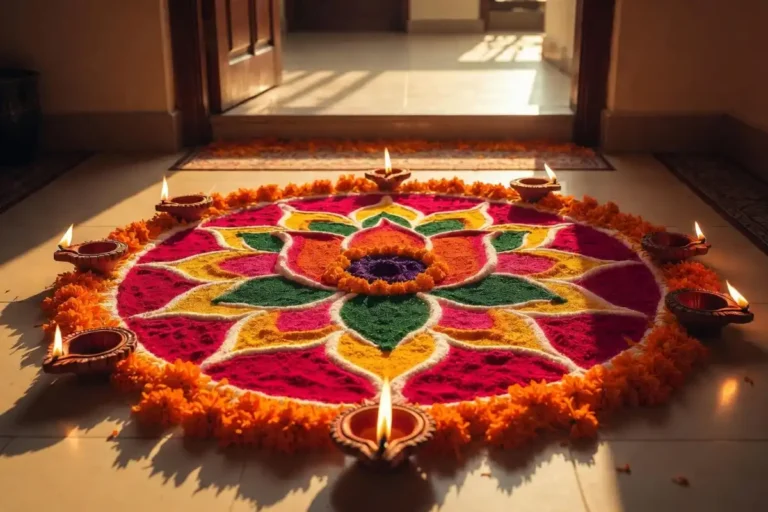
Floral patterns give a simple new year rangoli a soft, natural finish. A single large flower at the center, surrounded by small petals, covers an entrance without needing sharp lines or exact symmetry.
Marigold and rose petal colors (orange, yellow, deep red) match the New Year palette naturally. If you want more petal-based layouts, look at flower rangoli design ideas and simplify them by removing one or two outer layers.
Step-by-Step Guide to Draw New Year Rangoli
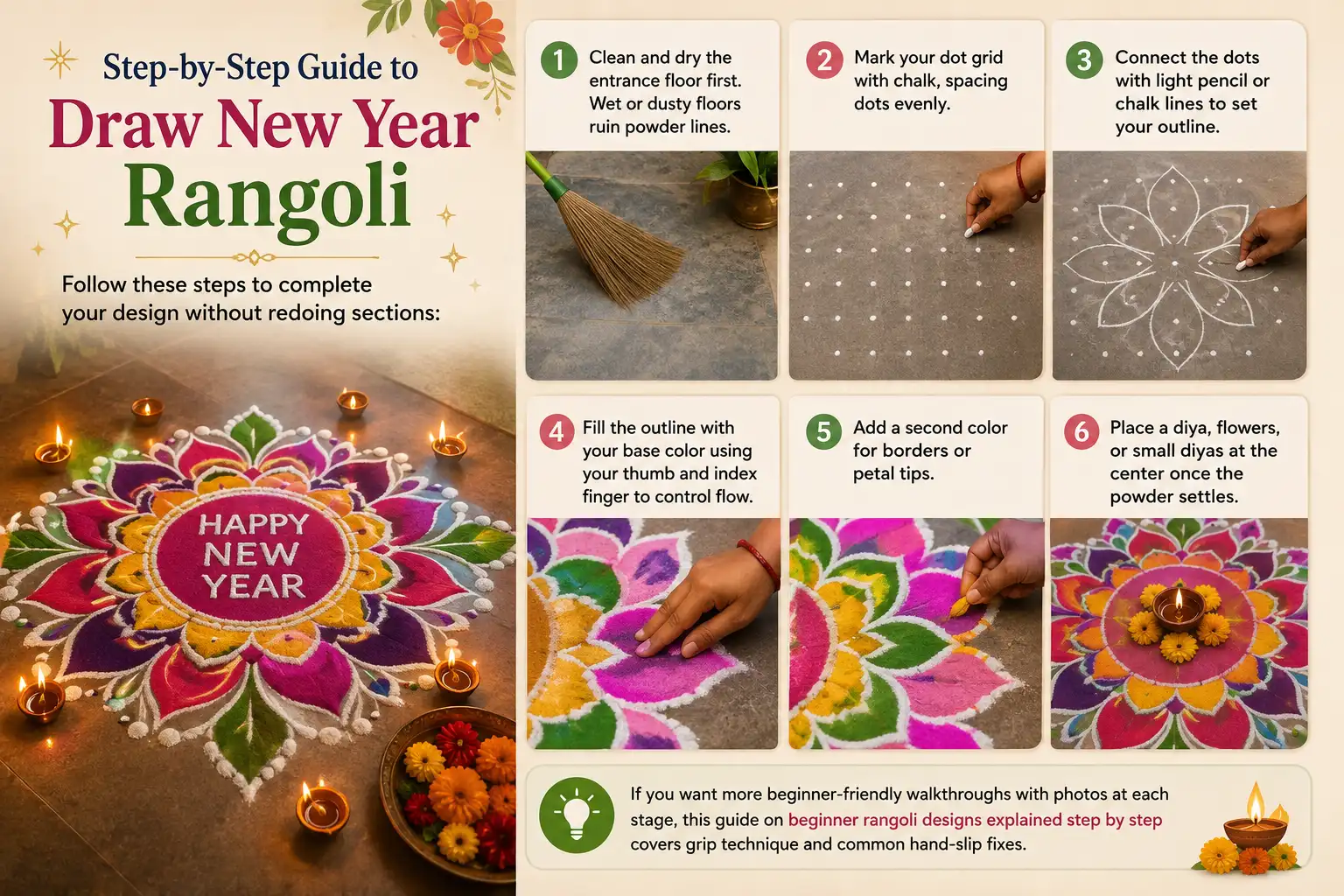
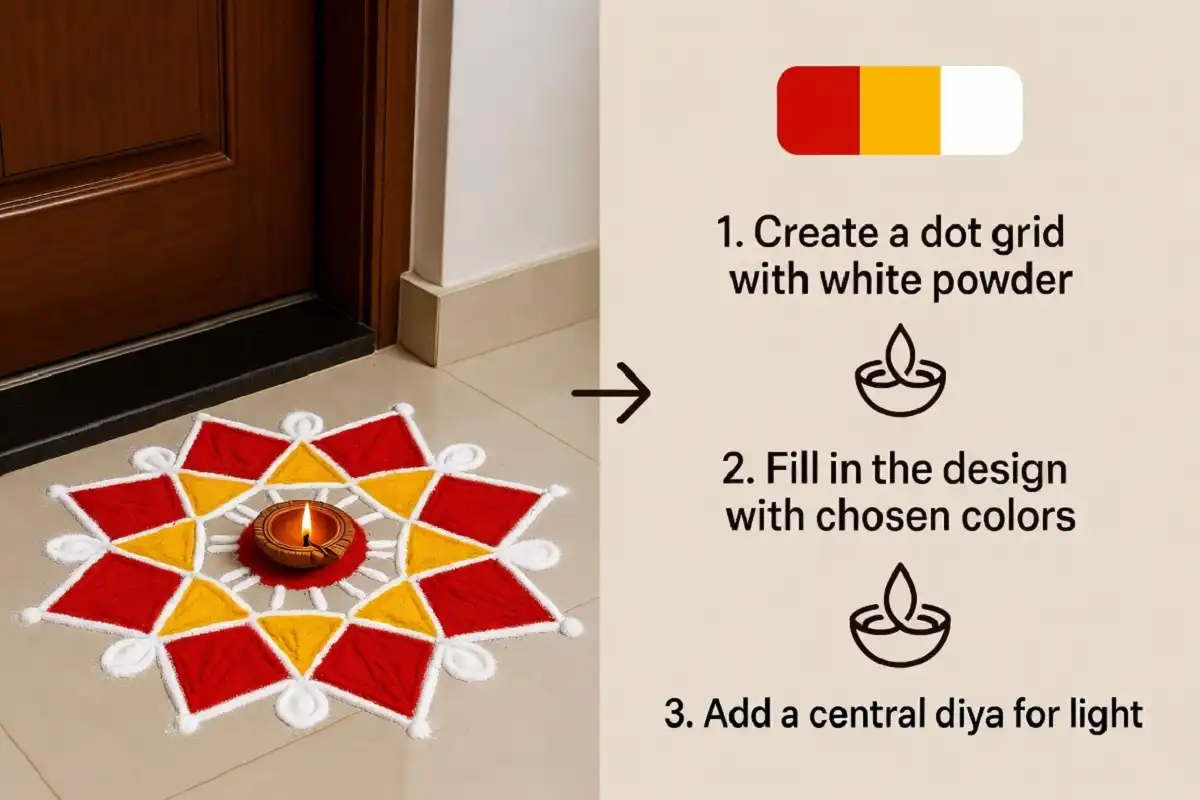
Follow these steps to complete your design without redoing sections:
Clean and dry the entrance floor first. Wet or dusty floors ruin powder lines.
Mark your dot grid with chalk, spacing dots evenly.
Connect the dots with light pencil or chalk lines to set your outline.
Fill the outline with your base color using your thumb and index finger to control flow.
Add a second color for borders or petal tips.
Place a diya, flowers, or small diyas at the center once the powder settles.
If you want more beginner-friendly walkthroughs with photos at each stage, this guide on beginner rangoli designs explained step by step covers grip technique and common hand-slip fixes.
Best Colors for Simple New Year Rangoli
Red, yellow, and white form the base of most new year rangoli color schemes.
Avoid using more than four colors in a small design, since extra colors slow down drying and blur the outline.
New Year Rangoli for Small Entrances and Apartments
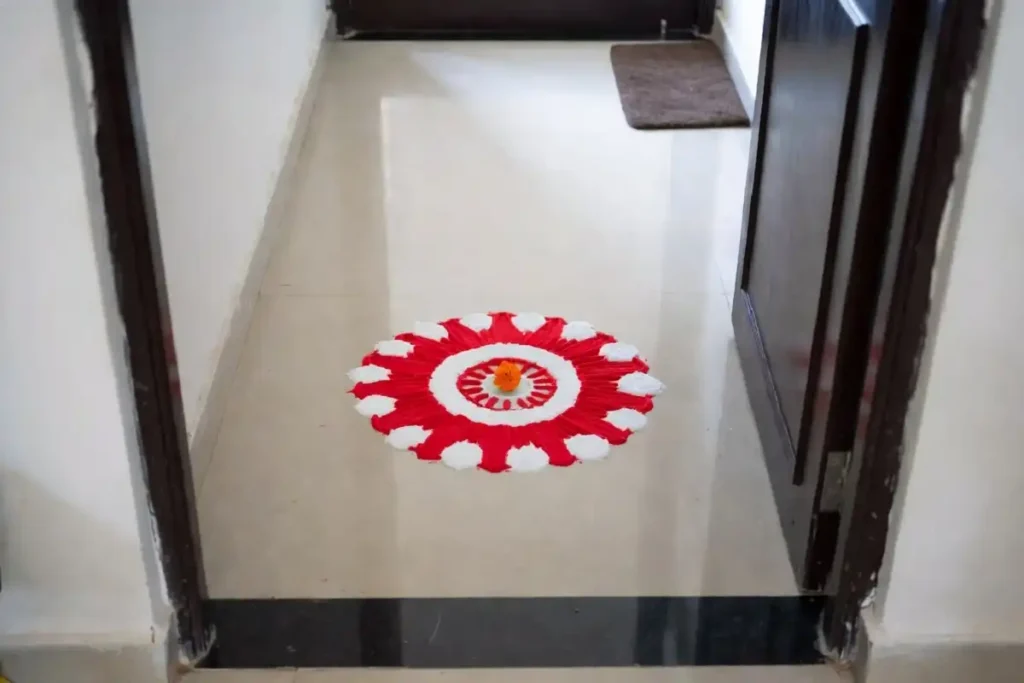
Small entrances need compact, single-layer designs. A 2×2 foot area is enough for a simple new year rangoli with a central motif and a thin border, no wider layout needed.
Stick to one main shape instead of combining flowers, geometry, and symbols in one small space. A single central motif with a thin border reads clean even from across the room, which matters more than detail when the design is small.
Adding a Diya or Peacock Touch to Your New Year Rangoli
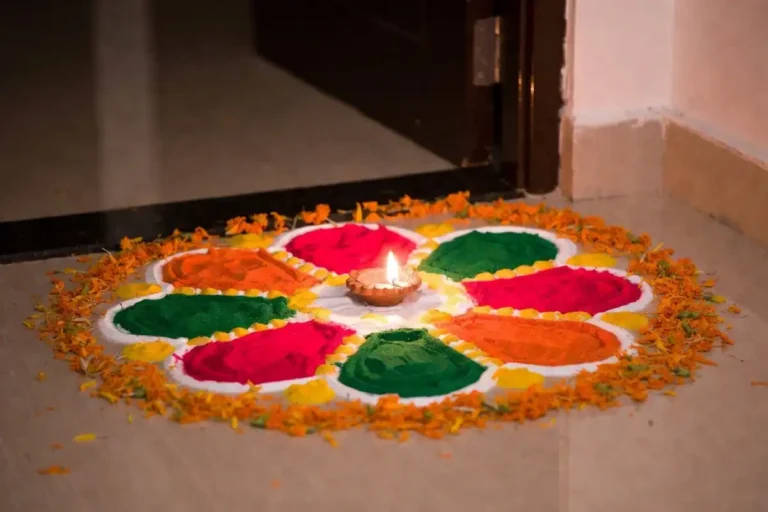
A single diya placed at the center lifts a design without adding drawing time. Light it after the powder settles so the flame doesn’t disturb the pattern.
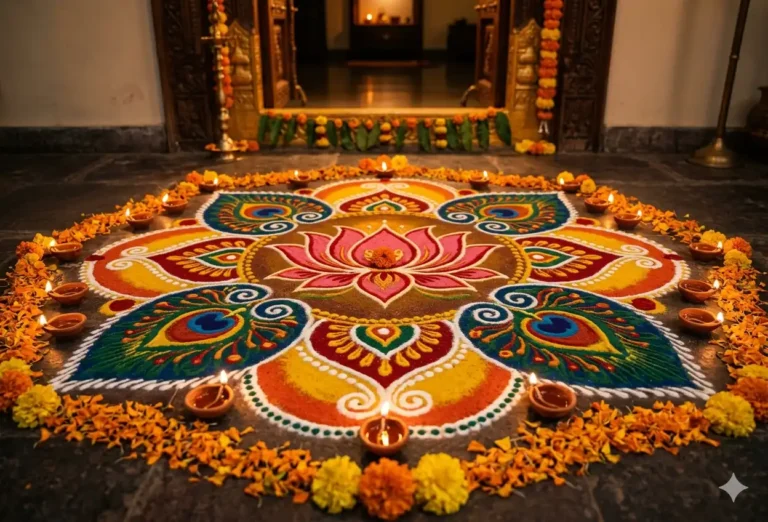
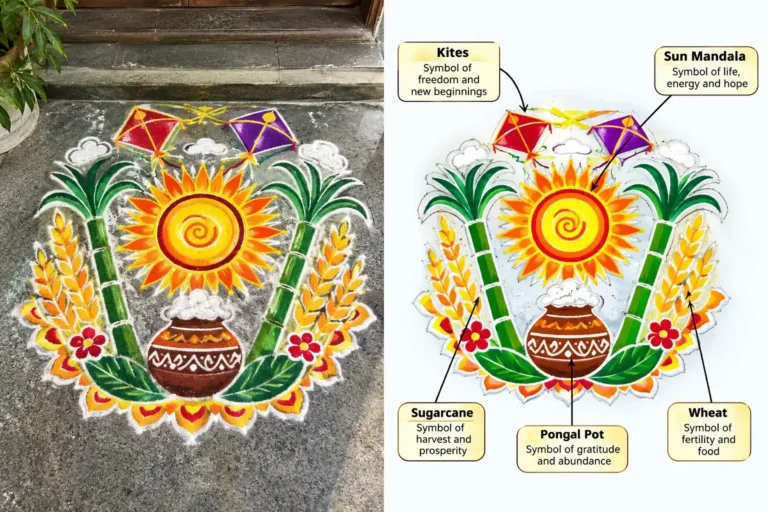
A peacock motif works too, but keep it as a small accent on one side rather than the main shape. Full peacock rangoli patterns take longer and suit bigger celebrations like Pongal or Diwali more than a quick New Year design.
Common Mistakes to Avoid
- Overcrowding the design. Too many colors or shapes packed into one small area is the most common reason beginner designs look messy instead of clean.
- Skipping the chalk outline. Freehand powder without a guide often drifts off-center on uneven floors, even for simple patterns.
- Using wet flower petals on dry powder. Moisture smudges the lines within minutes.
Simple New Year Rangoli Ideas for Beginners
A simple new year rangoli doesn’t need to be elaborate to feel festive. Pick one shape, keep your colors to three or four, and finish before your floor traffic starts.
Start with a dot grid if you’re unsure where to begin, then build confidence with floral or geometric variations as the year goes on.
FAQs
Can I make a simple new year rangoli with flowers only?
Yes. Use petals instead of powder for the entire design. It takes slightly longer to arrange but avoids color smudging and cleans up easily the next day.
How long does a simple new year rangoli take to complete?
A small design takes 15 to 30 minutes. Larger designs with multiple colors or a peacock accent can take up to an hour.
Is there a religious meaning behind rangoli on New Year?
Rangoli on New Year marks a fresh start and welcomes good fortune into the home. Different regions mark their new year on different dates, such as Gudi Padwa in Maharashtra, and rangoli patterns often shift slightly based on local tradition.