Colorful Entrance Rangoli Ideas for Every Festival
A colorful entrance rangoli is one of the most joyful ways to welcome guests into your home. This traditional Indian floor art, drawn at the doorstep, brings energy, warmth, and a festive spirit to any occasion.
Whether you are preparing for Diwali, Pongal, or a simple family gathering, a well-made rangoli at your entrance sets the tone for everything inside.
The beauty of this art form is that it works for beginners and experienced artists alike, with endless room to play with colors, shapes, and styles.
Why a Colorful Entrance Rangoli Makes Such a Big Difference
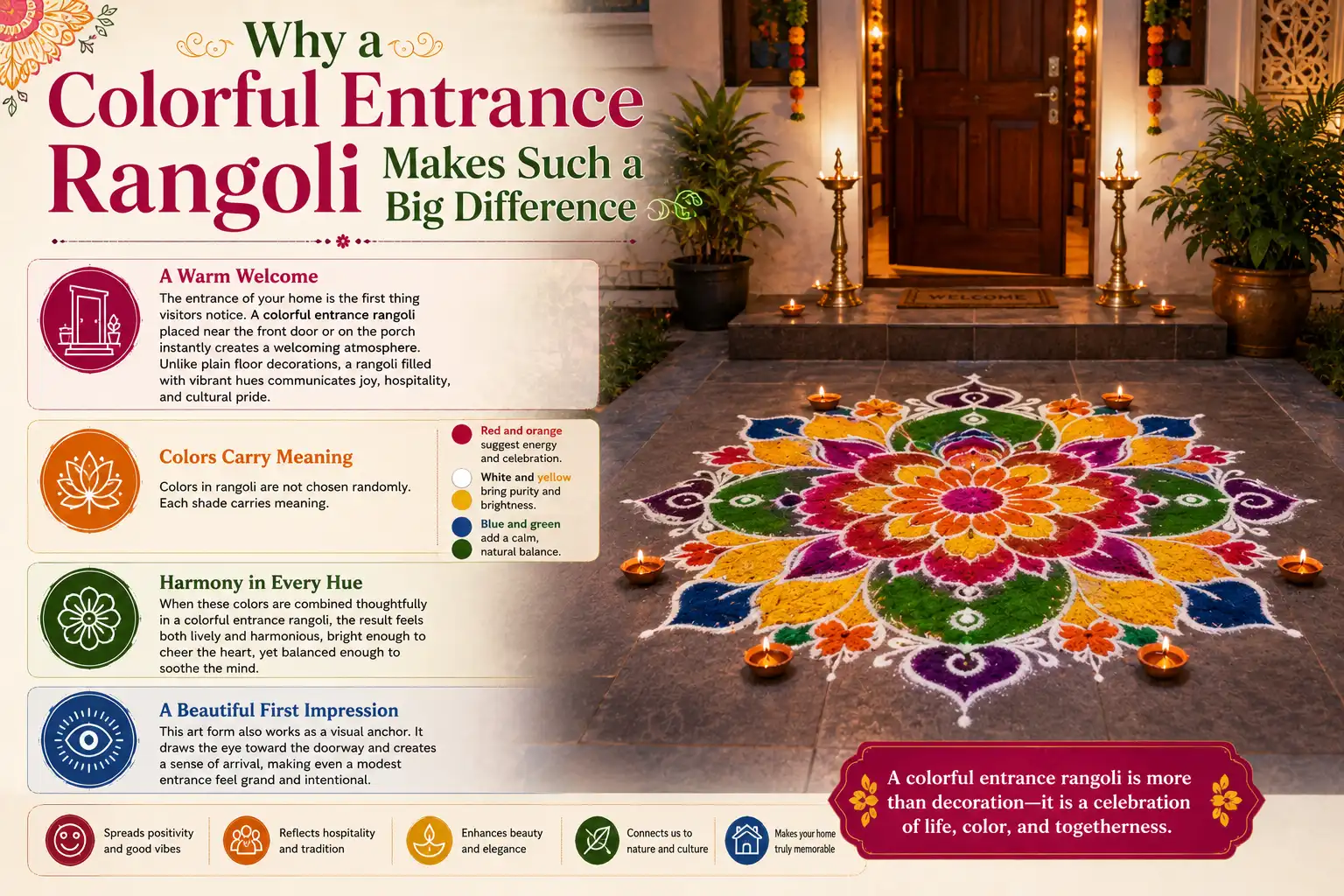
The entrance of your home is the first thing visitors notice. A colorful entrance rangoli placed near the front door or on the porch instantly creates a welcoming atmosphere. Unlike plain floor decorations, a rangoli filled with vibrant hues communicates joy, hospitality, and cultural pride.
Colors in rangoli are not chosen randomly. Each shade carries meaning. Red and orange suggest energy and celebration. White and yellow bring purity and brightness.
Blue and green add a calm, natural balance. When these colors are combined thoughtfully in a colorful entrance rangoli, the result feels both lively and harmonious.
This art form also works as a visual anchor. It draws the eye toward the doorway and creates a sense of arrival, making even a modest entrance feel grand and intentional.
Choosing the Right Colors for Your Entrance Rangoli
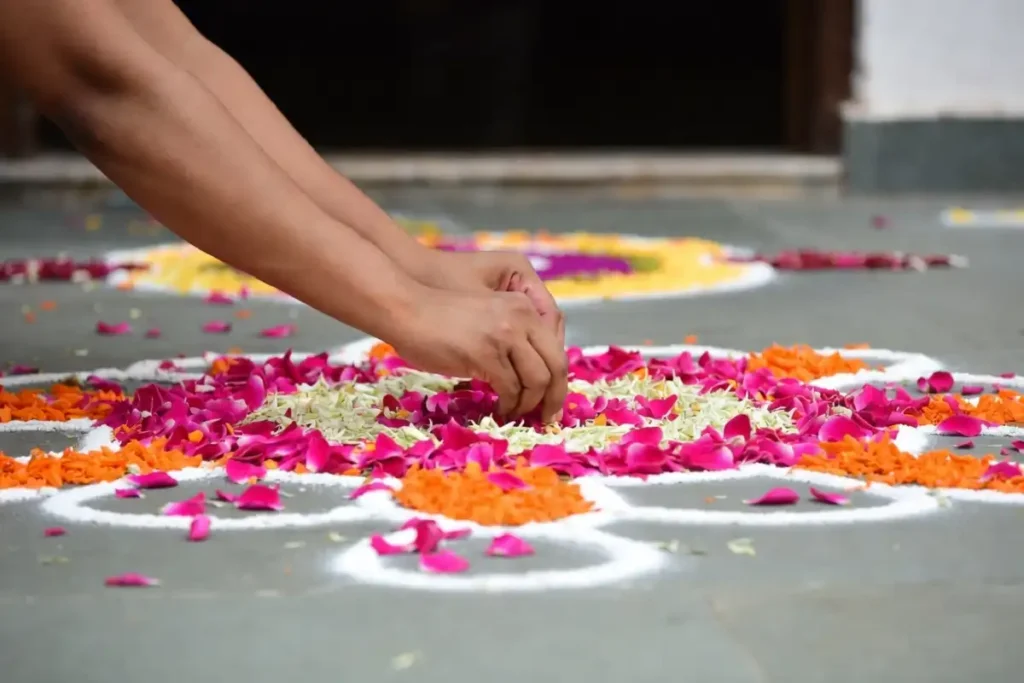
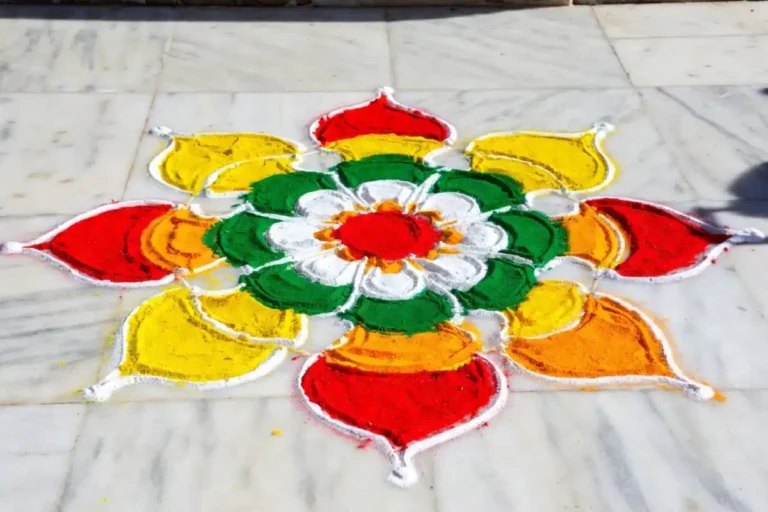
Color selection is one of the most important steps when planning a colorful entrance rangoli. The right palette depends on the occasion, the size of the space, and your personal preference. For festival designs, bold and high-contrast combinations work best:
A classic, elegant look.
A warm, traditional feel.
A rich, celebratory combination.
A festive, symmetrical pattern.
For everyday entrance rangoli designs, softer tones like lavender, sky blue, and pastel pink can look lovely without being overpowering.
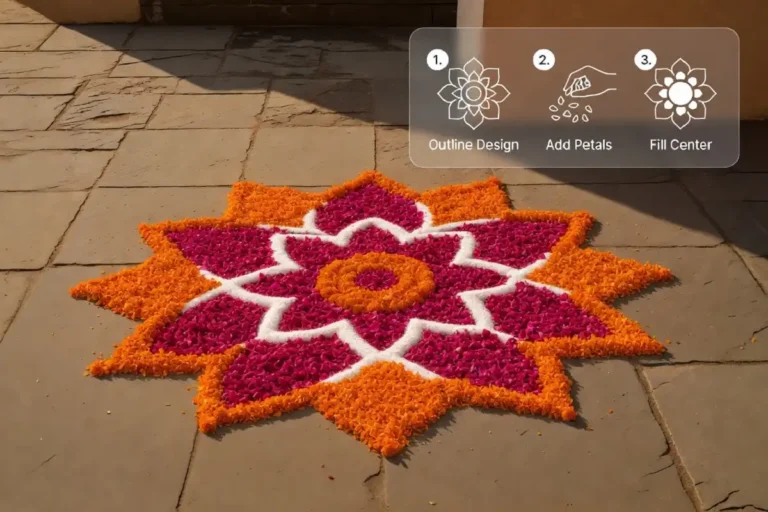
When working with dry colors or powders, always test shades on a small section first. Natural pigments from flowers like marigold, rose, and jasmine also create a beautifully organic colorful entrance rangoli, especially during religious or seasonal events.
Popular Patterns for a Colorful Entrance Rangoli
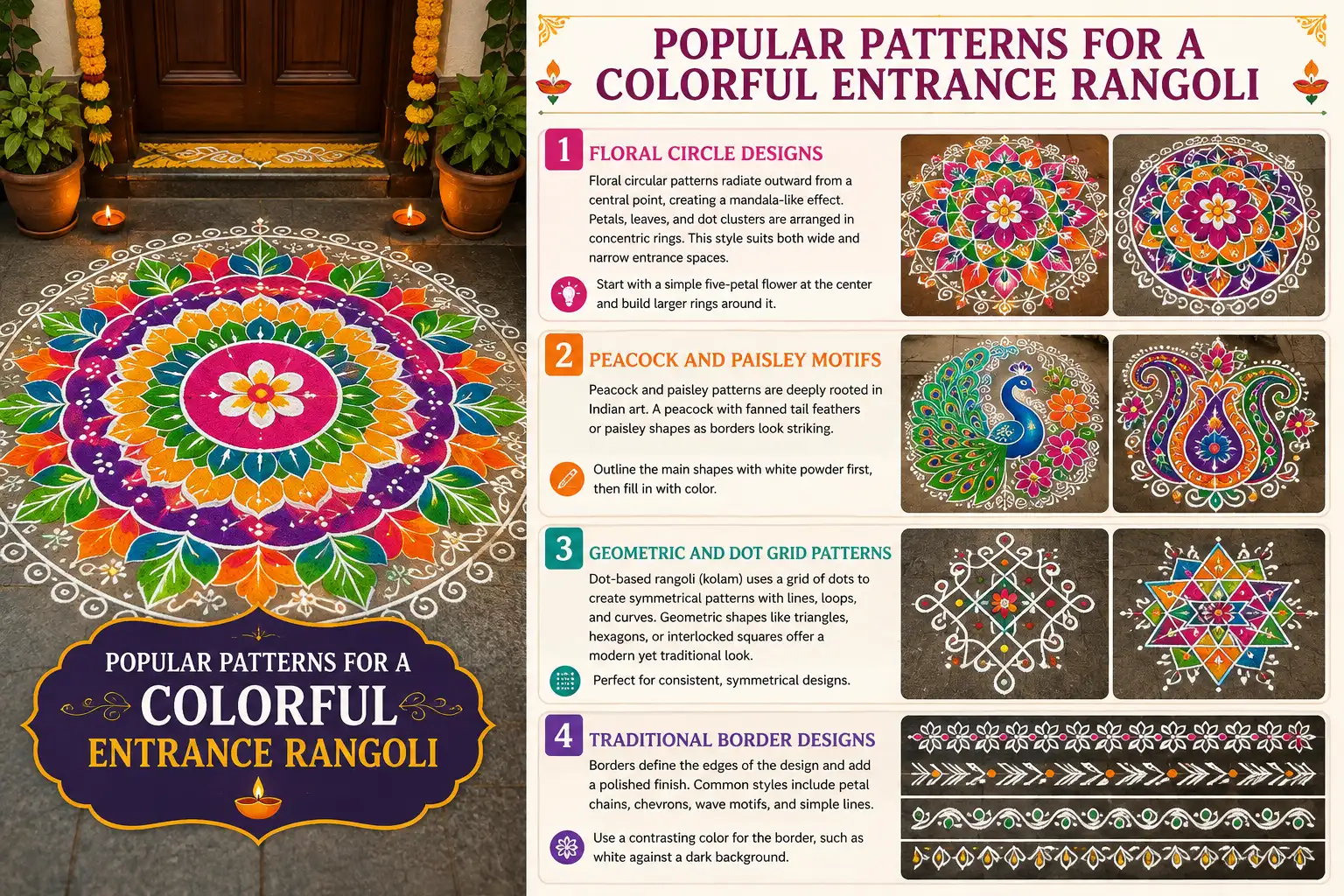
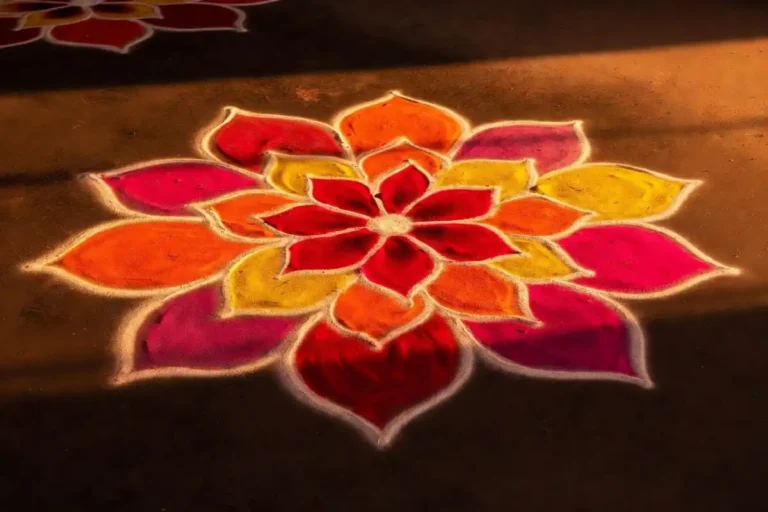
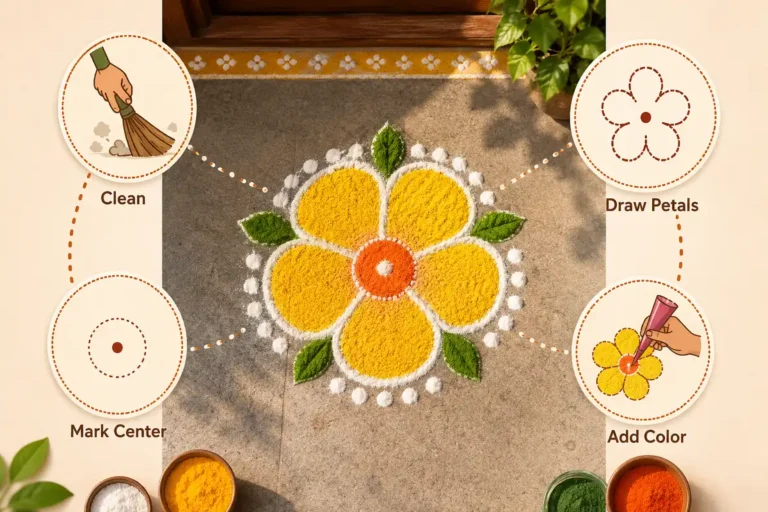
The most common choice. Petals, leaves, and dot clusters radiate outward from a central point in a mandala-like effect — suits both wide and narrow spaces. Start with a simple five-petal flower at the center and build larger rings around it. See this beginner-friendly rangoli art guide to get started.
Deeply rooted in Indian art. A peacock with fanned tail feathers in blue, green, and gold looks striking on any doorstep, and paisley shapes work well as border elements. Outline the main shapes in white powder first, then fill in with color.
Dot-based rangoli, also known as kolam, is a traditional South Indian style. Dots act as a grid for perfectly symmetrical patterns without freehand drawing. Explore small symmetry rangoli ideas for a clean, modern foundation.
No entrance rangoli is complete without a well-designed border. Common styles include simple lines, petal chains, chevron patterns, and wave motifs. A contrasting color, like white against a dark background, helps the whole design stand out.
Materials You Need to Create a Colorful Entrance Rangoli
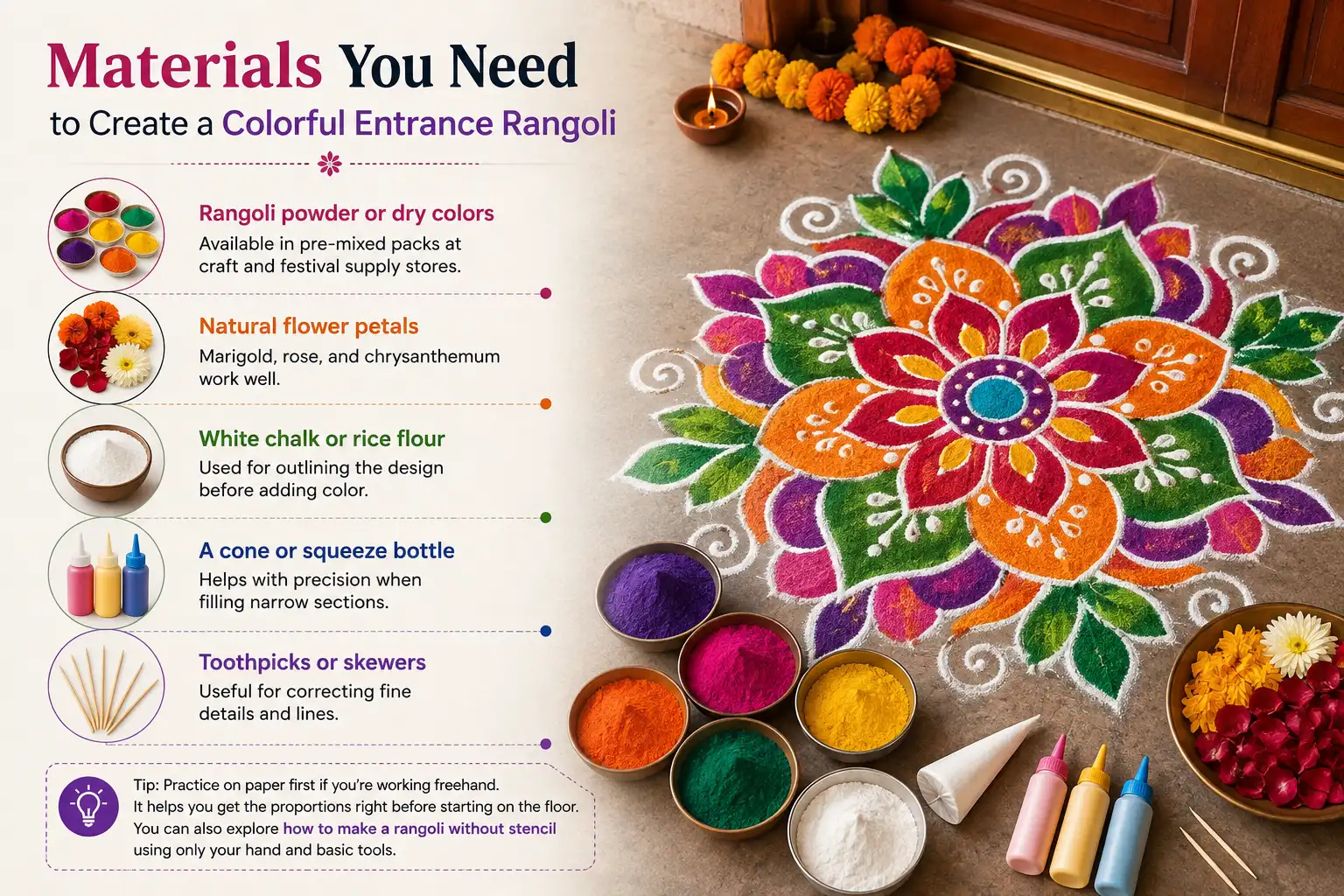
Getting the materials right makes the entire process smoother. Here is what you will typically need:
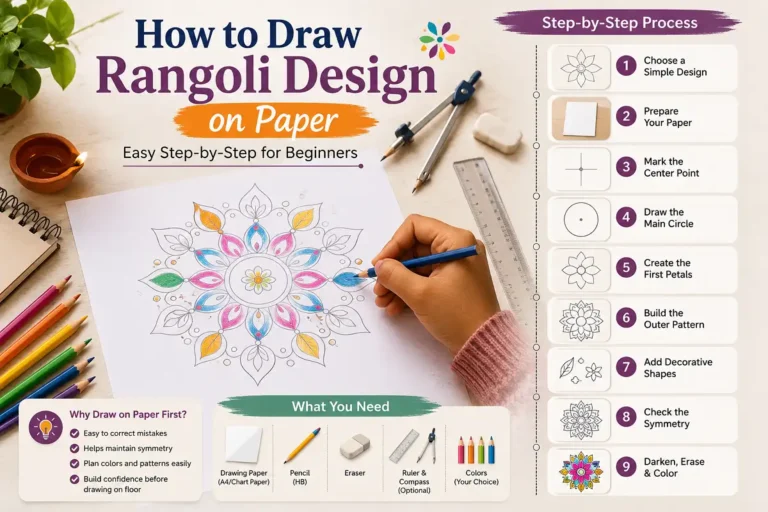
If you want to skip the outline step and work freehand, practicing on paper first will give you a clear sense of the proportions before you commit to the floor. For a more approachable option, you can also explore how to make a rangoli without stencil using only your hand and basic tools.
Tips for Making Your Entrance Rangoli Last Longer
A colorful entrance rangoli can fade or scatter quickly if you do not take a few precautions.
-
Clean and dry the floor surface thoroughly before starting.
-
Lightly spray water on the surface to help dry color stick.
-
Work from the center outward to avoid smudging finished sections.
-
Apply a thin layer of hairspray or fixative over dry-color designs to reduce scattering.
-
For flower petal designs, work in the morning when the air is cool and petals stay fresh longer.
If you are decorating for a multi-day celebration, consider using colored sand or acrylic rangoli powder, which holds up better than traditional dry pigments. According to the Crafts Council of India, traditional rangoli practices have been preserved and evolved across generations, adapting to new materials while maintaining their cultural essence.
Colorful Entrance Rangoli Ideas for Specific Festivals
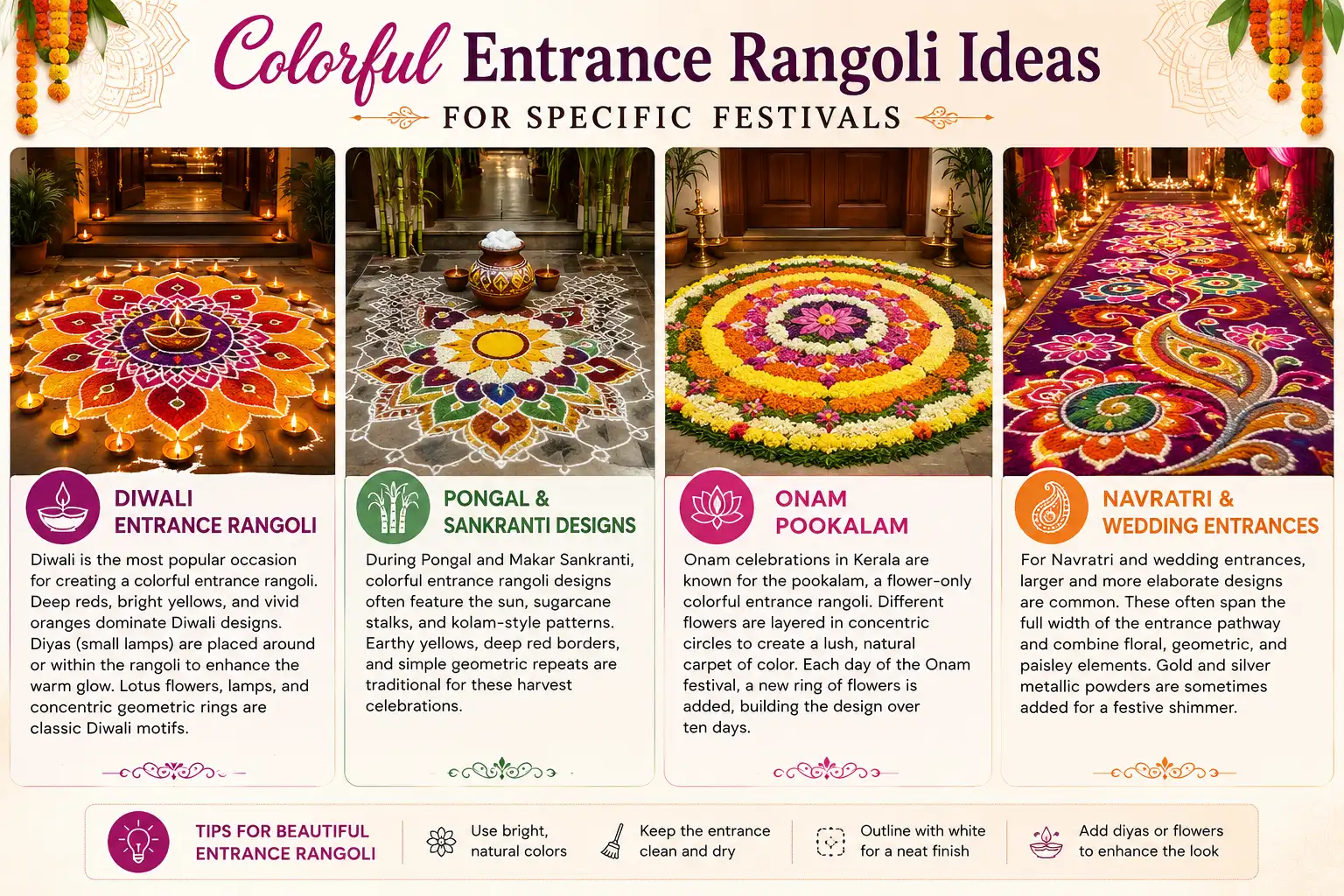
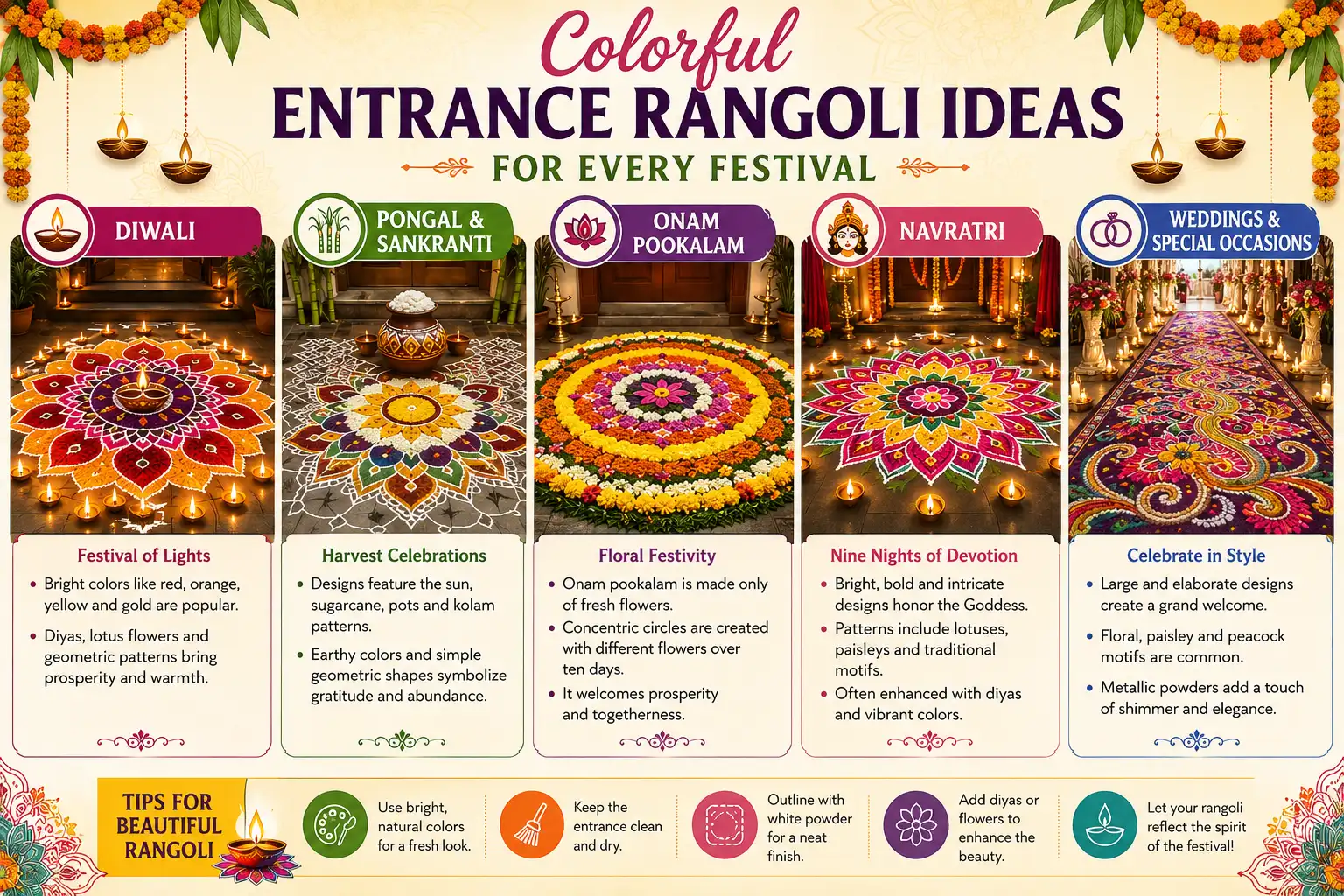
The most popular occasion. Deep reds, bright yellows, and vivid oranges dominate, with diyas placed around or within the rangoli. Lotus flowers, lamps, and concentric geometric rings are classic Diwali motifs.
Designs often feature the sun, sugarcane stalks, and kolam-style patterns. Earthy yellows, deep red borders, and simple geometric repeats are traditional for these harvest celebrations.
Kerala’s flower-only rangoli. Different flowers are layered in concentric circles to create a lush, natural carpet of color, with a new ring added each day of the ten-day festival.
Larger, more elaborate designs that span the full width of the entrance pathway, combining floral, geometric, and paisley elements. Gold and silver metallic powders add a festive shimmer.
Scaling Your Design for Any Entrance Size
One common concern is whether a colorful entrance rangoli can work in a small space. The answer is yes. Small entrance areas call for compact, focused designs with fewer rings and a strong central motif. A single flower cluster or a simple five-pointed star pattern can be just as beautiful as a large mandala.
For wider entrances or open courtyards, expanding the design with additional rings, border patterns, and corner motifs creates a grand, welcoming look. You can also try side panels or a long rectangular design that runs along the length of the entrance path.
If you want to explore compact styles that work well in tight spaces, check out these small traditional rangoli ideas for practical inspiration.
The Smithsonian’s Asian art collection has documented how rangoli traditions have spread across South and Southeast Asia, reflecting regional variations in color use and pattern style. These variations show just how flexible and adaptable this art form is across different contexts.
Common Mistakes to Avoid
Even experienced artists make a few common errors when creating a colorful entrance rangoli. Knowing these in advance helps you avoid wasted effort.
-
Starting without cleaning or drying the floor leads to uneven color application.
-
Using too many colors in a small area creates visual clutter instead of harmony.
-
Skipping the outline step means proportions can shift as you fill in sections.
-
Applying colors too thickly in one area and too thinly in another creates an uneven look.
-
Ignoring the surrounding space results in a design that feels disconnected from the entrance.
Taking five extra minutes to plan the layout on paper and prep the floor will save a significant amount of correction time later.
FAQs
What is the best time to make a colorful entrance rangoli?
Early morning is the ideal time. The air is cooler, colors stick better, and natural light helps you see the design clearly as you build it.
Can I make a colorful entrance rangoli without powder?
Yes, you can create a beautiful design using only flower petals, colored rice, or even colored sand. These materials work well for outdoor entrances and hold up reasonably in calm weather.
How do I remove rangoli from the floor after the festival?
Sweep the dry powder gently with a soft broom, then mop the area with water. For stubborn color stains, a mild detergent applied with a scrub brush usually clears it up.
How long does a colorful entrance rangoli last?
A dry-powder design typically lasts one to two days if the area is not exposed to wind or foot traffic. Flower petal designs may last only a few hours in warm weather before wilting.
Is it possible to make one without artistic skills?
Absolutely. Using a stencil, dot grid method, or simple freehand shapes, even a complete beginner can create a charming colorful entrance rangoli. Starting with a basic floral circle and practicing a few times will build your confidence quickly.
Conclusion
A colorful entrance rangoli is more than just a floor decoration. It is a genuine expression of welcome, creativity, and cultural tradition. Whether you are making one for a major festival or simply to add joy to your everyday doorstep, the process itself is rewarding.
Start simple, choose colors that feel right for the occasion, and let the design grow with your confidence. With a little patience and the right materials, your entrance can become a canvas that greets every visitor with warmth and color. There is no single correct way to make one, which is what makes this art form so enduring and personal.