Simple 3D Rangoli For Home: Easy Beginner Ideas
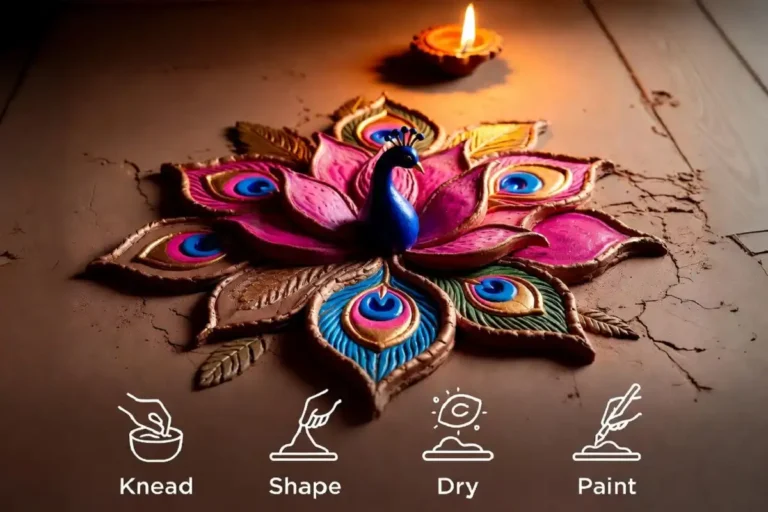
A flat rangoli can make your home look beautiful, but a 3D rangoli adds a little extra magic because the design appears to rise from the floor. The effect may look complicated at first, but you can create it with a few simple shading and blending techniques. You do not need professional drawing skills, expensive supplies, or years of experience to get started.
For a simple 3D rangoli for home, all you really need are some basic rangoli colors, a steady hand, and enough patience to build the shadows slowly.
The best part is that you can begin with small and uncomplicated patterns. Flowers, floating petals, spirals, leaves, and simple geometric shapes are great choices for beginners because they are easy to shade and give you plenty of room to practice creating depth. By using darker shades around the edges, lighter colors toward the center, and small white highlights in the right places, you can make an ordinary floor pattern look surprisingly three-dimensional.
In this guide, you will learn the basic technique behind a raised-looking rangoli, along with easy patterns that are suitable for your first few attempts. You will also find ideas for adapting these designs for festivals, family celebrations, pooja spaces, doorways, and other corners of your home. Take your time, experiment with the shading, and do not worry about making everything perfect on the first try.
By the end, you will have a better understanding of how 3D effects work and feel confident enough to create a rangoli that catches the attention of everyone who walks through your door.
What Makes a Rangoli Look 3D?
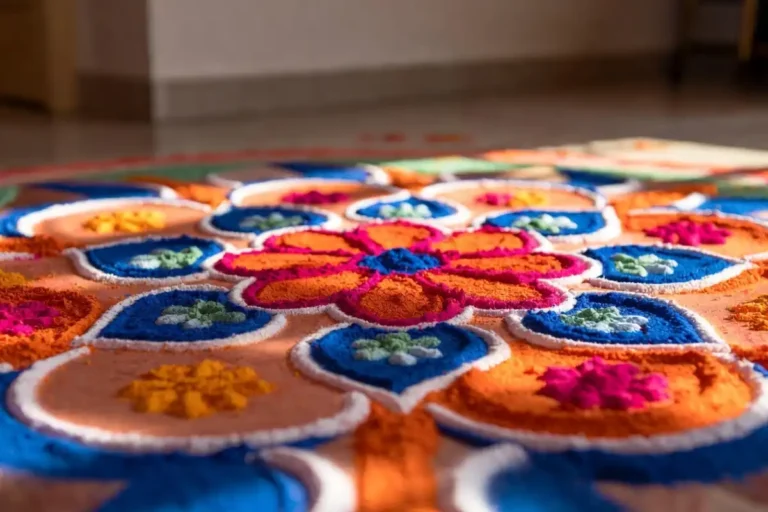
The 3D look comes from shading, not from any special powder. When one side of a shape is dark and the other side is light, our eyes read it as depth. That single idea drives almost every raised design.
Three things create the illusion:
Place contrasting shades side by side.
Blend shades gently to remove hard edges.
Keep the same bright side across every shape.
- Light and dark colors placed side by side
- Soft blending between shades so there is no hard edge
- A clear light direction, meaning the same side stays bright in every shape
Once you understand this, a simple 3D rangoli for home becomes far less scary. You are simply painting light and shadow on the floor.
Materials You Will Need
You likely have most of these at home already. Keep them ready before you start so your flow is not broken.
Light, medium, and dark shades of one color.
For bright highlights and finishing details.
A small cone or folded paper for fine lines.
A flat brush or your fingertips for blending.
A small amount to mark the outline.
- Rangoli powder in light, medium, and dark shades of one color
- White powder for highlights
- A small cone or a folded paper for fine lines
- A flat brush or your fingertips for blending
- A pinch of chalk to mark the outline
Using shades from the same color family is the easiest path. For example, light pink, rose, and deep maroon together give a smooth gradient that reads as 3D.
How to Make a Simple 3D Effect
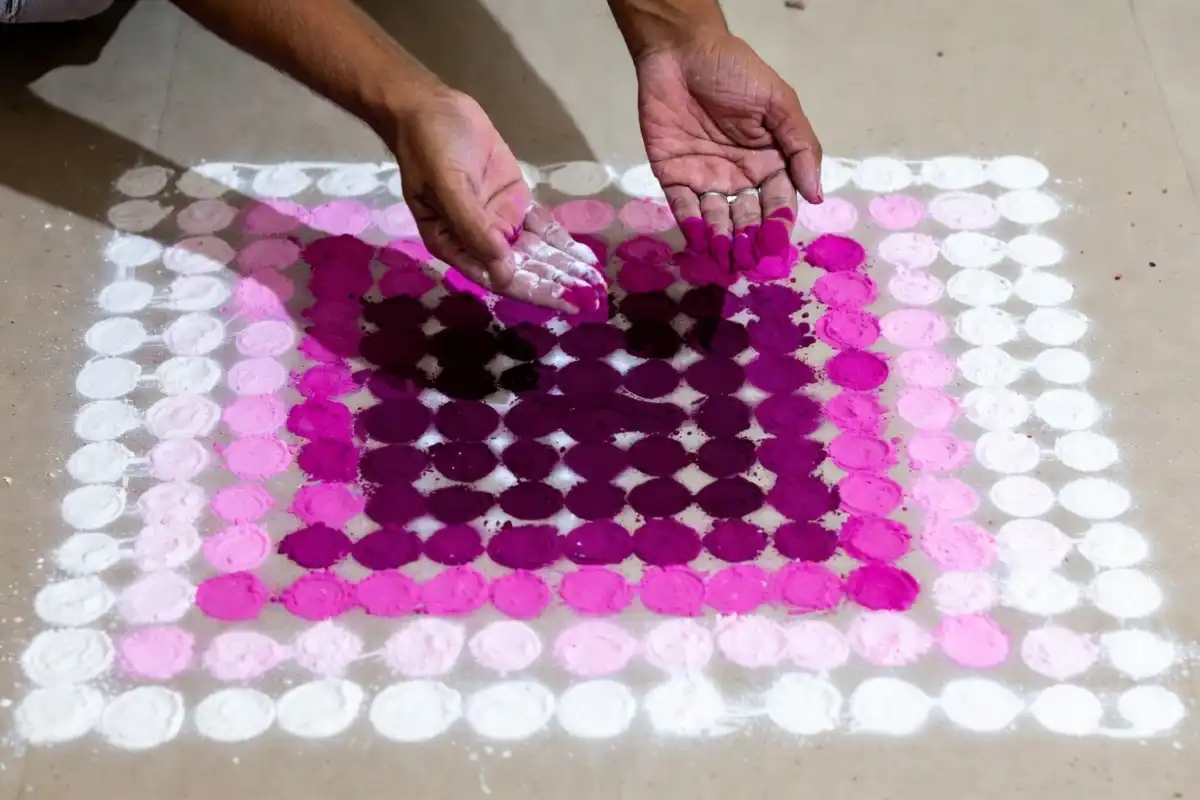
This is the heart of the whole design. Follow these steps slowly the first time.
Draw the Outline
Draw the outline with chalk. A circle, a single petal, or a small square is enough to begin.
Add the Darkest Shade
Add the darkest shade along one edge of the shape.
Add the Medium Tone
Place the medium tone in the middle area.
Fill the Lightest Tone
Fill the lightest tone on the opposite edge.
Blend the Shades
Blend gently where two shades meet so the change looks smooth.
Add the Highlight
Add a thin white line on the brightest edge for a glowing highlight.
That sequence turns a flat petal into one that seems to curve upward. Repeat the same shading on every petal or curve, and a full simple 3D rangoli for home starts to appear.
If you are still building confidence with floor art in general, you may enjoy these beginner entrance design ideas before moving to raised effects.
Easy 3D Patterns for Beginners
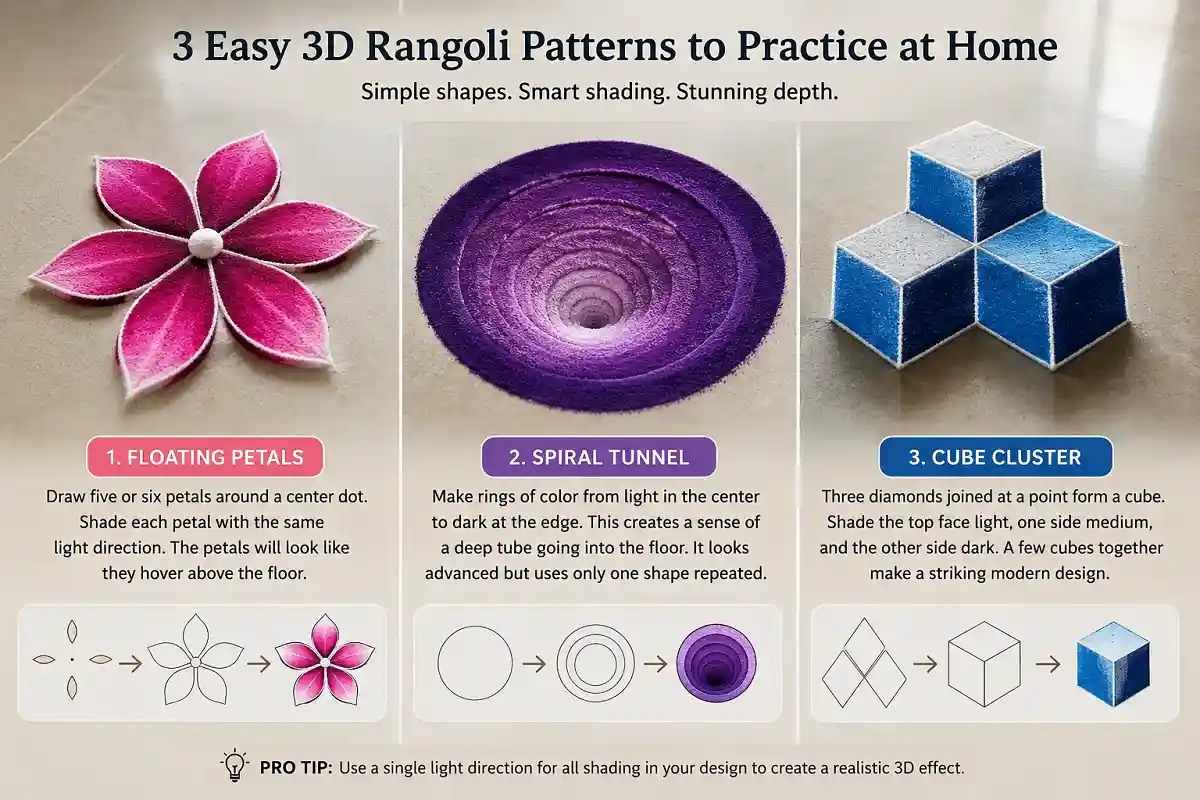
You do not need a complex layout to impress people. A few simple shapes carry the 3D look beautifully.
Floating Petals
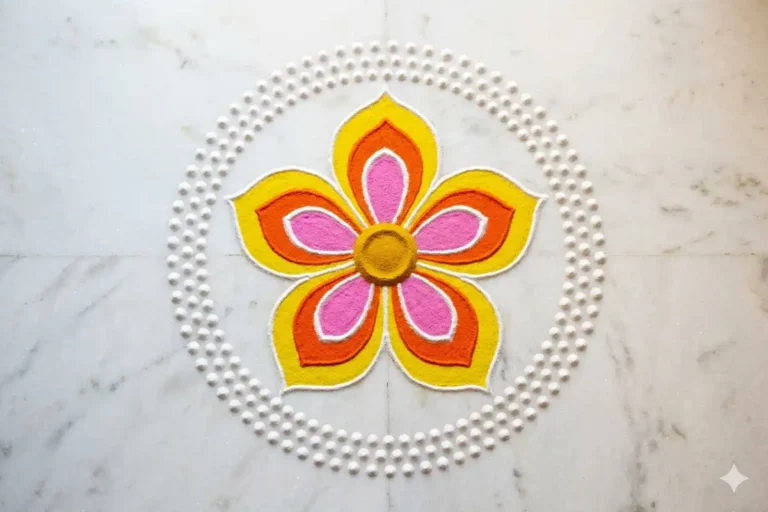
Draw five or six petals around a center dot. Shade each petal with the same light direction. The petals will look like they hover above the floor.
Spiral Tunnel
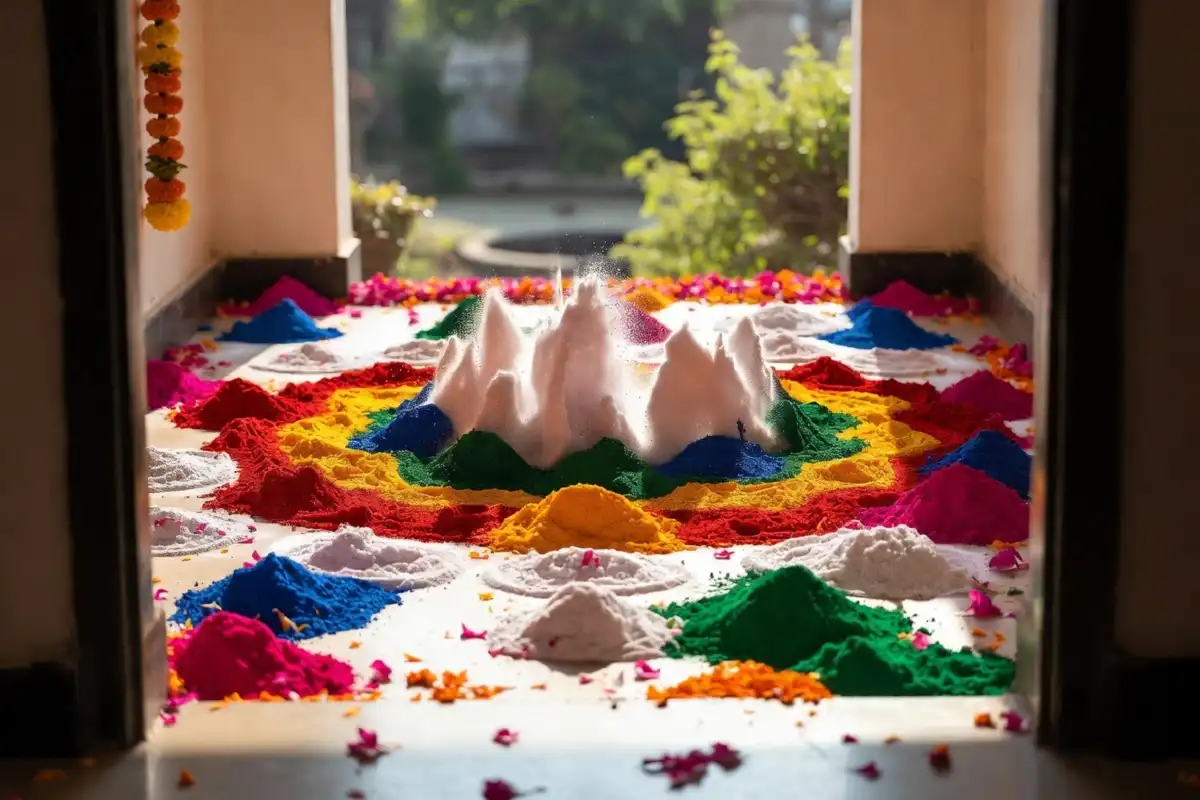
Make rings of color from light in the center to dark at the edge. This creates a sense of a deep tube going into the floor. It looks advanced but uses only one shape repeated.
Cube Cluster
Three diamonds joined at a point form a cube. Shade the top face light, one side medium, and the other side dark. A few cubes together make a striking modern design.
These three patterns are perfect practice. They teach shading without demanding fancy line work, which is exactly what a simple 3D rangoli for home should feel like.
Best Designs for Festivals
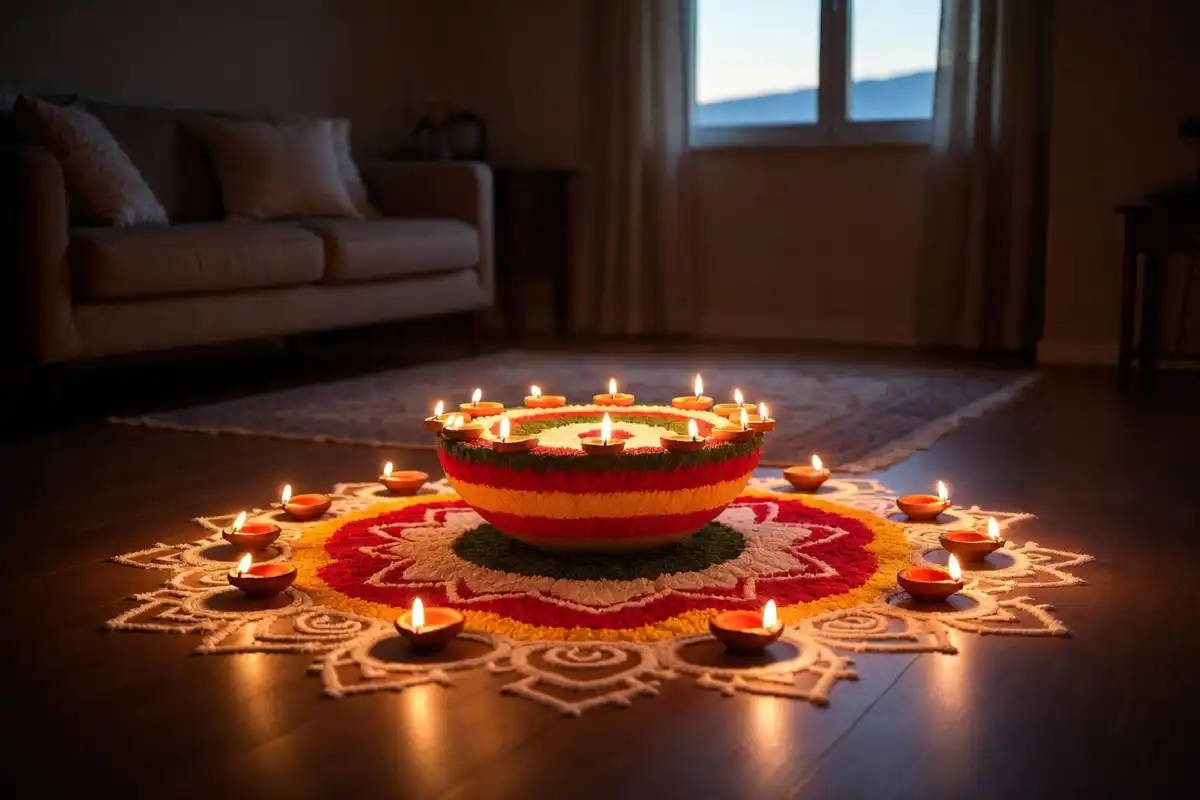
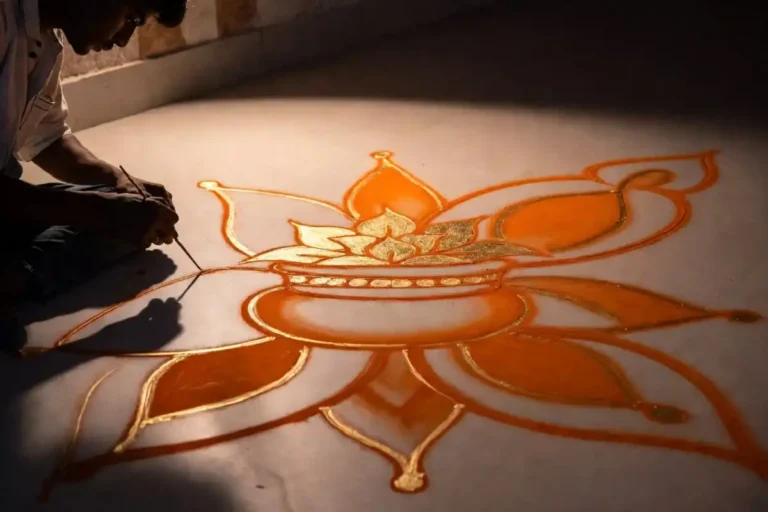
Festivals are the perfect time to bring out a raised design, since guests notice it instantly. A glowing bowl shape, a deep lotus, or a rising star all suit a celebration mood.
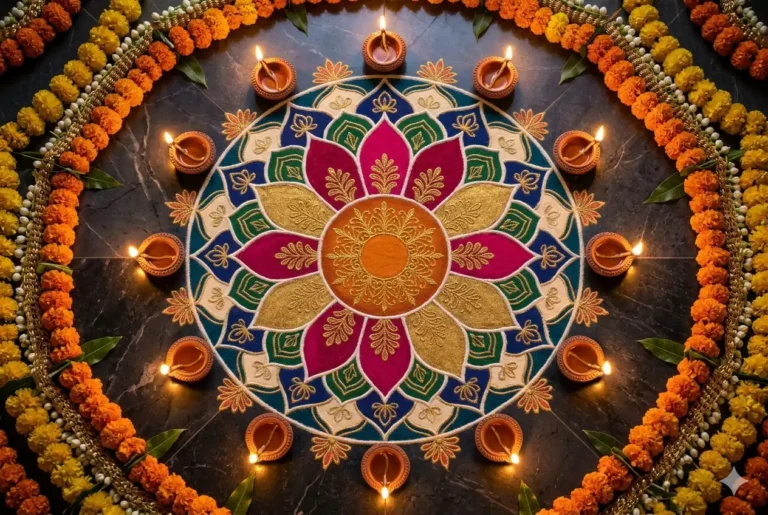
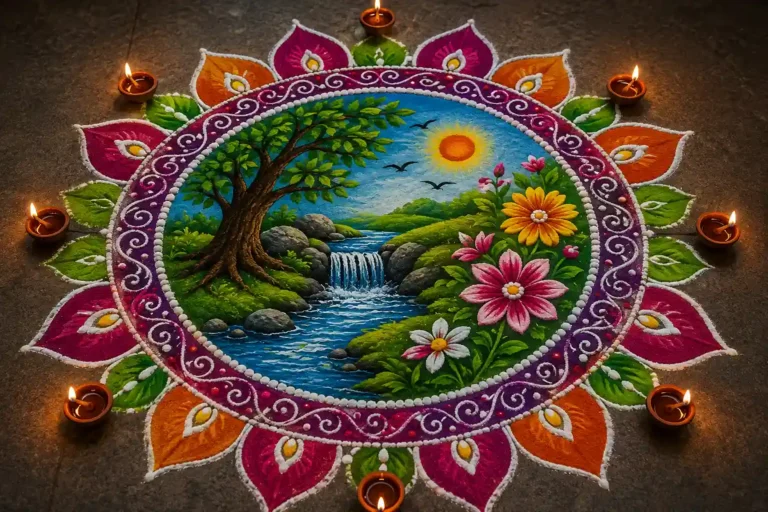
For a warm festive scene, place diyas around the edge of your design. The light from the flames deepens the shadows and makes the 3D effect even stronger after dark.
If you like adding meaningful symbols, you can pair your raised pattern with a small auspicious motif. These festive swastik patterns sit nicely in the corners of a larger 3D layout. You can also place a sacred symbol in the center using this easy om design guide and then add shading around it for a raised frame.
Rangoli itself carries deep cultural meaning across India, and you can read more about its history and regional styles on Wikipedia or in this overview from Britannica.
Tips to Keep Your Design Clean
Small habits make a big difference in the final result.
- Work from the center outward so you never smudge finished areas
- Keep a dry cloth nearby to wipe your fingers between shades
- Press lightly when blending, since heavy hands flatten the gradient
- Step back often to check that the light direction stays the same
- Practice one petal on paper first if you feel unsure
A common mistake is using too many colors. A simple 3D rangoli for home actually looks cleaner with just one color family and a single white highlight.
Keep your palette simple. One color family plus a white highlight is often enough to create a clean and convincing 3D effect.
Where to Place a 3D Rangoli at Home
Placement decides how much impact your work has. Choose a spot where people pause and look down.
The first thing guests see
Adds focus and devotion
Great for gatherings
A quiet, personal touch
- Main entrance: the first thing guests see
- Pooja room: adds focus and devotion
- Living room center: great for gatherings
- Balcony corner: a quiet, personal touch
A smooth tile or cement floor gives the best surface, since rough ground breaks the gentle blending that the 3D effect depends on.
Bring Your 3D Rangoli to Life With Light, Shadow, and a Little Practice
Creating a raised floor design becomes much easier once you understand how light and shadow can create the illusion of depth. You do not need expensive materials or advanced artistic skills to make a beautiful 3D rangoli at home. A few shades of the same color, some gentle blending, and carefully placed highlights can turn a simple pattern into something that looks raised and full of dimension.
Start with an easy shape such as floating petals, a spiral, or a simple flower, and decide where your light will come from before you begin shading. Keep the darker shade on the opposite side and gradually blend it toward the lighter area. Adding a small white highlight along the raised edge can make the design appear even more realistic.
Do not worry if your first attempt is not perfect. Like any form of floor art, creating a convincing 3D effect takes a little practice. As you work with different shades and learn how light changes the appearance of each shape, your hand will become steadier and your designs will naturally become more creative.
For your next festival, celebration, or special occasion, try adding a raised effect to your rangoli. With a little patience and imagination, even a simple floor design can become a beautiful piece of art that catches the eye and gives your home a warm, welcoming touch.
FAQs
Is a 3D rangoli hard for beginners?
No, a 3D rangoli is not hard once you learn basic shading. The whole effect comes from placing light and dark shades next to each other, which anyone can practice in a few tries.
What colors work best for a 3D effect?
Shades from a single color family work best for a clean 3D effect. Light, medium, and dark tones of the same color blend smoothly and create natural depth without looking messy.
How long does it take to make one?
A small simple 3D rangoli for home takes about twenty to thirty minutes. Larger designs may need an hour, mostly spent on careful blending rather than drawing.
Can I make a 3D rangoli without special powder?
Yes, you can use regular rangoli powder, flower petals, or even colored salt. The 3D look depends on shading, not on any special material, so basic supplies are enough.
Do I need to draw straight lines perfectly?
No, perfect lines are not required. Soft shading and a clear light direction matter far more, so small wobbles in your outline will not spoil the raised effect.