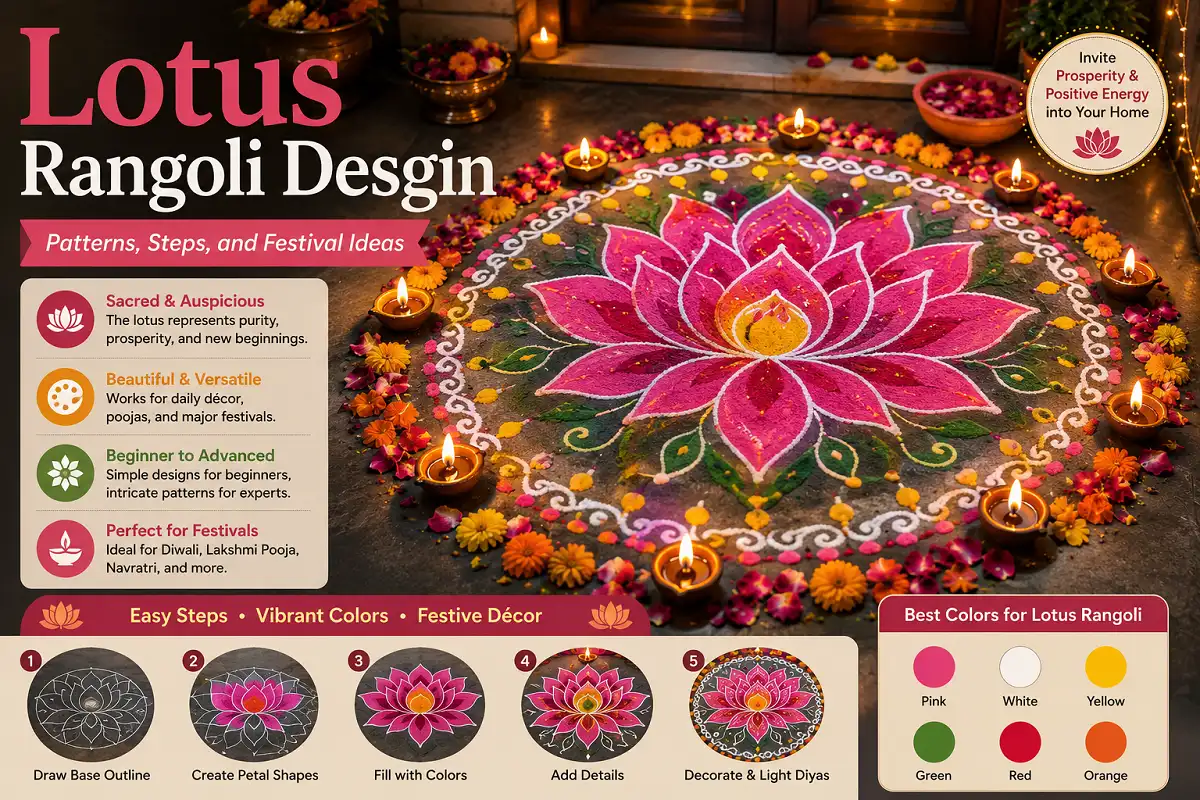
Lotus Rangoli Design: Patterns, Steps, and Festival Ideas
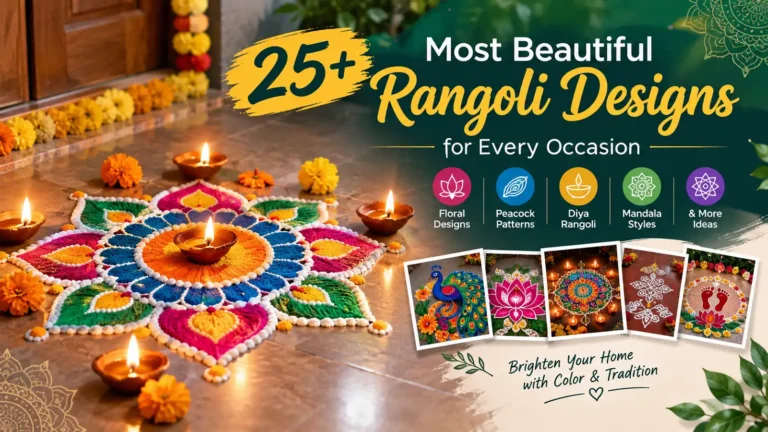
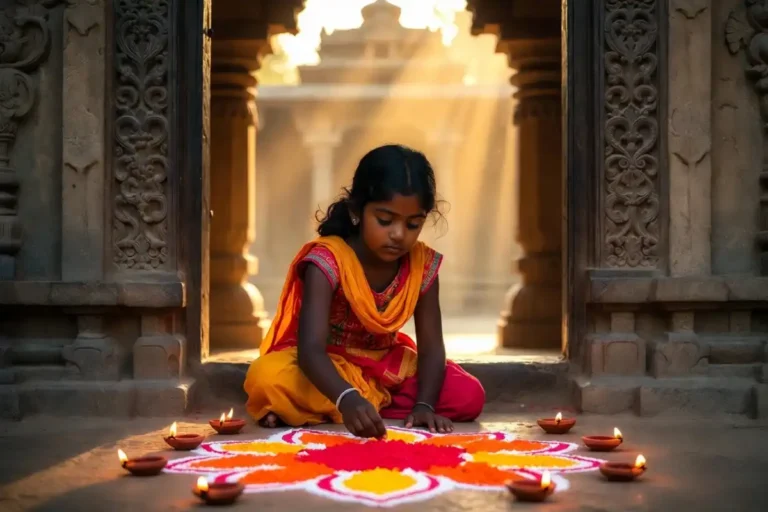
Lotus rangoli design is one of the most beloved and widely practiced forms of Indian floor art. The lotus holds deep cultural and spiritual significance across Hindu, Buddhist, and Jain traditions, making it a natural choice for festival decoration and everyday home blessings.
Its layered petals translate beautifully into rangoli patterns, whether you prefer a simple five-petal form or an elaborate multi-layered composition. This guide covers everything from basic patterns and materials to step-by-step instructions and festival-specific ideas.
Why the Lotus Is Such a Popular Rangoli Motif
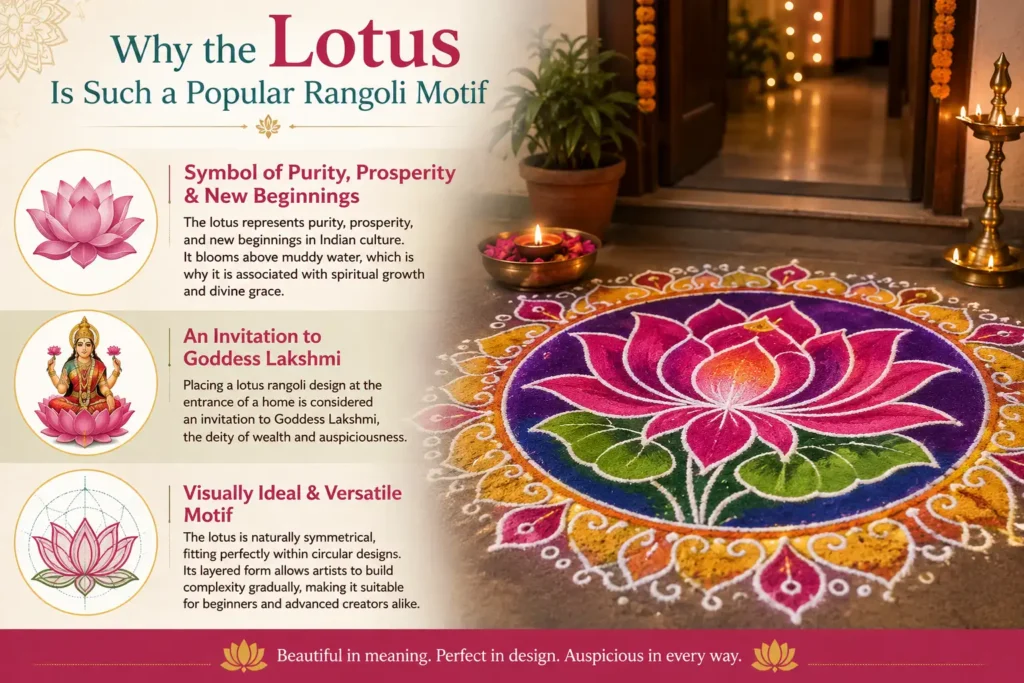
The lotus flower represents purity, prosperity, and new beginnings in Indian culture. It blooms above muddy water, which is why it is associated with spiritual growth and divine grace.
Placing a lotus rangoli design at the entrance of a home is considered an invitation to Goddess Lakshmi, the deity of wealth and auspiciousness.
Beyond its symbolism, the lotus is also a visually ideal motif for rangoli. Its naturally symmetrical petal structure fits perfectly within circular compositions, and its layered form allows artists to build complexity gradually, making it suitable for beginners and advanced creators alike.
Materials You Need for a Lotus Rangoli Design
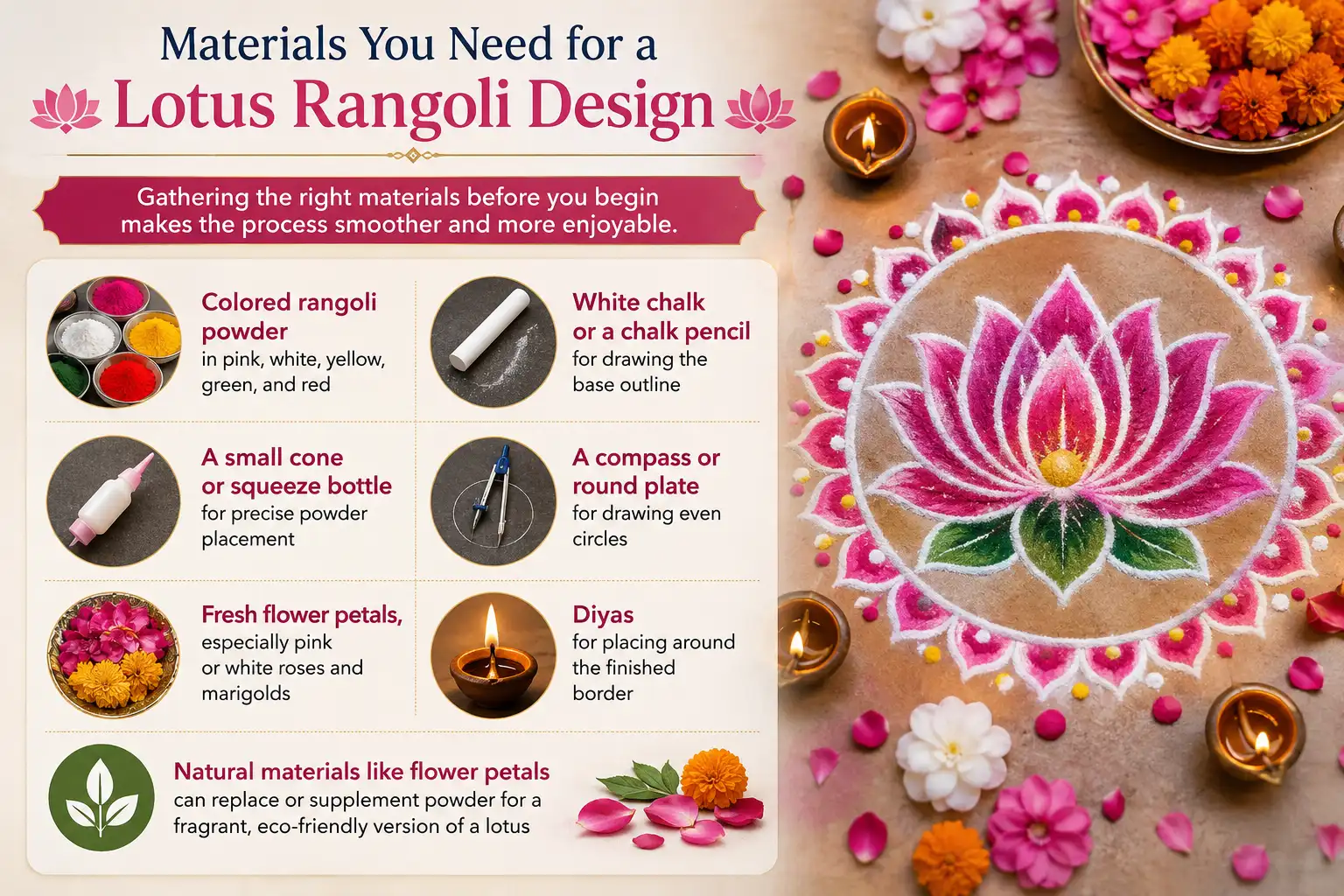
Gathering the right materials before you begin makes the process smoother and more enjoyable.
Colored rangoli powder — pink, white, yellow, green, red
White chalk or a chalk pencil for the base outline
A small cone or squeeze bottle for precise placement
A compass or round plate for even circles
Fresh rose and marigold petals
Diyas for the finished border
Natural materials like flower petals can replace or supplement powder for a fragrant, eco-friendly version of a lotus rangoli design. This works particularly well during outdoor festivals and morning prayers.
Types of Lotus Rangoli Designs You Can Try
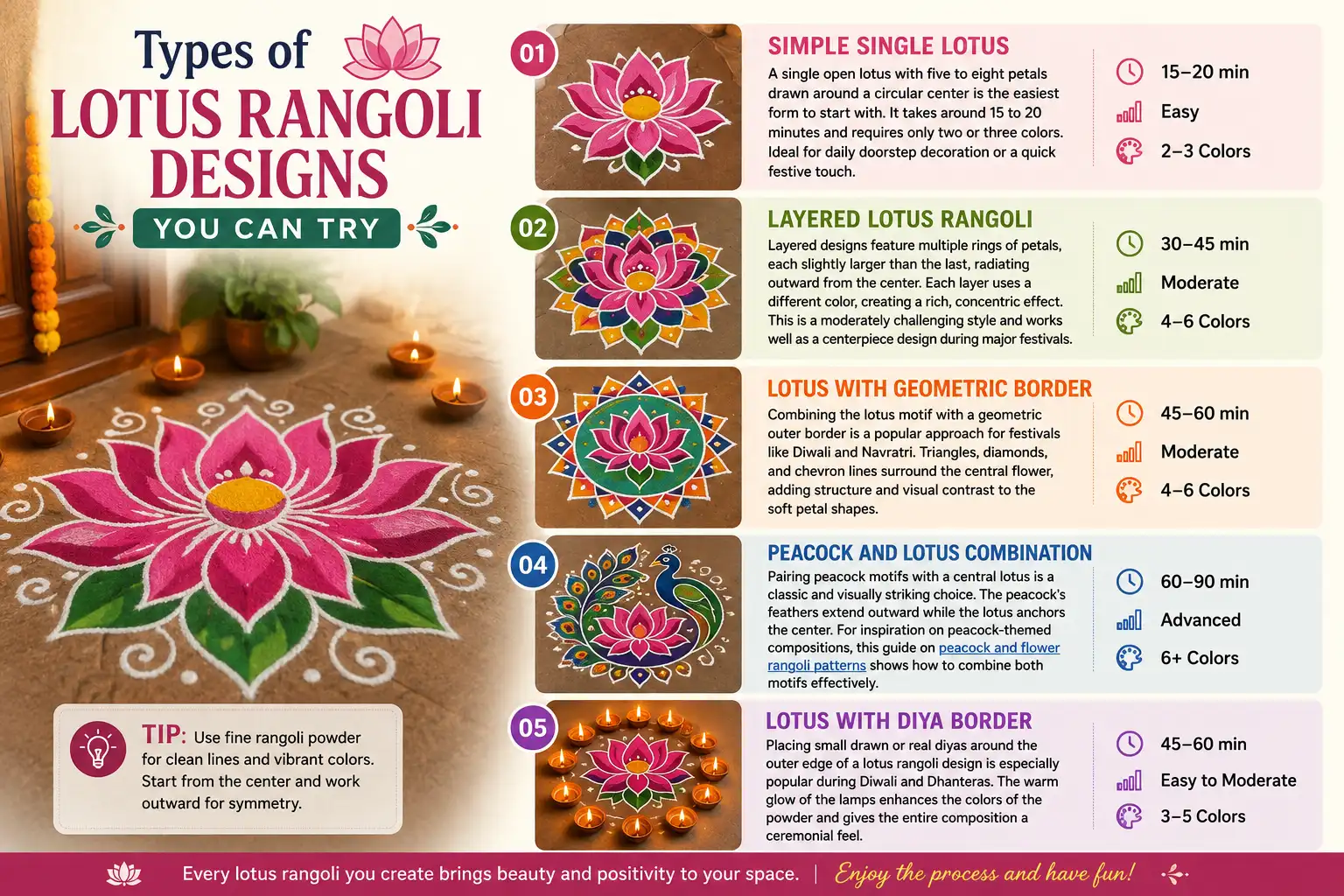
The lotus motif adapts well across many different styles. Choosing the right type depends on your available time, skill level, and the occasion.
Simple Single Lotus
A single open lotus with five to eight petals drawn around a circular center is the easiest form to start with. It takes around 15 to 20 minutes and requires only two or three colors.
This style is ideal for daily doorstep decoration or a quick festive touch.
Layered Lotus Rangoli
Layered designs feature multiple rings of petals, each slightly larger than the last, radiating outward from the center. Each layer uses a different color, creating a rich, concentric effect.
This is a moderately challenging style and works well as a centerpiece design during major festivals.
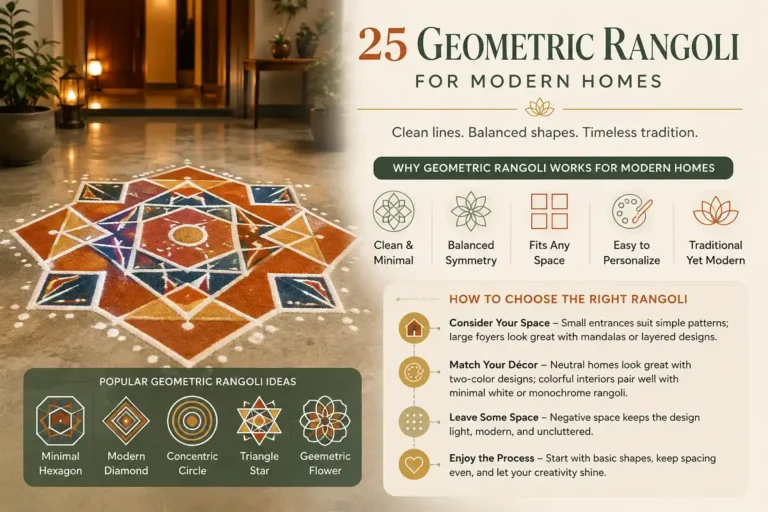
Lotus with Geometric Border
Combining the lotus motif with a geometric outer border is a popular approach for festivals like Diwali and Navratri.
Triangles, diamonds, and chevron lines surround the central flower, adding structure and visual contrast to the soft petal shapes.
Peacock and Lotus Combination
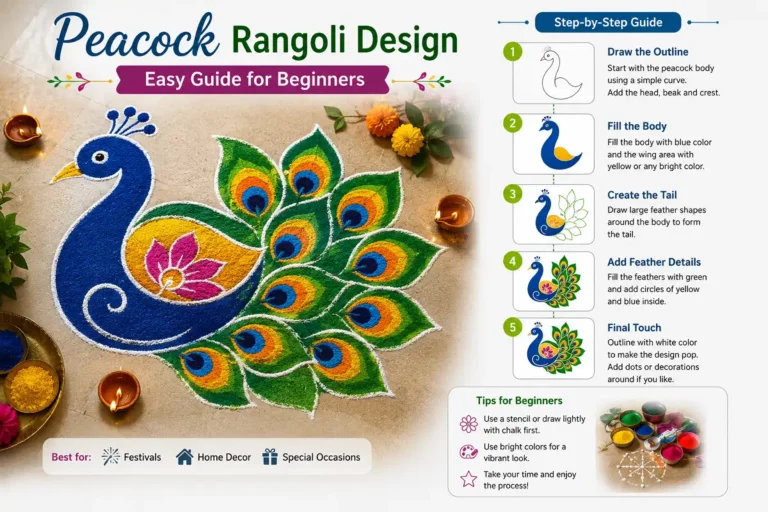
Pairing peacock motifs with a central lotus is a classic and visually striking choice. The peacock’s feathers extend outward while the lotus anchors the center.
For inspiration on peacock-themed compositions, this guide on peacock and flower rangoli patterns shows how to combine both motifs effectively.
Lotus with Diya Border
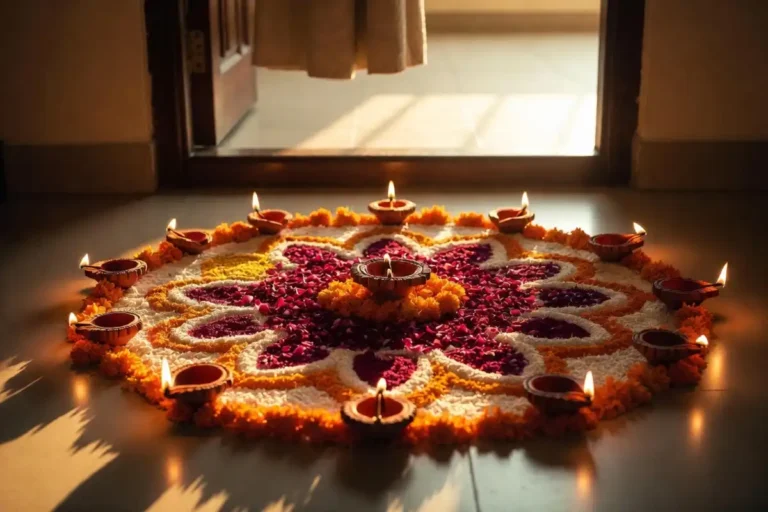
Placing small drawn or real diyas around the outer edge of a lotus rangoli design is especially popular during Diwali and Dhanteras.
The warm glow of the lamps enhances the colors of the powder and gives the entire composition a ceremonial feel.
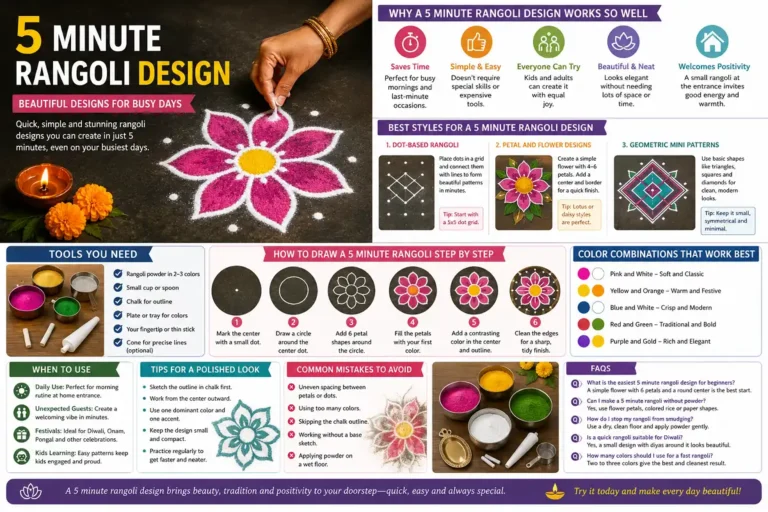
How to Make a Lotus Rangoli Design Step by Step
Following a clear sequence keeps the process organized and the result clean.
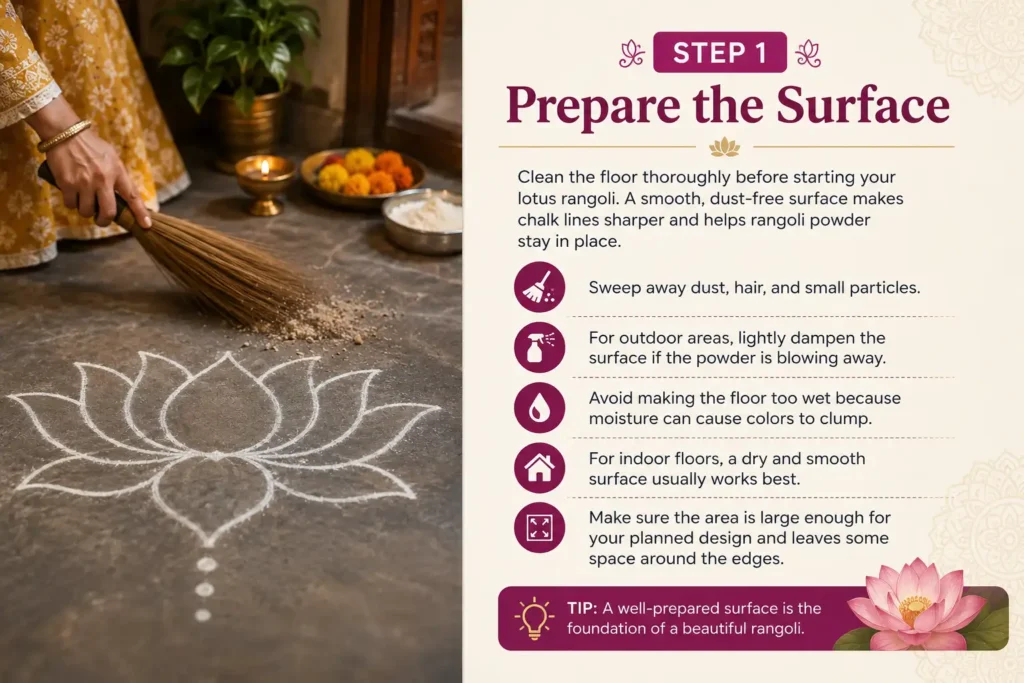
Prepare the Surface
Clean the floor thoroughly before starting your lotus rangoli. A smooth, dust-free surface makes chalk lines sharper and helps rangoli powder stay in place.
- Sweep away dust, hair, and small particles.
- For outdoor areas, lightly dampen the surface if the powder is blowing away.
- Avoid making the floor too wet because moisture can cause colors to clump.
- For indoor floors, a dry and smooth surface usually works best.
- Make sure the area is large enough for your planned design and leaves some space around the edges.
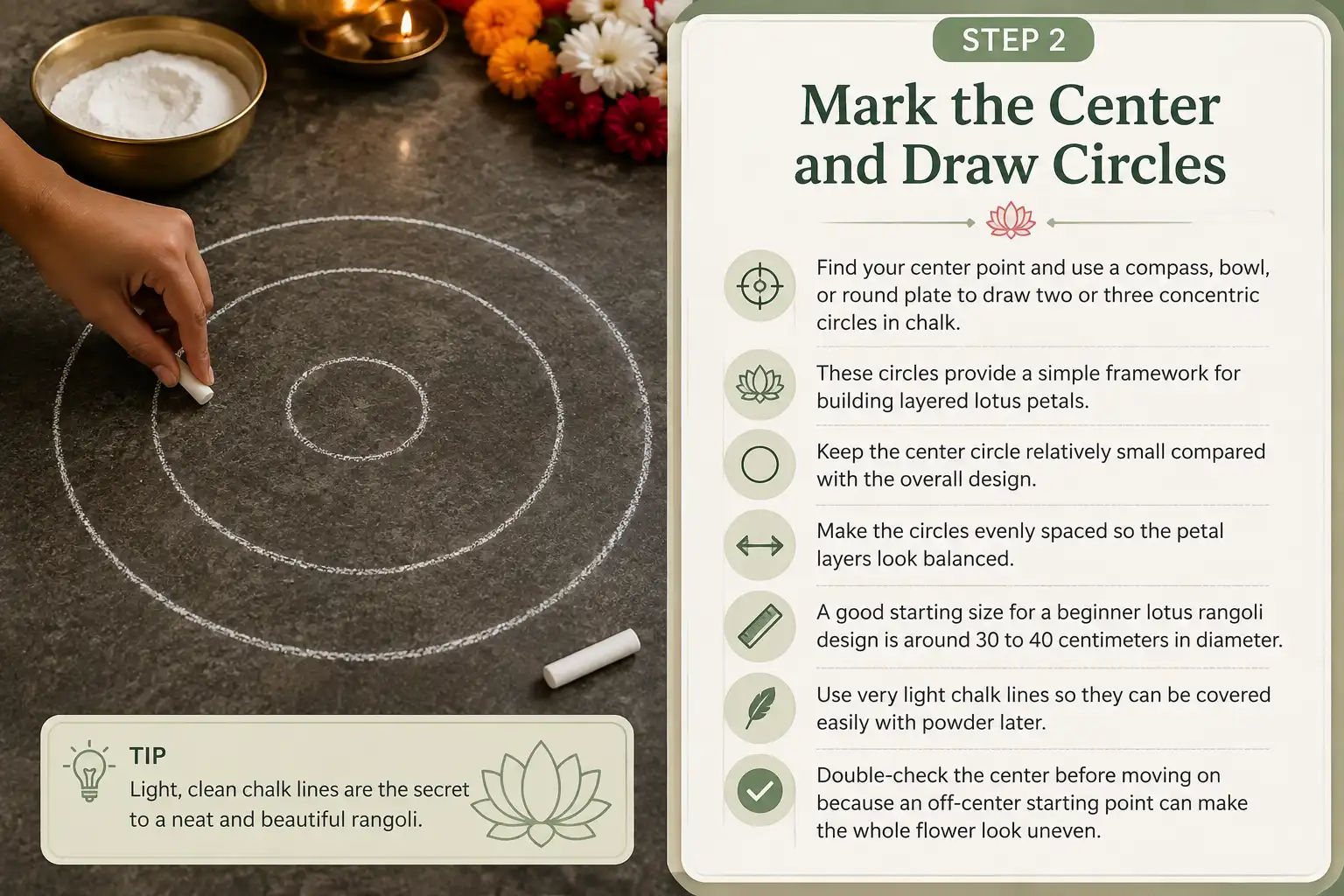
Mark the Center and Draw Circles
Find your center point and use a compass, bowl, or round plate to draw two or three concentric circles in chalk. These circles provide a simple framework for building layered lotus petals.
- Keep the center circle relatively small compared with the overall design.
- Make the circles evenly spaced so the petal layers look balanced.
- A good starting size for a beginner lotus rangoli design is around 30 to 40 centimeters in diameter.
- Use very light chalk lines so they can be covered easily with powder later.
- Double-check the center before moving on because an off-center starting point can make the whole flower look uneven.
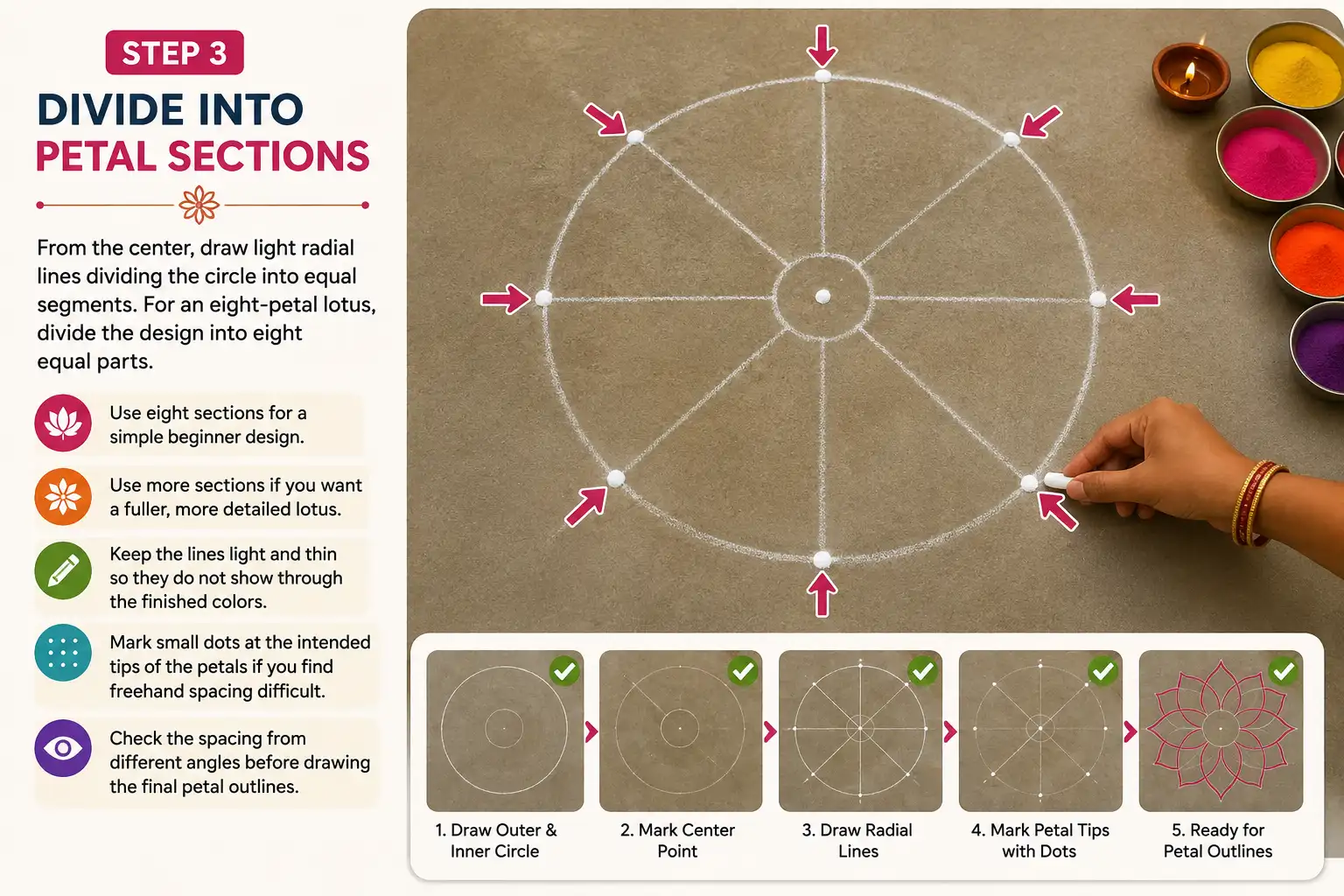
Divide Into Petal Sections
From the center, draw light radial lines dividing the circle into equal segments. For an eight-petal lotus, divide the design into eight equal parts.
- Use eight sections for a simple beginner design.
- Use more sections if you want a fuller, more detailed lotus.
- Keep the lines light and thin so they do not show through the finished colors.
- Mark small dots at the intended tips of the petals if you find freehand spacing difficult.
- Check the spacing from different angles before drawing the final petal outlines.
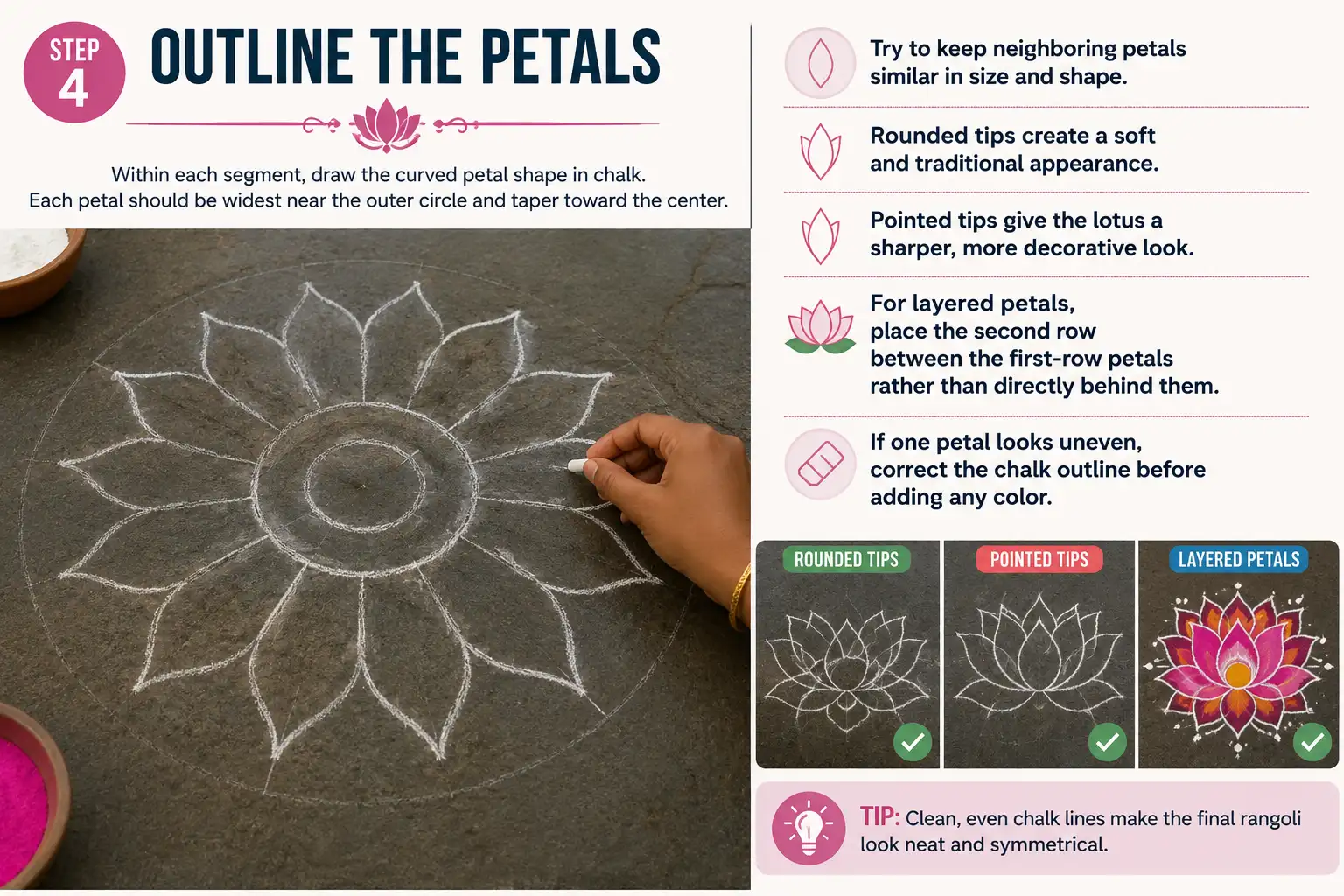
Outline the Petals
Within each segment, draw the curved petal shape in chalk. Each petal should be widest near the outer circle and taper toward the center.
- Try to keep neighboring petals similar in size and shape.
- Rounded tips create a soft and traditional appearance.
- Pointed tips give the lotus a sharper, more decorative look.
- For layered petals, place the second row between the first-row petals rather than directly behind them.
- If one petal looks uneven, correct the chalk outline before adding any color.
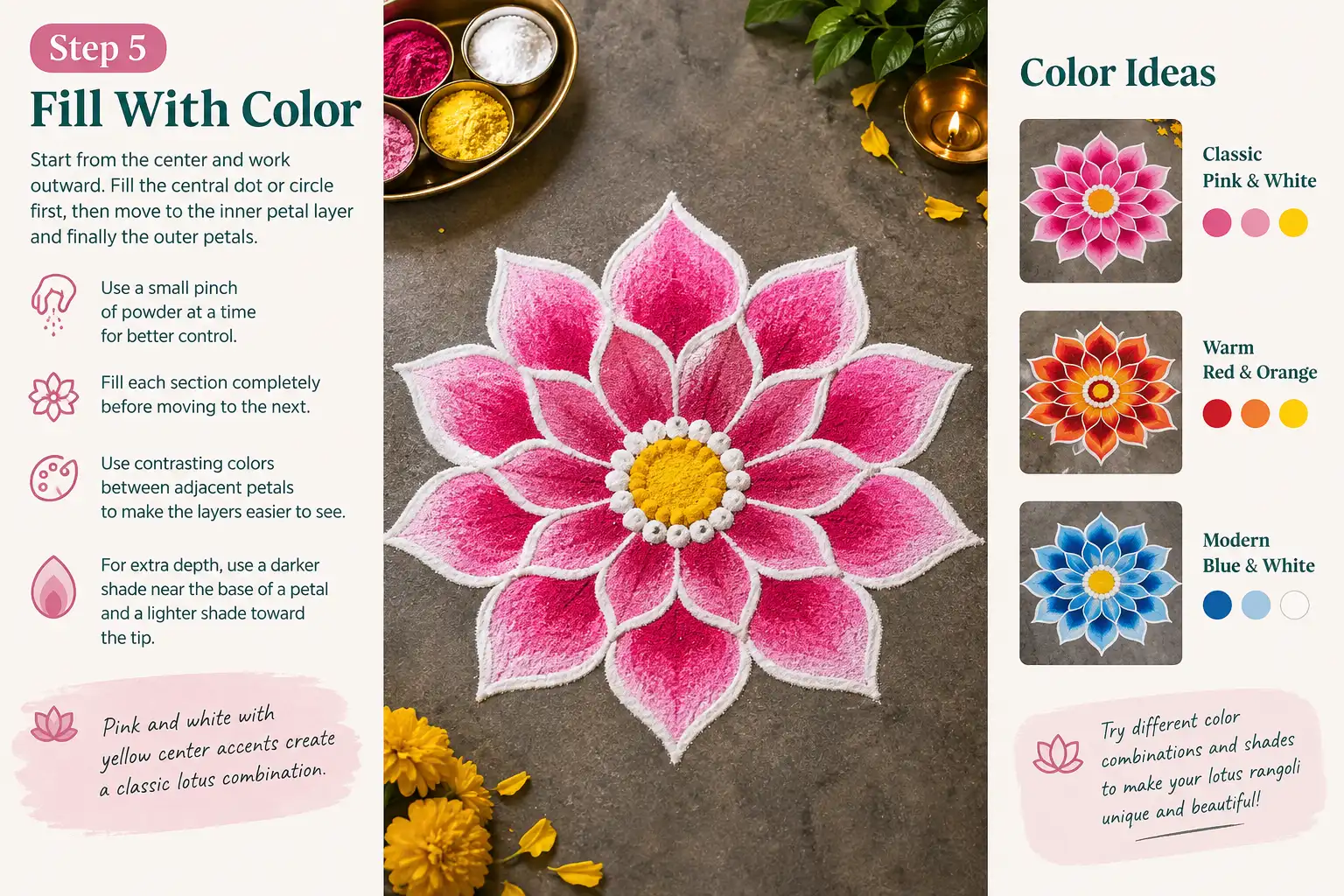
Fill With Color
Start from the center and work outward. Fill the central dot or circle first, then move to the inner petal layer and finally the outer petals.
- Use a small pinch of powder at a time for better control.
- Fill each section completely before moving to the next.
- Use contrasting colors between adjacent petals to make the layers easier to see.
- Pink and white with yellow center accents create a classic lotus combination.
- Try red and orange for a warmer festive look, or blue and white for a modern style.
- For extra depth, use a darker shade near the base of a petal and a lighter shade toward the tip.
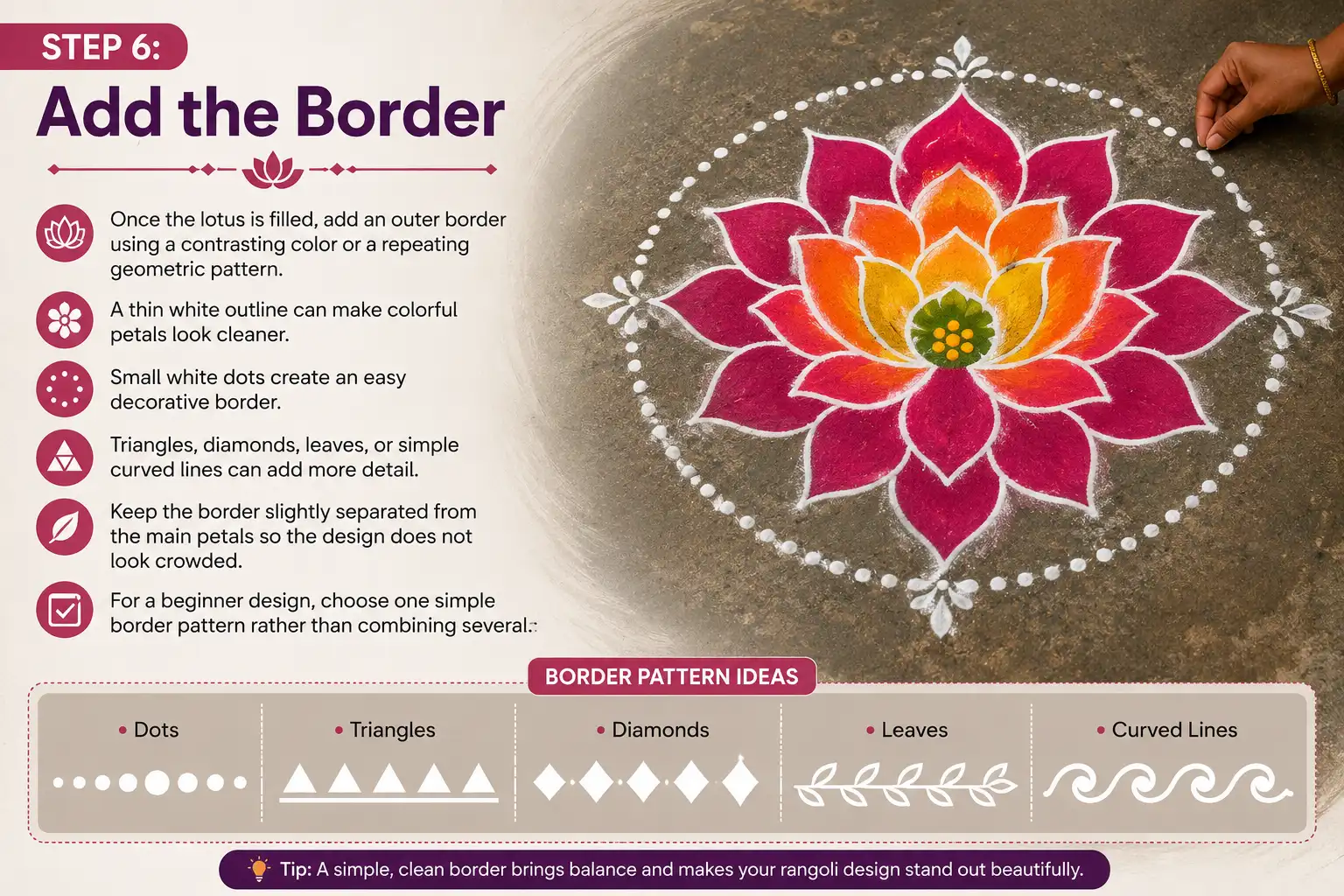
Add the Border
Once the lotus is filled, add an outer border using a contrasting color or a repeating geometric pattern.
- A thin white outline can make colorful petals look cleaner.
- Small white dots create an easy decorative border.
- Triangles, diamonds, leaves, or simple curved lines can add more detail.
- Keep the border slightly separated from the main petals so the design does not look crowded.
- For a beginner design, choose one simple border pattern rather than combining several.
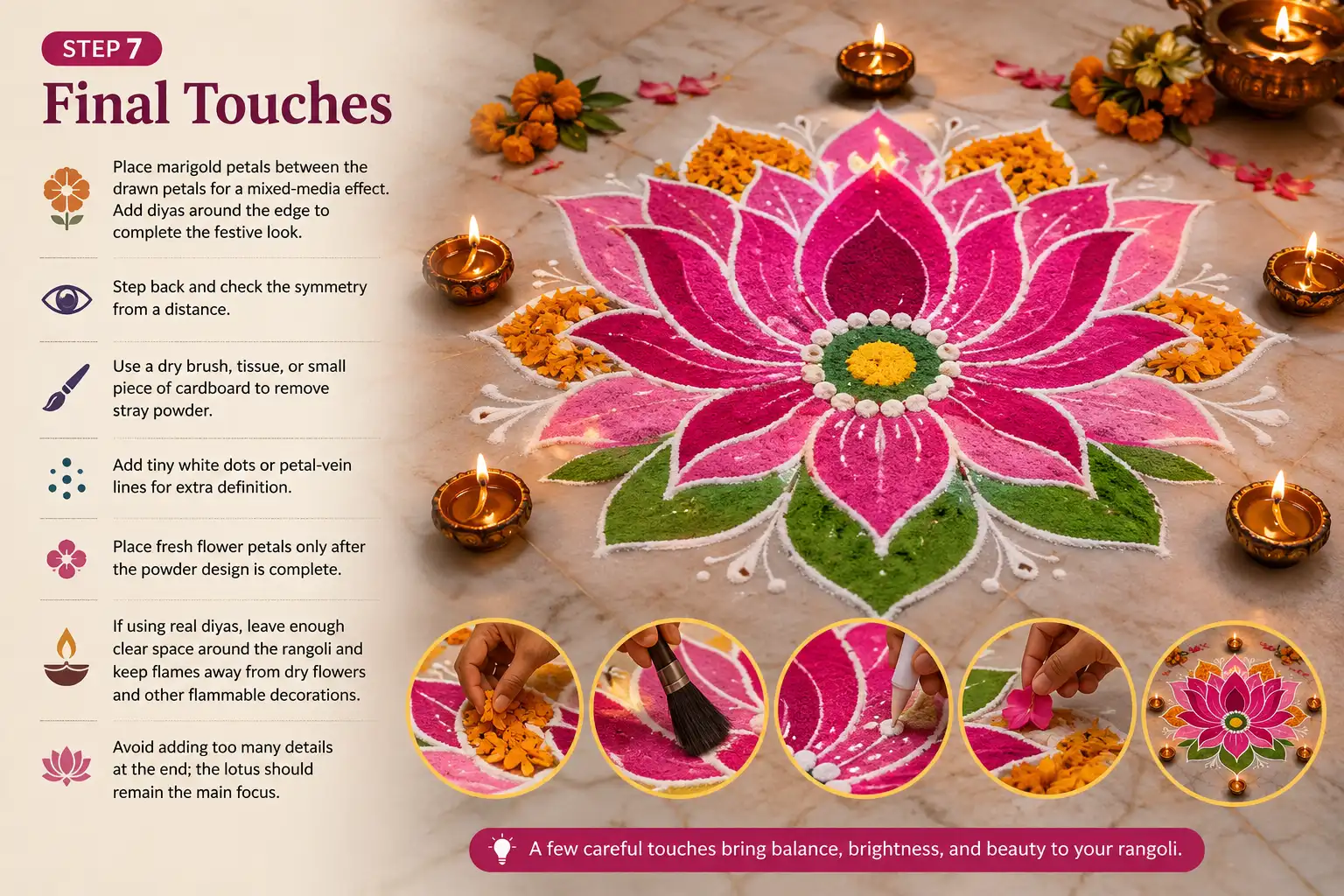
Final Touches
Place marigold petals between the drawn petals for a mixed-media effect. Add diyas around the edge to complete the festive look.
- Step back and check the symmetry from a distance.
- Use a dry brush, tissue, or small piece of cardboard to remove stray powder.
- Add tiny white dots or petal-vein lines for extra definition.
- Place fresh flower petals only after the powder design is complete.
- If using real diyas, leave enough clear space around the rangoli and keep flames away from dry flowers and flammable decorations.
- Avoid adding too many details at the end; the lotus should remain the main focus.
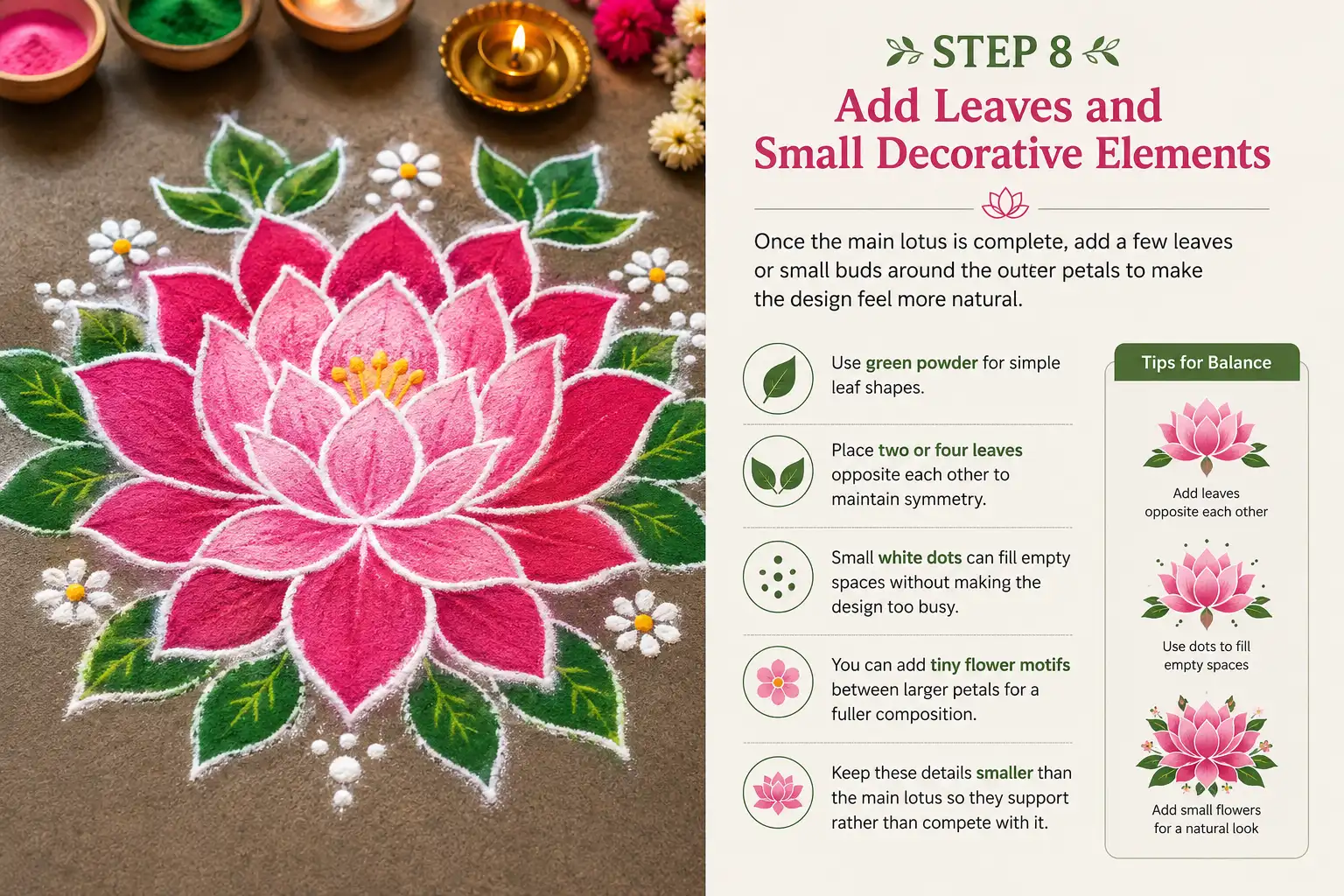
Add Leaves and Small Decorative Elements
Once the main lotus is complete, add a few leaves or small buds around the outer petals to make the design feel more natural.
- Use green powder for simple leaf shapes.
- Place two or four leaves opposite each other to maintain symmetry.
- Small white dots can fill empty spaces without making the design too busy.
- You can add tiny flower motifs between larger petals for a fuller composition.
- Keep these details smaller than the main lotus so they support rather than compete with it.
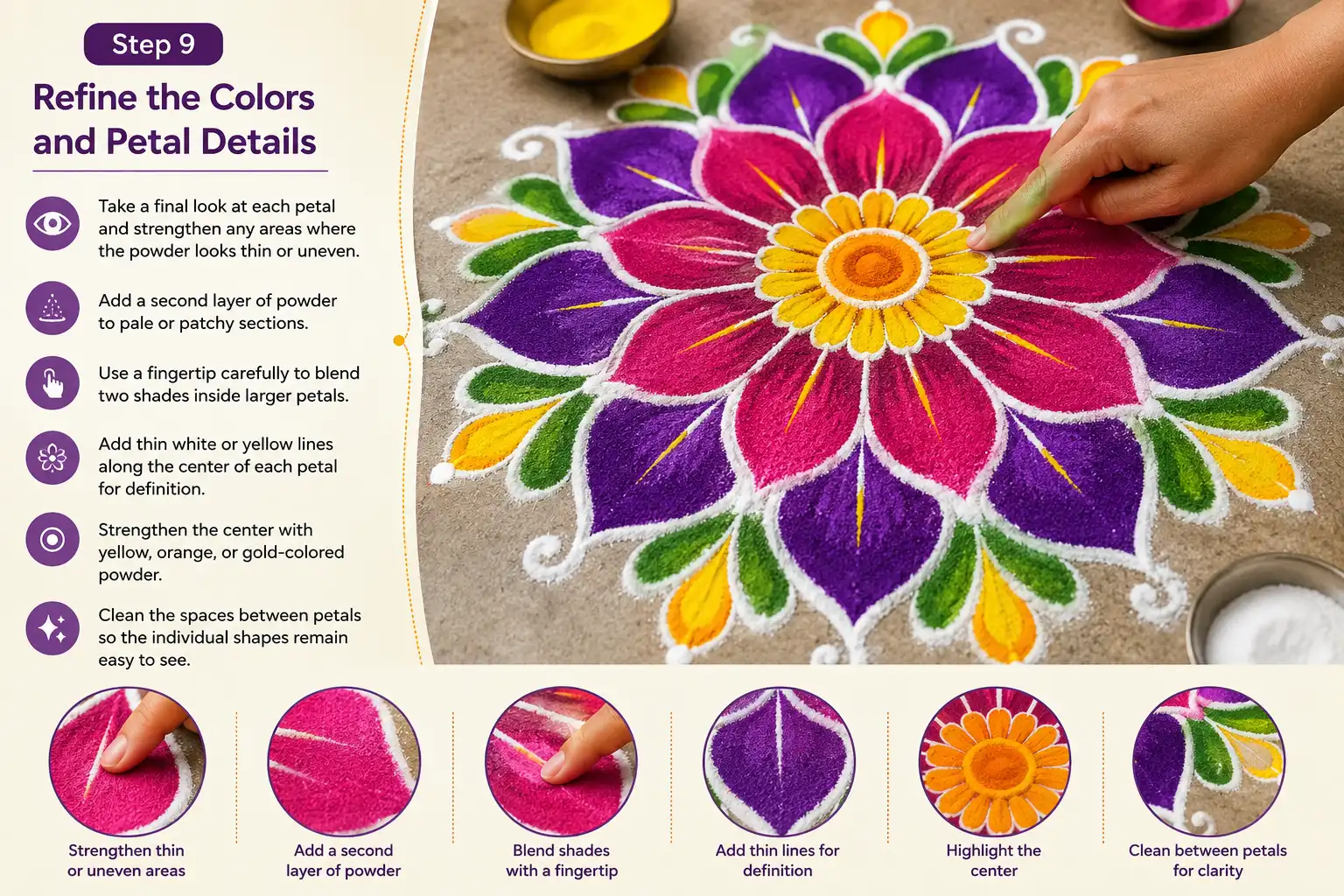
Refine the Colors and Petal Details
Take a final look at each petal and strengthen any areas where the powder looks thin or uneven.
- Add a second layer of powder to pale or patchy sections.
- Use a fingertip carefully to blend two shades inside larger petals.
- Add thin white or yellow lines along the center of each petal for definition.
- Strengthen the center with yellow, orange, or gold-colored powder.
- Clean the spaces between petals so the individual shapes remain easy to see.
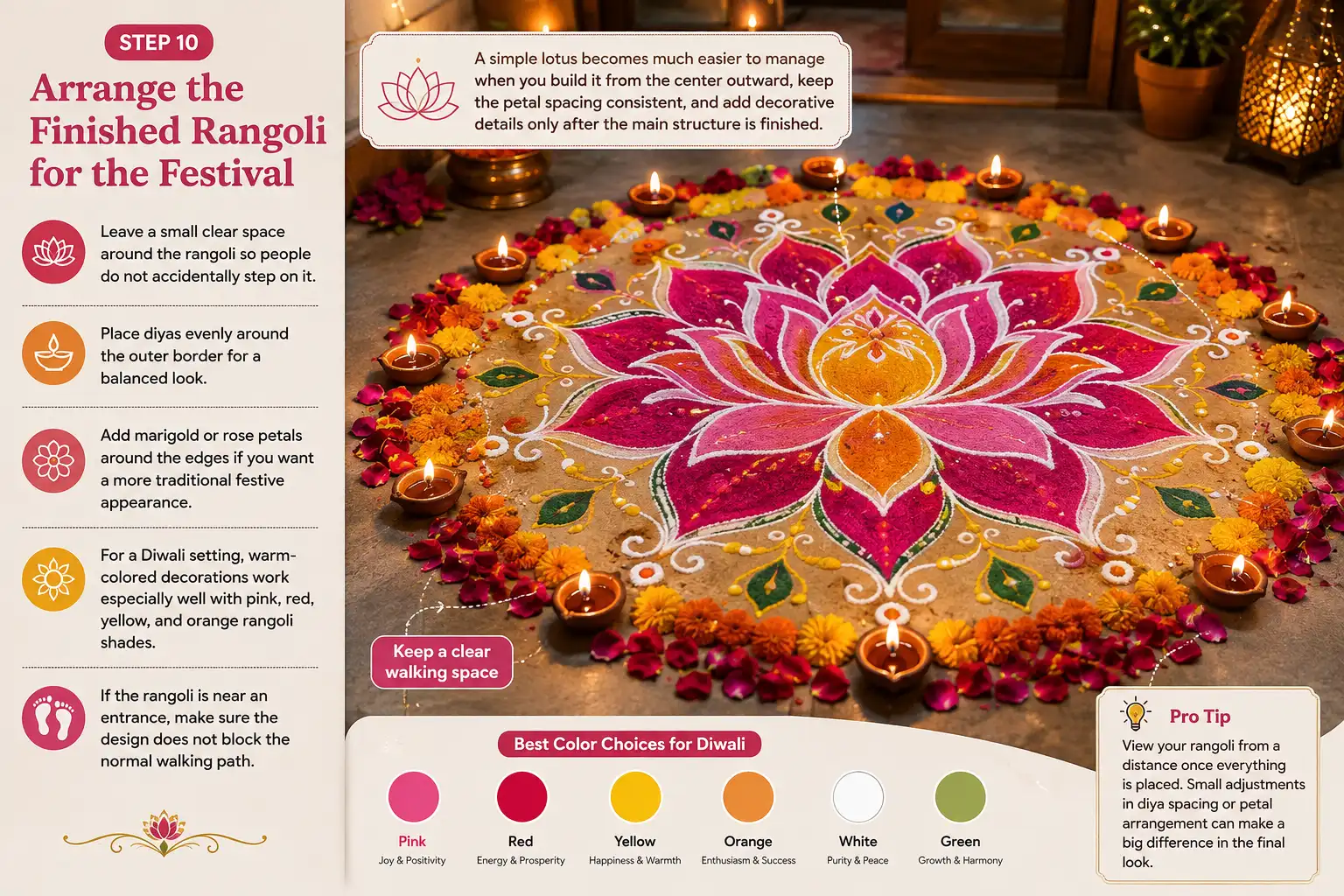
Arrange the Finished Rangoli for the Festival
Choose the final decorative elements and prepare the surrounding area before lighting the diyas.
- Leave a small clear space around the rangoli so people do not accidentally step on it.
- Place diyas evenly around the outer border for a balanced look.
- Add marigold or rose petals around the edges if you want a more traditional festive appearance.
- For a Diwali setting, warm-colored decorations work especially well with pink, red, yellow, and orange rangoli shades.
- If the rangoli is near an entrance, make sure the design does not block the normal walking path.
A simple lotus becomes much easier to manage when you build it from the center outward, keep the petal spacing consistent, and add decorative details only after the main structure is finished.
Lotus Rangoli Design Ideas for Festivals
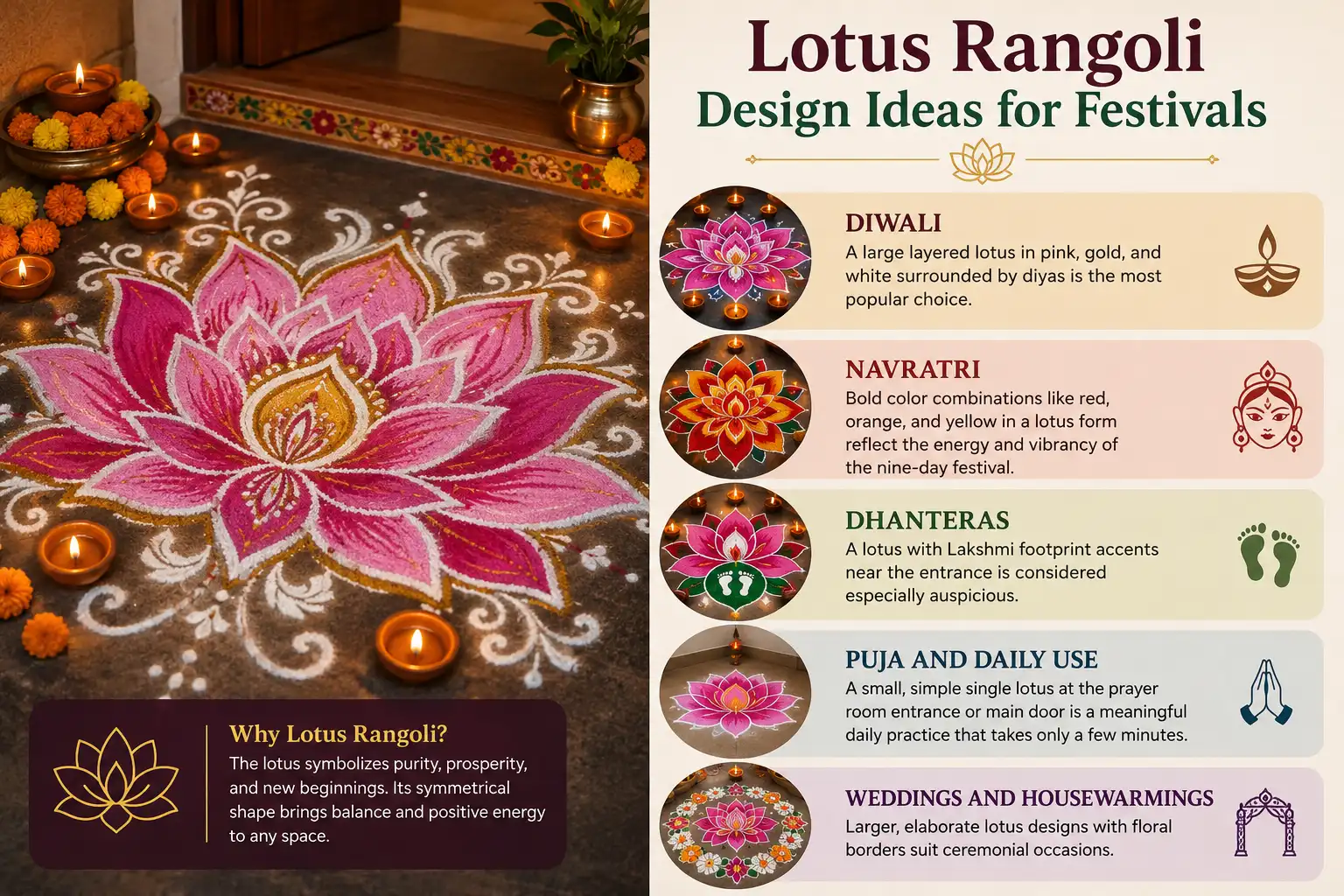
The lotus motif suits a wide range of occasions throughout the Indian festival calendar.
🪔Diwali
A large layered lotus in pink, gold, and white surrounded by diyas is the most popular choice. Explore this collection of beautiful Diwali rangoli designs for patterns that pair well with lotus compositions.
🌾Navratri
Bold color combinations like red, orange, and yellow in a lotus form reflect the energy and vibrancy of the nine-day festival.
🙏Dhanteras
A lotus with Lakshmi footprint accents near the entrance is considered especially auspicious. See this guide to Dhanteras rangoli design ideas for complementary patterns.
☀️Puja and Daily Use
A small, simple single lotus at the prayer room entrance or main door is a meaningful daily practice that takes only a few minutes.
💍Weddings and Housewarmings
Larger, elaborate lotus designs with floral borders suit ceremonial occasions. See this guide to big rangoli designs for every occasion for scale and layout inspiration.
Color Combinations That Work Best for Lotus Rangoli
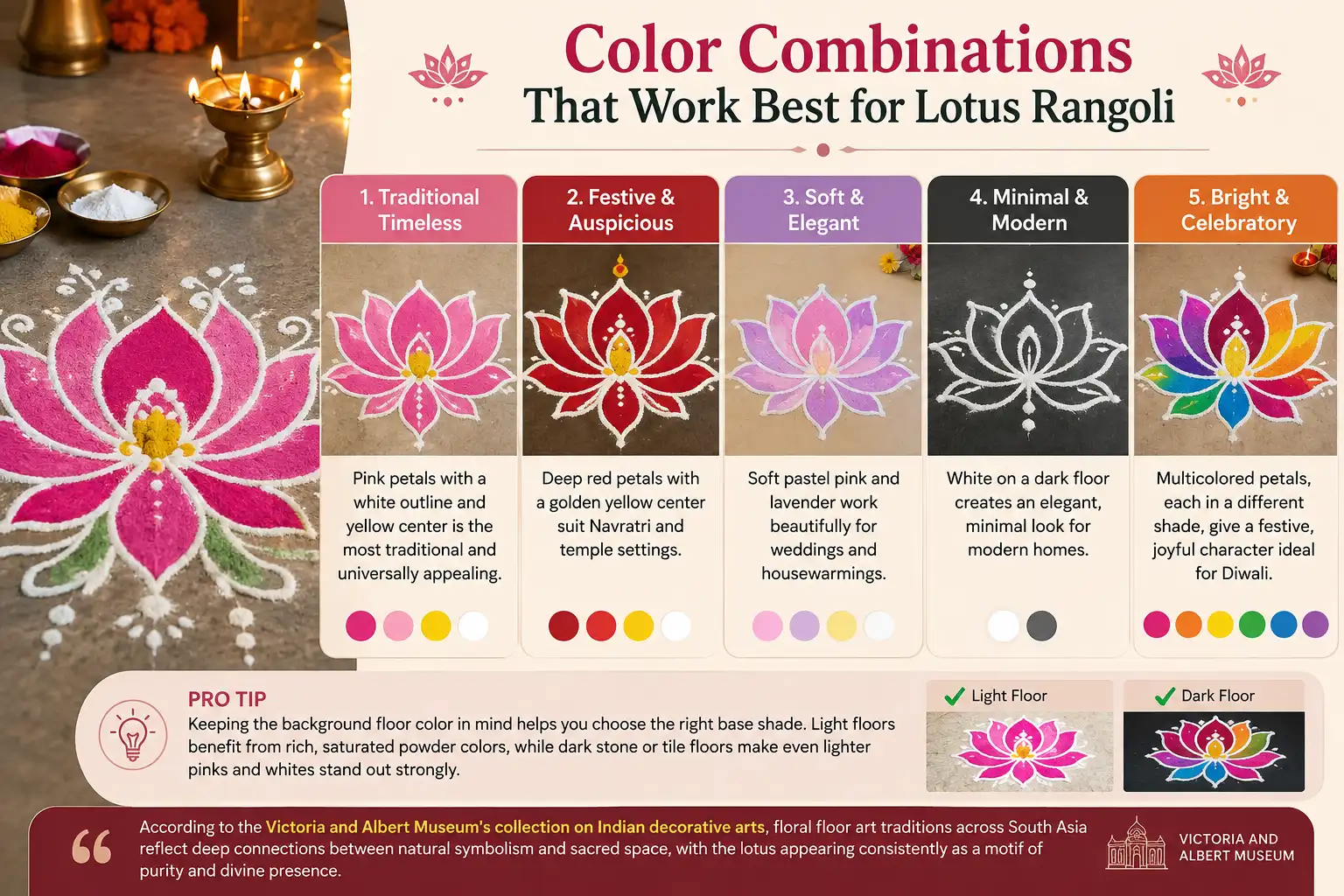
Color choice can transform even a simple lotus outline into something striking.
Keeping the background floor color in mind helps you choose the right base shade. Light floors benefit from rich, saturated powder colors, while dark stone or tile floors make even lighter pinks and whites stand out strongly.
Tips to Improve Your Lotus Rangoli Design
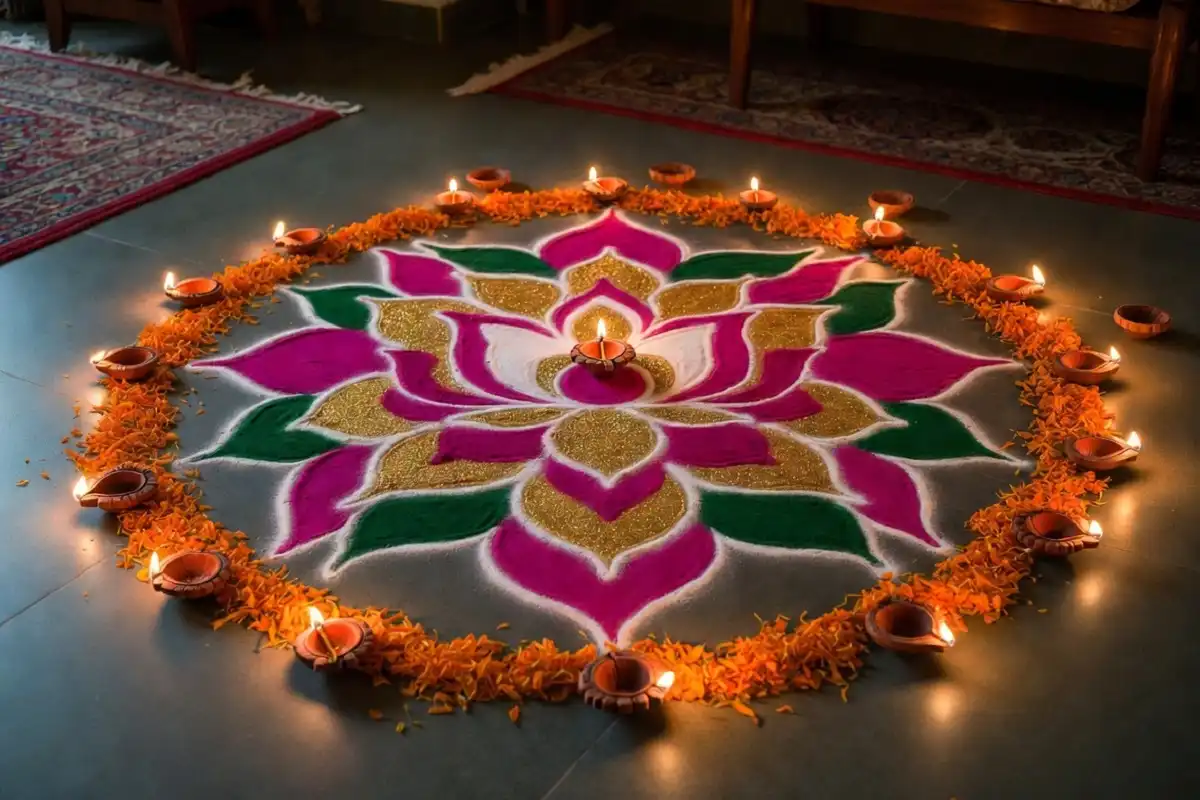
A few practical habits make a noticeable difference in the final result:
- Always complete the chalk outline before touching any powder
- Use a cone or squeeze bottle rather than pouring directly from a bag
- Work from the center outward to avoid resting your hand on finished sections
- Keep a dry brush nearby to correct edges as you go
- Practice the petal shape on paper before drawing on the floor
If you are new to rangoli overall, starting with a smaller design and working up to larger compositions is the most effective approach. This guide to easy rangoli design ideas for beginners covers foundational techniques that apply directly to lotus patterns.
The Pinterest Arts and Culture platform also features documentation of regional Indian floor art traditions, including variations of the lotus motif used across different states, which can serve as a rich visual reference for anyone looking to deepen their practice.
A Beautiful Symbol of Purity and Celebration
A lotus rangoli design brings together spiritual meaning, natural beauty, and creative expression in a way few other art forms can match. The lotus is traditionally associated with purity, prosperity, peace, and positive energy, making it a meaningful choice for festive and religious decorations.
Whether you choose a simple five-petal pattern for daily decoration or an elaborate layered composition for Diwali, the lotus adapts beautifully to every skill level and occasion.
You can experiment with different petal shapes, bright colors, borders, dots, and decorative patterns to create a unique look.
Adding shades of pink, red, yellow, orange, or white can make the lotus stand out, while small diyas or flower details around the design can give it an even more festive appearance.
FAQ
What makes a lotus rangoli design different from other floral patterns?
The lotus is structurally unique because its petals layer concentrically, allowing you to build outward in rings that each carry their own color and detail. This layered quality is harder to achieve with other flowers and gives the lotus its distinctive depth and visual richness in rangoli form.
Can beginners make a lotus rangoli design without stencils?
Yes, using a simple chalk circle and radial lines as guides makes it entirely possible to draw a lotus freehand without any stencil. Starting with six to eight petals keeps the symmetry manageable and the result still looks polished.
What is the best size for a lotus rangoli at the entrance?
A diameter of 30 to 50 centimeters works well for most home entrances. It is large enough to be visually impactful without obstructing foot traffic. For festival centerpieces in larger spaces, designs of 60 to 90 centimeters are common.
Can I use flower petals instead of powder for a lotus rangoli design?
Yes, flower petals are a popular and eco-friendly alternative. Pink rose petals, marigold petals, and white jasmine all work well. Petal designs are especially suited to outdoor spaces and morning puja settings where wind is not a concern.
How long does a lotus rangoli design last?
A powder rangoli indoors typically lasts one to two days if foot traffic around it is managed carefully. Outdoor designs may last only a few hours depending on wind and weather. Petal-based designs are more temporary but fully biodegradable.