Rangoli With Elephant Motif: Designs, Meaning, and How to Draw One
Rangoli with elephant motif turns a simple floor decoration into a symbol of strength, wisdom, and good fortune. The elephant carries deep meaning in Indian homes, and these designs work beautifully for festivals, weddings, and daily practice, always drawing attention at the doorstep.
A rangoli with elephant motif places one or more elephants at the center or corners of a floor design. Draw the body first, add the trunk and ears, then fill with color, dots, and floral borders for balance.
What Does the Elephant Symbolize in Rangoli?
The elephant symbolizes wisdom, power, loyalty, and prosperity. In Hindu tradition, it connects to Lord Ganesha, the remover of obstacles. Because of this link, the motif feels sacred as well as decorative. Many families draw an elephant at the entrance to invite good luck and protect the home.
The raised trunk holds special meaning. An upward trunk signals energy, victory, and blessings flowing into the house, which is why it is kept lifted in most festive designs.
Elephants also appear in wedding rangoli. They stand for a strong, stable union and a blessed married life. You can learn more about the animal’s cultural role from this overview of the Asian elephant and its place in South Asian heritage.
Types of Rangoli With Elephant Motif
There are several popular styles, each suited to a different occasion and skill level. Here are the main ones:
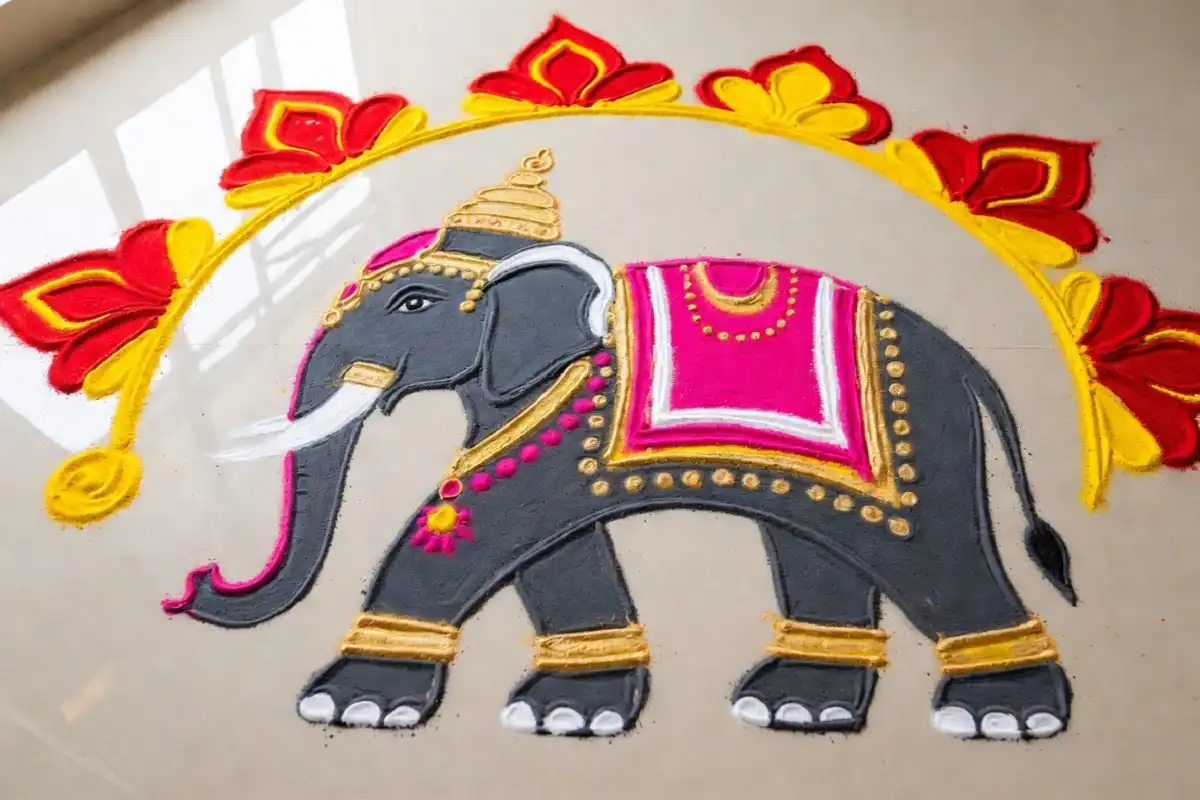
Single Elephant Design
A single elephant works well for small spaces and beginners. Place it in the center. Surround it with a simple circular or floral border. This keeps the focus on the elephant and takes little time.
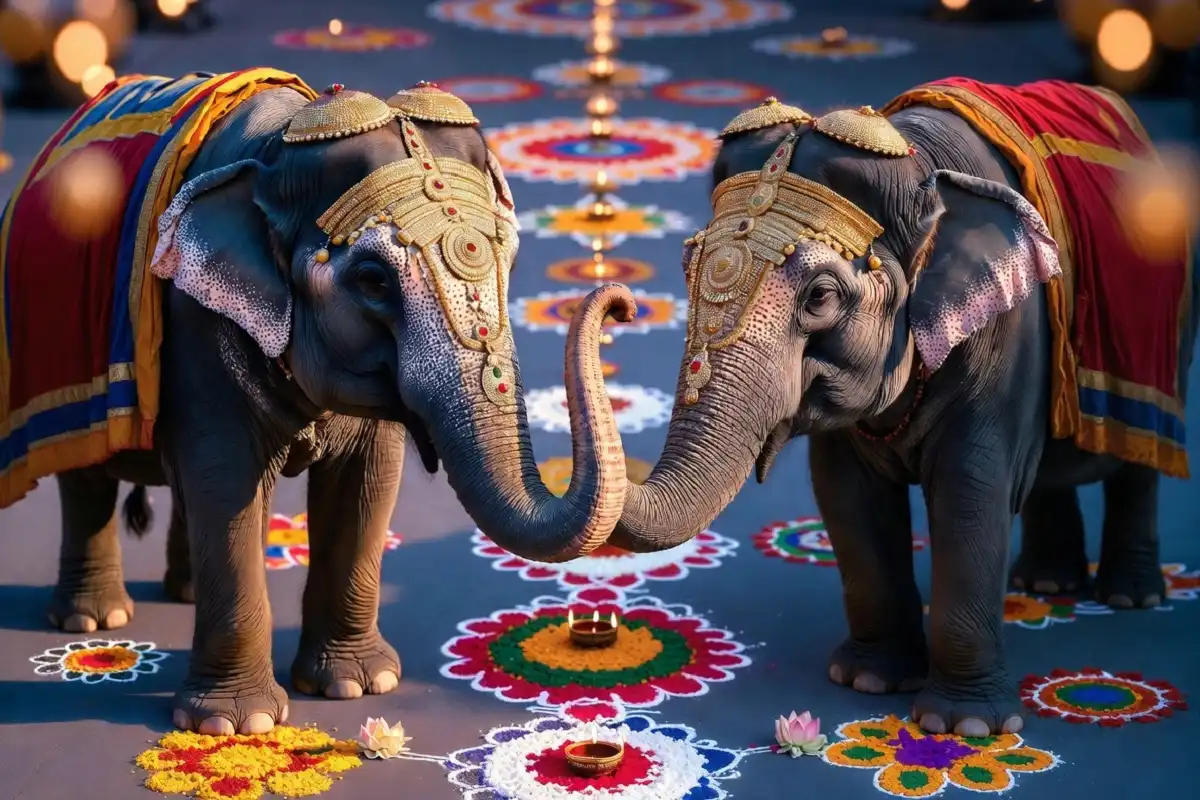
Facing Pair (Mirror) Design
Two elephants facing each other create balance and symmetry. This mirror layout suits wide entrances and wedding mandaps. Draw one side, then copy every line on the opposite side for a clean match.
Colors That Suit an Elephant Rangoli
Grey, white, and soft pink give the elephant a realistic base. After that, bright accent colors bring the design alive.
Metallic rangoli powder or foil works well here. Contrast matters — a pale elephant against a rich border reads clearly from a distance.
If you want a softer, natural finish, fresh flower petals also suit this motif. Marigold, rose, and jasmine petals fill large areas fast and smell wonderful at the door.
How to Draw a Rangoli With Elephant Motif Step by Step
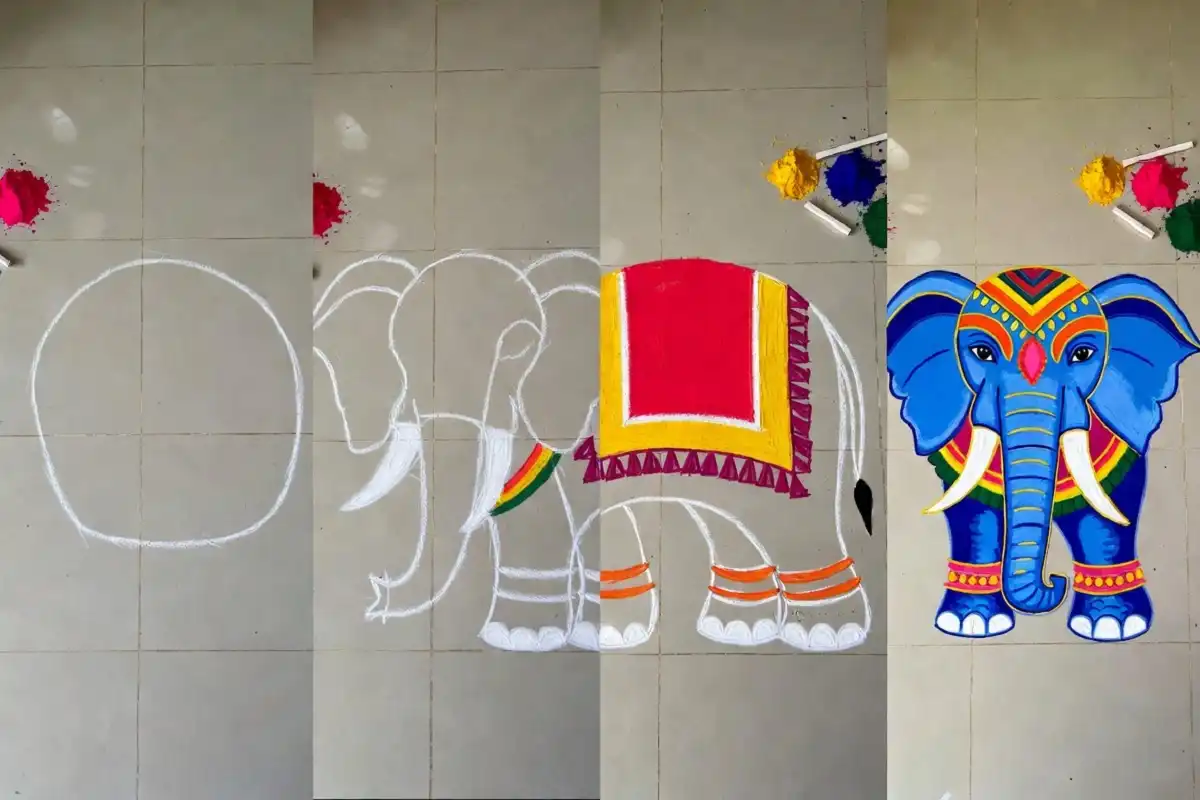
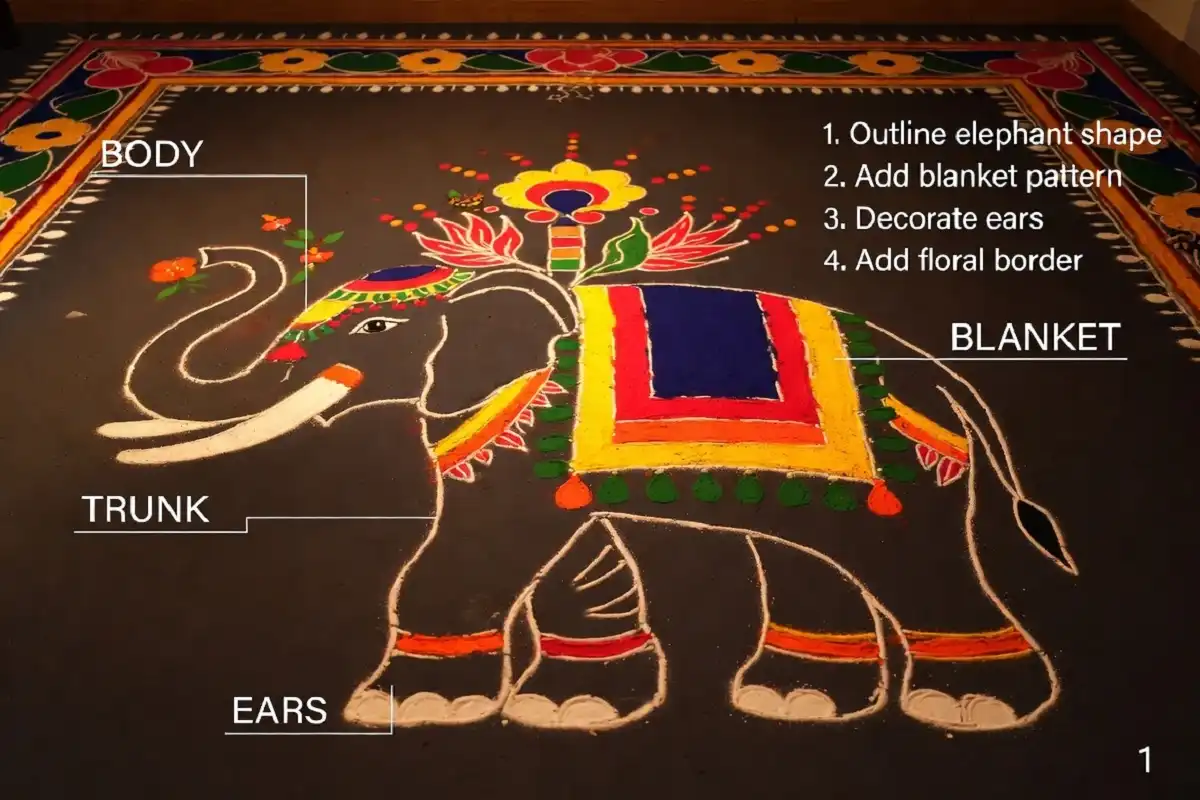
Start any rangoli with elephant motif with a rough outline, then build detail in layers. Follow these steps for a clean result every time.
Sketch the body as a large oval. Add a smaller oval for the head.
Draw the trunk as a curved line flowing down from the head, then lift the tip upward.
Add the ears as two wide, rounded shapes on each side of the head.
Draw the four legs as short pillars below the body. Add the tail at the back.
Outline a decorative blanket across the back and a small headpiece between the ears.
Fill the outline. Use grey or white for the body first, add accent colors on the blanket, ears, and ornaments, then finish with a floral or geometric border around the whole design.
Clean edges make the motif look professional. For more structured practice with shapes and balance, this guide to simple geometric rangoli patterns anyone can try helps you build a steady base before adding the elephant.
Best Occasions for a Rangoli With Elephant Motif
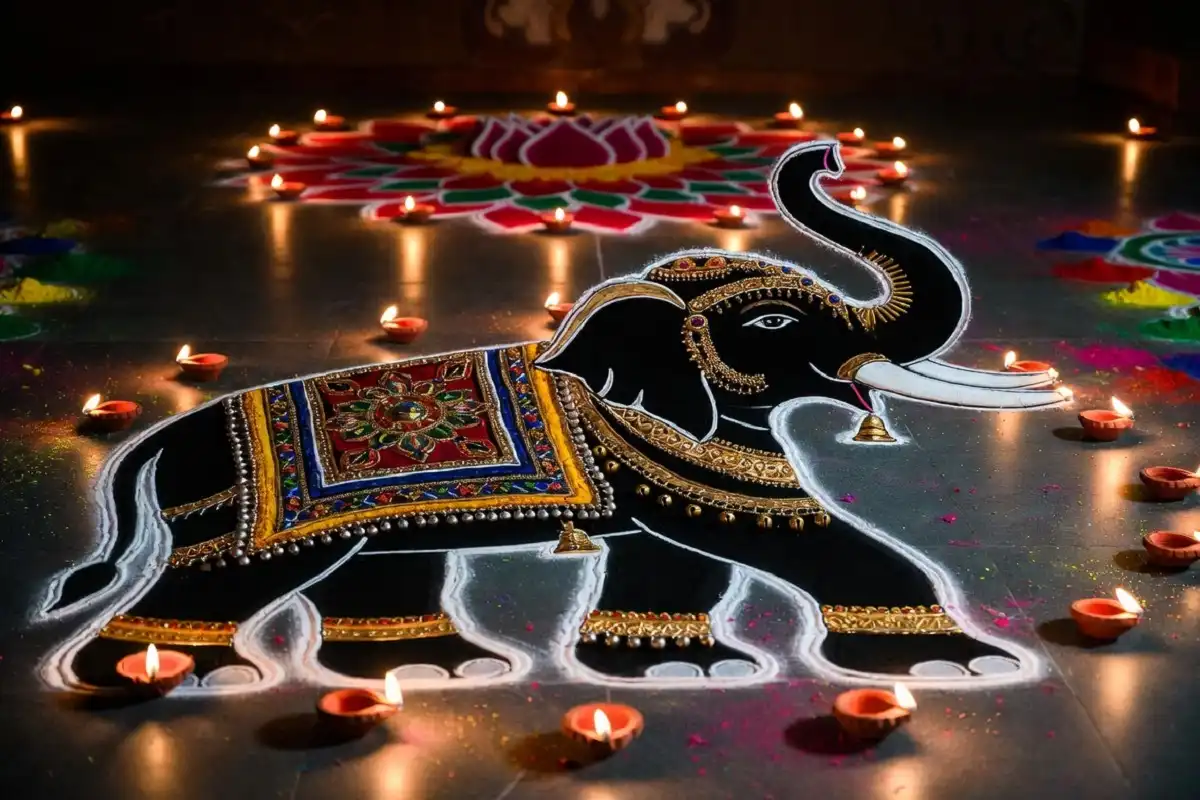
A rangoli with elephant motif suits almost every major celebration. It is most common at Diwali, weddings, Ganesh Chaturthi, and housewarming ceremonies. The design signals welcome, wealth, and protection.
During Diwali, pair the elephant with diyas and a lotus for a complete festive look. For weddings, use the facing pair to represent the couple. At a housewarming, place a single elephant at the threshold to bless the new home.
If you celebrate with regional floor art, the elephant also fits well within south Indian kolam rangoli designs, where clean lines and symmetry are central.
Tips to Make Your Rangoli With Elephant Motif Stand Out
Small choices separate a good design from a great one. Keep these points in mind while you work:
- Keep the trunk curved and lifted for a lively, auspicious feel.
- Maintain symmetry when you draw pairs — uneven ears or legs break the effect.
- Use a light chalk outline first so you can fix mistakes before adding color.
- Press color powder gently between your thumb and finger for thin, controlled lines.
- Work from the center outward to avoid smudging finished areas.
- Add a thin white outline at the end to sharpen every edge.
Elephant Rangoli Design: A Symbol of Luck and Prosperity
A rangoli with elephant motif is one of the most meaningful and beautiful designs you can create at home. Elephants are often associated with strength, wisdom, prosperity, and good fortune, making this design a lovely choice for festivals, pooja ceremonies, weddings, and special celebrations.
Start with one simple elephant in the center and focus on creating a smooth, balanced outline. Once the basic shape is ready, add decorative details such as flowers, paisley patterns, dots, and a colorful border. A raised trunk can give the elephant a joyful and welcoming appearance.
Use bright shades like red, yellow, orange, green, and blue to make the design stand out beautifully at your entrance.
FAQs
Is a rangoli with elephant motif good for Diwali?
Yes. A rangoli with elephant motif is very popular for Diwali. It represents prosperity and welcomes Goddess Lakshmi into the home. Pair it with diyas, lotus flowers, and a bright border for the best festive effect.
What size should an elephant rangoli be?
Match the size to your space. A single small elephant fits a compact entrance or balcony. A facing pair or ceremonial elephant needs a wider floor, such as a main doorway or courtyard.
Can beginners draw a rangoli with elephant motif?
Yes. Beginners should start a rangoli with elephant motif using a single elephant and a simple border. Use a chalk outline first. Once the shape feels easy, move on to pairs, processions, and decorated ceremonial designs.