Swastik Rangoli Design: Easy Steps, Meaning, and Ideas
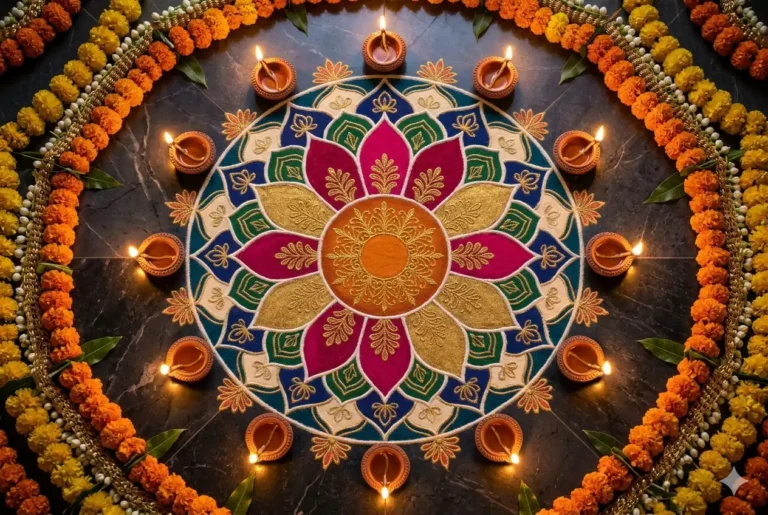
A Swastik rangoli design is one of the oldest and most meaningful traditional floor patterns found in Indian homes. For many families, drawing a swastik rangoli is more than simply decorating the entrance it is a beautiful way to welcome positivity, prosperity, and good fortune into the home. I especially love creating this design during Diwali, Dhanteras, pujas, housewarming ceremonies, and other festive occasions, when a colorful rangoli can instantly make the space feel more welcoming and festive.
The good thing about a Swastik rangoli design is that you do not need to be an expert artist to create one. The basic pattern is made from a simple swastik symbol with four evenly balanced bent arms. Once you understand the shape and learn how to keep the lines symmetrical, you can create anything from a small and simple entrance design to a larger, more decorative rangoli surrounded by flowers, diyas, dots, and traditional borders.
In this guide, I will walk you through the meaning of Swastik rangoli, the materials you need, the exact steps to draw it, and easy design ideas that you can try at home today. Whether you are making your first rangoli or simply looking for a quick traditional design for an upcoming festival, these tips will help you create a neat and beautiful result without making the process complicated.
What Does a Swastik Rangoli Design Mean?
Balance, Prosperity & Well-Being
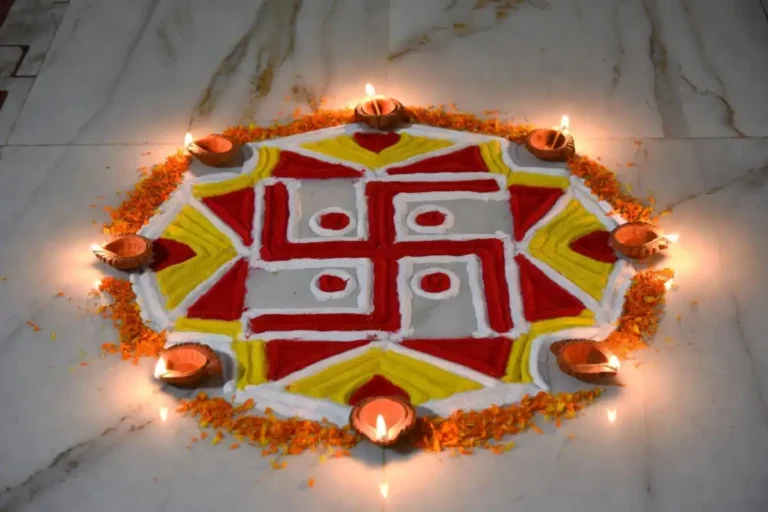
A traditional Swastik rangoli combines a simple geometric structure with deep cultural meaning.
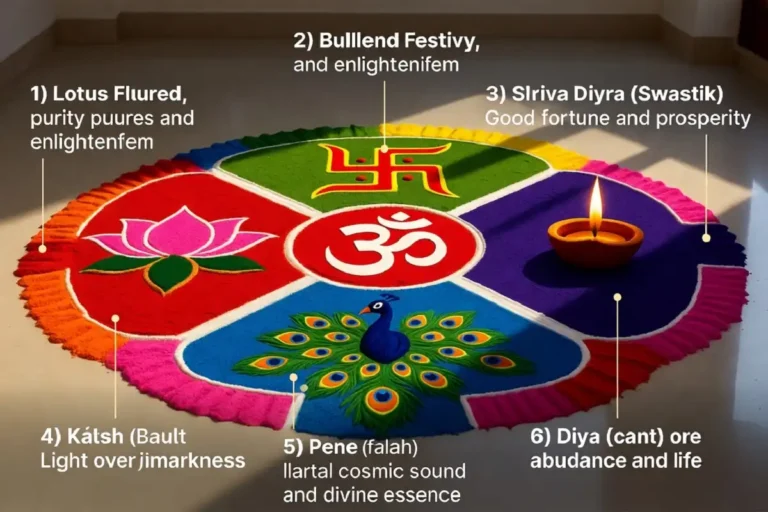
A swastik rangoli design carries deep meaning. The swastik stands for well-being, prosperity, and the sun’s movement across the sky. In Hindu tradition, it marks an auspicious start. Each of the four arms points to a direction, and together they suggest balance and continuity. Jain and Buddhist traditions use it too, each with their own reading.
I place it at the entrance because it welcomes positive energy into the house. The clockwise form is the one used for festivals and worship. You can read more about its full history on the Wikipedia entry for the swastika symbol.
What Do You Need for a Swastik Rangoli Design?
A swastik rangoli needs only a clean, dry floor and a few basic materials. Here is the short list I keep ready:
White Powder
White rangoli powder or rice flour for the outline
Colored Powders
Colored powders in red, yellow, orange, and green
Chalk
A small chalk piece to mark dots
Cotton Bud
A cotton bud or thin stick for neat lines
Pinch Bottle
A pinch bottle for fine detail
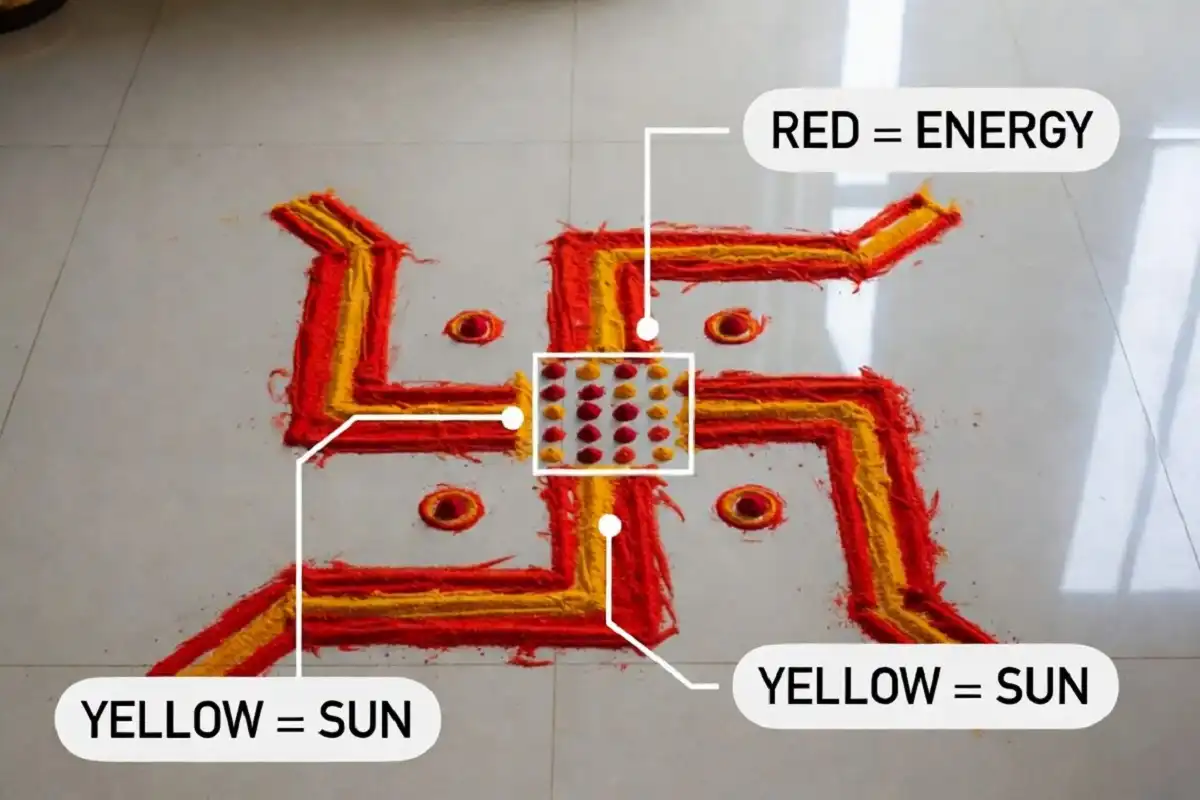
Red and yellow are the classic colors. Red signals energy and auspiciousness. Yellow stands for the sun and knowledge.
How to Make a Swastik Rangoli Design Step by Step
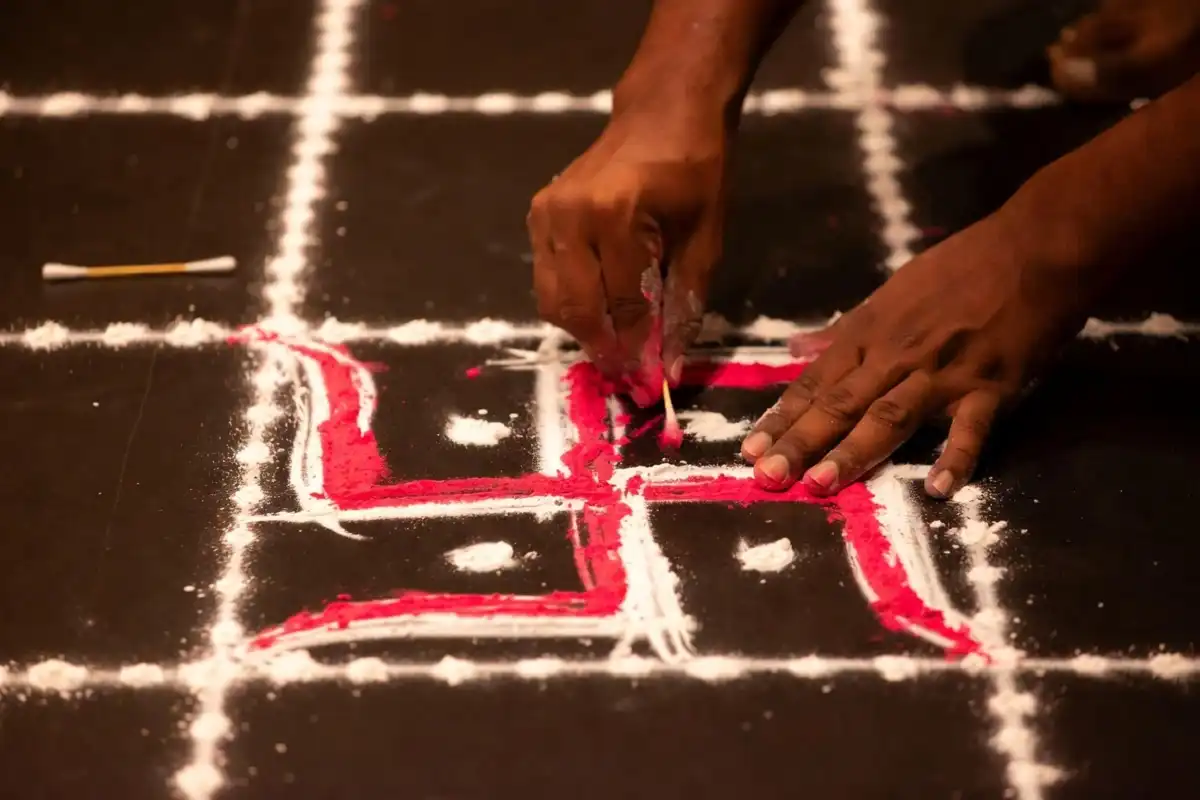
Start with a dot grid, then join the dots to form the swastik arms. Follow these steps in order.
Mark the Grid
Mark a 5×5 grid of evenly spaced dots with chalk.
Create the Center
Draw a plus sign through the center dots.
Bend the Arms
Extend each arm of the plus, then turn it 90 degrees to form the bent arms.
Check Direction
Make sure all four arms bend in the same direction, usually clockwise.
Add Details
Add four small dots in the open corners between the arms.
Outline
Outline the whole shape in white first.
Fill Colors
Fill the arms with red, then fill the background with yellow.
Clean Edges
Clean the edges with a cotton bud.
Keep your hand steady and work slowly. A swastik rangoli design looks best when the four arms match in length and angle. If you are new to floor art, this beginner friendly rangoli art guide walks through the basics of holding powder and drawing clean lines.
Simple Swastik Rangoli Design Ideas for Beginners
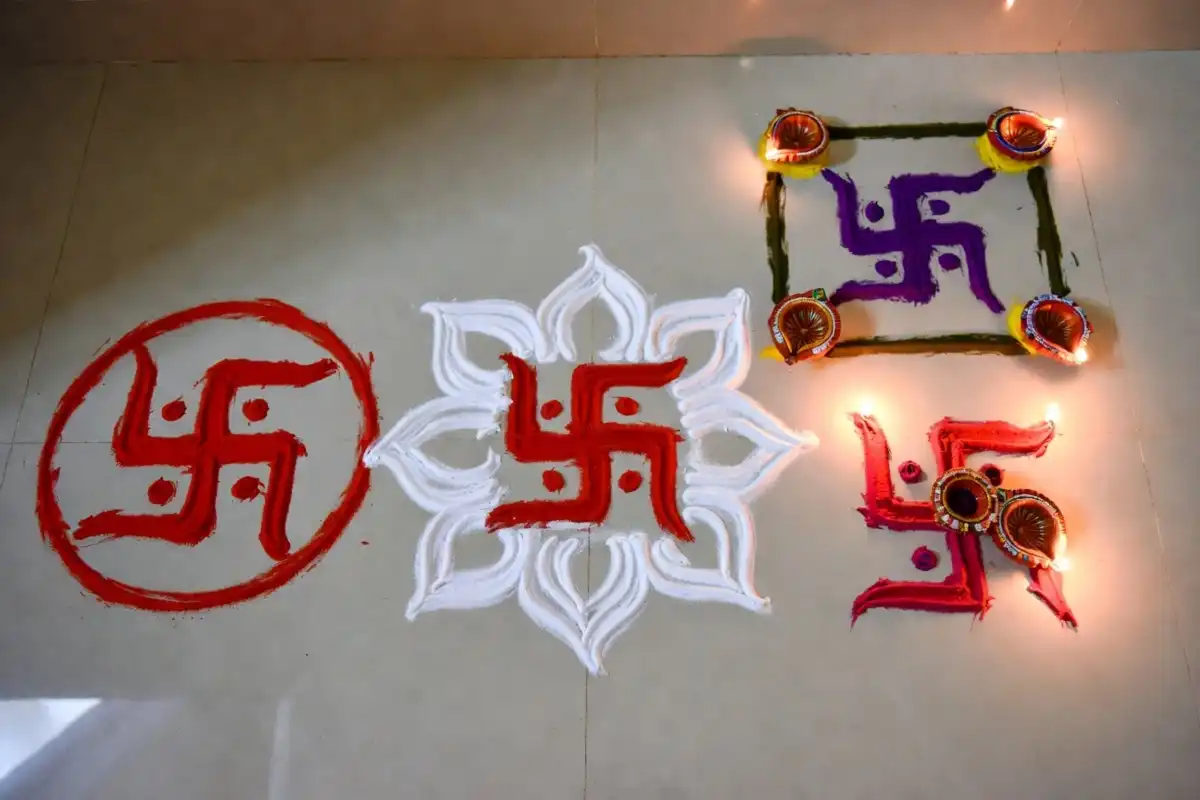
Beginners get the cleanest result from a small, single swastik inside a circle or square border. Try these easy versions first.
A Single Swastik
A single swastik inside a red circle
Floral Ring
A swastik with a lotus petal ring around it
Four Corners
Four small swastiks placed in each corner of a square
Diya Combination
A swastik combined with a diya on each arm for Diwali
Small designs finish fast and still look complete. For more compact festive patterns, these small swastik pattern ideas for festivals give you quick layouts that fit tight spaces.
Swastik Rangoli Design with Dots
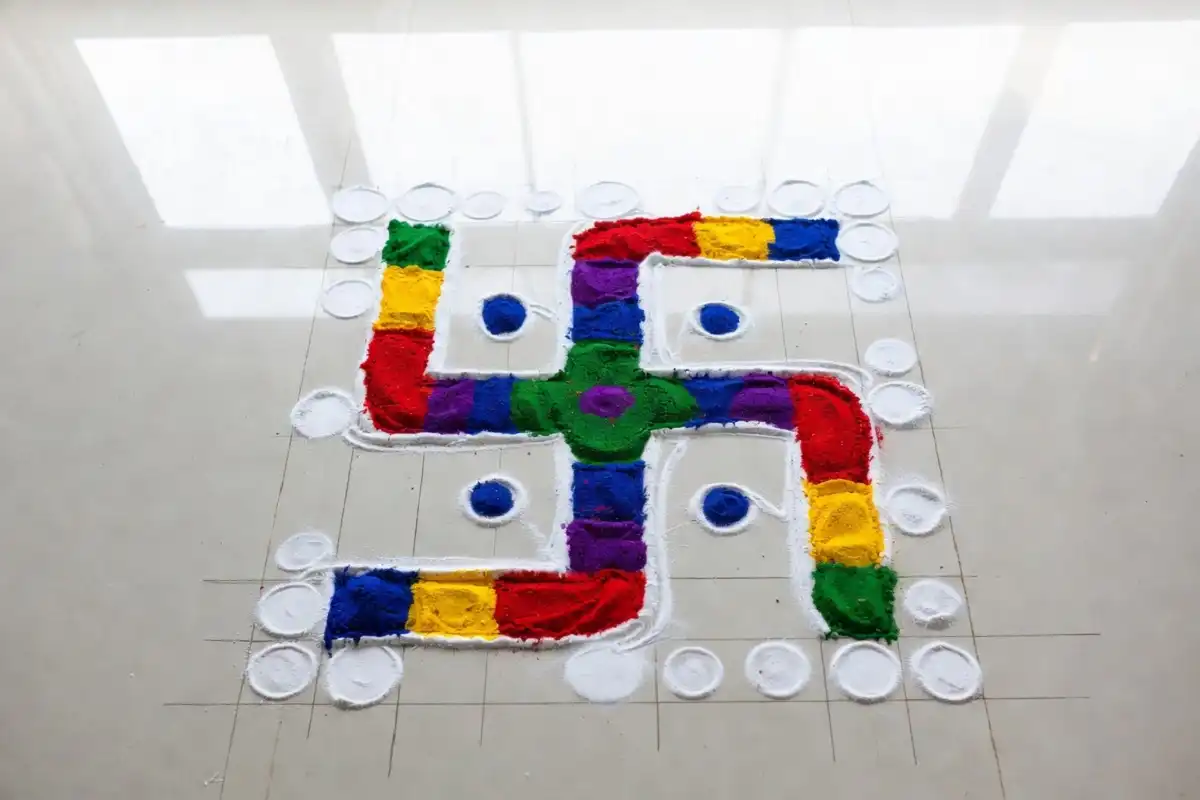
A dot grid is the easiest way to keep the design symmetrical. The dots act as anchor points for each arm. Use a 5×5 or 7×7 grid depending on the size you want. Bigger grids give you room for extra borders and floral fills.
Connect the dots with light pencil-like strokes first. Once the shape looks right, go over it in white powder. This method removes guesswork and keeps both sides even. If dots are new to you, these easy dot rangoli patterns for any occasion show how grids build a clean design.
Best Occasions for a Swastik Rangoli Design
Draw a swastik rangoli design for Diwali, Dhanteras, Navratri, Ganesh Chaturthi, and housewarming pujas. The swastik suits any occasion that marks a fresh, auspicious beginning. Many families also draw a small one daily at the entrance or near the tulsi plant.
During Diwali, pair it with diyas and a Lakshmi motif. During weddings, add it near the main door for blessings.
Colors and Their Meaning
Red, yellow, orange, and white carry specific meaning in a swastik rangoli design. Red means energy and auspiciousness. Yellow means the sun, learning, and peace. Orange blends both and adds warmth. White frames the design and keeps it crisp.
Stick to two or three colors for a clean look. Too many shades make the sacred symbol hard to read.
Common Mistakes to Avoid
The most common mistake is bending the four arms in different directions. All arms must turn the same way. Other errors to watch:
Fix the grid first. A correct grid solves most symmetry problems before you add a single color.
Create a Beautiful Swastik Rangoli With Confidence
A Swastik rangoli design becomes much easier once you understand the basic grid, maintain proper spacing, and practice drawing the four evenly balanced bent arms. Although the pattern may look detailed at first, its simple geometric structure makes it a great choice for both beginners and experienced rangoli artists. Start with a small design, lightly mark your grid, and build the swastik shape step by step to keep the overall pattern neat and symmetrical.
For a traditional and eye-catching appearance, red and yellow are excellent color choices, while a clean white outline can make the symbol stand out beautifully against the background. You can also add small dots, flowers, diyas, or a decorative border around the central motif to give your rangoli a more festive look without making the design too complicated.
The most important part is to focus on symmetry and even proportions. If one arm is longer or wider than the others, the design can quickly lose its balanced appearance. Take your time, practice the basic shape on paper or a small surface first, and gradually increase the size as your confidence improves.
With a little patience and regular practice, you can create a beautiful, clean, and auspicious Swastik rangoli for Diwali, puja ceremonies, weddings, housewarming celebrations, and other festive occasions. Keep the design simple, the lines balanced, and the colors vibrant—and soon you will be able to create this traditional symbol with confidence for every celebration.
FAQs
01 Is the swastik rangoli the same as the Nazi symbol?
No. The Indian swastik is an ancient symbol of peace and prosperity, drawn thousands of years before its misuse in the 20th century. The two are unrelated in origin and meaning.
02 Which direction should the swastik arms face?
For worship and festivals, the arms bend clockwise. This is the auspicious form used across Hindu households.
03 Can I draw a swastik rangoli daily?
Yes. Many people draw a small swastik rangoli design at the entrance each morning as a sign of blessing and welcome.
04 What size grid is best for beginners?
A 5×5 dot grid is ideal. It is large enough to shape clean arms and small enough to finish quickly.