Marigold Rangoli Design: Easy Fresh Flower Ideas for Home
Marigold rangoli design turns loose petals into a glowing floor pattern in minutes. No powder, no stencils, just fresh flowers you already buy for the festival. I make these at my entrance every Diwali, and they last longer than colored rangoli.
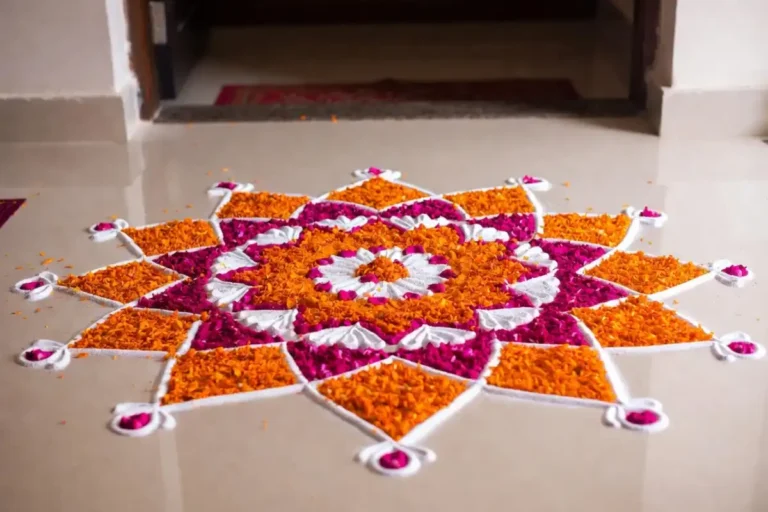
A marigold rangoli design uses whole marigold flowers and separated petals arranged into circles, borders, or mandala shapes on the floor. Start with a center point, build outward in rings, and fill gaps with green leaves or diya lamps.
What Is a Marigold Rangoli Design?
A marigold rangoli design is floor art made entirely from fresh marigold flowers instead of colored powder. You pluck the petals, sort them by shade, and lay them into patterns on a clean floor.
Marigold works better than most flowers for this. The petals are small, dense, and hold their shape for a full day. The orange and yellow tones read as bright even from a distance. In India we call the flower genda, and it sits at the center of nearly every festival decoration.
Fresh flower rangoli has one clear advantage over powder. It smells good, it looks rich, and cleanup means sweeping petals into your compost instead of scrubbing color off tiles. For more petal-based patterns beyond marigold, my guide to fresh flower rangoli patterns covers roses and mixed blooms too.
Why Marigold Is the Best Flower for Rangoli
Marigold is the best flower for rangoli because it is cheap, sturdy, and available all year in India. The petals separate cleanly and do not wilt fast. Here is what makes it practical:
Roses, jasmine, and chrysanthemum pair well as accents. But marigold carries the structure of the whole piece.
Types of Marigold Flowers to Use
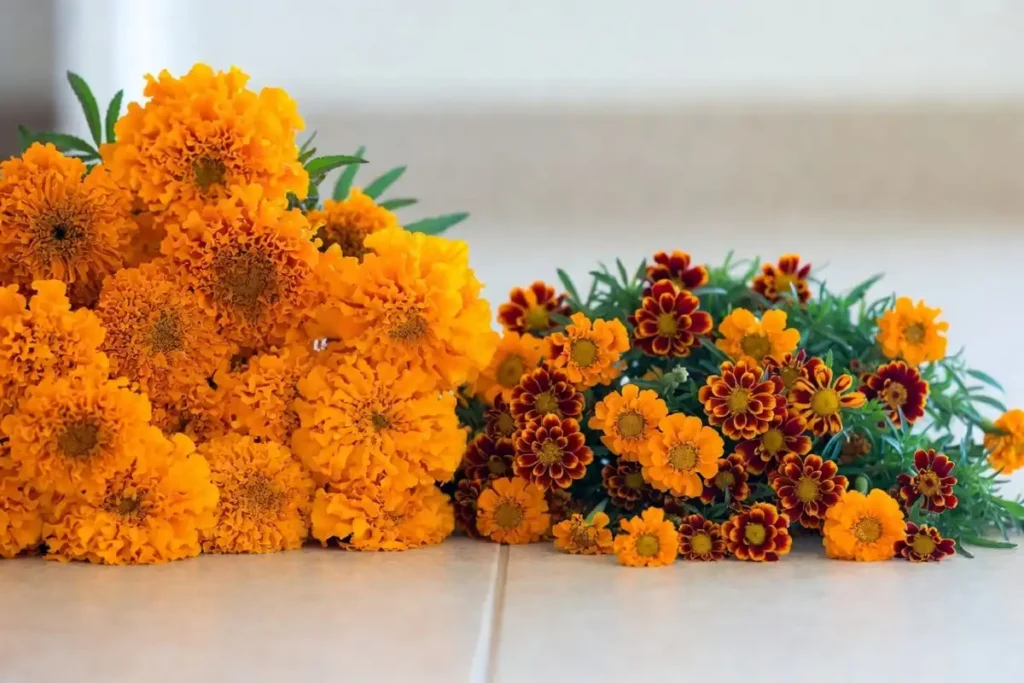
Two marigold types matter for rangoli: African marigold and French marigold. Each gives a different texture and coverage.
The tall genda, with large, ruffled heads. Use whole flowers for borders and thick outlines — one bloom covers a lot of floor.
Smaller with flatter petals in orange, red, and maroon. Use it for detail work and color layering inside a pattern.
Mix both in one design. Whole African marigolds mark the outer ring. French marigold petals fill the inner sections. This contrast is what makes a marigold rangoli design look full instead of flat.
Colors That Pair With Marigold
Marigold pairs best with green leaves, red rose petals, white flowers, and purple. These contrasts stop the orange from looking one-note.
Green is the essential partner. Tulsi leaves, mango leaves, or any small green foliage outline your shapes and separate the orange sections. Red rose petals add depth at the center. White flowers like chrysanthemum brighten the edges. A few purple aster petals give a modern touch.
Keep the ratio simple: mostly marigold, one strong contrast color, one neutral. Too many colors turn the pattern muddy.
How to Make a Marigold Rangoli Design Step by Step
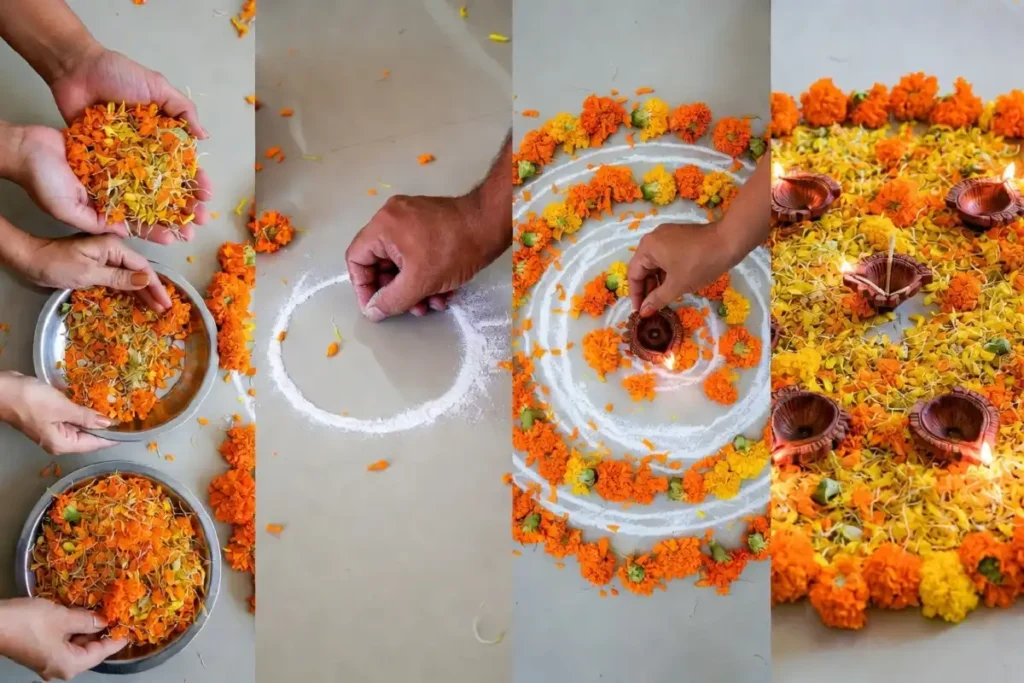
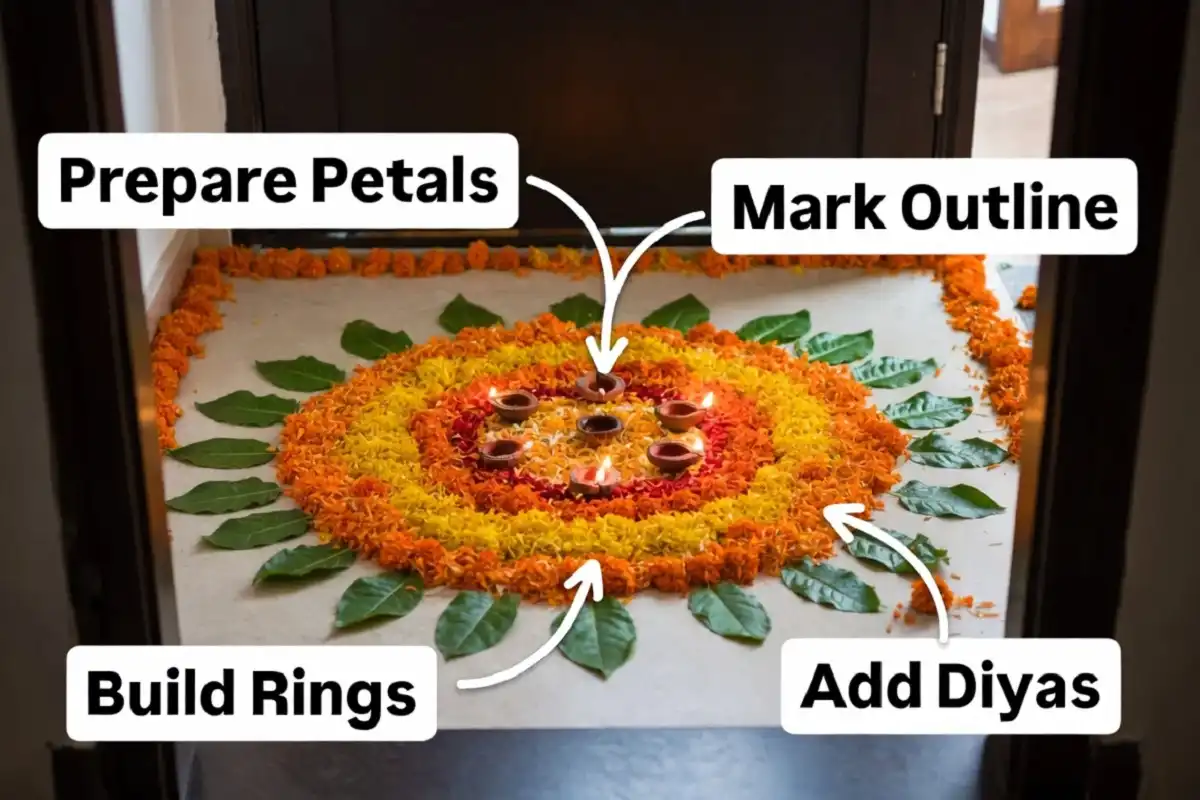
Making a marigold rangoli design takes four steps: prep the flowers, mark the outline, fill the pattern, and add finishing details. Total time is around 20 minutes for a medium design.
-
Prepare the Flowers
Pluck petals from half your marigolds and keep the rest whole. Sort petals by color into separate bowls. Wipe your floor clean and dry.
-
Mark the Center and Outline
Place one whole flower or a small object at the center. Use chalk or a light powder line to sketch your outer circle. This guide keeps the shape even.
-
Build Outward in Rings
Lay petals along your chalk line first. Work from the outer ring inward. Press each petal lightly so it stays. Fill one color section fully before moving to the next.
-
Add Details and Diyas
Place green leaves between color bands. Set whole marigolds at key points. Tuck small diya lamps into gaps for the evening.
A step-by-step rangoli approach for beginners helps if you are laying out your first pattern. Work fast in dry weather — petals shift if you leave them loose too long.
Easy Marigold Rangoli Patterns for Beginners
The easiest marigold patterns for beginners are the single circle, the concentric ring, and the simple border. All three use repetition, so mistakes barely show.
Draw one large circle. Fill it with marigold petals in a spiral. Ring the edge with green leaves. Done in ten minutes.
Lay three or four rings, alternating orange marigold and a contrast color. Center it with one whole flower. This is the most forgiving layout.
Line both sides of your entrance with a thick marigold strip. Add small dots of red at intervals. Perfect when you have little floor space.
For more compact ideas that suit flats and doorways, see my collection of small flower rangoli ideas.
Advanced Marigold Rangoli Ideas for Festivals
Advanced marigold designs add layering, gradients, and mixed textures across a larger floor. These suit Diwali, weddings, and competition displays.
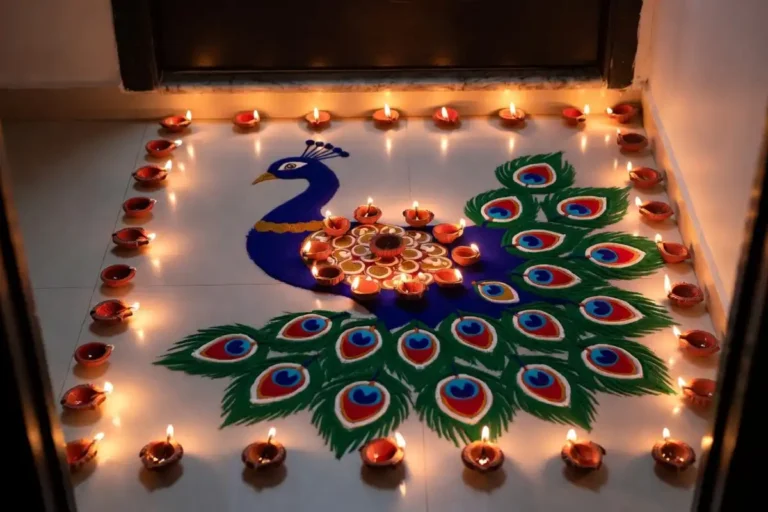
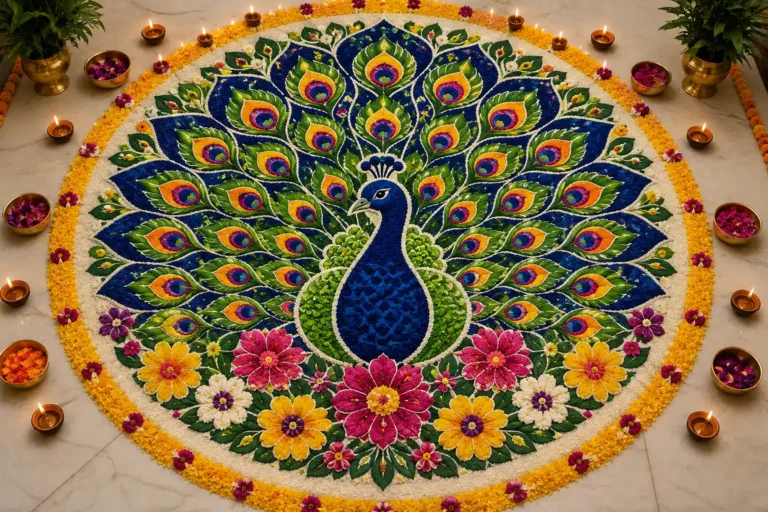
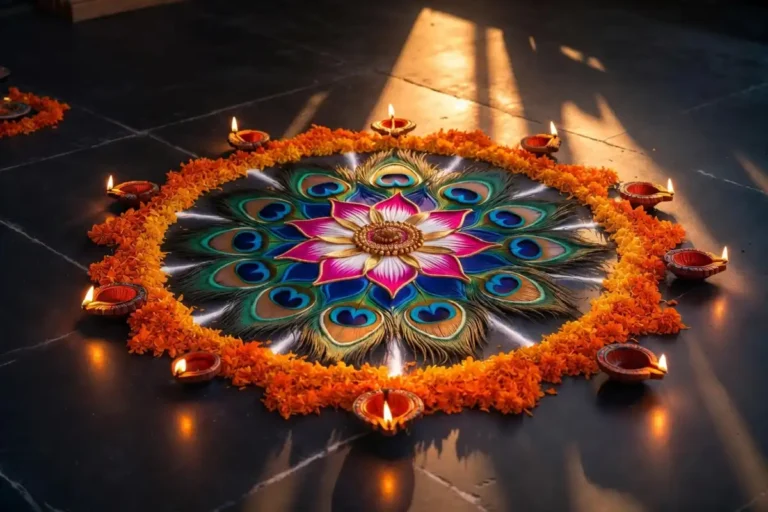
Try a peacock motif where the body is marigold petals and the tail feathers fan out in green and blue accents. Or build a lotus with layered petal rings that shift from deep orange at the center to pale yellow at the edge. For a gradient effect, arrange petals from red through orange to yellow in one sweeping band, blending each color into the next.
Whole flowers give height. Pressing marigolds into a raised mound creates a 3D center that catches light. Add a floating diya in a water bowl at the middle for a wedding look.
Marigold Rangoli for Diwali
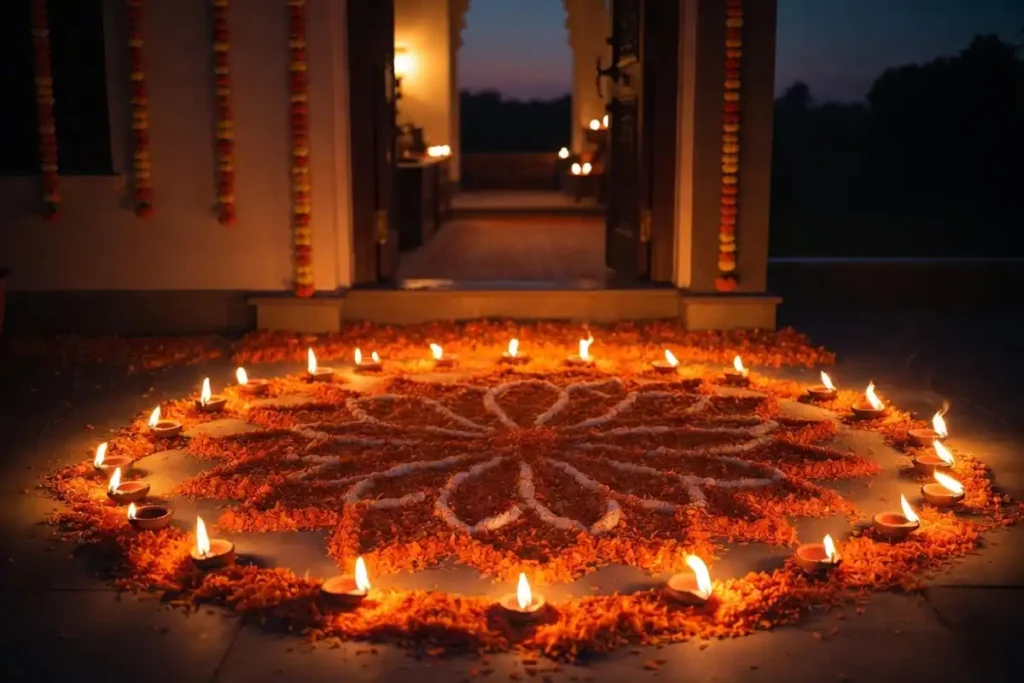
For Diwali, a marigold rangoli design works best at the main entrance paired with rows of diyas. The orange glow of the flowers matches the warm lamp light.
Diwali patterns lean symmetrical. A large central mandala with radiating petal lines reads well from the street. Place diyas around the outer ring so the light frames the flowers after dark. Marigold and diya together carry real meaning in Indian homes: both signal welcome and auspicious beginnings.
Make it the evening before or early morning. The flowers stay fresh through the main puja and evening guests.
How to Keep a Marigold Rangoli Fresh Longer
To keep a marigold rangoli fresh, lay it on a cool dry floor, avoid direct sun, and lightly sprinkle water on the petals. Fresh marigold holds color for a full day this way. A few practical habits help:
-
Time It Right
Make it in the morning or evening, not peak afternoon heat.
-
A Light Mist
Sprinkle a fine water mist once, not a soak.
-
Keep It Shaded
Keep it in shade or indoors near the entrance.
-
Use Fresh Flowers
Use freshly bought flowers, not day-old ones.
Even in warm weather, a well-made marigold pattern stays bright from morning puja through the evening.
FAQs
How many marigolds do I need for a rangoli?
For a medium design of about two feet, one to two kilos of marigold is enough. Larger festival patterns need three to four kilos.
Can I reuse marigold flowers after the rangoli?
No, plucked petals wilt after a day. But you can compost them or use whole leftover flowers in a garland the same day.
Do I need chalk lines under the flowers?
Only for the first few tries. A light chalk outline keeps circles even. Once you gain confidence, you can lay petals freehand.
Is marigold rangoli suitable for small spaces?
Yes. A simple border or a single small circle works well at a flat doorway or balcony. It needs very little floor.
Bottom Lines
A marigold rangoli design gives you a rich, fragrant floor pattern without powder or special tools. Start with a single circle, keep your petals sorted, and build outward. Add green leaves for contrast and diyas for the evening. With fresh flowers and a clean floor, anyone can make one that lasts a full festival day.