Lotus Rangoli Design Ideas: Easy Patterns, Colors & Festival Looks
I love Lotus Rangoli Design Ideas because they work so well for almost every festival. The lotus is a beautiful traditional flower, and when you turn it into a rangoli, it can make even a small space look colorful and welcoming. I often find that a simple lotus design looks especially nice near the entrance, in front of a puja area, or beside a row of diyas during Diwali and other special occasions.
You do not need to be an experienced rangoli artist to make a pretty lotus. I usually start with a small circle in the center and then draw the petals around it, working outward one layer at a time. Keeping the petals similar in size makes the design look much more balanced, even if the lines are not perfectly identical.
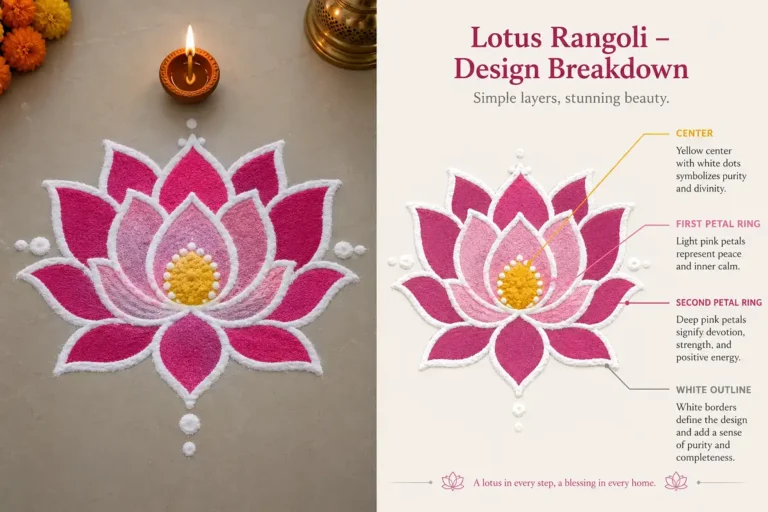
For the colors, pink and white give the lotus a soft and traditional look, while a little green for the leaves adds a fresh touch. I also like using white powder around the edges because it makes each petal stand out and gives the whole rangoli a cleaner finish. If you want to make the design more festive, you can add small dots, flowers, diyas, or a simple border around the lotus.
One of the best things about these Lotus Rangoli Design Ideas is that they are beginner-friendly. A small and simple lotus can usually be finished in about 15 minutes, especially once you get comfortable drawing the petals. Start with a design that feels easy, take your time with the symmetry, and then add more details as you gain confidence.
With just a few colors and a little practice, you can create a lovely lotus rangoli at home without making the process complicated. Sometimes, a simple design with clean petals and bright colors is all you need to make your festive space feel special.
Why the Lotus Works So Well in Rangoli
The lotus is the flower of purity and prosperity in Indian tradition. It sits at the center of Lakshmi worship, so people draw it during Diwali, Dhanteras, and Varalakshmi Vratam. The shape is also forgiving. Curved petals hide small mistakes, and the symmetry is easy to build in stages.
I draw lotus patterns more than any other flower. The petals repeat, so once you learn one, you can scale the whole design up or down. That is why these lotus rangoli design ideas suit both a small doorway motif and a large hall centerpiece.
Basic Lotus Rangoli: Step by Step
Start with the center, then build petals in rings. Here is the method I teach.
- Mark the center. Place one dot, then draw a small circle around it. This keeps every petal balanced.
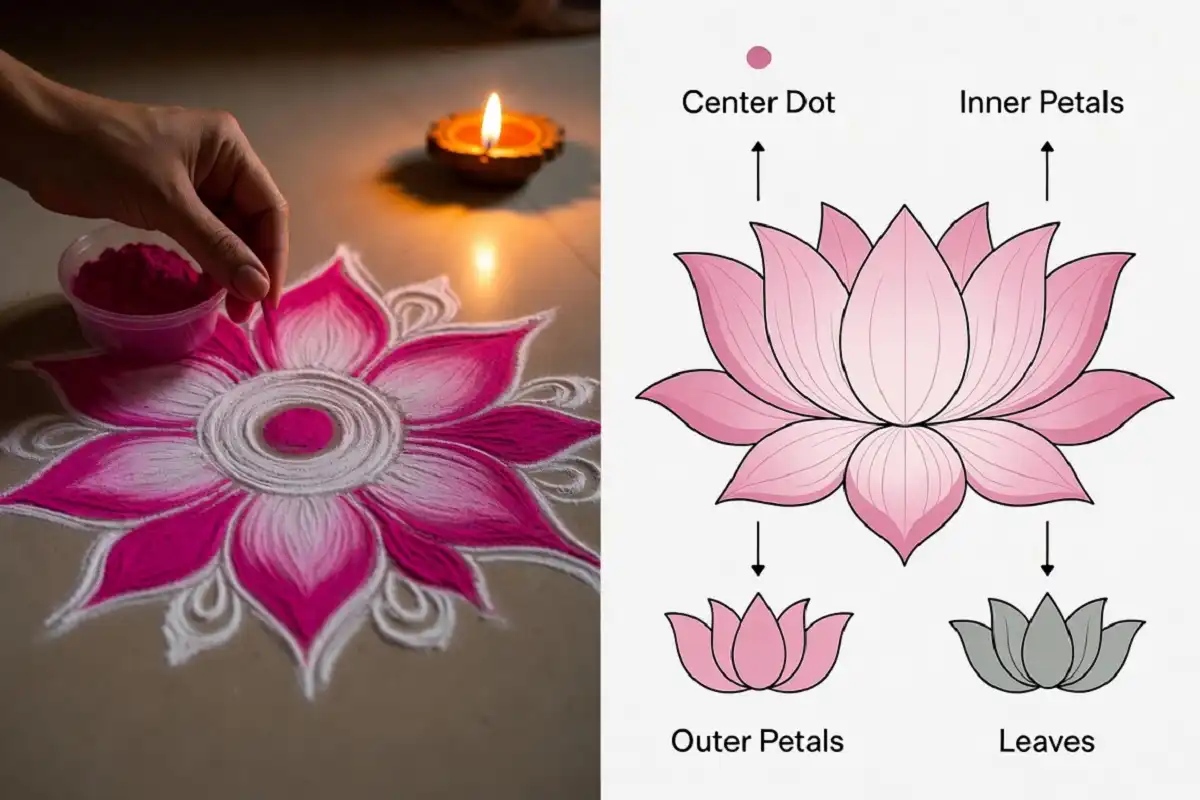
- Draw the first ring of petals. Add 6 to 8 pointed petals around the circle. Keep them equal in size.
- Add a second ring. Draw the next row of petals in the gaps of the first row. This gives the layered, open-flower look.
- Shape the outer petals. Make these slightly longer. They frame the whole flower.
- Add leaves and buds. Two or three green leaves at the base finish the shape.
- Fill and outline. Color inside, then trace every edge in white powder.
The white outline is the step most beginners skip. Do not skip it. A clean edge is what separates a neat lotus from a smudged one. If you want more starter shapes before this, my walkthrough on simple rangoli designs for beginners covers the hand control you need first.
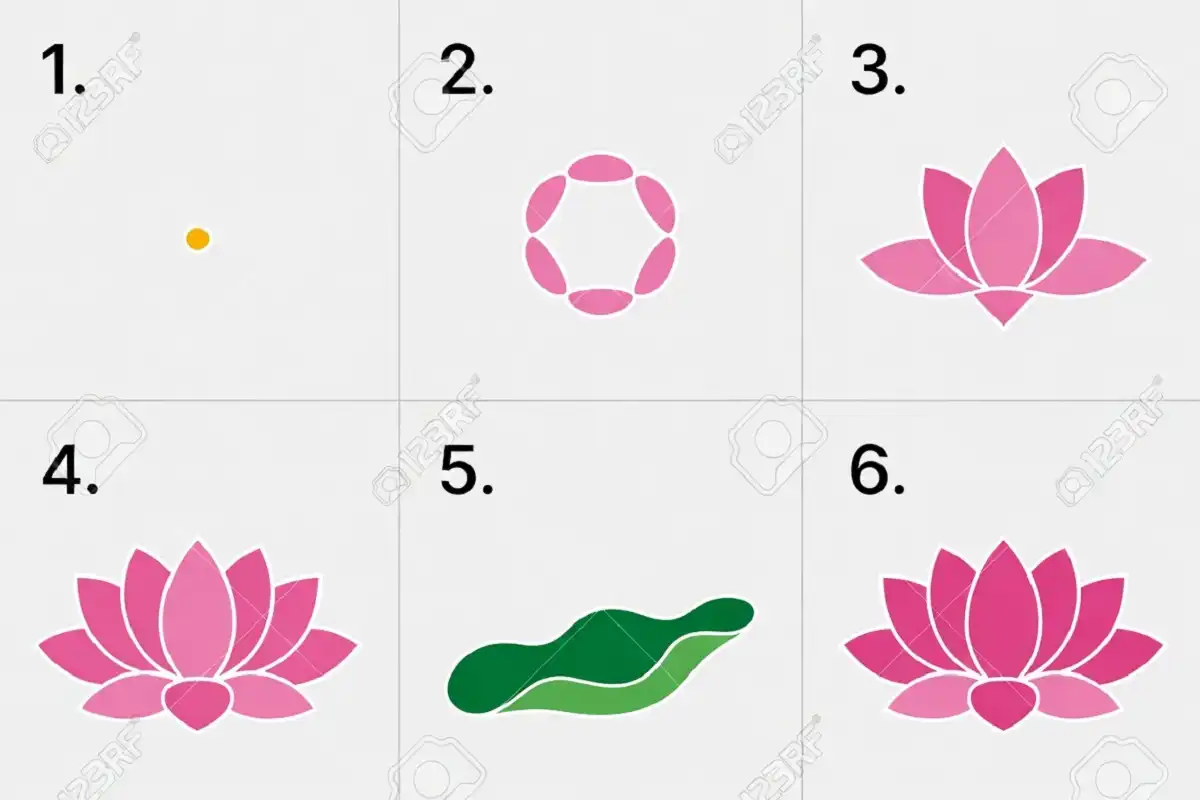
From the center dot to the final white outline — the six stages of a basic lotus rangoli at a glance.
Easy Lotus Rangoli Design Ideas for Beginners
Beginners should draw a single-ring lotus first. Use one ring of eight petals, a round center, and two leaves. Skip the second petal ring until your curves feel steady.
Free-hand petals scare new artists, so use a shortcut. Press a small katori (steel bowl) into the powder to mark the center circle. Then draw petals outward from that guide. Chalk dots also help. Mark light dots where each petal tip should end, then connect them with curves. These beginner lotus rangoli design ideas build your confidence fast.
Lotus Rangoli with Dots (Dot Grid Method)
The dot method gives you perfect symmetry without free-hand guessing. Lay a grid, then connect dots into petals.
Use a simple 5-3-1 dot layout for a small lotus. That means 5 dots in the center row, then rows shrinking to 3, then 1, mirrored top and bottom. Connect the outer dots with curved lines to form petals around the middle. This locks your flower into even spacing.
Dot grids suit anyone who wants repeatable results. If you like this structured style, the ideas in my rangoli designs with dots collection extend the same grid logic to other shapes.

The 5-3-1 dot layout, mirrored top and bottom, keeps every petal evenly spaced without any guesswork.
Best Color Combinations for Lotus Rangoli Design Ideas
Pink and white is the classic lotus pairing, but you have strong options. Match the colors to the mood of your festival.
- Pink and white: The traditional look. Soft, clean, instantly reads as a lotus.
- Red and orange: Bold and warm. Good for Diwali and large designs.
- Blue and white: Cooler and modern. Works for a fresh, minimal home style.
- Purple and gold: Rich and festive. The gold outline glows near diyas.
- Yellow and pink: Bright and cheerful, common for Pongal and spring festivals.
Blend two shades inside one petal for depth. Put the darker color at the petal base and the lighter shade at the tip. Fade them into each other with your fingertip. This shading trick makes flat lotus rangoli design ideas look three-dimensional.
Lotus Rangoli for Diwali and Lakshmi Puja
For Diwali, place the lotus where Lakshmi enters: the main doorway or the puja area. The lotus is her seat, so it carries real meaning during this festival, not just decoration.
Draw the lotus as the center, then ring it with small diya motifs or a simple border. Add Lakshmi footprints leading toward the flower if you want a complete puja look. Keep the colors warm so they match the lamp light. These festival lotus rangoli design ideas turn a simple flower into a full puja setup. For more, my guide on easy lotus rangoli designs for a festive home pairs the flower with matching festival borders.
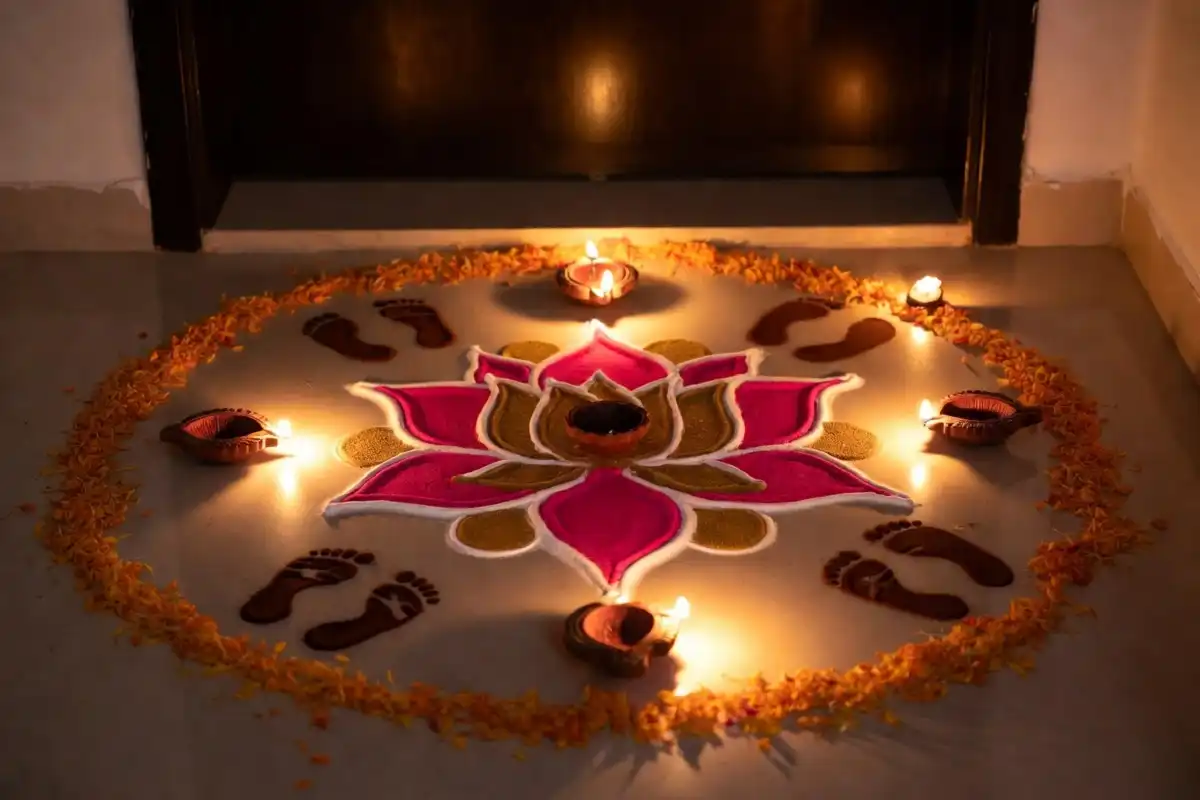
A lotus centerpiece framed with diyas and Lakshmi footprints — a complete doorway design for Diwali puja.
Big Lotus Rangoli Design Ideas for Competitions and Halls
Scale a lotus up by adding more petal rings and a wider border, not by making petals huge. Three or four rings of petals give a large flower that still looks detailed.
For competition work, add a mandala ring around the lotus. Surround the flower with geometric bands, small repeated motifs, or a peacock on each side. Symmetry matters most here. Draw one quarter, then copy it exactly to the other three quarters. Judges look for even spacing and clean lines more than bright color. Large lotus rangoli design ideas win on precision, not size alone.
Small Lotus Rangoli for Daily Use
A small lotus takes five minutes and suits everyday doorways. Draw a single flower with one petal ring, fill it, and outline it. No border needed.
Keep a small set of your favorite colors ready so you can draw one each morning. Daily practice is also the fastest way to improve your petal curves. These quick lotus rangoli design ideas keep your entrance fresh without much time. If you want more options for tight spaces, my small flower rangoli easy designs fit apartment entrances well.
Materials You Need
You can draw a lotus with basic supplies. Here is what I keep on hand.
- Rangoli powder in pink, white, green, and one accent color
- A steel katori to mark circles
- Chalk for guide dots and outlines
- A cone or bottle for fine white outlines
- Flower petals (optional) for a fresh flower lotus
Fresh flowers are a strong alternative to powder. Use rose petals for the flower body and green leaves for the base. A fresh-petal lotus lasts the whole day and smells wonderful.
Common Mistakes to Avoid
Most lotus rangoli problems come from spacing and outlines. Fix these and your flower improves fast.
- Uneven petals: Mark petal tips with dots first. Do not free-hand until you are confident.
- No center guide: Always start from a circle. A missing center makes the flower lean.
- Skipping the outline: The white edge defines the shape. Always add it last.
- Overcrowding: Too many petals in one ring looks messy. Keep 6 to 8 per ring.
- Wrong color order: Fill light to dark, and outline last so edges stay clean.
Lotus Rangoli Design Ideas: Beautiful Patterns, Color Combinations, and Easy Steps for Beginners
Lotus rangoli design ideas work beautifully for almost every festival because the lotus is both visually attractive and rich in traditional meaning. A lotus-inspired rangoli can instantly brighten an entrance, puja area, or festive corner of your home. From simple beginner patterns to more detailed floral designs, you can easily adjust the size, colors, and decorations to match the occasion.
A basic lotus rangoli starts with a small center circle, followed by rows of curved petals spreading outward. Fill the petals with pink and white, add green leaves, and finish with a clean white outline to make the design look sharp and balanced. Most simple lotus rangoli design ideas can be completed in around 15 minutes, making them a great choice when you want something beautiful without spending too much time.
FAQs
How many petals should a lotus rangoli have?
Start with 6 to 8 petals in the first ring. Add more rings for a bigger flower, keeping each ring evenly spaced.
Can I make a lotus rangoli without dots?
Yes. Use a steel bowl to mark the center circle, then draw petals free-hand around it. Dots only help with symmetry.
Which colors are best for lotus rangoli design ideas?
Pink and white is the classic pairing. Red, orange, purple, and gold also work well, especially for Diwali.
How long does a lotus rangoli take?
A small single-ring lotus takes about five minutes. A large multi-ring design for a hall can take one to two hours.