Floral Rangoli for Beginners: Easy Steps to Try
Floral rangoli for beginners starts with one idea: flowers forgive mistakes that powder does not. If a petal lands slightly off, you nudge it back. No smudging, no starting over.
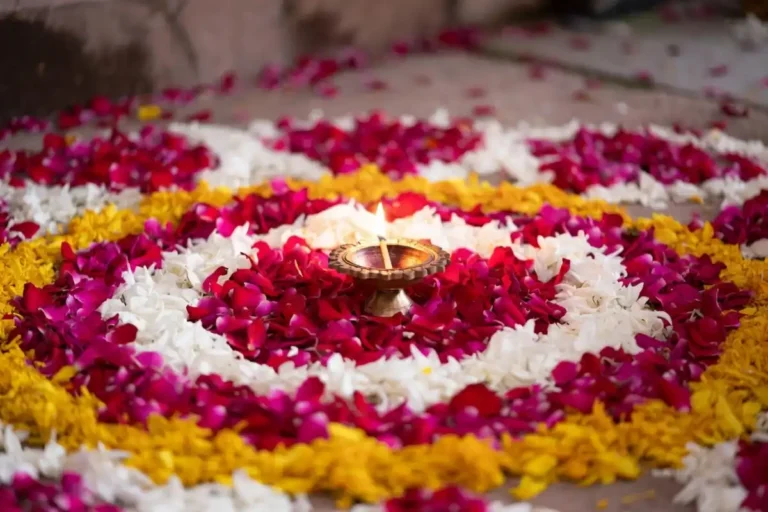
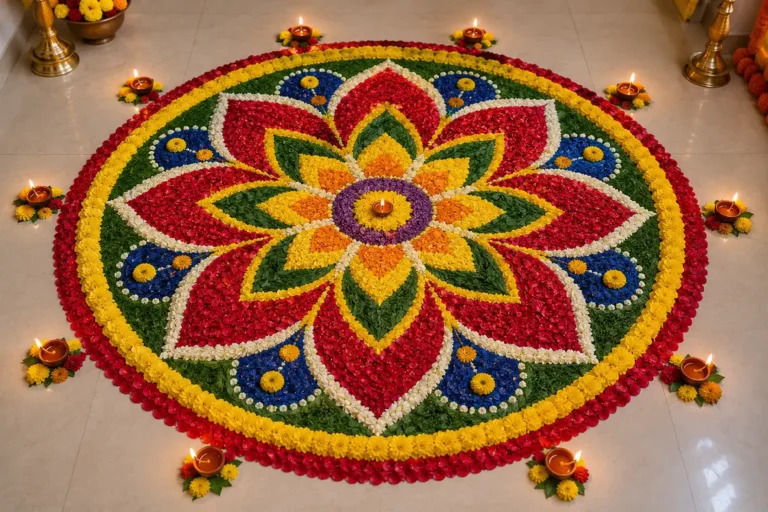
Floral rangoli for beginners means drawing a simple outline, then filling it with fresh flower petals, whole blooms, or leaves instead of colored powder. Marigold and rose petals work best for a first attempt, since they hold shape and color for hours.
What Makes Floral Rangoli Different From Powder Rangoli?
This is the first thing to understand about floral rangoli for beginners: it uses real flowers and leaves instead of gulal or rangoli powder. You still draw an outline first, usually with chalk or rice flour, then place petals inside the lines.
The texture sits higher off the ground, and the colors come from nature, not dye. That makes floral rangoli for beginners a gentler entry point, because petals can be lifted and repositioned without ruining the base.
I use this method whenever I want a design that smells good near the entrance, not just looks good. Marigold carries a strong scent and a bright orange that photographs well in daylight.
If you want more petal-based layouts once you get comfortable, browse other flower rangoli designs for ideas beyond the basic circle.
Materials You Need for Floral Rangoli for Beginners
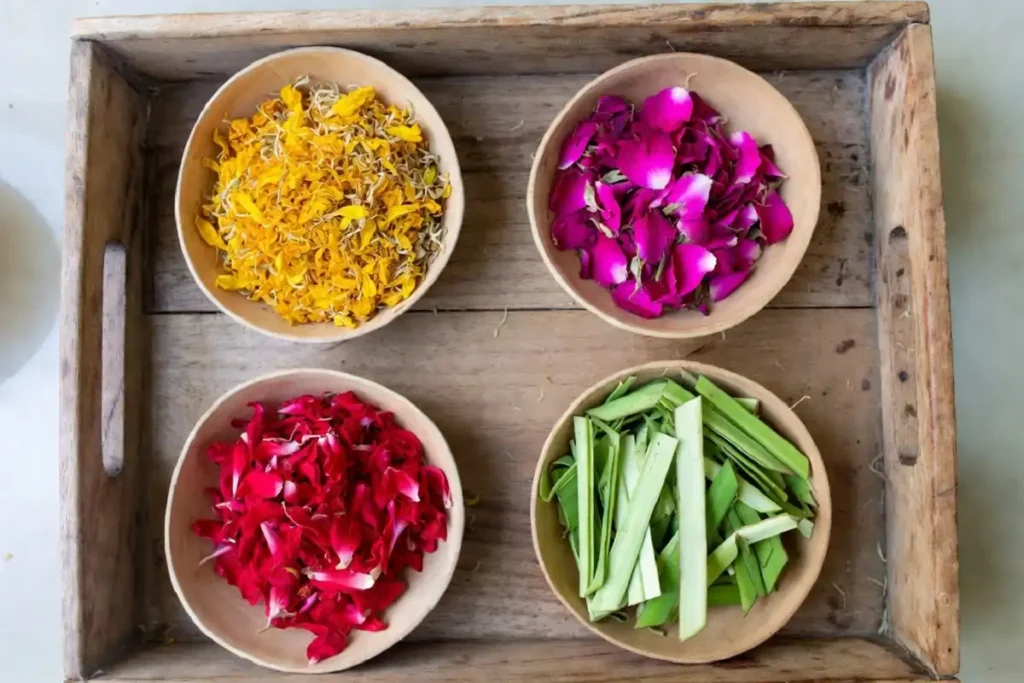
Gather everything before you sit down to draw, since floral rangoli for beginners works best when nothing is missing halfway through. Rangoli work moves fast once petals start drying.
Keep petals separated by color in small bowls before you begin. This single step saves the most time once you start filling the design.
How to Make Floral Rangoli for Beginners
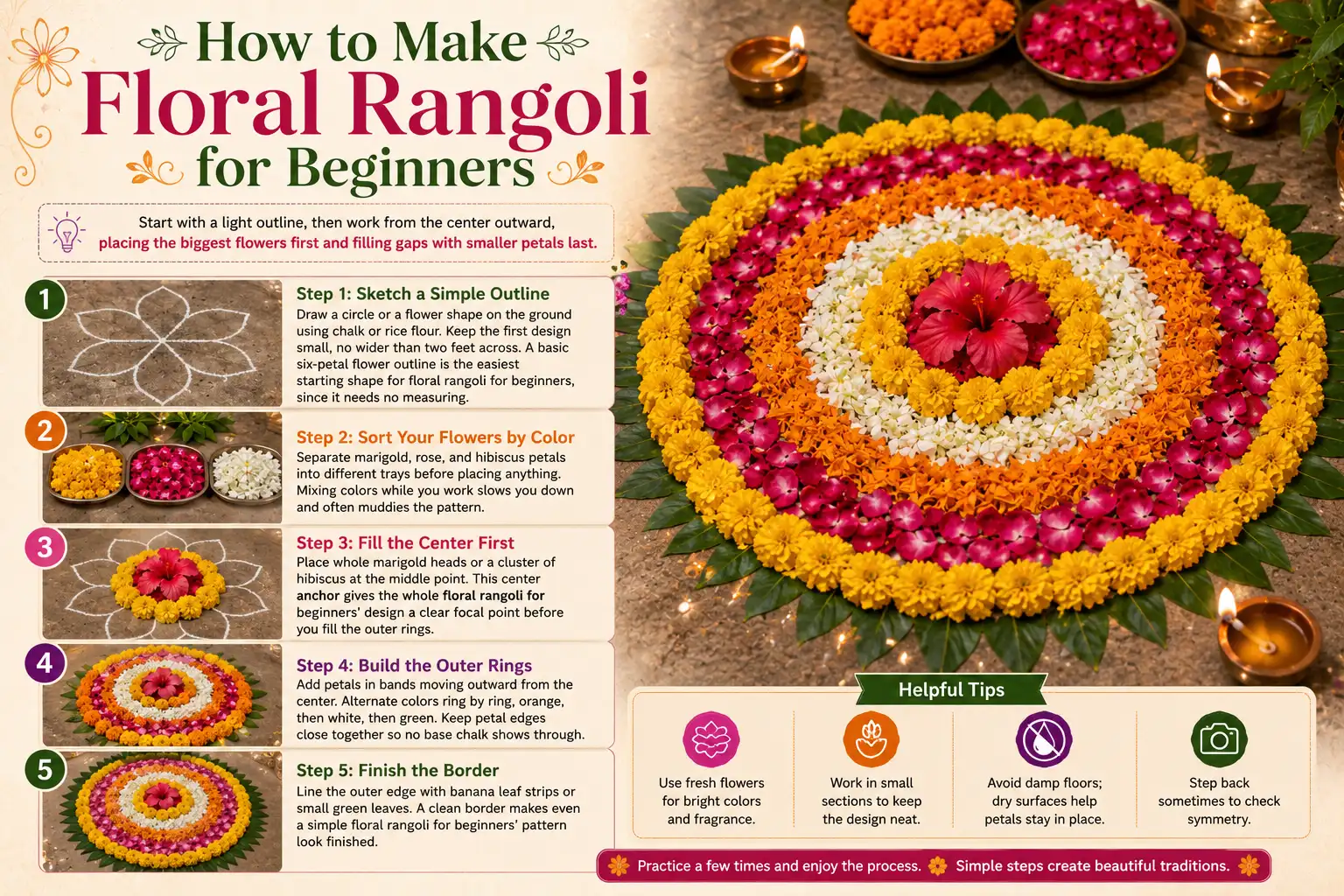
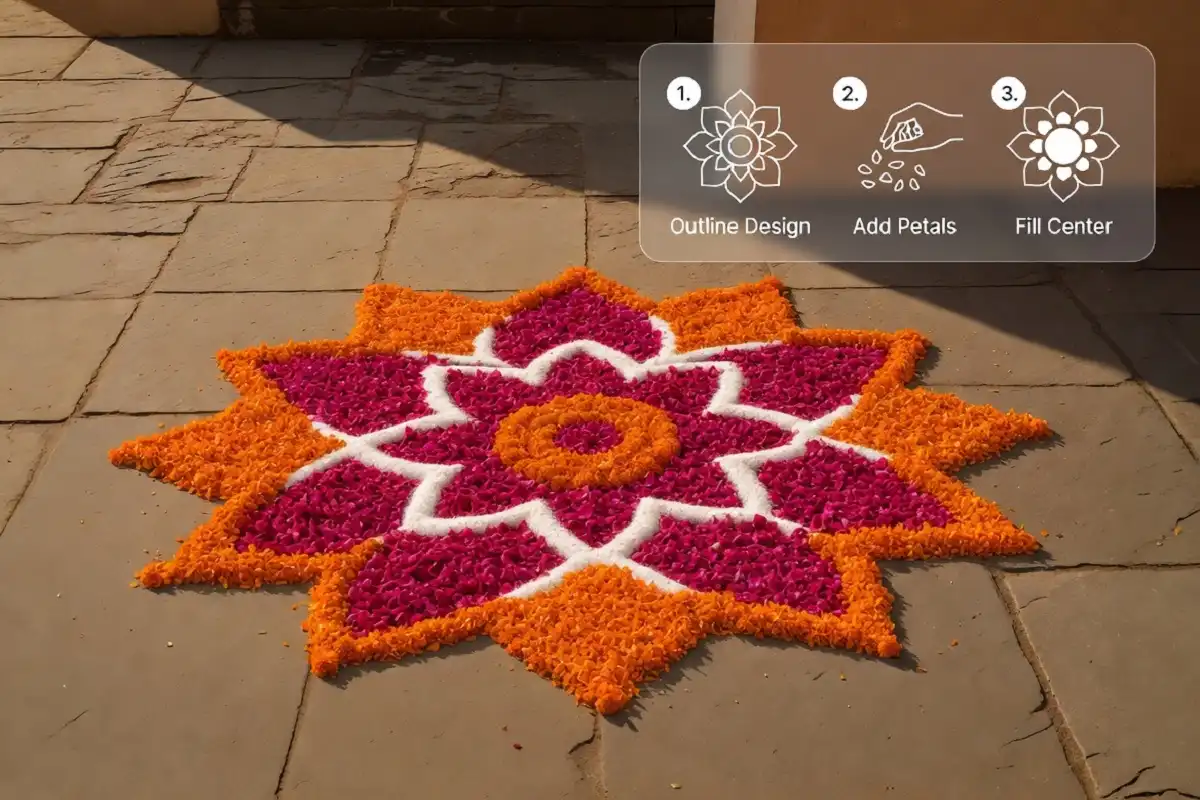
Start with a light outline, then work from the center outward, placing the biggest flowers first and filling gaps with smaller petals last.
-
Sketch a Simple Outline
Draw a circle or a flower shape on the ground using chalk or rice flour. Keep the first design small, no wider than two feet across. A basic six-petal flower outline is the easiest starting shape for floral rangoli for beginners, since it needs no measuring.
-
Sort Your Flowers by Color
Separate marigold, rose, and hibiscus petals into different trays before placing anything. Mixing colors while you work slows you down and often muddies the pattern.
-
Fill the Center First
Place whole marigold heads or a cluster of hibiscus at the middle point. This center anchor gives the whole design a clear focal point before you fill the outer rings.
-
Build the Outer Rings
Add petals in bands moving outward from the center. Alternate colors ring by ring, orange, then white, then green. Keep petal edges close together so no base chalk shows through.
-
Finish the Border
Line the outer edge with banana leaf strips or small green leaves. A clean border makes even a simple pattern look finished.
Simple Floral Rangoli Patterns to Try First
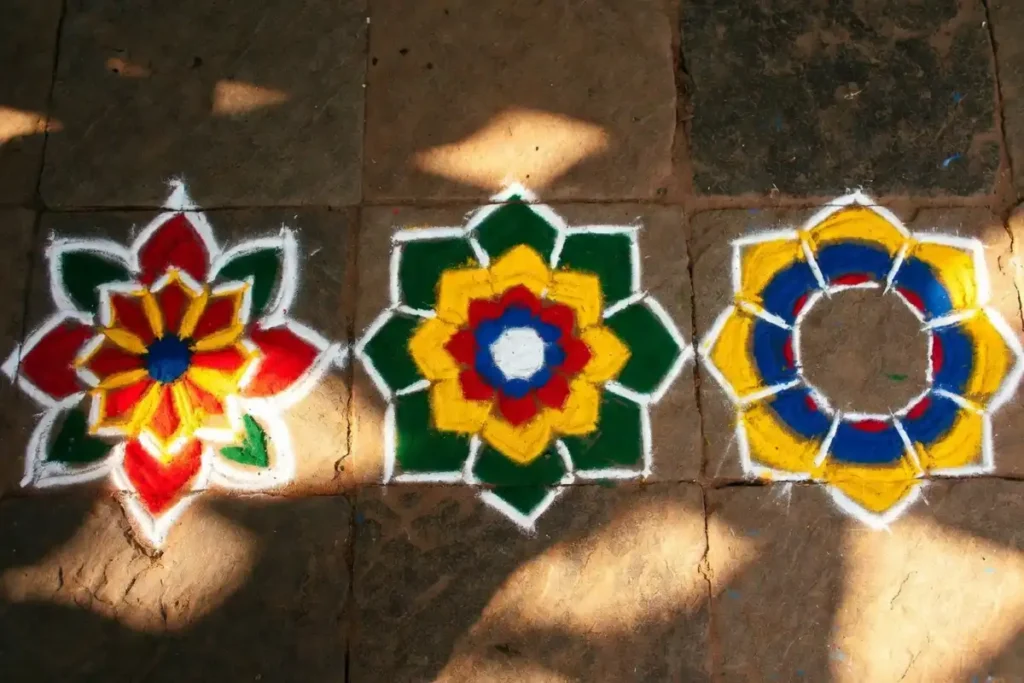
Start with shapes that need no grid or dot guide.
One large circle divided into six or eight petal segments.
Three rings of different colors, largest to smallest.
A line of flowers along a doorway, no fill needed.
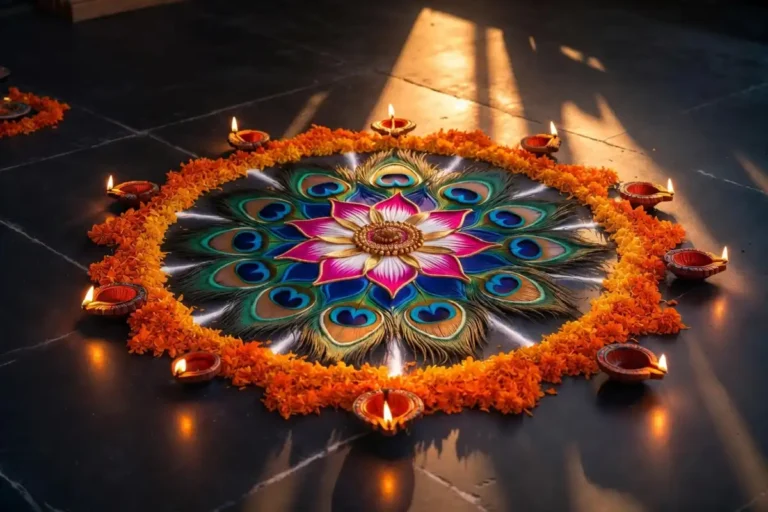
A small floral ring around one lit diya, common during Diwali.
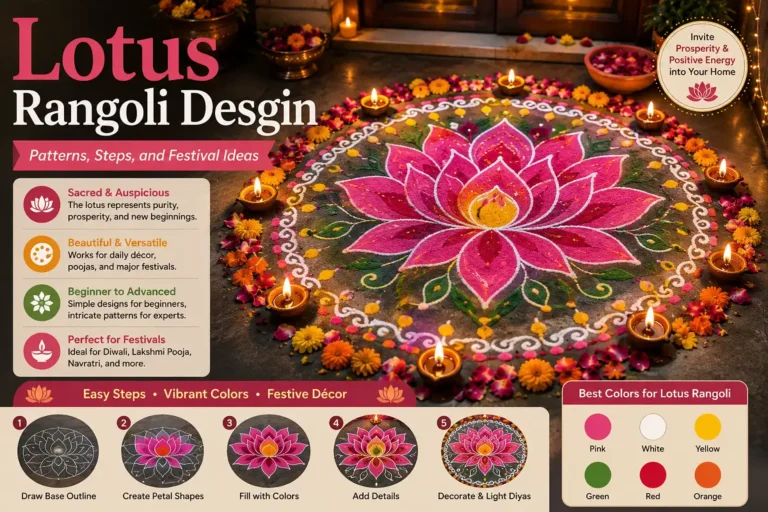
For a bloom shape with more detail, these lotus rangoli patterns for festive homes build on the same six-petal base without adding real complexity.
These patterns work well because they use repetition instead of precise measurement. Repetition is what makes floral rangoli for beginners look neat even on the first try.
Common Mistakes Beginners Make
Most trouble spots in floral rangoli for beginners come down to timing and spacing, not skill.
-
Placing Petals Too Far Apart
Gaps let the base outline show and break the visual flow. Press petals close, slightly overlapping.
-
Choosing Flowers That Wilt Fast
Delicate blooms like jasmine dry out within an hour outdoors. Marigold and hibiscus hold up far longer in direct sun.
-
Skipping the Outline Step
Freehand petal placement without a guide often drifts off-center. A light chalk line keeps the shape balanced.
-
Working With Wet Hands on Dry Petals
Water spots discolor petal edges quickly. Keep a separate dry area for handling.
Tips to Keep Your Floral Rangoli Fresh Longer
Mist it lightly. Mist the finished design lightly with water every few hours if it sits outdoors in heat. Avoid direct spray on the base outline, since chalk lines dissolve fast. Store extra petals in a cool, shaded spot, away from direct sun, until you need them.
In regions like Tamil Nadu and Kerala, floral rangoli often appears daily during Onam, refreshed each morning with new petals.
That daily practice is a good habit for anyone starting with floral rangoli for beginners, since fresh petals hold color and shape better than day-old ones.
FAQs
Can I make floral rangoli without a stencil?
Yes. For floral rangoli for beginners, a light chalk outline or even a finger-traced line in loose flour works fine for small designs.
How long does a floral rangoli design last?
Most floral designs stay fresh for six to eight hours outdoors, longer indoors or in shade.
Which flowers are cheapest for daily rangoli practice?
Marigold is the most affordable and widely available option across most Indian markets year-round.
Final Words
Floral rangoli for beginners rewards patience more than skill. Start small, sort your petals first, and build from the center out. Once the basic circle and border feel comfortable, larger festival patterns come easily.