Small Symmetry Rangoli: Easy Balanced Designs
Rangoli has been part of Indian homes for centuries. Families draw it at the doorway to welcome guests, festivals, and good fortune. But not everyone has a large floor or hours to spare.
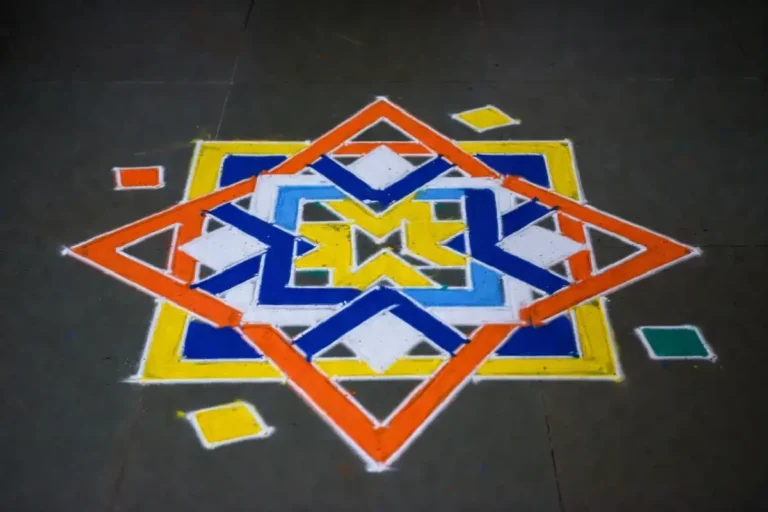
That is where a small symmetry rangoli helps. It is a compact, balanced design that fits in tight spaces and takes only a few minutes. Because the pattern repeats evenly, even a simple shape looks neat and finished.
This style suits daily decoration, small apartments, and pooja corners. If you are just starting out, these beginner-friendly rangoli designs are a great way to build confidence before trying bigger floor art.
What Is a Small Symmetry Rangoli?
A small symmetry rangoli is a tidy floor pattern built around balance. Every side of the design mirrors or repeats the other, so the whole thing feels even and calm.
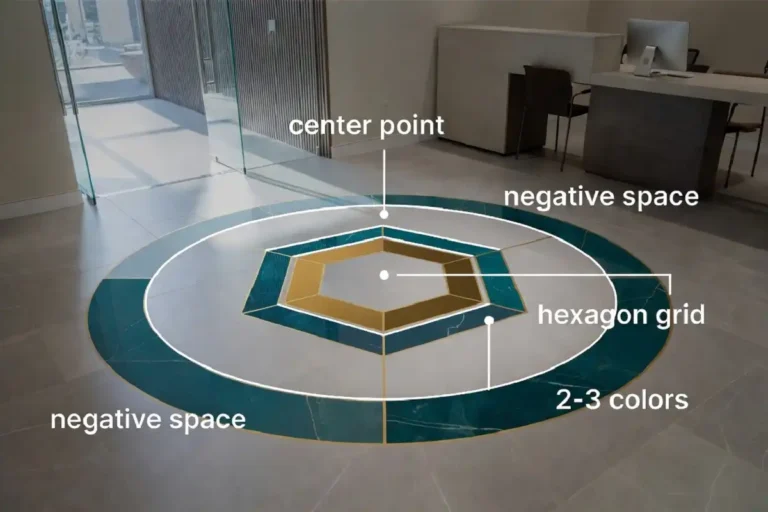
“Small” simply means the design covers a limited area, such as a doorstep or a single floor tile. “Symmetry” means the shapes are arranged around a centre point or a straight line.
There are three common kinds of balance:
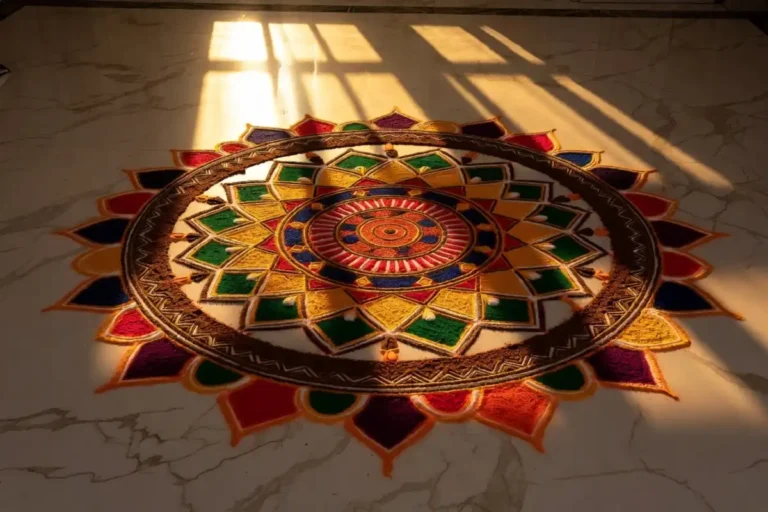
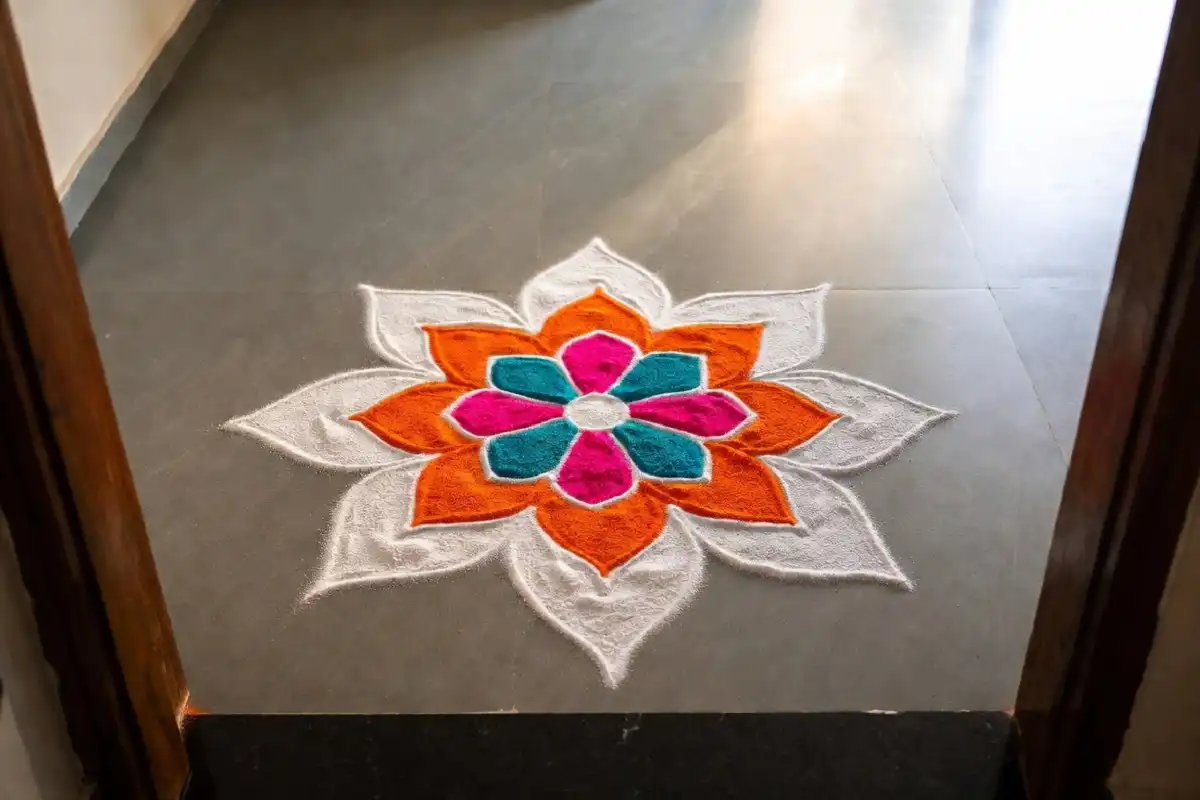
- Radial symmetry repeats a motif around a central point, like petals on a flower.
- Mirror symmetry copies one half onto the other, like a butterfly.
- Grid symmetry uses an even dot grid to keep the spacing exact.
This balanced layout gives rangoli its clean, welcoming look. It also makes the design easier to plan, since you only perfect one section and then repeat it.
Popular Types of Small Symmetry Rangoli
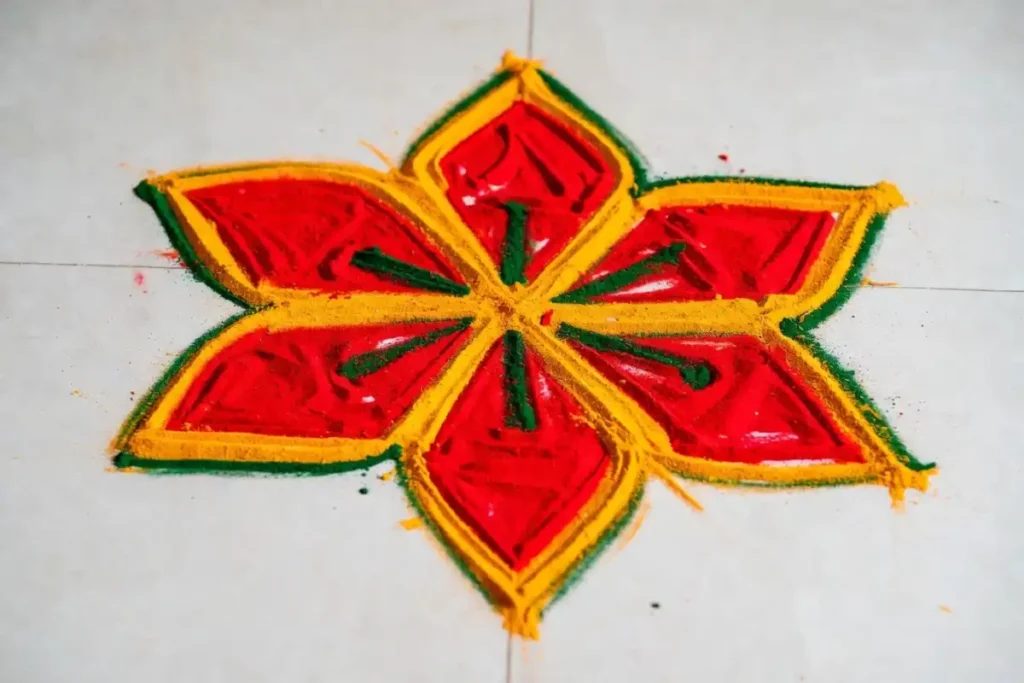
You can create many looks within the small symmetry rangoli style. Here are the most popular ones for small spaces.
Radial Flower Designs
These start from a single dot and spread outward in equal petals. They suit doorways and round corners. A five- or six-petal layout is enough for a quick daily design.
Mirror Border Designs
Here the left side reflects the right. They work well along the edge of a doormat or a rectangular tile. Add small diya or leaf shapes at each end for a festive touch.
Dot-Grid Kolam Designs
Rooted in South Indian tradition, these connect a grid of dots with curved, looping lines. The result is precise and elegant. They are ideal if you enjoy clean, geometric work.
Floral Symmetric Designs
Lotus and marigold shapes arranged in a circle never go out of style. For more flower ideas, this guide to simple petal rangoli pairs nicely with a symmetric base.
Geometric Symmetric Designs
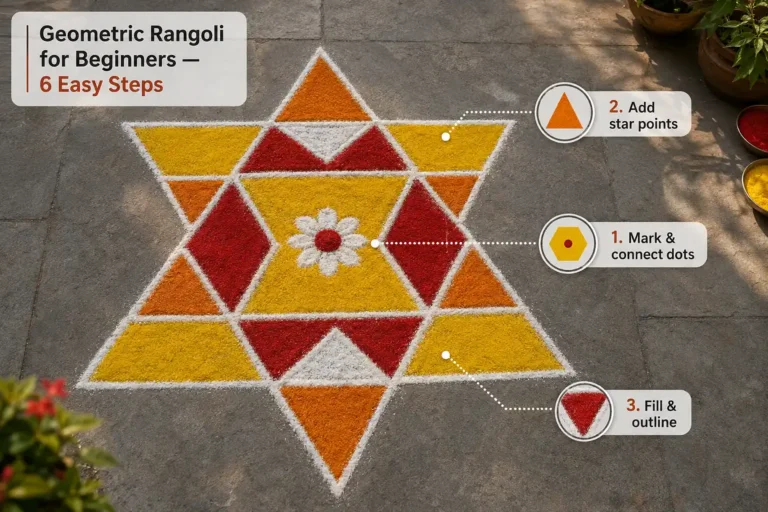
Triangles, squares, and diamonds repeated around a centre give a modern, mandala-like effect. They look striking even in plain white.
How to Make a Small Symmetry Rangoli Step by Step
Follow these simple steps to draw a balanced design at home.
- Pick a clean, flat spot. Wipe the floor so the colours stick well.
- Mark the centre. Place a small dot where the design will begin.
- Add a dot grid. A 3×3 or 5×5 grid keeps your spacing equal.
- Draw the central motif first. Start with a circle, star, or flower in the middle.
- Repeat the shape evenly. Copy the same motif around the centre, or mirror it side to side.
- Outline in white. White chalk or powder makes a crisp border before colour.
- Fill colours from the centre out. This keeps the symmetry intact as you work.
- Add final dots and dashes. Small accents tie the whole pattern together.
Work slowly the first few times. Speed comes naturally once the steps feel familiar.
Design Tips and Best Practices
A few small habits make any small symmetry rangoli look better.
Use a dot grid every time. It is the easiest way to keep both sides equal. Stick to three or four colours so the design stays clean rather than crowded.
Hold the powder between your thumb and forefinger for thin, steady lines. For fine details, a cotton bud or a paper cone gives you more control.
Practise the central motif on paper first. Once you can draw it evenly, repeating it on the floor becomes simple.
Cultural Importance of Symmetry in Rangoli
Rangoli is more than decoration. It marks a home as welcoming and auspicious, and it is often drawn to invite the goddess Lakshmi inside.
Symmetry carries its own meaning. The balanced lines stand for order, harmony, and positive energy at the entrance of a home.
Different regions have their own versions. In Tamil Nadu, the daily kolam uses dots and curved lines with careful geometric precision. In Bengal it is called alpana, and in Maharashtra it stays close to the classic rangoli style. You can read more about this heritage in Britannica’s overview of rangoli floor art.
Common Mistakes to Avoid
Beginners often make the same few errors. Avoiding these keeps your small symmetry rangoli neat and balanced.
- Skipping the dot grid, which leads to uneven, lopsided shapes.
- Choosing a pattern too large for the space.
- Using too many colours, which makes the design look messy.
- Filling colour before the outline is set.
- Rushing the repetition, which breaks the balance.
Slow, even spacing always beats speed. A small, neat design looks better than a rushed large one.
Latest Small Symmetry Rangoli Trends in 2026
This year, simple and sustainable styles are leading the way.
Minimalist single-colour designs are popular, especially white patterns on dark or wooden floors. Eco-friendly materials like rice flour and fresh flower petals are replacing synthetic powders in many homes.
Soft pastel shades and small metallic accents add a gentle, modern glow. Fusion designs that blend a mandala centre with geometric edges are also trending.
For renters and busy families, reusable stencils and stick-on rangoli make balanced designs quick and mess-free. You can explore more traditional and festive styles through this Google Arts & Culture feature on rangoli.
FAQs

What is a small symmetry rangoli?
Is a small symmetry rangoli good for beginners?
What materials do I need?
How long does it take to make one?
Which colours work best for small designs?
Conclusion
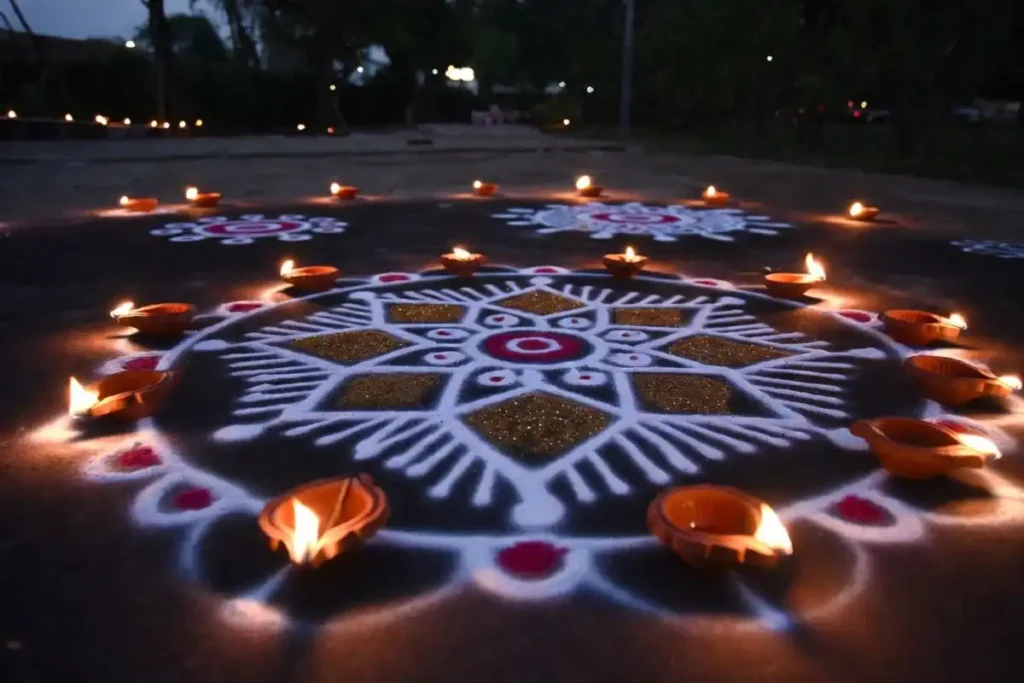
A small symmetry rangoli is one of the easiest ways to bring colour and tradition to your home. It fits any space, suits any skill level, and always looks balanced and welcoming.
Start with a dot grid, master one central motif, and build from there. With a little practice, you can draw a fresh design every morning or for any festival.
Ready to try more? These quick festival rangoli looks show how the same compact, balanced ideas work beautifully for celebrations.