Easy Wedding Rangoli Designs for Beautiful Decor
A wedding floor feels incomplete without color, and that is where an easy wedding rangoli brings the whole entrance to life. These designs greet guests with warmth, mark the space as sacred, and add a handmade charm that printed decor simply cannot match.
You do not need professional skills to make one. With a few colors, a steady hand, and a simple layout, anyone can decorate a doorway beautifully. If you are just starting out, these beginner-friendly rangoli designs will help you build confidence before the big day.
This guide walks you through ideas, steps, tips, and trends so your wedding entrance looks elegant without the stress.
What Makes a Wedding Rangoli Different
Wedding rangoli is larger, brighter, and more symbolic than everyday floor art. It usually appears at the main entrance, near the mandap, or around the welcome area where guests gather.
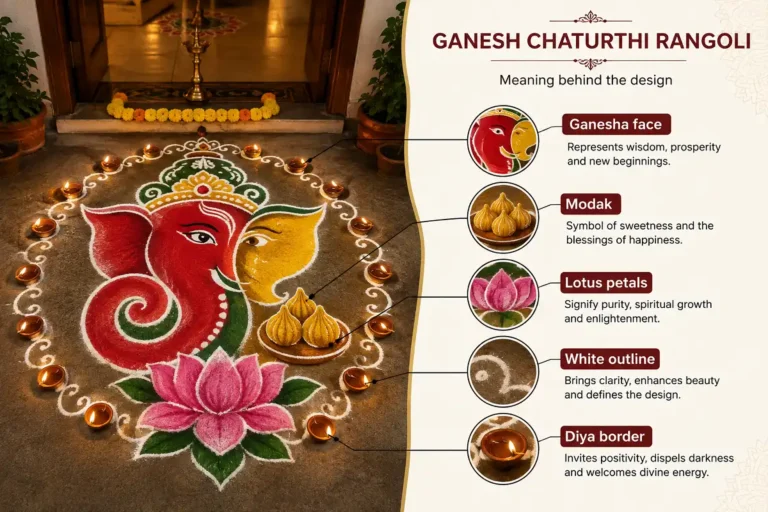
The patterns often include motifs tied to marriage, such as kalash, lotus, peacocks, diyas, and the names or initials of the couple. Gold and red tones dominate because they signal prosperity and celebration in Indian tradition.
The goal is balance. A wedding design should look rich and festive, yet stay clean and uncluttered so it photographs well in all those candid shots.
Easy Wedding Rangoli Ideas Anyone Can Try
You can pick a style based on your space, time, and skill level. Below are simple options that still look stunning.
Floral Welcome Circle
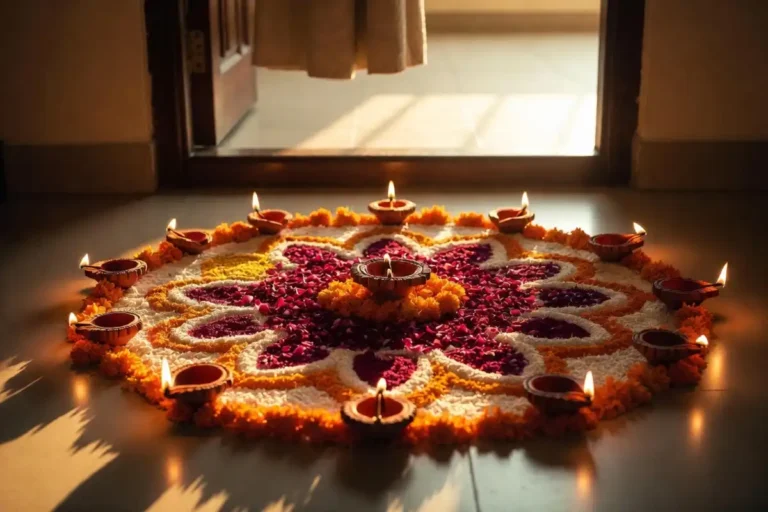
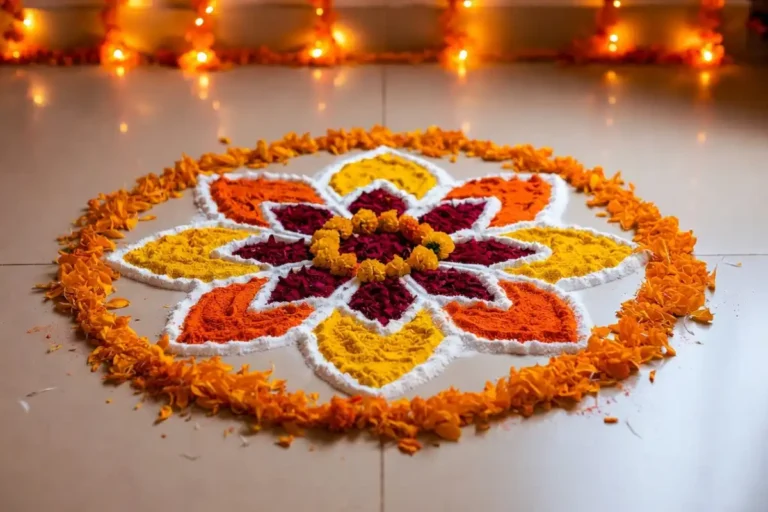
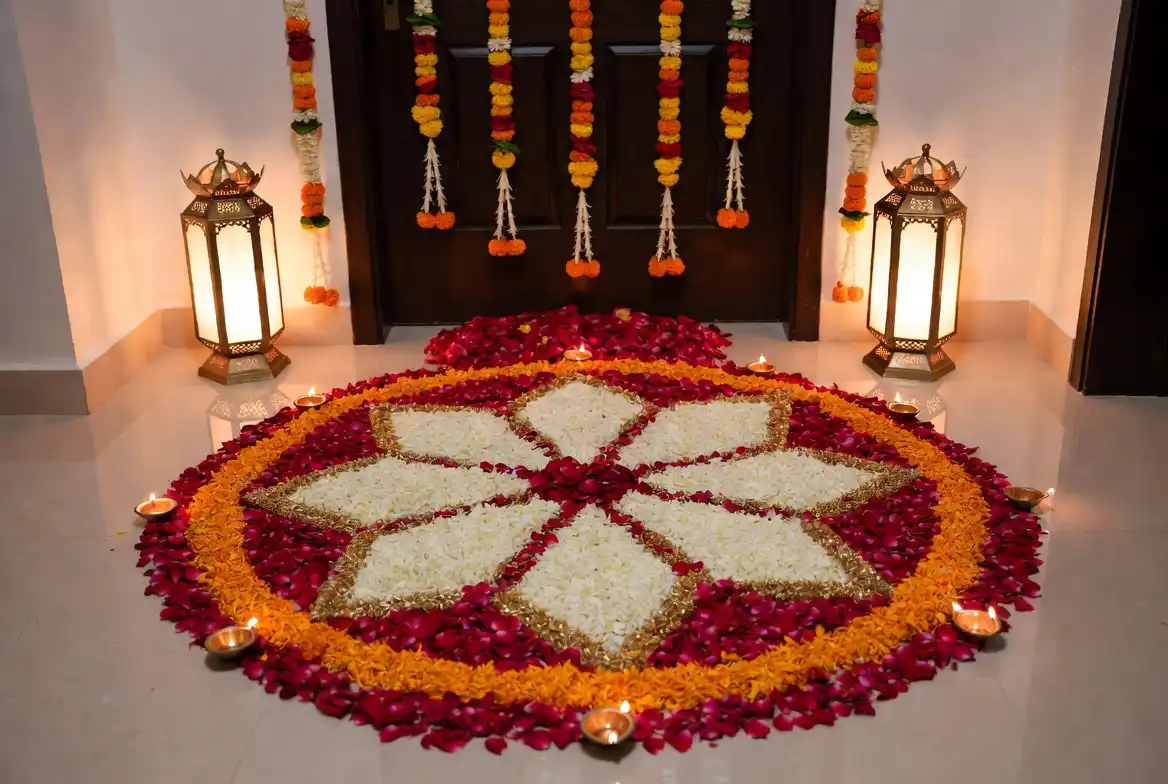
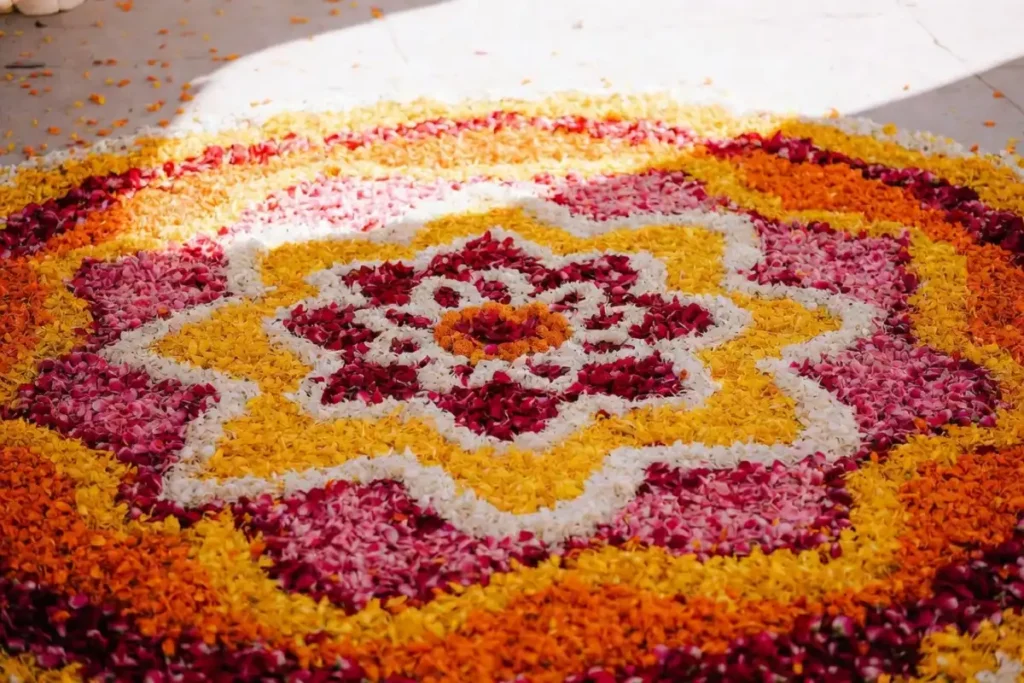
A round design filled with marigold and rose petals works beautifully near the entrance. Petals fill space fast, so even a large circle comes together quickly.
Couple Initials Design
Place the bride and groom’s initials in the center, framed by a vine or floral border. This personal touch is a favorite for engagement and reception areas.
Diya and Lamp Border
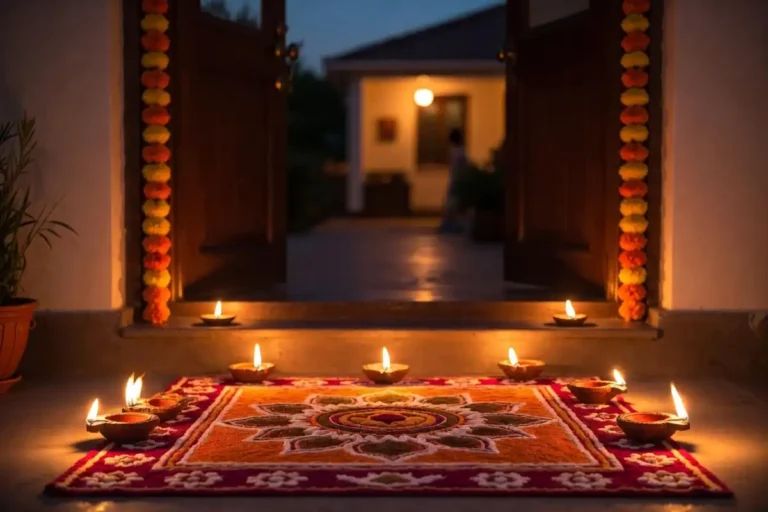
Surround a central motif with small diya shapes. When real tea lights are added at dusk, the whole rangoli glows for evening functions.
Symmetrical Dot Pattern
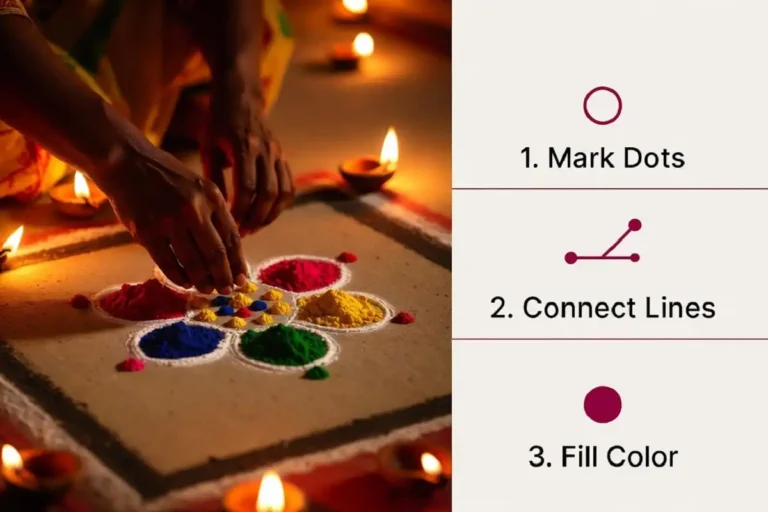
A grid of dots connected with simple curves creates a clean, traditional look. This is one of the most reliable styles for a fast and tidy finish.
Heart and Bell Motif
For a softer, romantic feel, combine gentle heart shapes with hanging bell outlines along the border.
Step-by-Step Guide to Make Easy Wedding Rangoli
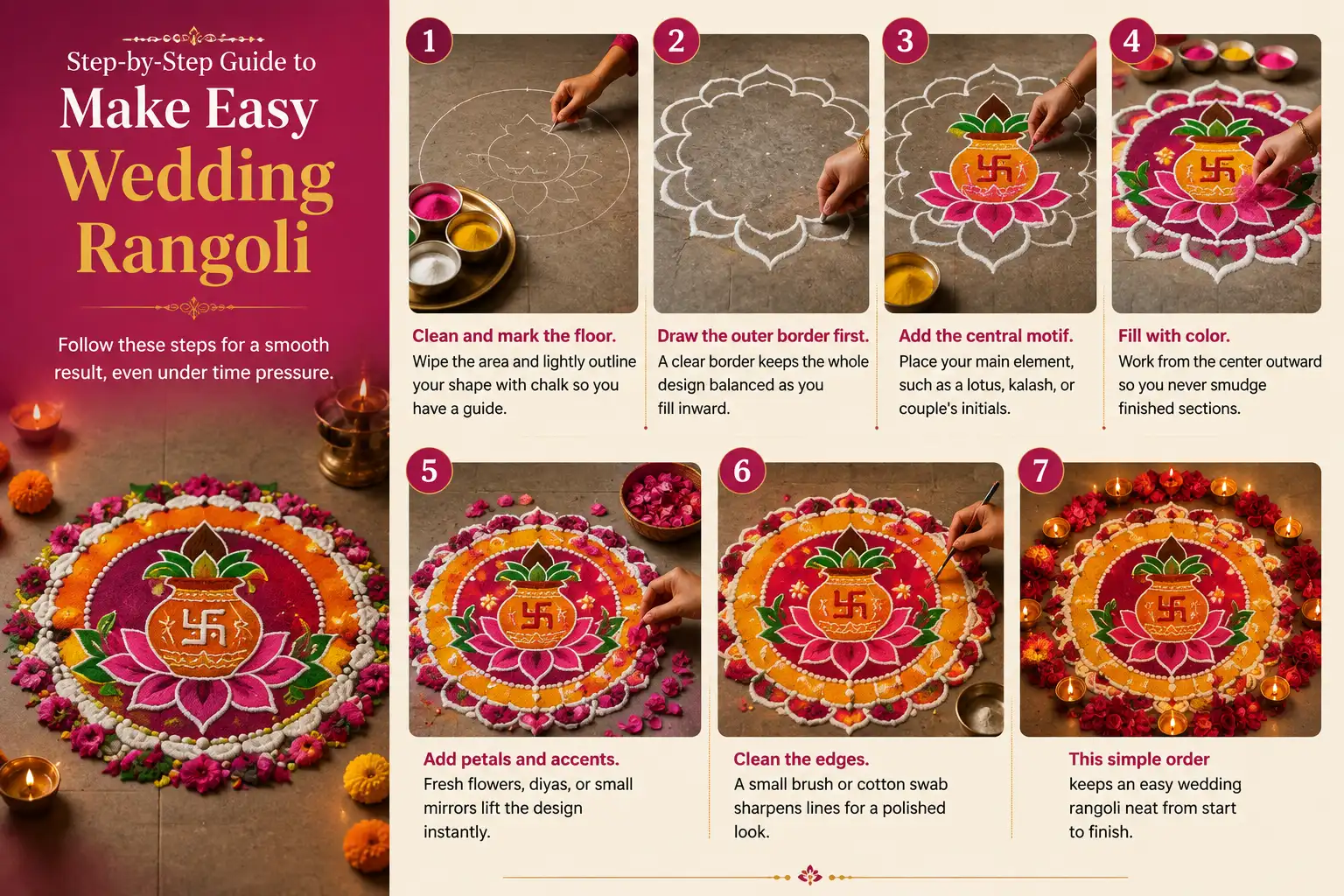
Follow these steps for a smooth result, even under time pressure.
Clean and mark the floor. Wipe the area and lightly outline your shape with chalk so you have a guide.
Draw the outer border first. A clear border keeps the whole design balanced as you fill inward.
Add the central motif. Place your main element, such as a lotus, kalash, or couple’s initials.
Fill with color. Work from the center outward so you never smudge finished sections.
Add petals and accents. Fresh flowers, diyas, or small mirrors lift the design instantly.
Clean the edges. A small brush or cotton swab sharpens lines for a polished look.
This simple order keeps an easy wedding rangoli neat from start to finish.
Design Tips and Best Practices
- Choose a color palette before you begin. Two or three main shades read as elegant, while too many colors can look busy in photos.
- Use a funnel or squeeze bottle for fine lines. This gives you control and a cleaner finish than pouring powder by hand.
- Plan the size for your space. A grand entrance can carry a big design, but a small porch looks better with a compact, detailed pattern.
- Do a quick practice run a day earlier. Even five minutes of testing builds muscle memory for the real thing.
For inspiration on layered, modern looks, explore these easy 3D rangoli ideas that add depth without extra difficulty.
Cultural Importance at Weddings
Rangoli has deep roots in Indian celebrations and is considered a sign of welcome and good fortune. According to Britannica, these floor decorations are a traditional folk art created during festivals and special occasions across the country.
At weddings, the design is believed to invite blessings and prosperity into the union. The act of making it together also becomes a shared family moment in the days before the ceremony.
Regional styles vary too. Kolam in the south, alpana in the east, and mandana in the west each bring their own patterns to the celebration.
Common Mistakes to Avoid
- Starting without a rough outline. Freehand work on a large wedding design often ends up uneven.
- Overcrowding the center. Leaving some open space makes the motif stand out and looks more refined.
- Using cheap, dull powders for the main event. Vibrant colors photograph far better under wedding lighting.
- Rushing the border. A wobbly outer line is the first thing the eye notices, so take your time there.
- Leaving outdoor designs unprotected. A light mist of water or fixative helps loose powder stay in place against wind.
Latest Trends in Wedding Rangoli
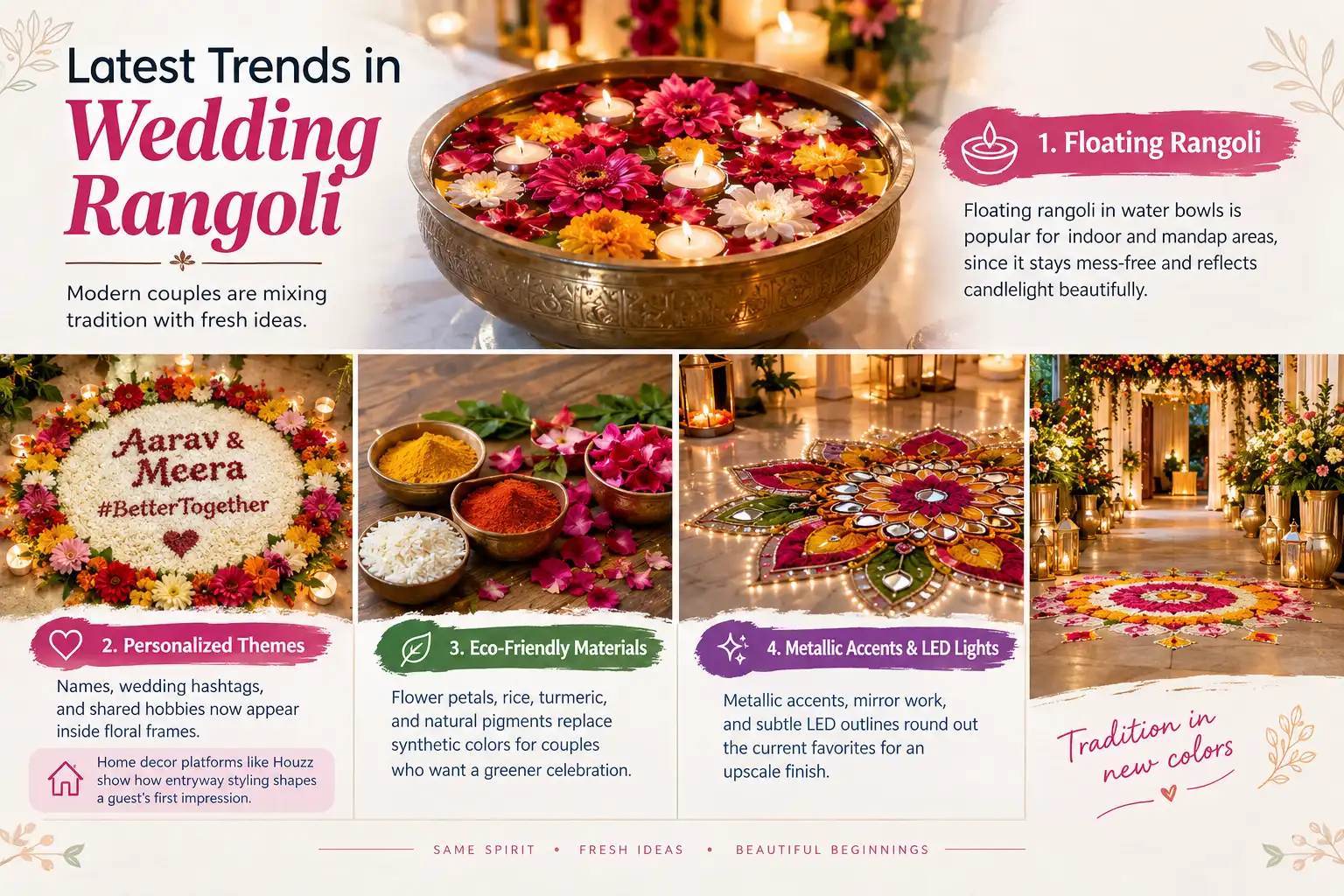
Modern couples are mixing tradition with fresh ideas.
Floating Rangoli
Popular for indoor and mandap areas, floating designs in water bowls stay mess-free and reflect candlelight beautifully.
Personalized Themes
Names, wedding hashtags, and shared hobbies now appear inside floral frames. Home decor platforms like Houzz show how entryway styling shapes a guest’s first impression.
Eco-Friendly Materials
Flower petals, rice, turmeric, and natural pigments replace synthetic colors for couples who want a greener celebration.
Metallic and LED Accents
Metallic accents, mirror work, and subtle LED outlines round out the current favorites for an upscale finish.
Conclusion
An easy wedding rangoli is one of the simplest ways to make a celebration feel grand and welcoming. With the right colors, a clear layout, and a calm step-by-step approach, you can create something memorable without stress.
Start small, practice your border, and let fresh flowers and diyas do the heavy lifting. For more seasonal styles to pair with your big day, browse this festival rangoli inspiration and keep your creative ideas flowing.
Your entrance is the first thing guests see, and a thoughtful easy wedding rangoli ensures it leaves a lasting impression.
FAQs
How long does an easy wedding rangoli take to make?
A simple design takes around 30 to 45 minutes. Larger, detailed patterns may need one to two hours with a helper.
What colors are best for a wedding rangoli?
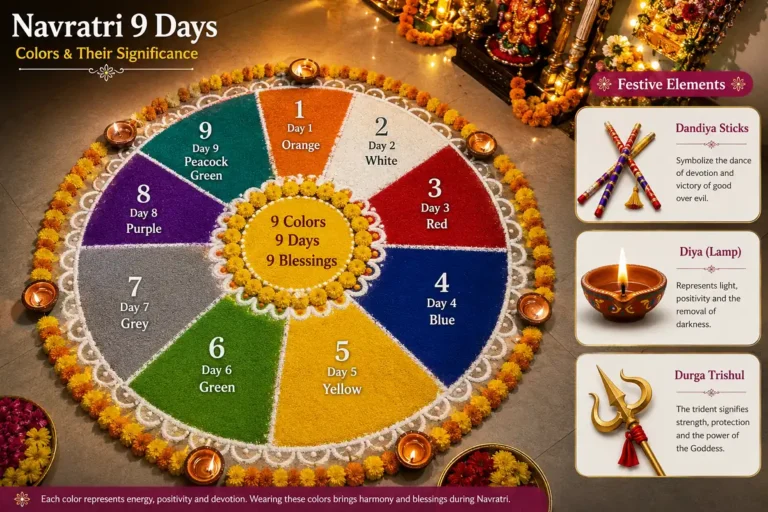
Red, gold, orange, pink, and white are classic choices because they feel festive and photograph well.
Can beginners make an easy wedding rangoli?
Yes. Start with petals, dots, and simple borders, then add detail as you gain confidence.
What can I use instead of rangoli powder?
Fresh flower petals, colored rice, chalk, and natural pigments all work well and are easy to handle.
How do I keep my rangoli from smudging?
Work from the center outward, keep your hands clean, and lightly fix outdoor designs to hold the color.