Try These Modern Simple Rangoli Designs at Home
Rangoli has been part of Indian homes for generations. Today, however, many people are looking for designs that are quick to create, tidy in appearance, and suitable for contemporary spaces. That is where modern simple rangoli becomes especially useful.
These designs preserve the charm of traditional floor art while removing much of the complicated detailing. Whether you are decorating for a festival or simply adding a little color to your entrance, a modern simple rangoli can make the space feel special. You do not need advanced artistic skills—just a little practice and a few colors.
What Makes a Rangoli Modern and Simple
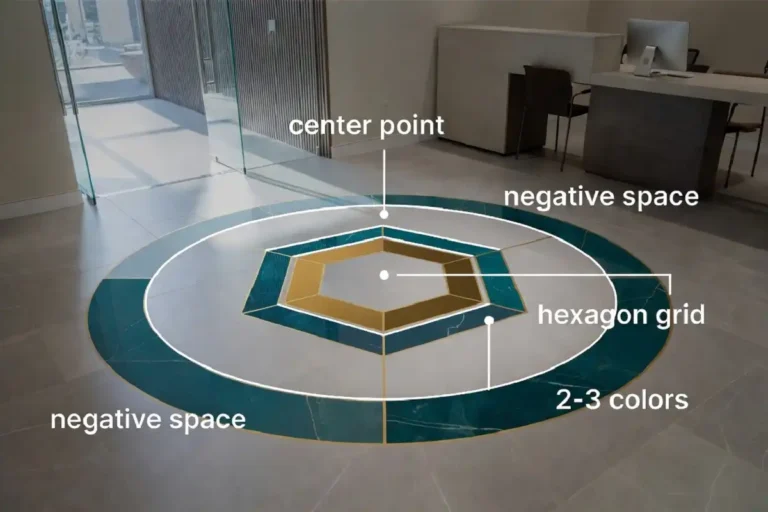
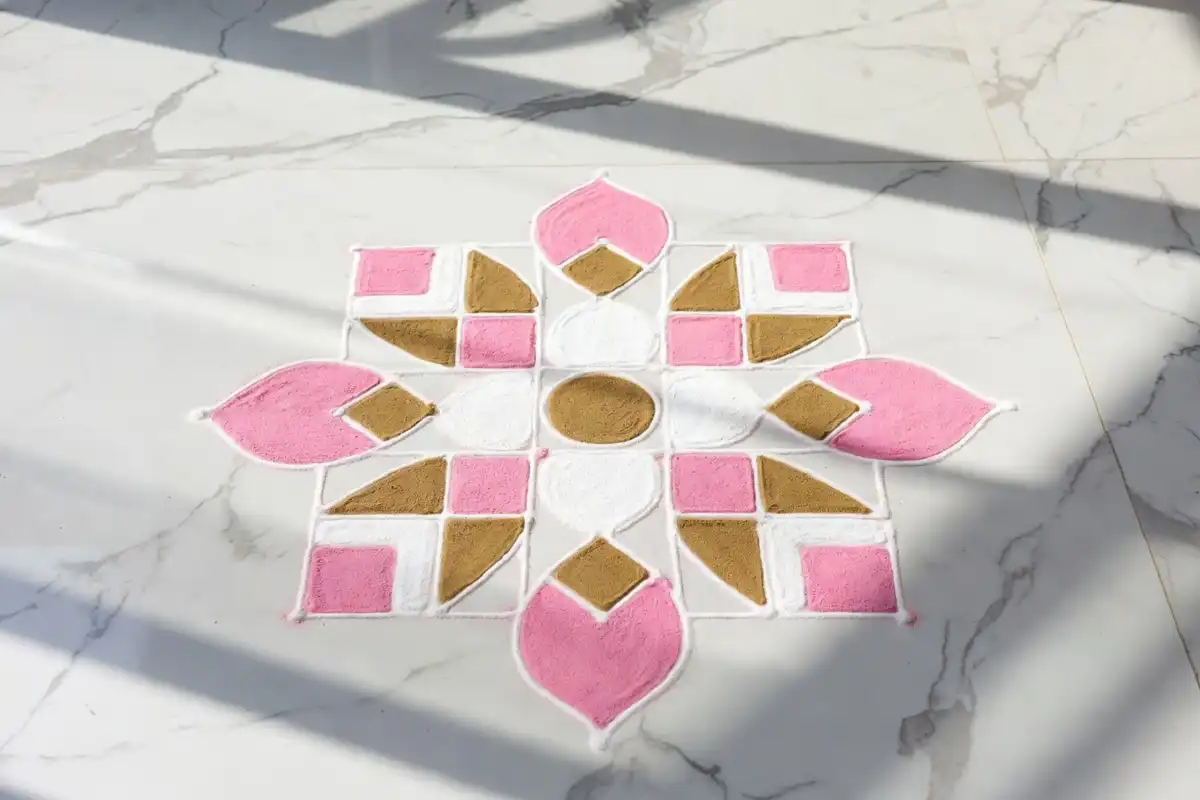
A modern simple rangoli focuses on clean lines, generous open areas, and a restrained color palette. Traditional designs may contain many small details, while contemporary versions often allow the pattern to breathe. Geometry, gentle curves, or a repeated floral element can be enough to create a beautiful result.
Some of the defining characteristics include:
- Using fewer colors, usually around two to four shades.
- Choosing symmetrical forms such as circles, triangles, and hexagons.
- Allowing negative space to become part of the overall composition.
- Creating smooth, controlled lines with a cone or stencil.
- Finishing the pattern with a clean border.
Because these elements are straightforward to control, beginners can achieve a polished look without spending several hours on the floor.
Why Modern Simple Rangoli Is Popular Right Now
Modern lifestyles are busy. Although festivals continue to bring people together and the tradition of decorating the entrance remains strong, many families have less time for highly elaborate rangoli designs.
Modern simple rangoli offers an ideal middle ground. It keeps the spirit of the tradition while fitting comfortably into a busy routine. Many designs can be completed within 15 to 30 minutes, and the clean structure means that a slightly imperfect line does not necessarily affect the overall result.
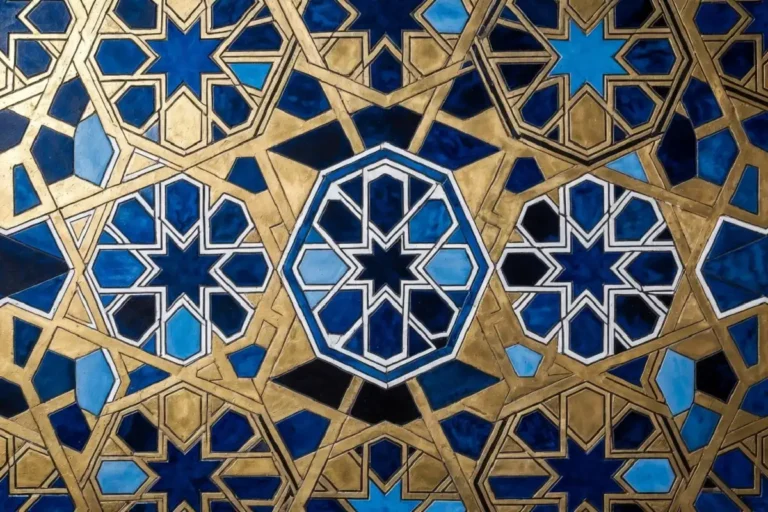
Rangoli-inspired patterns have also found their way into contemporary interiors. Similar motifs can be seen in tiles, rugs, wall art, and other decorative elements. This connection between traditional Indian art and modern interior styling has helped simple rangoli reach a wider audience.
Best Patterns for Modern Simple Rangoli
Geometric Circle Designs
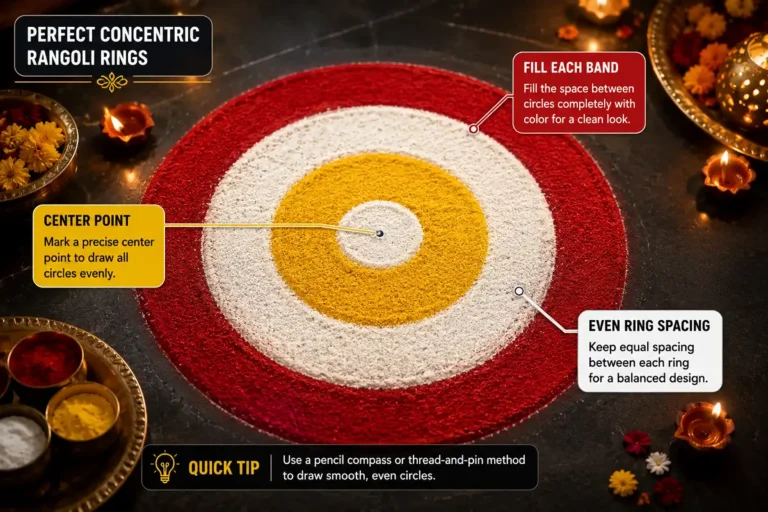
Circles are among the easiest shapes to work with. Even a few concentric circles filled with alternating shades can create an eye-catching design. You can place a small flower or dot arrangement in the center and allow the surrounding circles to complete the composition.
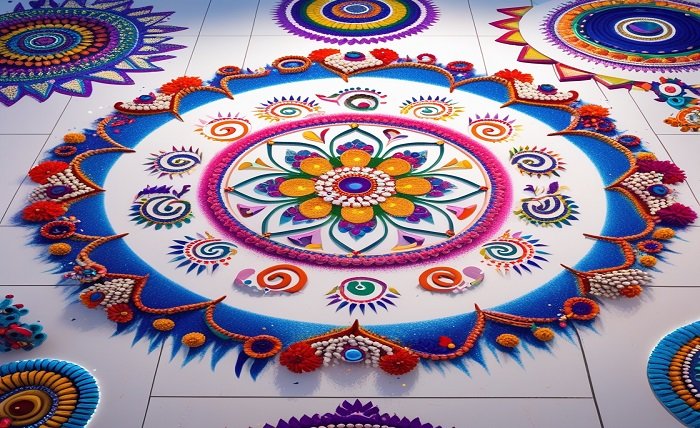
For a slightly more detailed version, divide the outer circle into sections and fill each section with a different shade. This produces a mandala-inspired appearance without requiring complicated freehand curves.
For additional inspiration, explore simple circle rangoli designs for any occasion .
Dot-Grid (Kolam) Style
South Indian kolam traditionally begins with a grid of dots that acts as the foundation for continuous loops and curves. Bringing this method into a modern rangoli style creates something that feels structured, elegant, and rooted in tradition.
Beginners can start with a 5×5 or 7×7 grid. Connect the dots with smooth curves that travel around the points without crossing. Although the final result can look complicated, the underlying process follows a simple and repeatable system.
If you like this style, see beautiful simple traditional kolam ideas for your home for patterns that can be adapted to your own design.
Petal and Leaf Patterns
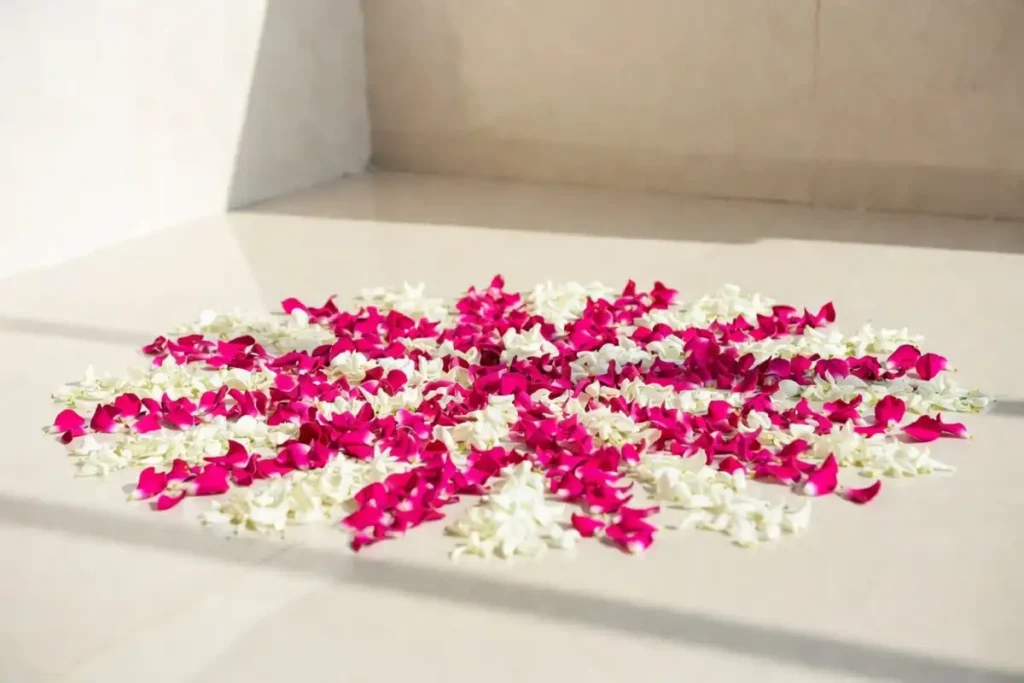
A simple lotus-inspired flower with six or eight petals is a classic choice for modern rangoli. Draw the petals first, keep their spacing balanced, and add a small circular center. The flower can remain the main feature or be framed with a delicate geometric border.
Leaf motifs can be handled in a similar way. Repeating mirror-image leaves around a circle creates a wreath-like arrangement that works beautifully near entrances, prayer spaces, and outdoor areas.
Minimalist Line Art
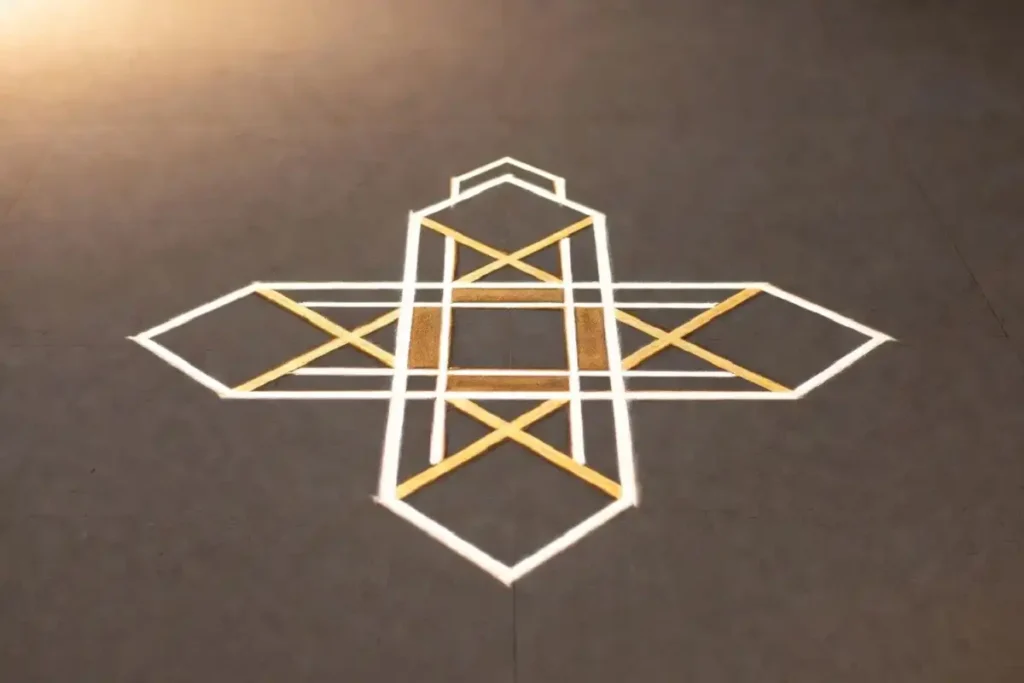
Some contemporary rangoli designs use almost no filled color. Instead, they depend on outlines to create their visual impact. Thin white lines on a darker surface or dark outlines against a light floor can give the design a clean, graphic appearance.
This is also one of the quickest styles to make. A simple outline can be completed in just a few minutes while still creating an attractive focal point.
Colors That Work Best for Modern Simple Rangoli
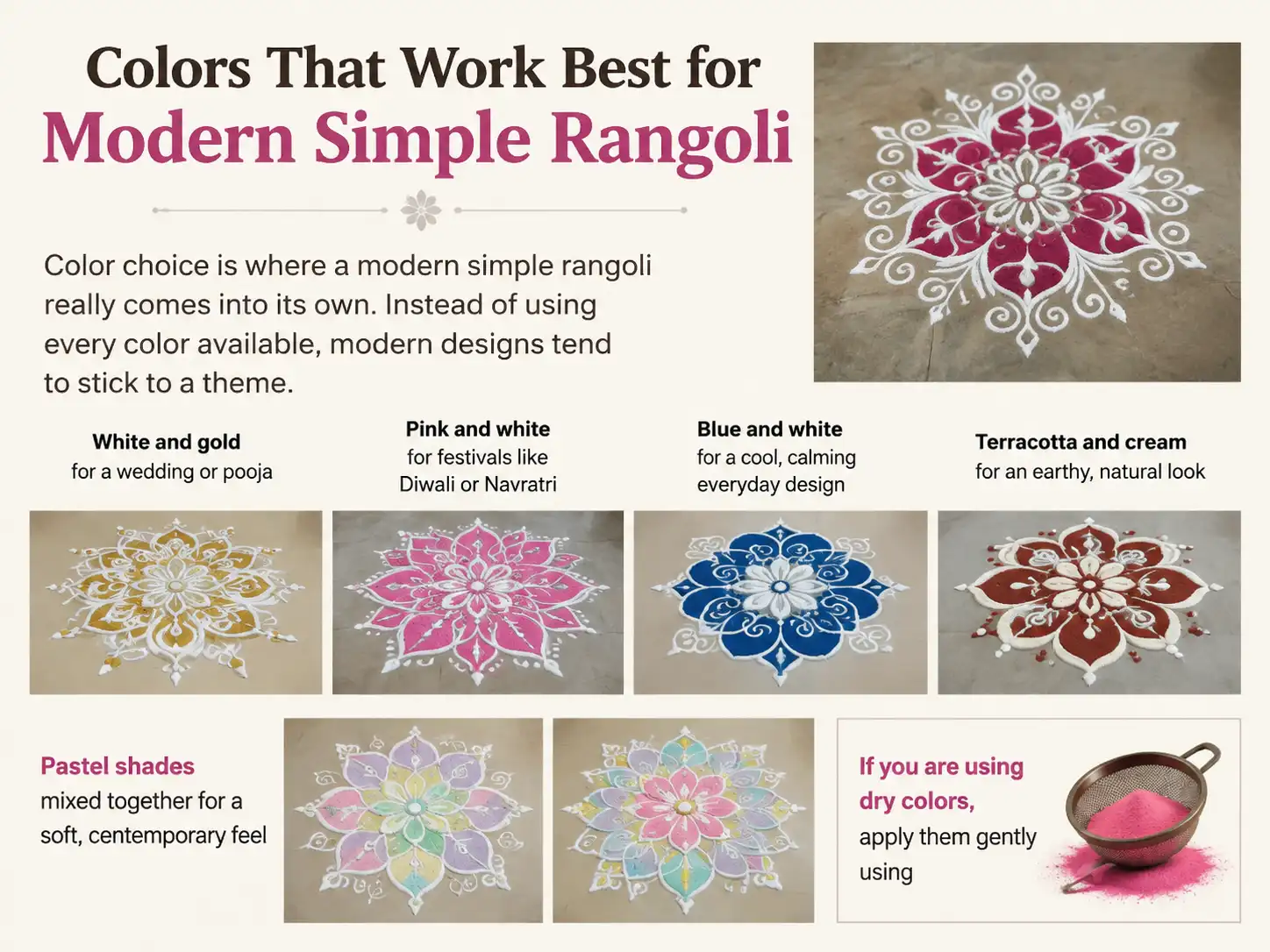
Color selection is one of the easiest ways to give a simple rangoli a modern personality. Instead of mixing every shade available, contemporary designs usually follow a carefully chosen color theme.
Some combinations that work particularly well are:
- White and gold for weddings or pooja settings.
- Pink and white for celebrations such as Diwali or Navratri.
- Blue and white for a calm, everyday appearance.
- Terracotta and cream for an earthy and natural style.
- Soft pastel shades combined for a gentle contemporary look.
When working with dry powder, a paper cone can help you create cleaner edges and controlled lines. For a natural alternative, flower petals can replace colored powder and add both texture and fragrance.
Tools and Materials You Need
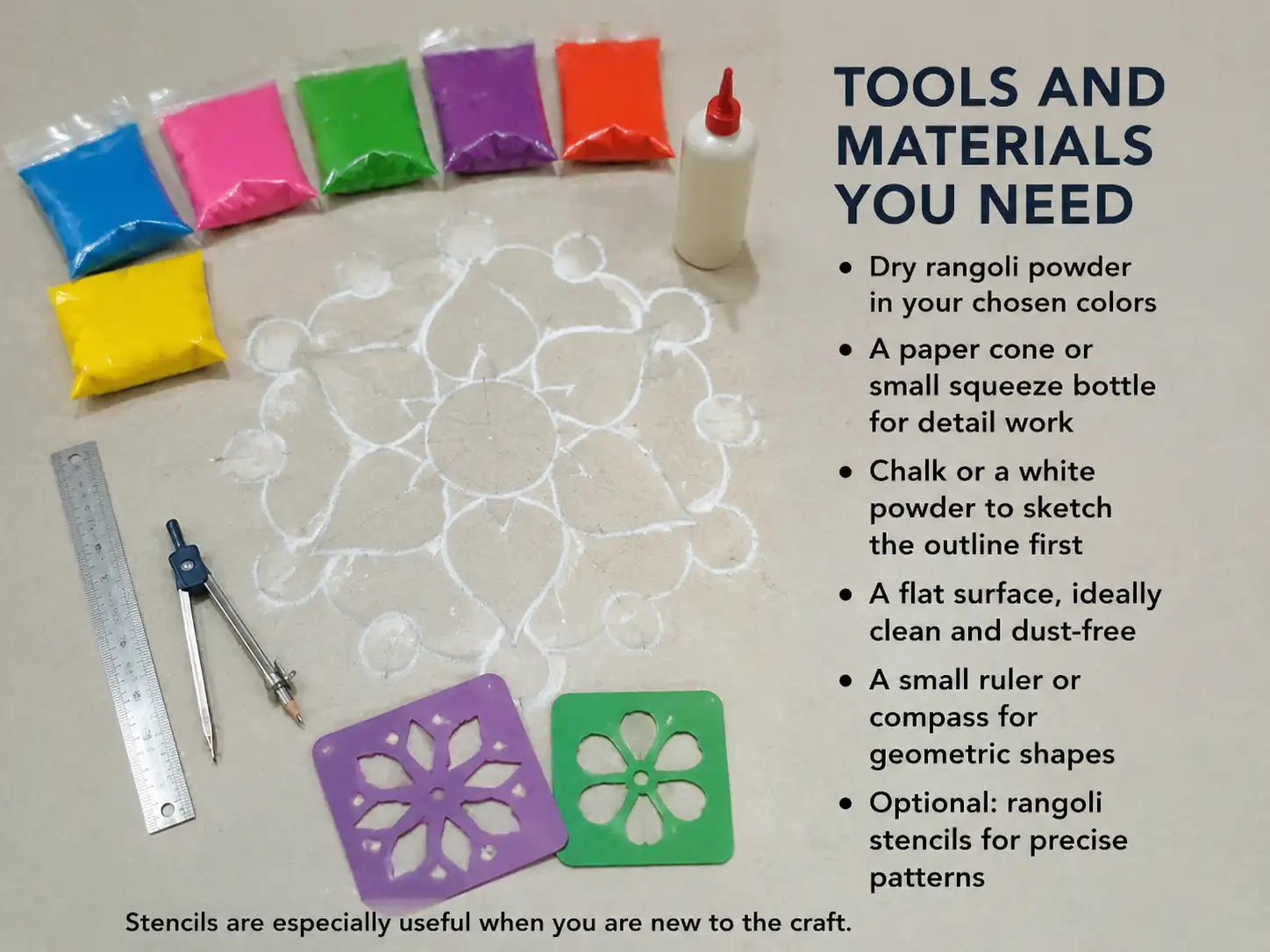
Creating a modern simple rangoli does not require a large collection of supplies. A few basic materials are enough to get started.
- Dry rangoli powder in the colors you want to use.
- A paper cone or small squeeze bottle for detailed lines.
- Chalk or white powder for sketching the design beforehand.
- A flat, clean, and dust-free surface.
- A small ruler or compass for geometric elements.
- Optional rangoli stencils for precise shapes.
Stencils can be especially helpful for beginners. Place the stencil on the floor, fill its openings with powder, and carefully lift it away to reveal a clean shape.
Tips for Beginners Making Modern Simple Rangoli
Starting is often the most difficult part. After making several designs, your hand becomes steadier and you naturally develop a better sense of spacing and proportion. These simple habits can make your first attempts much easier.
Sketch before filling: Use chalk or white powder to mark the main shapes first. This allows you to correct proportions and spacing before adding your final colors.
Build from the center outward: Begin with the central element and gradually add the surrounding layers. This helps maintain balance throughout the design.
Keep a damp cloth nearby: Small mistakes are normal. A damp cloth can remove unwanted smudges before they become difficult to correct.
Use less powder: Thin, even layers generally create a cleaner appearance than thick, uneven fills.
Check the design from above: Taking a photograph directly above the rangoli makes it easier to notice spacing problems or areas that are not balanced.
If you are completely new to rangoli, you can also explore quick rangoli ideas for beginners for easy designs to practice.
Modern Simple Rangoli for Festivals and Special Occasions
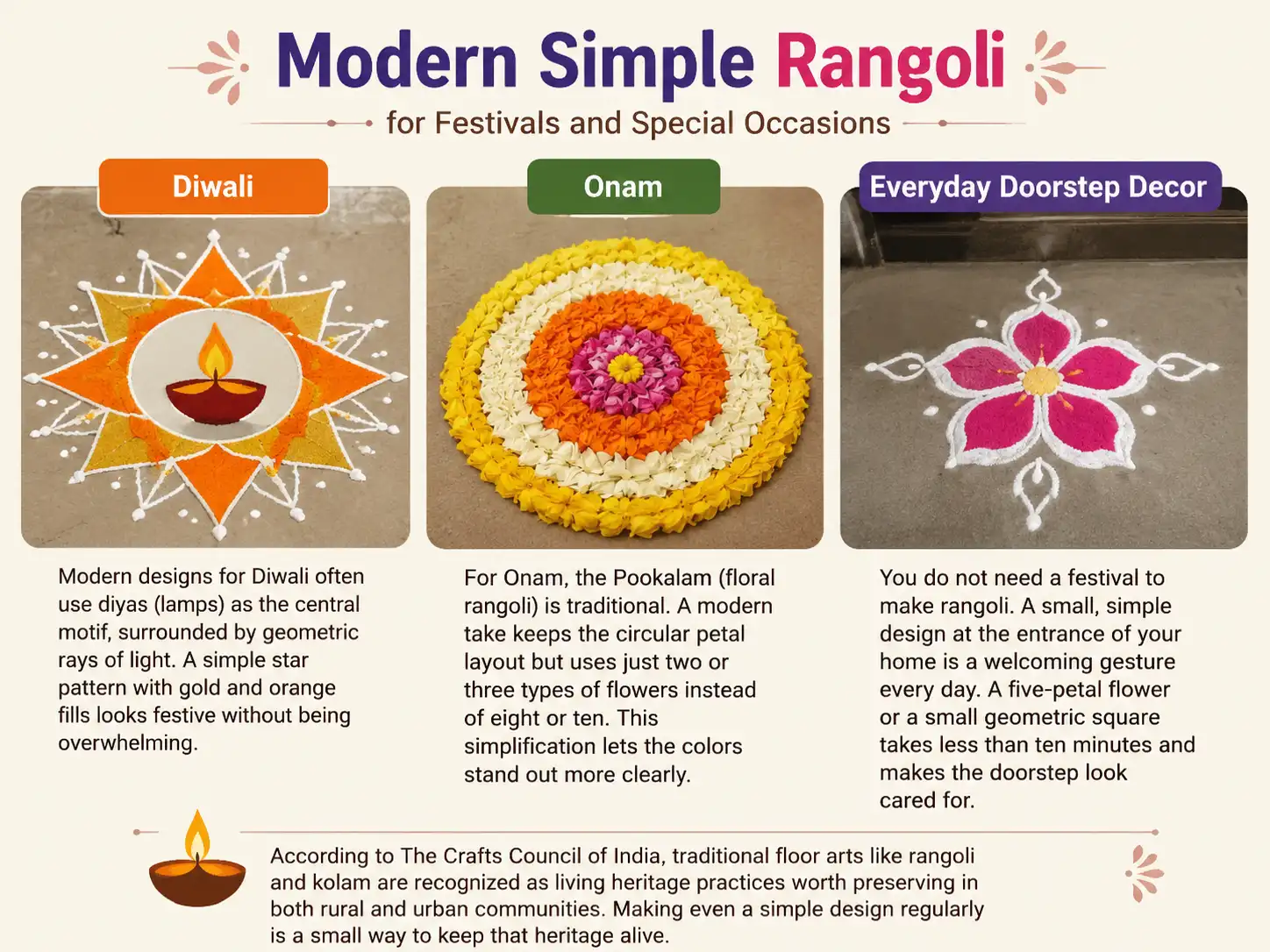
Diwali
Diwali is one of the most popular occasions for rangoli. Contemporary Diwali designs often place a diya or lamp at the center and surround it with geometric rays. A simple star-like pattern using gold and orange can create a festive appearance without making the design overly complicated.
Onam
Pookalam, the traditional floral rangoli associated with Onam, is normally arranged in circular layers of flowers. A modern interpretation can keep that circular structure while limiting the design to two or three types of flowers. The simpler arrangement allows each color to stand out.
Everyday Doorstep Decor
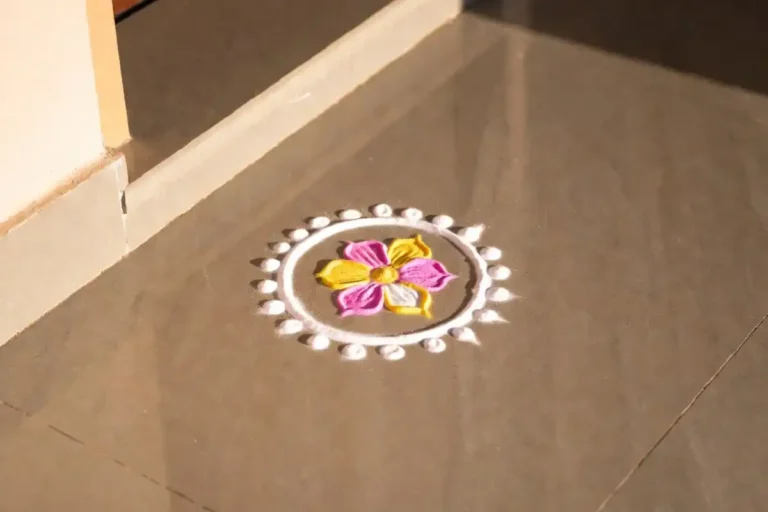
Rangoli does not need to be reserved for festivals. A small design at the entrance can make an ordinary day feel more welcoming. A five-petal flower or a compact geometric square can take less than ten minutes while still adding charm to the doorway.
Traditional floor-art practices such as rangoli and kolam are part of India’s living decorative heritage. Creating even a small design regularly can therefore be a simple way to continue and appreciate that tradition.
Modern Simple Rangoli vs. Traditional Rangoli
| Feature | Modern Simple Rangoli | Traditional Rangoli |
|---|---|---|
| Colors used | 2 to 4 | Often 6 or more |
| Time to complete | 15 to 30 minutes | 1 to 3 hours |
| Complexity | Low to medium | Medium to high |
| Best for | Beginners and daily use | Festivals and competitions |
| Tools needed | Basic | May require brushes and guides |
Neither approach is better than the other. The right choice depends on your available time, experience, and the occasion for which you are creating the rangoli.
What Experts Say About Simple Rangoli as an Art Form
The move toward simpler rangoli does not necessarily mean that the tradition is being lost. Instead, simplifying the process can make the practice accessible to more people. When more people participate, the art has a stronger chance of continuing across generations.
South Asian decorative-art collections also demonstrate that floor-art traditions have adapted over time according to the materials, settings, and amount of time available to the people creating them. In that sense, simplification can be viewed as part of the natural evolution of the art.
FAQs
What is modern simple rangoli?
Modern simple rangoli is a contemporary interpretation of traditional Indian floor art. It emphasizes clean shapes, a limited number of colors, and open spaces to create a design that is both attractive and relatively quick to make.
Can beginners make a modern simple rangoli?
Yes. In fact, modern simple rangoli is particularly suitable for beginners because it relies on basic shapes and fewer details. Starting with a circle or a simple flower is an easy way to build confidence.
How long does it take to make a modern simple rangoli?
Most modern simple rangoli designs can be completed in approximately 15 to 30 minutes. Once you become comfortable with the technique, extremely minimal outline designs can take less than ten minutes.
What materials do I need for a modern simple rangoli?
Basic supplies include rangoli powder in one to four colors, a paper cone or squeeze bottle for detailed work, and chalk for creating the initial outline. Rangoli stencils are optional but can be useful for beginners.
Is modern simple rangoli suitable for everyday use?
Yes. A small rangoli near the entrance can be used as an everyday decoration. A simple flower, geometric square, or outline design can be completed quickly and still make the doorway feel welcoming.
What is the difference between rangoli and kolam?
Rangoli is a broader term used for decorative floor art across India, while kolam refers specifically to a South Indian tradition that commonly uses a grid of dots as its foundation. Both traditions can be adapted into simple, contemporary designs.
Conclusion
Modern simple rangoli brings the beauty of a centuries-old tradition into everyday life without making the process feel overwhelming. Clean shapes, thoughtful colors, and a relaxed approach to detail are enough to create something genuinely beautiful.
Whether you are preparing for a festival, welcoming guests, or simply brightening your doorway in the morning, a small rangoli can make a noticeable difference. Begin with a simple pattern, practice regularly, and allow your own style to develop naturally. Rangoli has always evolved with the people who create it, and there is plenty of space for your own interpretation within that tradition.