Easy 5 Minute Rangoli Design for Every Occasion
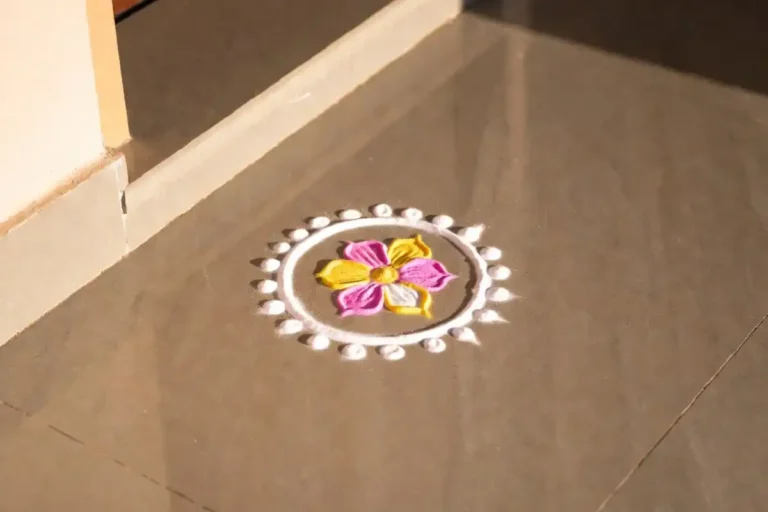
Not everyone has hours to spare before a festival or a guest arrives. That is where a 5 minute rangoli design becomes your best friend. These quick patterns look beautiful without asking too much of your time or skill. Whether you are a student, a working professional, or someone new to rangoli, these designs fit perfectly into a busy schedule. With a few colors, a steady hand, and a simple idea, you can brighten any doorstep or floor in just minutes.
Why a 5 Minute Rangoli Design Works So Well
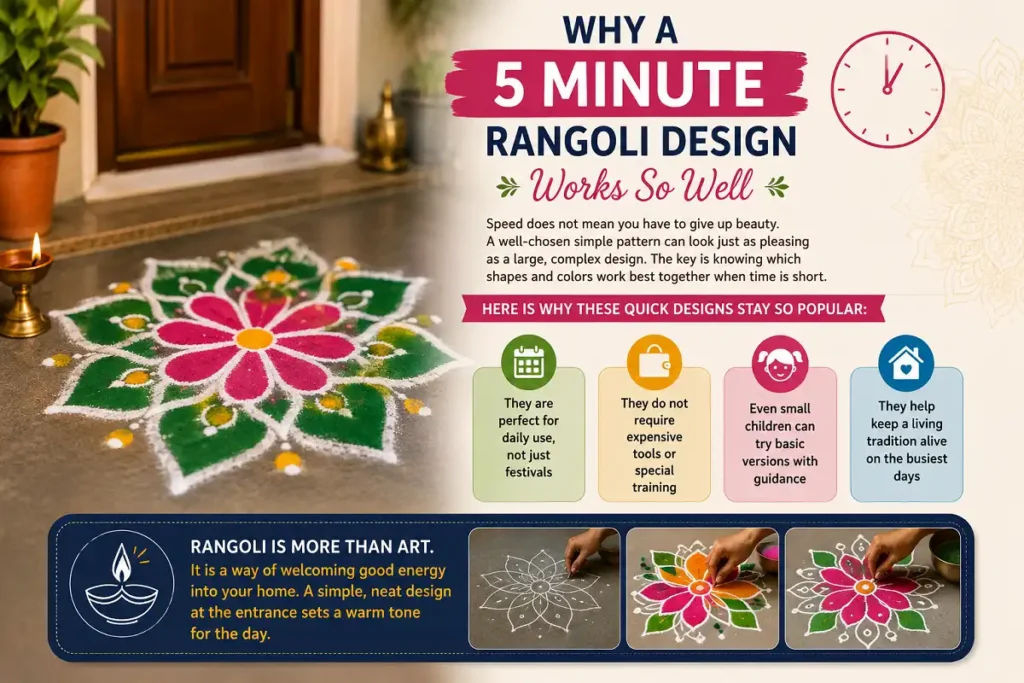
Speed does not mean you have to give up beauty. A well-chosen simple pattern can look just as pleasing as a large, complex design. The key is knowing which shapes and colors work best together when time is short.
Here is why these quick designs stay so popular:
Rangoli is more than art. It is a way of welcoming good energy into your home. A simple, neat design at the entrance sets a warm tone for the day.
Best Styles for a 5 Minute Rangoli Design
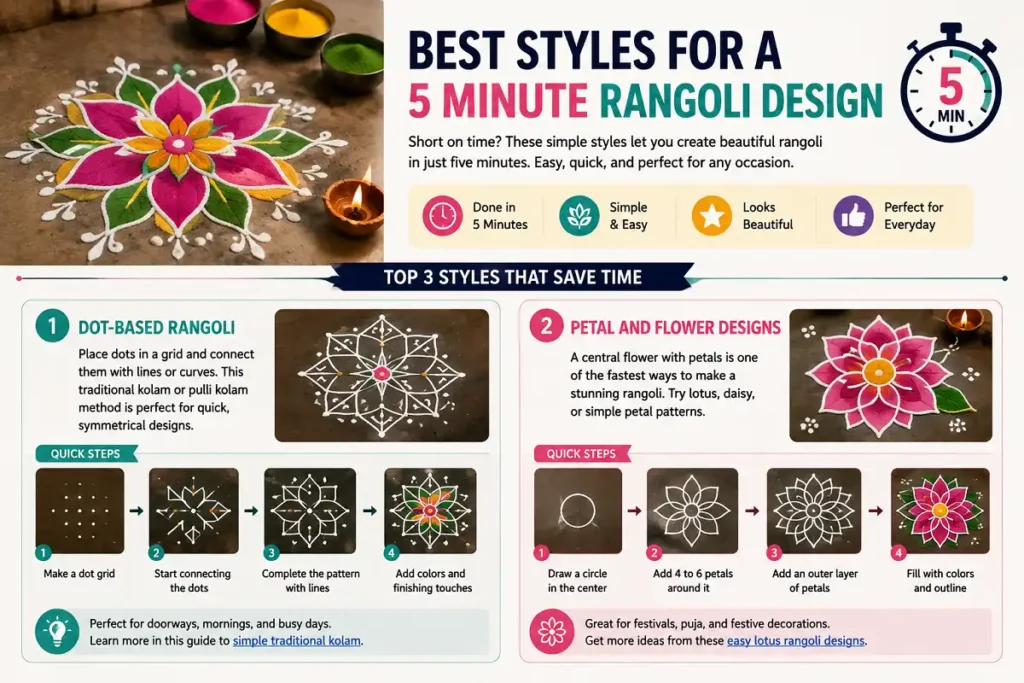
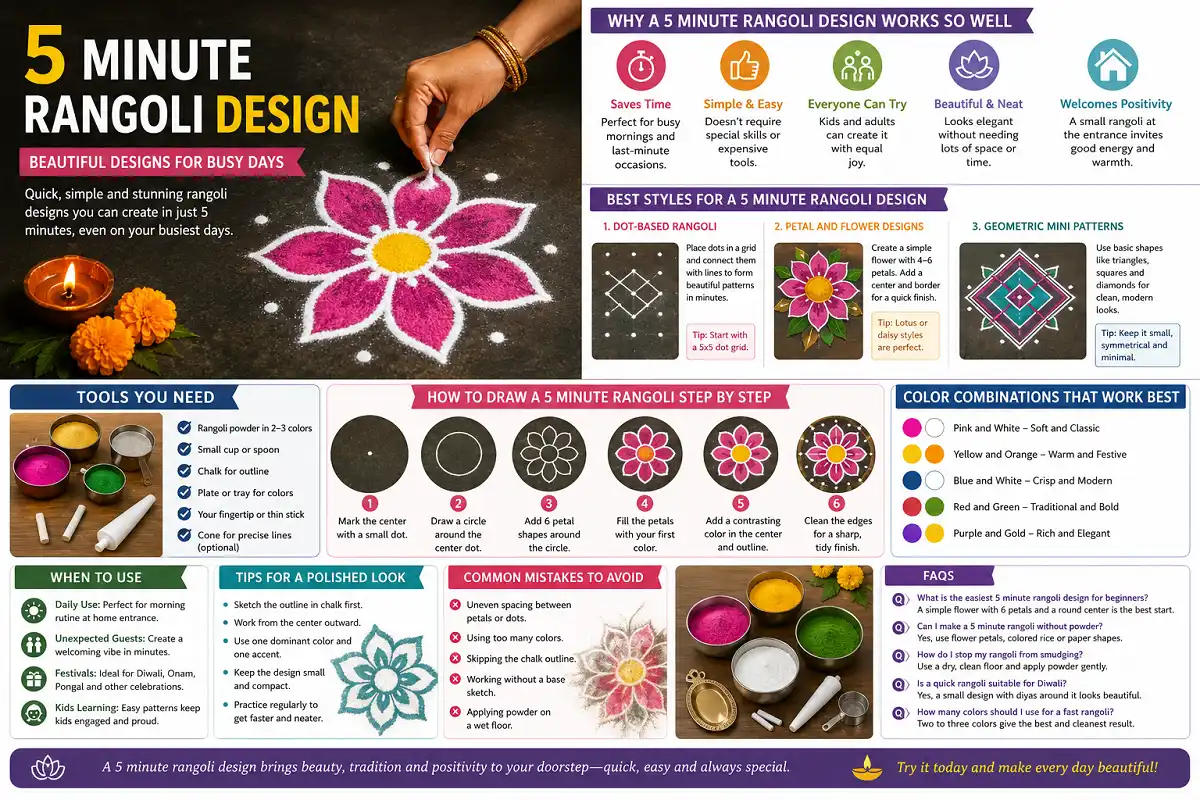
Choosing the right style is the first step. Some patterns lend themselves to speed better than others. The three styles below are the most reliable when you want great results in very little time.
Dot-Based Rangoli
Dot patterns are the easiest starting point for anyone who wants a 5 minute rangoli design. You place a grid of dots on the floor and then connect them with curved or straight lines. This method, known as kolam or pulli kolam in South India, is ideal when you are short on time. If you want to explore this approach further, this guide to simple traditional kolam walks you through beginner-friendly steps in detail.
Petal and Flower Designs
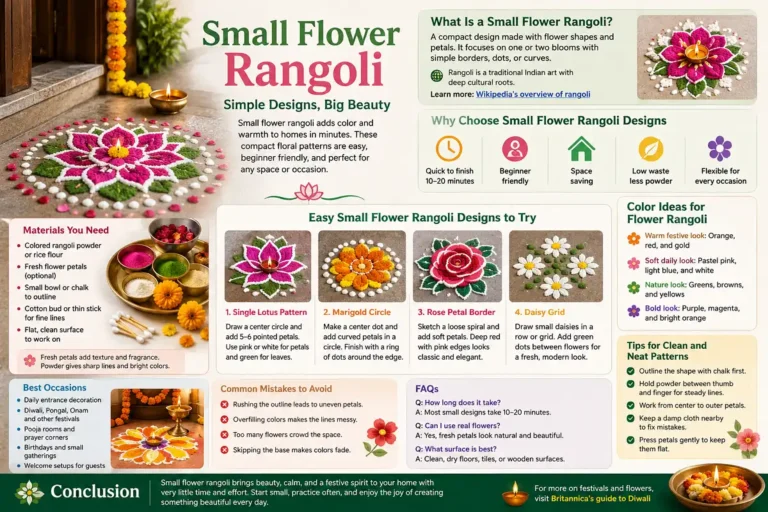
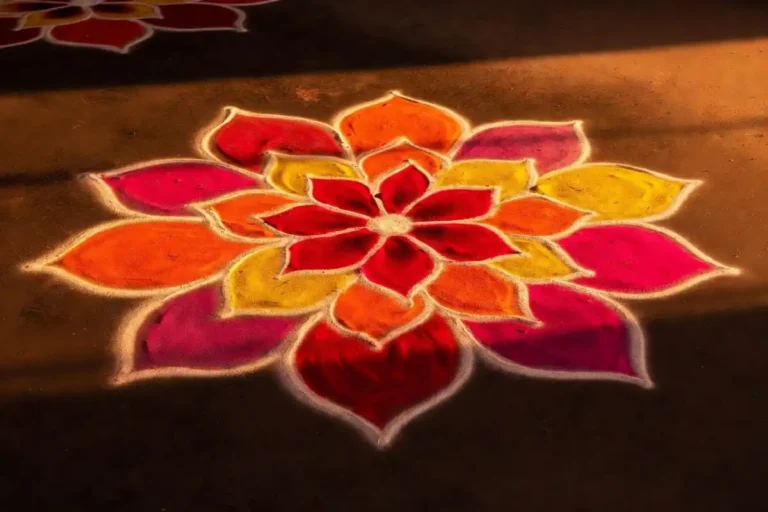
A single flower at the center, surrounded by petals, is one of the most recognizable rangoli forms. You can complete a small lotus or daisy-inspired pattern in under five minutes. Using four or six petals with a round center creates a neat, satisfying result every time. For more flower-based inspiration, take a look at these easy lotus rangoli designs for festive spaces.
Geometric Mini Patterns
Triangles, squares, and diamonds combine quickly to form clean geometric designs. These work especially well when you want something modern and tidy. A small diamond shape with a border takes almost no time and still looks intentional and polished. If geometric styles appeal to you, you might enjoy easy geometric rangoli patterns for any skill level.
Tools You Need to Make a 5 Minute Rangoli Design
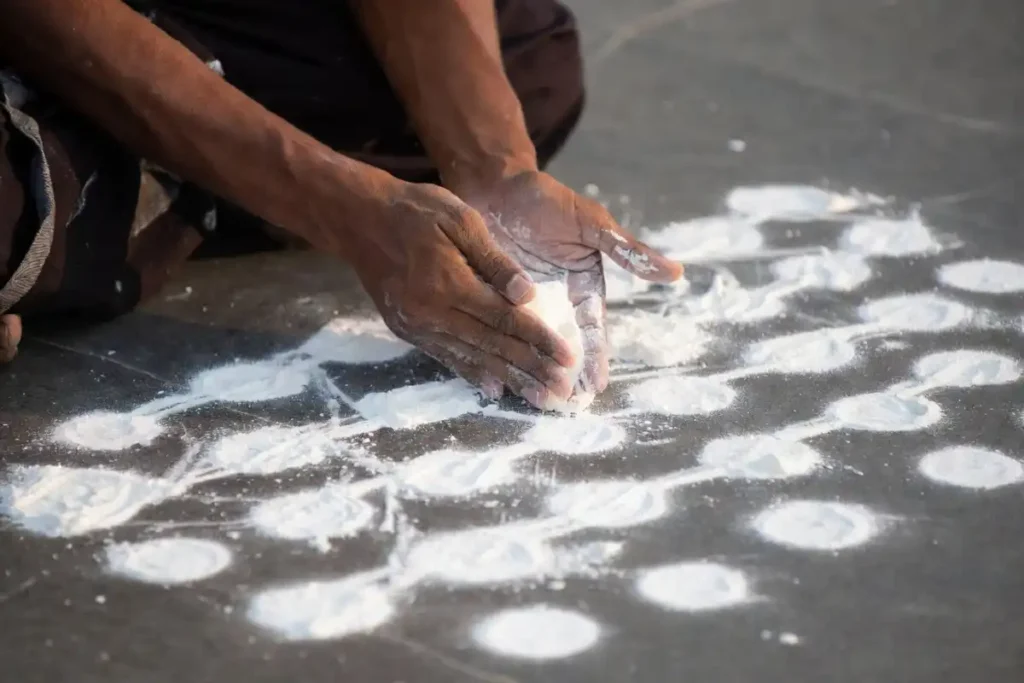
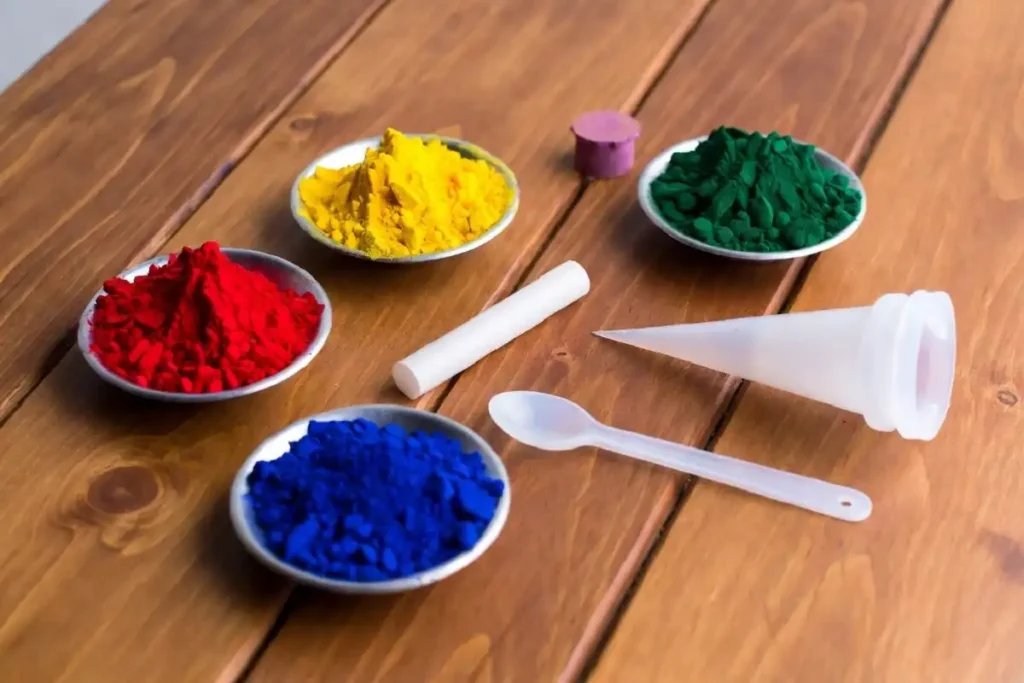
You do not need much to get started. Here are the basics:
Some people use a plastic cone with a small hole at the tip for more precise lines. These are inexpensive and available in most craft stores. According to Craftsy and other craft education platforms, using a cone or funnel helps beginners lay down clean, steady lines much faster.
How to Draw a 5 Minute Rangoli Step by Step
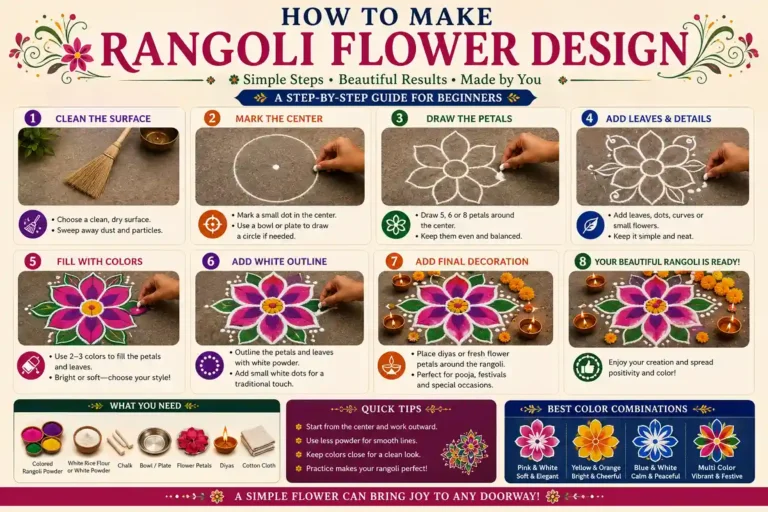
This simple flower method is a true 5 minute rangoli design that works beautifully and can be finished in under five minutes once you have practiced it once or twice.
Mark the center by placing a small dot where you want the middle of the design.
Draw a circle around the center dot using chalk or a light powder line.
Add petal shapes around the circle, spacing them as evenly as you can. Six petals work well.
Fill the petals with your first color using a spoon or cone.
Add a contrasting color to the center and outline the whole design with a border.
Clean the edges gently with a dry cloth or your fingertip for a sharp, tidy finish.
With a little practice, this 5 minute rangoli design fits comfortably into your morning routine.
Color Combinations That Work Best for This Style
Choosing the right two or three colors before you start saves both time and effort. These pairings consistently look great:
Avoid using more than three colors in a quick design. Fewer colors mean faster application and a cleaner, more confident result overall.
When to Use a 5 Minute Rangoli Design
These designs are useful in far more situations than you might expect.
For Daily Use
Many households draw small rangoli at the entrance every morning. A simple dot pattern or a tiny flower keeps the tradition alive without disrupting your routine.
Before Unexpected Guests
When someone is arriving soon and you want your home to feel welcoming, a quick design near the entrance makes an immediate, thoughtful impression.
During Festivals
On days like Diwali, Onam, or Pongal, a 5 minute rangoli design at the door works beautifully alongside larger decorations. For more ideas that suit any festival, quick rangoli ideas for beginners offers a helpful range of options to try.
For Teaching Children
A short, achievable design is the perfect introduction to rangoli for kids. It holds their attention and gives them a real sense of accomplishment in a short time.
Tips to Make Your 5 Minute Rangoli Design Look Polished
A fast design can still look thoughtful and professional. These habits make a real difference:
According to the BBC Culture platform, repetition and simplicity are at the heart of traditional floor art across many cultures, and both apply directly to a well-executed quick rangoli.
Common Mistakes to Avoid in a 5 Minute Rangoli Design
Even simple designs can go sideways. Here is what to watch out for:
Uneven spacing between petals or dots makes the design look rushed
Too many colors can make a small design look busy and hard to read
Skipping the chalk outline often leads to smudged, irregular edges
Working without a base sketch leads to off-center, lopsided patterns
Applying powder to a wet floor causes colors to bleed into each other
A little preparation before you start goes a long way, even for a design that takes just five minutes.
Conclusion
A 5 minute rangoli design proves that beauty does not always require extra time. With the right pattern, a couple of well-chosen colors, and a simple technique, anyone can create something genuinely lovely at their doorstep. These quick designs keep a meaningful tradition alive even on the most hectic days. They are welcoming, cheerful, and surprisingly satisfying to complete. Start with a basic flower or a small dot pattern, practice it a few times, and you will find it gets faster and easier with every attempt. Over time, your quick rangoli will look as polished as designs that took far longer. That is the quiet charm of this art form.
FAQs
What is the easiest 5 minute rangoli design for beginners?
A simple flower with six petals and a round center is the most beginner-friendly option available. You only need two colors and no special tools. Sketch the shape in chalk first, fill the petals with powder, and add a clean border around the outside. It looks neat and takes very little time from start to finish.
Can I make a 5 minute rangoli design without powder?
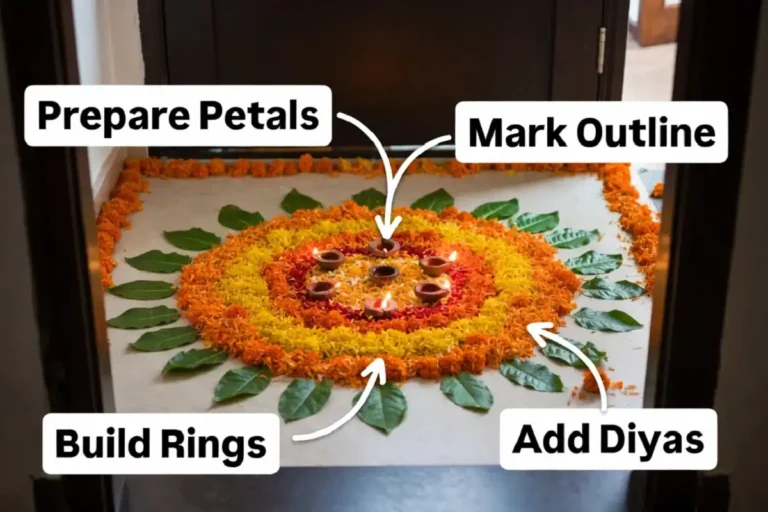
Yes, flower petals, colored rice, or cut paper shapes all work well as alternatives. Marigold petals are especially popular because they are bright, easy to arrange, and widely available during festivals. These natural materials also clean up quickly after the occasion is over.
How do I stop my quick rangoli from smudging?
Starting on a dry, clean floor makes the biggest difference. Apply powder gently and try not to lean over the design while you work. If you need the design to last longer, lightly mist it with a water and glue mixture once it is finished to hold the powder in place.
Is a quick rangoli suitable for Diwali?
Absolutely. A small, well-made design at the entrance is entirely appropriate for Diwali and looks intentional rather than rushed. Placing a few diyas around the edges adds warmth and festivity without adding much time to the process.
How many colors should I use for a fast rangoli?
Two to three colors work best. One main fill color, one accent or outline color, and one center highlight are enough to create a balanced, attractive result without slowing you down or complicating the process.