Diya Symbol Rangoli Design Ideas for Festivals
Festivals in India are never complete without a rangoli at the doorstep. Among all the motifs used in this art form, the diya symbol holds a special place.
A diya symbol rangoli design brings warmth, light, and tradition into your home. Whether you are making it for Diwali, Navratri, or any auspicious occasion, a diya-themed rangoli sets a beautiful tone right at the entrance.
In this guide, you will find easy ideas, design tips, and color advice to help you create something truly memorable.
Why the Diya Motif Is So Special in Rangoli
The diya, or oil lamp, is one of the oldest symbols in Indian culture. It represents light overcoming darkness, knowledge replacing ignorance, and hope during difficult times. When this symbol is used as the central motif in a rangoli, it carries deep meaning beyond just decoration.
What a Diya Represents
A diya symbol rangoli design is especially popular during:
- Diwali, the festival of lights
- Navratri and Dasara celebrations
- Kartik Puja and other lamp-related festivals
- New home ceremonies and housewarmings
The beauty of this motif is that it works well on its own or as part of a larger, more detailed design. You can keep it simple with two colors, or go elaborate with dozens of shades and layers. Either way, it looks meaningful and festive.
What Makes a Good Diya Symbol Rangoli Design
A well-made diya symbol rangoli design has three key elements working together.
Clear Central Motif
The diya should immediately read as a lamp, with a balanced body and recognizable flame.
Supporting Patterns
Petals, dots, geometric borders, or repeated motifs can frame the diya without overpowering it.
Warm, Controlled Colors
A focused palette helps the flame and diya remain the visual center of the composition.
The Central Diya Shape
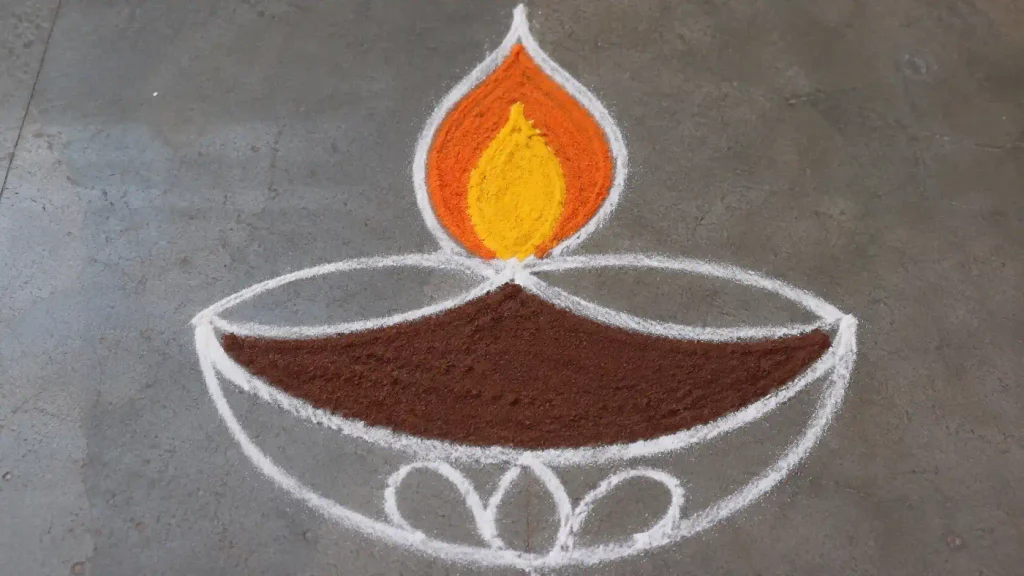
The diya shape itself should be clear, smooth, and proportionate. Most diya rangoli designs feature an oval or teardrop base with a pointed tip at the top to represent the flame. The flame area is usually colored in shades of orange, yellow, or red to mimic a real lit lamp. The body of the diya is often colored in earthy tones like brown, terracotta, golden yellow, or dark maroon.
Surrounding Patterns
A diya on its own looks complete, but surrounding it with petals, dots, or geometric borders makes the design richer. Common additions include:
- Lotus petals radiating outward from the diya
- Peacock feather motifs on either side
- Dotted borders using white or contrasting chalk
- Curved lines that mirror the shape of the diya
Color Choices
Color plays a huge role in how the final design looks and feels. Warm tones work best for diya rangolis because they echo the glow of real lamplight. Some color combinations that work very well:
Four Color Directions for a Diya Rangoli
Quick rule: Keep the brightest color around the flame so the eye naturally reads the diya as the main focal point.
- Orange, yellow, and white for a classic Diwali look
- Red, golden, and green for a festive and rich feel
- Pink, white, and light blue for a softer, more delicate effect
- Saffron and ivory for a traditional, minimal style
How to Make a Diya Symbol Rangoli Step by Step
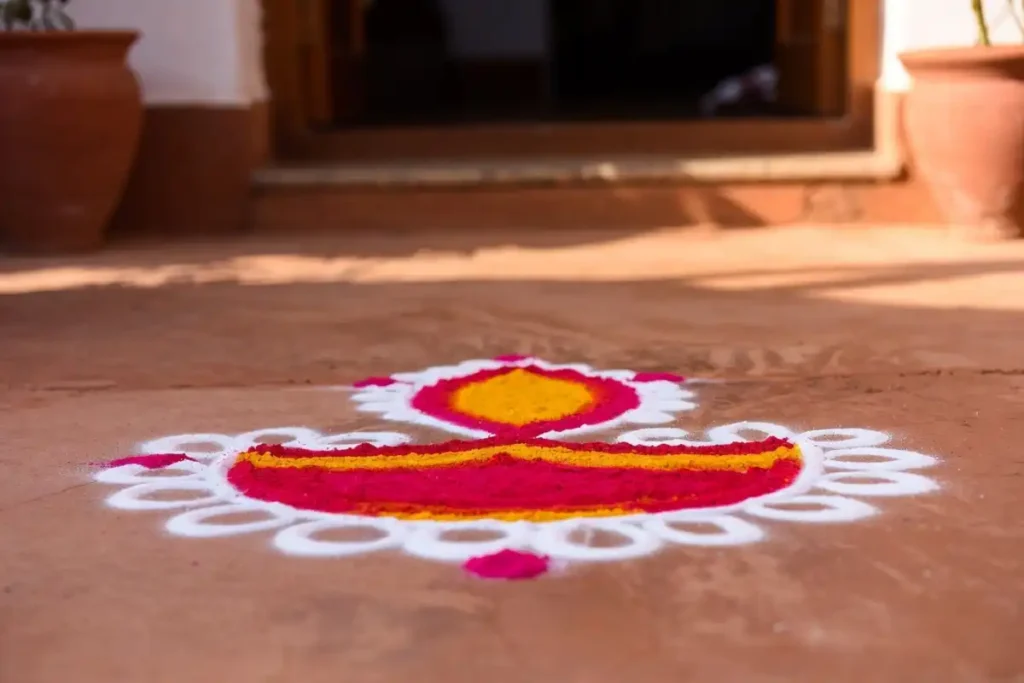
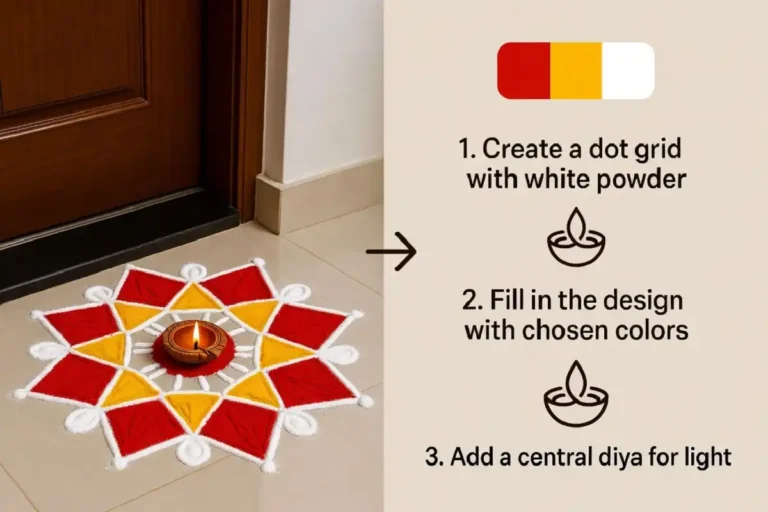
Making a diya rangoli is easier than it looks. Here is a simple method that works well even for beginners.
Prepare Your Space. Clean the floor area where you plan to make the design. A smooth, dry surface helps the colors stay in place. Lightly dampen the floor if you are using dry powder so it grips better.
Sketch the Basic Outline. Using white chalk or a thin stream of white rangoli powder, draw the basic outline of your diya. Start with the oval body, then add the curved base and pointed flame at the top. Keep the proportions balanced.
Fill in the Diya Body. Fill the body of the diya with your chosen base color. Use the side of your hand or a small brush to push powder evenly within the outline. Avoid going outside the chalk lines.
Add the Flame. The flame area is the most important part of a diya symbol rangoli. Use bright yellow at the center, then add orange around it, and finish with a thin edge of red or white for contrast. Blend the edges slightly so the colors flow naturally.
Add Surrounding Elements. Once the main diya is complete, add petals, dots, or border patterns around it. Use contrasting colors to make the diya stand out from the surrounding design.
Finish with Borders. A clean outer border pulls the whole design together. Use a single color like white or gold to draw a neat line around the entire composition.
Build the Diya from Center to Edge
Finishing the central diya before the outer decoration makes it easier to keep the composition balanced and prevents surrounding details from becoming more prominent than the main symbol.
For more inspiration on beginner-friendly rangoli art, you can explore easy simple Ganesha rangoli art for festivals to see how simple motifs are built up with layers and color.
Diya Symbol Rangoli Design Variations to Try This Season
Once you are comfortable with the basic diya shape, there are many creative directions to take your design.
Multiple Diya Arrangement
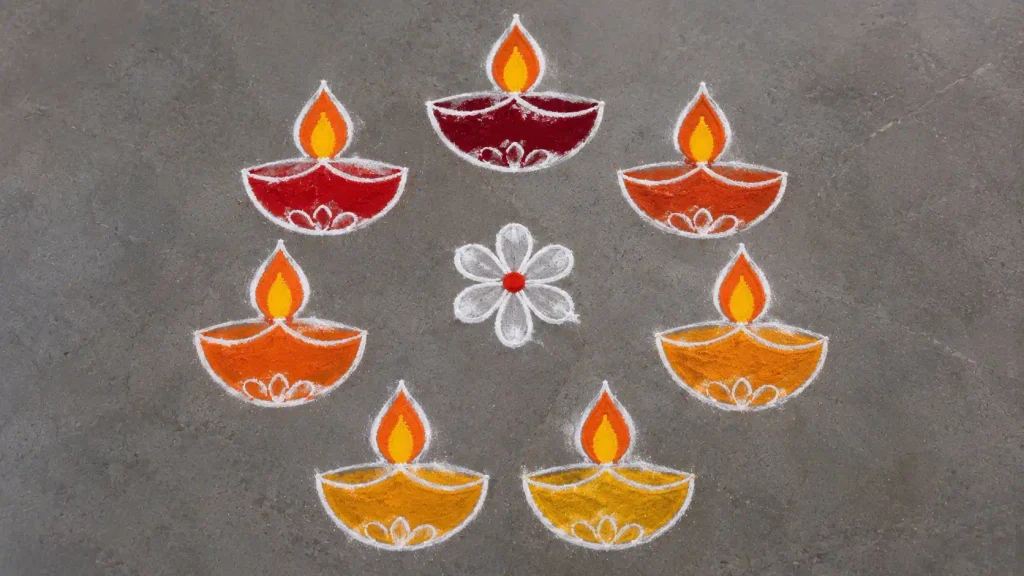
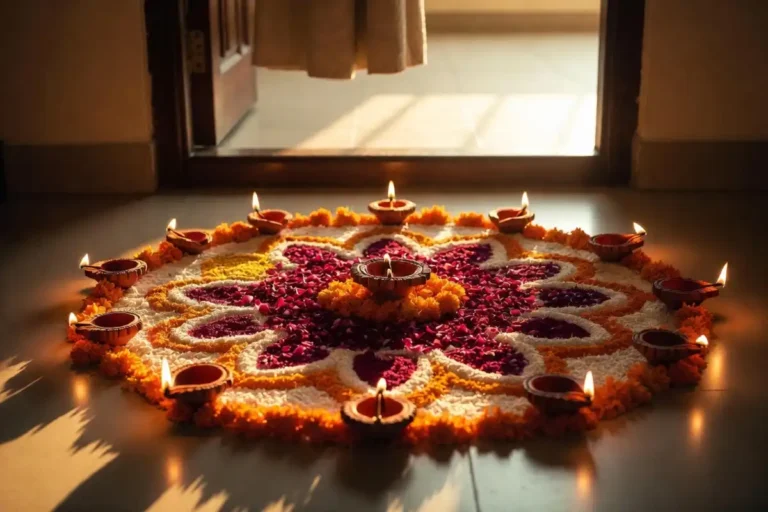
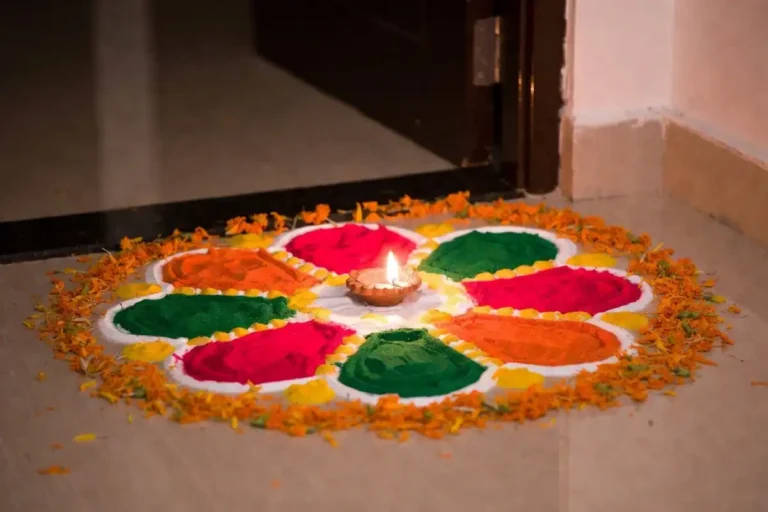
Instead of one large diya, arrange several smaller diyas in a circular or symmetrical pattern. This is especially striking when each diya is colored differently but follows the same overall palette. You can place five or seven diyas in a ring with a central flower motif in the middle.
Diya with Lakshmi Footprints
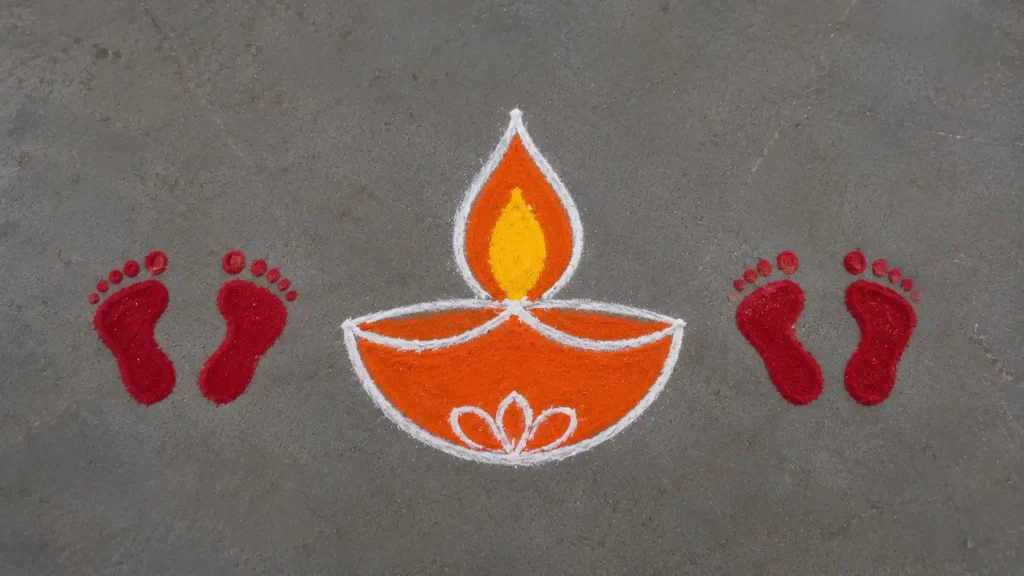
A very popular combination during Diwali is a diya rangoli paired with Lakshmi footprints. The footprints are said to welcome the goddess of wealth into the home. If you want to try this style, check out this guide on simple Lakshmi feet rangoli easy steps for beginners for a detailed walkthrough.
3D Diya Rangoli
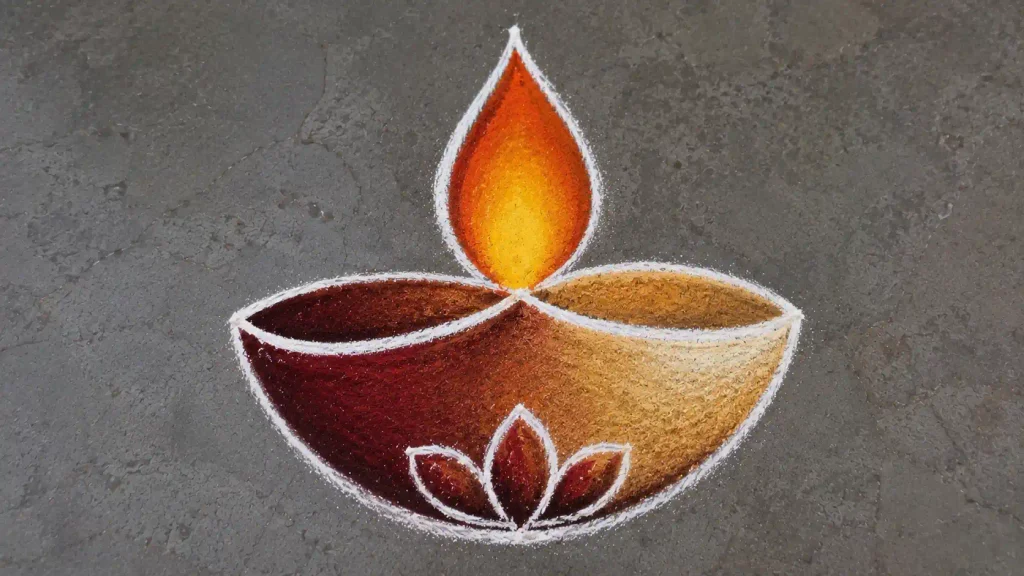
A three-dimensional diya rangoli uses shading and layering techniques to make the design look raised off the floor. Darker shades are placed on one side of the diya to create depth, while lighter or metallic tones are used on the lit side. If 3D rangoli interests you, the simple 3D rangoli for home easy beginner ideas guide is a great starting point.
Diya with Floral Border
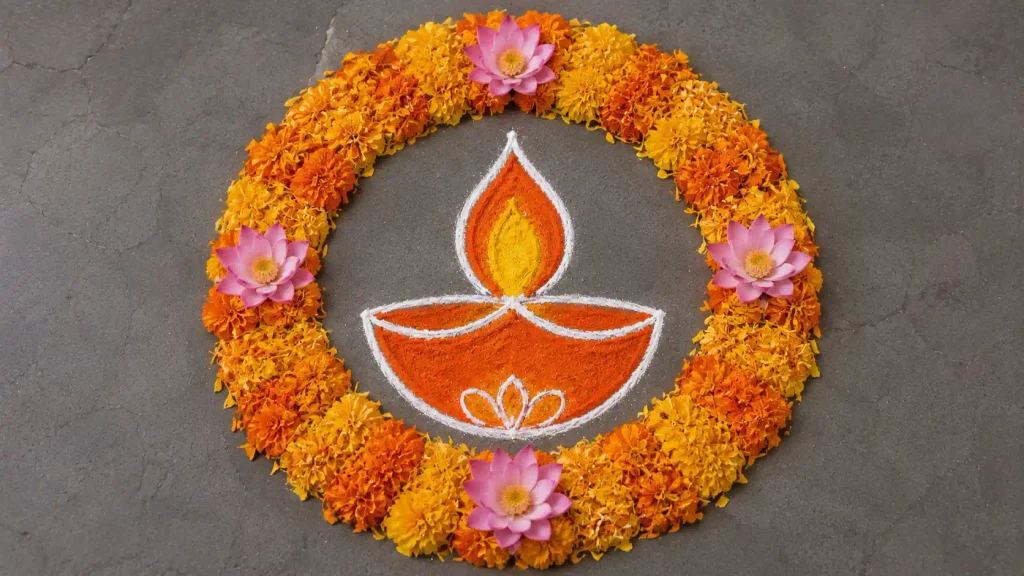
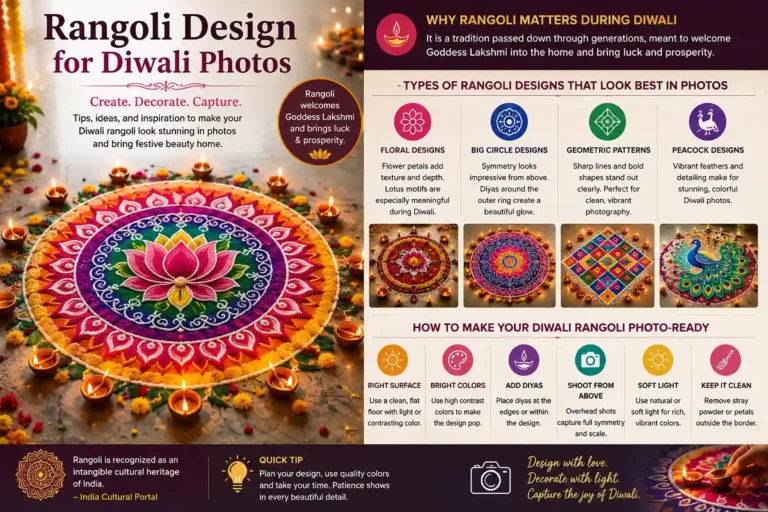
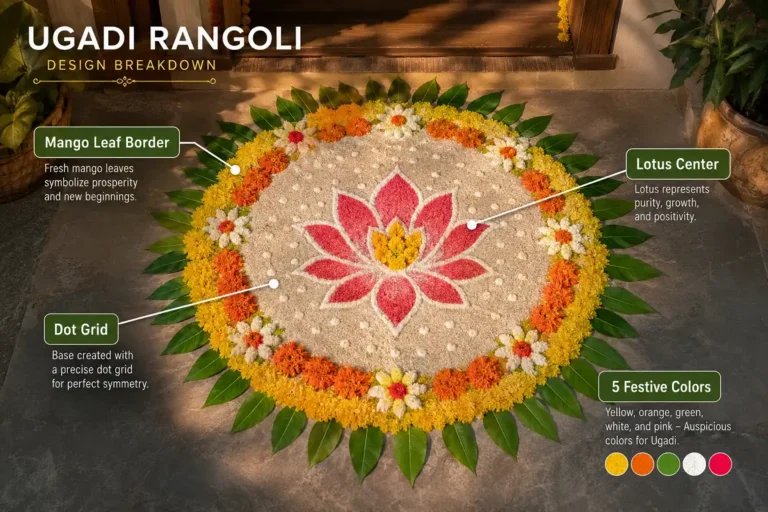
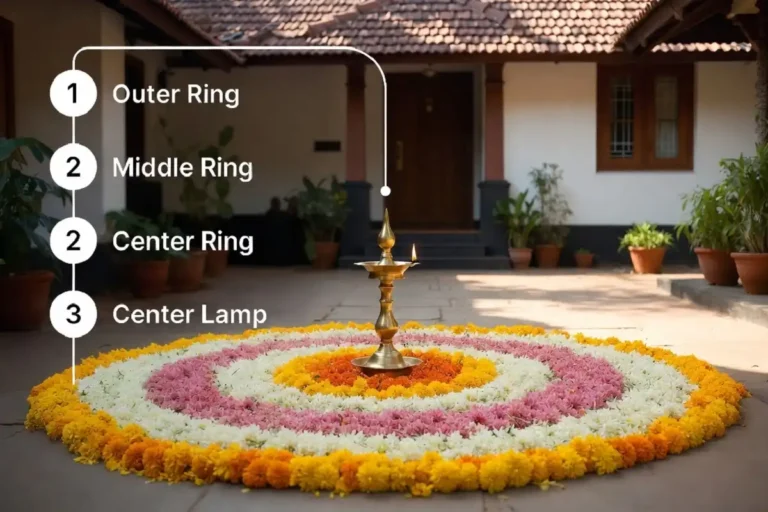
Surround the central diya with a ring of marigold or lotus flowers. This is a very common style for Diwali floor art and looks stunning in natural light. Orange marigold petals combined with yellow rangoli powder create a seamless blend between the real and drawn elements.
Diya with Geometric Frame
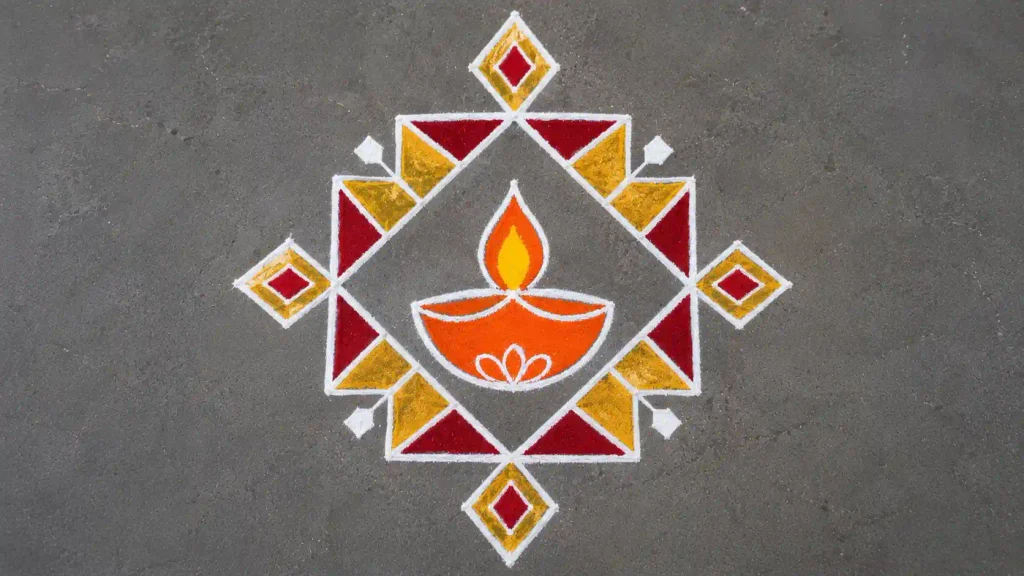
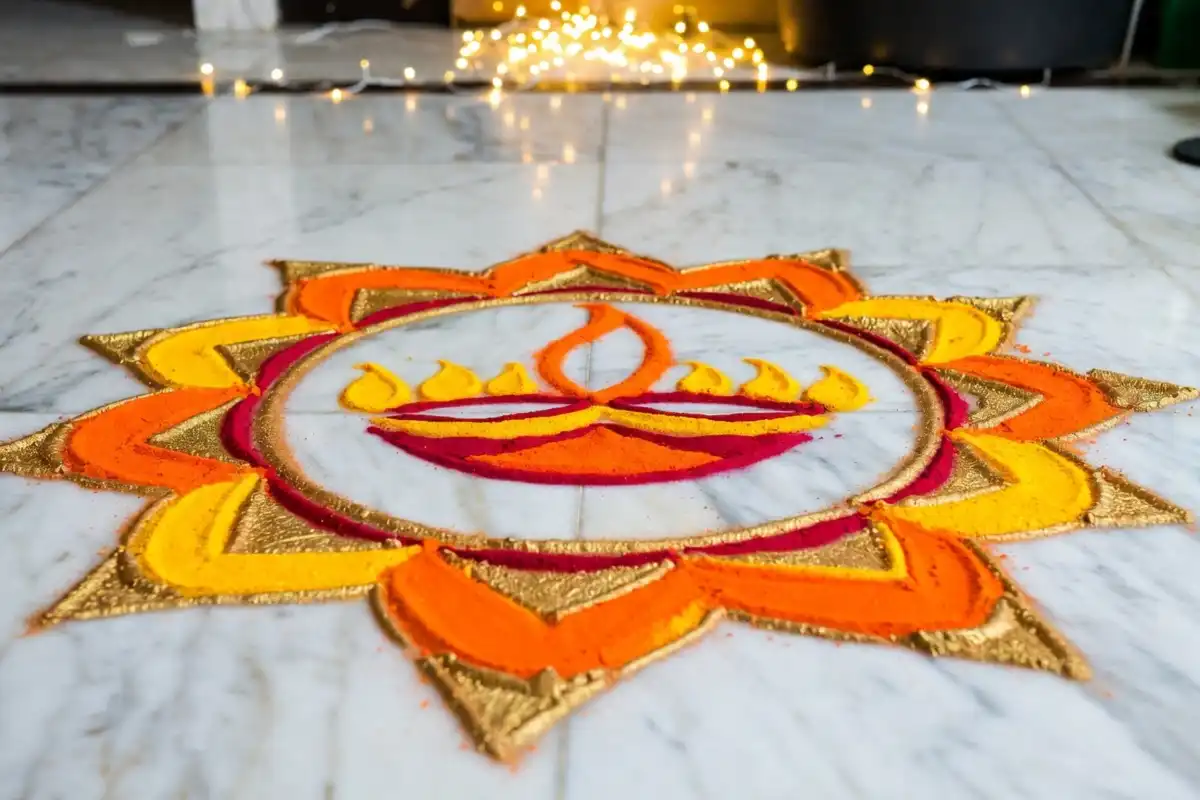
For a more structured, modern look, enclose the diya inside a geometric frame made of triangles or diamonds. This style blends traditional symbolism with contemporary design and works well on large floor areas.
Which Diya Rangoli Variation Fits Your Space?
Tools and Materials for a Diya Symbol Rangoli Design
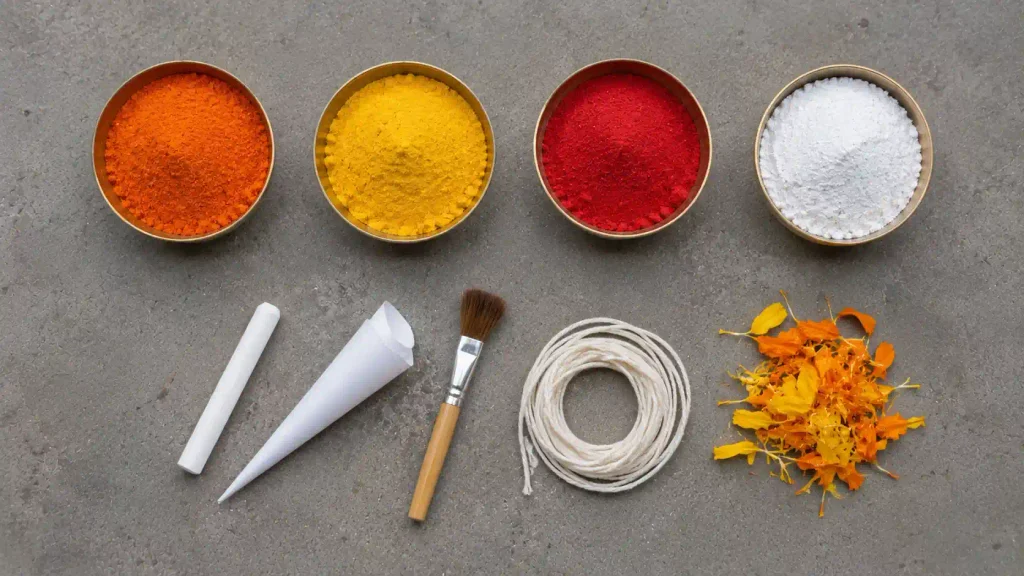
Having the right tools makes the process much easier and the result much cleaner.
Using natural materials like flower petals, turmeric, or vermilion is a wonderful option for those who want a more traditional approach. These materials are also easier to clean up after the festival is over.
For guidance on materials and tools used in outdoor and indoor rangoli, the Victoria and Albert Museum’s resource on Indian folk arts offers helpful cultural context and visual references.
Tips for a Clean and Long-Lasting Design
A few simple habits will help your diya symbol rangoli look neat from start to finish.
Always work from the center outward so you do not smudge completed sections
Use a dry cloth to correct small mistakes before the powder sets
Avoid working in windy areas, as powder can shift easily
Apply a light hairspray or water mist over dry powder designs to help them hold longer
If working outdoors, choose a dry day for best results
According to Smithsonian Magazine’s feature on Indian art traditions, rangoli is one of the most widely practiced folk art forms in South Asia, and its designs often reflect the region, season, and occasion of the artist.
Five Things That Protect a Rangoli
Diya Symbol Rangoli Design for Small Spaces
Not everyone has a large hallway or courtyard to work with. A diya symbol rangoli design can be scaled down beautifully for smaller spaces like apartment doorways, windowsills, or balconies.
Keep the Design Simple and Readable
For compact spaces, focus on one central diya with a simple petal border. Use just two or three colors to keep it clean and readable at a smaller size. A small diya rangoli made with care still creates a warm and welcoming impression.
You can also use a square or rectangular frame instead of a circular one to fit the design within a specific floor area without losing the charm.
Frequently Asked Questions
Helpful answers for creating a diya symbol rangoli at home.
Which colors work best for a diya symbol rangoli?
Warm combinations such as orange, yellow, white, red, golden, and saffron work especially well because they reinforce the visual feeling of a glowing lamp. Keeping the brightest shades near the flame also helps the diya remain the focal point.
Can beginners make a diya rangoli?
Yes. Start with a simple oval or teardrop-shaped diya, use two or three colors, and add a basic border. Once the central shape feels comfortable, you can experiment with petals, geometric frames, or multiple diyas.
How can I make a diya rangoli look more detailed?
Add surrounding petals, dots, curved borders, or repeated diya motifs. A clean white or gold outline can also make a relatively simple design appear more polished without requiring complicated drawing.
Can I make a diya rangoli in a small doorway?
Yes. Use one central diya, two or three colors, and a compact border. A square or rectangular frame can also help the design fit neatly into a narrow entrance, balcony, or apartment doorway.
What is the easiest diya rangoli variation to start with?
A single central diya with a simple floral or dotted border is one of the easiest options. It gives you practice with the main lamp shape while keeping the surrounding decoration manageable.
Conclusion
A diya symbol rangoli design is more than just a decoration. It carries meaning, tradition, and a warm sense of celebration. Whether you choose a simple single-diya symbol rangoli design or an elaborate arrangement with multiple motifs and colors, the effort you put into it adds a personal touch to your space.
Use warm colors, take your time with the details, and do not worry about making it perfect. Rangoli is a living art form, and every design you create is a reflection of your own creativity and connection to culture. Let your floor tell a story this festival season.