Geometric Shapes: Meaning, Use, and Design Ideas
Geometric shapes are the building blocks of visual art, design, and cultural expression. From the clean lines of a triangle to the perfect curve of a circle, these forms appear in architecture, textiles, spiritual art, and everyday decor. People have used these forms to create meaning, structure, and beauty for thousands of years across every culture on earth. Whether you are designing a rangoli pattern, decorating a room, or exploring art for the first time, understanding these foundational shapes opens up a wide range of creative possibilities.
What Are Geometric Shapes?
These are defined forms with specific mathematical properties. Unlike organic shapes found in nature, they follow precise rules of symmetry, angle, and proportion.
Basic Categories of Geometric Shapes
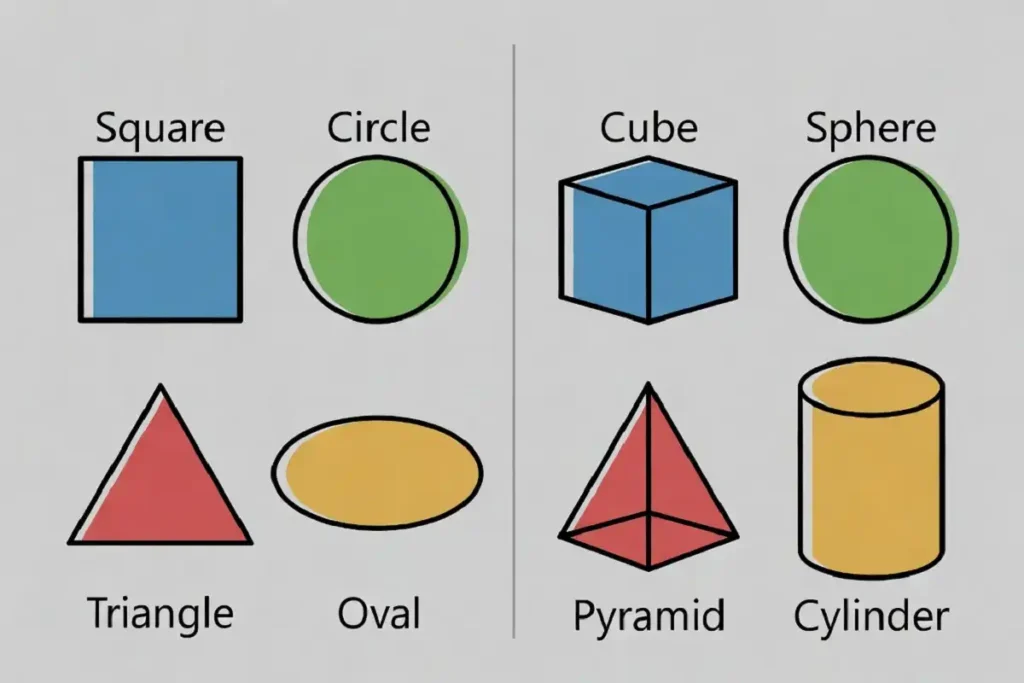
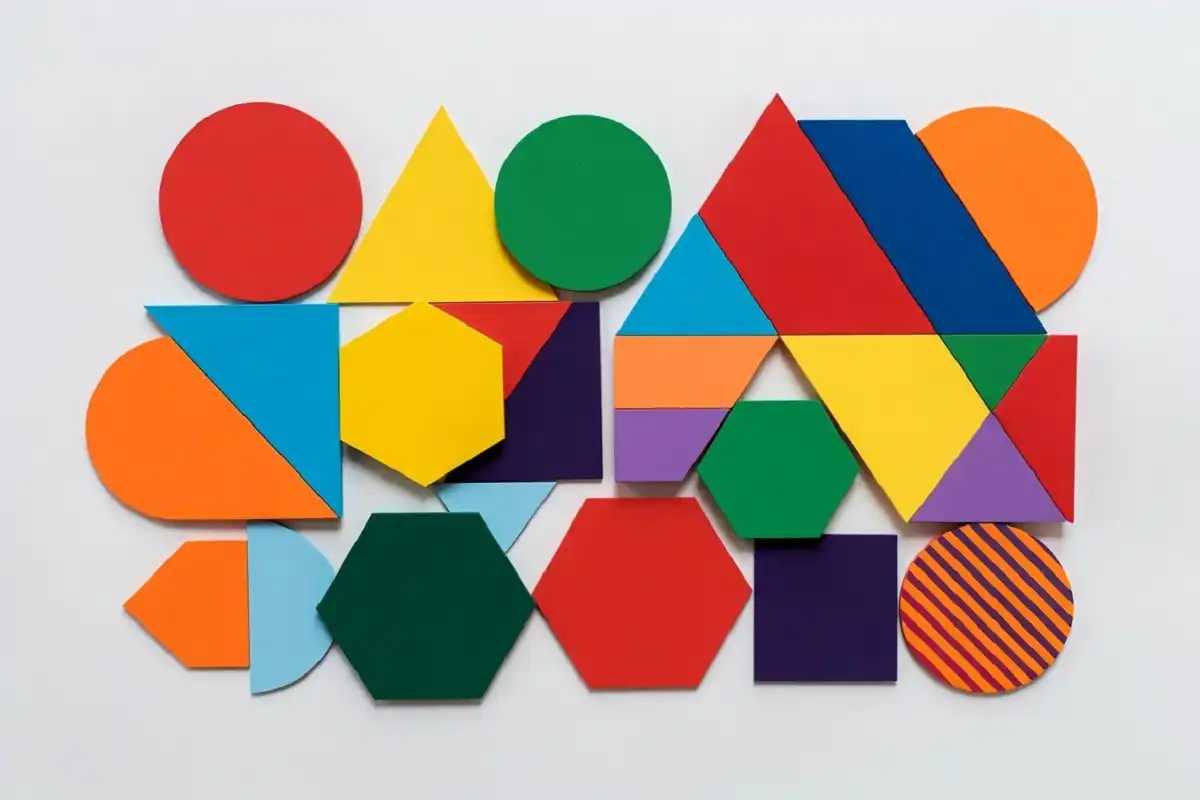
2D vs 3D at a Glance
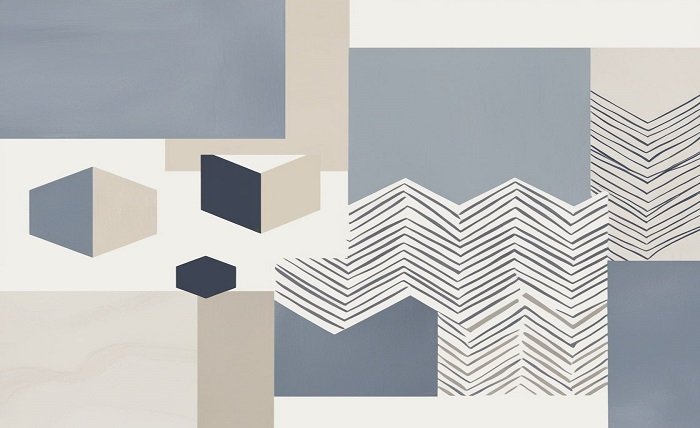
A color-coded reference sheet separating flat forms from solid ones — handy for quickly refreshing which category a shape belongs to.
These foundational forms fall into two broad groups:
- 2D shapes – flat forms including circles, squares, rectangles, triangles, pentagons, hexagons, and octagons
- 3D shapes – solid forms including spheres, cubes, cylinders, cones, and pyramids
Each shape carries distinct visual energy. Squares and rectangles feel stable and grounded. Triangles suggest direction and movement. Circles convey wholeness and continuity. These associations are not accidental. They reflect how human perception responds to form, a principle that artists and designers have relied on across centuries.
The Cultural and Symbolic Meaning of Geometric Shapes
These forms carry deep meaning across cultures and spiritual traditions. Understanding this symbolism helps when creating art or design intended to communicate something beyond pure aesthetics.
Shapes and Their Common Symbolic Associations
The circle represents eternity, unity, and wholeness in cultures worldwide. It has no beginning and no end, which is why it appears in mandalas, wedding rings, and sacred diagrams across Hindu, Buddhist, and Celtic traditions.
Triangles represent direction, energy, and transformation. An upward-pointing triangle is associated with fire and aspiration in many traditions. A downward-pointing triangle suggests water and the feminine principle. Combined, they form the Star of David and the Sri Yantra.
The square represents stability, order, and the material world. In Vedic and Islamic geometry, the square grounds a design in earthly reality while other shapes reach toward the spiritual.
The hexagon is one of nature’s most efficient shapes, appearing in honeycomb structures and snowflakes. In design, it represents balance, harmony, and structural efficiency. It is a popular choice in both modern graphic design and traditional tile patterns.
The spiral appears in nautilus shells, galaxies, and ancient petroglyphs. It represents growth, evolution, and the cyclical nature of time. In rangoli and mandala art, spirals add a sense of organic movement within a structured pattern.
Geometric Shapes in Traditional and Cultural Art
Some of the richest applications of shaped pattern work exist in traditional art forms that have been passed down across generations.
Rangoli and Floor Art
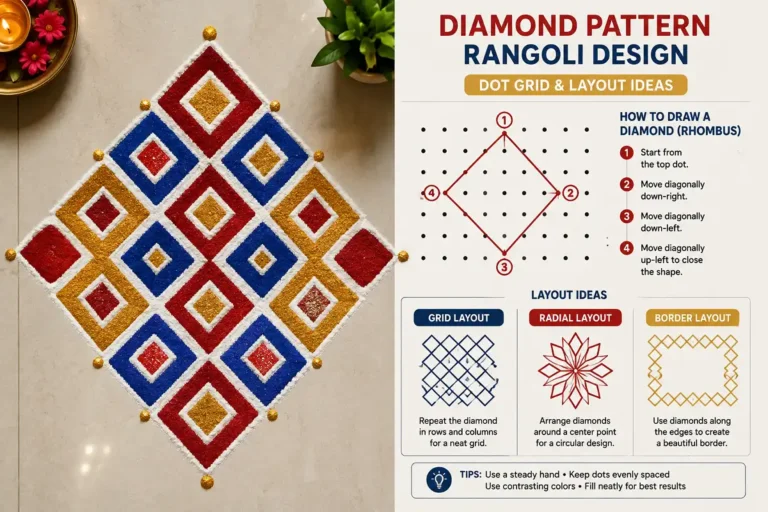
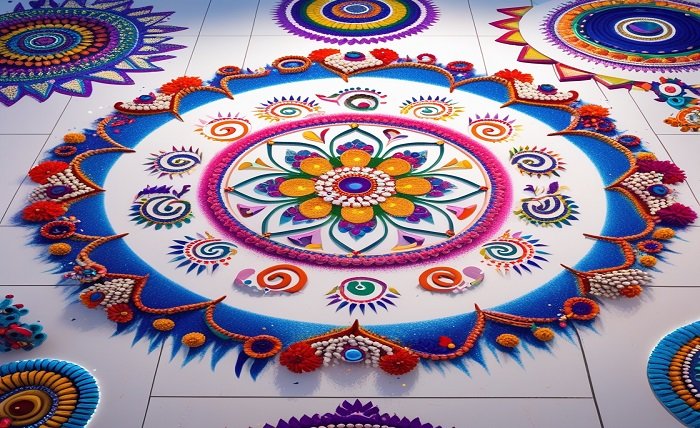
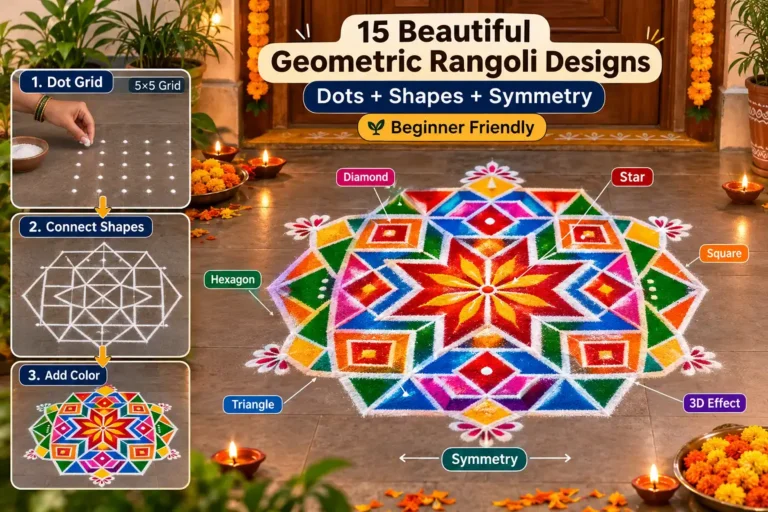
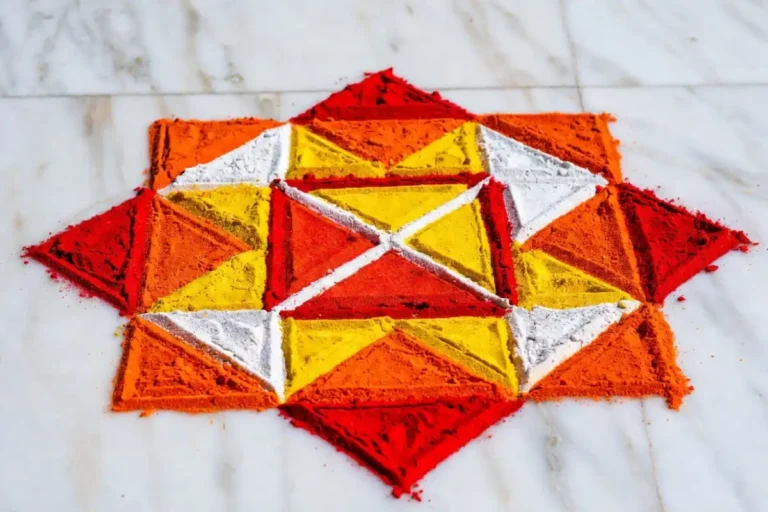
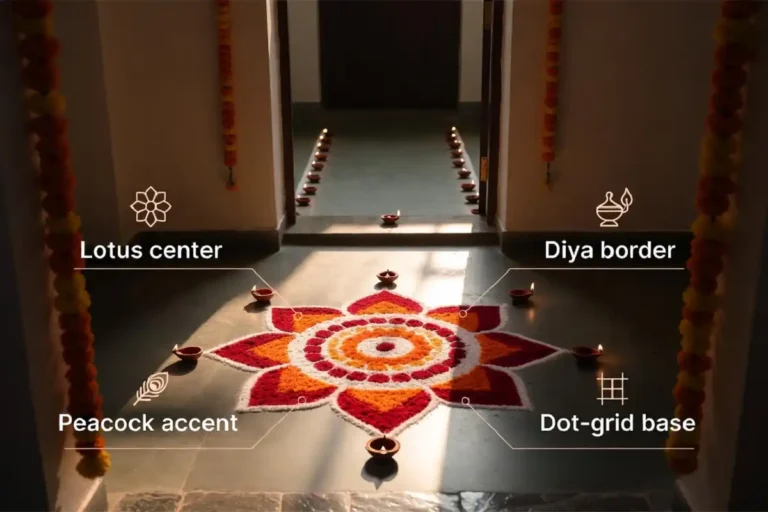
Rangoli is one of the most striking examples of these forms used in cultural decoration. Indian rangoli designs use grids of dots as anchor points from which squares, triangles, diamonds, and interlocking loops are constructed. The result is a complex symmetrical pattern built entirely from basic geometric principles.
For inspiration on how geometric forms translate into floor art, the collection of aesthetic rangoli designs for every occasion shows how circles, grids, and angular motifs combine to produce visually rich patterns suited to festivals and home decoration.
Islamic Geometric Patterns
Islamic art developed some of the most sophisticated geometric pattern systems in history. Tile work, woodcarving, and manuscript decoration use interlocking star polygons, tessellating hexagons, and radiating octagons to create infinite-feeling patterns. These designs were built on strict geometric principles using only a compass and straightedge.
Celtic Knotwork
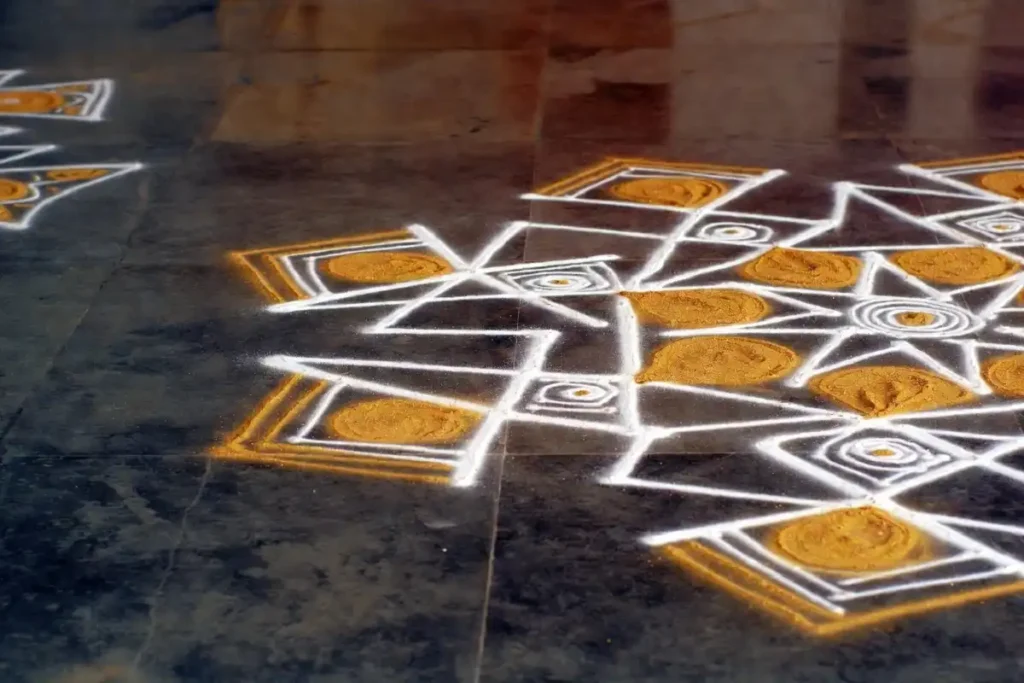
From Dot Grid to Finished Pattern
A hand-drawn look at how basic geometric shapes come together in a traditional rangoli floor design — the same underlying logic Celtic knotwork relies on.
Celtic art uses continuous geometric lines that interlace without beginning or end. Triangular knotwork, square panels, and circular medallions are all built from underlying geometric grids, demonstrating how geometry supports intricate organic-looking design.
How to Use Geometric Shapes in Your Own Designs
Applying these forms in practical design does not require advanced artistic skill. The key is understanding a few basic compositional principles.
Starting With Symmetry
Building With Grids
Layering Shapes
Choosing Colors Intentionally
For those who want a starting point without complex construction, easy rangoli design ideas for every occasion demonstrates how a small set of repeated shapes can produce beautiful results even for beginners.
Geometric Shapes in Modern Design and Technology

Geometry Beyond the Floor
The same shapes at work in a modern digital workspace — a reminder that the principles behind a rangoli grid show up in logos, layouts, and interfaces too.
These forms are not limited to traditional art. They are foundational to contemporary graphic design, architecture, product design, and user interface design.
Modern logo design relies heavily on geometric forms because they reproduce cleanly at any size and communicate clearly at a glance. Architecture uses geometric forms to balance structural integrity with visual appeal. User interface design uses grids, circles, and rectangles to organize information in ways the eye can follow naturally.
The Interaction Design Foundation provides research-backed resources on how geometric principles apply to modern visual communication and user experience design, useful for anyone applying these concepts beyond traditional craft.
Conclusion
Geometric shapes are far more than mathematical abstractions. They are a visual language that humans have used for art, architecture, spiritual expression, and everyday decoration across all cultures and time periods. Understanding the properties and symbolism of basic shapes gives any creative person a stronger foundation for design work, whether that is sketching a rangoli pattern, planning a room layout, or building a brand identity. Start with simple forms, explore symmetry and repetition, and let geometry guide your next creative project toward something structured, meaningful, and visually satisfying.
FAQs
What are the most basic geometric shapes?
The most basic shapes are the circle, square, triangle, and rectangle. These four forms appear across virtually every design system, art tradition, and mathematical framework as foundational building blocks.
Why are geometric shapes important in design?
These forms provide structure, balance, and visual clarity in design. They guide the viewer’s eye, communicate meaning through symbolism, and create patterns that feel ordered and intentional whether in digital interfaces, architecture, or handmade art.
What is the difference between geometric and organic shapes?
Geometric forms follow mathematical rules and have precise, consistent edges and angles. Organic shapes are irregular, free-flowing, and modeled on natural forms like leaves, clouds, or flowing water. Most designs combine both types for visual interest.
How are geometric shapes used in rangoli?
Rangoli uses forms including triangles, squares, diamonds, and interlocking curves as the structural basis for floor patterns. Artists begin with a dot grid and connect the dots using these shapes to build symmetrical, repeating compositions.
Can beginners create geometric shape patterns easily?
Yes, beginners can create attractive geometric patterns by starting with simple grids and repeating one or two shapes. The Khan Academy Math and Art resources offer accessible explanations of geometric principles that apply directly to pattern-making at any skill level.
Which geometric shape is considered the most universal symbol?
The circle is widely considered the most universal geometric symbol. It appears in sacred geometry, cosmology, architecture, and everyday design across virtually every culture as a representation of unity, wholeness, and continuity.