3D Rangoli Without Dots: A Complete Design Guide
Not every beautiful rangoli needs a dot grid to get started. If you’ve ever felt intimidated by measuring and placing dozens of tiny dots, 3D rangoli without dots offers a simpler, freehand path to the same eye-catching result.
This style relies on shading, layering, and color gradients instead of a symmetrical dot base. It’s especially popular with beginners who want a striking floor design without the setup time. If you’re new to floor art in general, our beginner-friendly mandala rangoli guide is a good companion starting point before you try the 3D technique.
What Is 3D Rangoli Without Dots?
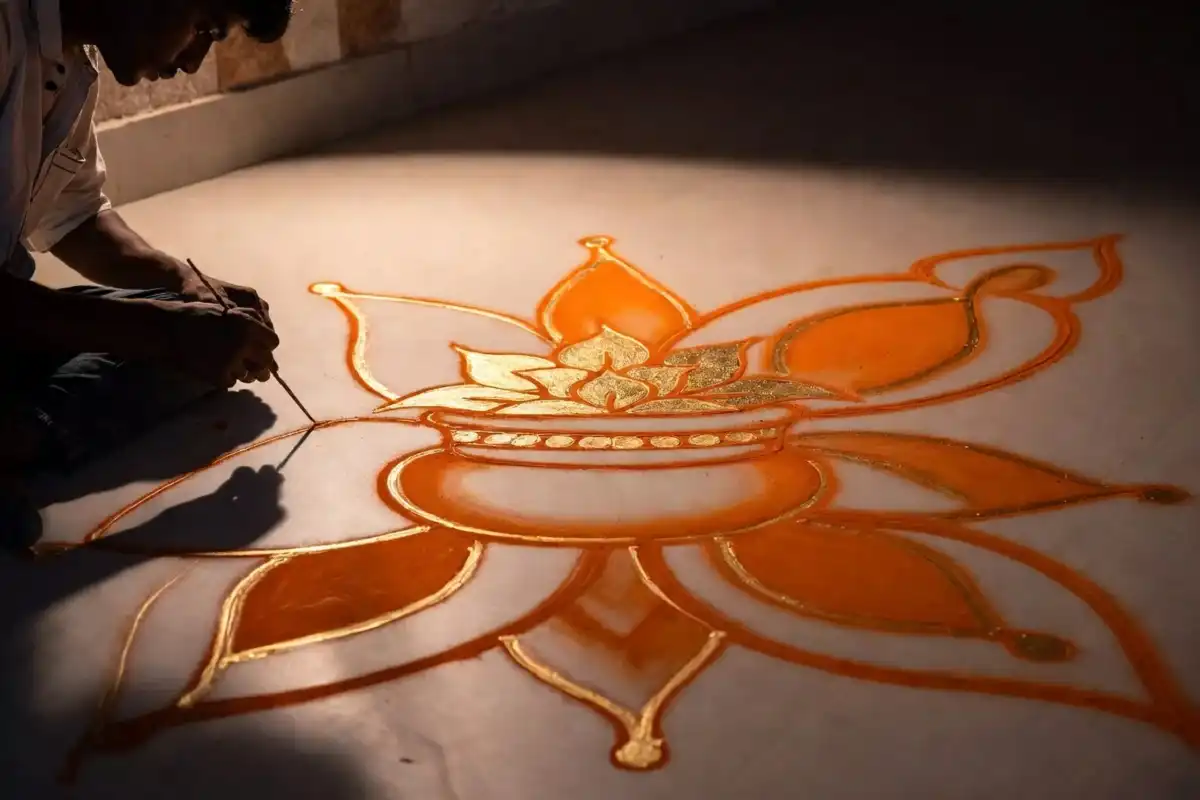
3D rangoli without dots is a freehand rangoli style that creates depth and illusion using shading and color transitions rather than a dot-based grid. Instead of connecting dots into a pattern, the artist sketches the outline directly, then builds volume with darker and lighter shades of powder or paint.
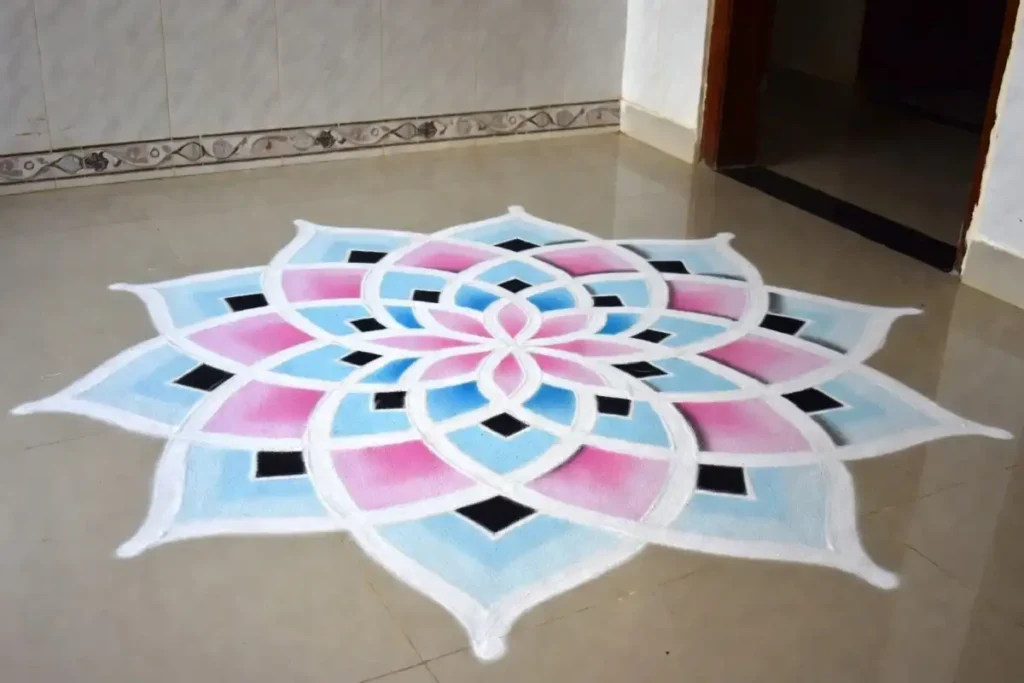
The “3D” effect comes from how light and dark tones are placed much like shading a drawing. This makes it more flexible than traditional dot rangoli, since you can adjust curves and proportions freely as you go.
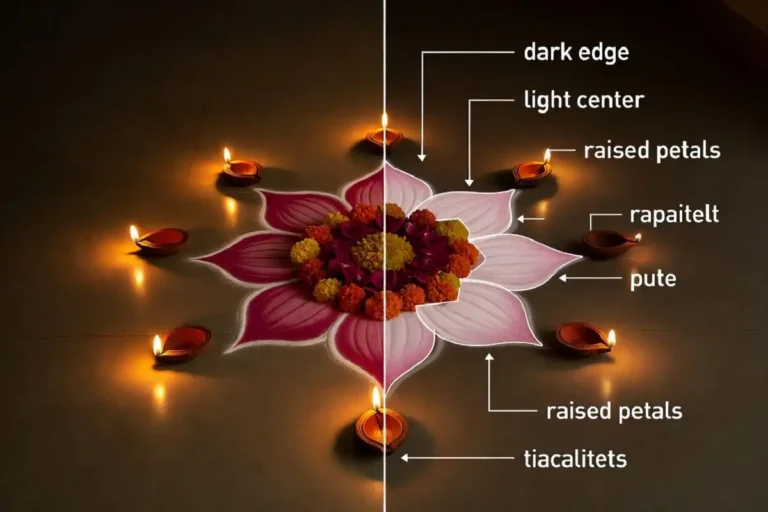
Light + Shadow Create the Illusion
The placement of highlights and shadows makes a flat rangoli shape appear raised and dimensional.
Popular Ideas for Dot-Free 3D Rangoli
There are several approachable design categories for anyone practicing 3D rangoli without dots:
Floating flower pots or baskets
a classic beginner design with soft shading around the rim and petals
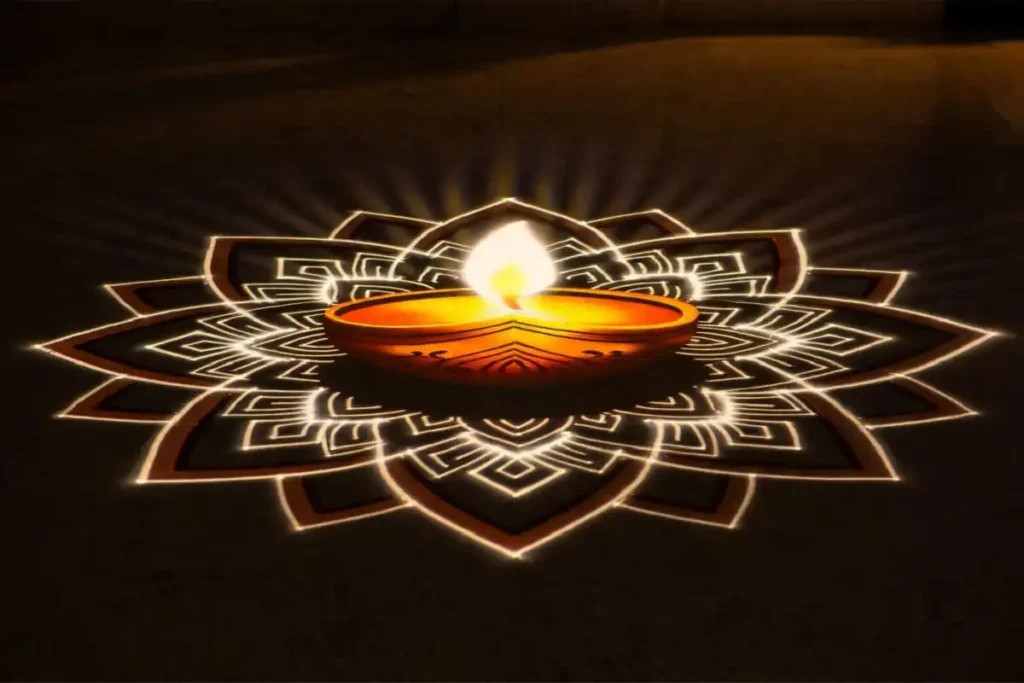
Diyas with glowing shadows
popular for Diwali, using orange-to-yellow gradients for the flame illusion
Stepwell or water pattern illusions
concentric shaded rings that appear to sink into the floor
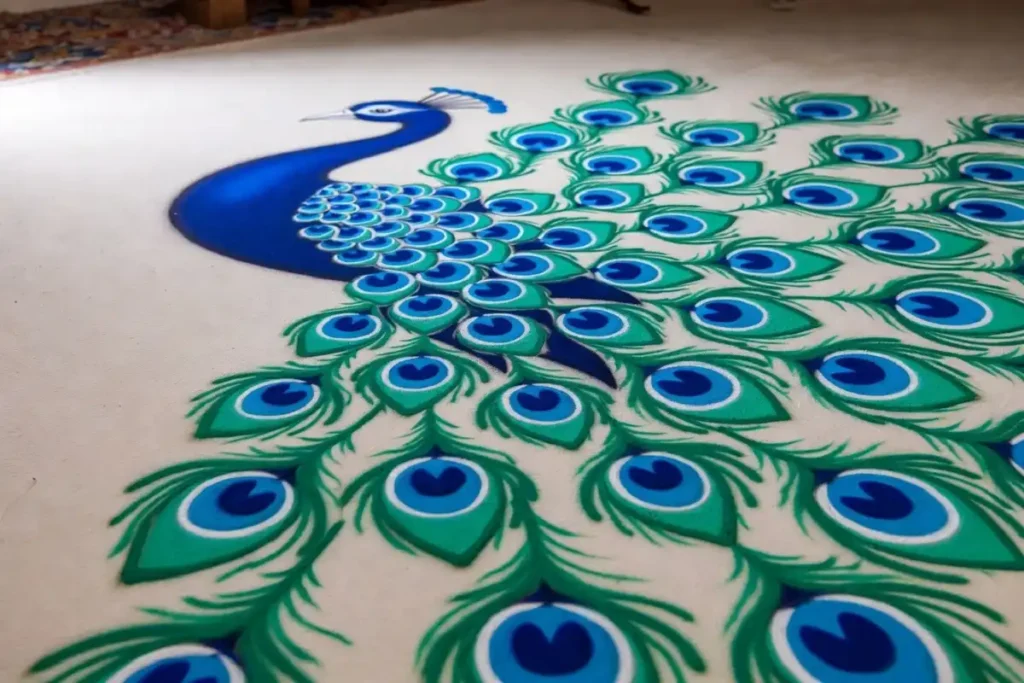
Peacock or bird motifs
larger designs where shading defines feathers instead of dot outlines
If you enjoy floral shapes, pairing this technique with ideas from our simple petal rangoli design can help you practice shading on smaller shapes first.
Step-by-Step Guide to 3D Rangoli Without Dots
Follow these steps to create your own 3D rangoli without dots:
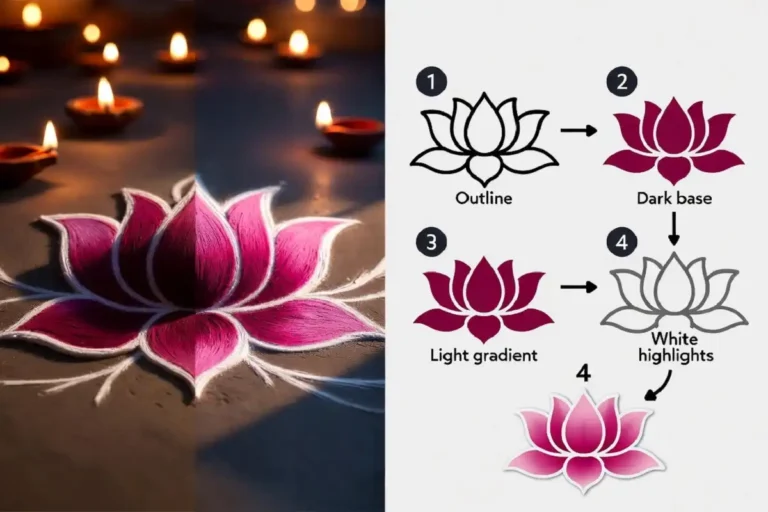
From Freehand Outline to 3D Depth
Follow the progression from a simple sketch to the finished dimensional effect.
Sketch the outline
Use a pencil, chalk, or a thin rangoli powder line to draw the basic shape freehand.
Choose your light source
Decide which side will be “lit” and which will be in “shadow.” This decision guides every shading choice afterward.
Apply base colors
Fill the main shape with a mid-tone color first.
Add shadows and highlights
Use darker shades on the shadow side and lighter shades or white on the highlighted side to create depth.
Blend the edges
Gently smudge where light and dark tones meet using a soft brush or your fingertip for a smooth gradient.
Outline for definition
Finish with a thin dark border to sharpen the overall shape.
Design Tips & Best Practices
- Practice shading on paper before attempting it with rangoli powder
- Use a limited color palette (3–4 shades) for a cleaner 3D effect
- Keep your light source consistent across the entire design
- Work from the center outward to maintain proportion
- Choose a design size that matches your available floor space and time
Cultural Importance of Rangoli Art
Rangoli has long been part of Indian household traditions, drawn at entrances to welcome guests and mark festive occasions. According to the Encyclopedia Britannica, rangoli is a folk art form of India in which patterns are created on the floor using materials such as colored rice, dry flour, colored sand, or flower petals. Modern 3D rangoli without dots builds on this heritage while giving artists more creative freedom than the traditional grid method.
Common Mistakes to Avoid
Skipping the sketch stage
jumping straight to shading without an outline often distorts proportions
Uneven light direction
shading different parts of the design as if lit from multiple angles breaks the 3D illusion
Overusing dark shades
too much shadow color can make the design look muddy instead of dimensional
Rushing the blending step
hard edges between colors ruin the gradient effect that makes 3D rangoli convincing
Latest Trends in 3D Rangoli Design (2026)
This year, dot-free 3D rangoli designs are trending toward softer pastel gradients rather than bold primary colors, along with nature-inspired themes like lotus ponds and sunset skies. Home decor publications have also noted a broader shift toward textured, sculptural floor art . Architectural Digest has covered how rangoli traditions are being reinterpreted with modern materials and techniques, a trend reflected in how artists are approaching 3D rangoli without dots with acrylic paints and layered stencils alongside traditional powders.
FAQs
Helpful answers for beginners exploring 3D rangoli without dots.
Can I make a 3D rangoli without using dots?
Yes. 3D rangoli without dots is specifically designed as a freehand approach. You can sketch the outline directly and create the illusion through shading, layering, and color transitions.
Is 3D rangoli without dots suitable for beginners?
Yes. It can be especially approachable for beginners because it removes the need to measure and place a dot grid. Starting with a simple shape can help you practice shading and blending before attempting a larger design.
How many colors should I use for a 3D rangoli?
A limited palette of 3–4 shades can create a cleaner 3D effect. Using lighter and darker versions of related colors makes the transitions easier to control.
What creates the 3D effect in a dot-free rangoli?
The effect comes mainly from the placement of light and dark tones. Highlights suggest the areas receiving light, while darker shades create the appearance of depth and shadow.
Which designs are easiest to try first?
Floating flower pots or baskets, simple diyas, and basic floral shapes are approachable starting points. They give you room to practice gradients and shadows without requiring a complex dot-based pattern.
Conclusion
3D rangoli without dots opens up rangoli art to anyone who finds dot grids restrictive, replacing precision measuring with expressive shading and gradients. With practice on light direction and blending, this freehand approach to 3D rangoli without dots can produce festival-ready designs that rival traditional dot-based patterns. For more freehand and quick design inspiration, browse our easy festive floor art ideas .