Traditional Rangoli Designs for Festivals
Traditional rangoli designs for festivals turn any doorstep into a welcome sign. I draw them every festive season, and they carry meaning, not just color. This guide shows you the classic patterns, materials, and steps I rely on.
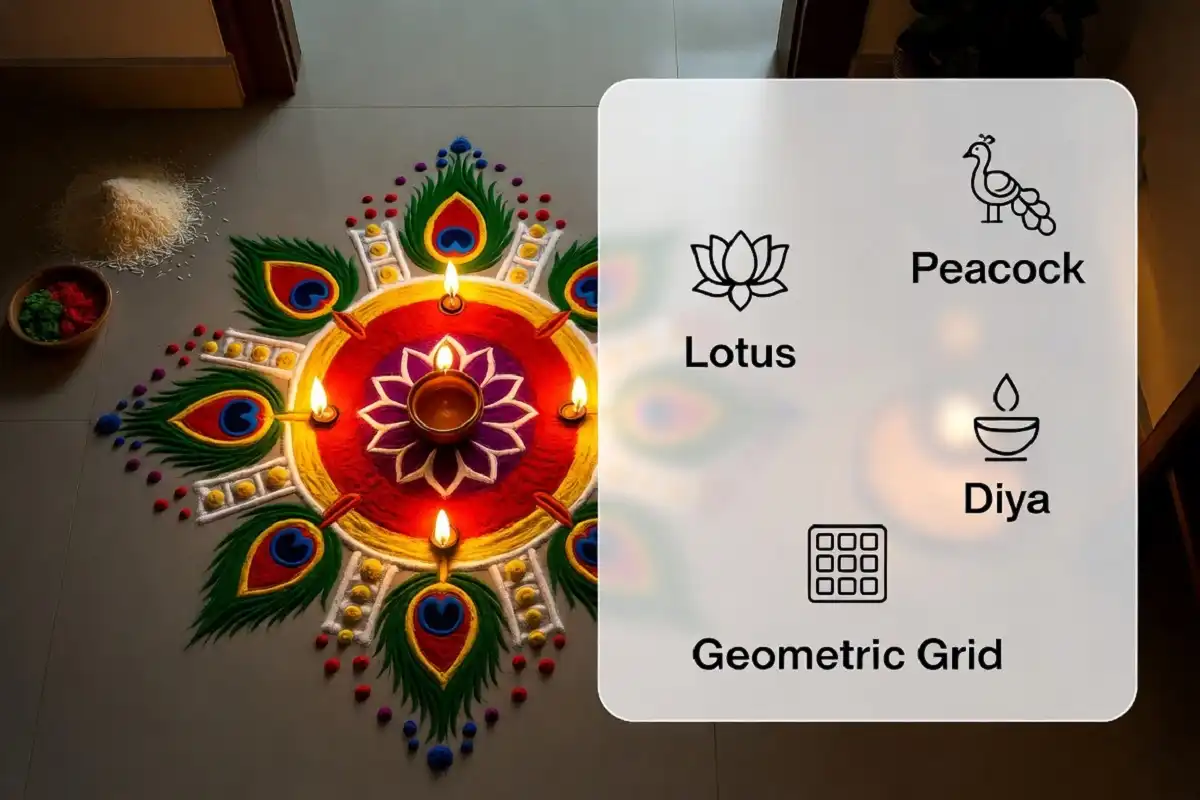
Traditional festival rangoli uses symmetrical patterns like lotus, peacock, diya, and geometric grids, made with rice flour or colored powder. Each design marks the occasion and invites prosperity into the home.
What Makes a Rangoli Design Traditional?
A rangoli is traditional when its motifs, symmetry, and materials follow the old regional patterns passed down through generations. These are not random shapes. Every element has a purpose.
The classic motifs stay consistent across India. Lotus flowers signal purity. Peacocks bring beauty and grace. Diyas mark light over darkness. Swastika and Om symbols invite auspicious energy. Fish and mango leaves signal abundance.
Symmetry sits at the heart of the craft. Most designs start from a center point and grow outward in equal parts. This balance is what makes the pattern feel complete and calm.
Materials matter too. Rice flour, dry colored powder, flower petals, and diyas are the four staples. In the south, women draw daily kolam with just rice flour. In the north, colored powder dominates during Diwali.
Which Festivals Use Rangoli the Most?
Diwali uses rangoli the most, followed by Pongal, Onam, Navratri, and regional new year celebrations. Each festival shapes the design in its own way.
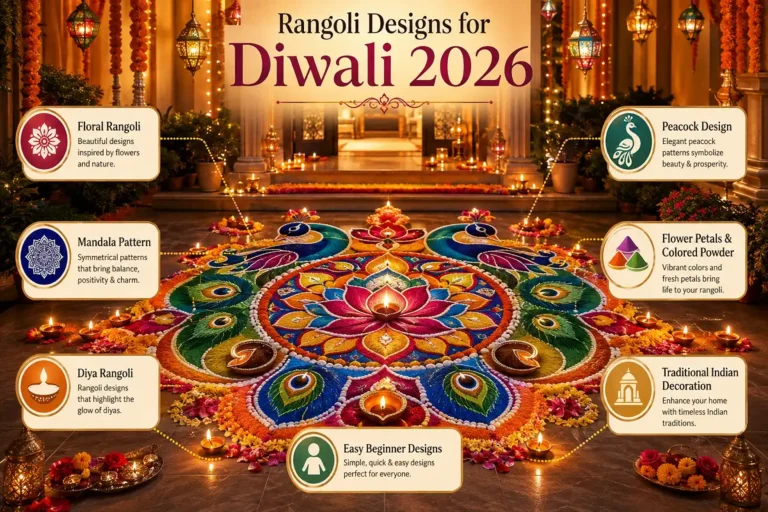
During Diwali, I fill the entrance with bright colors and diya motifs. Lakshmi footprints are common, drawn walking toward the door to invite the goddess of wealth. If you want festival-specific ideas, my collection of simple designs made for Diwali celebrations covers beginner to advanced patterns.
Pongal and Onam lean on flower rangoli. Onam’s pookalam is built entirely from fresh petals, layered in circles. The colors come from marigold, rose, and chrysanthemum.
Navratri brings vibrant, energetic patterns tied to the goddess Durga. New year celebrations across regions often use fresh, welcoming designs at the threshold.
Traditional Rangoli Designs for Festivals: The Core Patterns
Traditional rangoli designs for festivals fall into a few reliable categories that you can learn one at a time. Master these, and you can adapt them to any occasion.
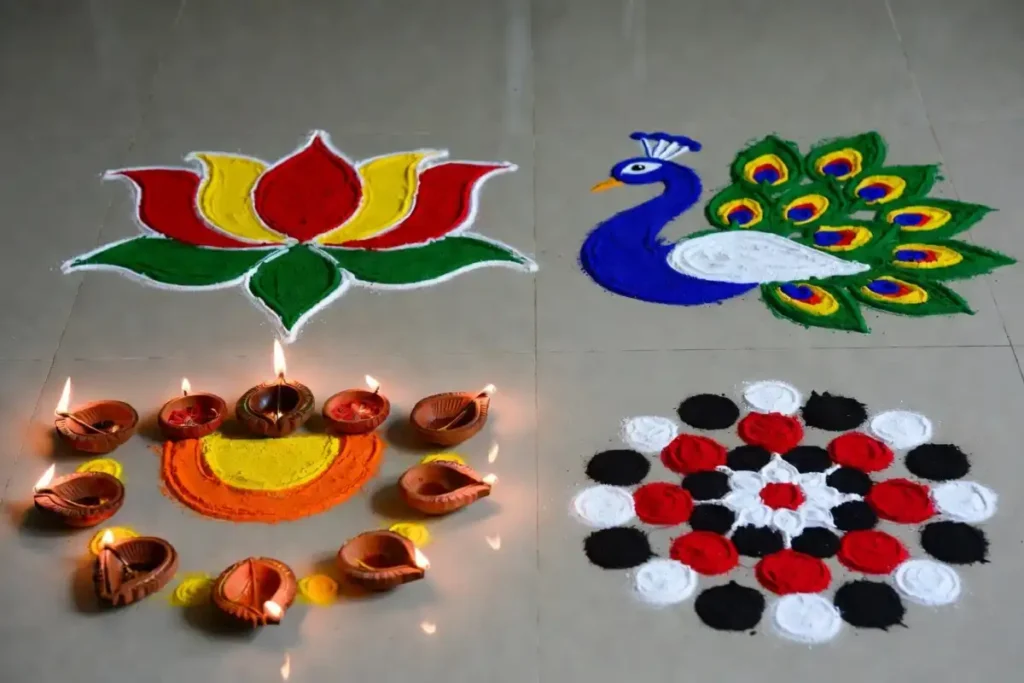
Lotus rangoli. The lotus is the most drawn festival motif. Start with a central circle, then add petal layers around it. Eight petals is the classic count.
Peacock rangoli. The peacock is popular for weddings and Diwali. The body curves to one side, and the open feathers fan out in a half-circle. It rewards patience.
Diya and lamp designs. These suit Diwali and Dhanteras. Rows of diyas frame the border while a larger motif fills the center.
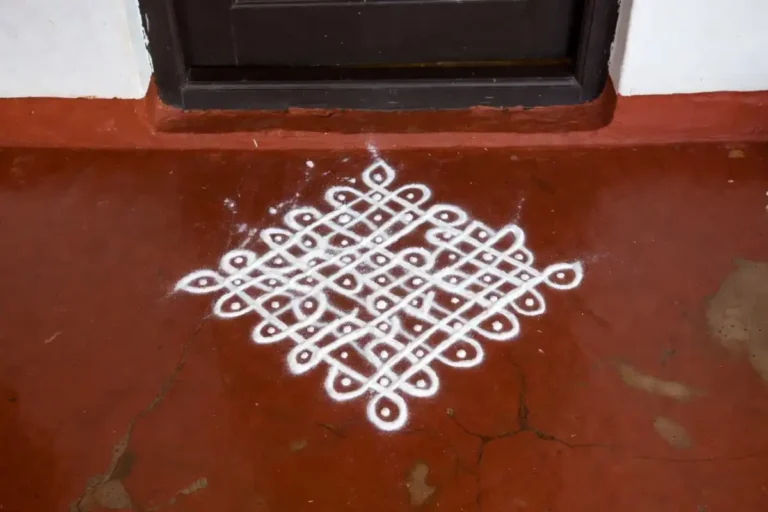
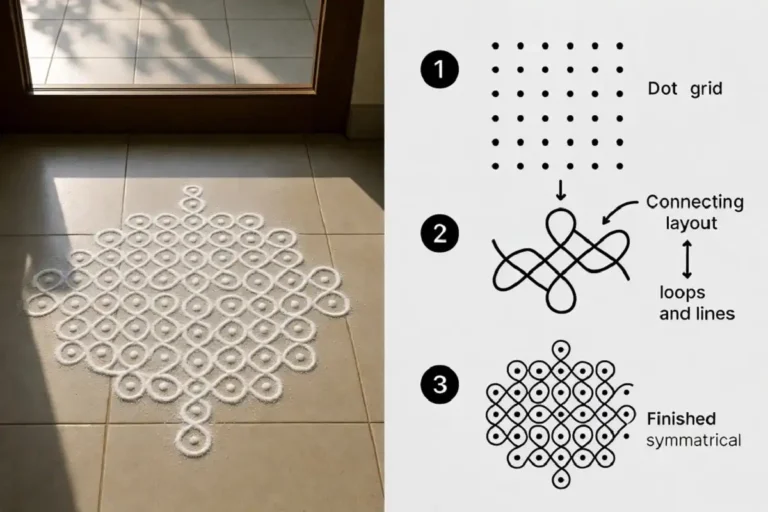
Geometric grid patterns. These start from a dot grid. You connect dots with curved or straight lines to form repeating shapes. South Indian kolam uses this method daily.
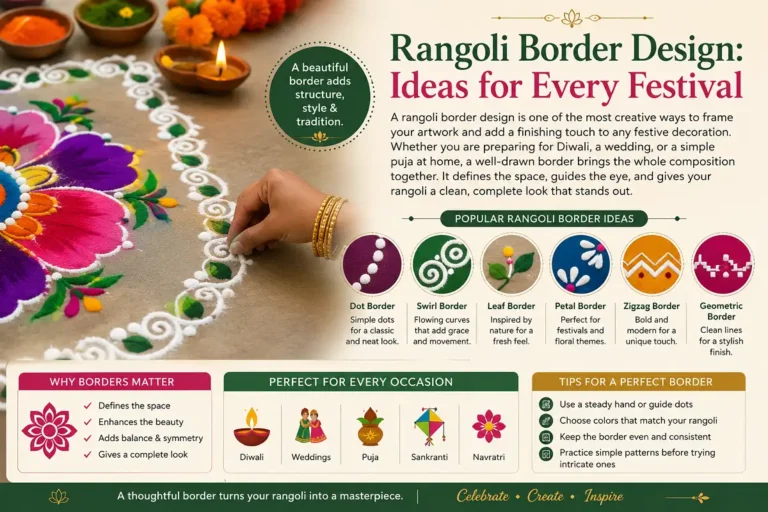
Floral border designs. These frame the main pattern. They work as standalone entrance decoration too.
How Do You Make a traditional rangoli designs for festivals Step by Step?
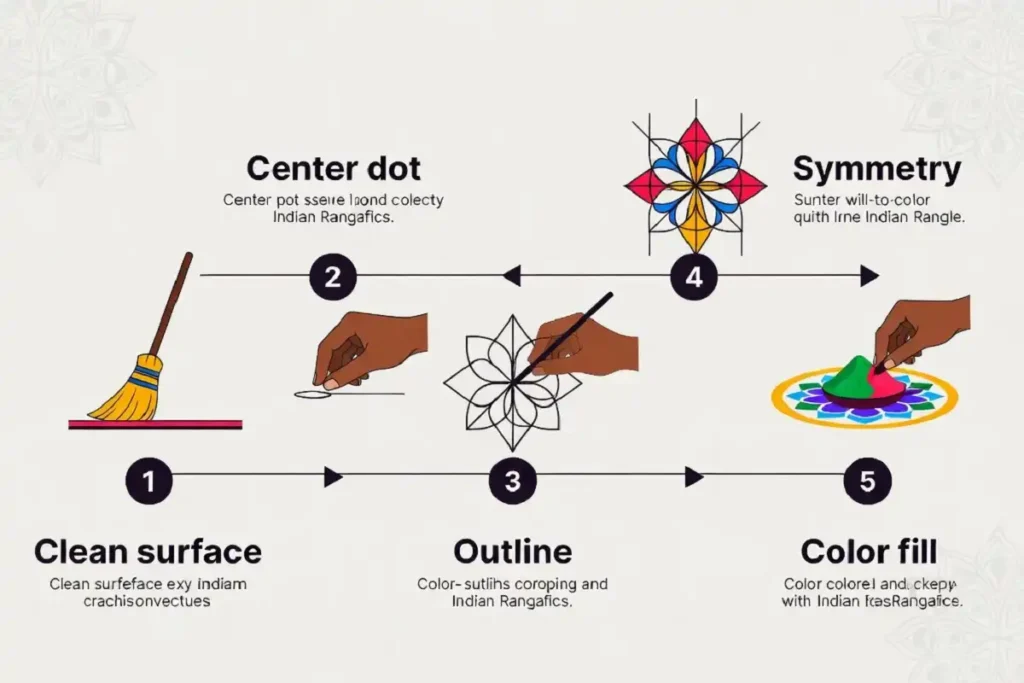
You make a traditional festival rangoli by cleaning the surface, marking a center, building symmetry outward, and filling color last. Here is the method I follow.
First, clean and lightly dampen the floor. A slightly damp surface holds powder better and stops it scattering.
Second, mark your center point. Then place a dot grid if your design needs one. Grids keep large patterns balanced.
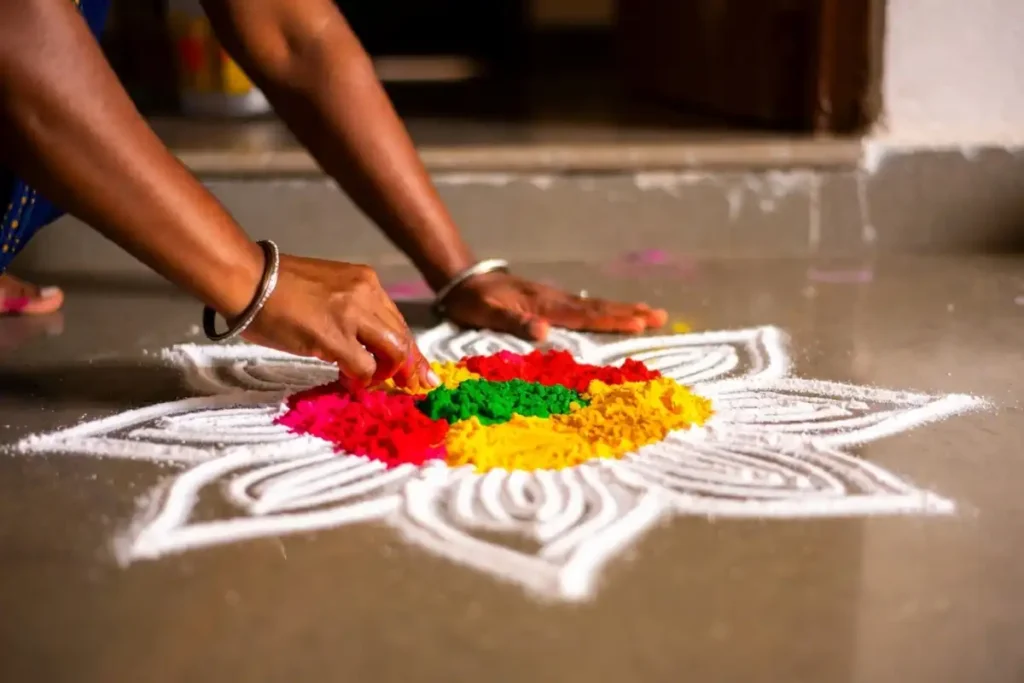
Third, draw the outline. Use a pinch of white rice flour between your thumb and forefinger. Move slowly and let the powder fall in a thin line.
Fourth, build symmetry. Complete one section, then repeat it on the opposite side. Work outward from the center so proportions stay even.
Fifth, fill the color. Start from the inside and move out so you never smudge finished areas. Press diyas or petals in place at the end.
For newcomers who want a gentler start, these rangoli patterns for people just beginning break the steps down further with easier shapes.
What Materials Work Best for Festival Rangoli?
Rice flour and dry colored powder work best, with flower petals and diyas for accent. Your choice depends on the festival and how long you want the design to last.
Rice flour is the traditional base. It is white, biodegradable, and feeds ants and birds, which is part of the old intention behind the practice. Dry colored powder, sold as gulal or rangoli color, gives the bright shades festivals call for.
Flower petals suit Onam and Pongal. Marigold, rose, and jasmine hold their color for a full day. For lasting designs, some people now use colored salt or sand.
Keep a few tools ready. A small cone or bottle helps with fine lines. A flat spoon spreads color evenly in large areas.
Regional Styles You Should Know
India’s rangoli traditions change by region, and knowing them helps you pick an authentic design. Each style carries its own name and rules.
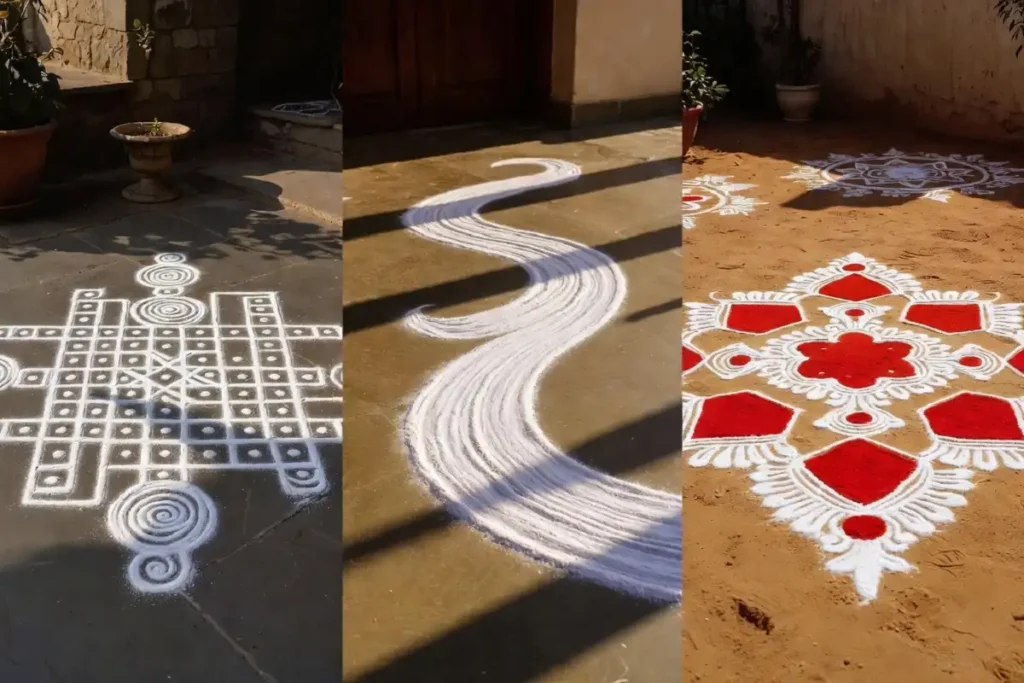
Tamil Nadu has kolam, drawn daily with rice flour in looping symmetrical lines. Andhra Pradesh calls it muggu. Maharashtra uses the word rangoli with bold, colorful festival patterns.
In West Bengal, alpana is painted with a rice-paste liquid, giving smooth flowing lines instead of powder. Rajasthan and Gujarat favor mandana, drawn in red and white on mud walls and floors.
These traditional rangoli designs for festivals share the same spirit but look distinct. Trying a style outside your region is a good way to grow your skill.
Tips to Keep Your Festival Rangoli Looking Fresh
Protect your rangoli from wind and foot traffic to keep it crisp through the celebration. A few habits make a real difference.
Draw in a sheltered corner of the entrance if wind is strong. Pack the powder gently so it settles. Place diyas at the edges to guard the outline and add light.
For outdoor designs, a light mist of water sets loose powder. If rain threatens, a rangoli sticker sheet gives you a backup that survives the weather.
Refresh the center each morning during multi-day festivals. This keeps the whole design bright without redrawing everything.
FAQs

How long does a traditional rangoli take to make?
Can beginners make traditional festival rangoli?
What is the meaning behind festival rangoli?
Is rice flour or colored powder better?
Last Words
Traditional rangoli designs for festivals reward patience and practice more than talent. Pick one motif, learn its symmetry, and build from there. If you want more festival-ready patterns to practice, my beautiful patterns suited to festival celebrations gives you plenty to try. Draw one this season, and your doorstep will say welcome before you do.