Simple and Easy Diwali Rangoli Designs for a Bright Festive Home
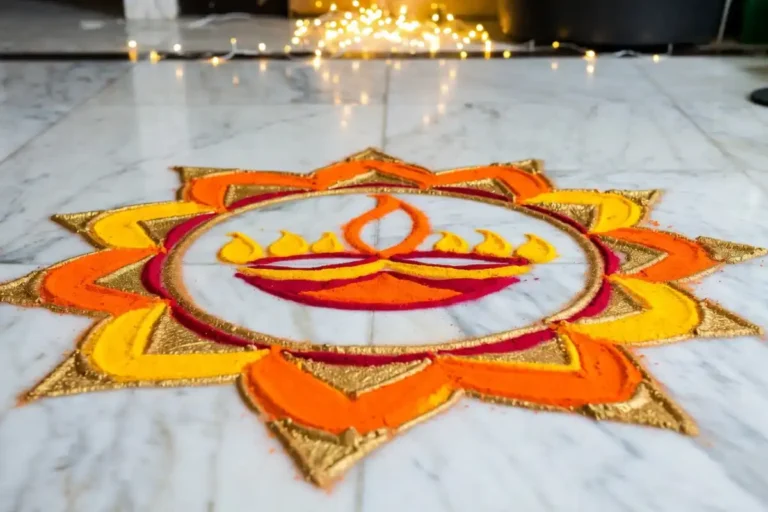
A diwali rangoli design simple and easy is the perfect way to welcome the festival of lights into your home. Rangoli has been part of Diwali celebrations for centuries, and today it remains one of the most beloved ways to decorate a doorstep.
Whether you are making rangoli for the first time or looking for fresh ideas, this guide covers everything you need. You will find patterns, tips, and techniques that make creating a diwali rangoli design simple and easy for everyone, including beginners and children.
Why a Simple Rangoli Is Perfect for Diwali
Many people feel that rangoli requires artistic skill, but that is not true. A diwali rangoli design simple and easy can be just as beautiful and meaningful as an elaborate one. What matters is the care and intention behind it.
Simple designs are quicker to complete, easier to plan, and still create a warm, festive impression at your entrance. During the busy Diwali season, a diwali rangoli design simple and easy saves time without sacrificing beauty.
If you want to see how rangoli fits into the full Diwali setup, this collection of beautiful rangoli ideas for Diwali 2025 offers plenty of inspiration for all skill levels.
What You Need to Get Started
Before drawing your diwali rangoli design simple and easy, gather these basic supplies:
- Rangoli powder or dry colors in 4-5 shades
- White chalk or a rangoli pencil to sketch the outline
- A small spoon or cone-shaped bottle for precision
- Flower petals such as marigold or rose for a natural look
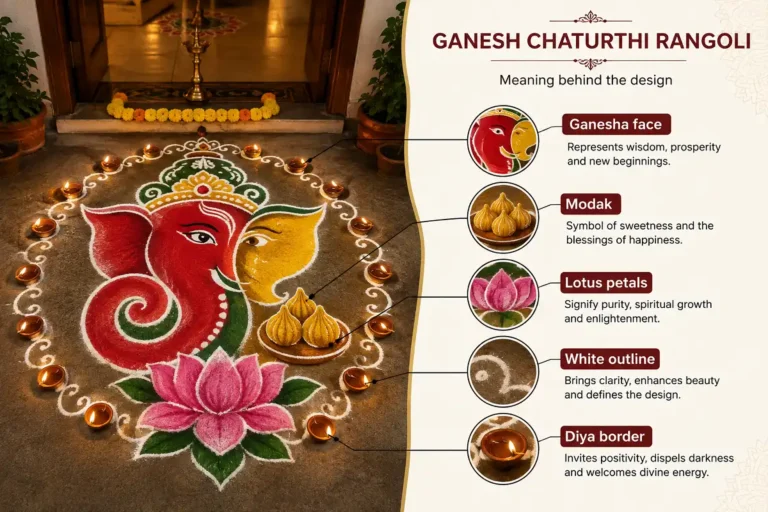
- Small diyas or tea lights to place around the finished design
You do not need expensive tools. A steady hand and a clear outline are enough.
Best Diwali Rangoli Design Simple and Easy Ideas
Dot-Based Rangoli Designs
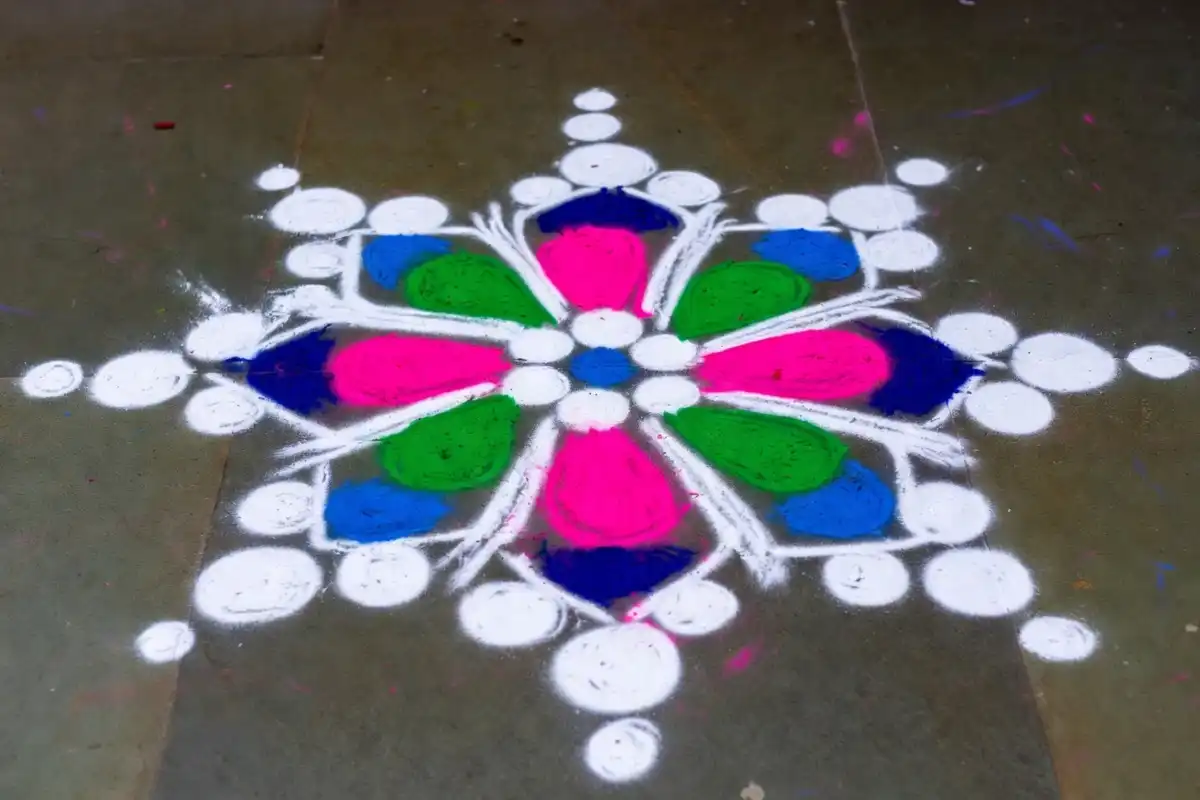
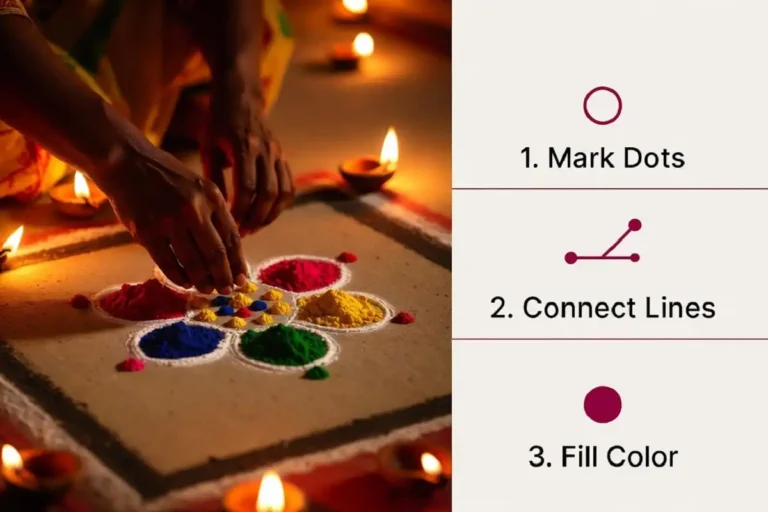
The dot method is the most accessible diwali rangoli design simple and easy technique for beginners. You place evenly spaced dots in a grid, then connect them with curves, petals, or leaves to form a complete pattern.
A 5×5 or 7×7 dot grid is ideal for a standard doorstep. Connect the dots with petal shapes radiating from a central point, then fill each section with a different color. The result looks symmetrical and polished without requiring freehand drawing skills.
This style is also called “kolam” in South India and is one of the oldest forms of floor art in Indian culture.
Floral Rangoli Designs
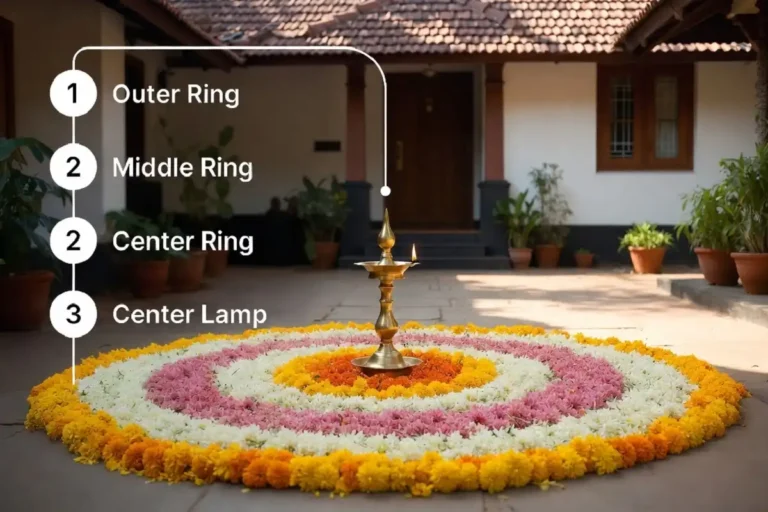
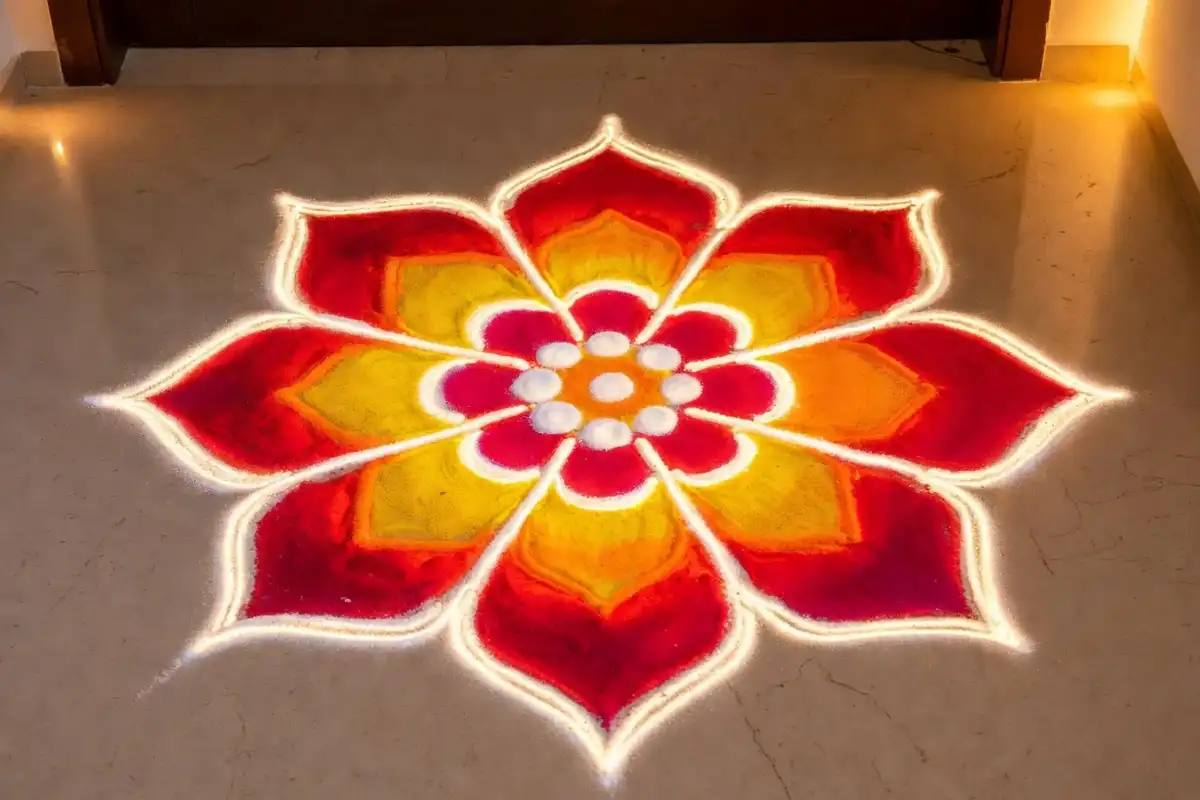
A flower-based diwali rangoli design simple and easy is one of the most popular choices. Draw a circle at the center, add rounded petals in two or three layers outward, and fill alternate petals with contrasting shades like orange and white or pink and green.
Real flower petals are a lovely alternative to powder. Marigold petals are widely available during Diwali and hold their shape beautifully. A petal-only rangoli looks fresh, fragrant, and requires no powder at all.
For designs that combine florals with other motifs, this peacock and flower rangoli guide shows how petals can form stunning layered patterns.
Geometric Rangoli Patterns
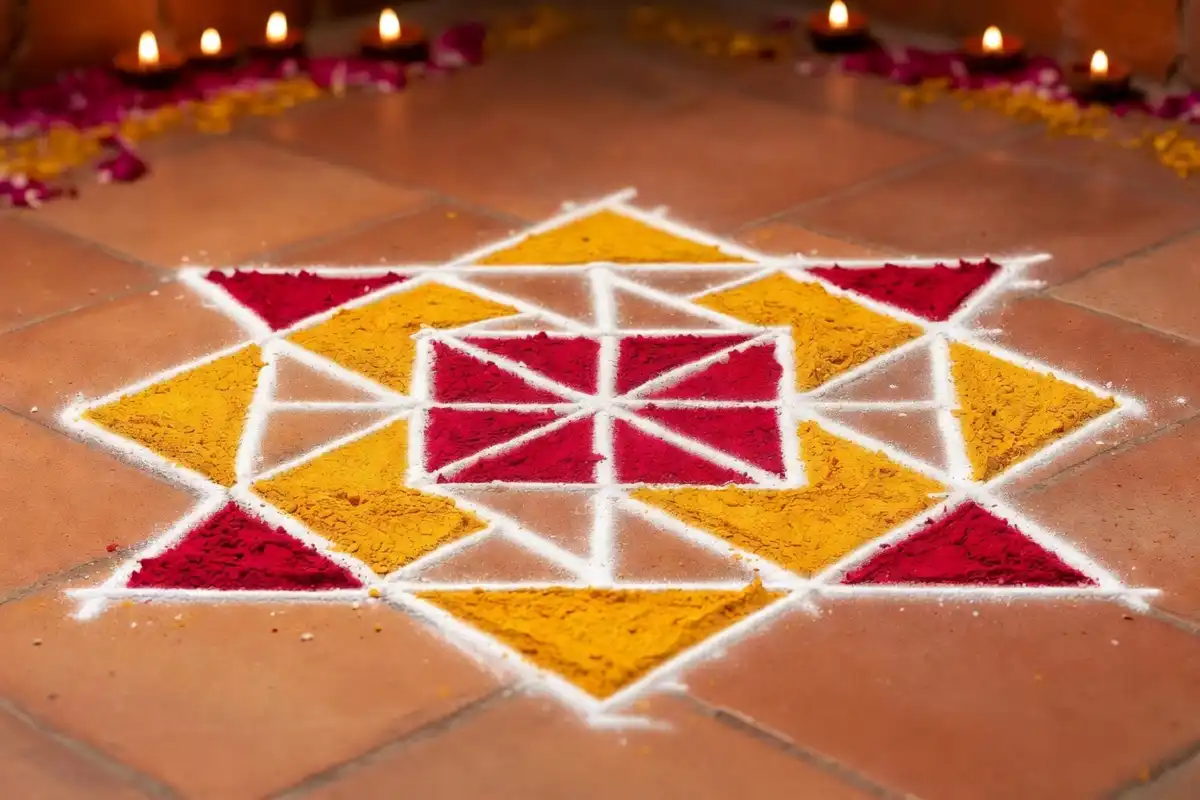
Geometric shapes make for a clean and precise diwali rangoli design simple and easy. Squares, triangles, diamonds, and hexagons arranged in a repeating structure are straightforward to plan and execute.
A square-within-a-square design colored in alternating shades looks modern and crisp. Adding small dots at corners adds detail without extra effort. This style also scales up easily for larger spaces.
For bigger formats, these big rangoli design ideas show how simple geometric shapes can be expanded into impressive floor displays.
Freehand Curved Designs
A freehand diwali rangoli design simple and easy using waves, spirals, and crescents is more achievable than it sounds. Starting with a chalk outline removes most of the pressure.
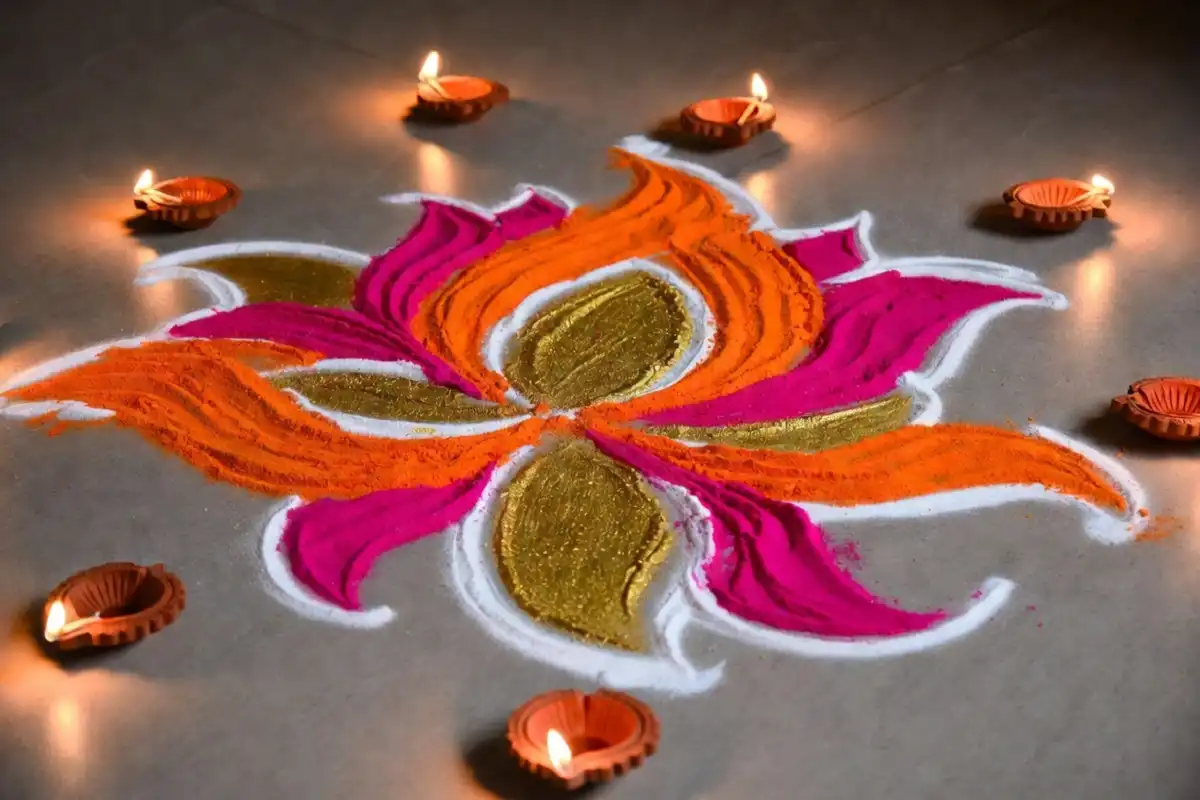
Paisley shapes, known as “mango” or “keri” motifs, are iconic in Indian art. A single large paisley surrounded by smaller ones, filled with 3-4 colors, creates a rich and complete design in a short time.
Step-by-Step: How to Draw a Simple Diwali Rangoli
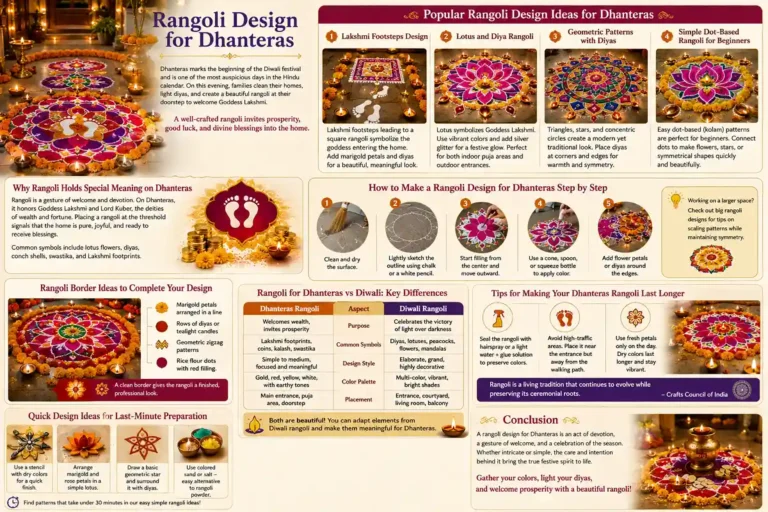
This five-step method produces a neat diwali rangoli design simple and easy in about 20-30 minutes:
Clean and dry the floor surface before you begin.
Draw a small circle in the center using chalk as your anchor.
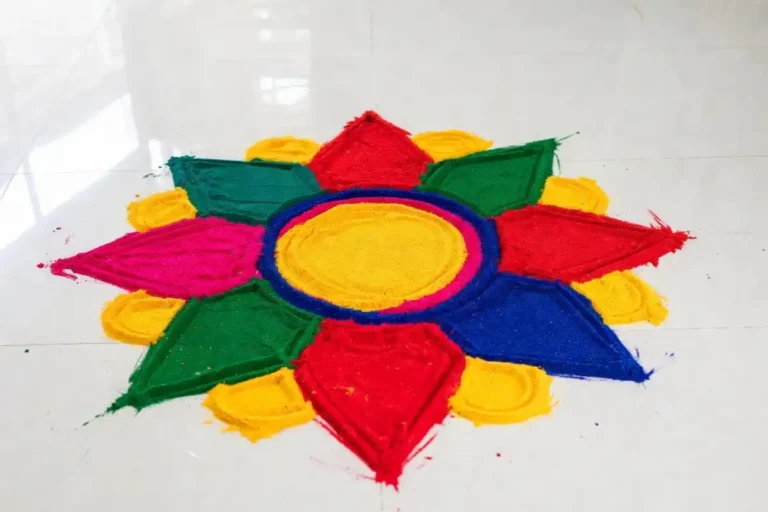
Add 6-8 petal shapes radiating outward from the circle.
Draw a larger circle around the petals and add a second ring of shapes.
Fill each section with a different color, working from the center outward.
Keep a damp cloth nearby to fix smudges. Once complete, place small diyas around the outer edge for a warm, glowing finish.
Tips for a Clean and Colorful Finish
Getting a neat result from your diwali rangoli design simple and easy is easier with a few practical habits:
- Always sketch in chalk before applying any color.
- Use a small cone or squeeze bottle for precise color work along edges.
- Complete one section at a time before moving to the next.
- Avoid blowing on the powder to smooth it, as this causes smearing.
- For outdoor rangoli, a light mist of water or hairspray helps set the colors against wind.
Warm tones like red, orange, yellow, and pink are ideal for Diwali. Adding white as an outline color makes every other shade stand out sharply.
Making Rangoli Without Commercial Powder
A diwali rangoli design simple and easy does not always require store-bought rangoli powder. Several household materials work well:
- Rice flour mixed with natural food coloring
- Powdered turmeric or sindoor for traditional shades
- Colored sand or salt
- Fresh or dried flower petals
Natural materials are a traditional choice and are also safer for children and pets. Many Indian households still use rice flour rangoli because it also feeds small birds and insects, making it a gesture of kindness during the festival.
The easy and simple rangoli ideas for home celebrations include designs that work beautifully with all of these natural alternatives.
Adding a Border to Your Rangoli
A well-drawn border completes any diwali rangoli design simple and easy and frames it neatly. Popular border styles include:
- A row of small dots or diamonds along the outer edge
- Alternating leaf shapes in two contrasting colors
- A continuous wave or zigzag line in white or gold
Borders also prevent colors from bleeding into each other and define the overall shape of the design. You can explore many border variations suited to different festivals in this dedicated rangoli border design collection.
Choosing Colors for Diwali Rangoli
Color selection plays a big role in how your diwali rangoli design simple and easy turns out. Diwali is associated with warmth and brightness, so bold, saturated tones work best.
Traditional Diwali palettes use red, saffron, yellow, and white. Modern interpretations often include purple, teal, and gold. The key is to use colors that contrast well with each other so that each section of the pattern is clearly visible.
Rangoli Safety for Families
If children or pets are at home, use natural or organic rangoli colors for your diwali rangoli design simple and easy. Synthetic dyes in some commercial powders can irritate skin or cause staining on fabrics and floors.
Place a light string or small pebble barrier around the design to prevent it from being disturbed during celebrations. For a design meant to last multiple days, a very fine mist of craft adhesive on the surface helps preserve it.
For more festive design inspiration beyond Diwali, this gallery of beautiful rangoli designs for festivals covers ideas for every major celebration throughout the year.
Conclusion
A diwali rangoli design simple and easy is one of the most joyful ways to celebrate the festival of lights. You do not need advanced skills or expensive supplies to create something that looks wonderful.
From dot-based patterns to floral arrangements and geometric layouts, there is a style for every skill level and every home.
FAQ
What is the best diwali rangoli design simple and easy for a beginner?
Dot-based rangoli is the best starting point for beginners. A simple 5×5 dot grid connected with petal shapes produces a complete, attractive pattern in under 20 minutes and requires no freehand drawing skill.
How many colors should I use in a simple Diwali rangoli?
Three to five colors is the ideal range for a diwali rangoli design simple and easy. Using too few colors makes the pattern look flat, while too many can make it look cluttered. Stick to shades that contrast well with each other.
Can I make a diwali rangoli design simple and easy without powder?
Yes. Rice flour, flower petals, colored sand, and salt mixed with food dye are all reliable alternatives. These natural materials are traditional, child-safe, and widely available during the festive season.
How long does it take to draw a simple Diwali rangoli?
A basic diwali rangoli design simple and easy takes between 20 and 40 minutes depending on size and complexity. Dot-based patterns are the quickest, while freehand or multi-layered floral designs may take a little longer.
How do I keep my rangoli from getting damaged?
For indoor rangoli, keeping the area undisturbed is usually enough. For outdoor designs, a light spray of water or a thin mist of hairspray can seal the surface and protect it from wind. Placing diyas or stones around the border also acts as a natural barrier.