Rangoli Design for Dhanteras: Beautiful Ideas to Welcome Wealth and Light
Dhanteras marks the beginning of the Diwali festival and is one of the most auspicious days in the Hindu calendar. On this evening, families clean their homes, light diyas, and create a beautiful rangoli design for Dhanteras at their doorstep to welcome Goddess Lakshmi.
A well-crafted rangoli is believed to invite prosperity, good luck, and divine blessings into the home. Whether you prefer traditional patterns or something more creative, there is a design suited for every skill level and every home.
Why Rangoli Holds Special Meaning on Dhanteras
Rangoli is not just a decorative art. It is a gesture of welcome and devotion. On Dhanteras, the main intention is to honor Goddess Lakshmi and Lord Kuber, the deities of wealth and fortune. Placing a rangoli design for Dhanteras at the threshold signals to divine energies that the home is pure, joyful, and ready to receive blessings.
Traditionally, rangoli for this occasion is made using colored powders, flower petals, or rice flour. The patterns often include lotus flowers, diyas, conch shells, and auspicious symbols like the swastika or footprints of Goddess Lakshmi.
A Symbol of Welcome, Wealth & Blessings
Popular Rangoli Design Ideas for Dhanteras
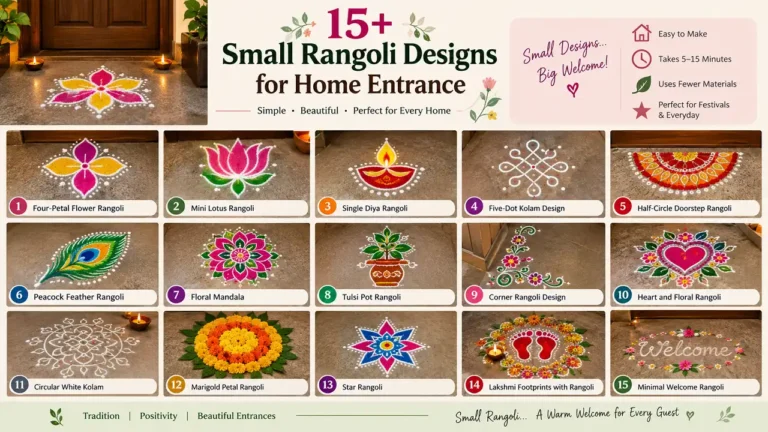
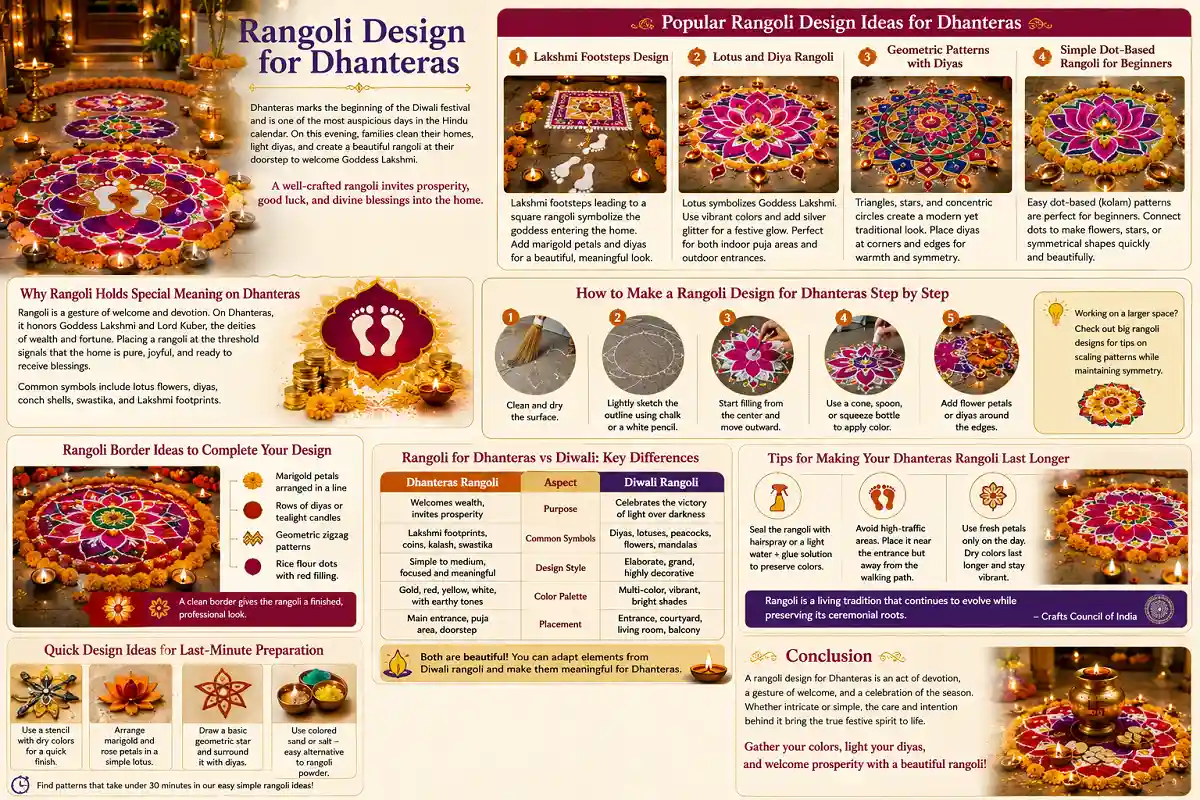
Lakshmi Footsteps Design
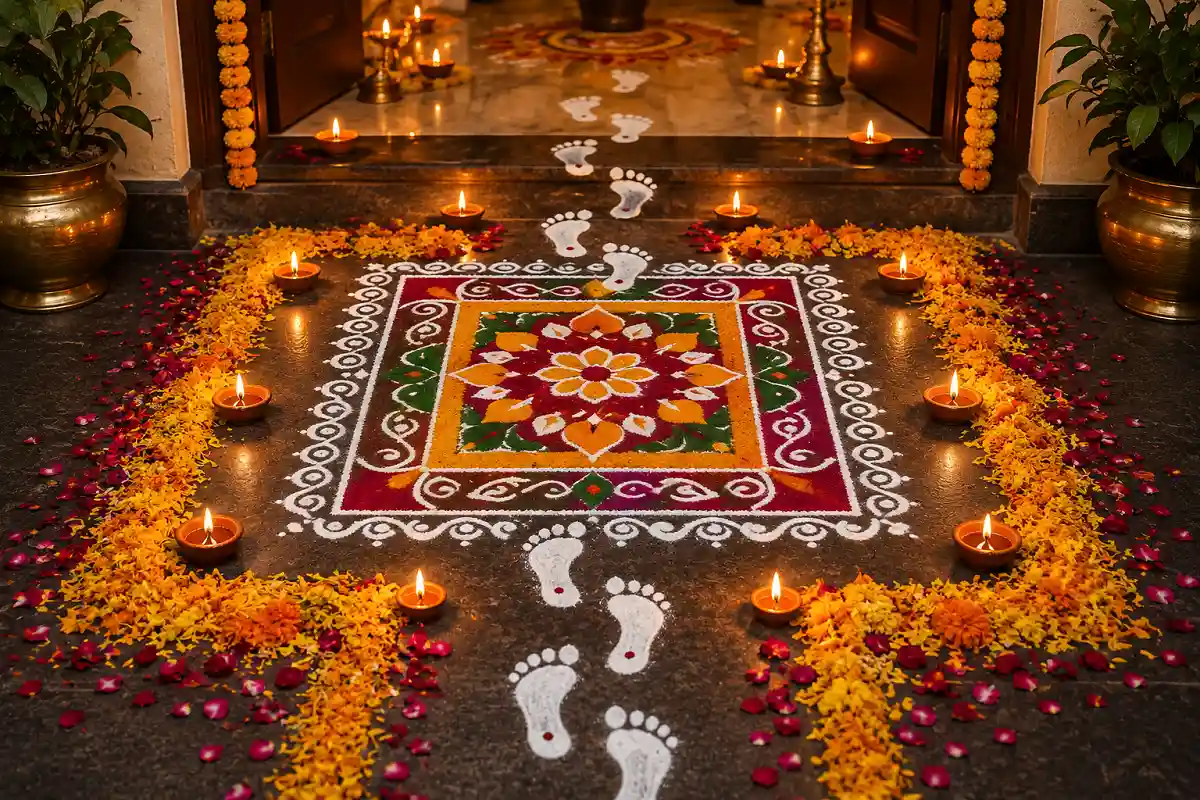
One of the most beloved rangoli design for Dhanteras ideas is the Lakshmi footsteps pattern. Small white feet are drawn leading from the main entrance toward the puja room, symbolizing the goddess entering the home. Surrounding this with a border of marigold petals and small oil lamps creates a stunning and deeply meaningful composition.
For a cleaner layout, pair the footsteps with a square rangoli design placed at the center of the entrance. The geometric frame anchors the design beautifully.
Lotus and Diya Rangoli
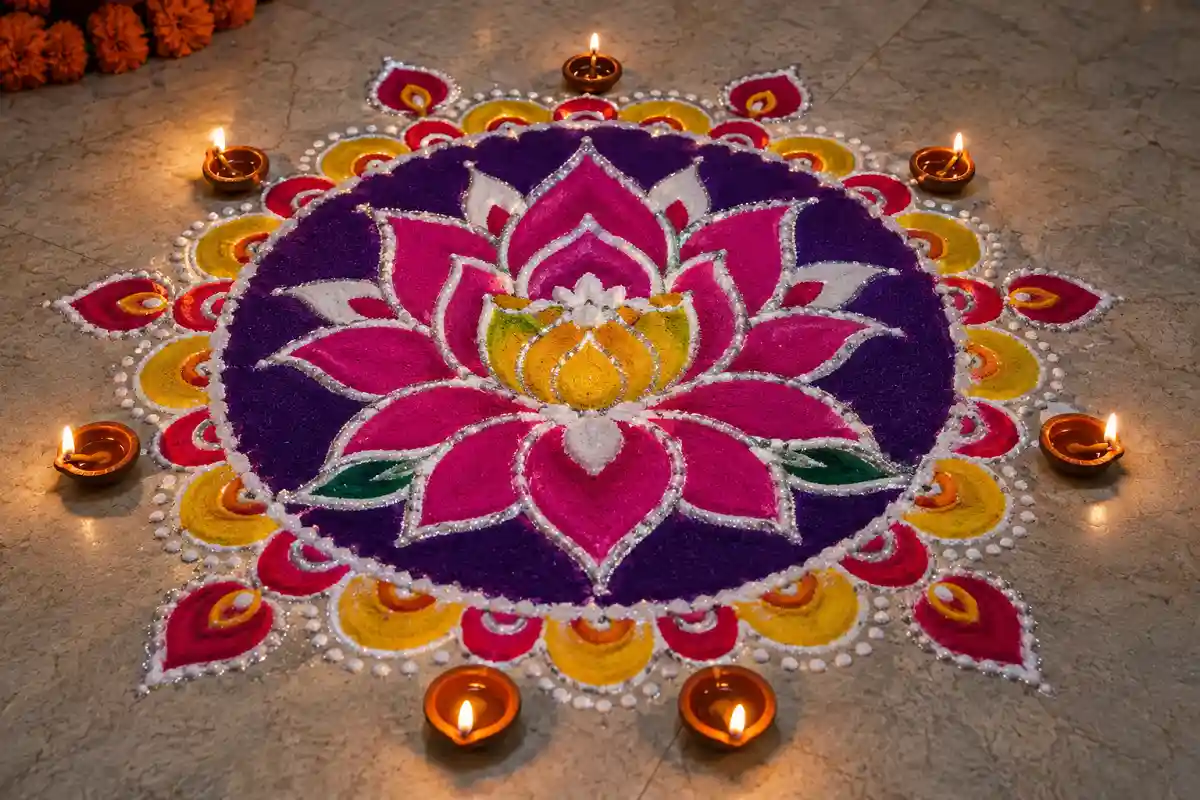
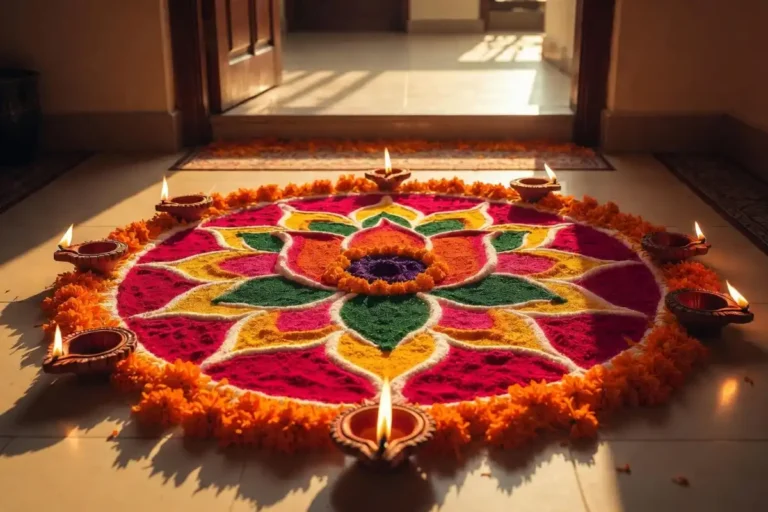
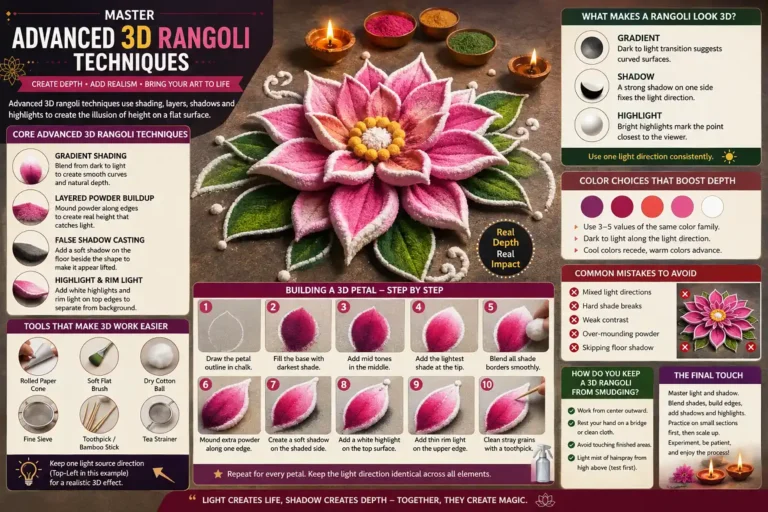
The lotus is one of the most sacred symbols in Hinduism and is directly associated with Goddess Lakshmi. A rangoli design for Dhanteras built around a lotus motif, created with vibrant pink, yellow, and white colors and surrounded by small diya shapes, is both traditional and visually striking. You can fill the petals with dry colors and use silver glitter to add a festive glow.
This type of design works well both indoors near the puja area and outdoors at the main door. If you want step-by-step help with floral patterns, explore these peacock and flower rangoli ideas for inspiration on petal shaping and color blending.
Geometric Patterns with Diyas
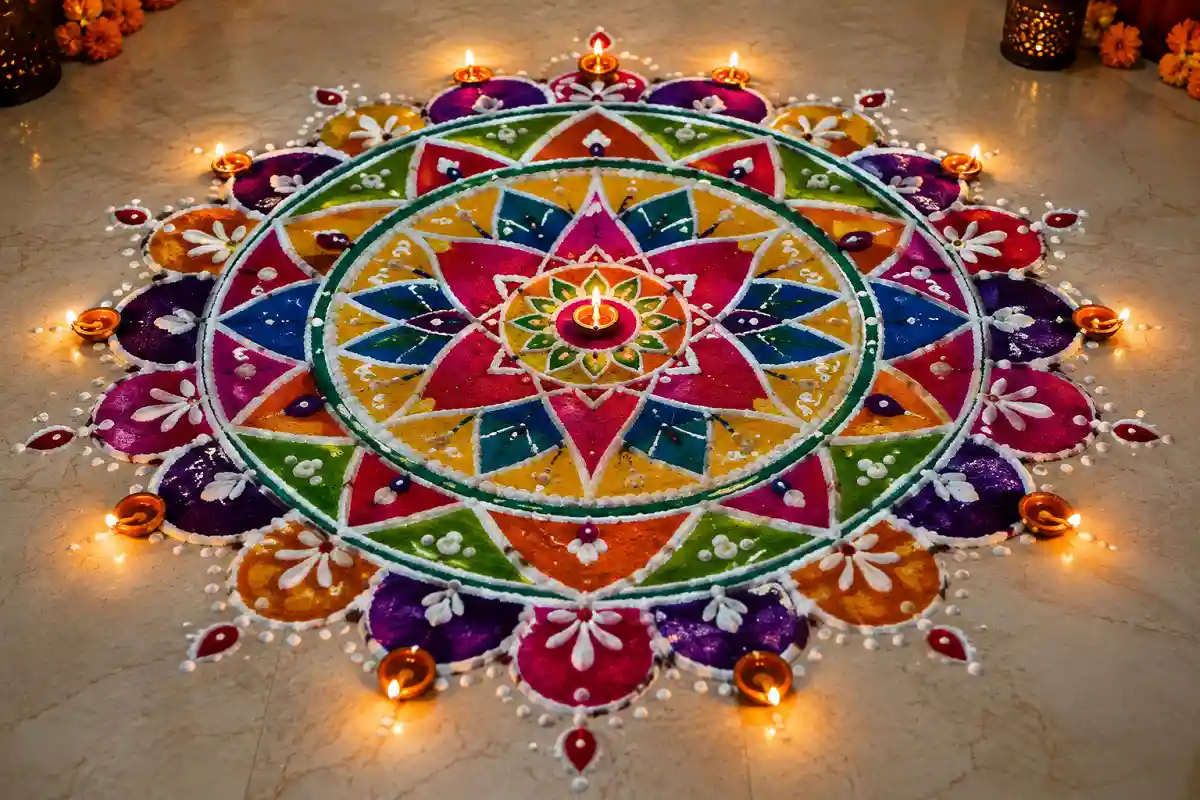
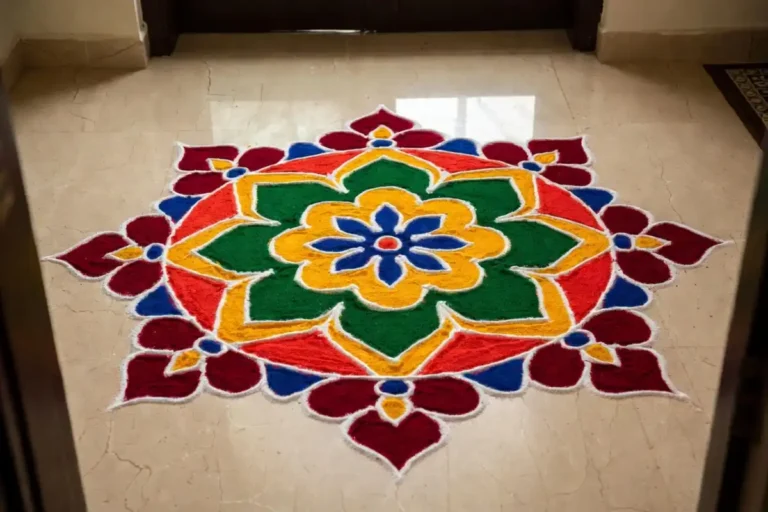
Geometric rangoli is a wonderful choice if you want precision and symmetry. Patterns featuring triangles, stars, and concentric circles give a modern yet traditional feel. Placing small diyas at the corners and edges adds warmth and an authentic festive touch.
These designs are especially striking when created on a larger scale. Check out big circle rangoli design ideas to find circular geometric templates that work well for Dhanteras layouts.
Balance Geometry With Warmth
Keep the geometric structure clean and symmetrical, then soften the composition with small diyas or flower accents around the edges.
Simple Dot-Based Rangoli for Beginners
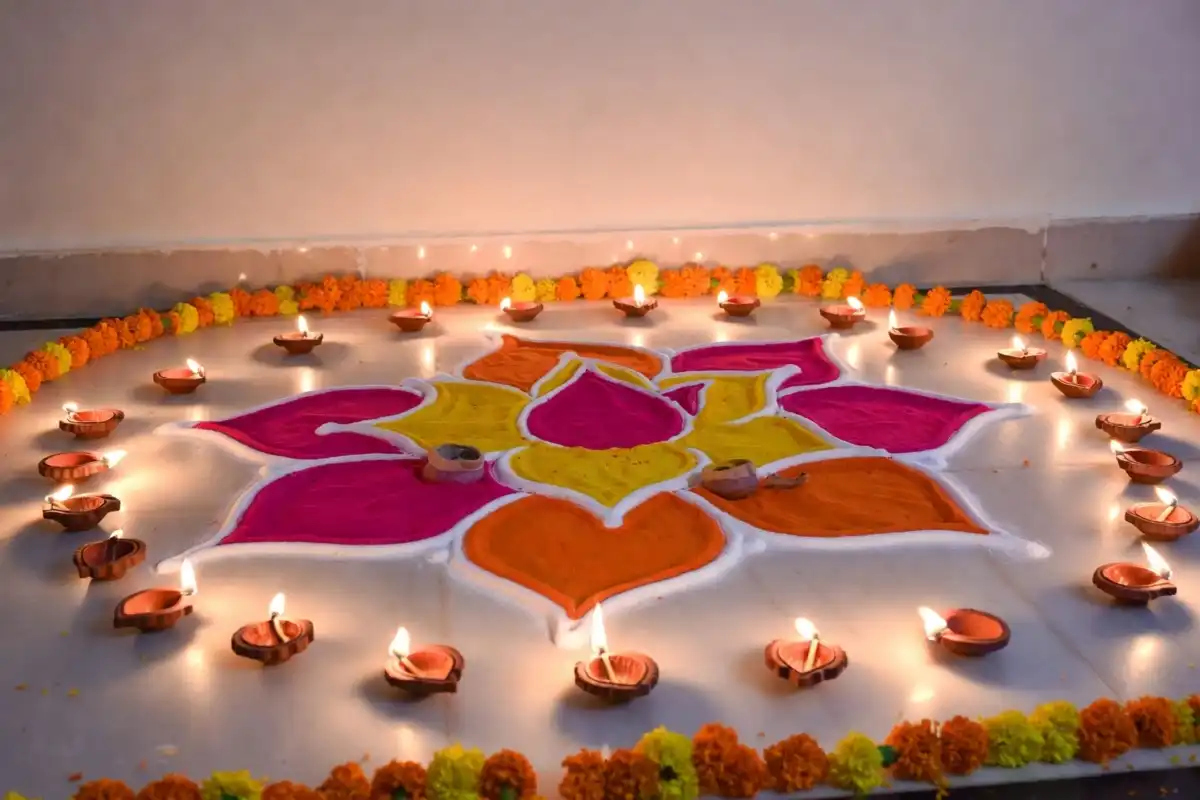
If you are trying a rangoli design for Dhanteras for the first time, dot-based patterns are the easiest starting point. You place dots in a grid and connect them to form flowers, stars, or symmetrical shapes. These are known as kolam or pulli kolam in South India and are equally meaningful for this celebration.
For approachable patterns that anyone can follow, these simple rangoli design ideas offer excellent guidance for beginners working with limited time or materials.
Traditional Colors Used in Dhanteras Rangoli
Color choice plays a significant role in making the rangoli design for Dhanteras visually appealing and symbolically appropriate. The following colors are commonly used:
- Yellow and orange: Associated with prosperity and Goddess Lakshmi
- Red: Represents good fortune and power
- White: Used for outlines and Lakshmi footsteps
- Green: Adds freshness and is often used for leaf motifs
- Gold or silver glitter: Adds a premium festive finish for special occasions
Natural materials like turmeric, sindoor, rice flour, and flower petals are traditional choices. Dry synthetic colors work well for detailed and long-lasting designs.
How to Make a Rangoli Design for Dhanteras Step by Step
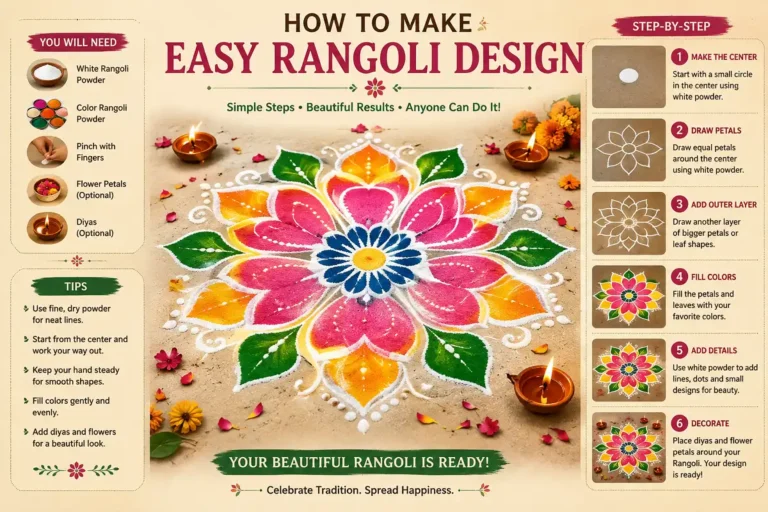
Creating a rangoli design for Dhanteras does not require professional skills. Here is a simple approach anyone can follow.
Step 1: Clean and dry the surface where you plan to draw the rangoli.
Step 2: Lightly sketch the outline using chalk or a white pencil. This acts as a guide.
Step 3: Start filling from the center and move outward. This prevents smudging.
Step 4: Use a cone, spoon, or squeeze bottle to apply colored powder with control.
Step 5: Add flower petals or diyas around the edges to complete the composition.
If you are working on a larger space, this guide to big rangoli designs for every occasion offers detailed tips on scaling up patterns without losing symmetry.
Rangoli Border Ideas to Complete Your Design
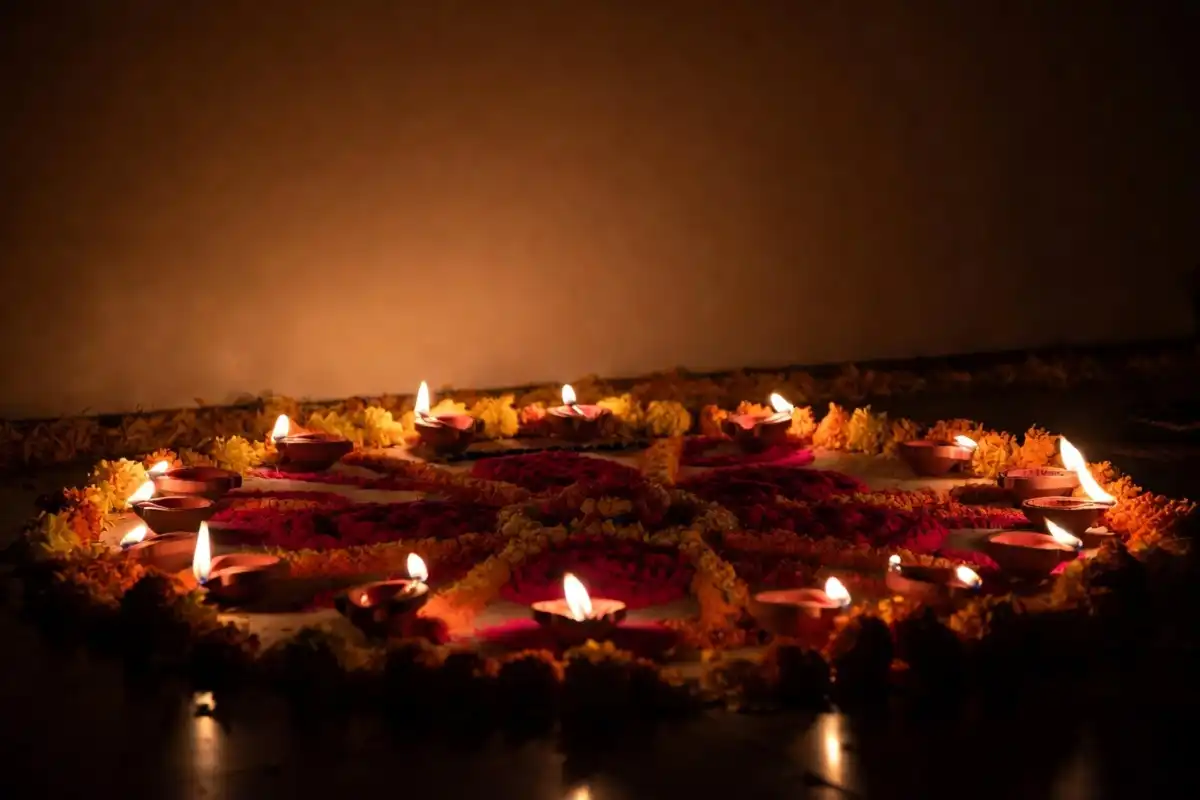
A well-defined border elevates any rangoli design for Dhanteras. For this occasion, borders can be made using:
- Marigold petals arranged in a continuous line
- Rows of small diyas or tealight candles
- Geometric zigzag patterns in contrasting colors
- Rice flour dots with red filling
A clean border gives the rangoli a finished, professional look. For dedicated inspiration, visit this collection of rangoli border design ideas for every festival to find patterns that complement Dhanteras themes.
Rangoli for Dhanteras vs Diwali: Key Differences
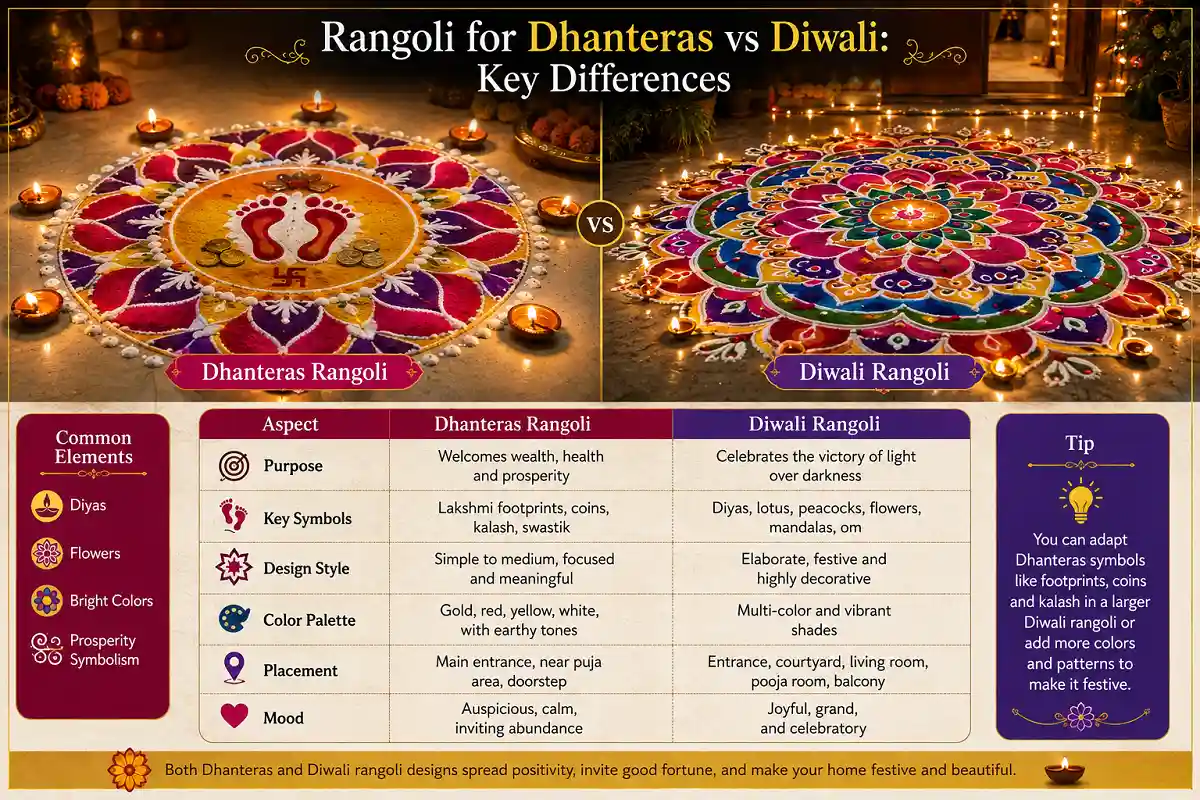
Many people wonder whether the same rangoli design for Dhanteras works for Diwali as well. The core patterns are often similar, but the intentions differ slightly.
Dhanteras rangoli focuses more on welcoming wealth and includes specific symbols like Lakshmi footsteps, coins, and the swastika. Diwali rangoli tends to be more elaborate and celebratory, often featuring larger and more colorful compositions.
Wealth & Welcome
- Lakshmi footsteps
- Prosperity symbols
- Coins and auspicious motifs
- Welcoming the goddess
Celebration & Light
- Larger compositions
- Bright color combinations
- Diyas and floral motifs
- More elaborate patterns
You can explore rangoli design ideas for Diwali to see how the two occasions call for different scales and themes, then adapt the elements you like for Dhanteras.
Tips for Making Your Dhanteras Rangoli Last Longer
A few practical steps help preserve your rangoli design for Dhanteras through the evening puja and beyond.
First, apply a thin layer of hairspray or a water and glue mixture lightly over dry colors once the design is complete. This seals the powder without dulling the colors.
Second, avoid placing the rangoli in high-traffic areas where it is likely to be disturbed. Near the main door is traditional, but slightly to the side of the walking path is more practical.
Third, use fresh flower petals only on the day itself, as they wilt quickly. For a design that stays vibrant for multiple days, dry colors are more reliable.
According to the Crafts Council of India, traditional floor art techniques including rangoli are living traditions that continue to evolve while preserving their ceremonial roots.
Quick Design Ideas for Last-Minute Preparation
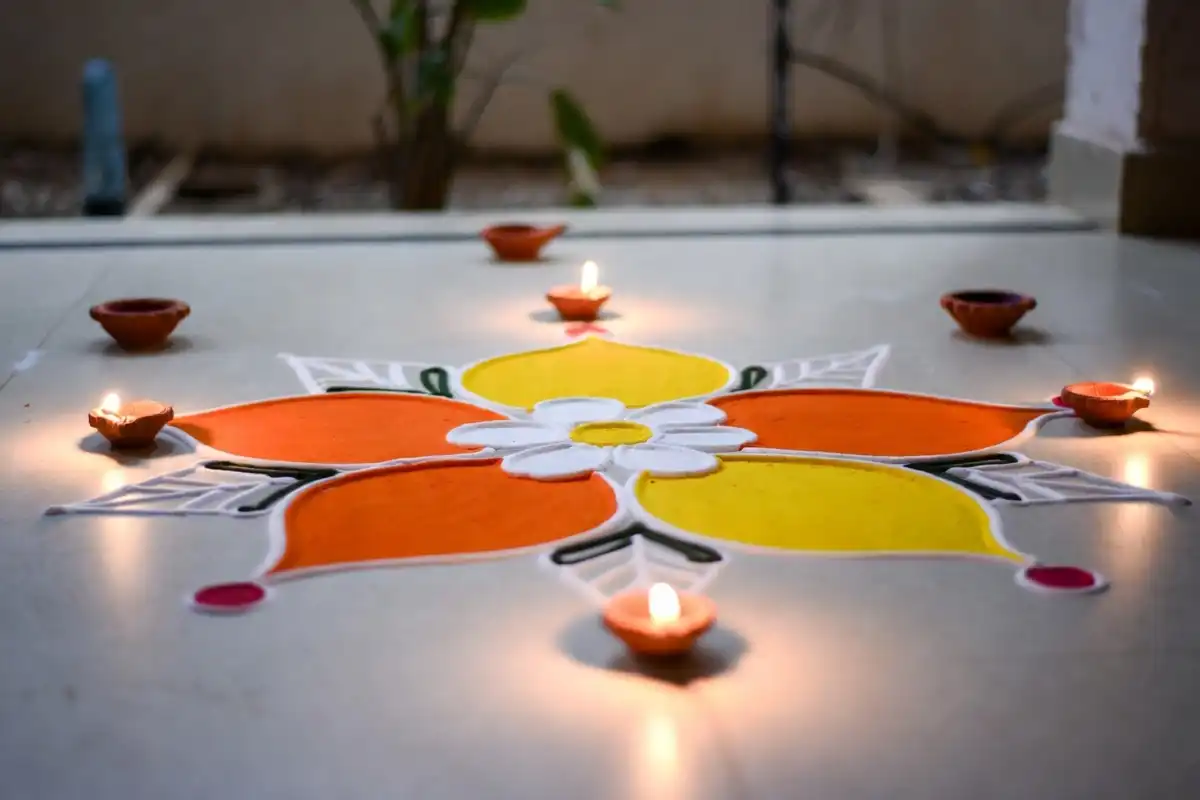
If you are short on time, these fast ideas still create a meaningful rangoli design for Dhanteras:
- Use a stencil with dry colors for a clean, quick finish
- Arrange marigold petals and rose petals in a simple lotus shape
- Draw a basic geometric star and surround it with diyas
- Use colored sand or salt for an easy alternative to rangoli powder
For ready-to-use patterns that take under 30 minutes, this list of easy simple rangoli designs for Diwali at home works equally well for Dhanteras with minor adjustments.
Stencil + Marigold + Diyas
For a polished festive entrance in less time, combine a simple stencil pattern with marigold petals and a few diyas around the outer edge.
Conclusion
A rangoli design for Dhanteras is much more than a visual decoration. It is an act of devotion, a gesture of welcome, and a celebration of the season. Whether you create an intricate lotus pattern or a simple geometric design, what matters most is the care and intention behind it. Start with whatever design feels right for your skill level, gather your colors and petals, and let the creative process be part of the festive joy.
Let Your Rangoli Welcome the Festival
Choose a design that feels meaningful to you, keep the composition neat, and let your creativity become part of the Dhanteras celebration.
FAQ
What is the best rangoli design for Dhanteras?
The best rangoli design for Dhanteras combines auspicious symbols with vibrant colors. Lotus patterns with Lakshmi footsteps, geometric star designs with diya motifs, and floral rangoli using marigold petals are all considered ideal for this occasion. Choose based on your skill level and available time.
Which colors are lucky for Dhanteras rangoli?
Yellow, orange, and red are considered the most auspicious colors for this festival. These shades are associated with Goddess Lakshmi and are believed to attract wealth and positive energy into the home.
Can beginners make a rangoli design for Dhanteras?
Yes, beginners can absolutely create a beautiful rangoli design for Dhanteras. Dot-based kolam patterns, stencil designs, and petal arrangements require no prior experience and still produce stunning results. Starting with a simple geometric shape and gradually adding details is the easiest approach.
How big should a Dhanteras rangoli be?
The size depends on the available space. A small rangoli of 2 to 3 feet across works well for apartment entrances, while larger homes can accommodate designs of 5 feet or more. What matters more than size is the clarity of the pattern and the neatness of the colors.
What materials are used in a rangoli design for Dhanteras?
Common materials include dry colored powders, rice flour, flower petals, turmeric, and colored sand. Diyas, coins, and small idols are often placed alongside the rangoli to enhance its devotional quality. Natural materials are preferred for traditional designs.
Is it necessary to include Lakshmi footsteps in Dhanteras rangoli?
It is not mandatory, but it is a widely followed tradition. Lakshmi footsteps made with white powder or rice flour at the entrance are believed to invite the goddess into the home. They can be added as a simple addition to any existing pattern.