Big Rangoli Design: Top Ideas for Every Occasion
A big rangoli design can completely transform an ordinary floor into a beautiful work of art. Whether it is created at a home entrance, temple courtyard, wedding venue, or community space, a large rangoli naturally becomes the center of attention.
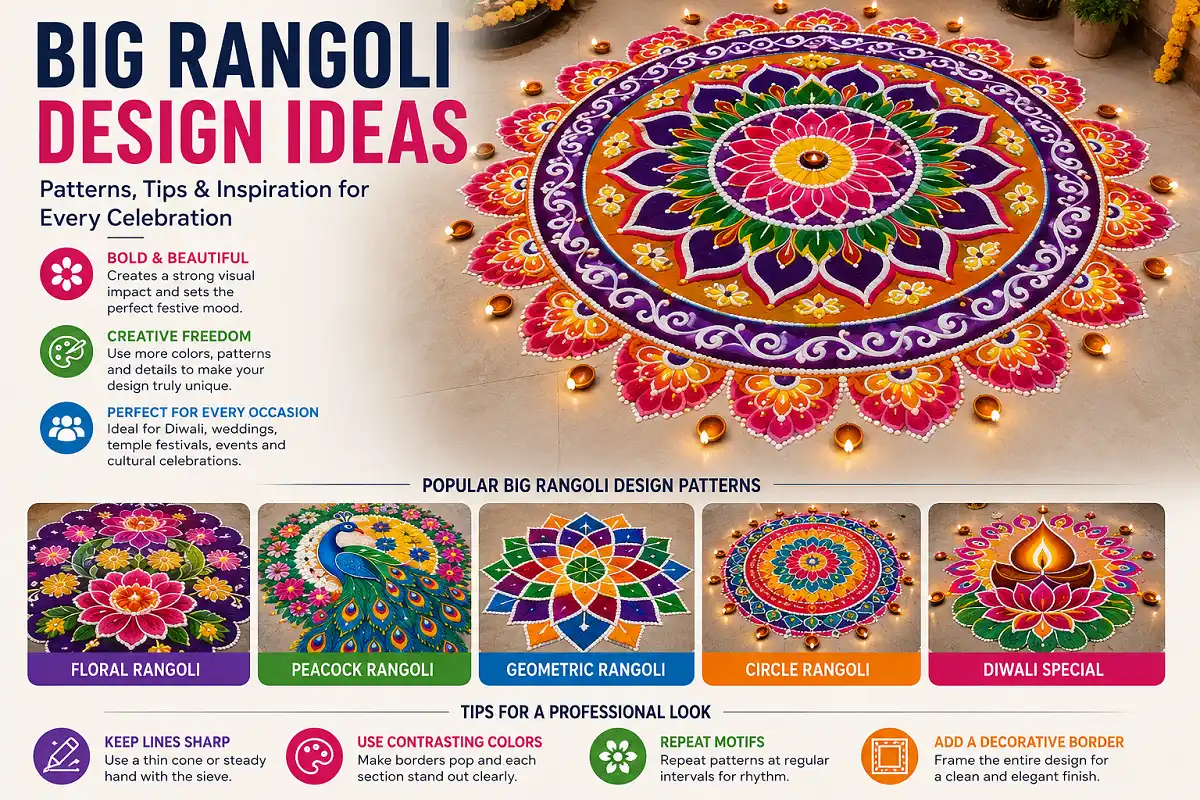
Large rangoli designs give you more room to experiment with colors, patterns, flowers, peacocks, diyas, geometric shapes, and decorative borders. This guide explores popular big rangoli design ideas along with practical tips for planning and creating one successfully.
Why Choose a Big Rangoli Design?
A larger rangoli naturally creates a stronger visual impact. While a small design may disappear in a spacious area, a big rangoli fills the floor with color and immediately creates a festive atmosphere.
The additional space also gives you more creative freedom. You can combine several motifs, introduce multiple color zones, and include details such as flowers, peacocks, diyas, geometric patterns, and elaborate borders.
Popular Big Rangoli Design Patterns
Floral Big Rangoli Design
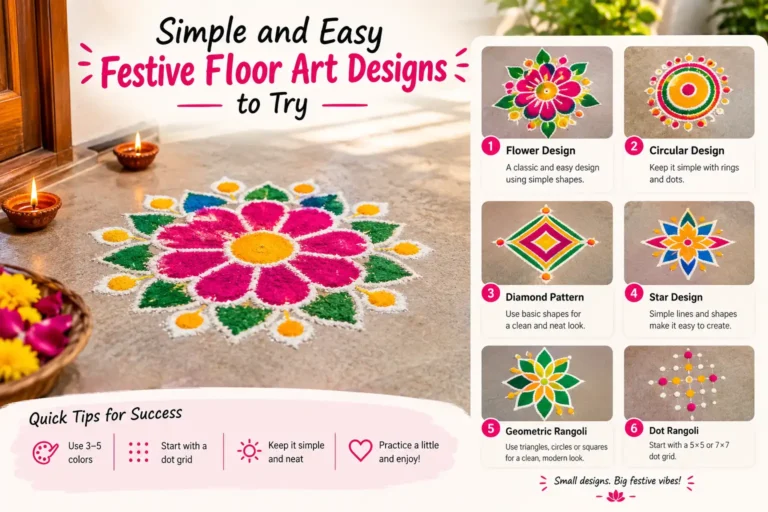
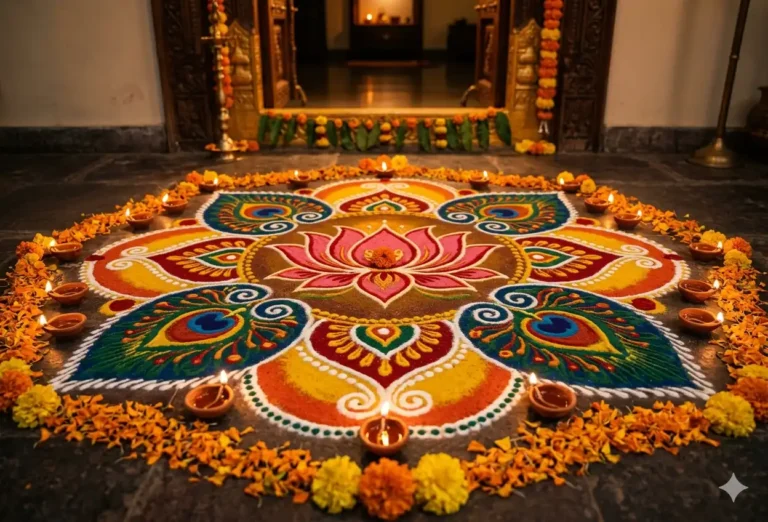
Floral patterns are among the most traditional choices for a large rangoli. A central lotus surrounded by layers of petals and leafy borders creates a rich and symmetrical composition.
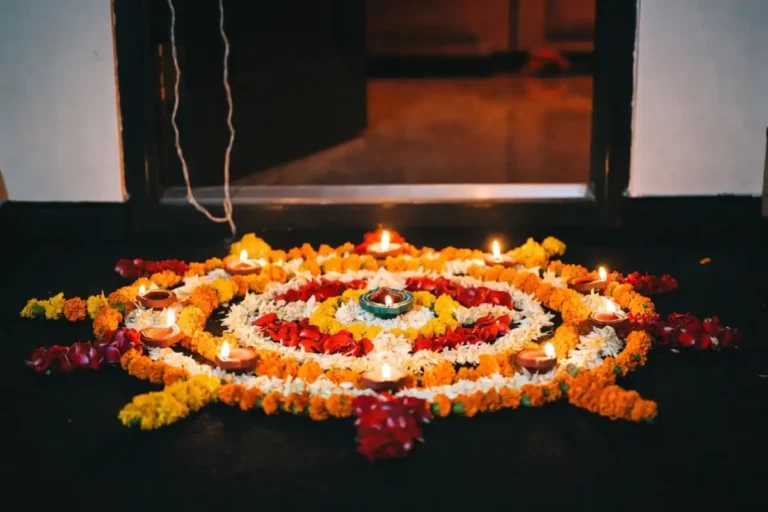
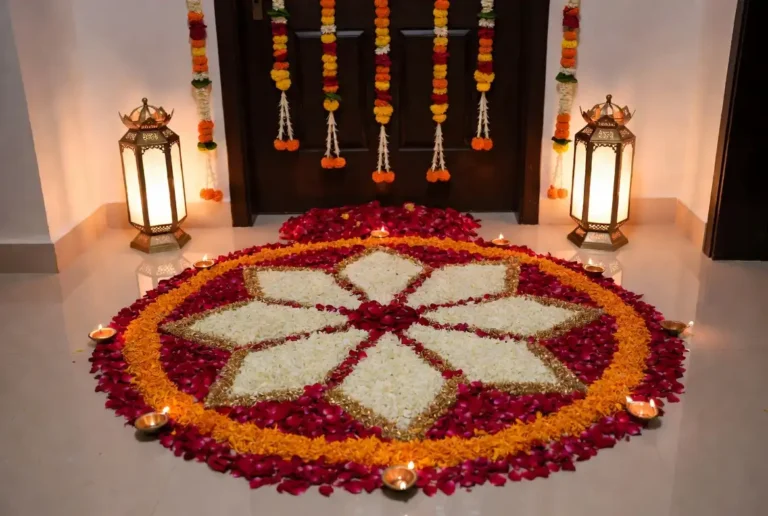
Marigold petals can be used for a textured natural effect, while colored powder is ideal when you want crisp outlines and detailed shapes. Roses, sunflowers, and jasmine-inspired motifs can also be expanded beautifully across a large floor.
Explore peacock flower rangoli designs →Peacock Big Rangoli Design
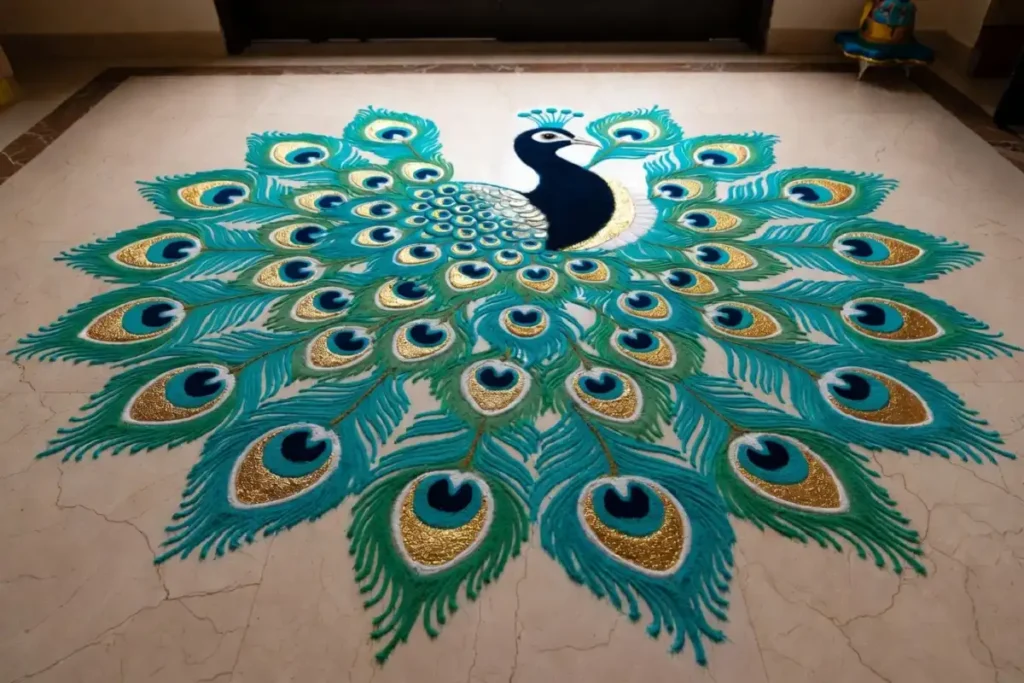
The peacock is one of the most recognizable motifs in Indian rangoli art. A large peacock design gives you enough space to show the intricate details of the feathers, body, and decorative eye patterns.
You can use one large peacock as the focal point or create two symmetrical peacocks facing each other. Floral details around the birds can help connect the entire composition.
See beautiful peacock rangoli ideas →Geometric Big Rangoli Design
Geometric rangoli designs use triangles, hexagons, stars, circles, squares, and repeating patterns to create a structured appearance. These designs become particularly impressive when enlarged because their symmetry becomes easier to appreciate.
Square-based patterns are especially useful on large flat surfaces because their grid structure makes the design easier to measure and reproduce accurately.
Explore square rangoli design ideas →Big Circle Rangoli Design
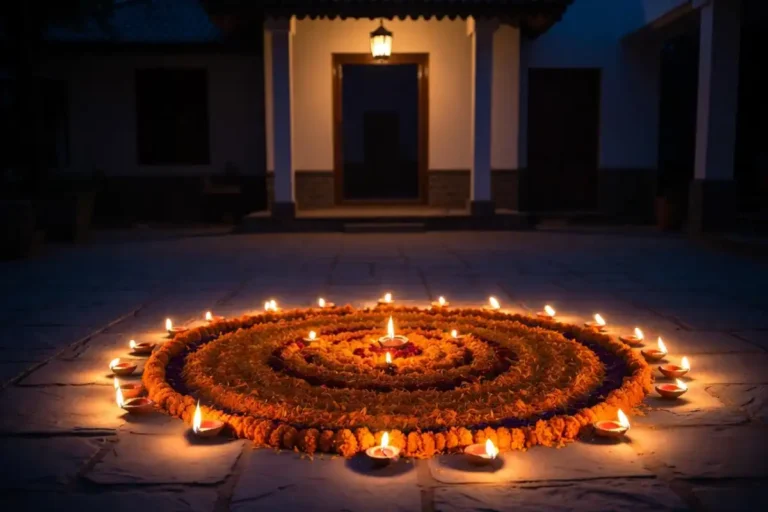
Circular layouts are one of the easiest formats to expand into a large rangoli. Begin from the center and build outward using concentric rings. Each ring can introduce a new color, motif, or decorative pattern.
This approach naturally keeps the composition balanced while giving you plenty of room to experiment with layered details.
Discover big circle rangoli ideas →Diwali Special Big Rangoli Design
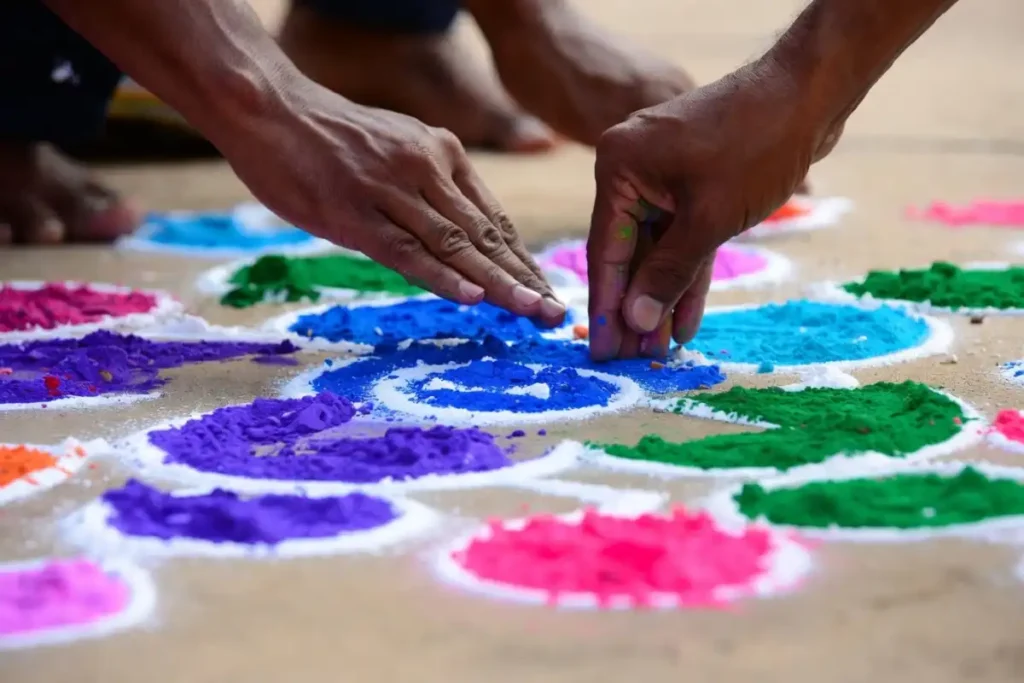
Diwali is the perfect occasion for creating a grand rangoli. Traditional designs often feature diyas, lotus flowers, lamps, and Lakshmi-inspired motifs.
Warm shades such as orange, red, yellow, and gold create a festive appearance. Adding small diyas around the completed border can make the design look especially beautiful after sunset.
Explore Diwali rangoli ideas →How to Plan a Big Rangoli Design
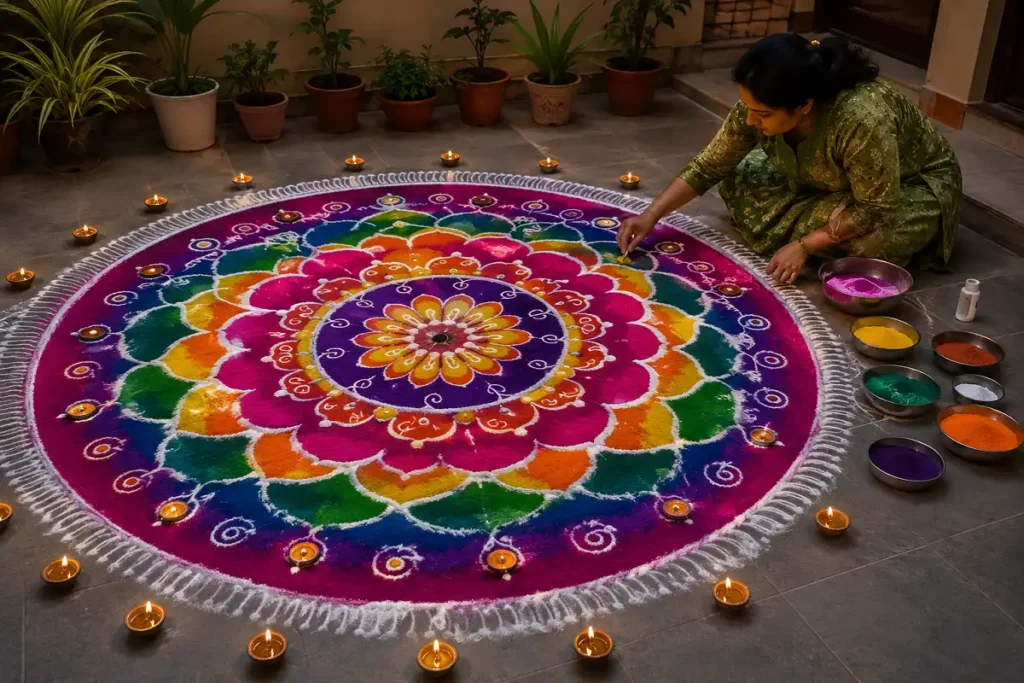
Creating a large rangoli requires more preparation than making a small pattern. Taking a little time to plan the design can save considerable effort once you begin working on the floor.
Choose Your Space and Measure It
Decide where the rangoli will be placed and measure the available area. A typical home entrance may comfortably accommodate a design around 4 to 6 feet across, while community and competition designs can be considerably larger.
Sketch the Design First
Make a rough drawing on paper before working on the floor. Divide the design into sections and decide which colors belong in each area. Lightly transfer the outline to the floor using chalk or white rangoli powder.
Gather Your Materials
Prepare enough colored rangoli powder, white powder or chalk, sieves or cones, flower petals if required, and diyas or tea lights for decoration.
Work From the Center Outward
Beginning at the center helps maintain balance and reduces the chance of accidentally smudging sections that have already been completed.
Tips for Making a Big Rangoli Design Look Professional
Use a thin cone or steady sieve technique to keep outlines clean.
Use contrasting colors around important borders and sections.
Repeating petals, leaves or geometric shapes creates visual rhythm.
A decorative outer border gives the entire composition a polished finish.
A well-designed border can make a significant difference when working on a large floor. For additional ideas, explore rangoli border design ideas for styles ranging from simple lines to more decorative patterns.
Rangoli is a living decorative tradition with regional variations in motifs, colors, and materials. Learning about the regional style behind a particular pattern can add greater cultural context to your design. You can explore cultural information through the Indian Cultural Council .
Best Colors to Use in a Big Rangoli Design
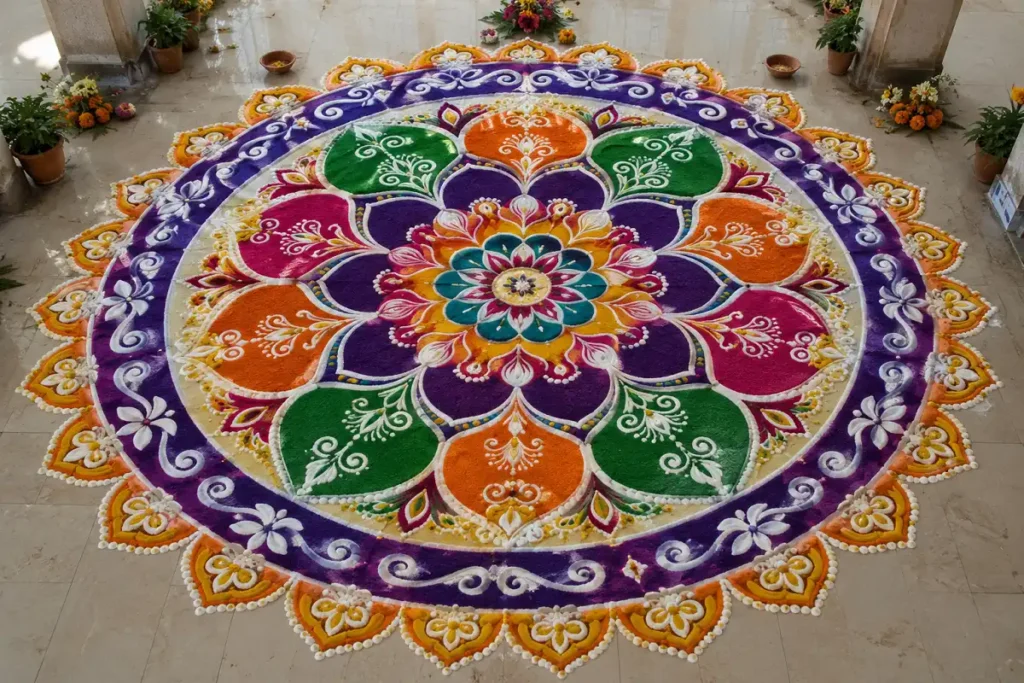
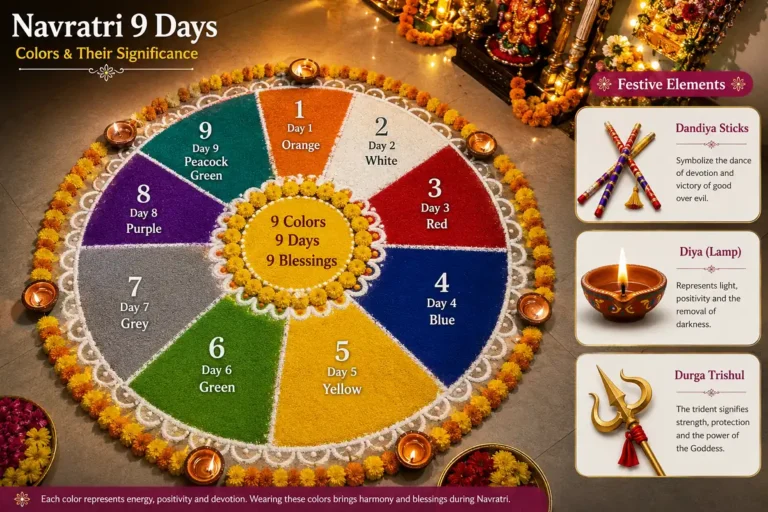
Color choice has a major influence on how a large rangoli looks from a distance. Instead of randomly using every shade available, assign each color a specific role within the composition.
Red + Orange
Warm and energetic, especially suitable for Diwali and weddings.
White + Yellow
A bright combination that gives the design a clean festive feel.
Blue + Teal
Excellent for peacock-inspired and nature-themed compositions.
Green Accents
Adds a fresh natural quality to floral and botanical patterns.
Pink + Purple
Works beautifully for spring celebrations and decorative designs.
Big Rangoli Design for Beginners
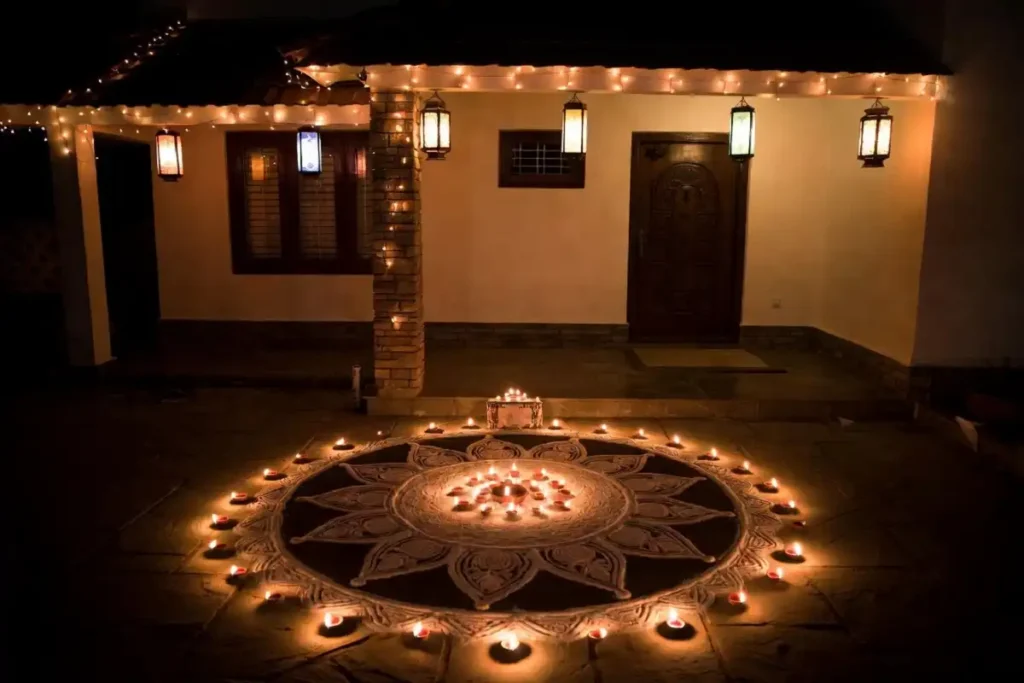
A large design does not necessarily have to be complicated. Beginners can create an impressive big rangoli by simply enlarging a pattern they already know.
One easy approach is to begin with a large circle, place a simple flower in the center, add two or three concentric rings using alternating colors, and finish with a decorative petal border.
If you want to practice smaller patterns first, explore these simple rangoli design ideas before scaling your favorite design up.
Rangoli has traditionally served both decorative and spiritual purposes, including welcoming guests and creating an auspicious atmosphere. This makes even a simple large design meaningful as well as visually attractive.
Learn more from Britannica →Creating a Big Rangoli That People Remember
A big rangoli design can turn an ordinary space into something genuinely beautiful and memorable. Whether you choose a floral arrangement, a geometric composition, a circular pattern, or a detailed peacock centerpiece, careful planning makes the process much easier.
Think about the available space first, decide on your color palette, sketch the main structure, and then work gradually from the center outward. Most importantly, enjoy the process. A large rangoli is not only about the finished picture but also about the creativity and celebration behind it.
FAQs About Big Rangoli Designs
What is the best size for a big rangoli design?
For most home entrances and living spaces, a design around 4 to 6 feet in diameter is practical. Community events and competitions can use much larger designs, often extending beyond 8 feet.
How long does it take to make a big rangoli design?
A moderately detailed 4-foot rangoli can take approximately one to two hours for one person. Larger competition-style designs may require several hours and can be easier to complete as a team.
What materials work best for a big rangoli design?
Dry colored rangoli powder is one of the easiest materials for large designs. Flower petals provide texture and a natural appearance, while colored sand and rice flour can also be used depending on the regional style and desired finish.
Can a big rangoli design be made indoors?
Yes. Large rangoli designs can work very well indoors on clean, dry marble, tile, or smooth stone surfaces. A clean surface helps the colors remain vivid and makes the design easier to control.
How do you protect a big rangoli design from wind or footfall?
Lightly settling the powder can help reduce the effect of mild wind. In busy areas, small diyas, flower pots, or a simple protective barrier can help prevent people from accidentally walking across the design.