Peacock Rangoli Design: 15+ Stunning Ideas to Brighten Your Festivals
Few rangoli motifs capture the spirit of Indian festivals like the majestic peacock. With its flowing feathers, vibrant colors, and graceful curves, a peacock rangoli design instantly transforms any entrance into a festive masterpiece.
Whether you’re decorating for Diwali, a wedding, or a pooja at home, peacock-themed rangoli adds elegance and cultural charm. In this guide, you’ll discover 15+ stunning peacock rangoli ideas, easy step-by-step tips, color combinations, and expert tricks to make your art stand out. From simple beginner-friendly patterns to elaborate festival showpieces, there’s something here for everyone.
Why Peacock Rangoli Designs Are So Popular
The peacock is India’s national bird and a powerful symbol of beauty, grace, and prosperity. In Hindu mythology, it’s associated with Goddess Saraswati and Lord Kartikeya, making it a deeply spiritual motif.
A peacock rangoli design isn’t just decorative it carries blessings, positivity, and tradition. Its naturally vibrant feathers translate beautifully into rangoli colors, allowing artists to experiment with blues, greens, golds, and purples.
Cultural Significance of the Peacock Motif
- Symbol of beauty & royalty: Often featured in ancient temple art and Mughal paintings.
- Spiritual meaning: Represents kindness, patience, and good luck.
- Festive favorite: Especially popular during Diwali, Onam, Pongal, and weddings.
According to Wikipedia’s entry on the Indian Peafowl, the peacock has been revered across Indian culture for thousands of years — which explains its timeless appeal in rangoli art.
Essential Materials You’ll Need
Before starting your peacock rangoli, gather these basics:
Blue, green, yellow, orange, purple, white
For sketching outlines
For detailed feather work
For festive enhancement
Marigold, rose, jasmine for depth
Great for beginners
Types of Peacock Rangoli Designs to Try
Simple Peacock Rangoli Design for Beginners
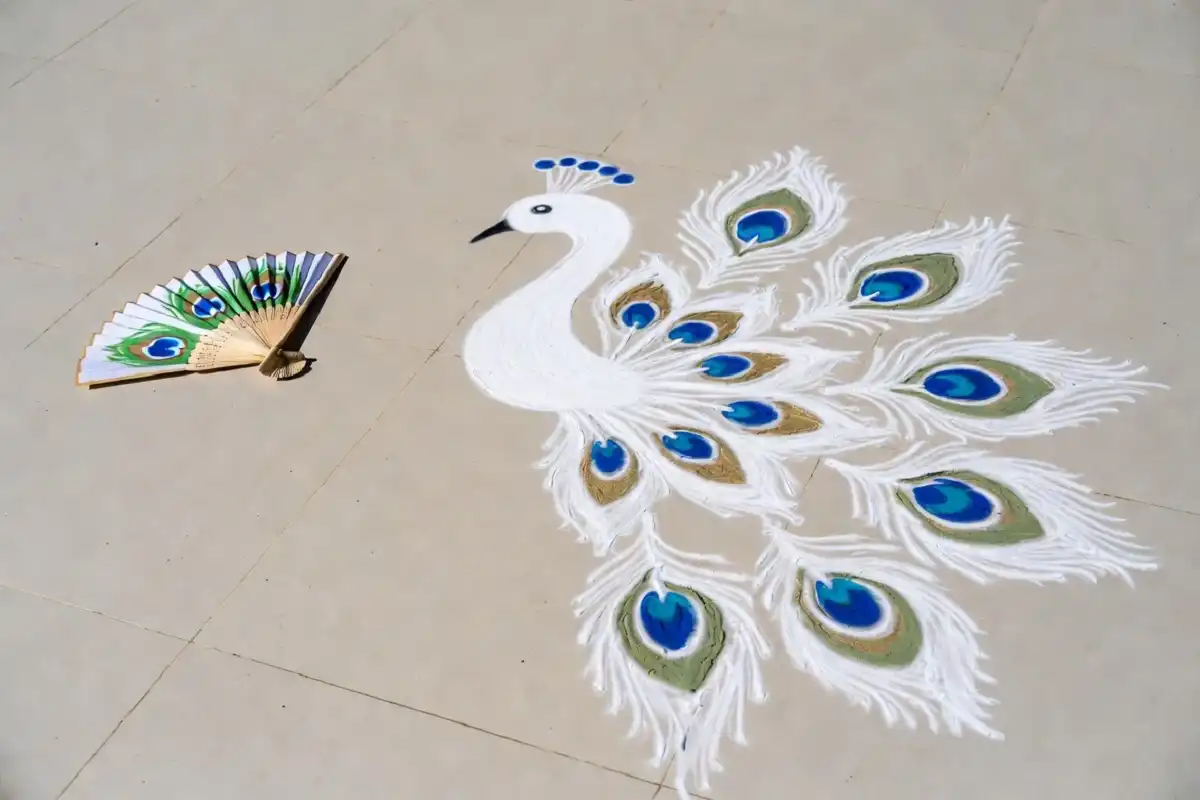
If you’re new to rangoli art, start with a single peacock silhouette and a flowing tail. Use dotted grids to maintain symmetry. Pair it with easy rangoli design ideas to build your confidence before attempting complex patterns.
Traditional Peacock Rangoli Design
Traditional versions use earthy tones, rice flour borders, and intricate feather detailing. These are perfect for poojas and South Indian festivals. Combine peacock motifs with classic kolam patterns or take inspiration from traditional girl rangoli designs for cultural flair.
Peacock Rangoli with Flowers
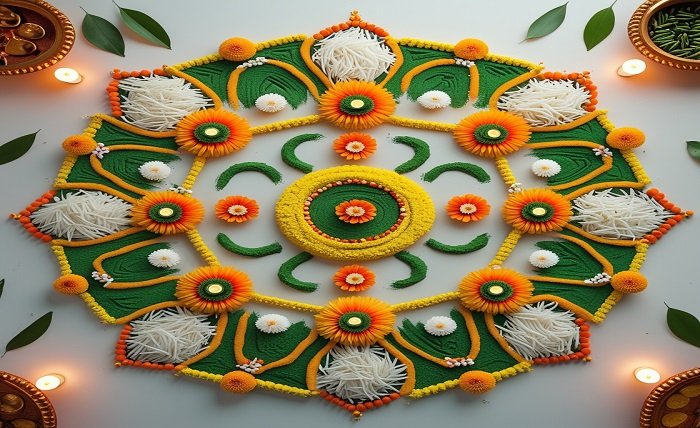
For a fresh, fragrant look, outline your peacock with marigold petals and fill the feathers with rose and jasmine flowers. This style is gaining popularity for eco-friendly celebrations. Explore more in this flower rangoli design guide.
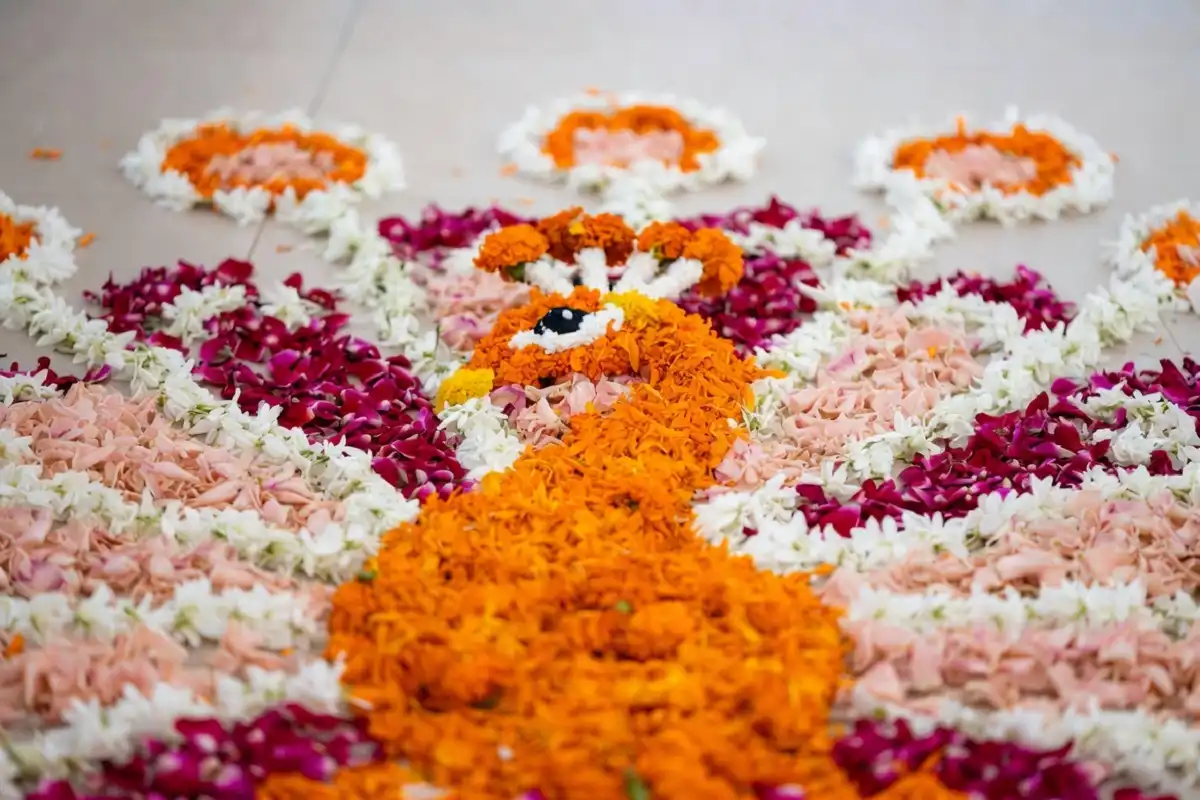
Peacock Rangoli for Diwali
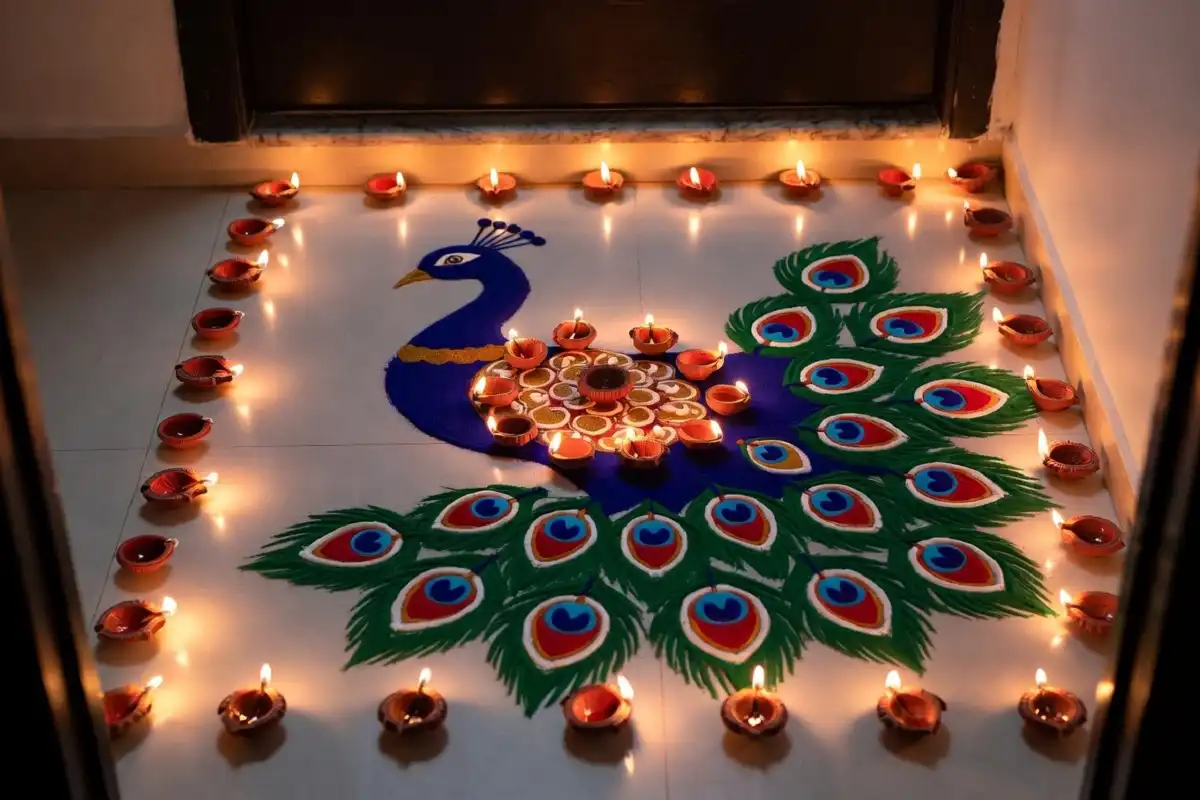
Diwali peacock rangolis often feature diyas placed around the feathers and a glowing color palette. The peacock’s tail can be expanded across the doorway for a grand welcome. For more inspiration, check out these stunning Diwali rangoli ideas.
Circular Peacock Rangoli Design
Circular layouts feature a central peacock surrounded by a feather-themed border. These are ideal for puja areas. Pair this style with circle rangoli design ideas to create symmetrical, eye-catching art.
3D Peacock Rangoli Design
Use shading techniques and gradient colors to create depth, making the peacock look three-dimensional. This advanced style is perfect for competitions and showstopper entrances.
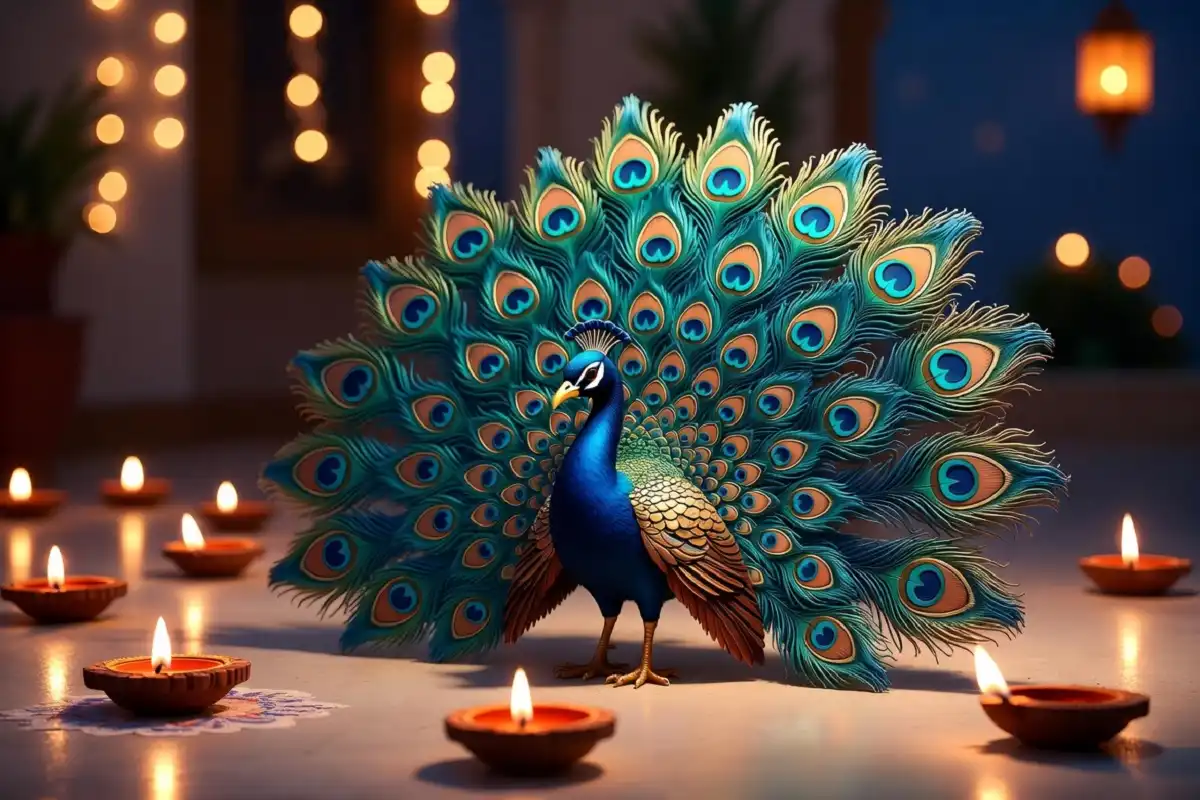
Small Peacock Rangoli Design
Tight on space? A compact peacock motif near the doorway or pooja room works beautifully. Browse small rangoli design ideas for more compact inspiration.
Step-by-Step Guide: How to Make a Peacock Rangoli Design
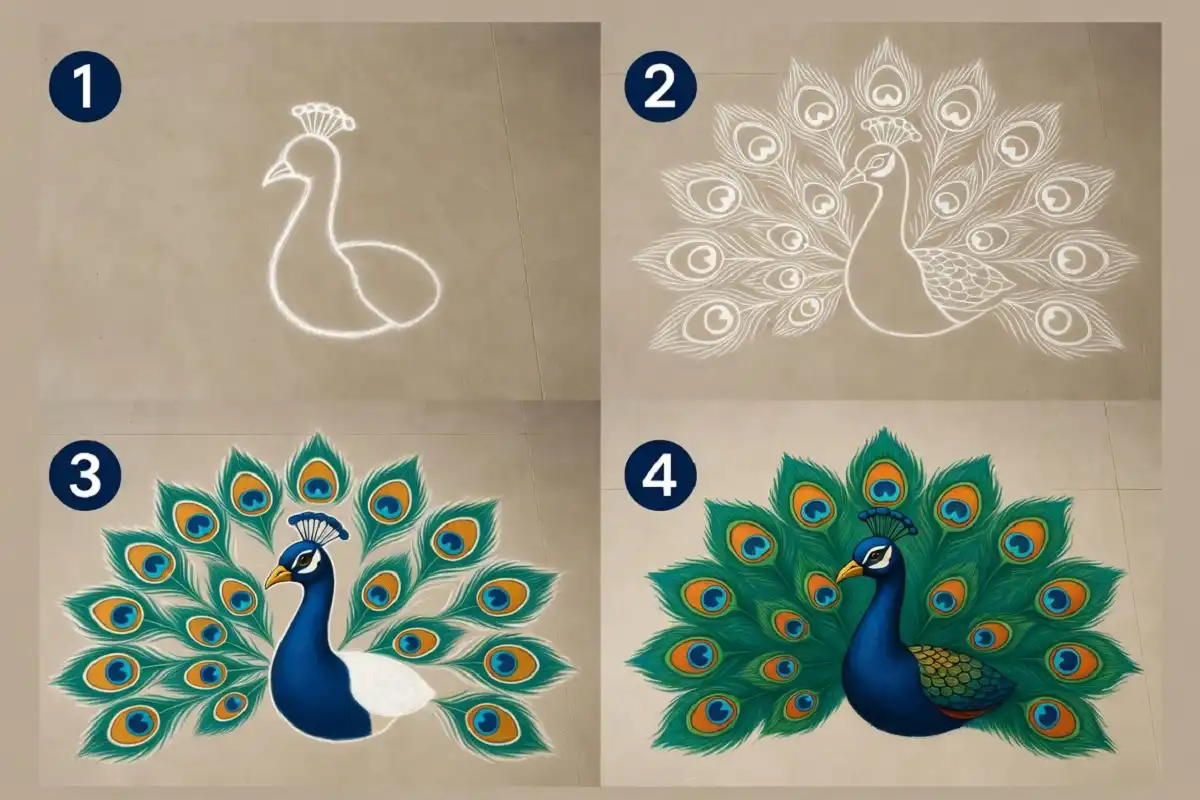
- Sketch the outline: Use chalk to draw the peacock’s body, neck, and tail base.
- Add the feathers: Draw curved lines fanning out from the tail base.
- Outline each feather: Add the iconic “eye” shape at each feather’s tip.
- Fill in colors: Start with the body (blue/green), then layer feather colors.
- Add highlights: Use white and gold for sparkle and dimension.
- Decorate the border: Add dots, swirls, or flowers around the design.
- Place diyas: Light up the design for a magical festive effect.
Color Combinations That Work Best
According to color theory principles from Google Arts & Culture, contrasting colors create the most visual impact. For peacock rangoli, try:
Royal Blue + Emerald Green + Gold
Classic peacock palette
Purple + Turquoise + Silver
Modern and elegant
Orange + Magenta + Yellow
Bright and festive
White + Indigo + Copper
Subtle yet stunning
Tips to Make Your Peacock Rangoli Stand Out
- Use symmetry — A balanced design feels naturally pleasing.
- Layer colors gradually — Start light, then add deeper tones.
- Add metallic accents — Gold and silver powders enhance feathers.
- Incorporate diyas creatively — Place them inside feather “eyes.”
- Mix mediums — Combine rangoli powder with flowers and rice.
For festive enhancements, browse these attractive Diwali rangoli ideas to spark fresh creativity.
Common Mistakes to Avoid
- Skipping the chalk outline (leads to uneven shapes)
- Overcrowding the design with too many colors
- Forgetting symmetry in feather placement
- Using the wrong color base (always test on paper first)
- Rushing the detailing — feathers need patience
Occasions to Showcase Peacock Rangoli
Peacock rangolis suit nearly every Indian celebration:
According to Britannica’s overview of Diwali, rangoli traditions have been central to Indian festival culture for centuries and peacock motifs remain among the most cherished.
FAQs About Peacock Rangoli Design
Is a peacock rangoli design difficult for beginners?
Not at all. Start with a simple silhouette and a small feather fan. With practice and stencils, even beginners can master beautiful peacock rangolis.
What colors are best for a peacock rangoli design?
Blues, greens, purples, and golds work best as they mimic real peacock feathers. Add white for highlights and contrast.
How long does it take to make a peacock rangoli?
A simple design takes 30–45 minutes, while detailed or 3D versions can take 2–4 hours depending on size and complexity.
Can I make a peacock rangoli with flowers only?
Yes! Floral peacock rangolis using marigold, rose petals, and leaves are eco-friendly and stunningly vibrant.
What’s the best occasion for a peacock rangoli design?
Diwali, weddings, and pujas are perfect occasions, but peacock rangolis work for any festive or celebratory event.
Can I use stencils for a peacock rangoli?
Absolutely. Stencils are great for beginners and ensure clean, symmetrical results.
A peacock rangoli design is more than decoration — it’s a celebration of tradition, beauty, and festive spirit. Whether you choose a simple silhouette or an elaborate 3D masterpiece, the peacock motif brings elegance to every doorstep.
Start with the basics, experiment with colors, and don’t be afraid to mix flowers, diyas, and modern twists. With practice, your peacock rangoli will become the highlight of every festival.