20+ Easy Rangoli Designs for Kids: Simple & Fun Rangoli Ideas for Beginners
I still remember how fascinated I was by Rangoli as a child. Whenever I saw colorful patterns taking shape on the floor, I would wonder how something so simple could look so beautiful.
What caught my attention most was how the designs began with just a few dots, lines, and simple shapes. Little by little, they turned into flowers, stars, diyas, and beautiful patterns.
As I grew older, I started trying some of those designs myself. I quickly realized that Rangoli doesn’t have to be complicated to be beautiful. Sometimes, the simplest patterns are the most enjoyable to make, especially for children who are just learning.
That is what inspired me to put together this collection of easy rangoli for kids. I wanted to share simple designs that children can actually try without feeling overwhelmed by complicated patterns or difficult techniques.
In this collection, you’ll find easy flowers, butterflies, diyas, stars, geometric patterns, and more. Some can be made with Rangoli powder, while others are perfect for practicing on paper first.
Whether you’re looking for a fun activity for your child, a simple Rangoli for a festival, or just an easy design to try together, I hope these ideas give you a fun place to start.
So grab a few colors, choose a design your child likes, and let the creativity begin.
Why Rangoli Is Great for Kids
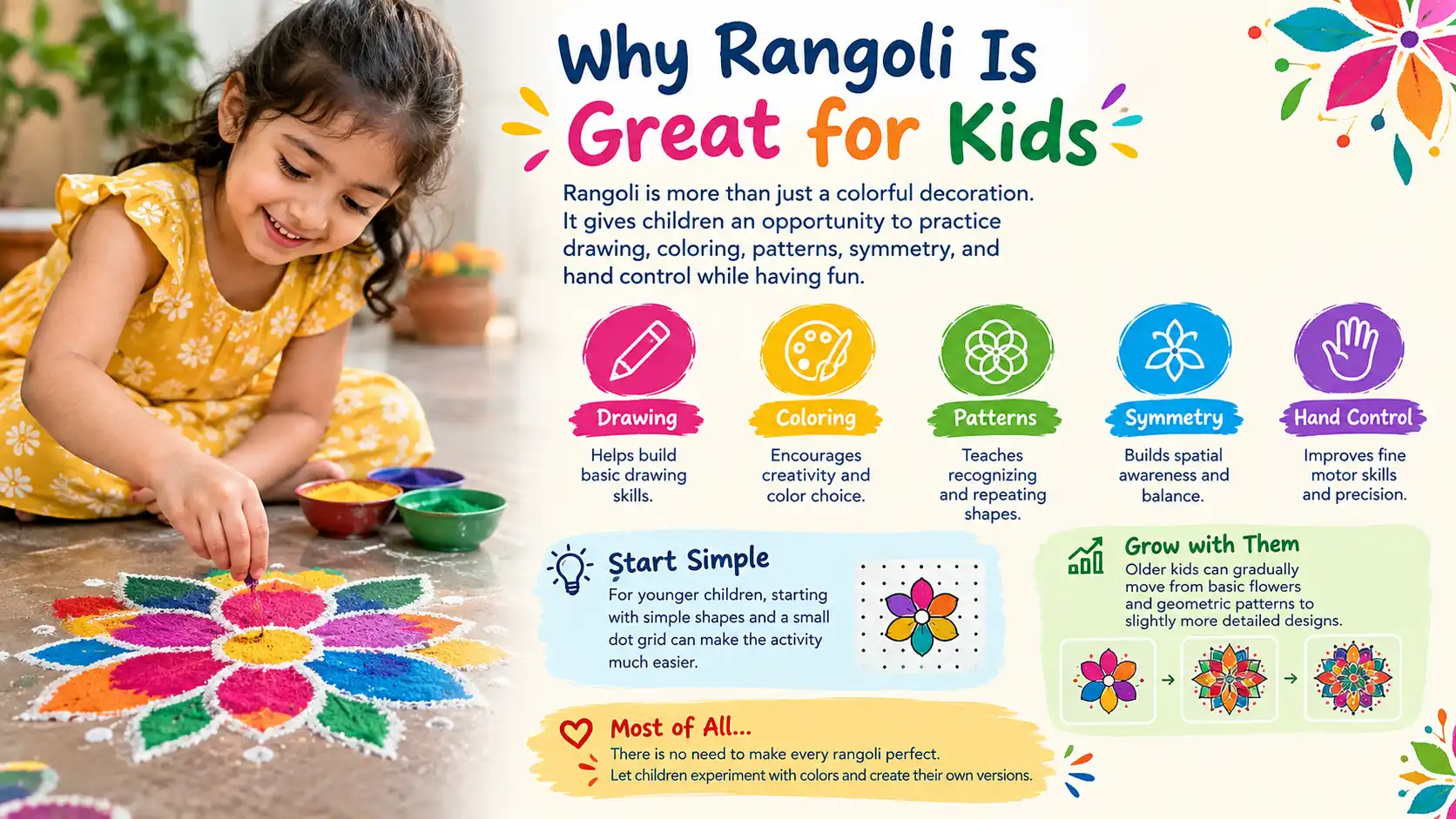
Rangoli is more than just a colorful decoration. It gives children an opportunity to practice drawing, coloring, patterns, symmetry, and hand control while having fun.
For younger children, starting with simple shapes and a small dot grid can make the activity much easier. Older kids can gradually move from basic flowers and geometric patterns to slightly more detailed designs.
The best part is that there is no need to make every rangoli perfect. Let children experiment with colors and create their own versions.
20 Easy Rangoli Designs for Kids
Simple Flower Rangoli
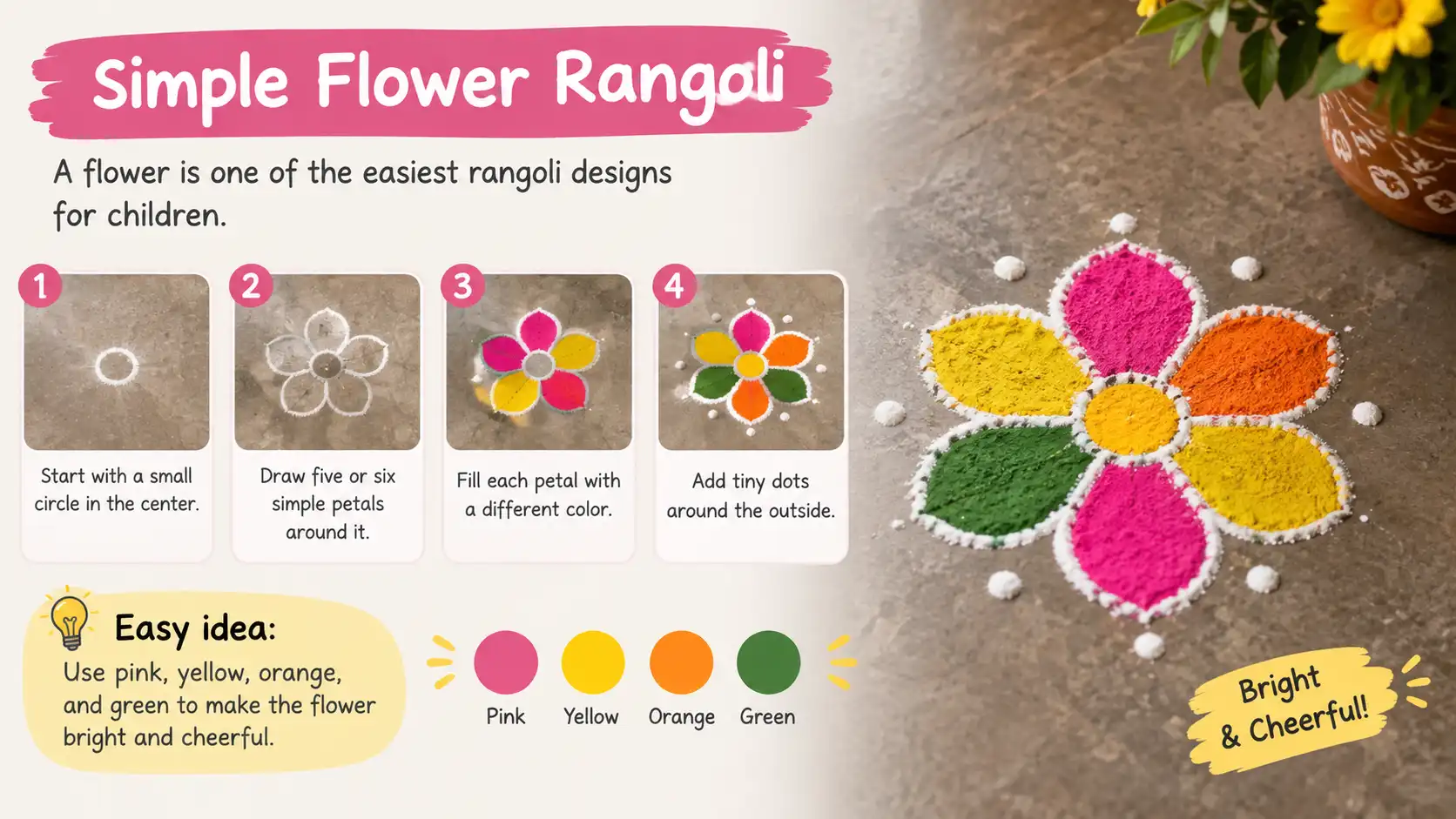
A flower is one of the easiest rangoli designs for children.
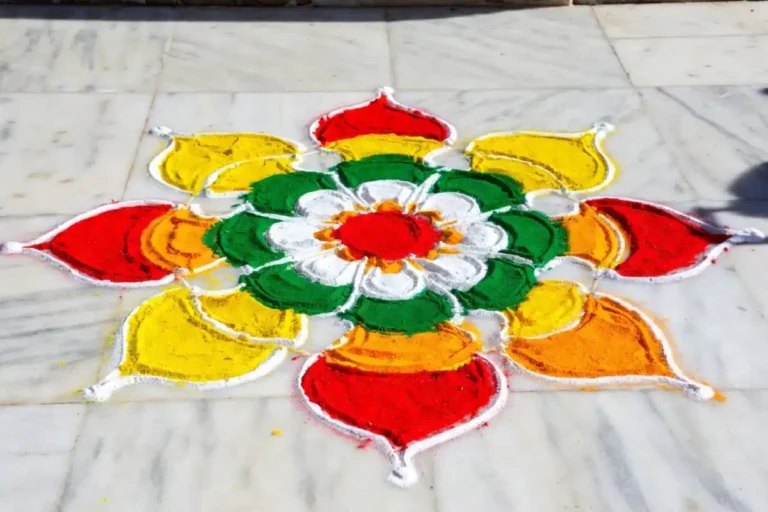
Start with a small circle in the center and draw five or six simple petals around it. Fill each petal with a different color and add tiny dots around the outside.
Easy idea: Use pink, yellow, orange, and green to make the flower bright and cheerful.
Five-Petal Rangoli
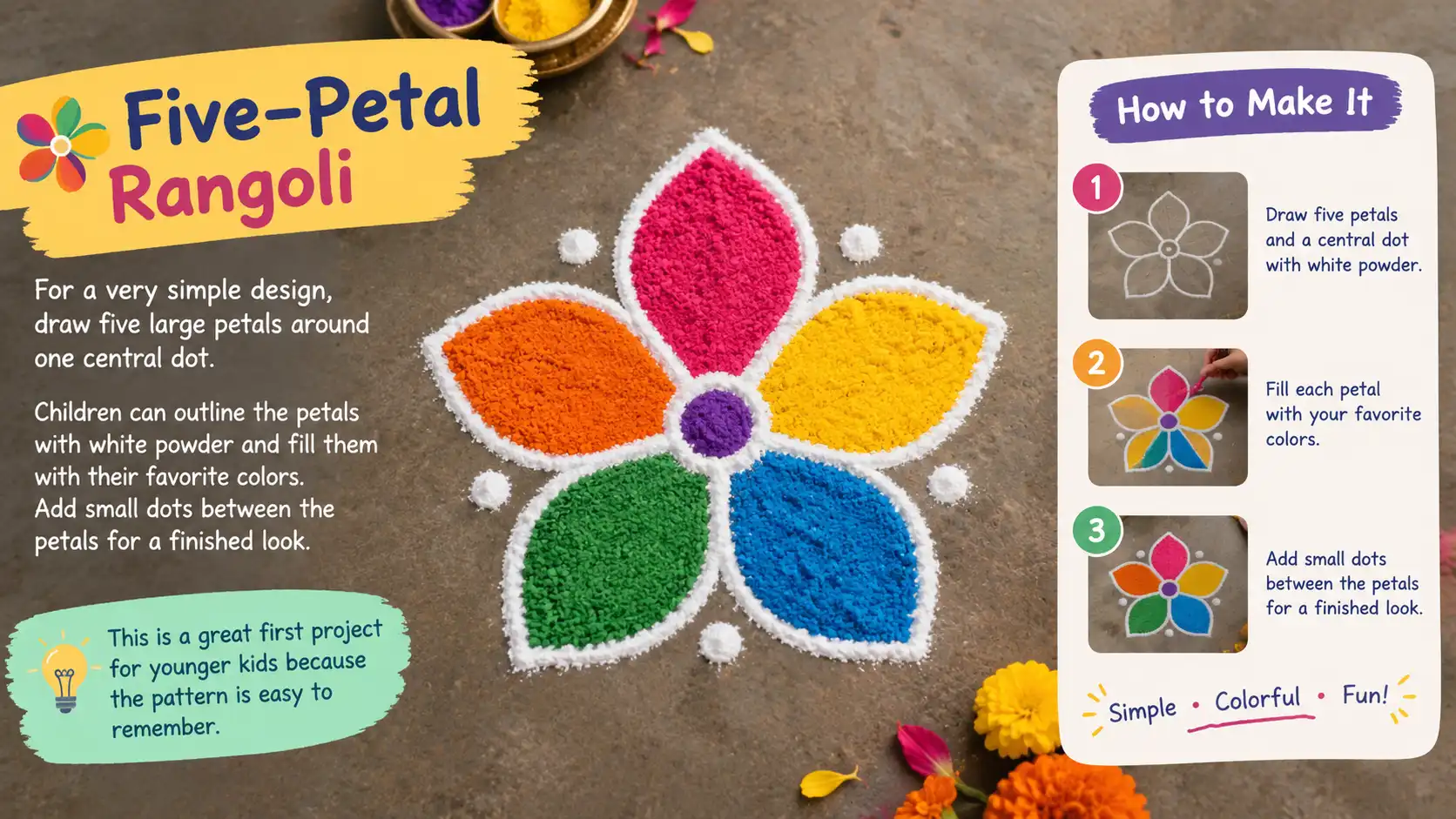
For a very simple design, draw five large petals around one central dot.
Children can outline the petals with white powder and fill them with their favorite colors. Add small dots between the petals for a finished look.
This is a great first project for younger kids because the pattern is easy to remember.
Easy Diya Rangoli
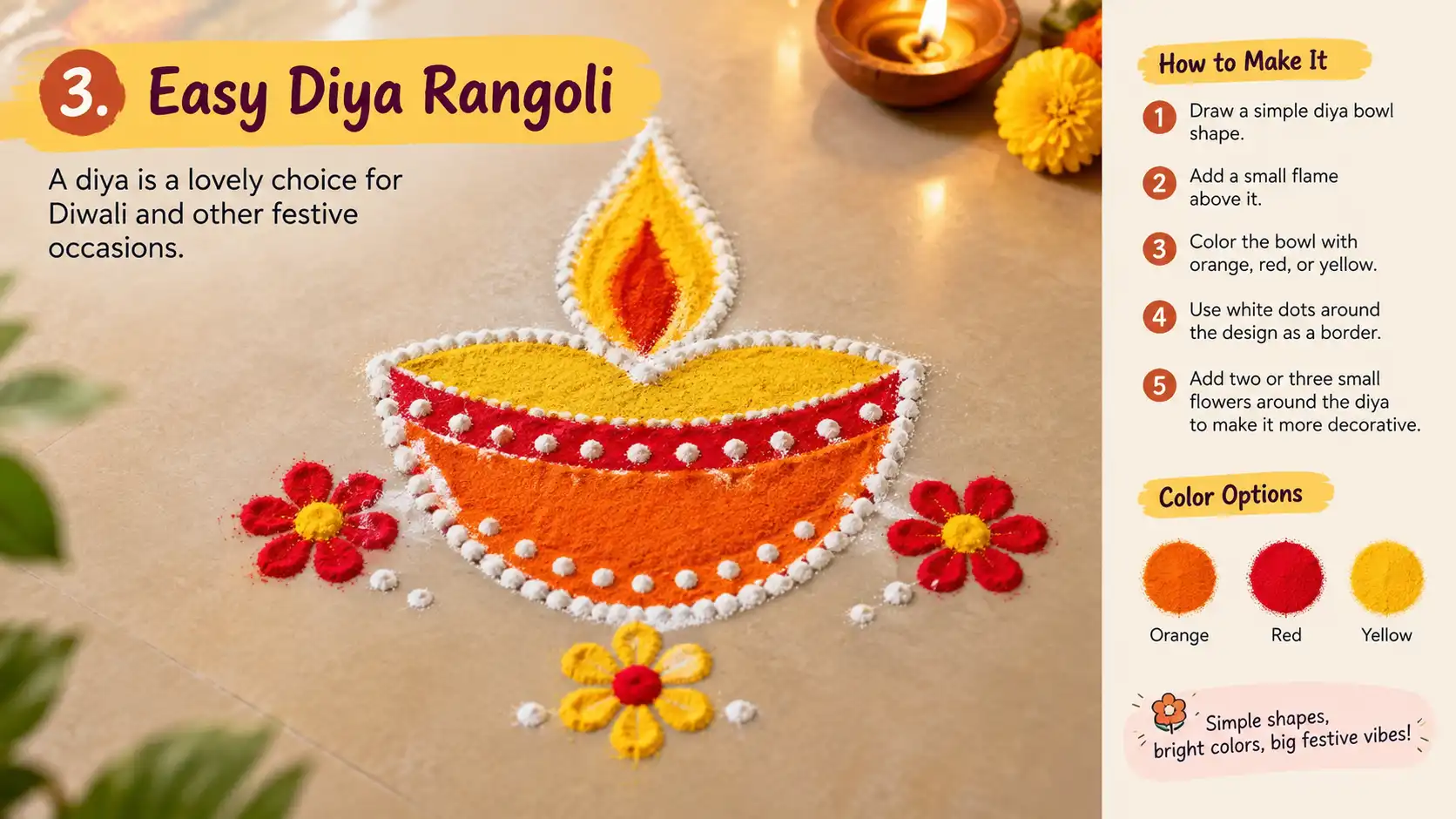
A diya is a lovely choice for Diwali and other festive occasions.
Draw a simple diya bowl and add a small flame above it. Children can color the bowl orange, red, or yellow and use white dots around the design as a border.
You can also add two or three small flowers around the diya to make the rangoli more decorative.
Butterfly Rangoli
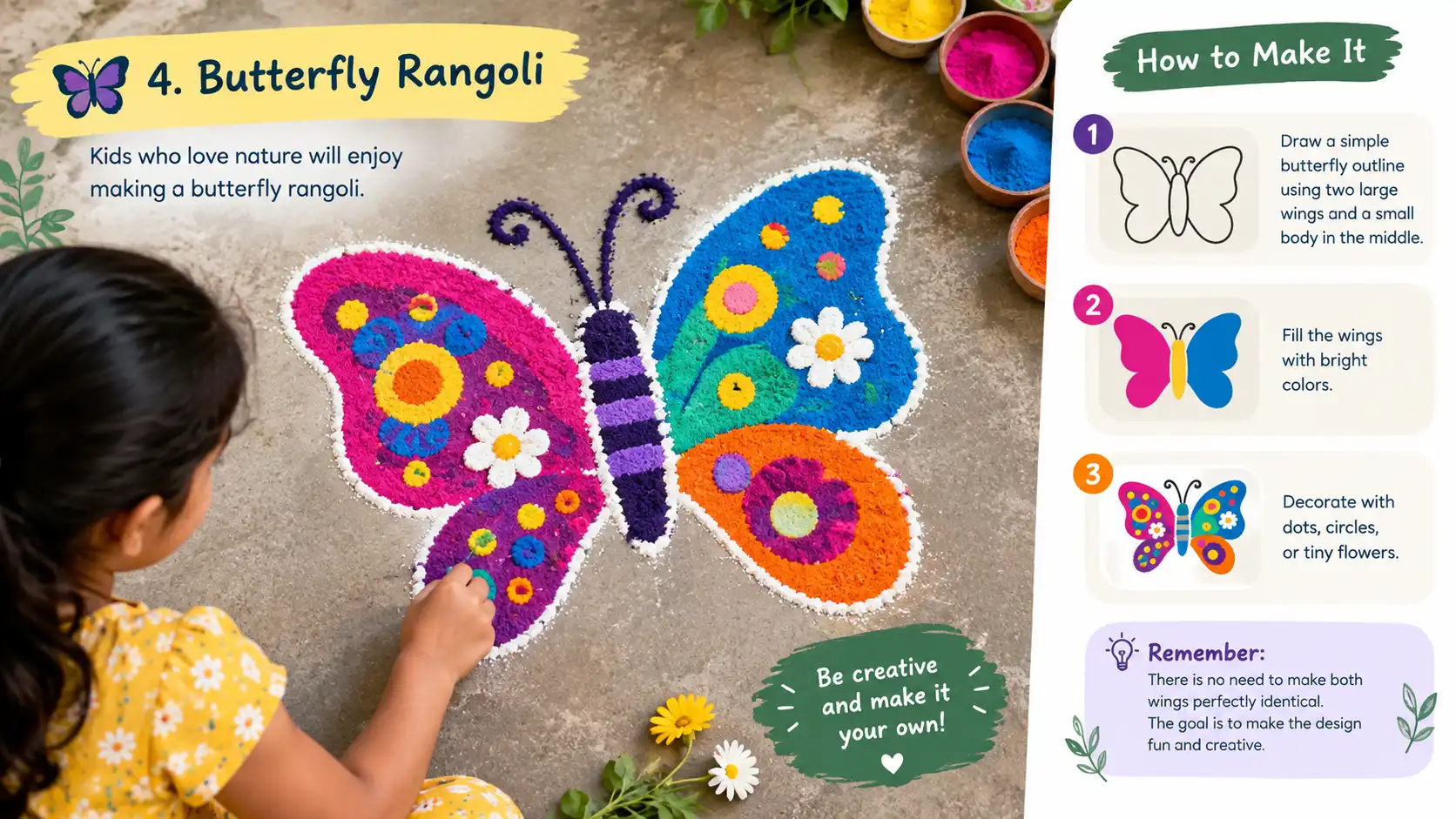
Kids who love nature will enjoy making a butterfly rangoli.
Draw a simple butterfly outline using two large wings and a small body in the middle. Fill the wings with bright colors and decorate them with dots, circles, or tiny flowers.
There is no need to make both wings perfectly identical. The goal is to make the design fun and creative.
Easy Star Rangoli
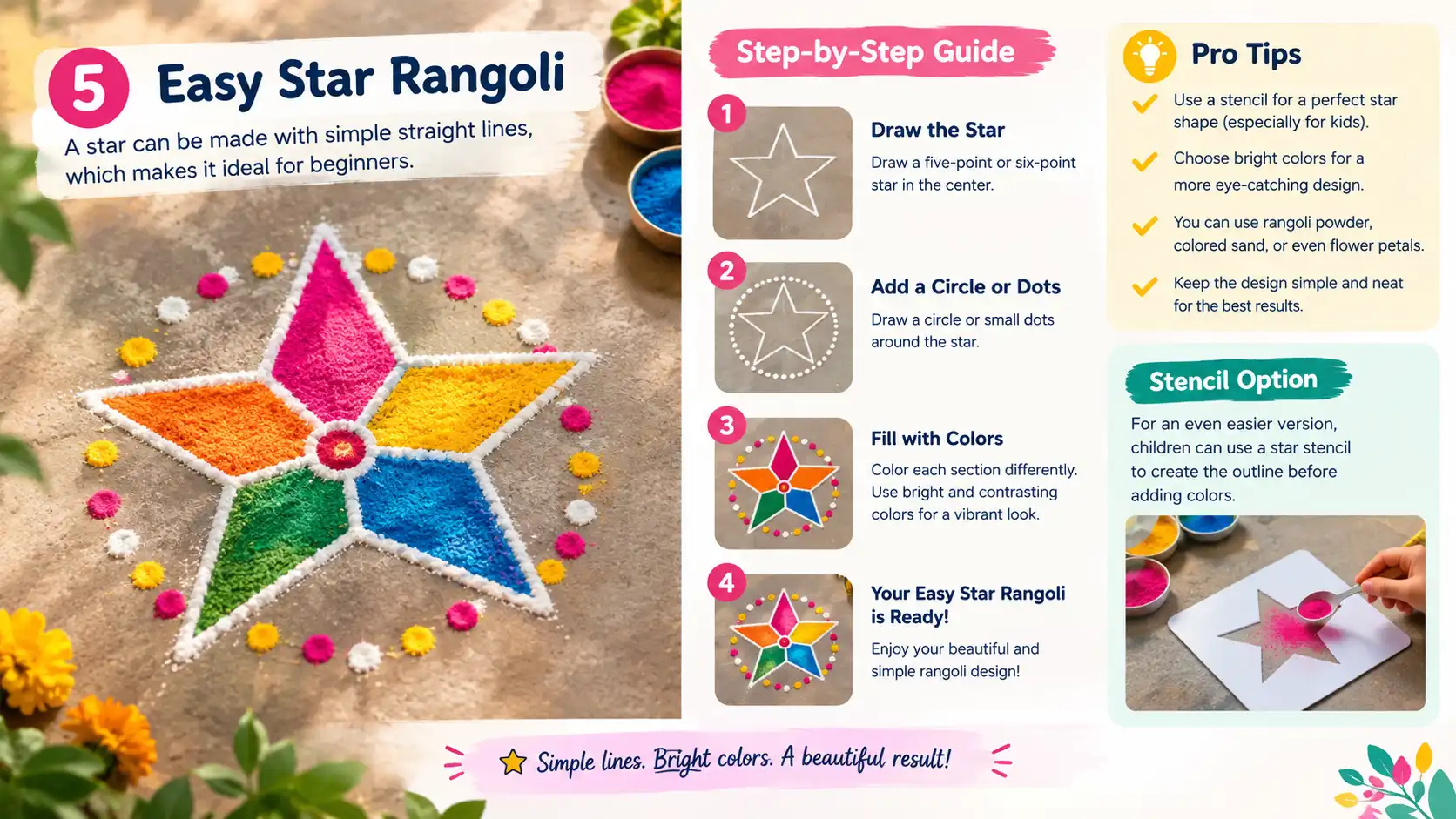
A star can be made with simple straight lines, which makes it ideal for beginners.
Draw a five-point or six-point star in the center. Add a circle or small dots around it and color each section differently.
For an even easier version, children can use a star stencil to create the outline before adding colors.
Circle and Dot Rangoli
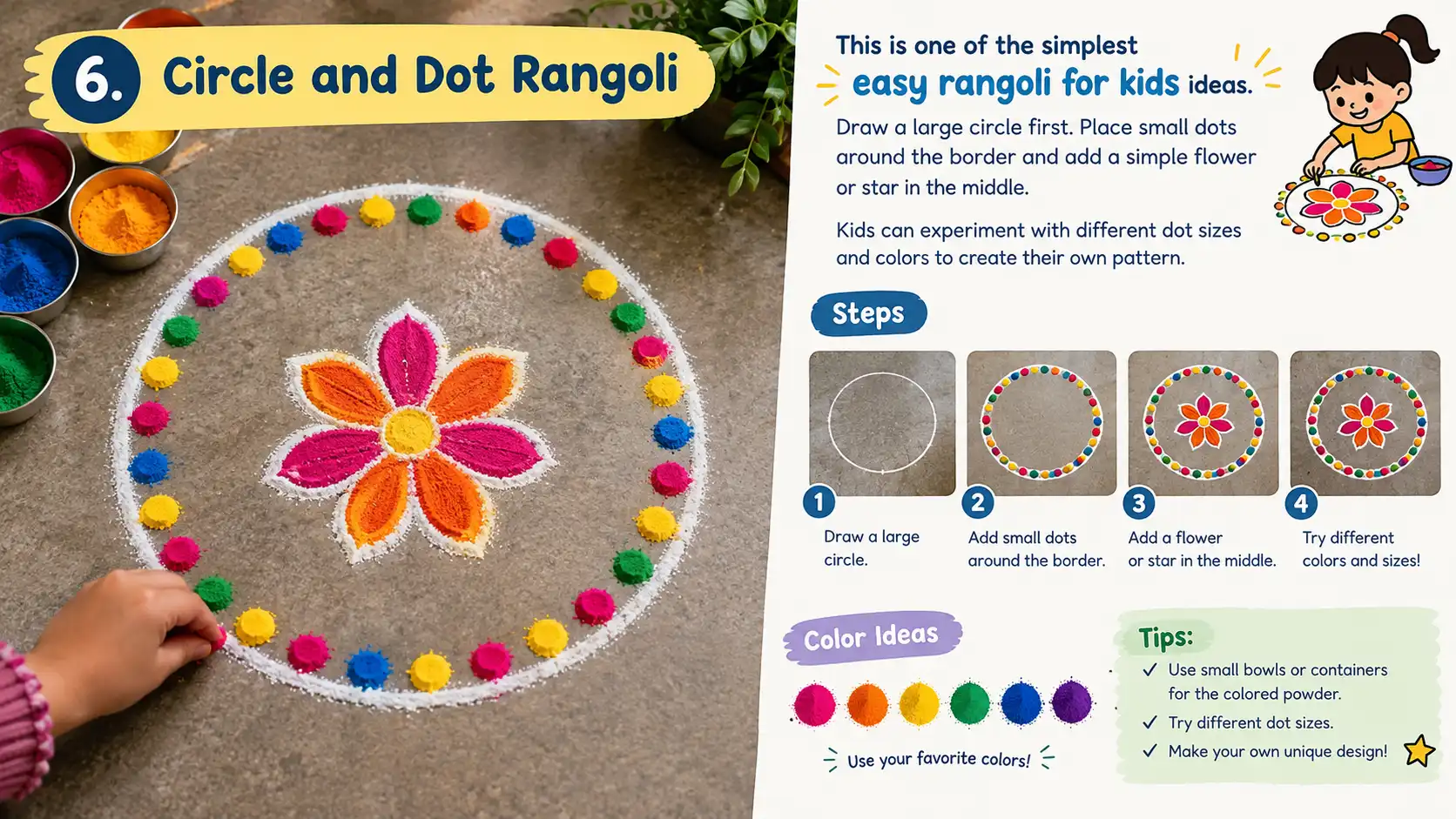
This is one of the simplest easy rangoli for kids ideas.
Draw a large circle first. Place small dots around the border and add a simple flower or star in the middle.
Kids can experiment with different dot sizes and colors to create their own pattern.
Heart Rangoli
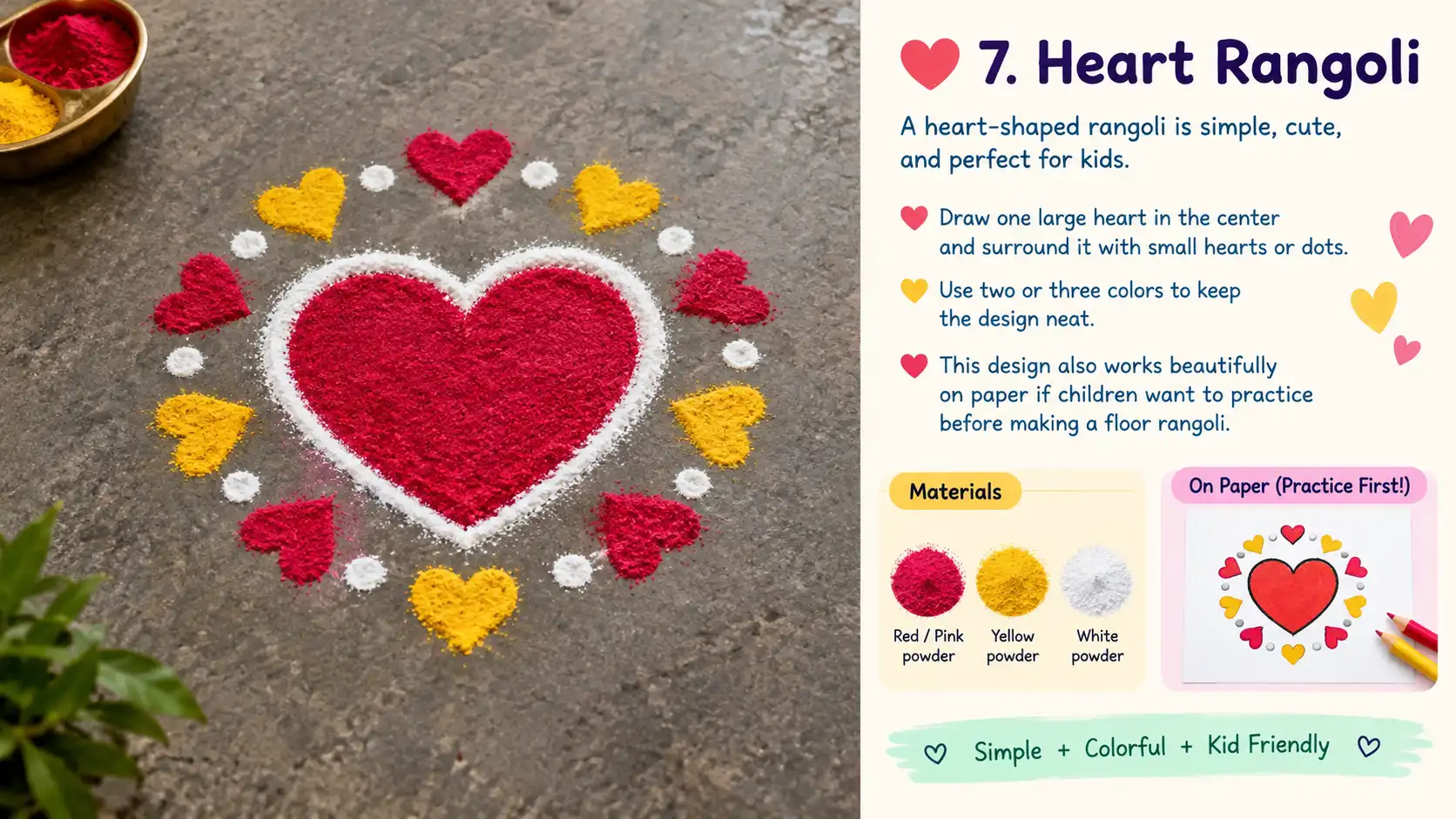
A heart-shaped rangoli is simple, cute, and perfect for kids.
Draw one large heart in the center and surround it with small hearts or dots. Use two or three colors to keep the design neat.
This design also works beautifully on paper if children want to practice before making a floor rangoli.
Easy Lotus Rangoli
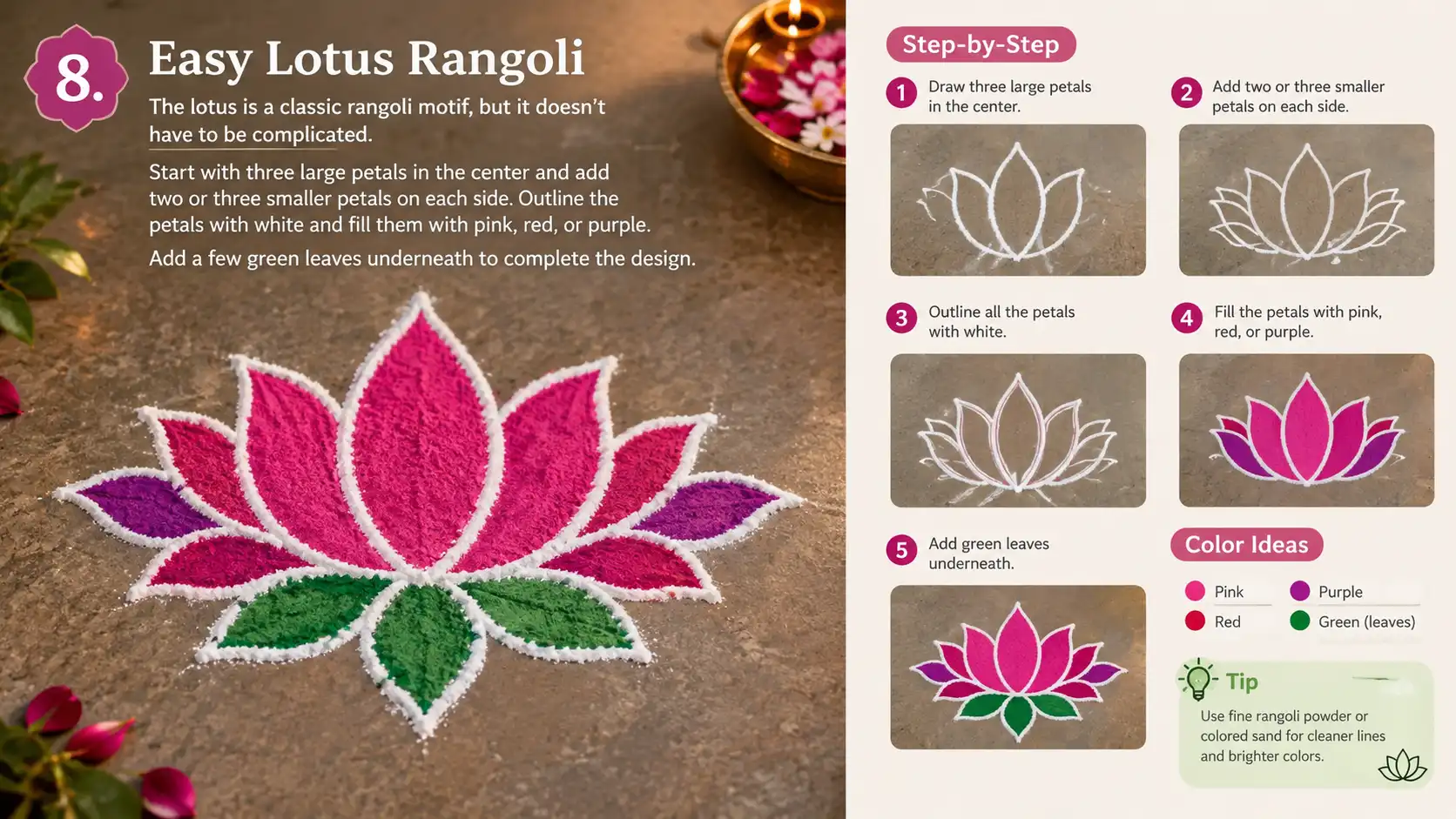
The lotus is a classic rangoli motif, but it doesn’t have to be complicated.
Start with three large petals in the center and add two or three smaller petals on each side. Outline the petals with white and fill them with pink, red, or purple.
Add a few green leaves underneath to complete the design.
Rainbow Rangoli
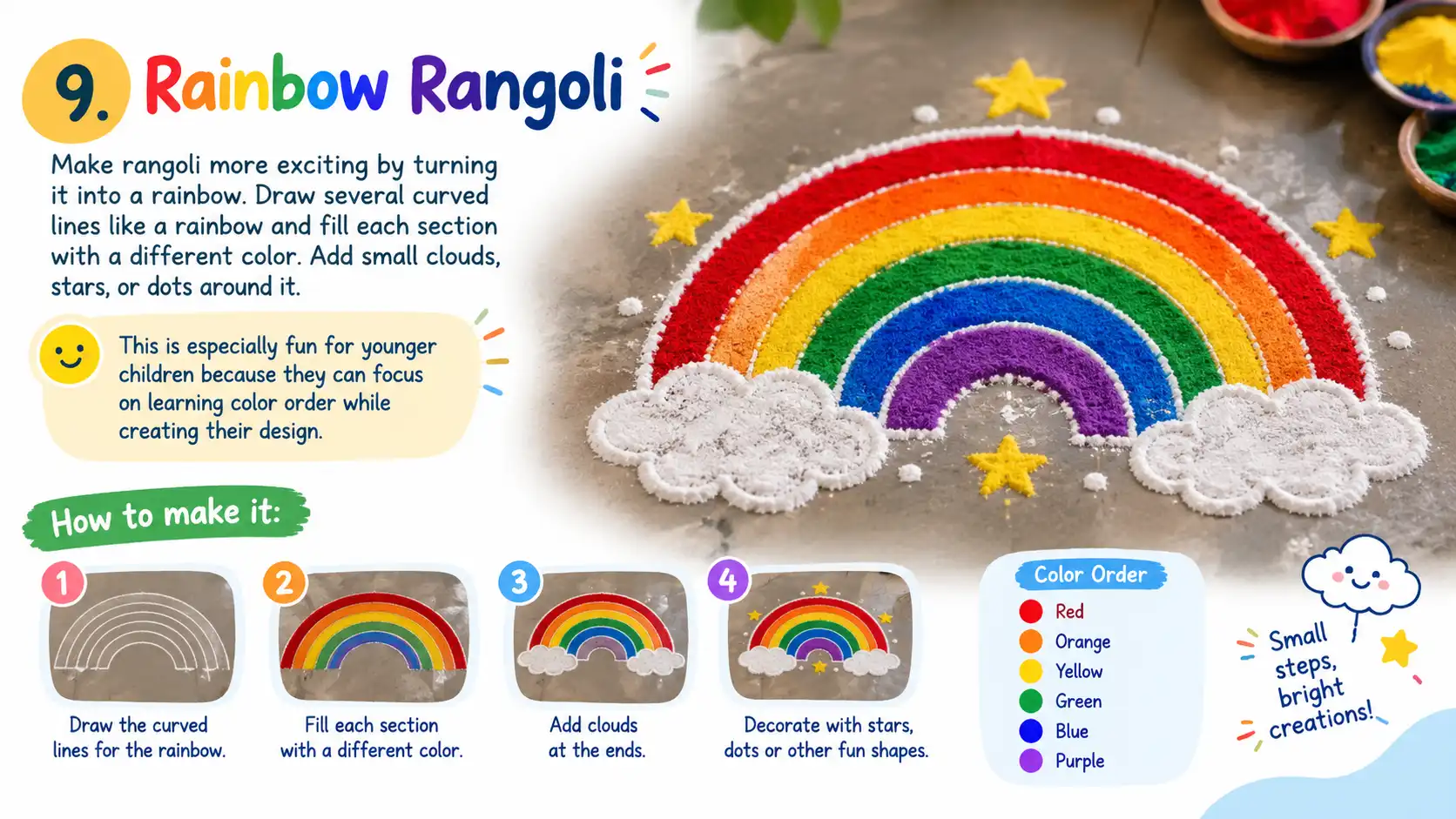
Make rangoli more exciting by turning it into a rainbow.
Draw several curved lines like a rainbow and fill each section with a different color. Add small clouds, stars, or dots around it.
This is especially fun for younger children because they can focus on learning color order while creating their design.
Easy Peacock Rangoli
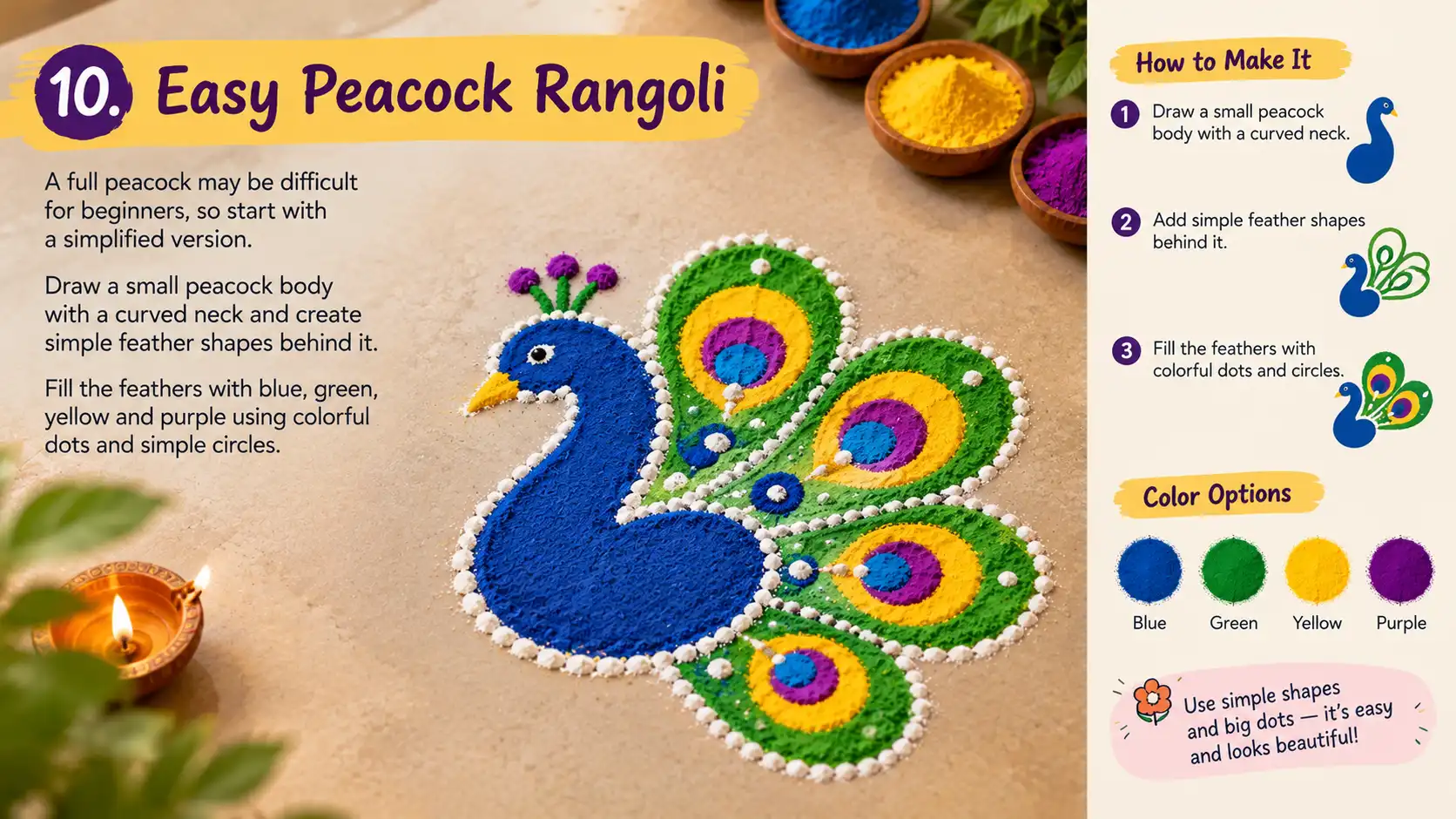
A full peacock may be difficult for beginners, so start with a simplified version.
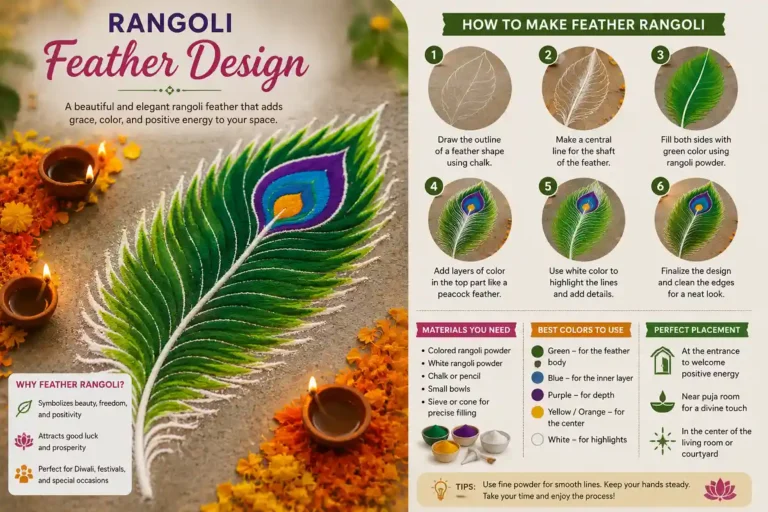
Draw a small peacock body with a curved neck and create simple feather shapes behind it. Fill the feathers with blue, green, yellow, and purple.
Instead of drawing every feather in detail, children can use colorful dots and simple circles.
Geometric Square Rangoli
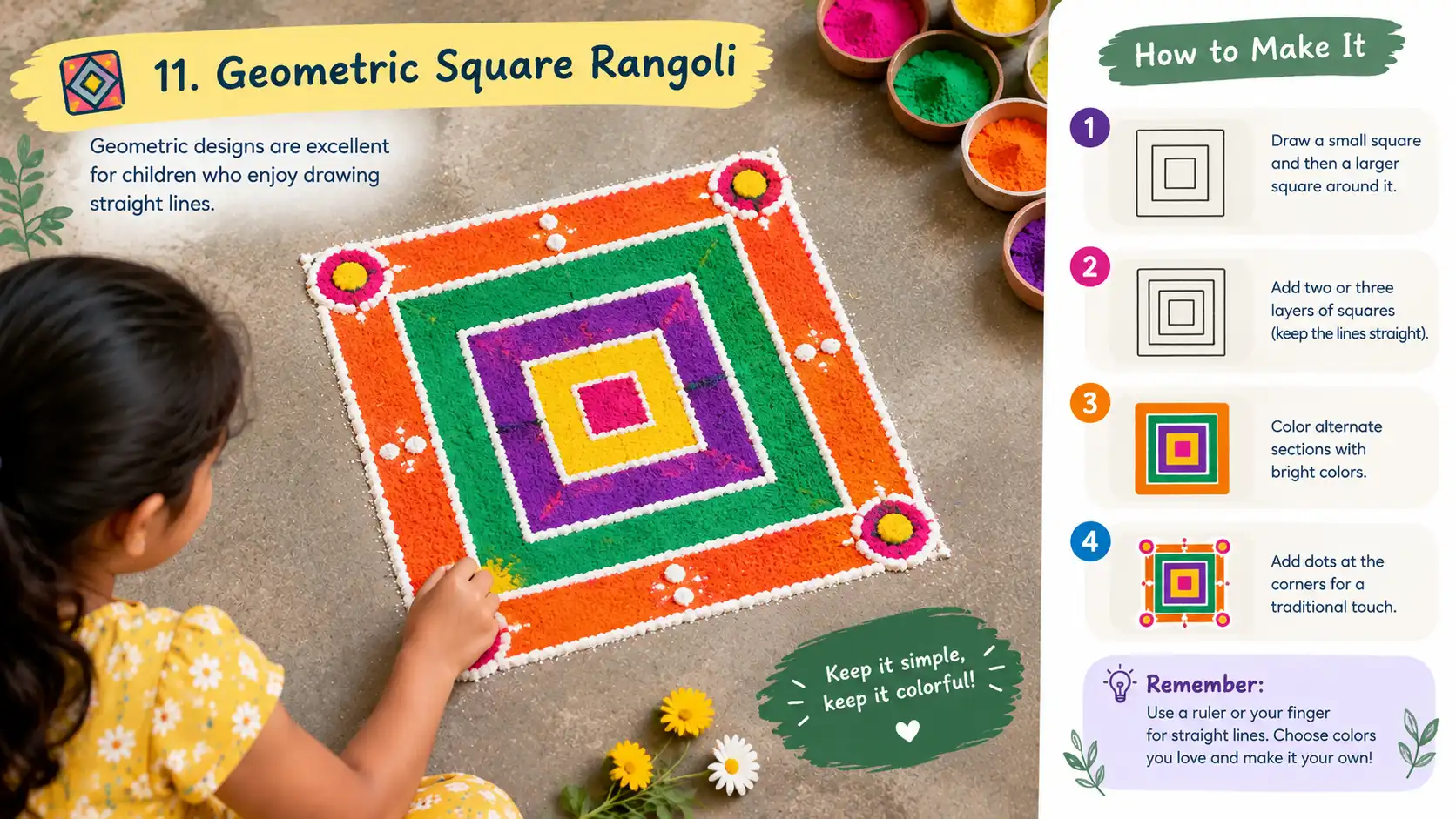
Geometric designs are excellent for children who enjoy drawing straight lines.
Begin with a small square and draw another larger square around it. Continue with two or three layers and color alternate sections.
Add dots at the corners for a traditional rangoli feel.
Diamond Rangoli
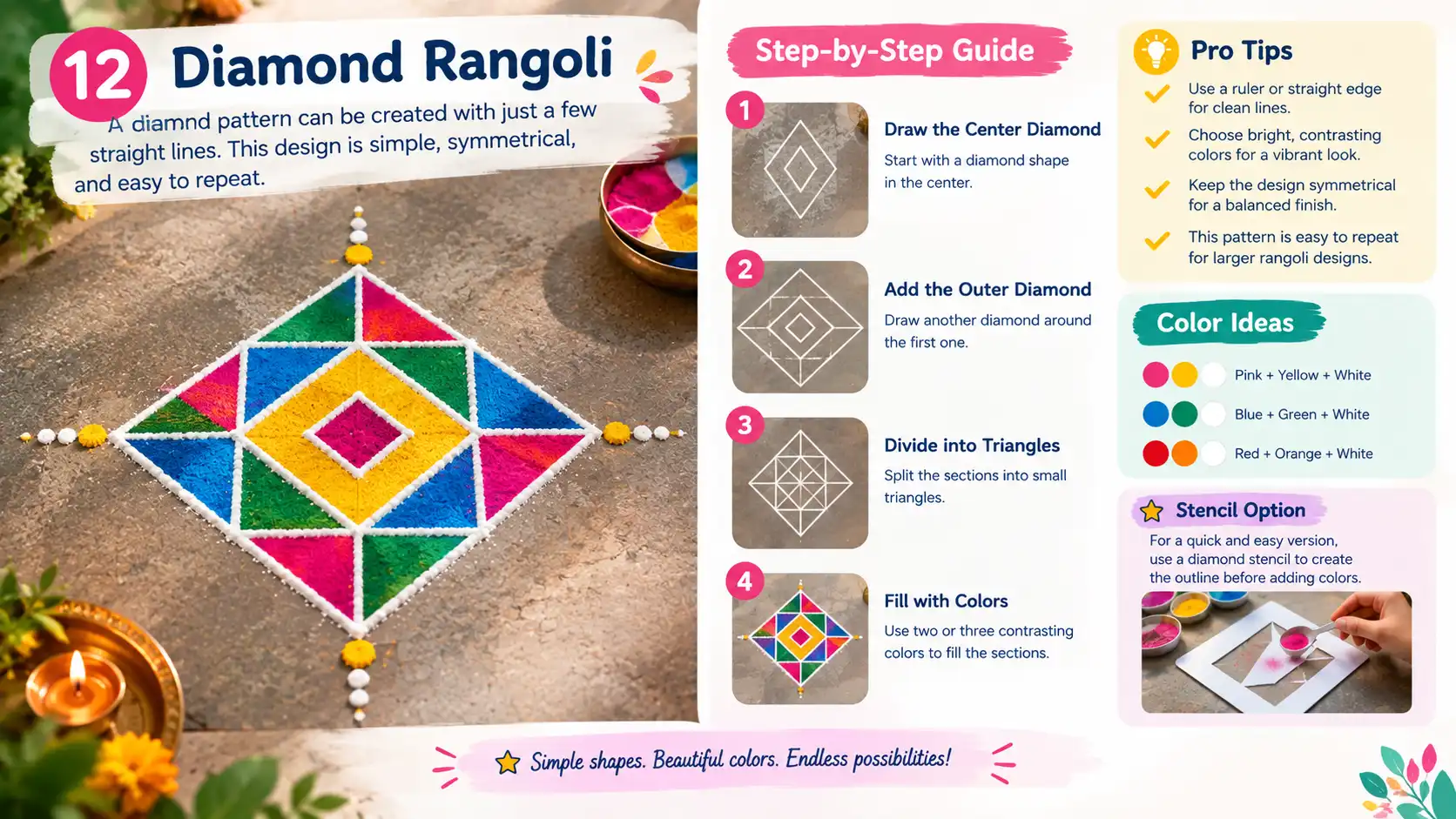
A diamond pattern can be created with just a few straight lines.
Draw one diamond in the center and add another around it. Divide the sections into small triangles and color them using two or three contrasting colors.
This design is simple, symmetrical, and easy to repeat.
Sun Rangoli
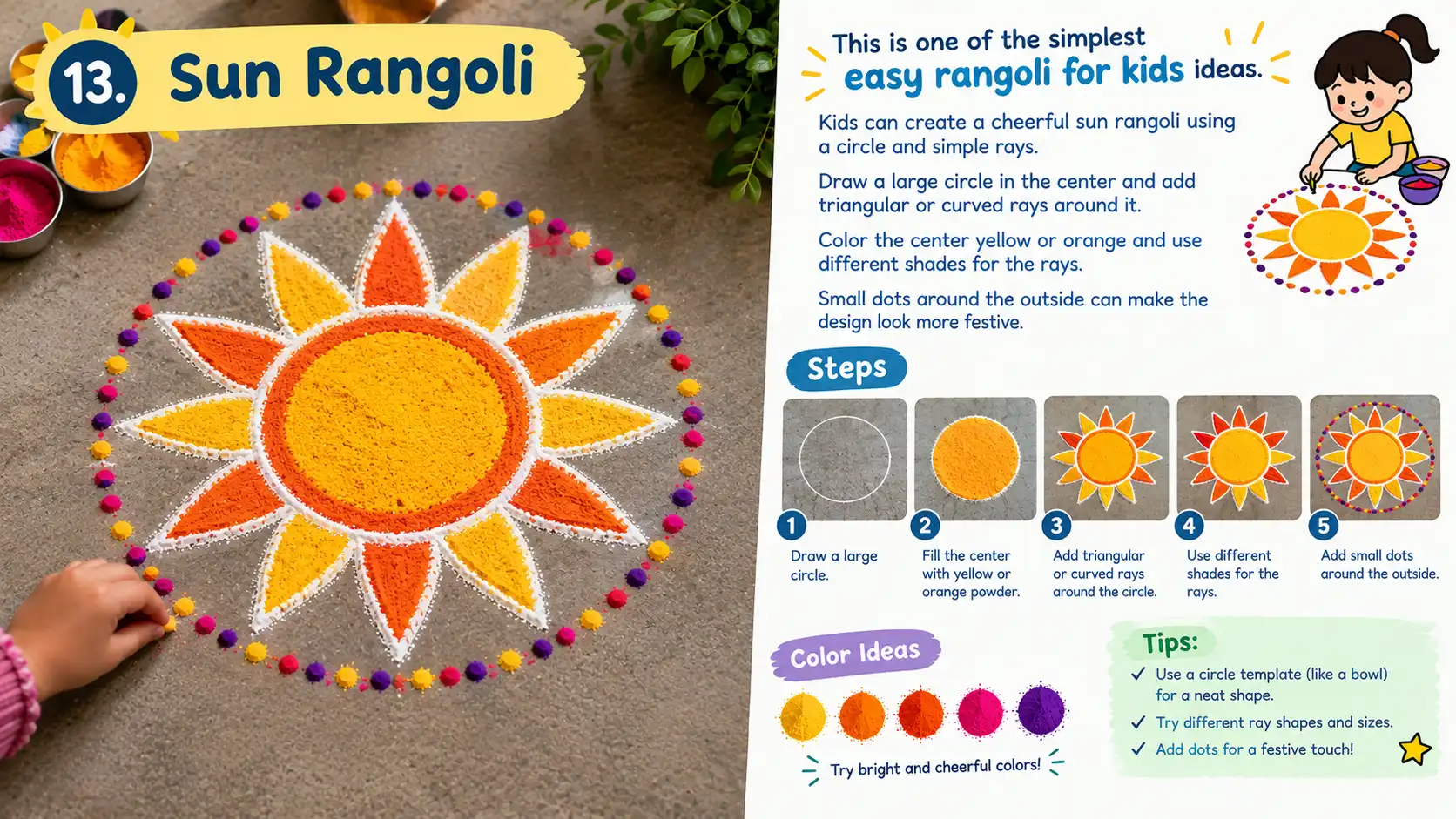
Kids can create a cheerful sun rangoli using a circle and simple rays.
Draw a large circle in the center and add triangular or curved rays around it. Color the center yellow or orange and use different shades for the rays.
Small dots around the outside can make the design look more festive.
Easy Fish Rangoli
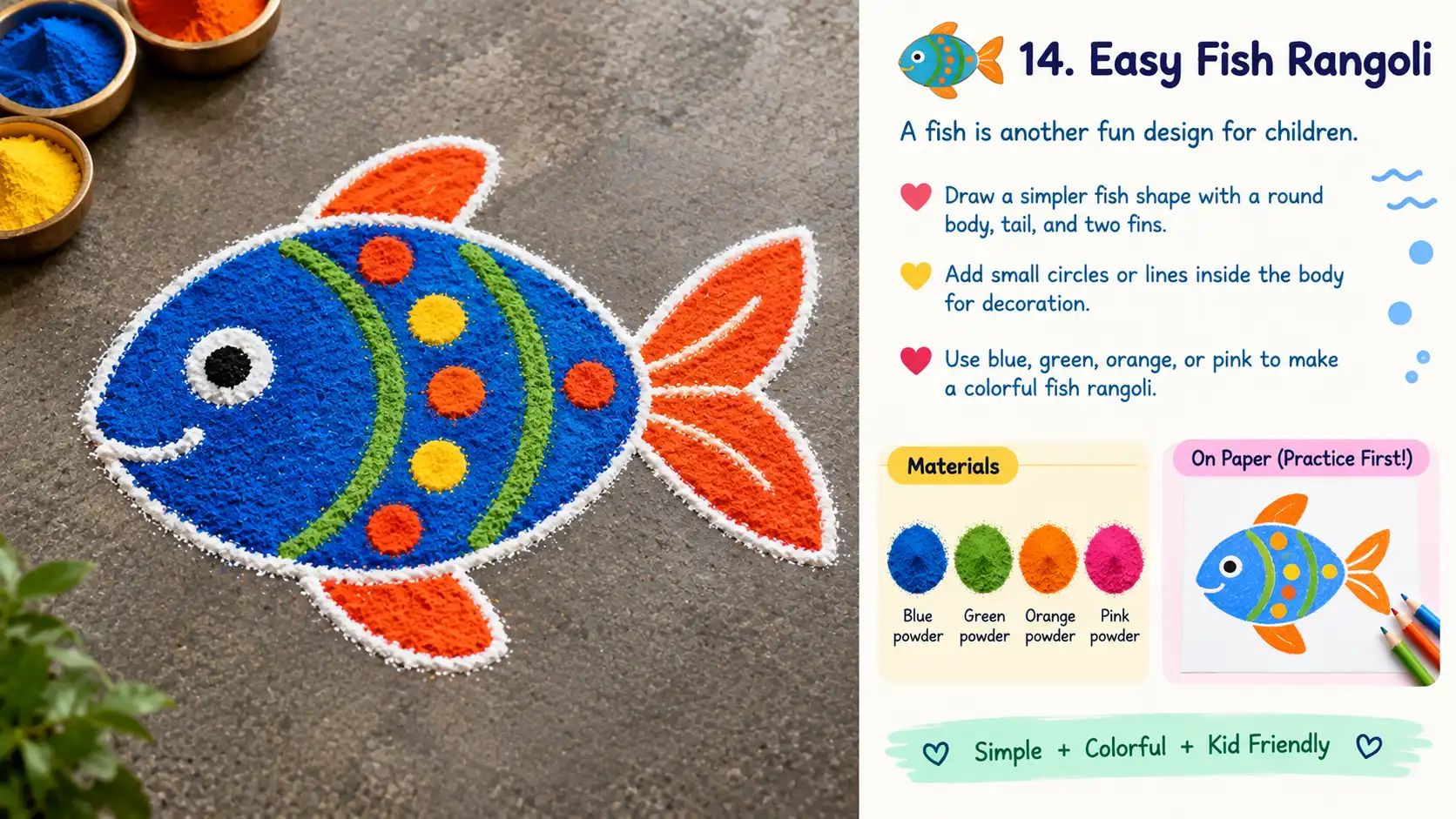
A fish is another fun design for children.
Draw a simple fish shape with a round body, tail, and two fins. Add small circles or lines inside the body for decoration.
Use blue, green, orange, or pink to make a colorful fish rangoli.
Simple Leaf Rangoli
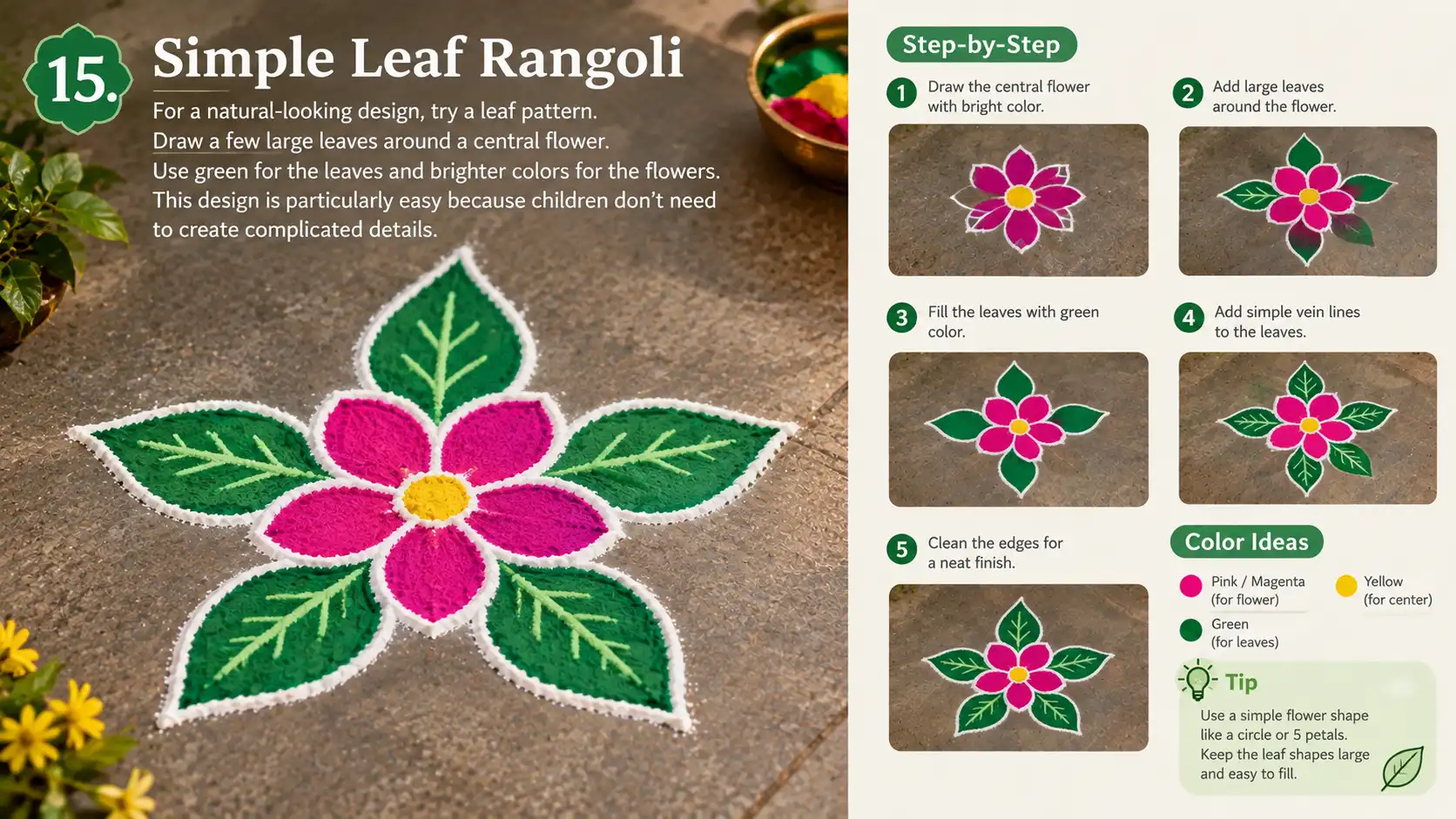
For a natural-looking design, try a leaf pattern.
Draw a few large leaves around a central flower. Use green for the leaves and brighter colors for the flowers.
This design is particularly easy because children don’t need to create complicated details.
Emoji Rangoli
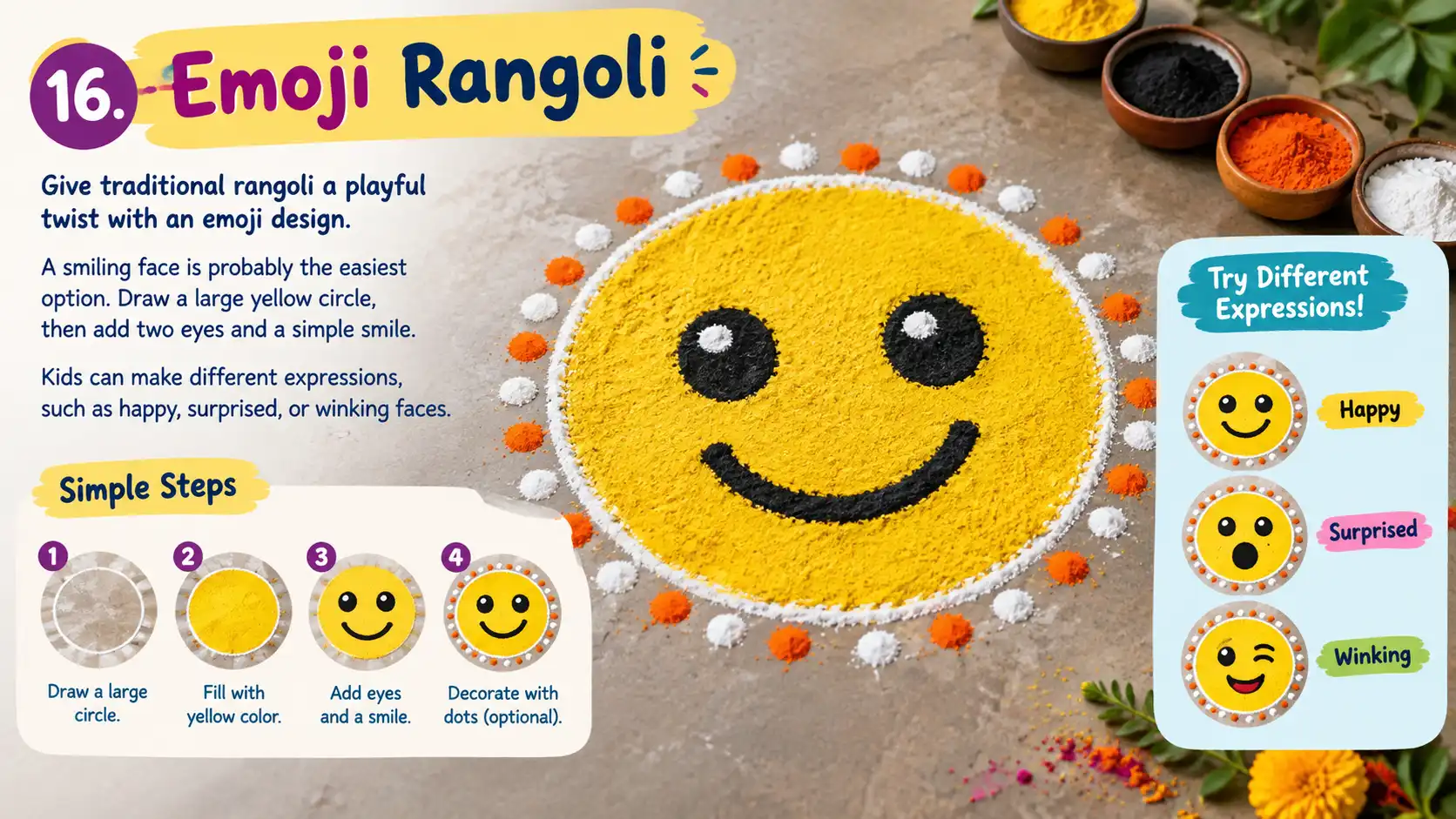
Give traditional rangoli a playful twist with an emoji design.
A smiling face is probably the easiest option. Draw a large yellow circle, then add two eyes and a simple smile.
Kids can make different expressions, such as happy, surprised, or winking faces.
Easy Mandala Rangoli
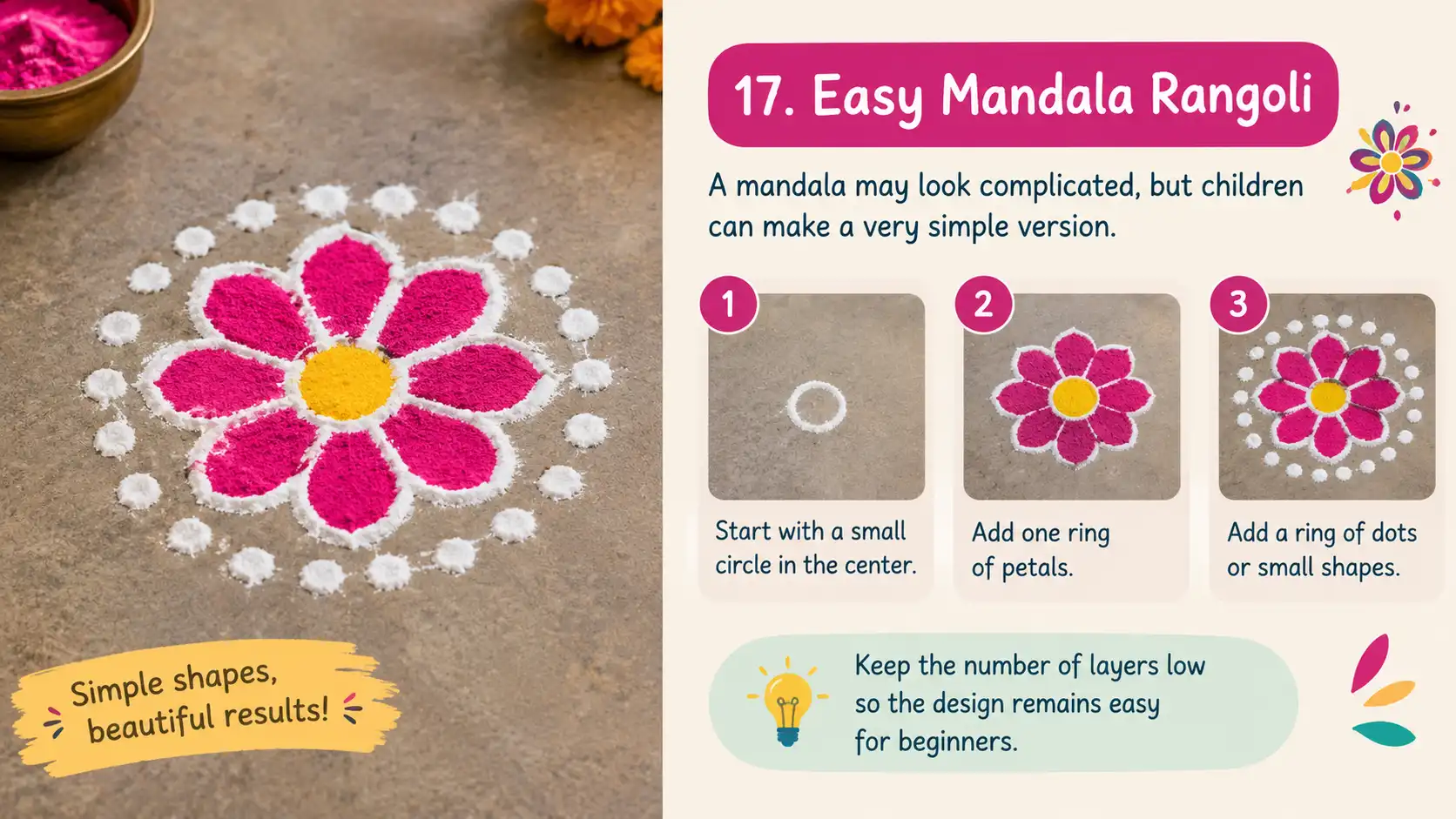
A mandala may look complicated, but children can make a very simple version.
Start with a small circle in the center. Add one ring of petals, followed by a ring of dots or small shapes.
Keep the number of layers low so the design remains easy for beginners.
Flower and Diya Rangoli
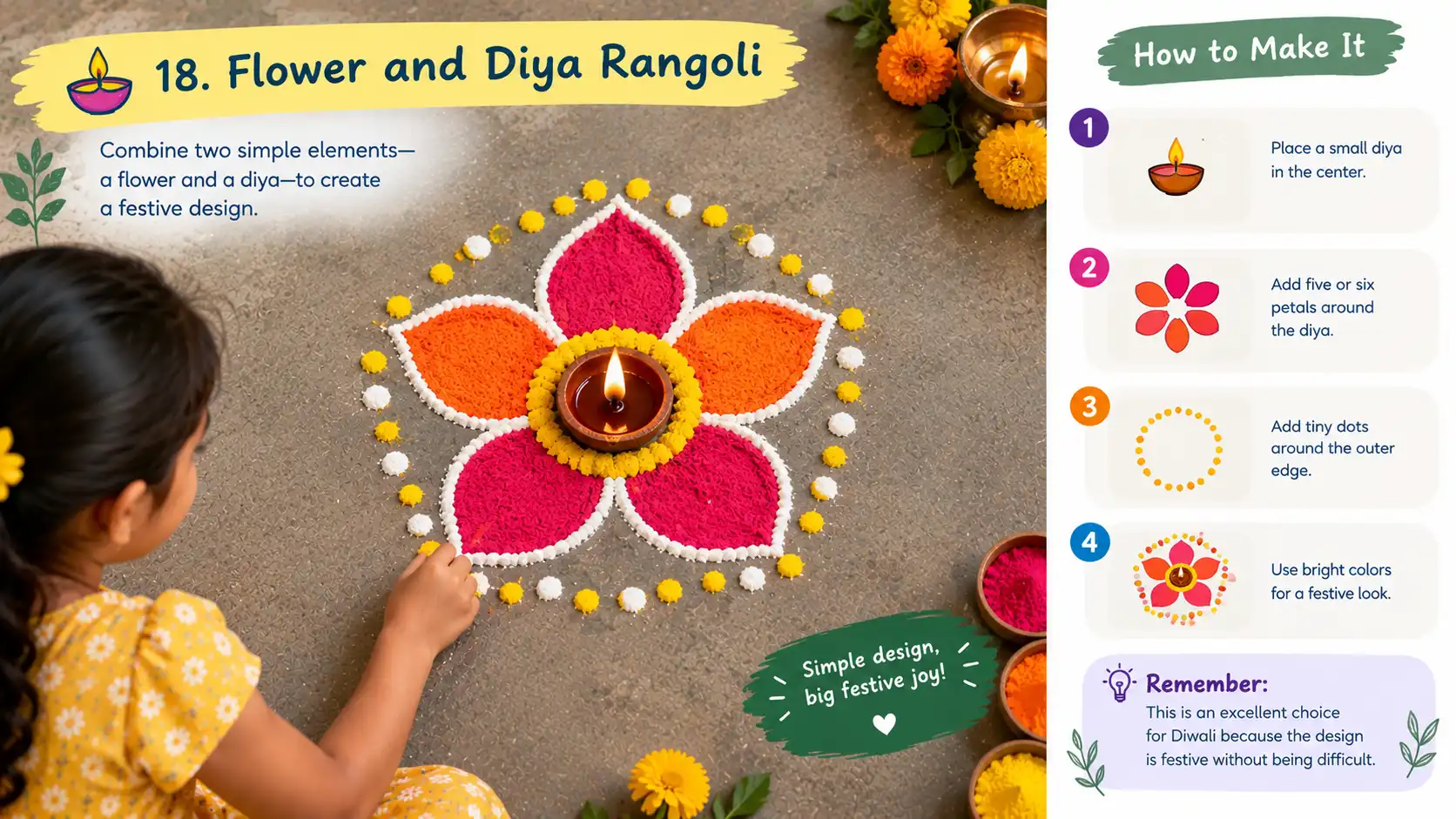
Combine two simple elements—a flower and a diya—to create a festive design.
Place a small diya in the center and surround it with five or six petals. Add tiny dots around the outer edge.
This is an excellent choice for Diwali because the design is festive without being difficult.
Butterfly and Flower Rangoli
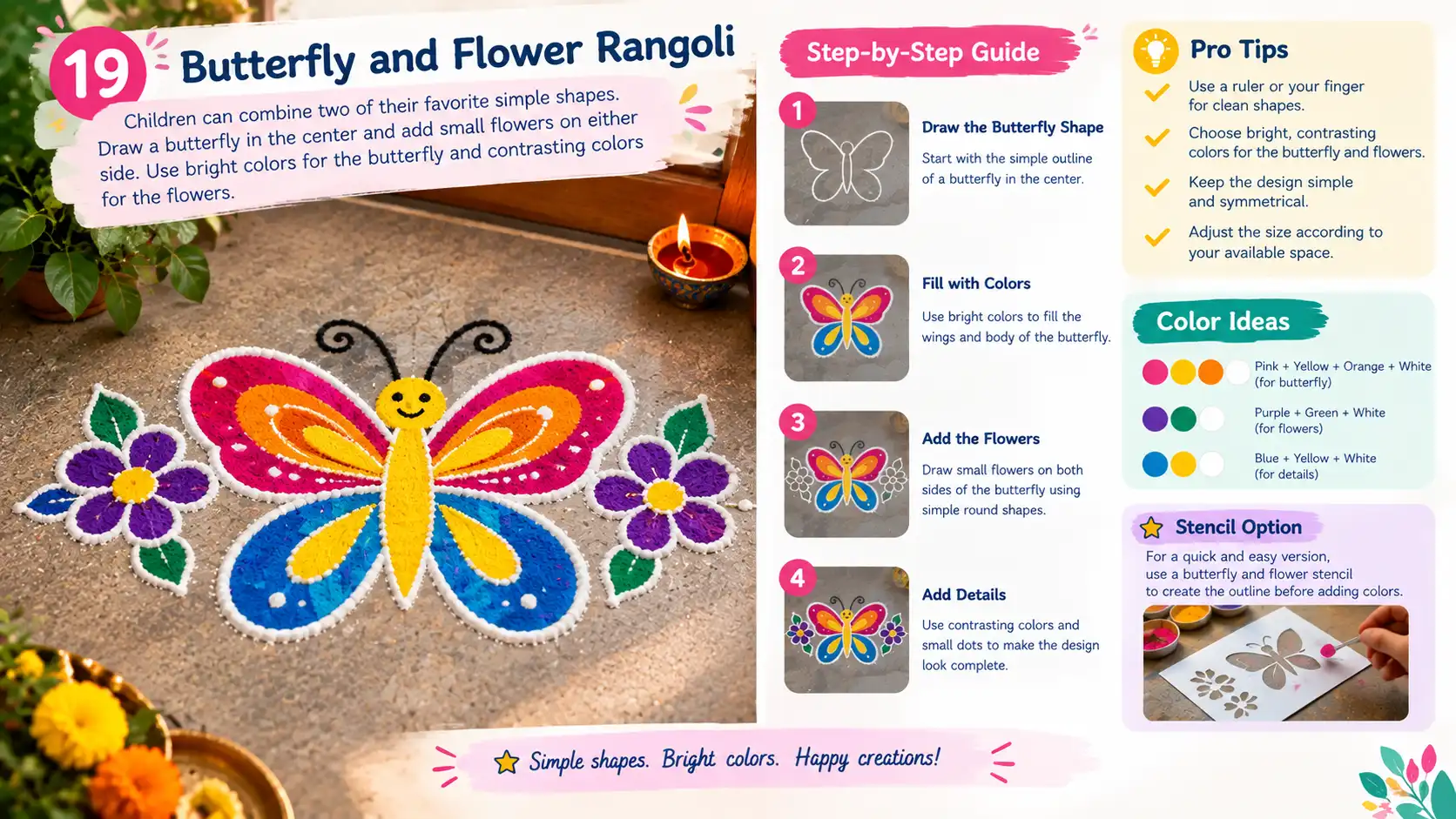
Children can combine two of their favorite simple shapes.
Draw a butterfly in the center and add small flowers on either side. Use bright colors for the butterfly and contrasting colors for the flowers.
The design can be made larger or smaller depending on the available space.
Easy Border Rangoli
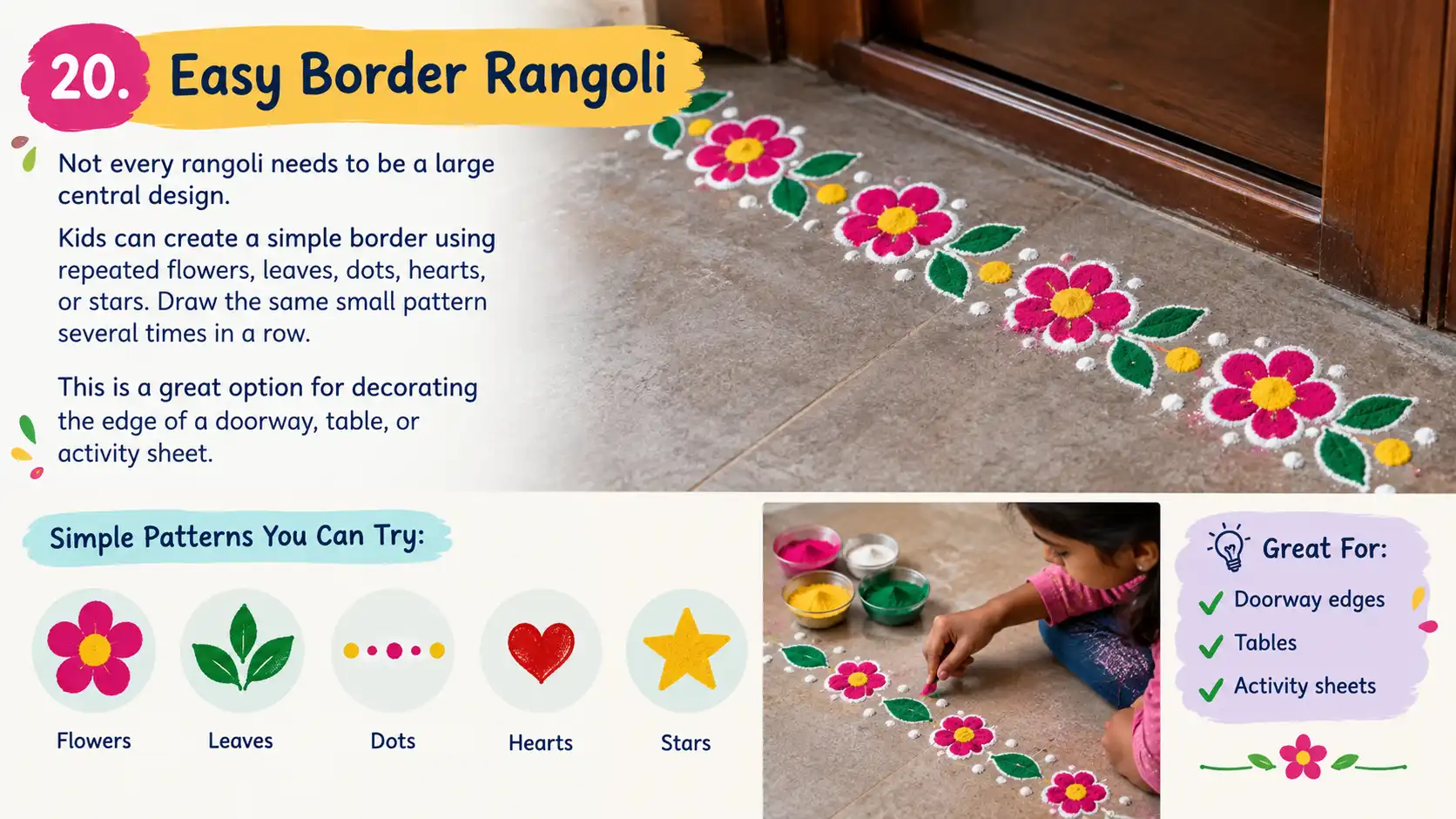
Not every rangoli needs to be a large central design.
Kids can create a simple border using repeated flowers, leaves, dots, hearts, or stars. Draw the same small pattern several times in a row.
This is a great option for decorating the edge of a doorway, table, or activity sheet.
Simple Materials for Making Rangoli With Kids
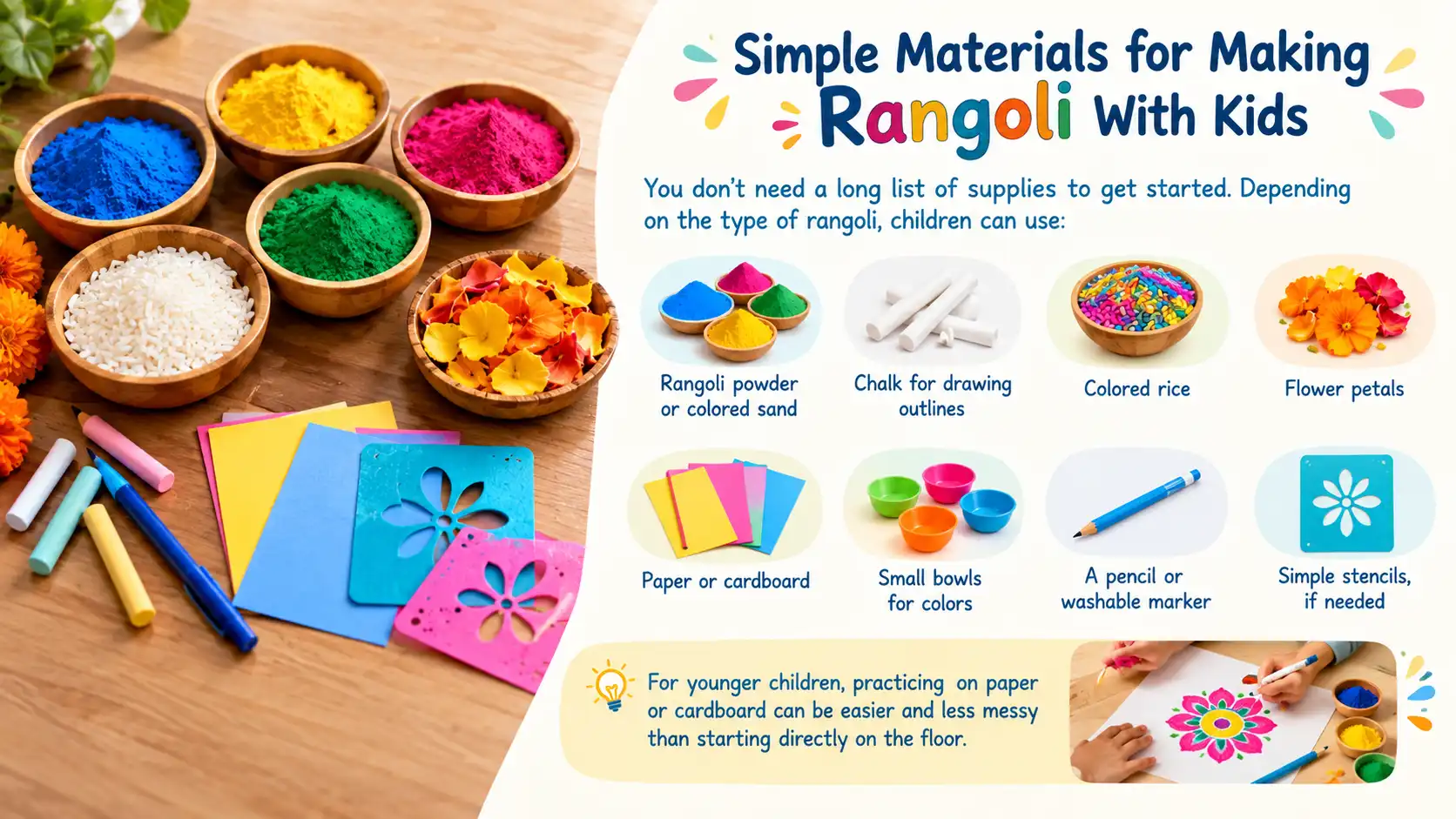
You don’t need a long list of supplies to get started. Depending on the type of rangoli, children can use:
Colored powder or sand for floor designs.
Useful for drawing simple outlines.
A fun alternative to traditional powder.
Perfect for natural and festive rangoli.
Great for practicing without making a mess.
Keep different colors organized.
Helpful for paper-based rangoli activities.
Useful for beginners who need guidance.
For younger children, practicing on paper or cardboard can be easier and less messy than starting directly on the floor.
How to Make Easy Rangoli for Kids
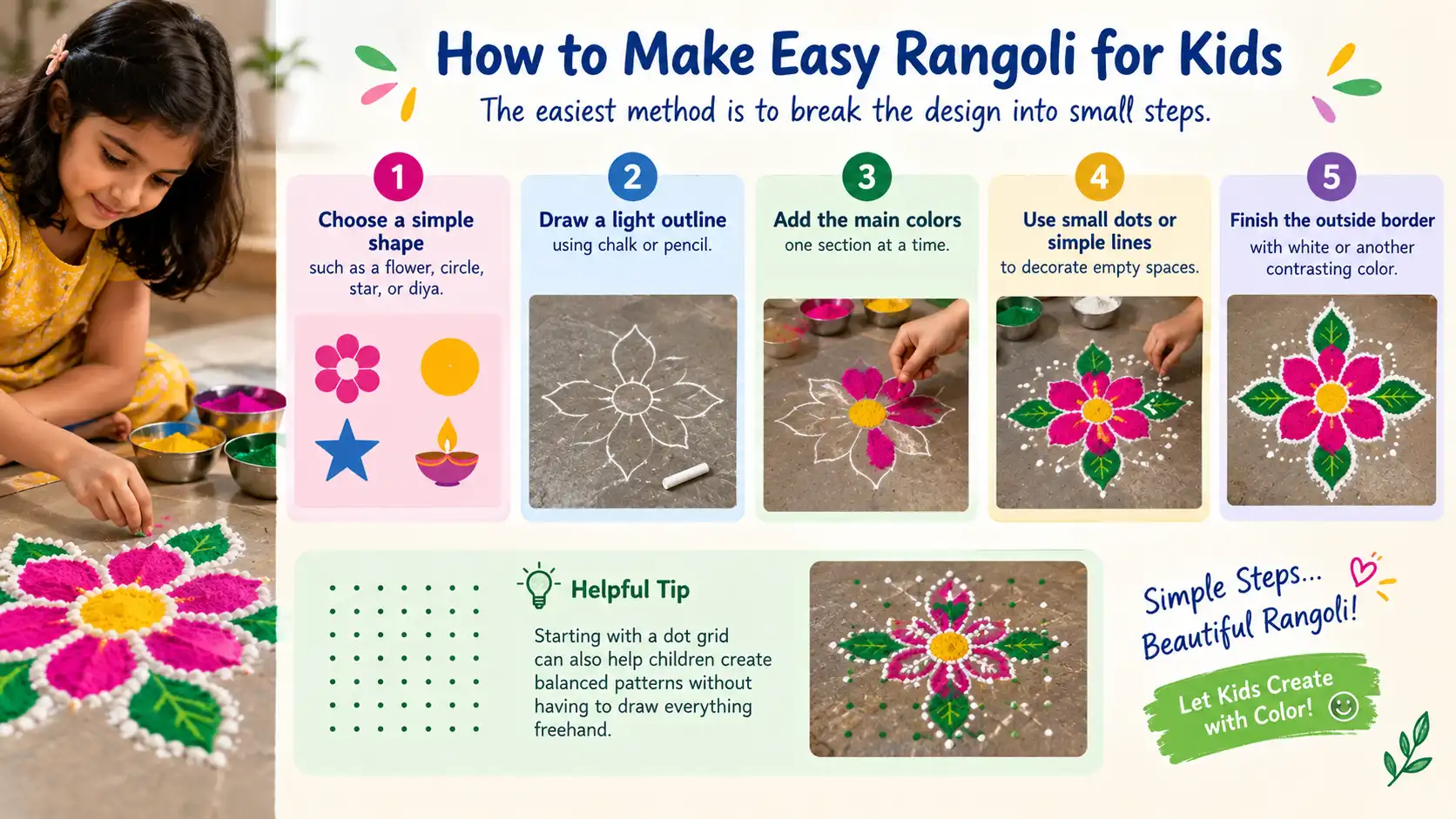
The easiest method is to break the design into small steps.
Choose a Simple Shape
Choose a simple shape such as a flower, circle, star, or diya.
Draw the Outline
Draw a light outline using chalk or pencil.
Add Main Colors
Add the main colors one section at a time.
Decorate Empty Spaces
Use small dots or simple lines to decorate empty spaces.
Finish the Border
Finish the outside border with white or another contrasting color.
Starting with a dot grid can also help children create balanced patterns without having to draw everything freehand.
Tips to Make Kids’ Rangoli Look Neat
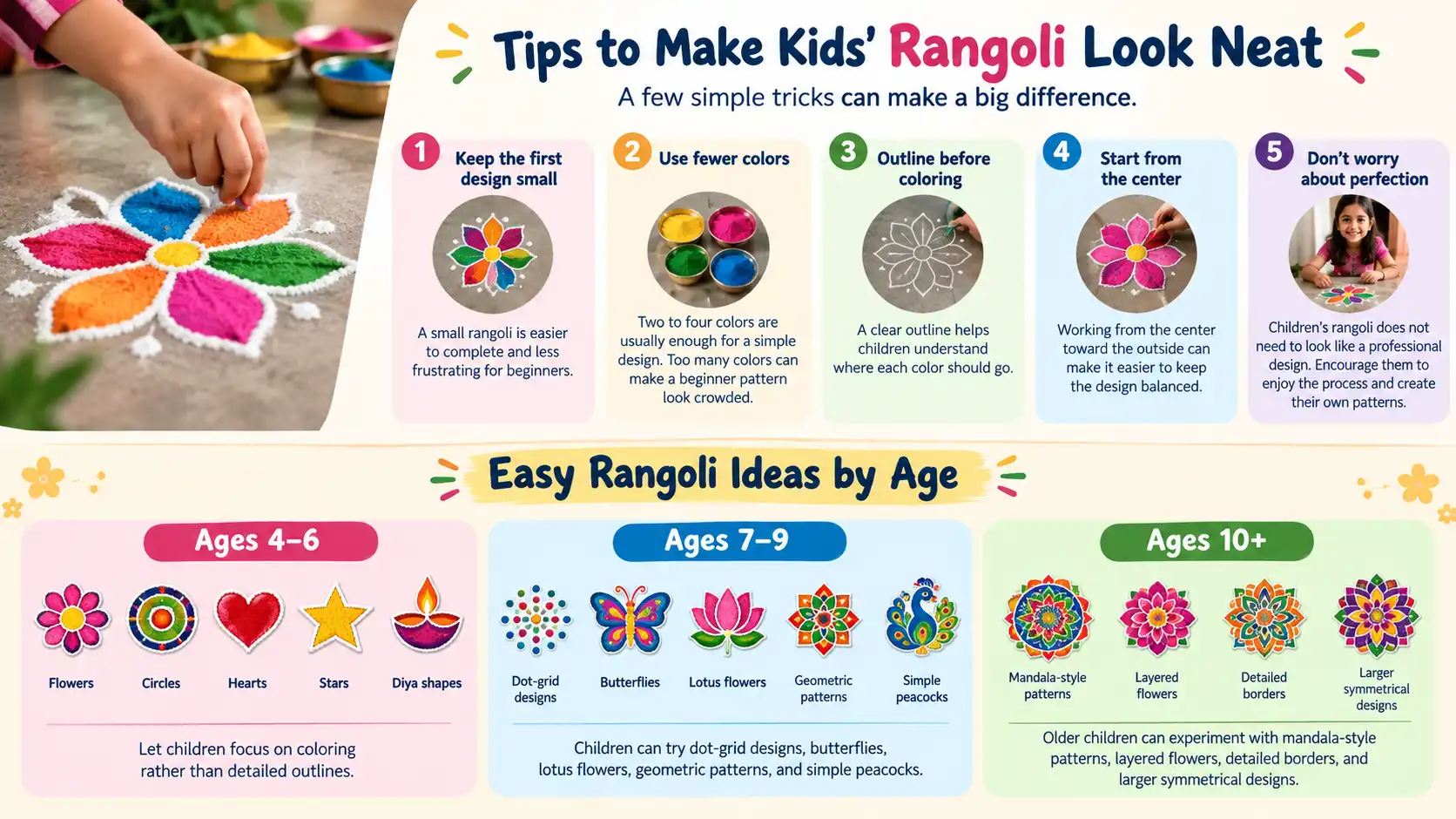
A few simple tricks can make a big difference.
Keep the First Design Small
A small rangoli is easier to complete and less frustrating for beginners.
Use Fewer Colors
Two to four colors are usually enough for a simple design. Too many colors can make a beginner pattern look crowded.
Outline Before Coloring
A clear outline helps children understand where each color should go.
Start From the Center
Working from the center toward the outside can make it easier to keep the design balanced.
Don’t Worry About Perfection
Children’s rangoli does not need to look like a professional design. Encourage them to enjoy the process and create their own patterns.
Easy Rangoli Ideas by Age
Try simple flowers, circles, hearts, dots, stars, and diya shapes. Let children focus on coloring rather than detailed outlines.
Children can try dot-grid designs, butterflies, lotus flowers, geometric patterns, and simple peacocks.
Older children can experiment with mandala-style patterns, layered flowers, detailed borders, and larger symmetrical designs.
A Fun Way to Start Creating Rangoli
Making rangoli can be a wonderful creative activity for children, especially when the design matches their skill level. You don’t need complicated patterns to create something beautiful. A simple flower, colorful star, diya, or geometric design can be just as attractive.
If your child enjoys these beginner-friendly ideas and wants to try something a little different, you can also explore more easy rangoli designs for inspiration.
Simple dot patterns are another great next step because the dots provide an easy guide for children who are still learning spacing and symmetry. You can find more ideas in this beginner-friendly rangoli guide .
The key is to start small, use easy shapes, and let kids enjoy experimenting with colors. Once they feel comfortable with basic flowers, circles, and stars, they can gradually try more detailed patterns.
For more beginner tips on drawing and planning a design, this guide to drawing rangoli can also be helpful.
If you’re looking for even more visual inspiration, Pinterest is a great place to browse different rangoli patterns and save ideas for a future project.
Frequently Asked Questions
What is the easiest rangoli design for kids?
Simple flowers, circles, dots, stars, hearts, and diya designs are some of the easiest rangoli patterns for children.
Can children practice rangoli on paper?
Yes. Paper or cardboard is an excellent way for children to practice outlines, colors, spacing, and symmetry before making rangoli on the floor.
What materials are best for beginner rangoli?
Rangoli powder, chalk, colored rice, flower petals, paper, pencils, and simple stencils are all useful materials for beginners.
How many colors should kids use?
Two to four colors are usually enough for a neat and attractive beginner rangoli.
What age can children start making rangoli?
Children as young as four can begin with basic shapes, dots, and coloring. Older children can gradually try more detailed patterns.
Let Every Little Design Become a Happy Memory
Rangoli is not about perfection. It is about colorful moments, creativity, learning, and making something beautiful together.