Om Symbol Rangoli Design: Easy Steps for Beginners
An Om symbol rangoli design turns a plain doorway into a sacred welcome point. It combines one of Hinduism’s oldest symbols with the everyday art of rangoli, and it works for daily worship, festivals, or special poojas.
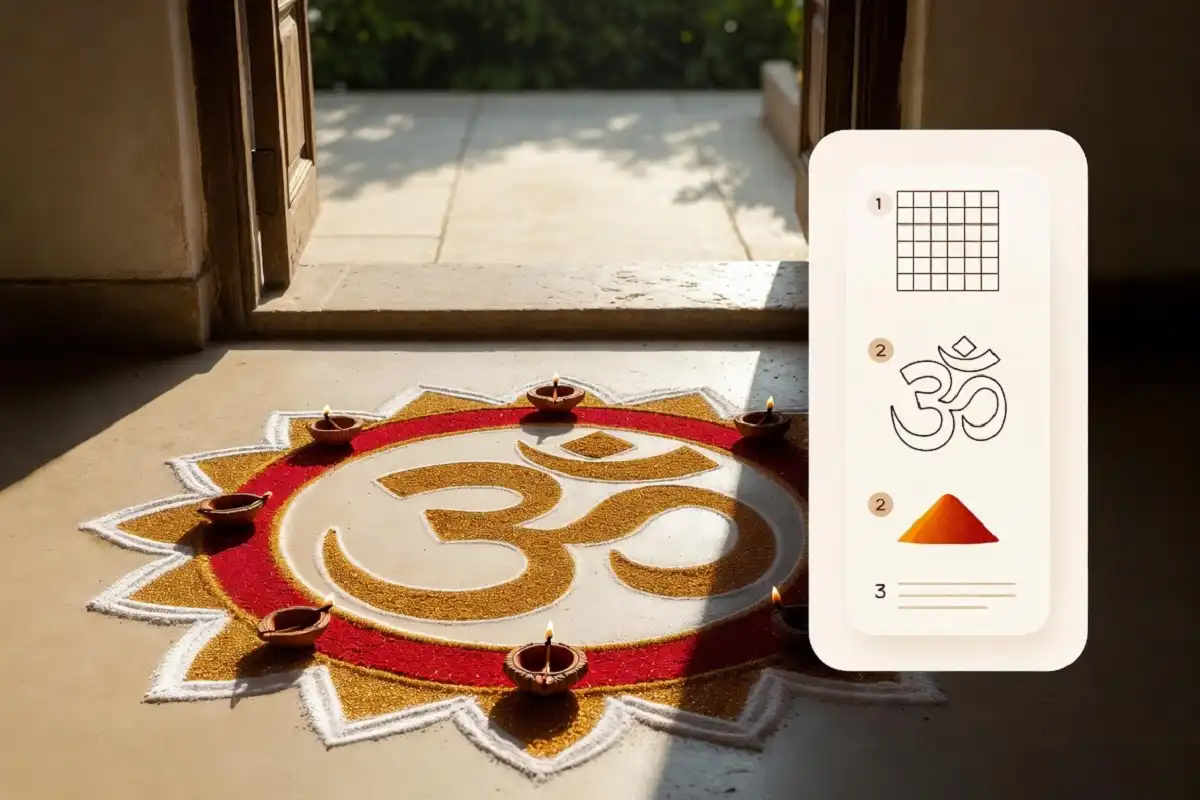
To make an Om symbol rangoli design, draw a dot grid, sketch the Om outline through the dots, then fill it with colored powder or flowers. Add a border and diyas around it for a festive, complete look.
Why the Om Symbol Works So Well in Rangoli
The Om symbol represents the sound of creation in Hindu philosophy. It stands for the universe’s origin, and it appears in temples, home shrines, and festival decorations across India. Placing it in rangoli form at your entrance sets a spiritual tone before anyone even steps inside.
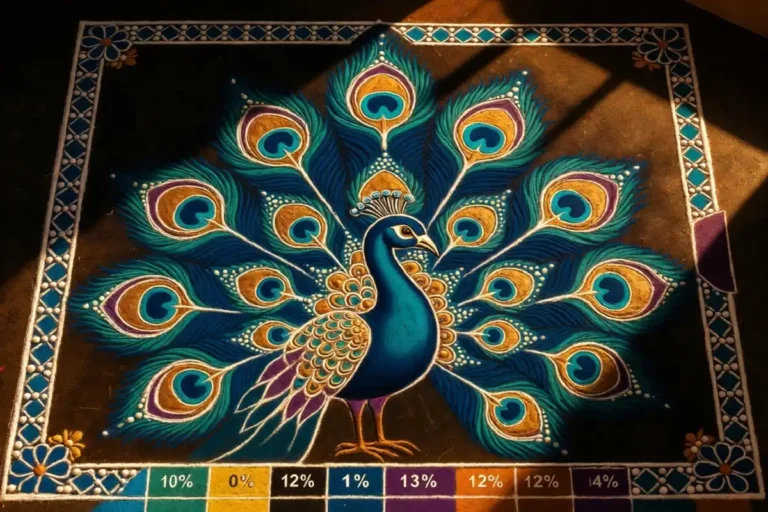
Unlike floral or peacock motifs, the Om symbol rangoli design carries direct religious meaning — it is not decorative alone. This is why families often choose it for Diwali, Ganesh Chaturthi, and daily morning rangoli near the puja room. For a broader look at symbols used this way, this article on cultural symbols of India covers several more, including the swastik and lotus.
Materials You Need
Before starting, gather these:
- Rangoli powder (gulal) in red, yellow, orange, and white
- A rangoli comb or a small paper cone for fine lines
- Chalk or a rangoli stencil for the outline
- A ruler or string for the dot grid
- Marigold petals or rose petals (optional, for a floral finish)
- Small diyas or tea lights for the border
Cotton-based gulal gives the cleanest color for an Om symbol rangoli design because it holds its shape better than chalk powder, especially outdoors where wind is a factor.
How to Make Om Symbol Rangoli Design Step by Step
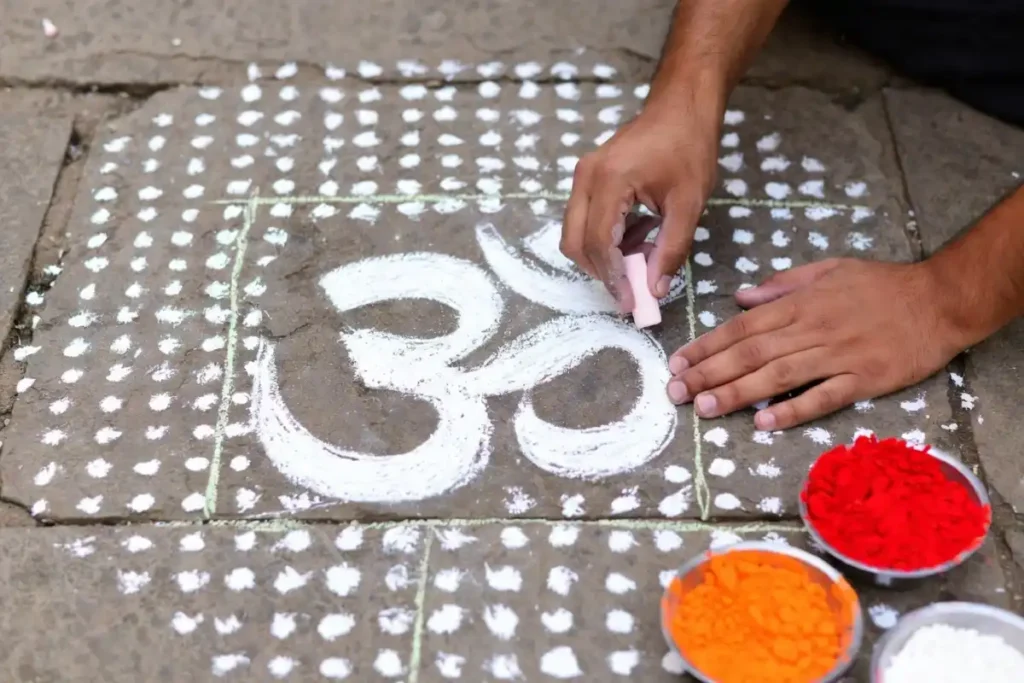
Here is the direct method for a clean, symmetrical result.
Mark the Dot Grid
Place dots in a diamond or square grid on your floor using chalk. A 7×7 or 9×9 grid works well for a medium-sized Om symbol rangoli design. Keep the spacing even so the curves come out balanced.
Sketch the Om Outline
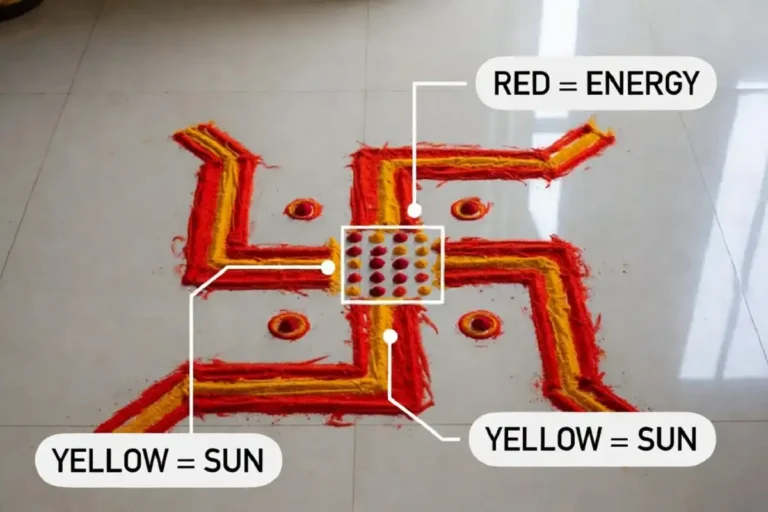
Draw the Om symbol by connecting the dots with light chalk lines. Start with the main curved body, then add the crescent and dot above it. Go slowly through the curves since the Om shape has more bends than a straight-line design like a swastik.
Outline in Color
Trace over your chalk lines with a rangoli comb using dark colors like maroon or black. This locks in the shape before you fill it, so the color does not spread out of place.
Fill the Symbol
Fill the Om body with warm colors such as red, orange, or gold. These colors match the symbol’s traditional association with fire and energy. Use a light touch and fill from the center outward.
Add a Border and Final Touches
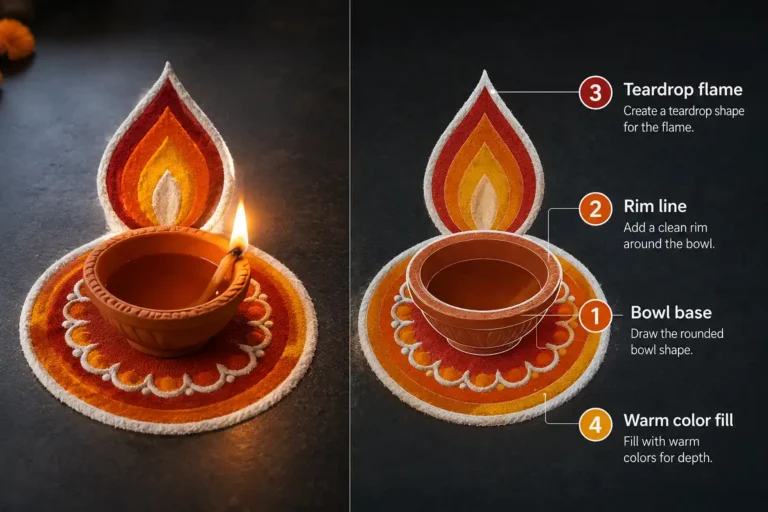
Frame the completed Om symbol rangoli design with a circular or square border in a contrasting color. Place small diyas along the border for festivals, or use fresh petals if you want a natural, softer finish.
Om Symbol Rangoli Design Variations
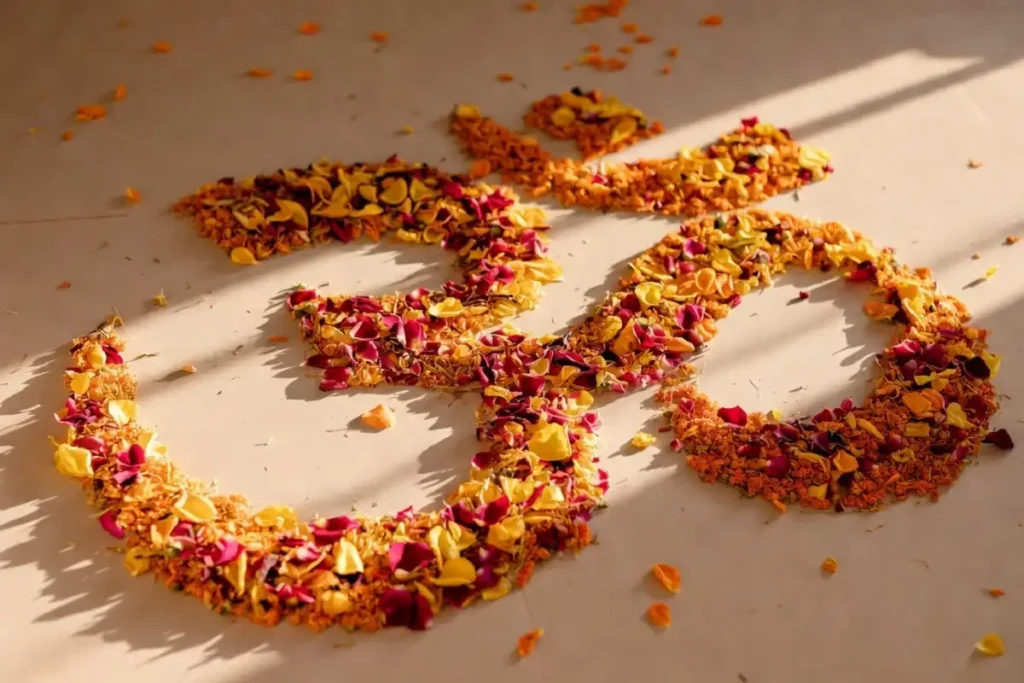
There is more than one way to style this symbol, and the right one depends on the occasion.
Floral Version
Use marigold, rose, and jasmine petals instead of powder. This version suits Ganesh Chaturthi and other festivals where fresh flowers are already part of the decoration. It also lasts well in humid weather since petals do not smudge like powder.
Dot-Grid Version
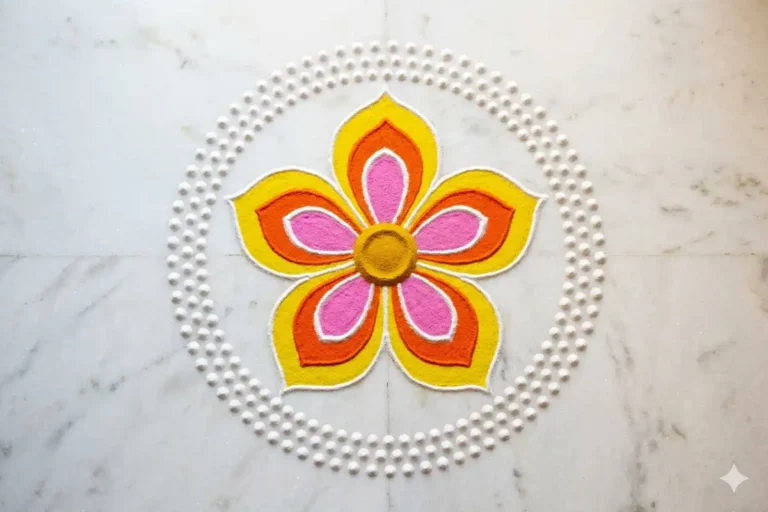
This version sticks closely to traditional kolam-style dot patterns, common in South Indian homes. The Om shape stays simple and geometric, drawn mostly in white rice flour with a colored fill. This guide on rangoli designs with dots has several layouts that pair well with this style.
3D Version
Raised rangoli using clay, thermocol, or sand gives the Om symbol depth and a shadow effect. This works best for competitions or larger festival displays where the design needs to stand out from a distance.
Combined with Other Symbols
Many households combine the Om symbol with a swastik or a small diya on either side. This piece on swastik rangoli ideas has layouts that pair naturally with Om.
Where to Place Om Symbol Rangoli Design at Home
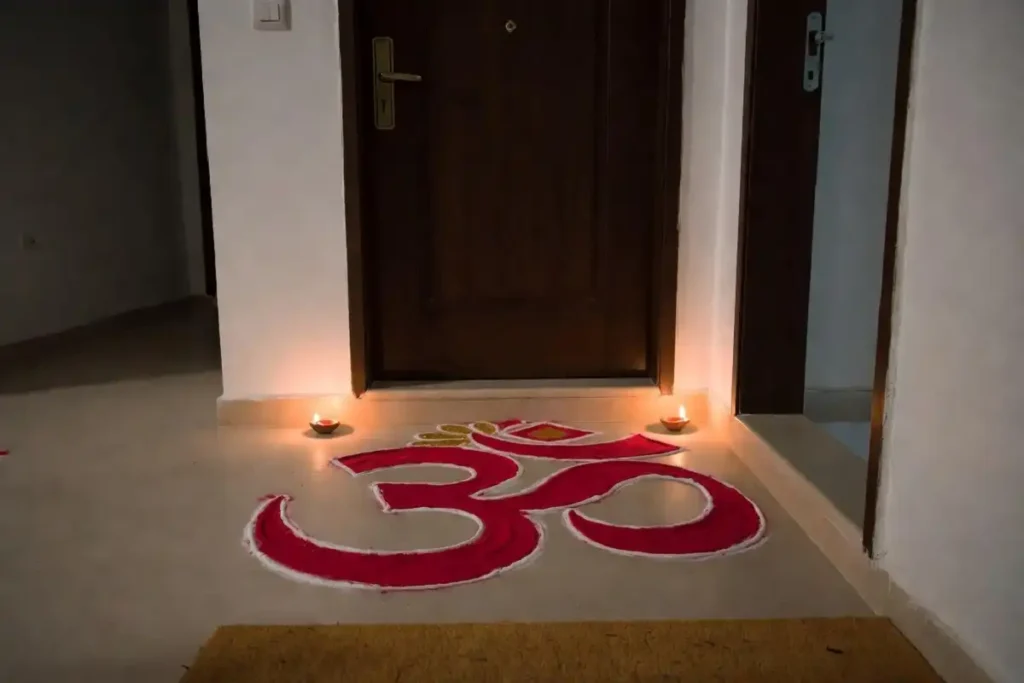
The main entrance is the most common spot for an Om symbol rangoli design, since it welcomes positive energy inward. The area right outside or inside the puja room is the second most popular choice, especially for daily worship.
For apartments with limited floor space, a small Om symbol rangoli design near the doormat works just as well as a large one at a house entrance. Size does not reduce the symbol’s meaning.
Common Mistakes to Avoid
- Uneven dot spacing. This throws off the Om curve and makes the symbol look lopsided. Measure before you start.
- Overfilling with color. Too much powder blurs the outline. Fill in thin, even layers.
- Skipping the outline step. Without a dark outline, colors bleed into each other within hours.
- Wrong color choice. Very light or pastel shades make the Om symbol rangoli design hard to see from a distance. Stick to warm, saturated tones for the main body.
Simple Om Symbol Rangoli Design for a Peaceful Home
An Om symbol rangoli design does not need to be complicated to feel beautiful, meaningful, and welcoming. Start with a simple dot grid or lightly sketch the Om symbol in the center before adding your colors. Warm shades such as red, orange, yellow, pink, and gold can make the design look bright while keeping its traditional feel.
You can create the pattern with colored rangoli powder, fresh flower petals, rice, or even try a raised 3D style for a more creative look. Add small diyas, dots, leaves, or floral borders around the main symbol to complete the design.
Whether placed near the entrance, prayer area, or living room, an Om rangoli can create a calm and positive atmosphere for family and guests.
FAQs
Can I make an Om symbol rangoli design without using a dot grid?
Yes. Free-hand drawing works if you already know the Om shape well. Beginners get better symmetry with a dot grid, so it’s recommended until you’re comfortable with the curves.
How long does a powder-based Om symbol rangoli design last outdoors?
It usually lasts one to two days in dry weather. Wind and rain will fade it faster, so refresh it before major prayers or guests arrive.
What size works best for a home entrance?
A 2 to 3 foot design suits most doorways. Go larger only if your entrance space allows it without blocking movement.