Beginner Mandala Rangoli: Easy Steps & Ideas
A mandala rangoli starts with one dot and grows into a full circle of color. That simple idea is what makes it perfect for newcomers. If you have never drawn on the floor before, a beginner mandala rangoli gives you a clear shape to follow and a calm rhythm to enjoy.
Rangoli has decorated Indian doorways for centuries. It welcomes guests, marks festivals, and adds daily beauty to a home. The mandala style, built on circles and repeating shapes, is one of the easiest ways to begin.
In this guide, you will learn the patterns, the steps, and the small tricks that make your first design look neat. If you want even simpler shapes to warm up with, these beginner-friendly rangoli designs are a good place to start.
What Is a Beginner Mandala Rangoli?
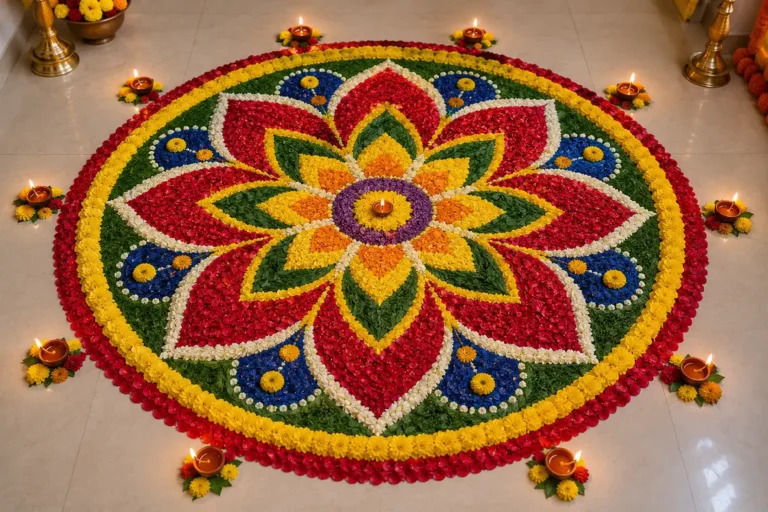
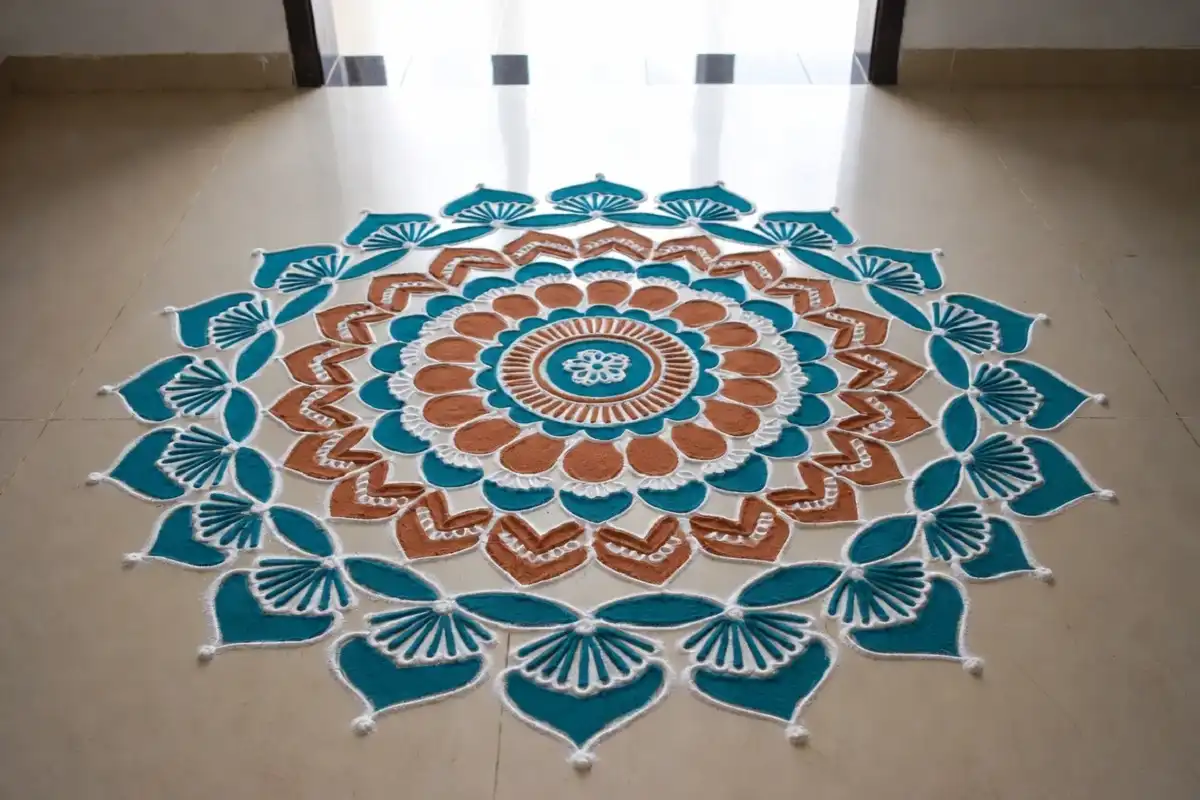
A beginner mandala rangoli is a circular floor design made from a center point that expands outward in even layers. Each ring repeats the same motif, so you only need to learn one small shape and copy it around the circle.
The word mandala means “circle” in Sanskrit. In design, it stands for balance and wholeness. Because every part mirrors the others, mistakes are easy to fix and hard to notice.
This symmetry is also why mandalas feel relaxing to draw. You are not inventing each section. You are repeating a pattern, which lets your hand settle into a steady flow.
Easy Mandala Rangoli Patterns to Try
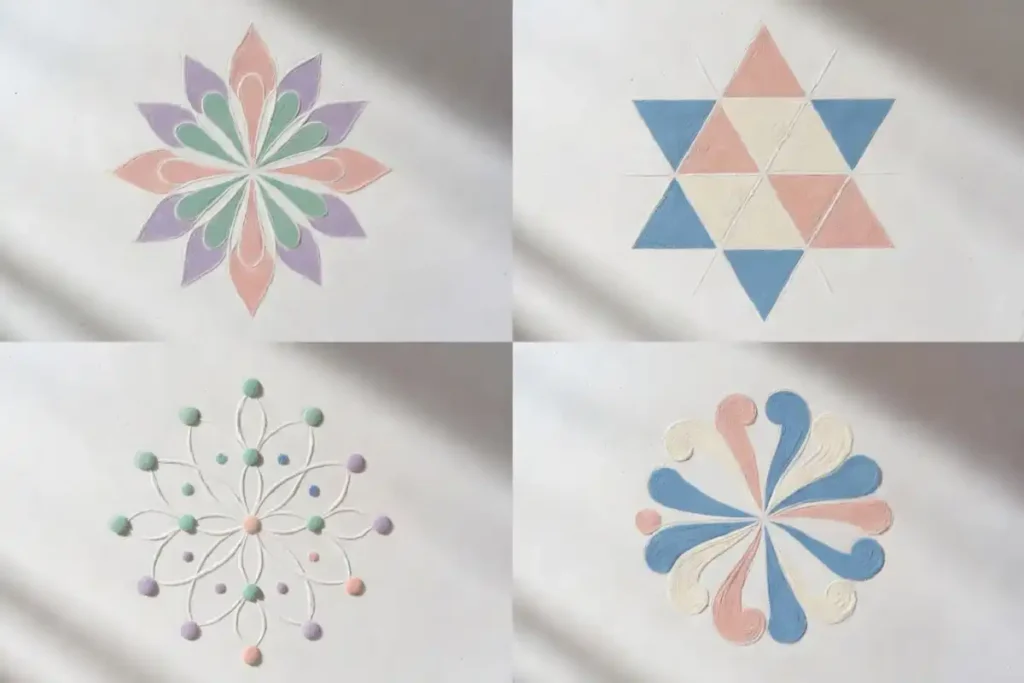
You do not need advanced skills to begin. Start with these simple layouts and build from there.
Dot Grid Mandala
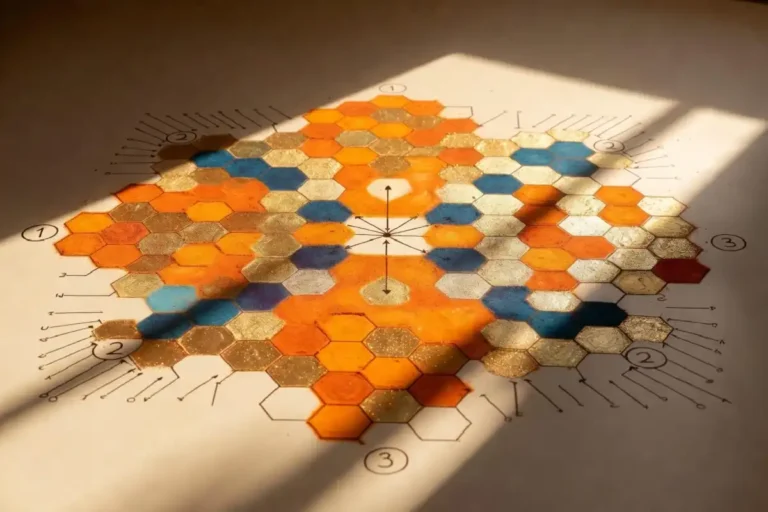
Place a small grid of dots, then connect them with curved lines. The dots act as guides, so your loops stay even. This is the most reliable pattern for a first attempt.
Petal Ring Mandala
Draw a small circle in the center. Surround it with a ring of petals, then add a second, larger ring of petals around that. Two or three rings are enough for a clean look.
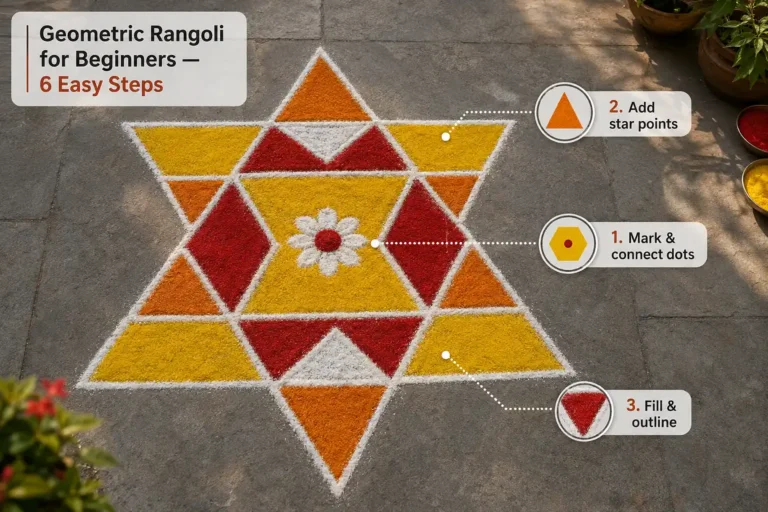
Geometric Triangle Mandala
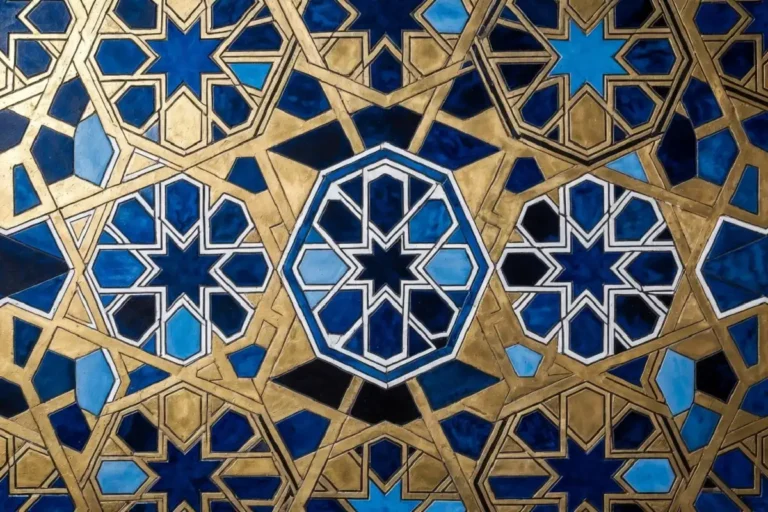
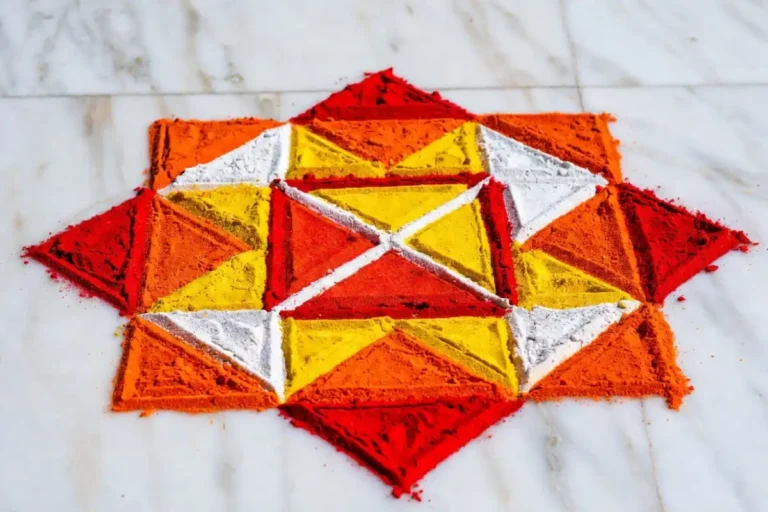
Use repeating triangles pointing outward from the center. Sharp, simple shapes like these are forgiving and modern. They suit anyone who prefers straight lines over curves.
Free-Form Loop Mandala
Once you feel confident, skip the dots. Draw flowing loops around the center by hand. This gives a softer, more personal style.
Step-by-Step Guide to Your First Mandala Rangoli
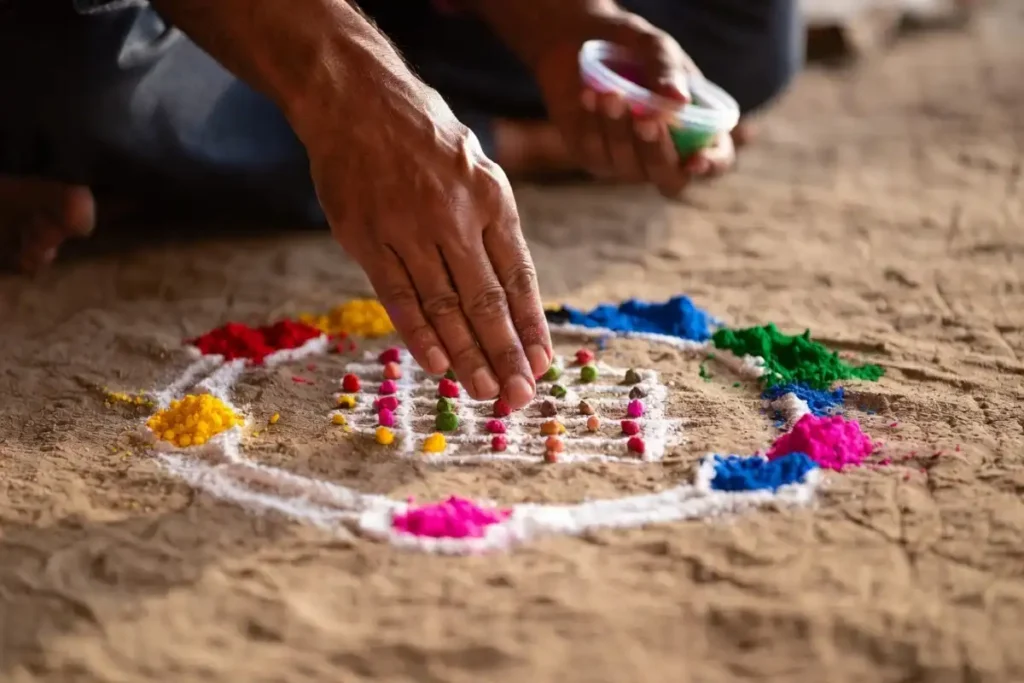
Follow these steps to create a tidy beginner mandala rangoli from start to finish.
Step 1: Clean and mark the surface.
Sweep the area and wipe it dry. A smooth floor holds powder better and keeps lines crisp.
Step 2: Find the center.
Place one dot in the middle. This is your anchor. Everything grows outward from this single point.
Step 3: Build a guide ring.
Add a ring of evenly spaced dots around the center. Use a chalk circle if you want extra accuracy.
Step 4: Connect the first layer.
Join the dots with curves, petals, or lines. Keep this layer small and simple.
Step 5: Repeat outward.
Add the next ring using the same motif. Each layer should echo the one before it.
Step 6: Fill with color.
Add rangoli powder, flower petals, or colored sand. Work from the center outward so you do not smudge finished sections.
Step 7: Outline and finish.
Trace the edges with white powder to make the colors stand out.
Design Tips and Best Practices
A few habits make a big difference in how your beginner mandala rangoli turns out.
Work in good light so you can see your spacing clearly. Even gaps between dots are the secret to a balanced circle.
Choose two or three colors instead of many. A limited palette looks intentional and is easier to control. Pinch powder between your thumb and finger for thin, steady lines.
Keep a small brush or cotton swab nearby to clean stray powder. Practice the center ring on paper first if you feel unsure. According to the Encyclopaedia Britannica, rangoli has long valued symmetry and repetition, and those same principles guide every mandala you draw.
Festival and Cultural Importance
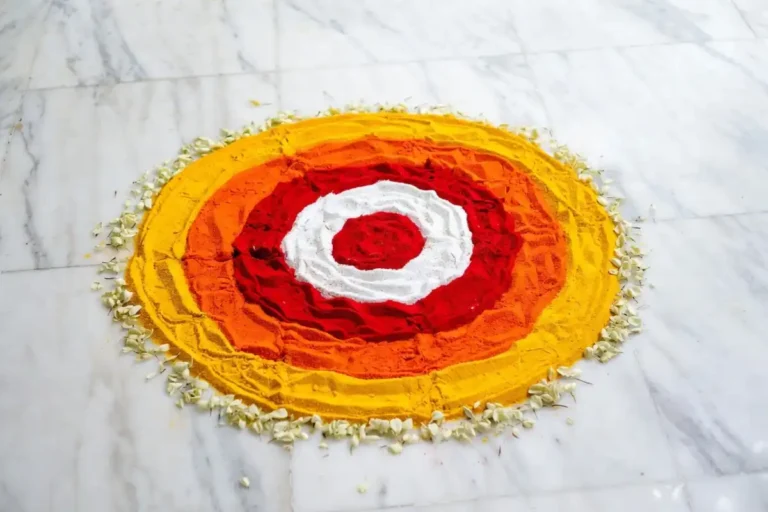
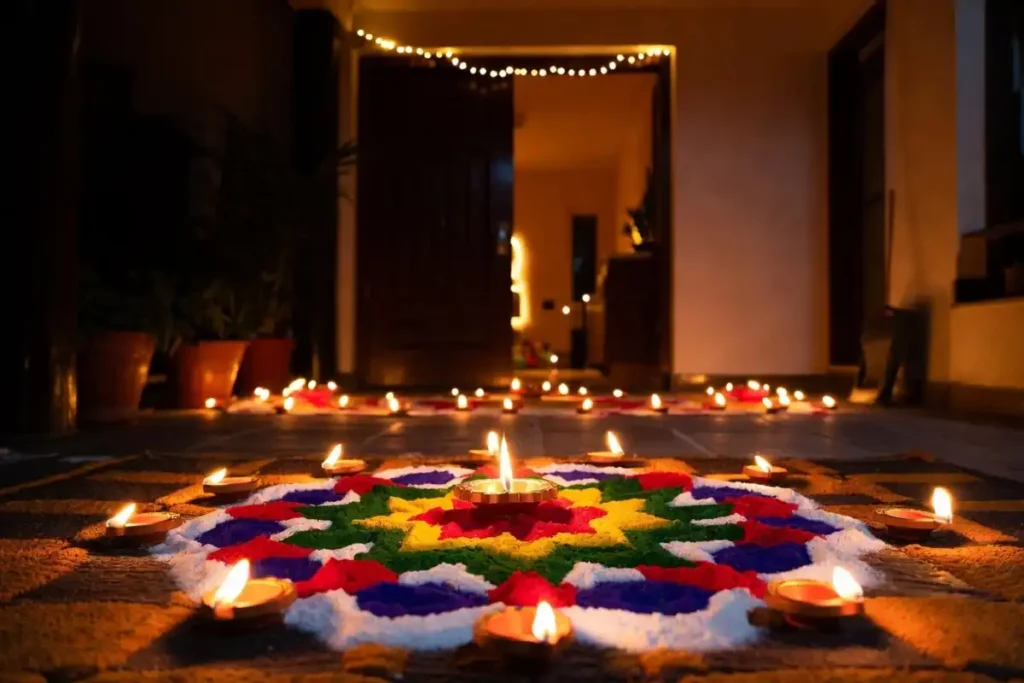
Mandala rangoli appears at almost every Indian celebration. During Diwali, families draw them at the entrance to invite prosperity and light. They also feature during weddings, Pongal, and regional new-year festivals.
The circular form carries meaning. It represents unity, the cycle of seasons, and the connection between the home and the wider world. Drawing one is both decoration and a quiet daily ritual.
If you enjoy seasonal designs, this collection of festival rangoli inspiration shows how mandalas adapt to different occasions.
Common Mistakes to Avoid
Beginners often run into the same few problems. Knowing them in advance saves time.
Starting too large is the most common error. A wide circle is hard to keep even. Begin small and grow only when each ring feels comfortable.
Uneven dot spacing throws off the whole design, so measure by eye carefully before connecting them. Using too many colors can also make a mandala look cluttered rather than balanced.
Finally, do not rush the center. The middle sets the tone for every layer that follows. A steady, simple center keeps your beginner mandala rangoli looking clean all the way to the outer edge.
Latest Trends in Mandala Rangoli Design
Mandala styles keep evolving while staying rooted in tradition. Right now, several looks are popular with home decorators.
Muted, earthy palettes are trending, with soft terracotta, sage, and cream replacing bright primary colors. Many designers also pair powder with fresh flower petals for texture, a style featured often on home platforms like Houzz.
Minimal mandalas are another rising favorite. These use plenty of empty floor space and just one or two rings, which suits modern interiors. Reusable stencil mats have also made the beginner mandala rangoli far easier to attempt indoors and on tile.
FAQs

Is mandala rangoli good for absolute beginners?
What materials do I need?
How long does a simple mandala take?
Can I make a mandala rangoli without dots?
How do I keep my rangoli neat?
Conclusion
A mandala is the friendliest doorway into rangoli art. It rewards patience over speed and rhythm over perfection. With one center dot and a few repeating rings, anyone can create something beautiful.
Start small, keep your colors simple, and let each layer guide the next. Your first beginner mandala rangoli does not need to be flawless, only made with care. Over time, your circles will grow steadier and your designs more confident.
When you are ready for a flower-themed variation, this easy rose design is a lovely next project to try.