Simple and Easy Spiritual Rangoli for Beginners
A rangoli does more than decorate the floor. When made with sacred symbols and a calm mind, it becomes a small act of devotion.
An easy spiritual rangoli lets you bring that feeling into your home without artistic training or hours of effort. Using gentle shapes like the lotus, diya, and Om, you can create peaceful patterns in minutes.
This guide shares simple ideas, meaningful symbols, and beginner steps so anyone can make a sacred design that feels personal, calming, and full of positive energy.
What Makes a Rangoli Spiritual?
A rangoli becomes spiritual when its design carries meaning beyond beauty. This floor art has long been part of Indian homes, drawn at doorways to welcome blessings and guests. You can read more about its cultural background in this overview of rangoli traditions.
A sacred version focuses on meaningful shapes, balance, and intention rather than heavy detail. The goal is to invite peace and good fortune, which is why clean and simple patterns often work best. A single symbol drawn with care can feel more powerful than a crowded design.
Why Choose an Easy Spiritual Rangoli at Home
There are good reasons to keep your designs simple. An easy spiritual rangoli gives you the meaning of traditional art without the stress of intricate work.
The benefits include:
- Quick to make, even on busy mornings
- Calming to draw, almost like a short meditation
- Welcoming for guests and family members
- Suitable for daily worship and festivals
- Easy to clean and refresh each day
Many people find that drawing an easy spiritual rangoli each morning sets a peaceful tone for the whole day. It needs only a few minutes, yet it shifts the mood of the entire home.
Sacred Symbols to Use in Easy Spiritual Rangoli
Symbols give your design its spiritual heart. You do not need all of them at once. Pick one or two that feel right for the day or the occasion.
Om Symbol
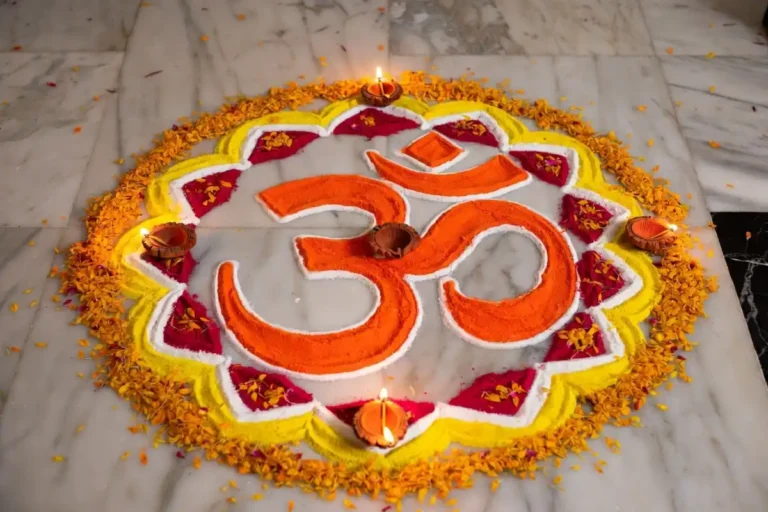
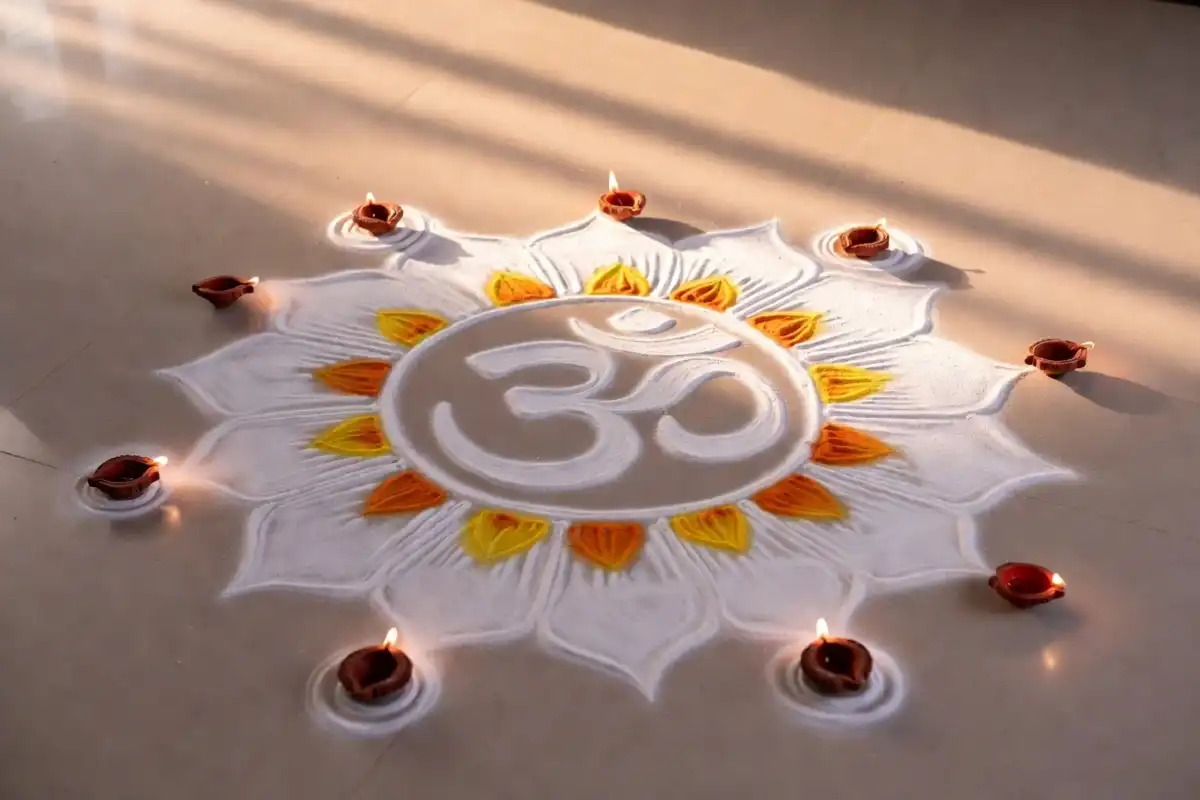
The Om symbol represents sound, creation, and inner stillness. It sits well at the center of a design, framed by a simple circle or a ring of petals. If you want to understand its deeper meaning, this guide to the Om symbol is a helpful read. Drawn with a steady hand, Om turns a plain floor pattern into a point of focus for prayer.
Lotus Flower
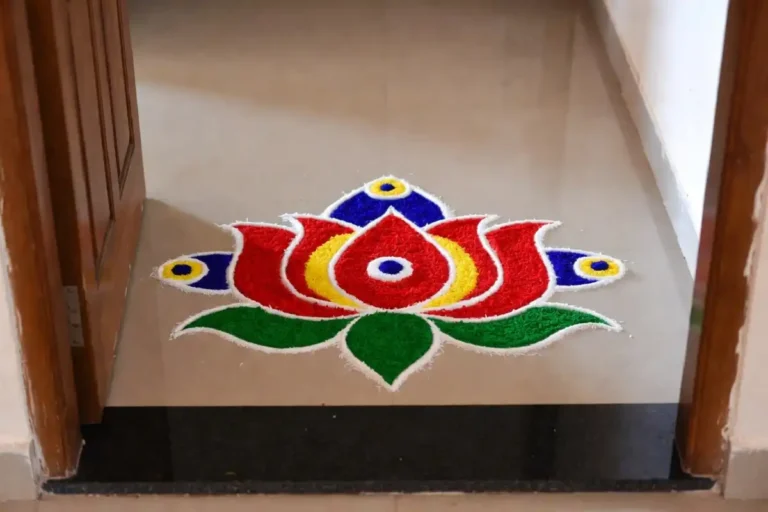
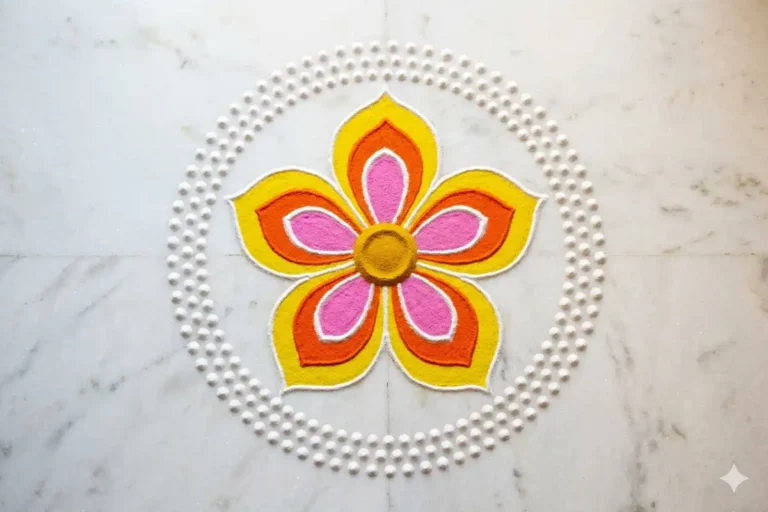
The lotus stands for purity and growth, since it blooms cleanly above muddy water. A few curved petals around a small center create a graceful look. It pairs nicely with soft colors and is one of the easiest sacred shapes for beginners to master.
Diya and Light
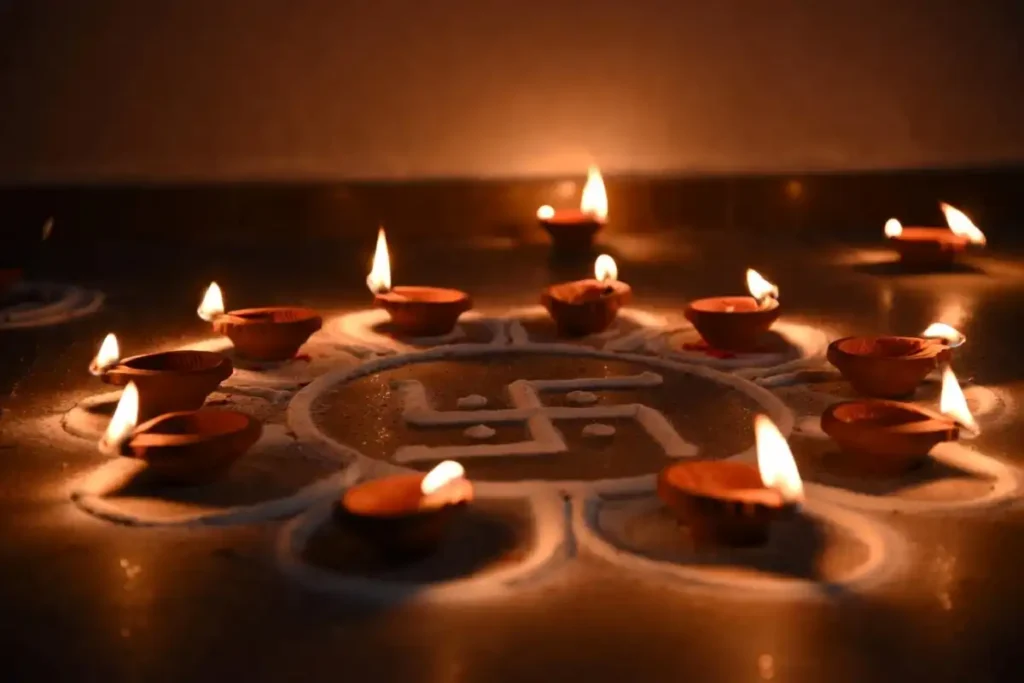
A diya, or oil lamp, is a sign of light pushing away darkness. You can sketch single diyas or a ring of them around a central motif. For more lamp based patterns, these diya themed floor designs are worth exploring. Diyas suit Diwali and any evening prayer.
Swastika
The swastika, in its Indian meaning, is an ancient sign of well being and good luck. Four even lines and four dots are enough to form it. Keep the strokes balanced so the shape stays neat and clear.
Lakshmi Feet
Tiny footprints, known as Lakshmi feet, welcome the goddess of wealth into the home. They are often placed near the entrance during festivals. You can follow these beginner steps for Lakshmi feet to add them to your design.
Simple Steps to Make a Spiritual Floor Design

You can finish a clean pattern in well under an hour. Follow these steps in order:
- 1
Clean and lightly dampen the floor so the powder holds.
- 2
Mark a center point and draw light guide dots.
- 3
Sketch the outline of your chosen symbol with chalk.
- 4
Fill the shape with rangoli powder, sand, or flower petals.
- 5
Add a border of dots or petals to frame the work.
- 6
Place a diya or fresh flower in the center to finish.
With a little practice, an easy spiritual rangoli like this becomes second nature. The repetition itself feels calming, much like a quiet ritual.
Color Ideas for a Calm and Sacred Look
Color sets the mood of your design. For a peaceful feeling, soft and natural shades work best.
You do not need many colors. Two or three shades often make an easy spiritual rangoli look clean and thoughtful, while too many can hide the meaning of the design.
Tips for Beginners
A few small habits make the work smoother and the result neater.
- Start with one symbol before trying full patterns
- Use a pinch grip to control the flow of powder
- Keep a soft cloth nearby to fix small mistakes
- Practice the Om or lotus shape on paper first
- Draw in good light so your lines stay even
These tips help every easy spiritual rangoli look steady and well balanced, even if you are completely new to floor art.
Best Occasions for a Sacred Design
Spiritual patterns fit many moments, not only large festivals. You might draw one for morning prayer, a small home pooja, Diwali, Navratri, or a housewarming. A Ganesha centered design suits new beginnings, and you can see friendly Ganesha design ideas to get started. Whatever the day, an easy spiritual rangoli adds a quiet sense of devotion to your space and makes guests feel welcome the moment they arrive.
Easy Spiritual Rangoli Ideas for Peace and Positivity
Making an easy spiritual rangoli is a simple way to add meaning and calm to your home. You do not need special talent or costly supplies, just a quiet moment and a symbol that speaks to you. Start small with a single Om, lotus, or diya, then grow your confidence over time. Soft colors, clean lines, and a steady hand are all it takes to create something that feels sacred.
Whether for daily prayer or a festive day, these gentle designs welcome peace and positivity into any space. Keep practicing, and each easy spiritual rangoli you draw will feel more natural, personal, and rewarding.
FAQs
Is easy spiritual rangoli good for beginners?
Yes, easy spiritual rangoli is one of the best starting points for beginners. Its simple symbols and small size let you build confidence quickly before moving on to detailed patterns.
What symbols are best for a spiritual rangoli?
Om, the lotus, the diya, the swastika, and Lakshmi feet are among the best choices. Each one carries a clear meaning and can be drawn with just a few simple lines.
How long does it take to make one?
Most simple designs take about fifteen to thirty minutes. The time depends on the size you choose and how many symbols you include in the pattern.
Can I make a sacred design without colors?
Yes, you can use white rice flour, chalk, or sand for a clean and calm look. Many traditional patterns use only white, which keeps all attention on the sacred shape.
What can I use instead of rangoli powder?
Flower petals, rice, pulses, salt, and fine sand all work well. These natural materials are easy to find and gentle on the floor.