Cute Small Rangoli Designs for Every Occasion
Rangoli does not have to be large or elaborate to leave a lasting impression. Cute small rangoli designs are perfect for daily use, apartment doorsteps, and quick festival decoration.
They take less time, use fewer materials, and still bring warmth and color to any corner of your home. Whether you are a beginner trying your first design or someone looking for a quick daily pattern, small rangoli offers a wonderful way to keep this beautiful tradition alive without pressure or complexity.
Why Cute Small Rangoli Designs Are Worth Making
Small rangoli designs fit naturally into modern lifestyles. Many people live in apartments or homes with limited floor space near the entrance. A compact design that covers 30 to 45 centimeters is enough to create a welcoming, festive feel.
Small designs are also forgiving for learners. Mistakes are easier to correct, and the overall commitment of time and material is low. This makes them ideal for anyone building their rangoli skills day by day.
If you are new to this art form, browsing simple rangoli designs for beginners step by step is a great starting point before working up to more detailed patterns.
Cute Small Rangoli Ideas for Daily Use
Simple Single Flower Bloom
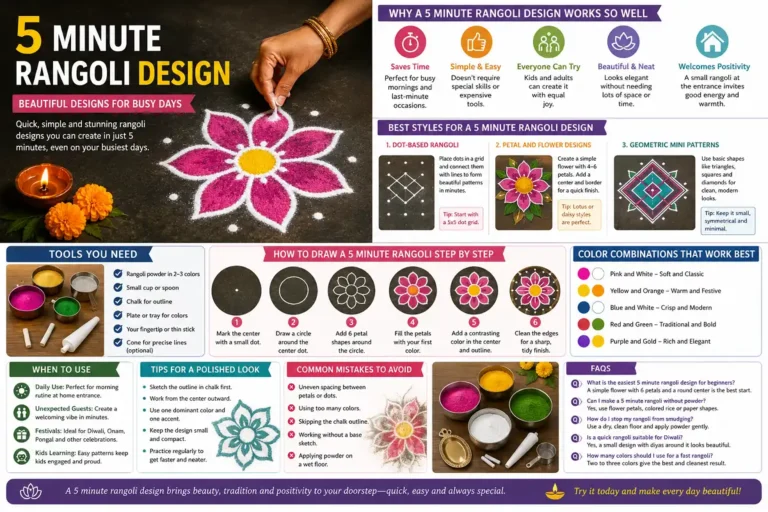
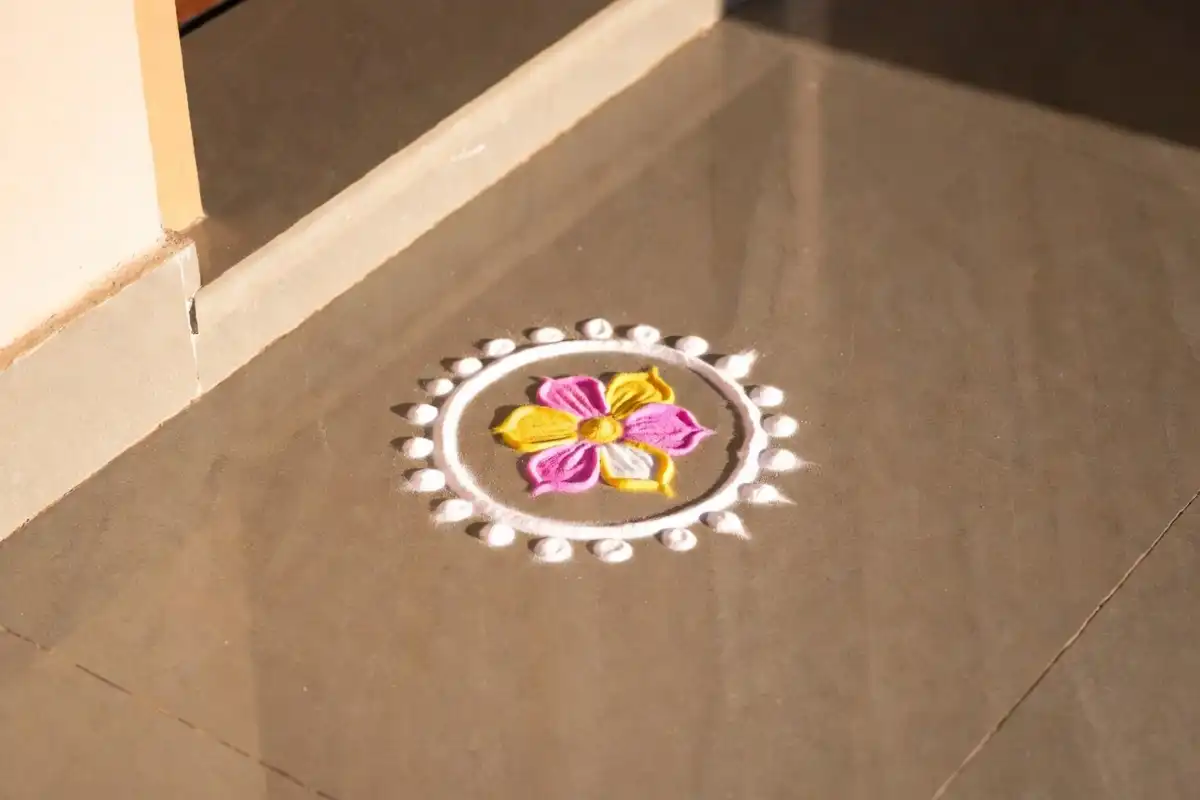
A single flower with six to eight petals radiating from a central dot is one of the most satisfying and achievable designs for everyday use. Use two contrasting colors for the petals and a bright center dot to make it pop. This design takes about 15 minutes and fits neatly on most doorsteps.
Leaf and Vine Border
A small curved vine with simple leaf shapes along each side creates a fresh, natural look. This works especially well at the base of a door or along the edge of a step. Green, white, and yellow are classic choices for this style.
Heart and Petal Combination
A heart shape filled with small petal details inside is a cute option for home decor outside of festival season. It works well as a welcoming design for guests and takes very little space or time.
Dot-Based Cute Small Rangoli Designs
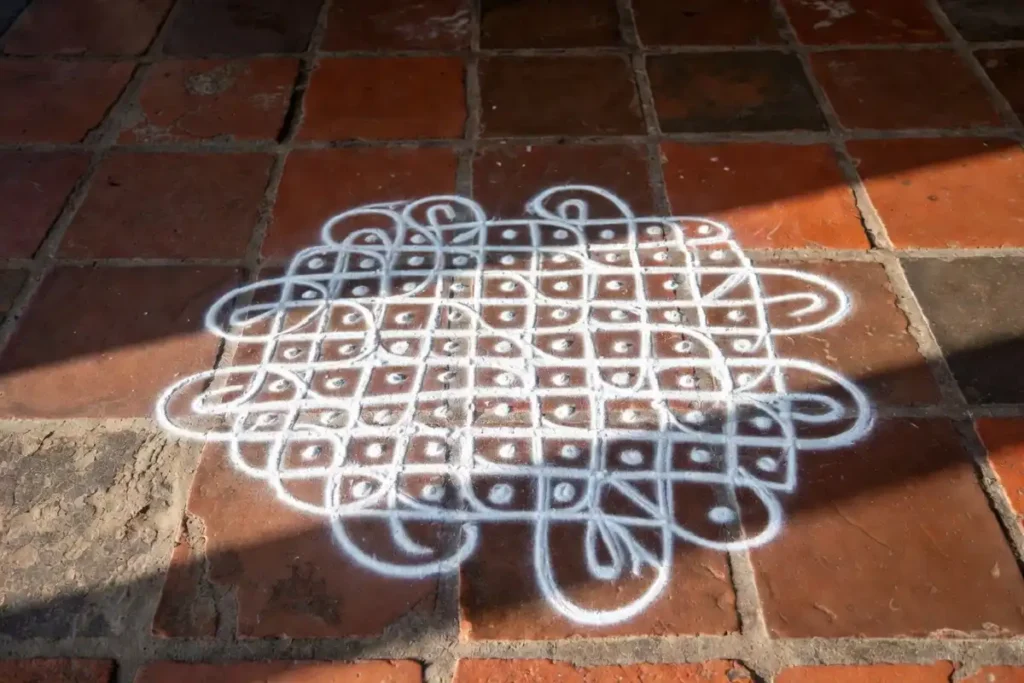
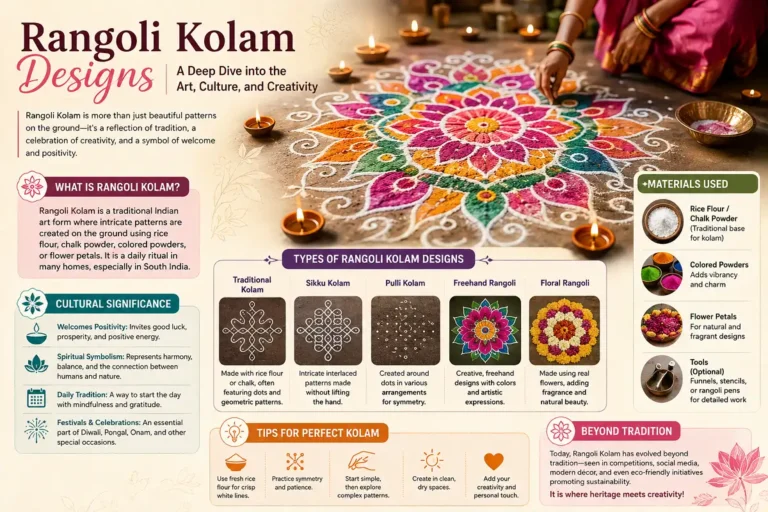
Dot rangoli, also called kolam or muggu, uses a structured grid of dots as the foundation. Lines and curves are drawn around these dots to form patterns. The result looks intricate, but the dot grid keeps everything proportionate and manageable.
For a beginner, a 3×3 or 5×5 dot grid is a good starting size. Larger grids produce more complex patterns, but even a small grid can generate a beautiful, symmetrical design.
You can find a wide range of daily-use inspiration in this collection of small rangoli designs with dots that work for every skill level.
Kolam Loop Patterns
Loop-based kolam designs flow continuously around the dot grid without lifting the hand. They have a rhythmic, meditative quality and produce a lace-like effect. White rice flour on a dark floor creates the most striking contrast.
Star and Diamond Dot Designs
A small 5-point star or diamond shape drawn around a central dot cluster is compact, clean, and visually satisfying. These patterns suit both powder and chalk, and they are easy to reproduce consistently.
Mini Motif Rangoli Ideas
Tiny Paisley and Mango Motifs
Paisley (also called the mango or boteh shape) is a classic Indian decorative motif that translates beautifully into small rangoli. A single paisley with fine dot detailing around the border is charming and culturally meaningful. Use warm jewel tones like deep orange, teal, and gold.
Mini Peacock Design
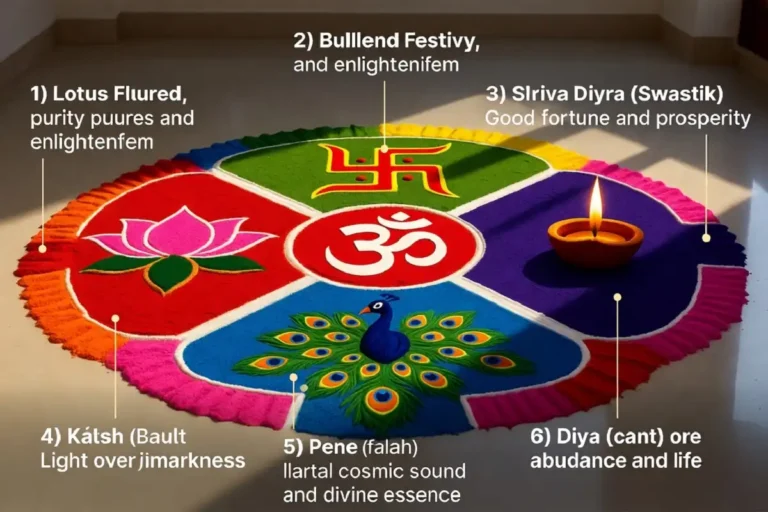
A simplified peacock with a small fanned tail and rounded body can be drawn in a compact space and still look elegant. Teal, green, and orange work best. For a more detailed approach, the peacock rangoli easy guide for beginners walks through the process in simple steps.
Diya and Flame Motif
A small diya (oil lamp) shape with a stylized flame above it is ideal for Diwali or daily puja space decoration. It is one of the simplest recognizable symbols in rangoli art and requires only a few colors to look complete.
Color Ideas for Cute Small Rangoli
Color choice has a big effect on how a small design reads from a distance. Since the design is compact, every color decision is more visible. Some reliable palettes for small designs:
- Two-tone contrast: White and red, or white and blue, for crisp and clean results
- Pastel trio: Blush, lavender, and mint for a soft, modern feel
- Festival brights: Saffron, crimson, and green for traditional occasions
- Monochrome: A single color with variations in shade adds sophistication to a tiny design
Avoid using too many colors in a very small design. Three to four colors is usually enough to create depth without visual clutter.
Using Petals and Natural Materials
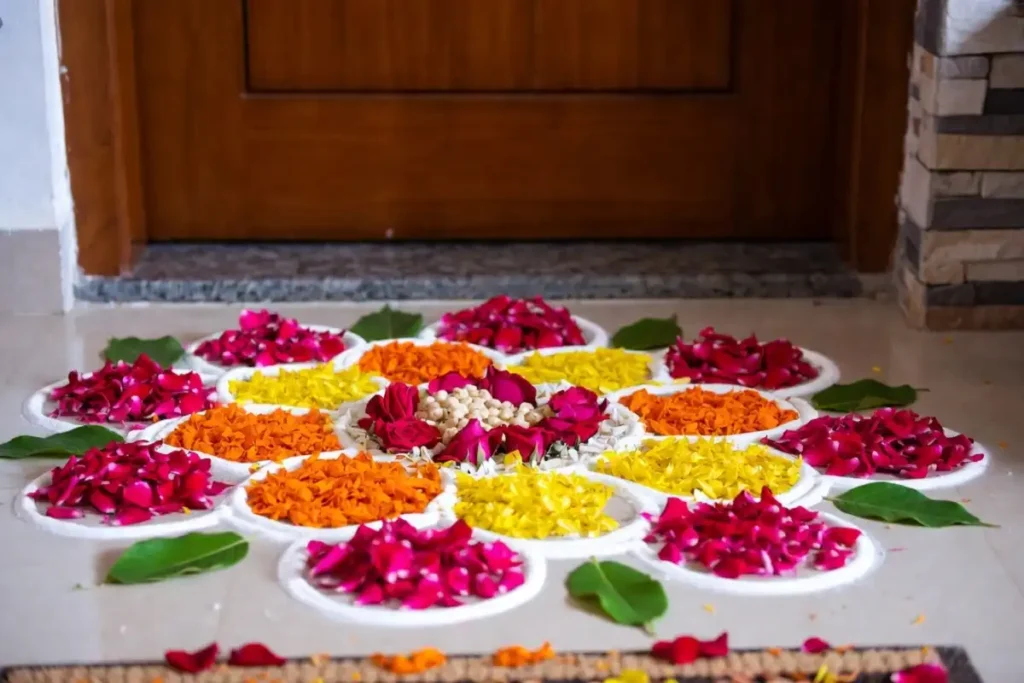
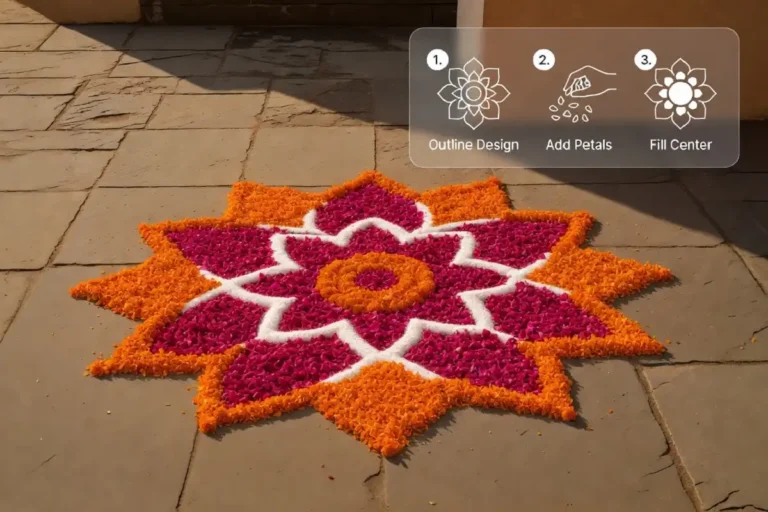
Fresh flower petals bring texture and fragrance to even the smallest rangoli. Marigold petals, rose petals, and jasmine buds can be arranged into compact circles or simple star shapes in just a few minutes.
This approach is especially popular during festivals when fresh flowers are already present in the home. It is also an eco-friendly alternative to synthetic powder, as the petals can be composted afterward.
Colored rice and turmeric powder are other natural options. Turmeric creates a rich yellow that pairs well with red kumkum powder for a traditional two-tone doorstep design.
Cute Small Rangoli for Festivals and Special Days
🪔Diwali
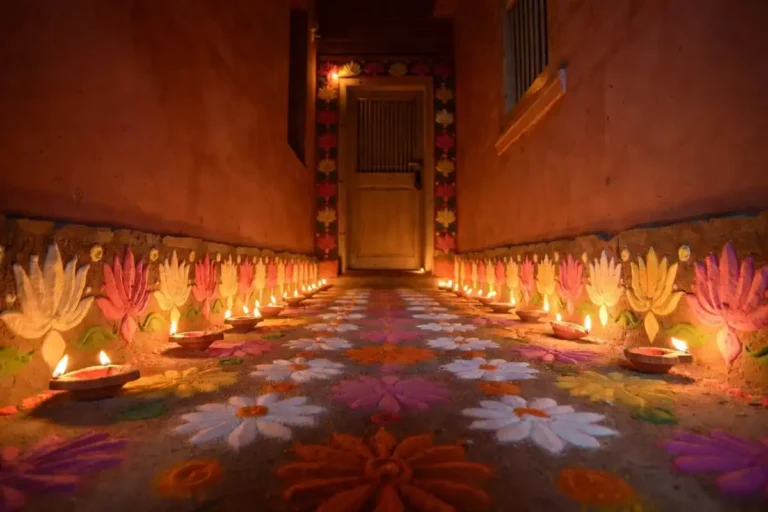
A small circular design with diya motifs and warm orange and gold colors fits perfectly at an apartment entrance. Surround the design with small tea light candles to amplify the effect.
🌺Onam
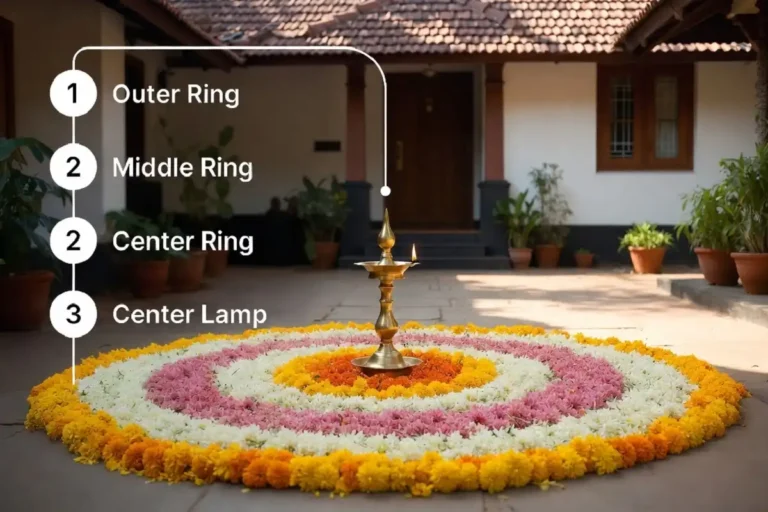
A small pookalam made with two or three rings of flower petals is a respectful nod to this tradition even when space is limited. Yellow and white flowers create the most traditional look.
🙏Everyday Puja Decoration
A small lotus or star design placed in front of the puja room or mandir at home adds a devotional touch to daily practice. White or yellow powder on a clean floor keeps it simple and sacred.
For those interested in expanding beyond flat designs, 3D rangoli designs step by step for beginners offers an interesting next step once you are confident with flat patterns.
The Victoria and Albert Museum’s collection on South Asian decorative arts provides useful context on how motifs like the lotus, peacock, and paisley have shaped traditional floor art across centuries.
Tips for Making Clean, Neat Small Rangoli
Because small designs have less room for error, technique matters more. A few practical habits that help:
- Use a chalk outline or faint pencil guide before adding color
- Work from the center outward to maintain symmetry
- Use a small funnel, cone, or squeeze bottle for precise powder application
- Keep a dry cloth nearby to correct powder smudges quickly
- Practice the design on paper first if it includes an unfamiliar motif
Good lighting is also important when working on a small design. Natural morning light makes it easier to see fine details while you work.
Conclusion
Cute small rangoli designs prove that beauty does not require scale. A compact, well-executed design at your doorstep or puja space carries the same warmth and intention as a large festival creation.
Start with simple floral or dot-based patterns, build your color confidence, and explore motifs that feel meaningful to you.
With a little practice, making a small rangoli each morning or before a celebration can become a quiet, creative ritual that connects you to a rich and living tradition.
FAQs
What size is considered a cute small rangoli?
A small rangoli typically measures between 20 and 50 centimeters in diameter. Designs in this range work well at apartment doorsteps, puja areas, and small interior spaces without overwhelming the floor.
What materials are best for small rangoli designs?
Colored rangoli powder, chalk, rice flour, and fresh flower petals all work well for small designs. Rice flour is ideal for daily kolam-style patterns, while dry powder suits festive and colorful designs.
How long does a cute small rangoli take to make?
Most small rangoli designs can be completed in 15 to 30 minutes, depending on the complexity of the pattern and the number of colors used. Simple single-motif designs may take even less time once you have practiced a few times.
Can I make small rangoli on tile or marble floors?
Yes, rangoli powder and chalk work on most smooth indoor surfaces including tile and marble. Dry powder is easy to sweep away, and chalk wipes off with a damp cloth. Avoid using wet or oil-based materials on polished surfaces as they may stain.
Do I need special tools to make small rangoli?
No special tools are required, though a small funnel, squeeze bottle, or rolled paper cone helps with precise powder placement. Many experienced artists use their thumb and index finger to control the flow of powder directly. A toothpick or skewer is useful for fine detailing in tight spaces.