Simple Rangoli Design: 25 Easy & Beautiful Ideas for Every Occasion
You don’t need to be an artist to create something breathtaking. A simple rangoli design can transform your doorstep, living space, or prayer room into a vibrant celebration in just a few minutes, with just a few colors.
Whether you’re preparing for Diwali, Pongal, Onam, a wedding ceremony, or simply want to add color to your everyday home décor, a simple rangoli design is the most accessible and rewarding creative tradition you can embrace. In this guide, we’ve curated 25+ easy rangoli ideas with pro tips, material guides, color palettes, and step-by-step techniques so that anyone, regardless of skill level, can create something truly beautiful.
What Is Rangoli and Why Does It Matter?
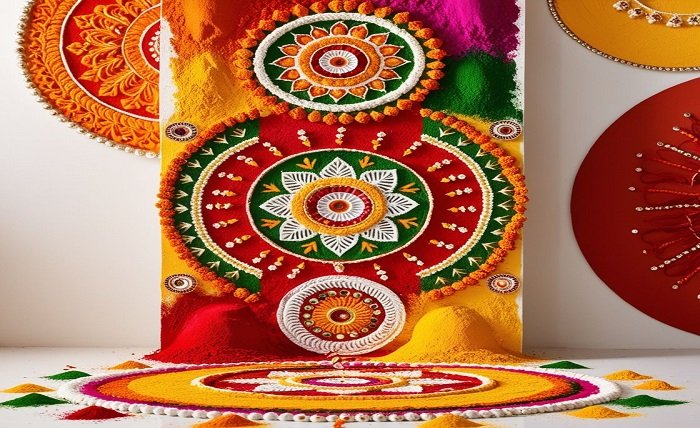
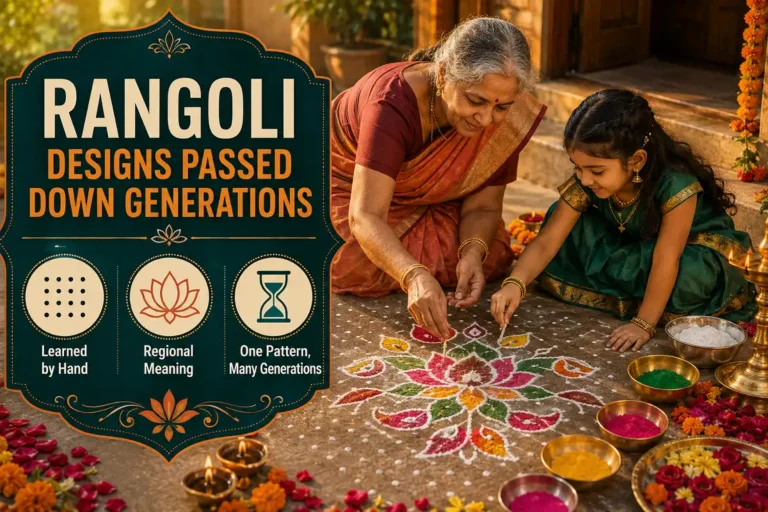
Rangoli is one of India’s oldest and most beloved folk art traditions. Created on floors using colored powders, flower petals, rice flour, or chalk, rangoli serves as a decorative and spiritual practice across Indian households.
According to Wikipedia’s article on Rangoli, this ancient art form has roots going back over 5,000 years and is practiced under different names across India Kolam in Tamil Nadu, Alpana in West Bengal, Aripana in Bihar, and Muggu in Andhra Pradesh.
A simple rangoli design doesn’t diminish the cultural significance. In fact, simplicity often carries the deepest meaning a clean lotus, a modest swastik, or a five-dot pattern can be just as spiritually powerful as an elaborate mandala.
No prior art training needed.
Most simple designs take under 30 minutes.
Basic supplies cost very little.
Even a small rangoli invites positive energy.
The act of creating rangoli is meditative and calming.
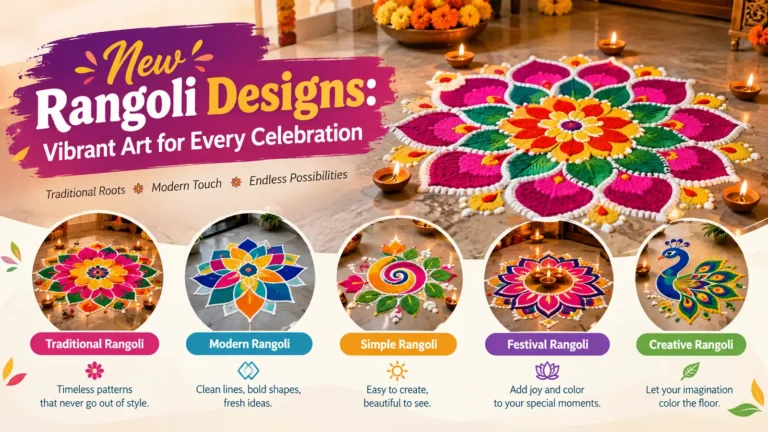
Types of Simple Rangoli Design
Understanding the different styles helps you pick the right simple rangoli design for your space, occasion, and skill level.
Dot-Based Simple Rangoli (Kolam Style)
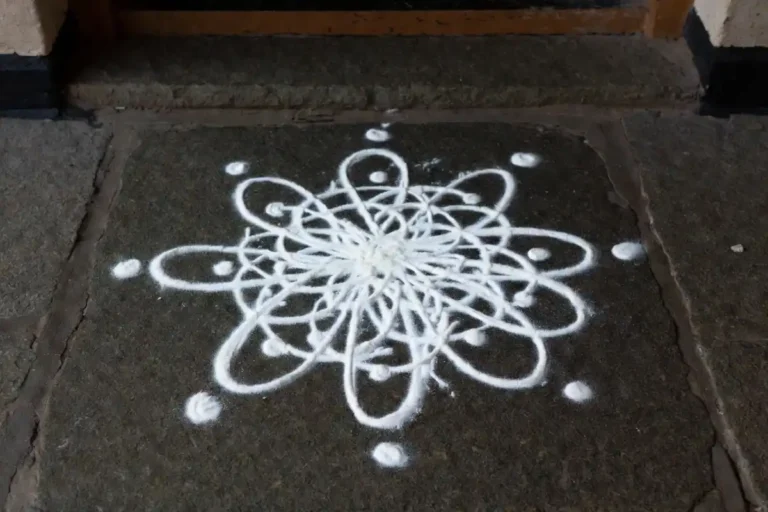
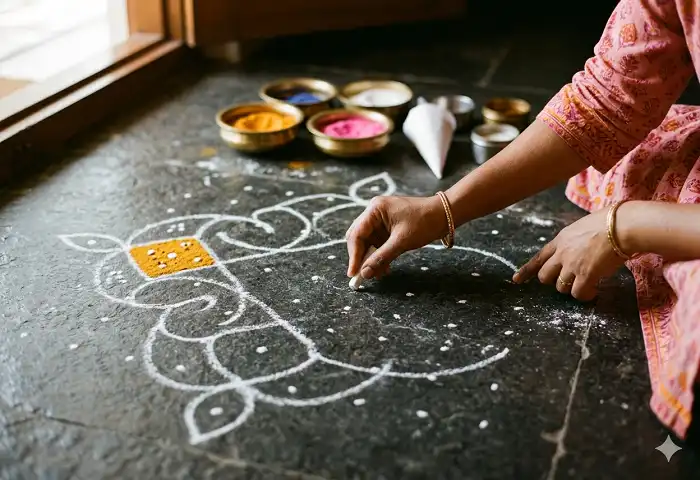
The dot grid method known as pulli kolam in South India is the most beginner-friendly approach. You place dots in a grid formation and connect them to form symmetrical patterns.
Freehand Floral Simple Rangoli
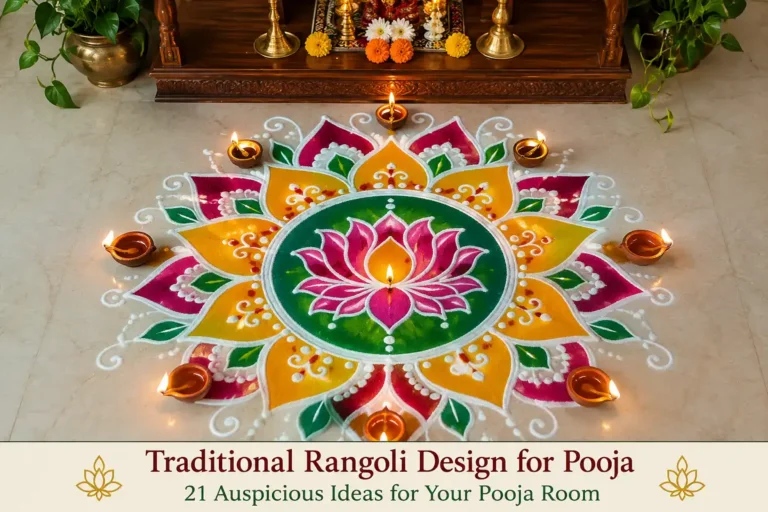
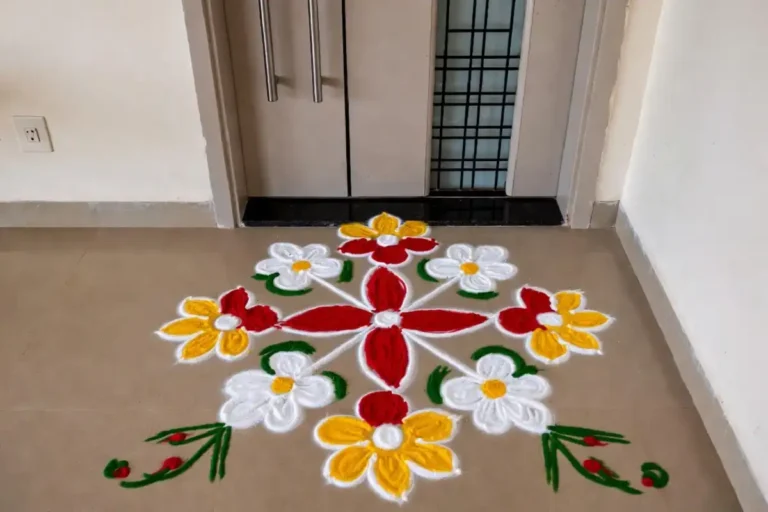
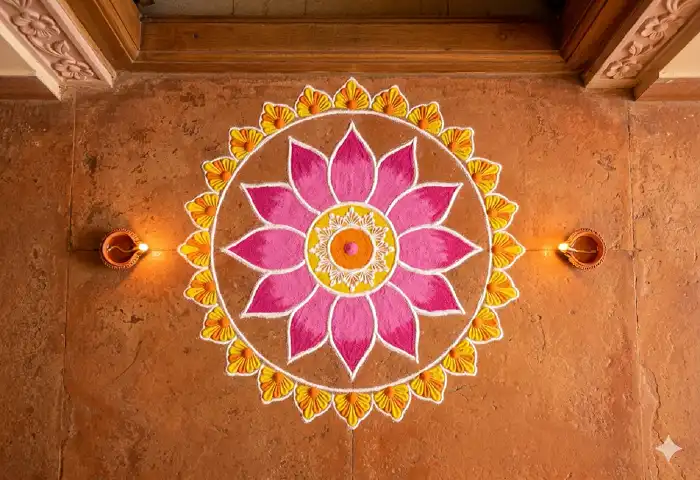
Freehand floral designs use petals, leaves, and circular blooms drawn without any template. Think a single lotus at the center or a ring of small flowers radiating outward.
Geometric Simple Rangoli
Squares, triangles, hexagons, and stars form the backbone of geometric rangoli. These patterns feel modern and structured, yet are easy to replicate using rulers and stencils.
Stencil-Based Simple Rangoli
Rangoli stencils available at craft stores or printable at home make it effortless to create a professional-looking simple rangoli design in under 10 minutes.
Flower Petal Rangoli
Using real or artificial flower petals to form rangoli patterns is an eco-friendly, aromatic alternative to powder. Marigold, rose, and jasmine petals are most commonly used.
Materials You Need for a Simple Rangoli Design
Getting the right supplies makes the process smooth and enjoyable. Here’s everything you’ll need:
Main coloring vibrant, fine, and blendable
Outlining and dot marking
Precise powder application along fine lines
Instant perfect shapes without drawing
Natural, fragrant, eco-friendly designs
Decorative lighting element placed within the design
Achieving symmetrical circles and geometric patterns
Even powder spreading for filled areas
Step-by-Step: How to Make a Simple Rangoli Design
Follow these steps to create your very first simple rangoli design with confidence:
Choose Your Design
Pick a pattern suited to your skill level. For total beginners, a 5-dot kolam or a single lotus with 8 petals is ideal. Browse references online or from our curated list of Simple and Unique Rangoli Designs to Brighten Your Space.
Prepare Your Surface
Clean the floor thoroughly. Remove dust, moisture, and debris. A smooth, dry surface ensures your rangoli powder sticks evenly and colors stay bright.
Sketch the Outline
Use white chalk or dry rice flour to lightly sketch the outline of your simple rangoli design. For dot-based patterns, mark your dot grid first using evenly spaced chalk dots.
Apply Base Colors
Fill in the largest sections of your design with base colors first. Work from the center outward to avoid smudging completed areas.
Add Detail Colors
Layer in finer details and accent colors using a rangoli cone for precision. Thin borders, petals, and decorative dots are easiest with the cone.
Add the Border
Every great simple rangoli design ends with a border. A simple dotted line, a chain of small loops, or a wave of petals instantly elevates the entire design.
Place Your Diya
Set a lit clay diya at the center or along the border. The warm glow transforms even the most basic pattern into something magical.
25 Simple Rangoli Design Ideas
Here is a categorized list of 25 simple rangoli design ideas across all skill levels:
Beginner Designs
0–20 MinutesThe smallest and simplest traditional dot pattern.
One flower, two colors, total impact.
Three rings in alternating colors using a compass.
Auspicious, clean, and quick.
Great for hallways and staircases.
Geometric precision made easy with a stencil.
Charming and quick for any celebration.
Four petals radiating from a central dot.
Intermediate Designs
20–45 MinutesA single feather in blue and green.
Two layers of petals in contrasting colors.
A central diya encircled by marigold petals.
Symmetrical wings in bright pinks and purples.
Classic Indian decorative element.
Intermediate dot pattern with beautiful results.
Bold circular center with radiating lines.
Rectangular border with a floral center.
Festival-Specific Designs
Traditional Diwali entrance design.
Seven diyas arranged in a circular pattern.
Perfect for South Indian harvest festivals.
Concentric rings made entirely from petals.
Nine-sided symmetrical pattern.
“Happy New Year” framed in floral borders.
Quick Everyday Designs
A repeating 5-dot pattern along the doorstep.
Three small flowers grouped casually.
Elegant and quick for daily use.
Best Color Combinations for Simple Rangoli Design
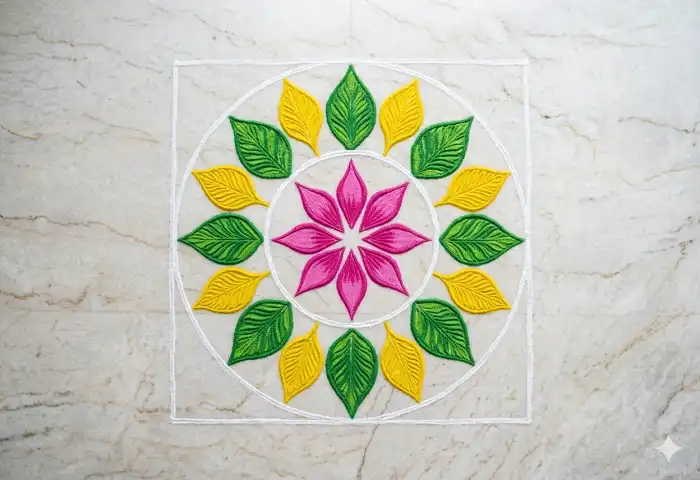
Color is where a simple rangoli design truly comes alive. Here are the most effective combinations to use:
Traditional, clean, and festive.
Soft, floral, and modern.
Deeply auspicious for Diwali and weddings.
Contemporary and striking.
Warm and energizing for harvest festivals.
Always use white as your outline color. It creates sharp definition between sections and makes every other color pop dramatically even on dark-colored floors.
Simple Rangoli Design for Specific Occasions
Different festivals call for different rangoli moods. Here’s a quick guide:
Simple Rangoli for Diwali
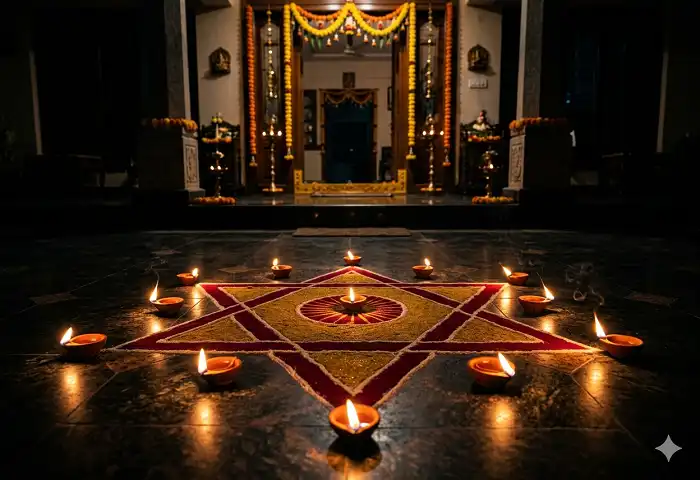
Focus on lotus flowers, Lakshmi motifs, and diya clusters. Use warm golds, deep reds, and festive oranges. Place at the main entrance to welcome Goddess Lakshmi.
Simple Rangoli for Pongal and Onam
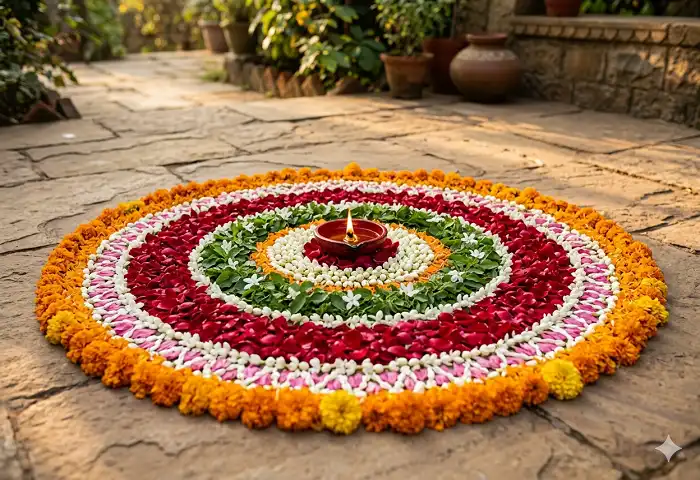
Go for pookkalam-style flower petal designs concentric rings of marigold, rose, and chrysanthemum. Keep the layout circular and symmetrical.
Simple Rangoli for Weddings
Choose large, elegant patterns with white and red as dominant colors. Incorporate lotus, peacock, and mango (paisley) motifs for auspiciousness.
Simple Rangoli for Daily Use
A small 3–5 dot kolam at the front door is perfect for daily practice. It takes 5 minutes, needs only white rice flour, and carries deep traditional meaning.
Simple Rangoli Border Designs
A well-chosen border frame is what separates a good simple rangoli design from a truly polished one. Popular border styles include:
Classic, elegant, takes 2 minutes.
Soft and festive.
Modern and structured.
Natural and flowing.
Bold and graphic.
Tips to Make Your Simple Rangoli Look Professional
Even a simple rangoli design can look expert-level with these tricks:
Use a compass for all circular elements perfect circles make everything look intentional.
Work in layers Background colors first, details last.
Keep a dry brush nearby Use it to correct small mistakes without disturbing nearby areas.
Match your color count to your skill 3 colors for beginners, 5+ for intermediate.
Photograph in natural daylight Colors look most vibrant in morning or golden hour light.
Add texture Mix powder and petal elements for depth and dimension.
FAQ: Simple Rangoli Design
What is the easiest simple rangoli design for absolute beginners? +
The easiest simple rangoli design for beginners is the 3-dot or 5-dot kolam pattern. You mark a small grid of dots on the floor, then connect them with flowing curved lines to create a symmetrical pattern. It requires no freehand skill and can be completed in under 10 minutes. Using a stencil is another excellent option for first-timers.
Which materials are best for making a simple rangoli design at home? +
For home use, dry rangoli powder and white chalk are the most convenient materials for a simple rangoli design. Flower petals work wonderfully for eco-friendly, aromatic alternatives. Rice flour is the traditional material for everyday kolam designs. Stencils, a rangoli cone, and a compass are helpful tools that improve accuracy for beginners.
How long does it take to make a simple rangoli design? +
A basic simple rangoli design such as a single lotus or a 5-dot kolam can be completed in 10 to 20 minutes. Medium-complexity designs like floral mandalas or peacock feather motifs typically take 30–45 minutes. Always add 10 extra minutes for setup, outlining, and border work.
Can I make a simple rangoli design indoors? +
Yes! A simple rangoli design works beautifully indoors on clean marble, tile, or stone floors. For apartments or homes with carpeted areas, create your rangoli on a large cardboard sheet or canvas board this also makes it portable and reusable. Indoor rangoli lasts longer since it’s protected from wind and foot traffic.
How do I fix mistakes in a simple rangoli design? +
Use a dry, fine-bristled brush to carefully sweep away misplaced powder without disturbing adjacent areas. For larger corrections, a piece of dry cloth works well. Always have a small cup of the affected color nearby to re-fill corrected areas. Working slowly and in layers helps minimize mistakes from the start.
What is the best occasion to make a simple rangoli design? +
A simple rangoli design is appropriate for virtually any occasion Diwali, Pongal, Navratri, Onam, weddings, housewarming ceremonies, and even daily morning rituals. Small kolam patterns are commonly made every morning in South Indian homes as a devotional practice, proving that simple rangoli carries profound everyday meaning.
Conclusion
A simple rangoli design is proof that beauty doesn’t require complexity. With a handful of colors, a steady hand, and a little patience, you can create something that transforms your space, honors tradition, and brings genuine joy to yourself and everyone who sees it.
From 3-dot kolam patterns to elegant floral mandalas, from petal-based pookkalam to geometric stencil designs the world of simple rangoli is rich, diverse, and endlessly inspiring. The most important thing is simply to begin.
Start your rangoli journey today! Explore our full library of Best Rangoli Designs to Brighten Your Celebrations and discover patterns that match your style, occasion, and skill level. Gather your colors, clean your floor, and let creativity flow one dot, one petal, one beautiful design at a time.