Rangoli Design Easy: Simple Patterns and Beginner Tips for Every Festival
Rangoli design easy enough for beginners is something every home decorator and festival enthusiast can genuinely learn. Rangoli is a traditional Indian art form created on floors using colored powders, flower petals, or rice flour, especially during festivals like Diwali, Navratri, and Pongal. It brings color, warmth, and positive energy to any space.
You do not need to be a trained artist to produce something beautiful. With the right guidance and a little patience, even a first-timer can create a stunning rangoli design easy enough to finish in under an hour.
Simple Rangoli Starts With Three Things
Beginner tip: A simple design with clean spacing usually looks better than a complicated design with crowded details.
Why Rangoli Design Easy Patterns Work for Everyone
A rangoli design easy to follow removes the intimidation that stops most beginners from trying. Simple patterns use repeated shapes, basic symmetry, and minimal materials. You do not need special talent, only a steady hand and a willingness to practice.
Starting small builds confidence naturally. Once a basic circular or floral pattern feels comfortable, moving toward larger and more detailed designs becomes a logical next step. Every experienced rangoli artist began with the same foundational forms you will practice here.
For a broader look at festive patterns across skill levels, this guide to beautiful rangoli designs for festivals offers ideas that scale well from beginner to advanced.
From First Attempt to Confident Design
Materials You Need to Get Started
You do not need much to create your first rangoli design easy at home. Most supplies are affordable and widely available.
Practicing on a sheet of paper first lets you get comfortable before committing to the floor.
Types of Easy Rangoli Designs You Can Try
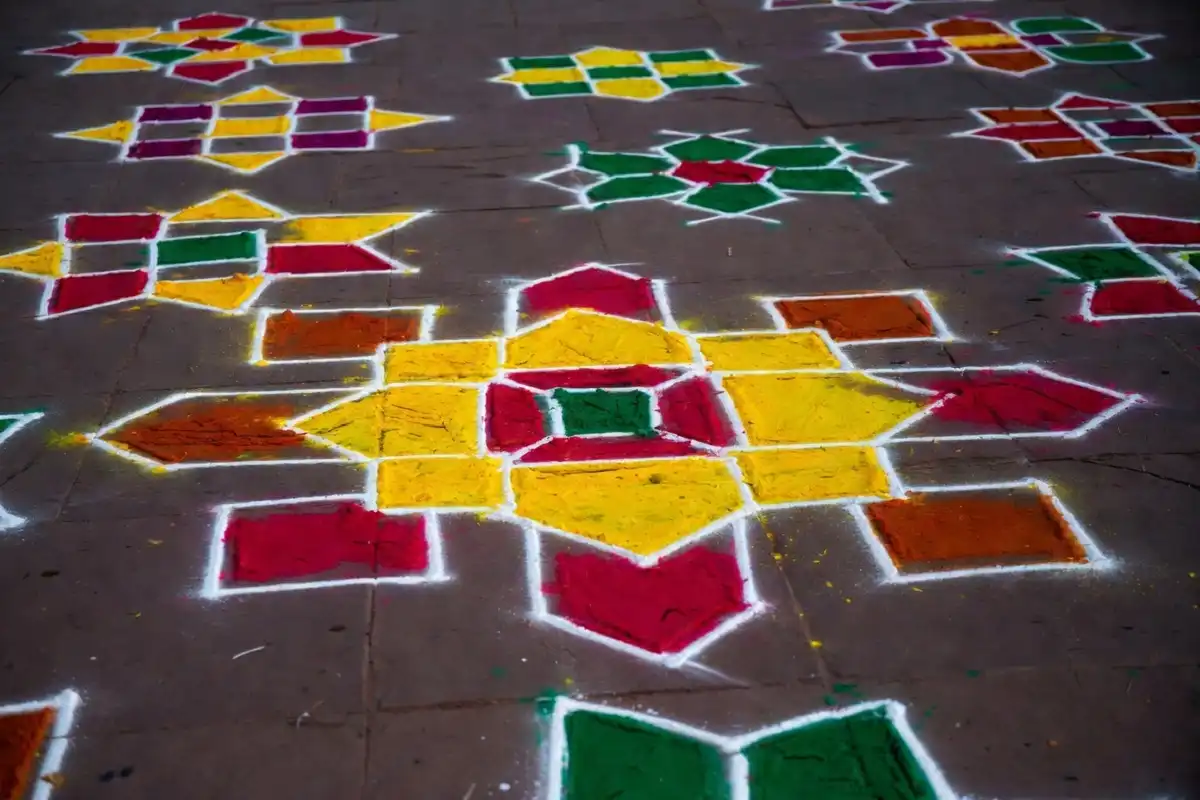
Choosing the right style makes the whole process smoother. These are the most beginner-friendly approaches to a rangoli design easy enough to complete on your first attempt.
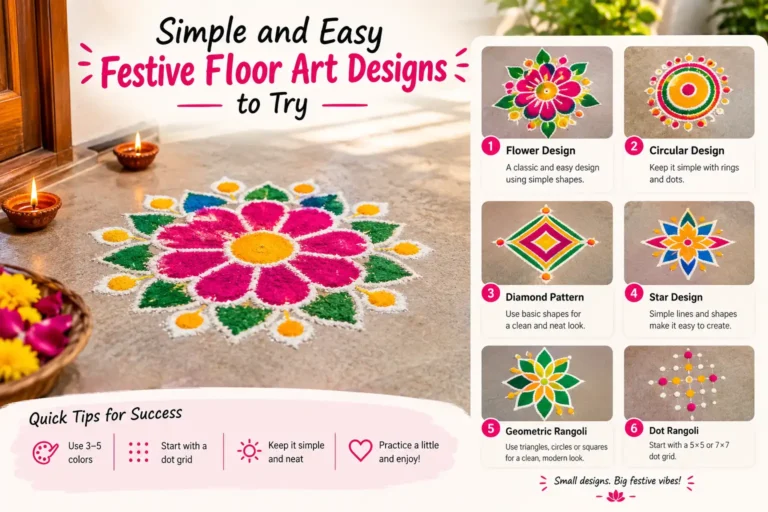
Dot Grid Rangoli
Dot grid rangoli, known as pulli kolam in South India, uses evenly spaced dots as a guide framework. You connect the dots with curved or straight lines to form symmetrical patterns. The dots keep everything proportional, making this the most forgiving rangoli design easy style for newcomers.
Simple Floral Rangoli
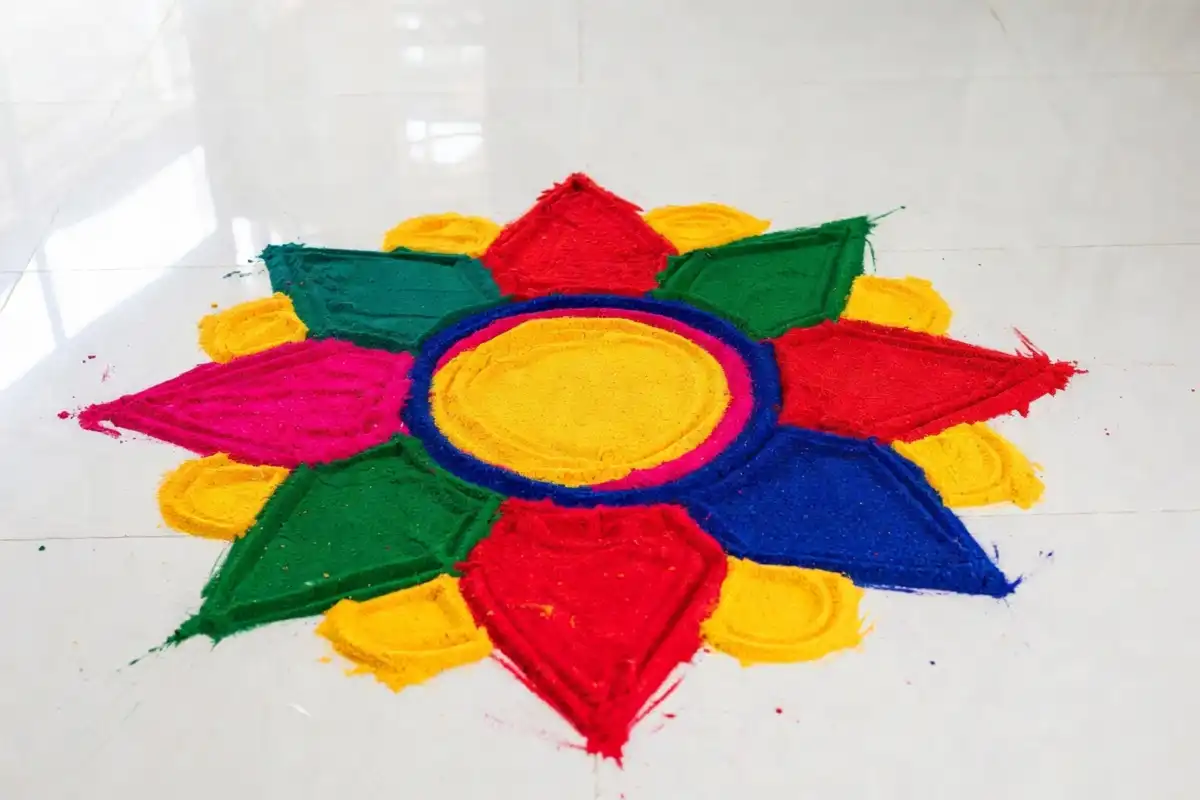
A floral pattern places repeated petal shapes around a central point. Draw a small circle in the center and radiate petals outward like a sunflower. Fill each petal in a different color. This style suits entrances and puja spaces beautifully.
Geometric Rangoli
Squares, triangles, and hexagons arranged symmetrically produce a clean geometric rangoli design easy to replicate. The repetition makes these look detailed even when individual shapes remain very simple.
Free-Hand Swirl Rangoli
Loose curved lines and spirals create a free-hand swirl design that is forgiving and fast. Less structured than grid-based styles, it still looks visually strong with good color contrast.
Choose a Pattern Based on Your Comfort Level
How to Make a Rangoli Design Easy Step by Step
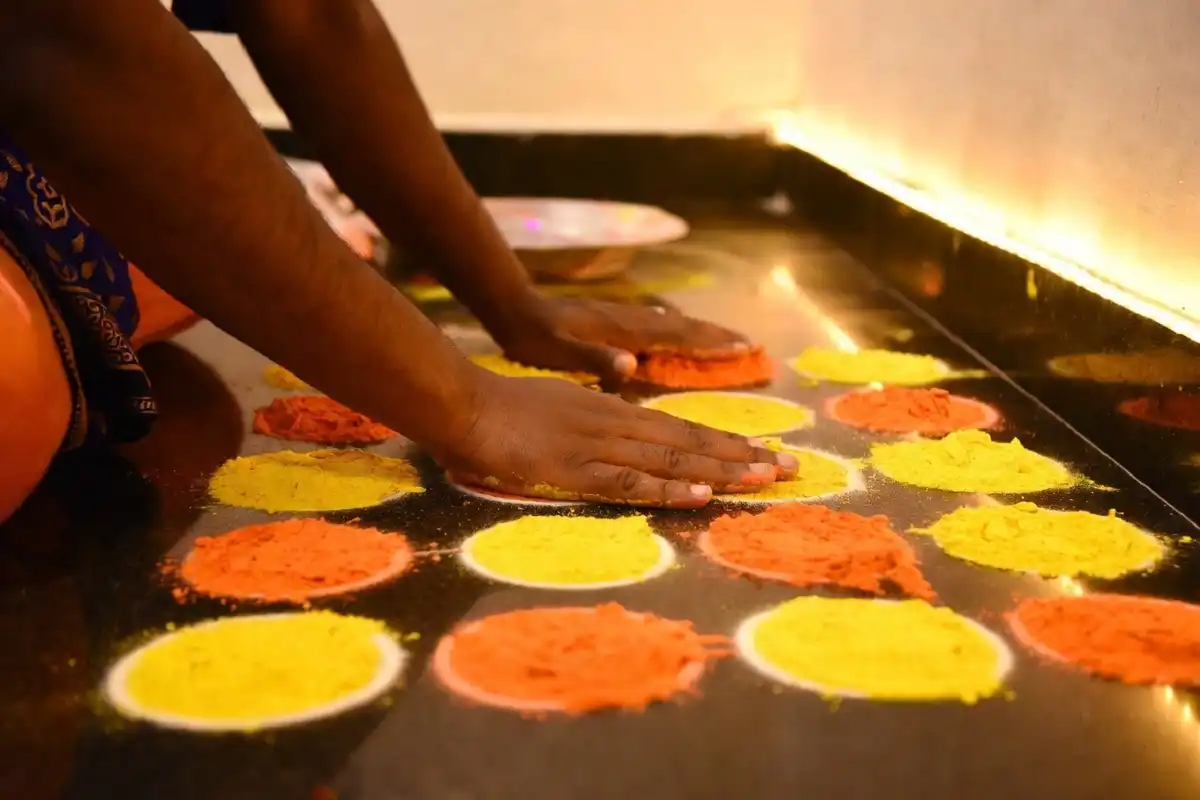
Following a clear process removes guesswork so you can focus entirely on the creative work.
Prepare the Surface. Sweep the floor clean and wipe it lightly if needed. A clean surface keeps powder colors vivid and prevents unwanted smudging.
Sketch the Base Outline. Use chalk to mark the outer boundary. For a circular rangoli design easy to center, trace around a round plate to get a clean starting circle. For dot grid styles, mark dots at equal intervals first.
Add Inner Guidelines. Divide the design into sections with light chalk lines. For floral patterns, sketch petal outlines from the center. For geometric work, divide the circle into equal triangular sections to maintain balance.
Fill With Color. Start at the center and work outward. Use a cone or squeeze bottle for precise placement. Apply one color section at a time and keep contrasting shades next to each other for the best visual impact.
Clean the Edges. Use a dry brush to tidy any powder that has spilled over the lines. A thin white or black outline around the finished design adds a clean, polished finish.
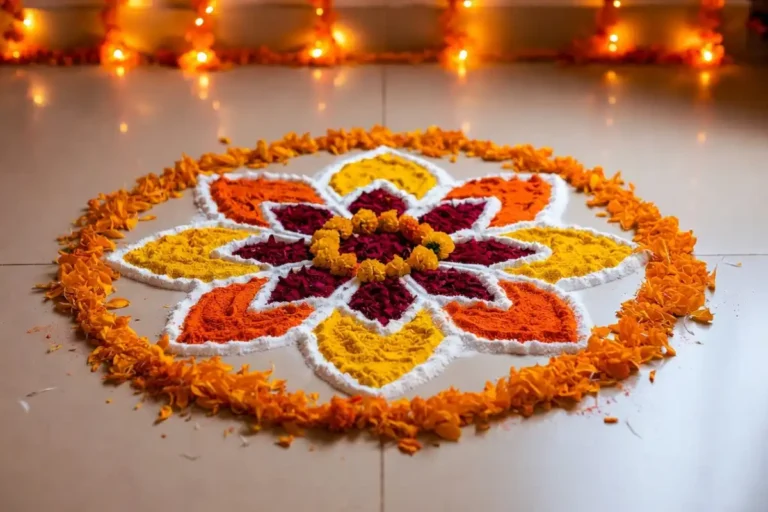
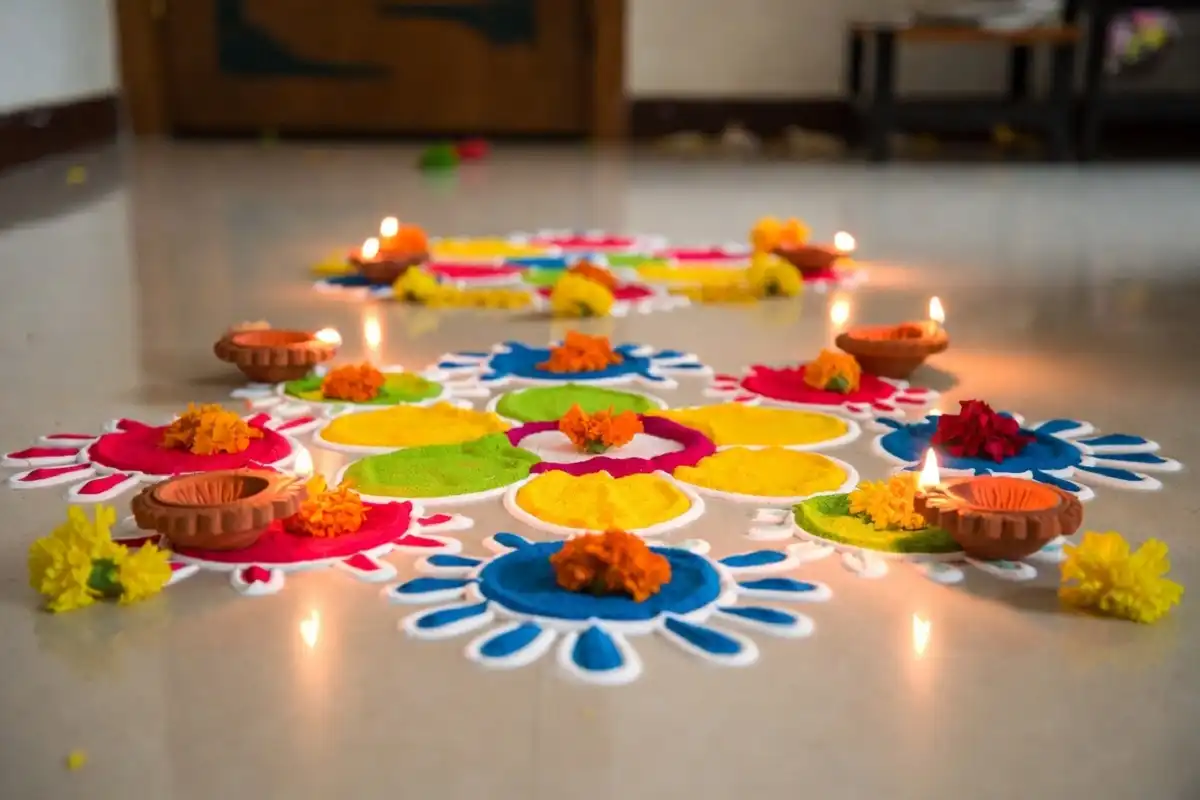
Add Final Touches. Place marigold petals, small candles, or diyas along the border. This final step transforms even a basic rangoli design easy for beginners into something that looks truly festive and complete.
Six Simple Steps From Floor to Finished Rangoli
Best practice: Work from the center outward. This keeps your hands away from completed sections and reduces accidental smudging.
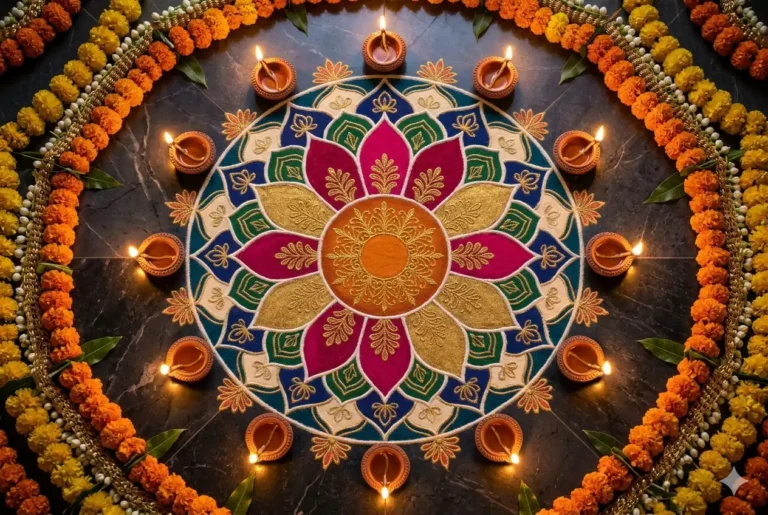
Rangoli Design Easy Ideas for Diwali
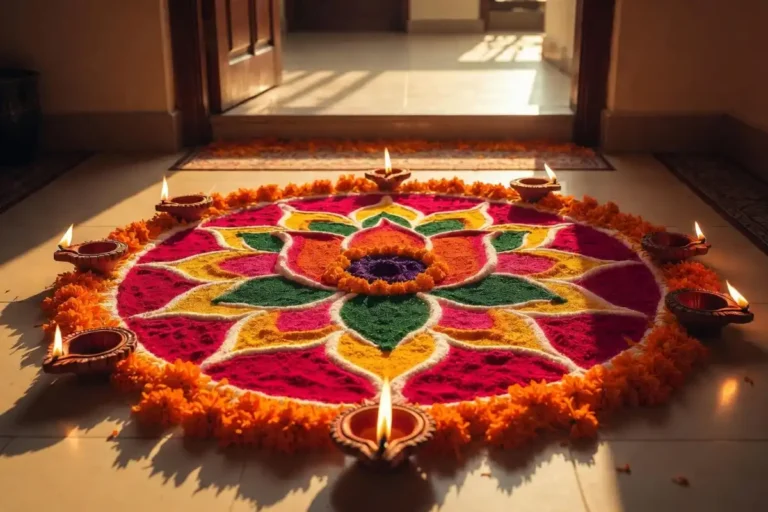
Diwali is the most celebrated occasion for rangoli across Indian homes. Warm diya light paired with bright colors makes even modest designs look spectacular.
Popular rangoli design easy options for Diwali include:
- A simple lotus pattern at the main entrance with orange and yellow powder
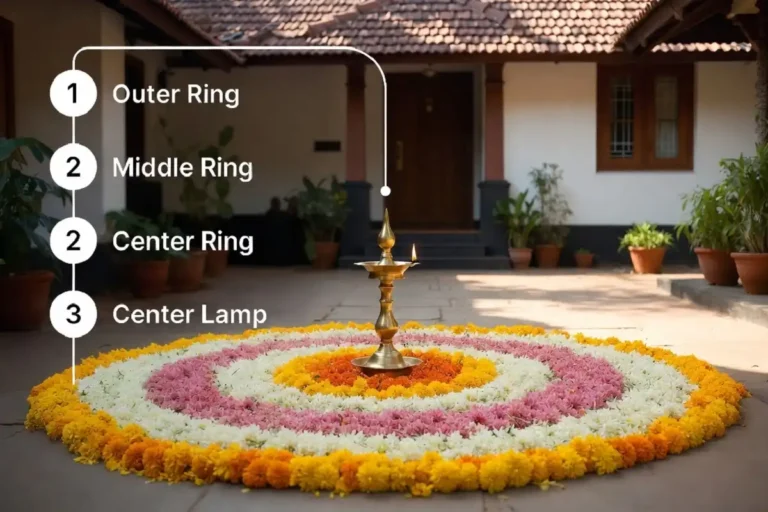
- Concentric color rings around a central diya
- A five-petal flower design that takes under 20 minutes
- A repeating leaf or petal border motif along the doorstep
For Diwali-specific patterns with step-by-step visuals, this collection of simple and easy Diwali rangoli designs for home is a helpful starting point. You can also explore Diwali rangoli design photos with the best ideas to find styles that suit your space and comfort level.
Four Easy Designs for the Festival of Lights
Color Tips That Elevate Simple Designs
Color choices are where beginners most commonly undersell themselves. The right combinations make a rangoli design easy to execute look far more complex than it actually is.
Five Simple Rules for Better Color Balance
- Pair high-contrast colors: red with white, yellow with green, blue with orange
- Place the brightest color at the center to draw the eye inward
- Use white as a separator between adjacent sections for clean definition
- Avoid placing two dark shades directly next to each other as they merge visually
- Limit the palette to four or five colors for a focused, intentional result
According to Google Arts and Culture , rangoli is one of India’s most enduring living art traditions, with regional color sensibilities varying meaningfully across states.
Rangoli Design Easy Ideas Beyond Diwali
A rangoli design easy to adapt works well across many festivals and occasions throughout the year.
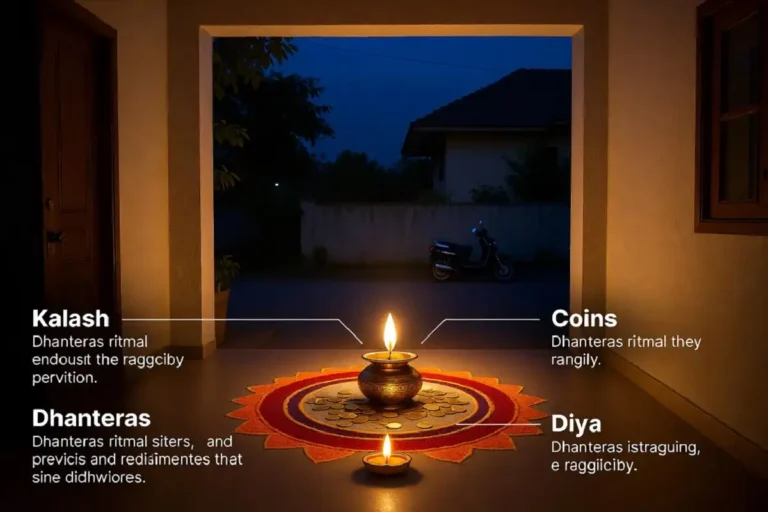
For Dhanteras, coin motifs and Lakshmi footprint patterns are traditional and meaningful. This guide to rangoli design ideas for Dhanteras covers festive patterns that are appropriately symbolic and simple to create. For Pongal, curved geometric kolam patterns made with rice flour are the regional standard. For weddings, floral and peacock motifs are popular choices that photograph beautifully.
The UNESCO Intangible Cultural Heritage framework recognizes several South Asian floor-painting traditions, reflecting how deeply practices like rangoli are woven into cultural identity across the region.
Match the Rangoli to the Occasion
Mistakes to Avoid as a Beginner
Knowing common pitfalls helps you sidestep frustration early:
Skipping the chalk outline leads to uneven shapes and poor proportions.
Using too many colors makes the design look cluttered rather than festive.
Applying powder too thickly in one spot causes it to blur into adjacent sections.
Rushing the edges results in rough, uneven borders that weaken the overall finish.
Starting too large before mastering a smaller version reduces your control.
Master Small Before You Scale Up
Begin with a design no larger than 30 to 40 centimeters in diameter. Once small patterns feel natural, scaling up to designs like big circle rangoli ideas for festivals becomes a manageable and enjoyable progression.
Frequently Asked Questions
Quick answers for anyone creating their first easy rangoli.
What is the easiest rangoli design for absolute beginners?
A five-petal flower using a dot grid is the best starting point. It uses only basic shapes, needs minimal materials, and can be completed in under 15 minutes with just a few colors.
Can I make a rangoli design easy without colored powder?
Yes, flower petals, rice flour, colored sand, and chalk all work as alternatives to commercial powder. Marigold and rose petals are especially popular for natural, eco-friendly results.
How do I stop my rangoli design easy from smudging?
Work from the center outward so your hands never rest on finished sections. Use a cone or bottle for precise placement and avoid touching completed areas. Indoors, a light hairspray mist can help set powder on smooth surfaces.
How long does a rangoli design easy for beginners take to complete?
A simple beginner design takes between 15 and 45 minutes depending on size and detail. The basic styles covered in this guide are specifically chosen to be fast and manageable for newcomers.
Is a rangoli design easy enough for children to try?
Yes, children can participate with adult supervision. Using stencils, flower petals, or oversized dot grids keeps the process safe, fun, and age-appropriate while introducing them to a meaningful cultural tradition.
Conclusion
Creating a rangoli design easy enough to do at home is well within reach for anyone willing to begin. Start with a small floral or dot grid pattern, choose strong color contrast, and let your confidence grow with each attempt.
Every design you complete teaches you something that makes the next one better. Start simple, enjoy the process, and gradually experiment with larger patterns, richer colors, and new festive motifs.