Introduction
A peacock flower rangoli design brings together two of the most beloved elements in Indian floor art: the elegance of the peacock and the freshness of floral patterns. This combination creates something both traditional and visually rich, making a peacock flower rangoli design a top choice for Diwali, weddings, housewarmings, and regional festivals. Whether you work with dry powder, fresh petals, or both, this style offers a flexible canvas for artists at every level. This guide covers design types, color choices, step-by-step tips, and practical advice to help you create your best peacock flower rangoli design yet.
Why the Peacock and Flower Combination Works So Well
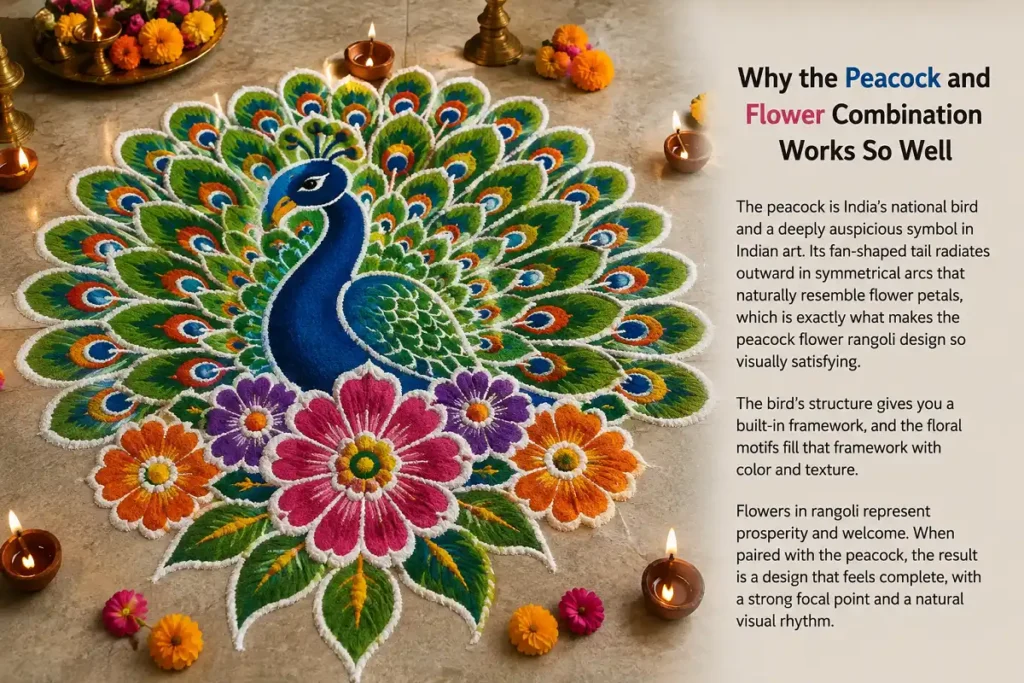
The peacock is India’s national bird and a deeply auspicious symbol in Indian art. Its fan-shaped tail radiates outward in symmetrical arcs that naturally resemble flower petals, which is exactly what makes the peacock flower rangoli design so visually satisfying. The bird’s structure gives you a built-in framework, and the floral motifs fill that framework with color and texture.
Flowers in rangoli represent prosperity and welcome. When paired with the peacock, the result is a design that feels complete, with a strong focal point and a natural visual rhythm. Browse this collection of stunning peacock rangoli ideas to see the range of styles this motif supports.
Types of Peacock Flower Rangoli Designs
Single Peacock with Floral Border
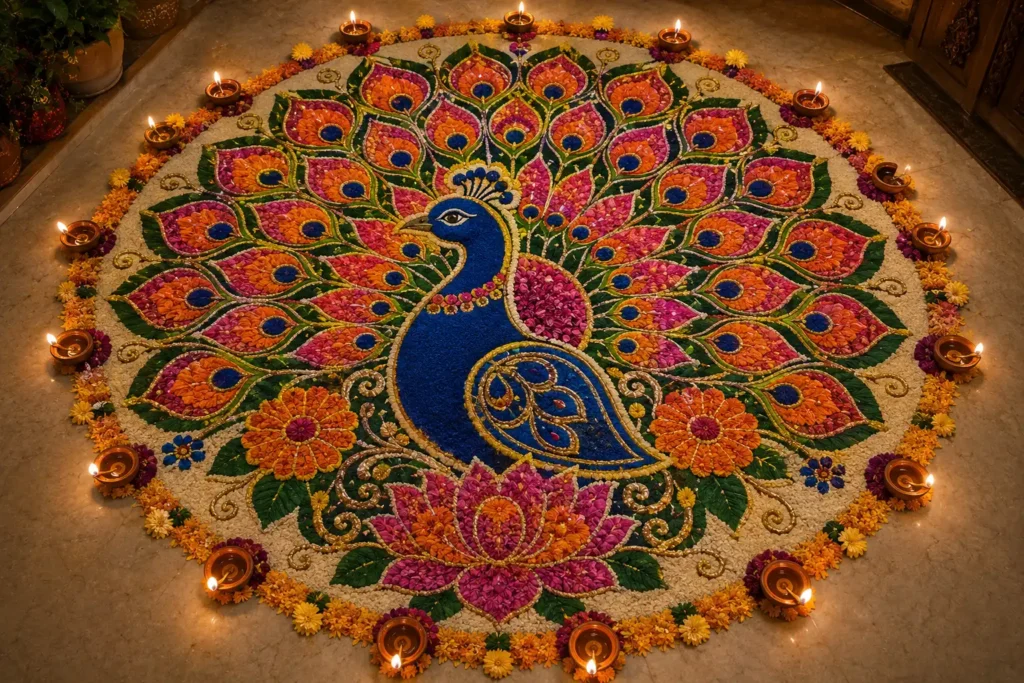
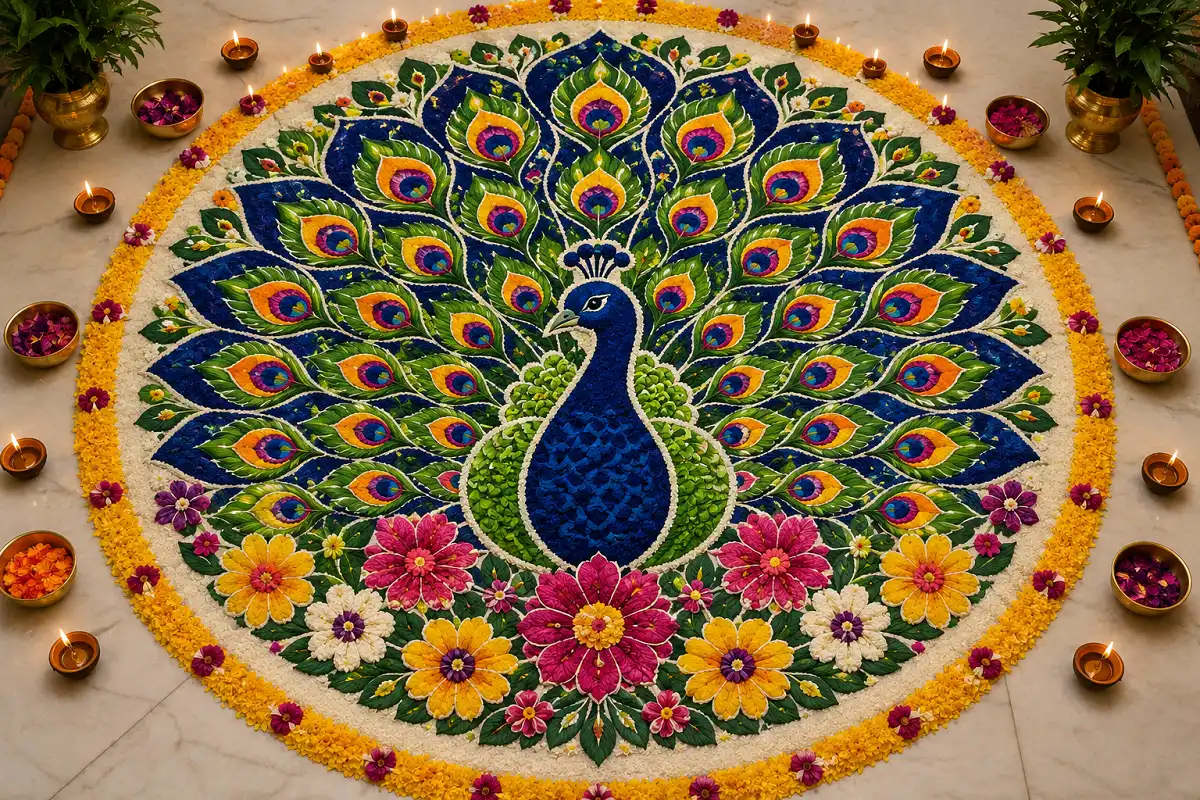
This is the most popular format for a peacock flower rangoli design. One peacock sits at the center with its tail fanned wide, each feather section filled with a different flower pattern. A repeating petal or leaf border frames the outer edge. This layout suits most doorstep sizes and scales up easily for larger spaces.
Double Peacock with Central Lotus
Two peacocks placed symmetrically on either side of a central lotus create a balanced, mirror-image peacock flower rangoli design. This version is widely used at weddings and housewarmings because paired peacocks symbolize harmony and prosperity in Indian tradition.
For larger spaces, placing this composition inside a big circle rangoli layout gives the peacocks a defined circular frame and adds visual depth.
Peacock Perched on a Flowering Branch
A peacock sitting on a branch covered in blossoms is a classic Indian art motif that translates well into rangoli. The branch and flowers fill the lower half while the raised tail fills the upper half, giving the peacock flower rangoli design a natural sense of movement. This style works particularly well in rectangular floor spaces.
Peacock Feather Mandala
Instead of the full bird, this version arranges individual peacock feathers in a circle, each filled with small flower motifs. The result is a mandala-style peacock flower rangoli design that is elegant, symmetrical, and well-suited to artists who find drawing the full peacock body challenging.

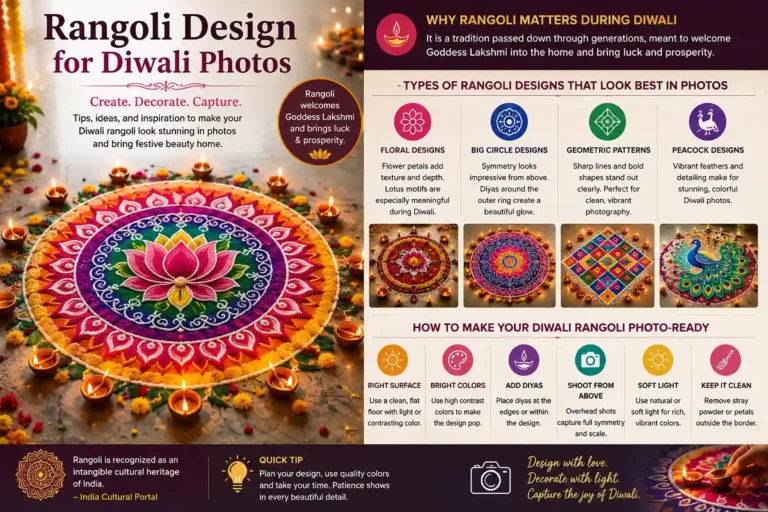
Peacock Flower Rangoli for Diwali
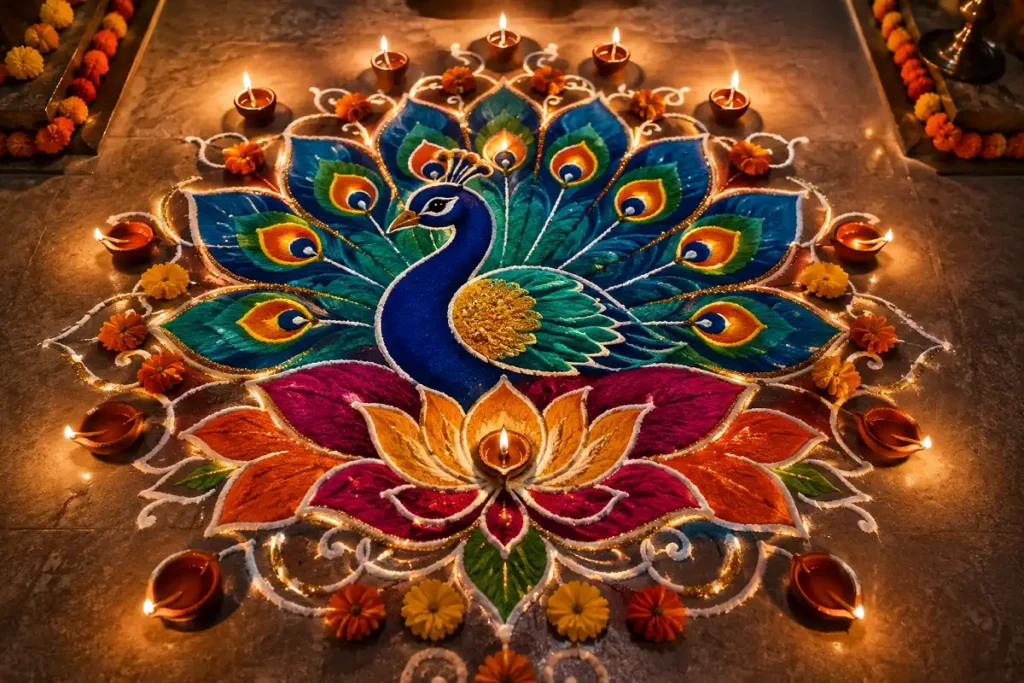
Diwali is the most popular occasion for a peacock flower rangoli design, and the color combinations available for this festival align naturally with the peacock’s palette. Deep blue and teal on the bird’s body contrast beautifully with the warm oranges and reds of festival florals.
Additions that enhance a Diwali peacock flower rangoli design include:
- Small diya motifs placed along the outer border
- Gold or silver glitter powder highlights on feather tips
- A central lamp or lotus motif at the heart of the design
- Warm orange and deep red floral fills within the feather arcs
For more Diwali-ready inspiration, these beautiful Diwali rangoli ideas include color layouts that pair well with a peacock centerpiece.
Choosing Colors for a Peacock Flower Rangoli Design
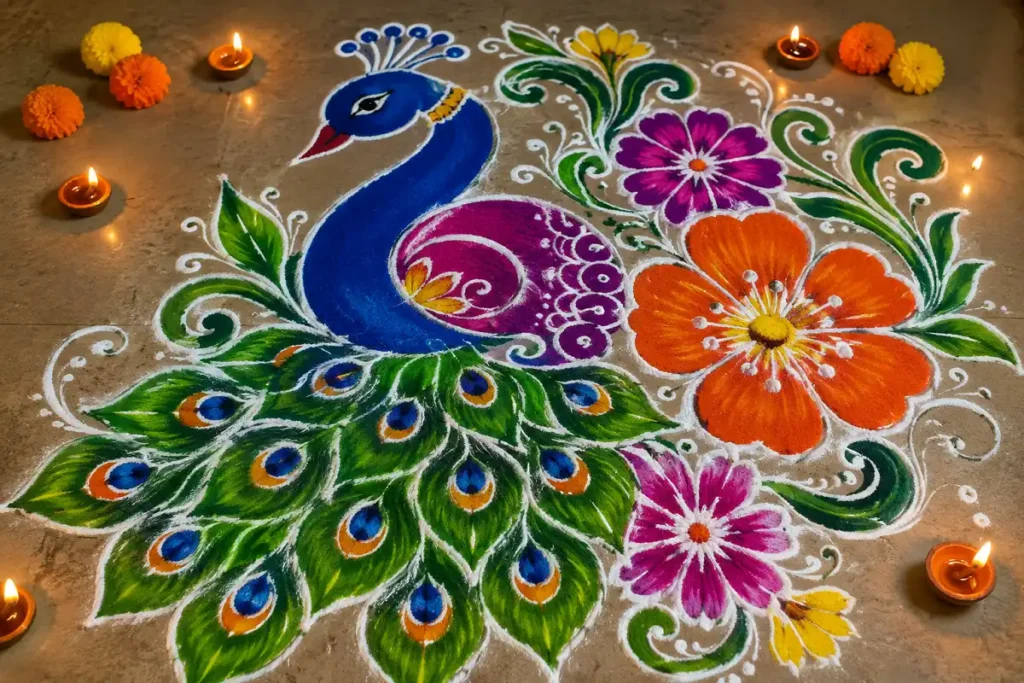
Color selection shapes the entire mood of a peacock flower rangoli design. The bird is traditionally depicted in deep blue and teal green, which provides a strong base. Floral elements then add contrast and warmth.
Effective color combinations for a peacock flower rangoli design:
- Blue, green, and orange: Classic peacock tones with warm flower accents
- Blue, white, and yellow: Clean and bright, works well in daylight
- Purple, pink, and gold: Suited to weddings or Diwali settings
- Green, red, and white: Traditional and festive for regional celebrations
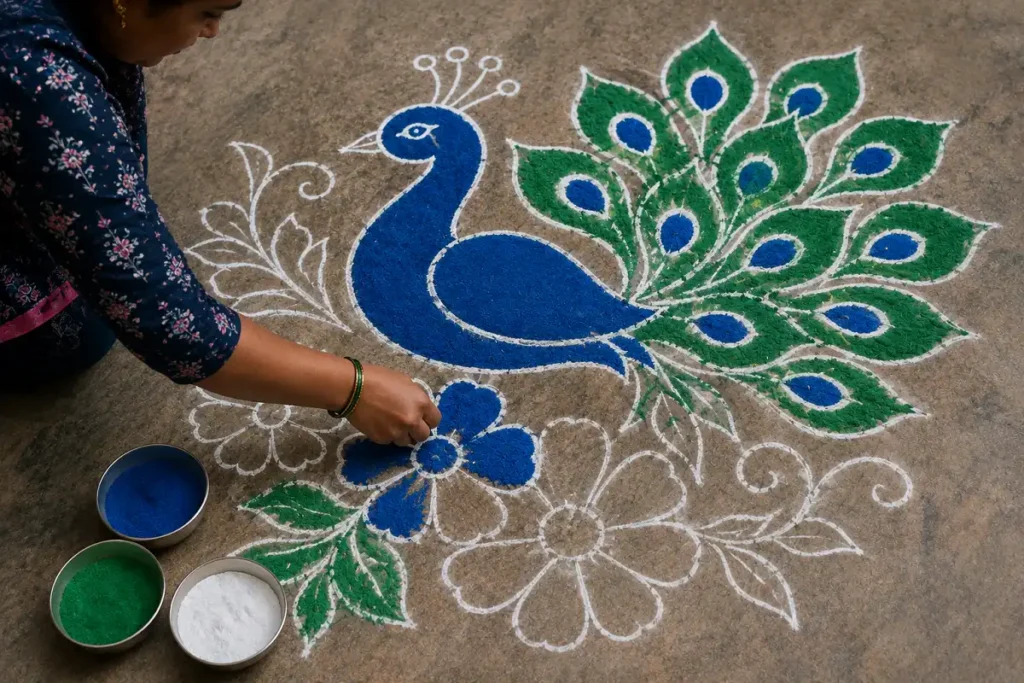
Always apply white powder as an outline between color sections. This keeps the peacock flower rangoli design visually clean and prevents colors from blending at the edges.
According to the Craft Council of India, specific color combinations in rangoli often carry regional significance, with different states favoring distinct palettes that reflect local cultural traditions.
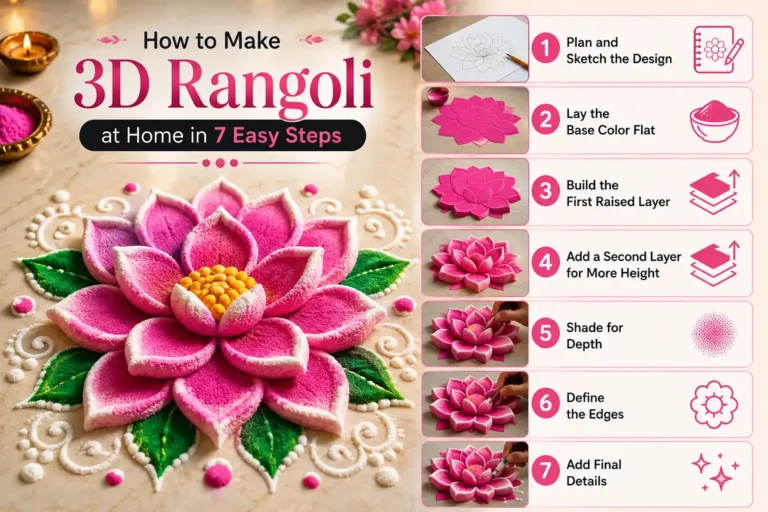
How to Draw a Peacock Flower Rangoli Step by Step

Following a clear sequence makes the drawing process manageable, even for a detailed peacock flower rangoli design.
Step 1: Sketch the outline Use chalk or white powder to mark the peacock’s body, neck, and tail spread. A simple teardrop shape works well for the body.
Step 2: Divide the tail into sections Draw four to eight arc-shaped sections within the tail. Each section will hold a separate flower motif in the finished peacock flower rangoli design.
Step 3: Fill each feather with a flower pattern A five-petal flower centered in each arc, with small leaf accents on the sides, is both accessible and effective. This step is the heart of any peacock flower rangoli design.
Step 4: Add a border Frame the outer edge with repeating petals, curved lines, or dots. A well-drawn border gives the peacock flower rangoli design a finished, polished appearance.
Step 5: Apply color from center outward Fill the body first, then the tail sections, then the border. White outline layers between areas keep the peacock flower rangoli design sharp throughout.
Beginners can find useful foundational practice in these simple rangoli design ideas before attempting a full bird composition.
Using Flower Petals in a Peacock Flower Rangoli Design

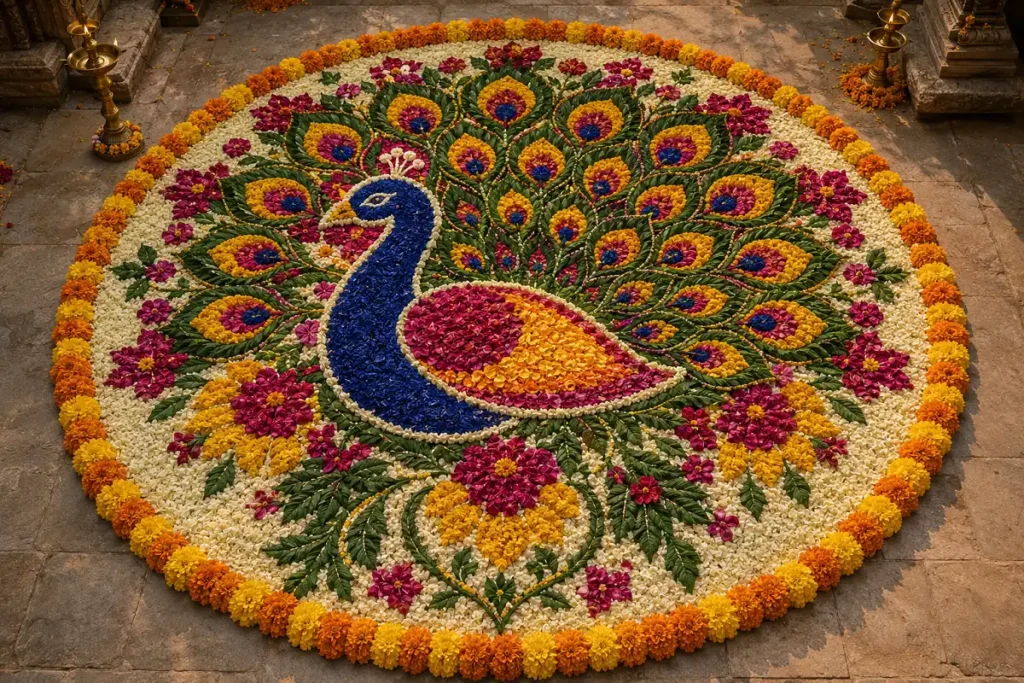
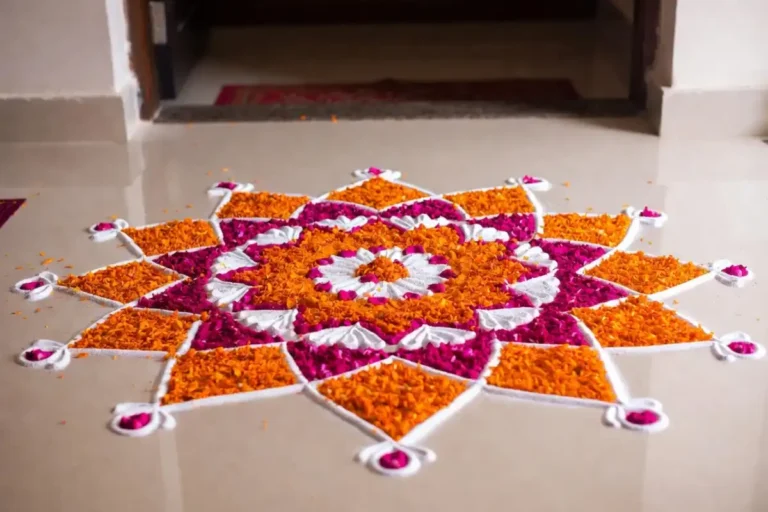
Fresh flower petals bring a natural, textured quality to any peacock flower rangoli design. Marigold petals work well in warm-toned feather sections, while rose petals in red or pink naturally fill the body area. Green leaves serve as section outlines, replacing white powder in a dry-color design.
A fully floral peacock flower rangoli design is more delicate than a powder version, so it suits indoor spaces or sheltered entrances best. The Onam Pookalam tradition, documented on India’s official cultural portal, shows how deeply flower-based floor art is embedded in Indian festival life across regions.
For stability, consider using dry powder for the outer border of your petal-based peacock flower rangoli design. This gives the composition a firm frame while keeping the interior fresh and organic.
Peacock Flower Rangoli for Weddings and Housewarmings
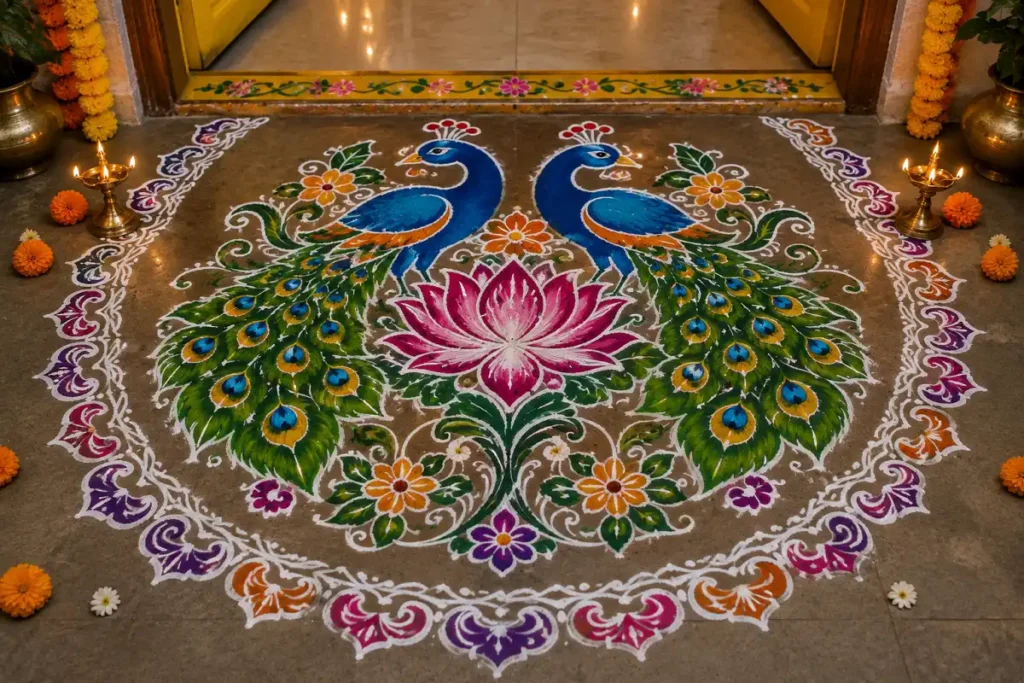
Weddings and housewarmings call for auspicious, grand designs, and the peacock flower rangoli design satisfies both requirements. Paired peacocks around a central lotus create a welcoming statement at wedding entrances. For housewarmings, a single peacock surrounded by flowering vines and leaves reflects new beginnings and good fortune.
Pairing a peacock flower rangoli design with a complementary rangoli border design around the full entrance area creates a layered, cohesive decoration that elevates the entire space.
Common Mistakes to Avoid
A few practical points help you get a clean result on your first attempt:
- Skipping the chalk outline, which leads to uneven body proportions
- Using too many colors in the feather sections, making the design feel cluttered
- Applying powder too thickly, which causes colors to mix at the edges
- Not applying white outlines first between sections
- Drawing the body too small relative to the tail spread, which throws off the overall balance
Ten minutes of pencil sketching before you begin applying powder saves significant time and avoids the most common errors in a peacock flower rangoli design.
FAQ Section
Is a peacock flower rangoli design suitable for beginners?
Yes, beginners can create a successful peacock flower rangoli design by starting with the feather-only mandala version, which skips the challenge of drawing the full bird. Stencils for the peacock body outline also make the process much easier to manage.
What materials work best for this style?
Dry rangoli powder is the most practical material for a peacock flower rangoli design, offering sharp color contrast and wide color availability. Fresh flower petals are a natural alternative for those who prefer an organic look, especially for indoor or sheltered celebrations.
How large should the design be?
A width of three to four feet suits most home entrances well. For wedding halls or large courtyards, scaling the peacock flower rangoli design up to six feet or more is possible by adding wider feather sections and more detailed inner patterns.
Can I use a stencil for this design?
Yes, stencils are a helpful tool for creating clean peacock body outlines, especially for first-time artists. Reusable plastic stencils are widely available and often include both the bird shape and matching floral fill patterns.
Which festivals suit a peacock flower rangoli design?
This style works well for Diwali, Navratri, Pongal, Onam, weddings, and housewarmings. Its auspicious symbolism and adaptable color palette make it a strong fit for almost any Indian festive occasion.
How do I prevent colors from mixing during application?
Apply white rangoli powder as a clean outline around every section before adding color. Work one section at a time and use a small cone or funnel for precise application in detailed areas of the peacock flower rangoli design.
Conclusion
A peacock flower rangoli design is one of the most rewarding floor art styles you can create, combining cultural meaning with genuine visual impact. From simple feather mandalas to elaborate paired peacock compositions, there is a version suited to every skill level and occasion.