Flower Rangoli Design Simple: 15+ Easy & Beautiful Ideas for Beginners
Introduction
Want to add a splash of color and tradition to your home without spending hours on intricate art? You’re in the right place. A flower rangoli design simple enough for beginners can transform your entryway into a welcoming, festive space in just minutes.
Rangoli has been a cherished part of Indian culture for centuries, and floral patterns remain one of the most loved styles. Whether you’re decorating for Diwali, a wedding, or simply brightening your morning routine, a flower rangoli design simple in style is the perfect choice. In this guide, you’ll discover easy ideas, beginner-friendly tips, and step-by-step inspiration to help you create gorgeous designs—even if you’ve never tried rangoli before.
Why Choose a Flower Rangoli Design Simple Style?
Floral rangolis are timeless. They’re easier than geometric patterns, more forgiving for beginners, and instantly add charm to any space. Here’s why a flower rangoli design simple approach is so popular:
- Beginner-friendly: Petals and circles are forgiving shapes—small mistakes blend in beautifully.
- Versatile: Works for festivals, weddings, pujas, and everyday decor.
- Quick to make: Most designs take 15–30 minutes.
- Affordable: You only need basic rangoli colors or fresh flower petals.
According to Wikipedia’s entry on Rangoli, this folk art is traditionally created to welcome guests and deities—and floral motifs symbolize prosperity, joy, and renewal.
Essential Materials You’ll Need
Before starting your flower rangoli design simple project, gather these basics:
- Colored rangoli powder (red, yellow, orange, green, white)
- Chalk or pencil for outlining
- A small sieve or funnel for clean lines
- Fresh flower petals (marigold, rose, jasmine) — optional
- Diyas or tea lights for finishing
Pro tip: Use a paper template under your rangoli area for perfect symmetry your first few times.
15+ Flower Rangoli Design Simple Ideas to Try
Classic Lotus Rangoli
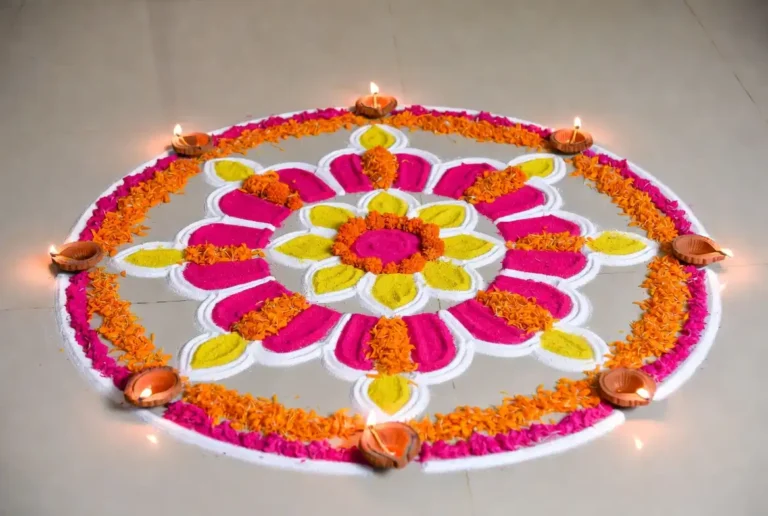
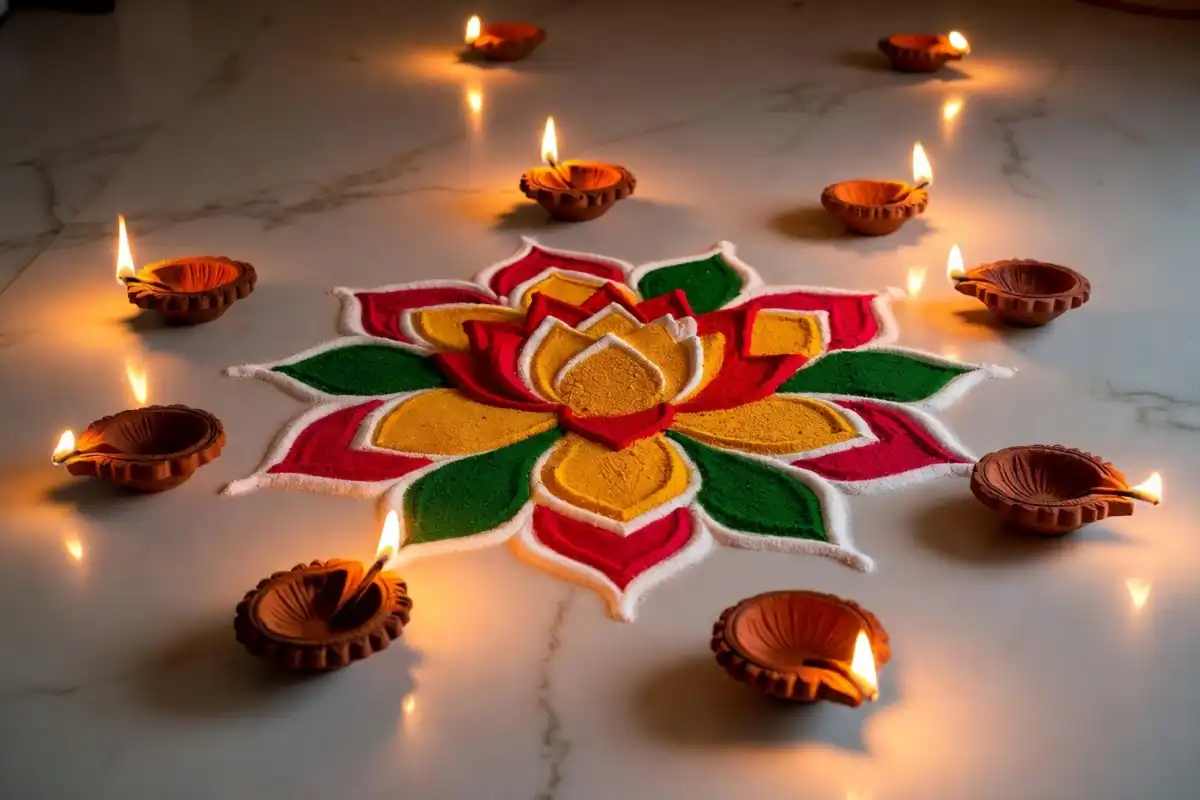
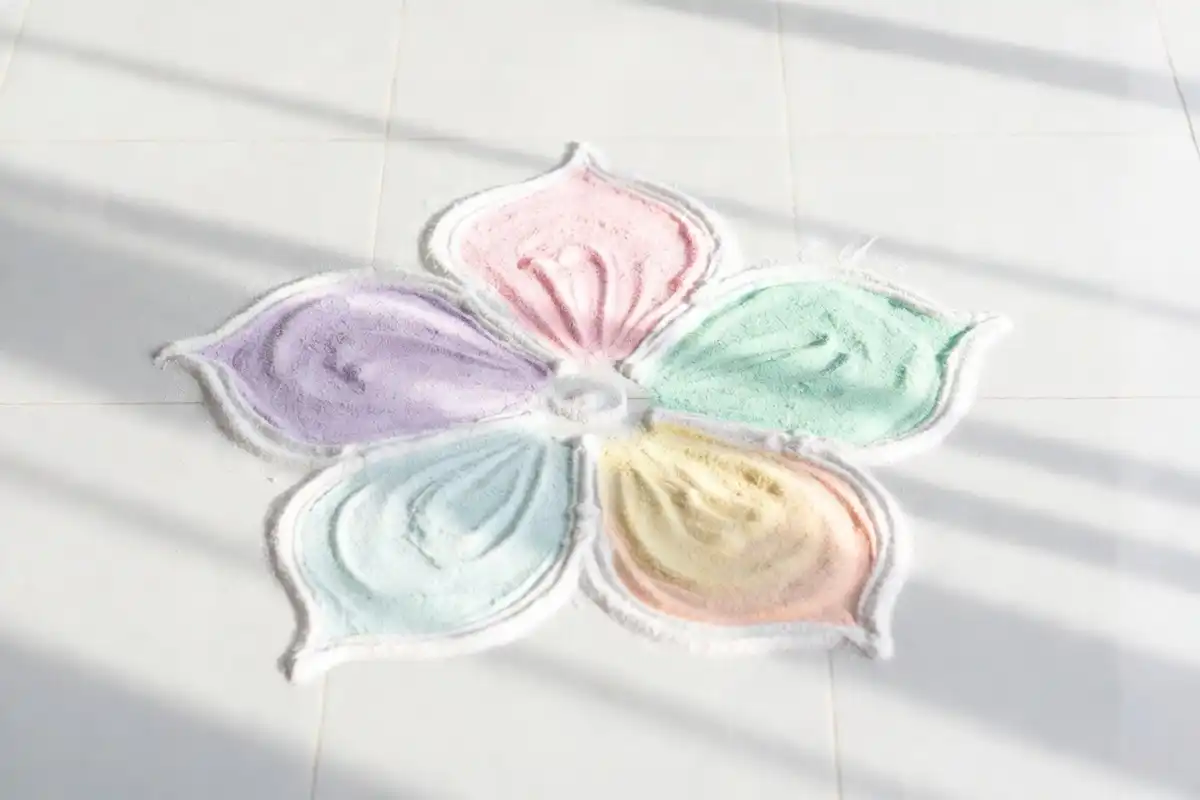
The lotus is the easiest and most iconic flower rangoli design simple option. Draw a center circle and add 6–8 petals around it. Fill with pink and white for a serene look.
Marigold Petal Circle
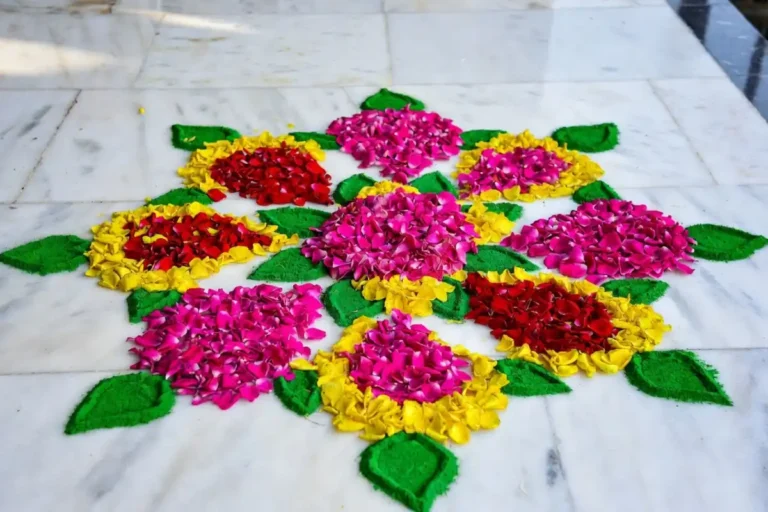
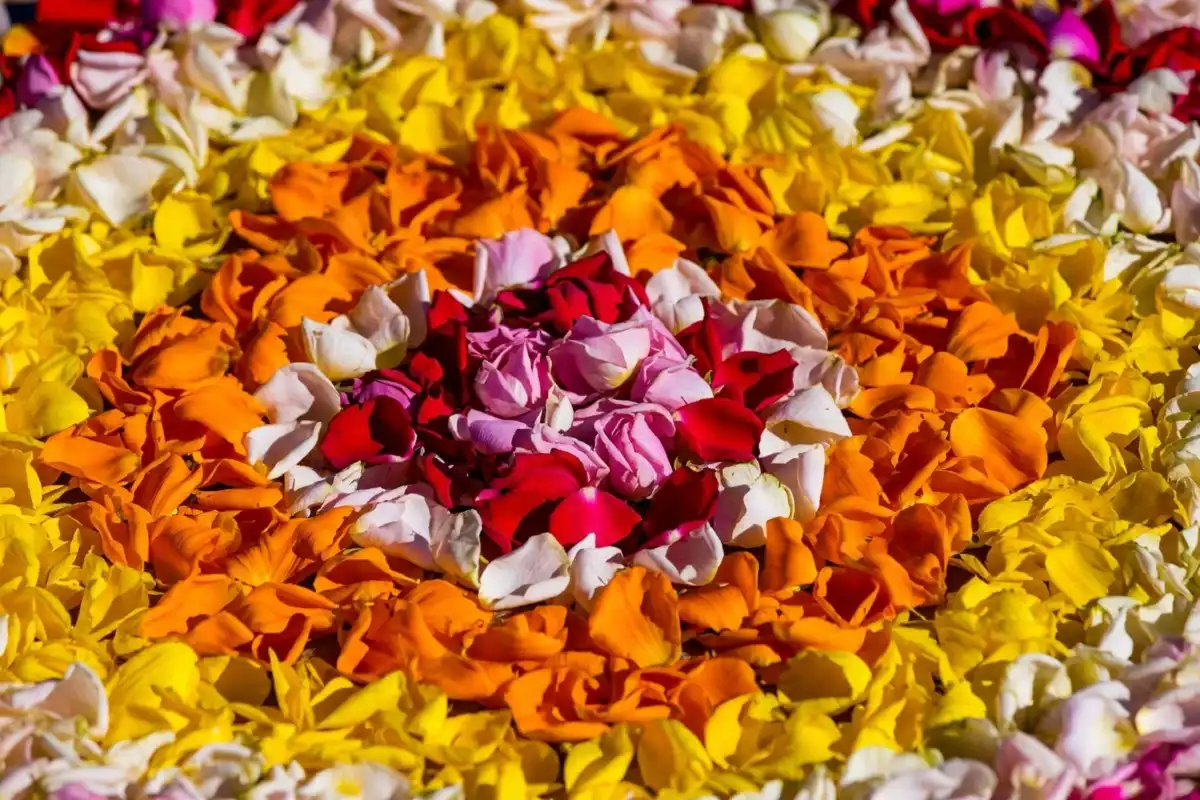
Skip the powder—use real marigold petals arranged in concentric circles. Perfect for Diwali and pujas. For more festive ideas, check out these stunning Diwali rangoli designs.
Rose Bloom Rangoli
Sketch a single rose with overlapping petals. Use deep red and pink with green leaves. Elegant and romantic—great for weddings.
Sunflower Burst
Draw a brown center, then add long yellow petals radiating outward. Bright, cheerful, and ideal for daytime celebrations.
Daisy Chain Border
Small white daisies linked in a circle make a perfect border. Pair this with a central design from this easy rangoli design guide.
Hibiscus Single Bloom
A 5-petal hibiscus with a long stamen is visually striking yet simple. Use red or orange shades for maximum impact.
Floral Mandala
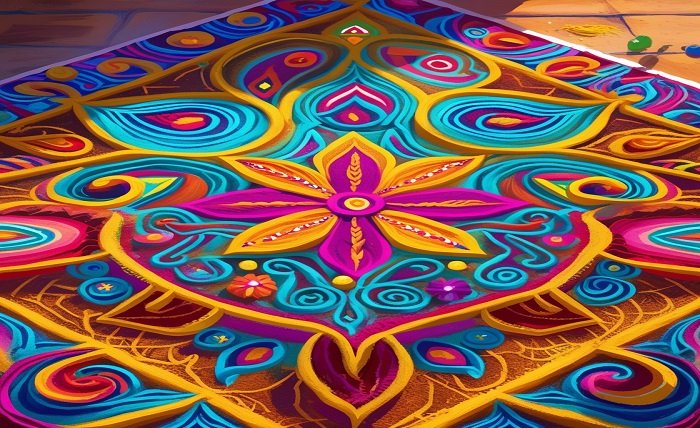
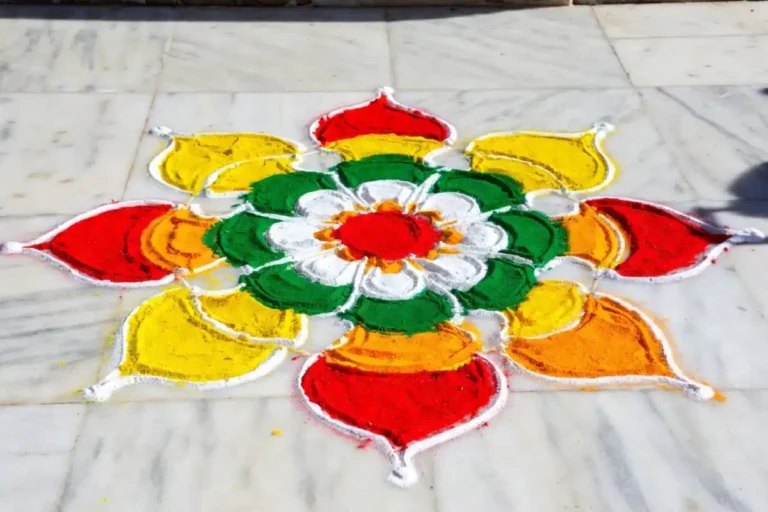
Combine flower motifs in a circular mandala. Start small in the center and grow outward in layers—a beautiful flower rangoli design simple enough for any beginner.
Jasmine Garland Design
Tiny white five-petal flowers arranged in a flowing curve. Soft, fragrant, and minimalist.
Tulip Row
Three or five tulips in a row work beautifully near a doorway. Mix red, yellow, and pink.
Lily Pond
Draw 2–3 water lilies with curved leaves. Add blue and white shades for a calming effect.
Floral Diya Rangoli
Place a diya in the center surrounded by a flower outline. A great fusion design—explore more in this attractive Diwali rangoli collection.
Petal Border with Center Bloom
Outline your space with petal shapes, then add a single large flower in the middle. This flower rangoli design simple layout is endlessly customizable.
Heart-Shaped Floral Rangoli
Form a heart outline using small flowers. Lovely for anniversaries and Valentine’s-themed decor.
Paisley Flower Combo
Mix paisley shapes with small flowers for an Indo-traditional look.
Mini Floral Rangoli
A compact 6–8 inch design near a corner or doorway. See more in this small rangoli design collection.
Bonus: Free-Hand Petal Spray
Just sweep petals in a curve—no rules, no symmetry required. Perfect for last-minute decor.
Step-by-Step: How to Create a Flower Rangoli Design Simple Style
Step 1 — Choose Your Spot
Pick a clean, flat surface near the entrance, prayer area, or courtyard. Wipe it with a damp cloth.
Step 2 — Sketch the Outline
Use chalk to lightly draw your flower shape. Start with a center dot, then add petals.
Step 3 — Fill in Colors
Pinch rangoli powder between your thumb and forefinger. Move slowly for clean edges.
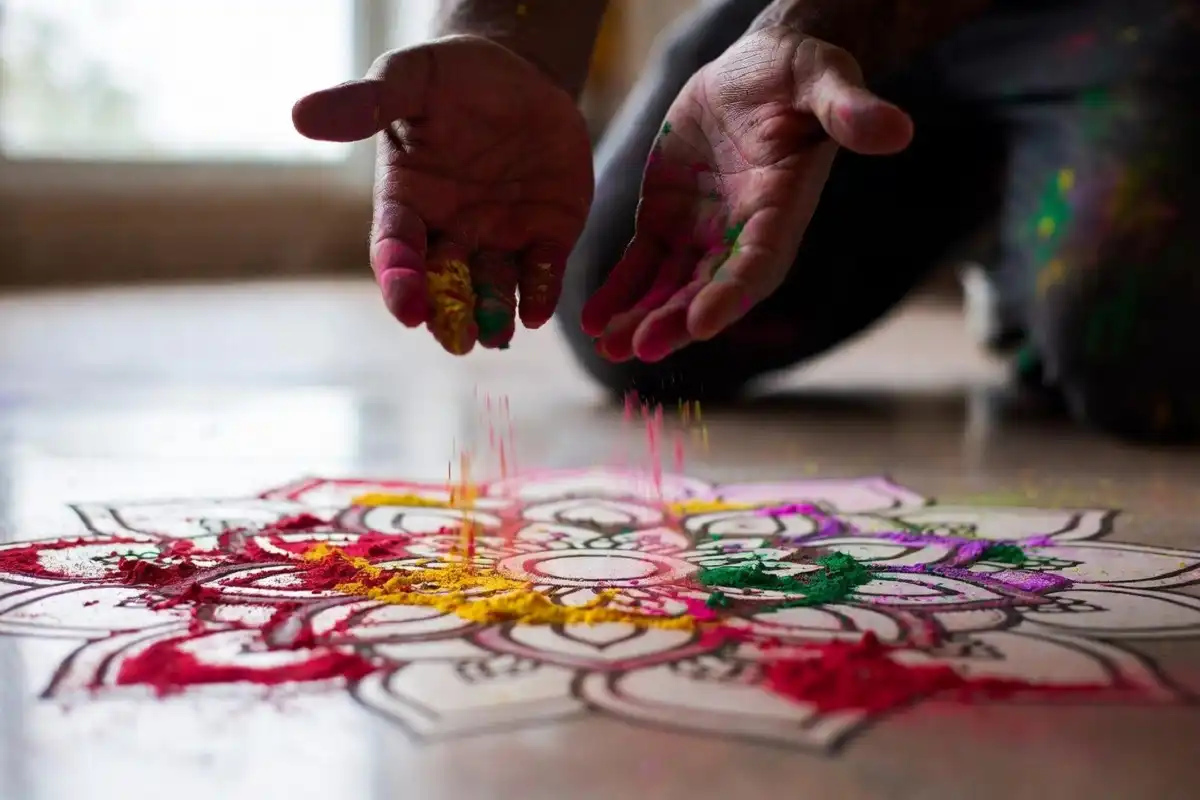
Step 4 — Add Details
Use white powder for outlines and accents. This makes colors pop dramatically.
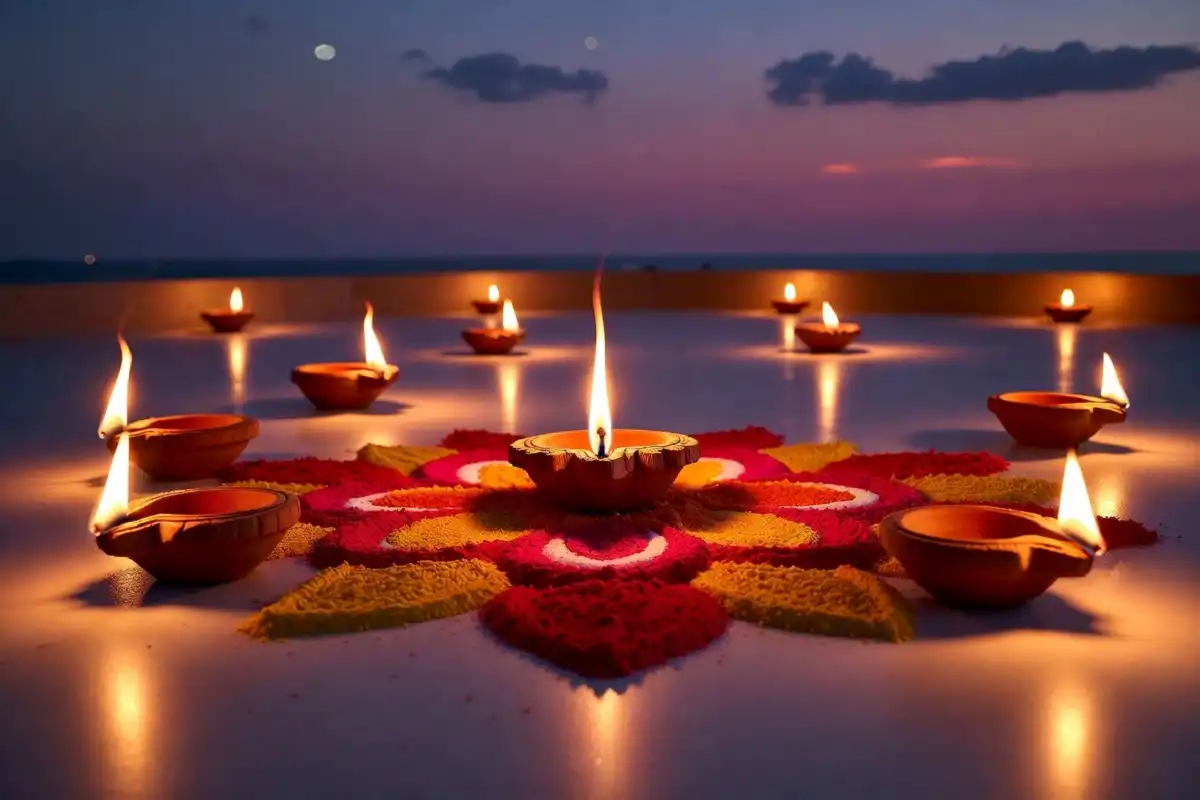
Step 5 — Finish with Lights
Place small diyas or tea lights around the design for a glowing effect.
For more inspiration, explore these 25 beautiful flower rangoli ideas to spark your creativity.
Tips for a Stunning Flower Rangoli Design Simple Layout
- Start small: A 12-inch design is easier than a 3-foot one.
- Use contrast: Pair bright petals with dark backgrounds.
- Symmetry matters: Fold paper templates to keep petals even.
- Mix textures: Combine powder rangoli with fresh petals for depth.
- Practice on paper first: Sketch your design before drawing on the floor.
According to Britannica’s overview of Indian folk arts, rangoli’s appeal lies in its ability to balance simplicity with cultural depth—exactly what a flower rangoli design simple in nature offers beginners.
Best Occasions for Floral Rangoli
A flower rangoli design simple style suits nearly every celebration:
- Diwali — pair with diyas (browse this best Diwali rangoli guide)
- Weddings & engagements
- Onam, Pongal, Navratri
- Housewarming ceremonies
- Daily morning decor
Common Mistakes to Avoid
- Using too many colors (3–4 is plenty)
- Drawing on a dusty surface
- Skipping the chalk outline
- Making petals different sizes
- Rushing the filling process
FAQ Section
What is the easiest flower rangoli design simple enough for kids?
A basic lotus with 6 petals around a circle is the easiest. Kids can fill it with any 2–3 colors and finish in under 15 minutes.
How long does a flower rangoli design simple in style take to make?
Most beginner-friendly designs take 15–30 minutes. Larger or more detailed floral mandalas may take up to an hour.
Can I make a flower rangoli without colored powder?
Yes. Use fresh flower petals (marigold, rose, jasmine), colored rice, or even chalk on tiles for an eco-friendly version.
Which flowers symbolize good luck in rangoli?
Lotus, marigold, and jasmine are considered auspicious. Marigolds especially symbolize prosperity in Indian traditions.
How do I keep my flower rangoli design simple yet long-lasting?
Lightly mist with hairspray or use rangoli stickers. Avoid windy spots and foot traffic.
Are flower rangolis suitable for outdoor spaces?
Absolutely. Fresh petal rangolis work especially well outdoors and last for several hours, even a full day in cool weather.
Conclusion
Creating a beautiful flower rangoli design simple enough for any skill level isn’t just possible—it’s enjoyable and deeply rewarding. From a single lotus bloom to a full floral mandala, these designs let you celebrate tradition with minimal effort and maximum impact.
Whether you’re decorating for Diwali, a family gathering, or simply brightening your daily routine, a flower rangoli design simple at heart offers endless creativity. Start small, experiment with colors, and let your style evolve naturally.
Ready to create your first design? Pick one idea from this guide, gather your colors, and start today. Don’t forget to explore our complete collection of simple rangoli designs for even more inspiration!