25 Beautiful Floral Rangoli Border Designs for Every Occasion
Floral rangoli border designs turn a plain floor drawing into a finished, framed piece of art. I add borders to almost every rangoli I make. A good flower border pulls the whole design together and makes even a simple center look complete.
Floral rangoli border designs are decorative flower patterns drawn around the edge of a rangoli. They frame the main design using petals, vines, and leaf shapes. You draw them with rangoli powder, chalk, or fresh flowers to add color and structure.
What Are Floral Rangoli Border Designs?
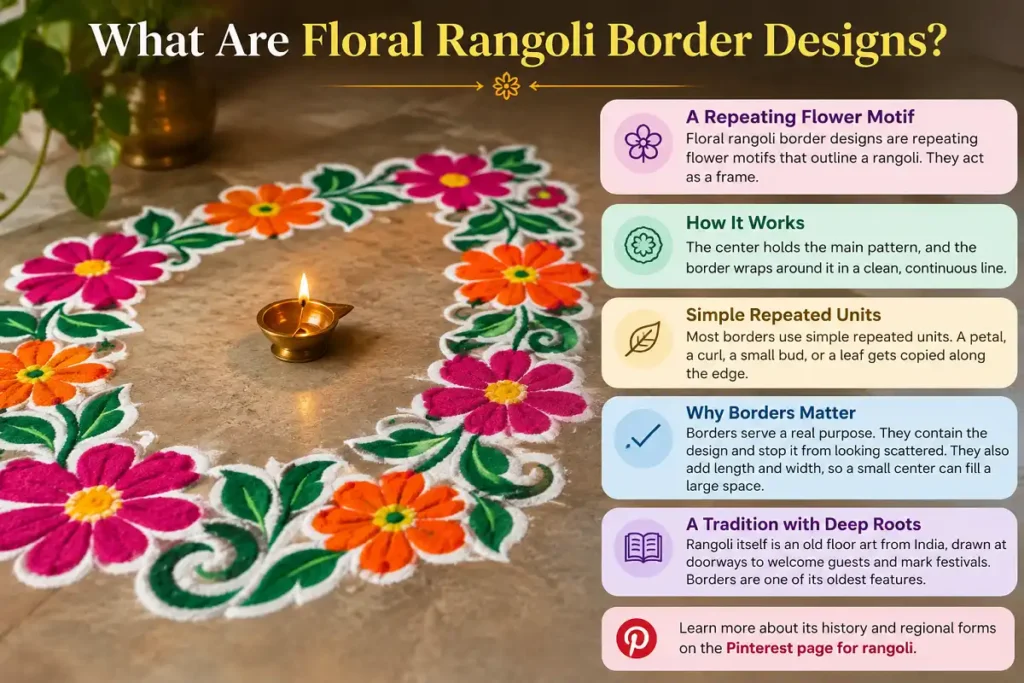
Floral rangoli border designs are repeating flower motifs that outline a rangoli. They act as a frame. The center holds the main pattern, and the border wraps around it in a clean, continuous line.
Most borders use simple repeated units. A petal, a curl, a small bud, or a leaf gets copied along the edge. This repetition is what gives a border its rhythm. Your eye follows the pattern all the way around.
Borders serve a real purpose. They contain the design and stop it from looking scattered. They also add length and width, so a small center can fill a large space. In my practice, a border is the fastest way to make a rangoli look intentional.
Rangoli itself is an old floor art from India, drawn at doorways to welcome guests and mark festivals. You can read more about its history and regional forms on the Pinterest page for rangoli . Borders are one of its oldest features.
Why Borders Make Rangoli Look Complete
It helps define the design, balance the composition, and make the whole rangoli feel intentional.
A border gives your rangoli a clear edge. Without one, the design can look like it just stops. The flower frame tells the eye where the art ends.
Borders also fix uneven work. If your center is slightly lopsided, a strong repeated frame balances it out. The repetition draws attention away from small mistakes. This is why I teach borders early to beginners.
There is a practical side too. Floral rangoli border designs let you cover more floor with less effort. You draw one small motif and repeat it. You get a big, filled look without designing a complex center.
A frame also sets the mood. A soft vine border feels calm. A bright marigold band feels festive. The border you choose signals the occasion before anyone sees the center. This is why floral rangoli border designs stay popular across every region of India.
Types of Floral Rangoli Border Designs
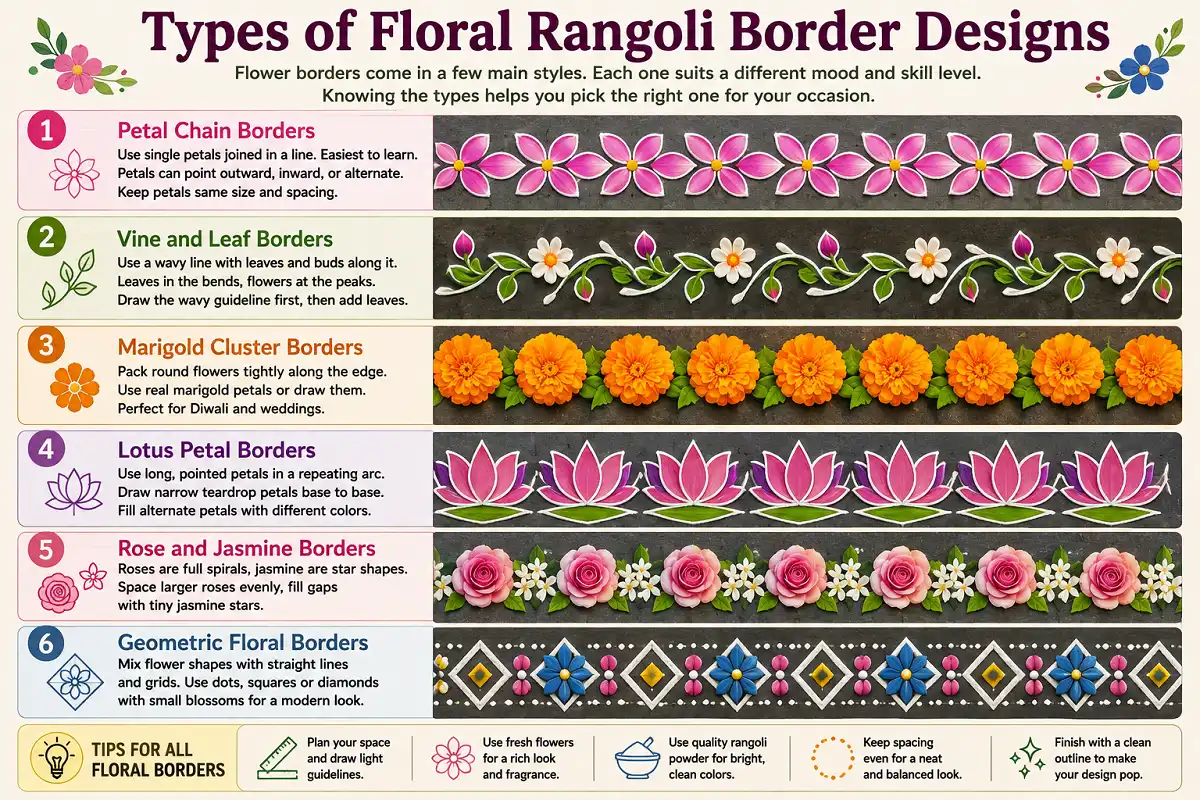
Flower borders come in a few main styles. Each one suits a different mood and skill level. Knowing the types helps you pick the right one for your occasion.
Petal Chain Borders
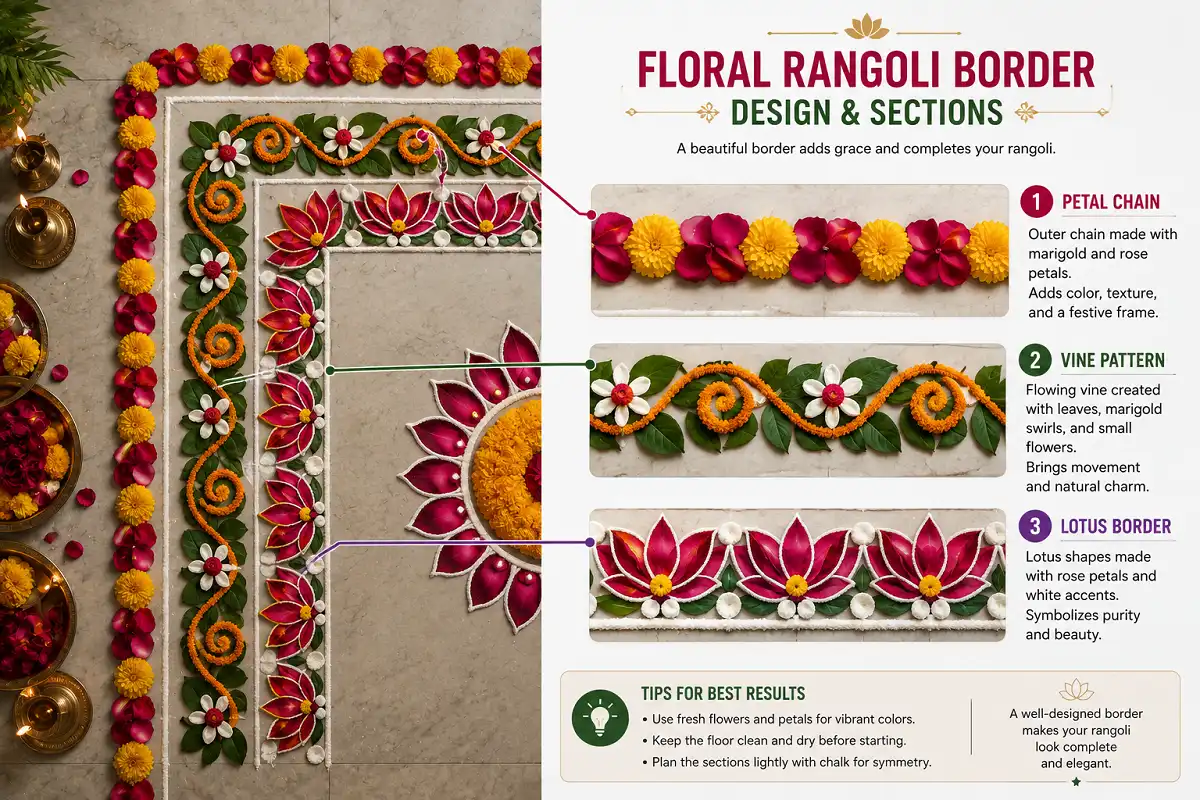
Petal chain borders use single petals joined in a line. You draw one petal, then the next, so they touch and flow. This is the easiest flower border to learn.
The petals can point outward, inward, or alternate. Outward petals feel open and bright. Inward petals feel neat and closed. For a first attempt, keep all petals the same size and spacing.
Vine and Leaf Borders
Vine borders use a wavy line with small leaves and buds along it. The vine curves gently from side to side. Leaves sit in the bends, and flowers sit at the peaks.
This style feels natural and soft. It works well for entrances and long hallways. Draw the wavy guideline first, then add the leaves. The guideline keeps your curve even.
Marigold Cluster Borders
Marigold cluster borders pack round flowers tightly along the edge. Each flower is a filled circle with a ringed center. Marigold is a common festival flower, so this border fits Diwali and weddings well.
You can draw these clusters or use real petals. Fresh marigold petals give a rich orange band that no powder can match. This is one of my favorite floral rangoli border designs for festival days.
Lotus Petal Borders
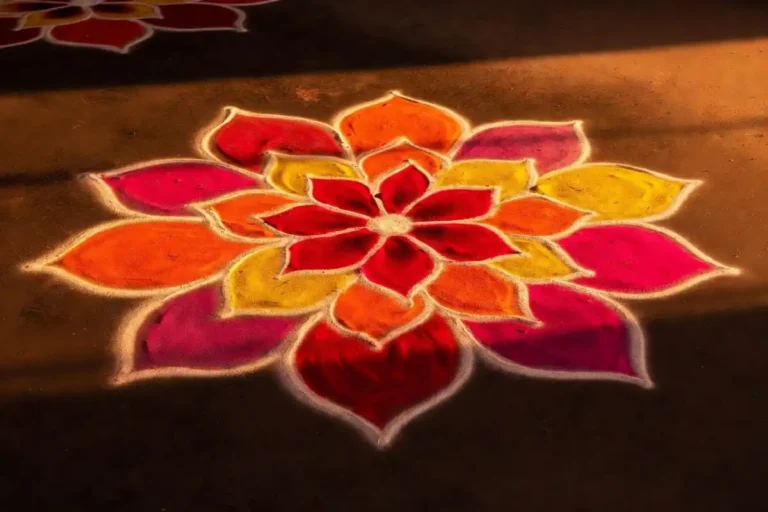
Lotus petal borders use long, pointed petals in a repeating arc. The lotus is a strong cultural symbol in Indian art. Its petals stack neatly, which makes a clean, formal frame.
Draw each petal as a narrow teardrop. Line them base to base so the tips fan outward. Fill alternate petals with different colors for depth. These borders suit poojas and traditional homes.
Rose and Jasmine Borders
Rose and jasmine borders bring soft, rounded blooms to the edge. Roses read as full spirals of curved petals. Jasmine reads as small white five-point stars. Together they make a gentle, fragrant-looking frame.
These flowers suit weddings and calm home settings. Pink roses with white jasmine feel elegant. Space the larger roses evenly, then fill the gaps with tiny jasmine stars. Among all floral rangoli border designs, these read as the softest and most romantic.
Geometric Floral Borders
Geometric floral borders mix flower shapes with straight lines and grids. You combine dots, squares, or diamonds with small blossoms. The result is structured but still soft.
This style suits modern homes and office entrances. The grid gives order, and the flowers add warmth. If you like clean lines, pair these ideas with other flower rangoli patterns that stay simple for a matching center.
How to Draw Floral Rangoli Border Designs Step by Step
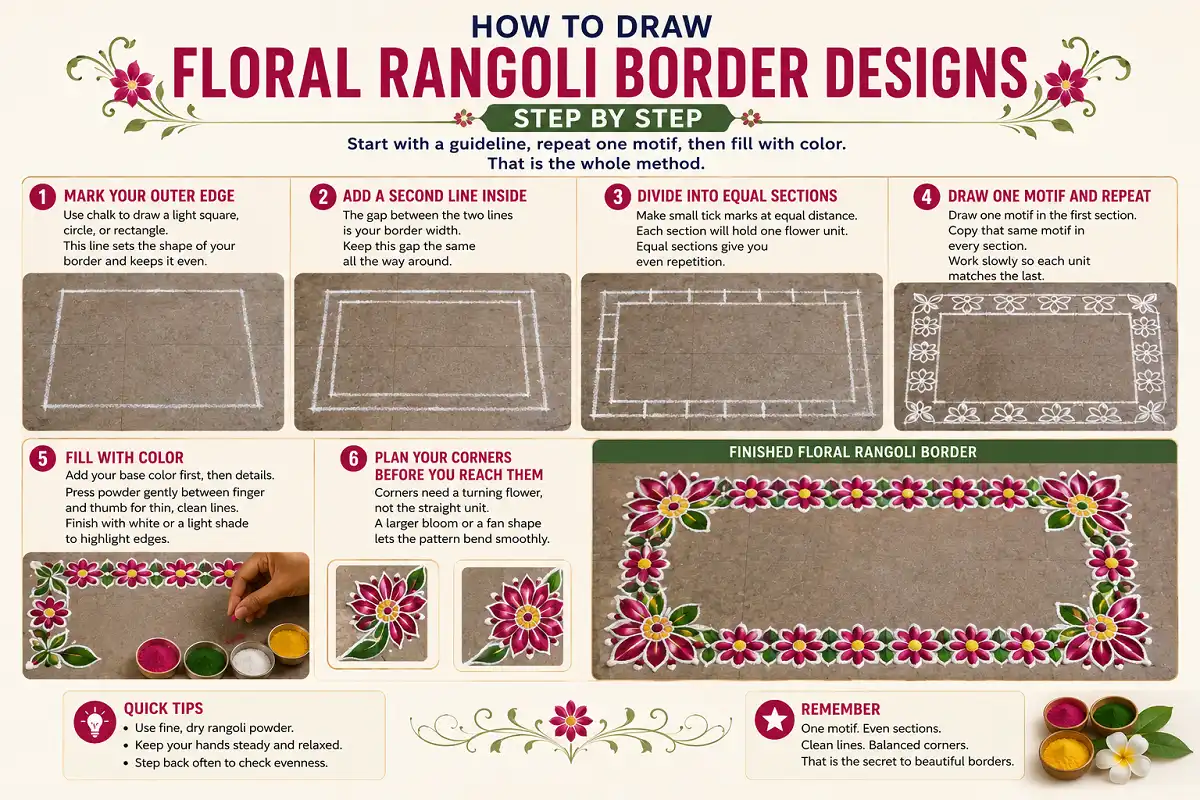
Start with a guideline, repeat one motif, then fill with color. That is the whole method. Below is the exact process I follow every time I make floral rangoli border designs.
Mark Your Outer Edge
First, mark your outer edge. Use chalk to draw a light square, circle, or rectangle. This line sets the shape of your border and keeps it even.
Add a Second Line Inside
Second, add a second line inside the first. The gap between the two lines is your border width. Keep this gap the same all the way around.
Divide Into Equal Sections
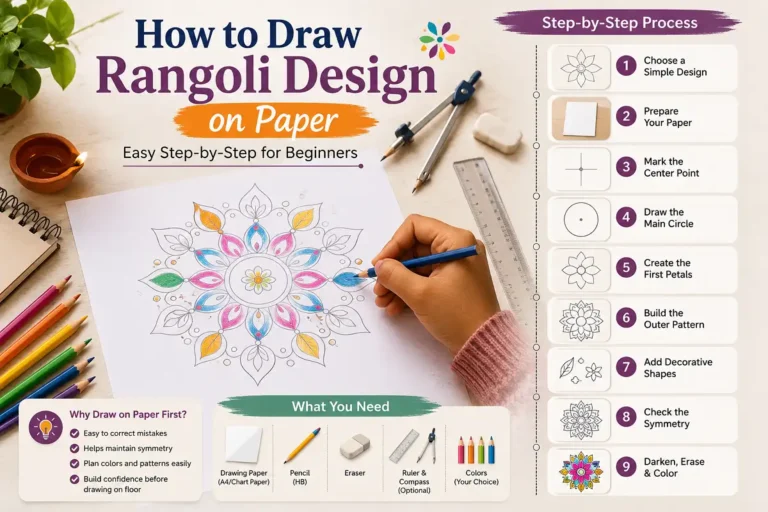
Third, divide the border into equal sections. Make small tick marks at equal distance. Each section will hold one flower unit. Equal sections give you even repetition.
Draw One Motif and Repeat
Fourth, draw one motif in the first section. Copy that same motif in every section. Work slowly so each unit matches the last.
Fill With Color
Fifth, fill with color. Add your base color first, then details. Press powder gently between finger and thumb for thin, clean lines. Finish with white or a light shade to highlight edges.
Plan Your Corners
Sixth, plan your corners before you reach them. Corners need a turning flower, not the straight unit. A larger bloom or a fan shape lets the pattern bend smoothly.
Best Flowers and Materials for Flower Borders
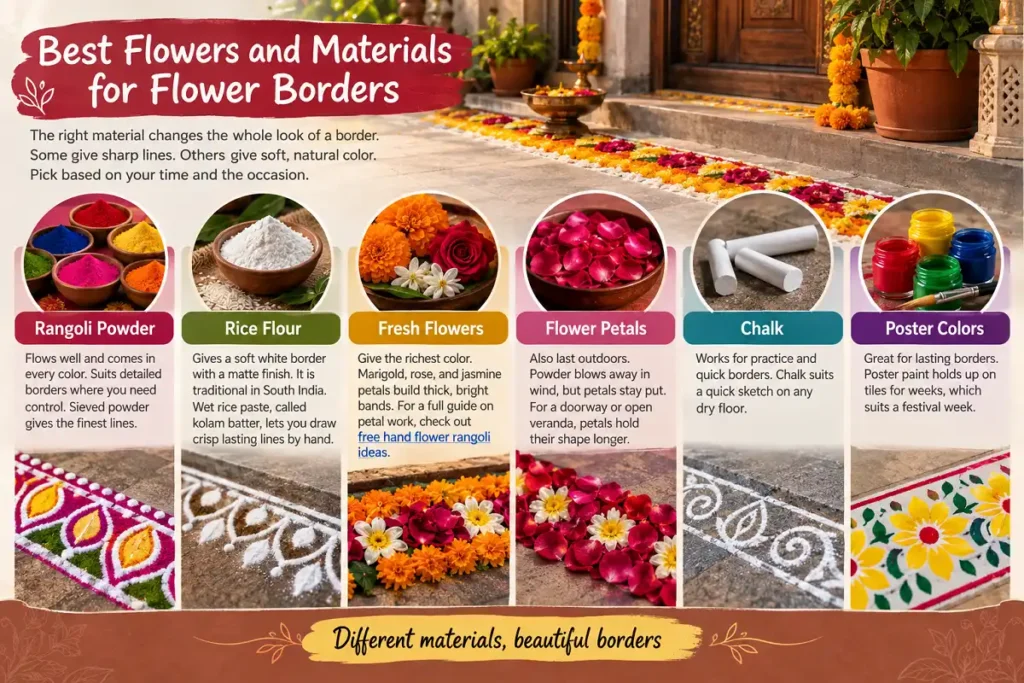
The right material changes the whole look of a border. Some give sharp lines. Others give soft, natural color. Pick based on your time and the occasion.
Rangoli Powder
Rangoli powder is the standard choice. It flows well and comes in every color. It suits detailed borders where you need control. Sieved powder gives the finest lines.
Rice Flour
Rice flour gives a soft white border with a matte finish. It is traditional in South India. Wet rice paste, called kolam batter, lets you draw crisp lasting lines by hand.
Fresh Flowers
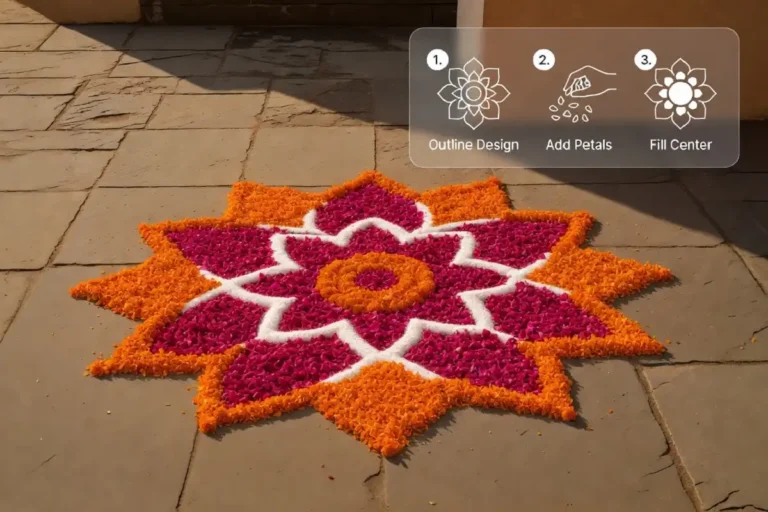
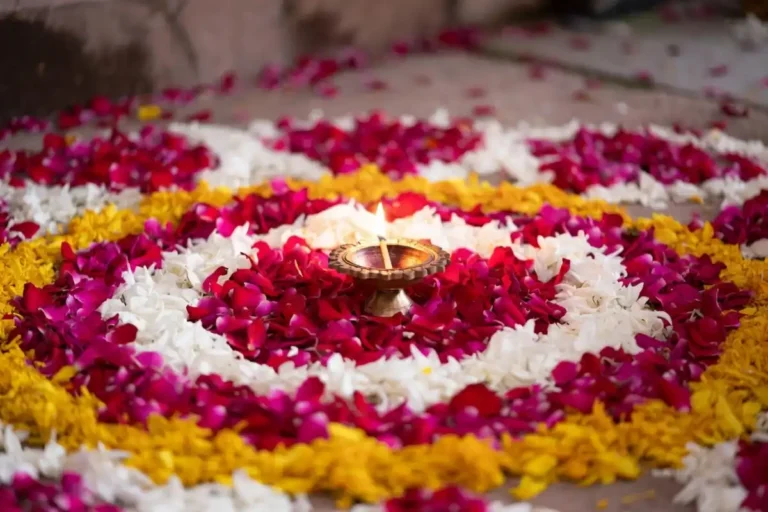
Fresh flowers give the richest color. Marigold, rose, and jasmine petals build thick, bright bands. For a full guide on petal work, these free hand flower rangoli ideas show how to shape blooms without stencils.
Flower Petals
Flower petals also last outdoors. Powder blows away in wind, but petals stay put. For a doorway or open veranda, petals hold their shape longer.
Chalk and Poster Colors
Chalk and poster colors work for practice and for lasting borders. Chalk suits a quick sketch on any dry floor. Poster paint holds up on tiles for weeks, which suits a festival week. The material you pick shapes how your floral rangoli border designs look and how long they last.
Floral Rangoli Border Designs for Different Occasions
Different festivals call for different border styles. Matching the flower and color to the event makes your rangoli feel right. Here is how I choose floral rangoli border designs for each event.
Diwali
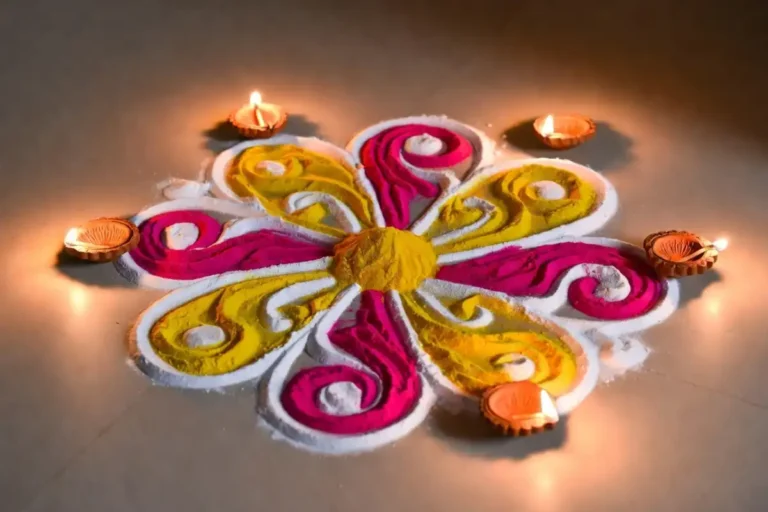
For Diwali, I use marigold clusters and diya-shaped gaps. Bright orange and yellow suit the festival of lights. Add small dots of red for contrast.
Weddings
For weddings, I pick soft rose and lotus borders. Pink, white, and gold feel elegant. Fresh rose petals give a romantic, full look.
Daily Rangoli
For daily rangoli, simple petal chains work best. They are fast and need little powder. A quick flower border still makes your entrance feel cared for.
Poojas
For poojas, lotus petal borders fit the mood. The lotus carries spiritual meaning. A clean white and pink frame suits a prayer space.
Onam and Pongal
For Onam and Pongal, I use round flower carpets with a petal border. Yellow, orange, and green feel like the harvest season. These borders often use only fresh petals.
Simple Floral Rangoli Border Designs for Beginners
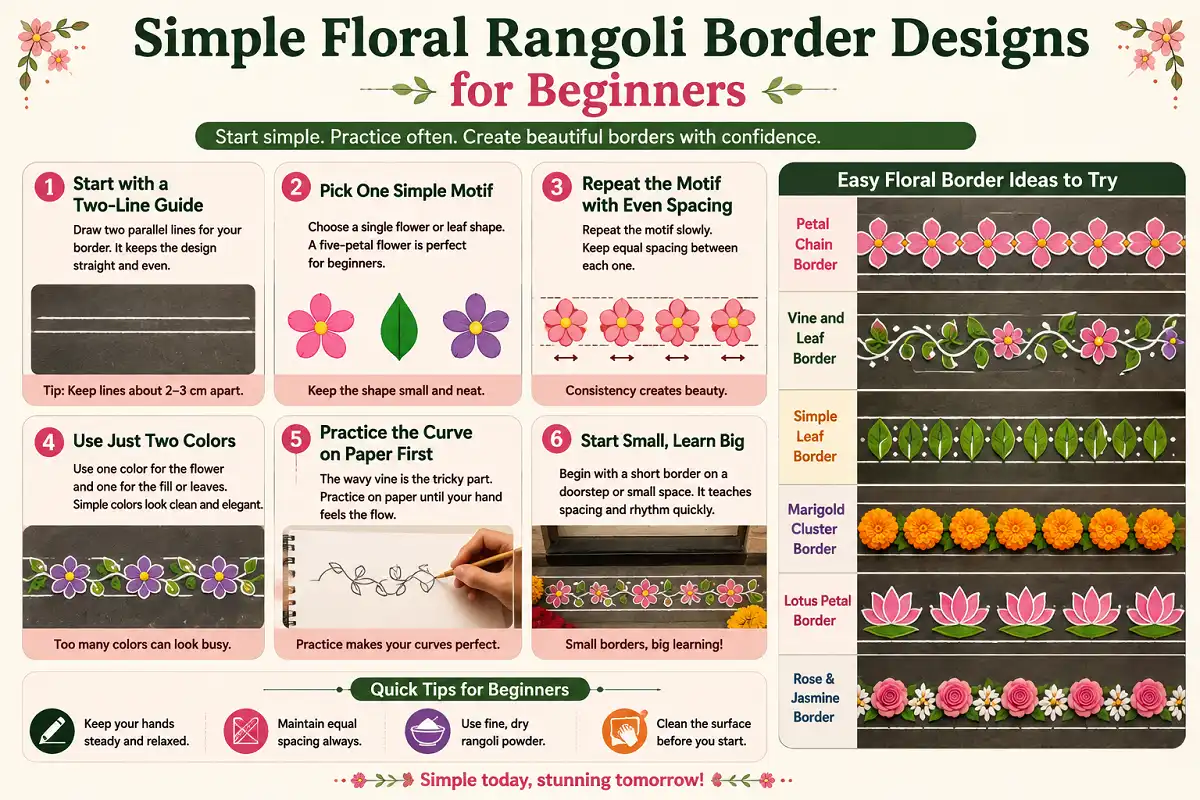
Beginners should start with one repeated petal and a two-line guide. Keep the motif small and the spacing wide. Simple floral rangoli border designs build your hand control fast.
Pick a single flower shape. A five-petal bloom or a simple leaf is enough. Draw it once, then repeat it slowly. Do not add detail until the repetition looks even.
Use just two colors at first. One for the flower, one for the fill. Too many colors make a beginner border look busy. Clean and simple always reads better.
Practice the curve of a vine border on paper first. The wavy line is the hard part. Once your hand knows the curve, the floor version comes easily. You can also study more border rangoli ideas for festivals to see how spacing changes the feel.
Small floral rangoli border designs are the best place to begin. A short border on a single doorstep teaches you spacing without much powder. You finish quickly and learn the rhythm.
Common Mistakes to Avoid With Flower Borders
The most common mistake is uneven spacing. When sections are different sizes, the border looks rushed. Always mark equal ticks before you draw.
Another mistake is rushing the corners. Corners need a turning motif, not the same straight unit. Plan a special corner flower so the pattern flows around the bend.
Too many colors is a frequent problem. Beginners often use every shade they own. Two or three colors give a cleaner, stronger border.
Thick, messy lines spoil fine work. Sieve your powder and pour slowly. A thin, steady line always looks more skilled than a thick, wobbly one.
Skipping the guideline is the last big error. Freehand borders drift and bend. Two light chalk lines take a minute and keep your whole frame straight. Avoid these slips and your floral rangoli border designs will look neat every time.
Color Combinations That Work for Floral Borders
Warm color pairs suit festivals, and cool pairs suit calm spaces. Orange with yellow feels festive. Pink with white feels soft. Blue with white feels fresh and modern.
Warm Combinations
Orange with yellow feels festive.
Soft Combinations
Pink with white feels soft.
Cool Combinations
Blue with white feels fresh and modern.
Contrast makes a border pop. Place a dark color next to a light one. A deep maroon petal on a white fill stands out sharply. This contrast is what makes floral rangoli border designs read from a distance.
Gold and silver work as accents, not base colors. A thin gold outline lifts any flower border. Use metallic shades only on edges and centers, never as the main fill.
Match your border color to your center. A border in the center’s shade ties the whole rangoli together. One shared color across both is enough to make the design feel planned.
Final Words
Floral rangoli border designs are the simplest way to make any rangoli look complete. Start with a two-line guide, repeat one small motif, and keep your spacing even. Pick your flowers and colors to match the occasion.
With a little practice, a clean flower border will frame every design you make and make your entrance feel truly finished.
FAQs
Quick answers to common questions about floral rangoli borders.
A flower border should be about one-sixth the width of your full rangoli. Keep it proportional. A border too thin gets lost, and one too thick overwhelms the center.
Yes. Fresh flower petals, chalk, and rice flour all work well. Petals give the richest color, while chalk suits quick practice on any dry floor.
The petal chain is the easiest. You repeat one simple petal along a two-line guide. It builds hand control and still looks finished.
Use a special corner motif. Draw a larger flower or a fan shape at each corner. This turning unit lets the pattern flow smoothly around the bend.
A fresh petal border stays bright for about one day. Indoors and away from wind, it can hold for two. Mist it lightly with water to keep petals fresh longer.