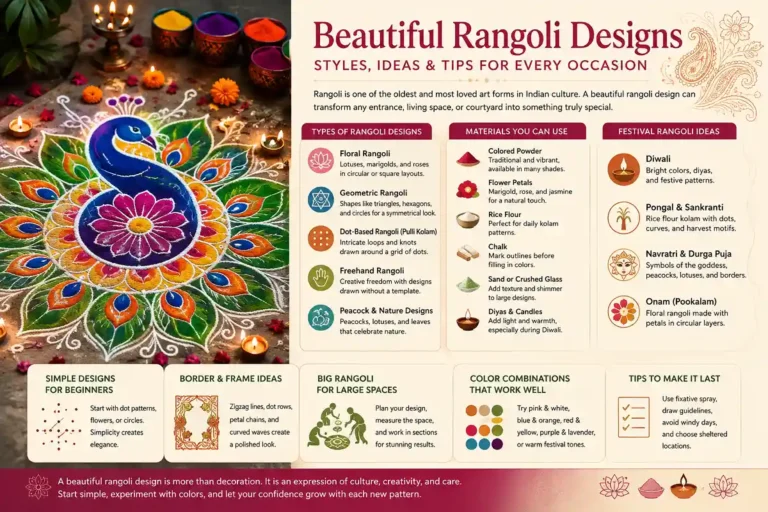
Rangoli With Real Flowers: A Complete Guide to Fresh Floral Floor Art
Rangoli with real flowers turns your entrance into living color for any festival or celebration. I make these all year, and fresh petals give a glow that powder simply cannot match. This guide covers everything, from flower choice to keeping your design fresh longer.
Rangoli with real flowers is a floor design made using fresh petals, whole blooms, and leaves instead of colored powder. You arrange marigold, rose, and other petals into patterns by hand, working from a center outward.
What Is Rangoli With Real Flowers?
Rangoli with real flowers is floor art created from fresh petals and blooms rather than synthetic powder. This style is called pookalam in Kerala and phool rangoli across North India. The petals sit loose on the floor, held only by their own weight and careful placement.
The tradition runs deep in Indian homes. During Onam, families build huge circular pookalams over ten days. For Diwali and weddings, smaller floral designs welcome guests at the door. The appeal is simple. Flowers feel alive, smell wonderful, and photograph beautifully.
Rangoli with real flowers also carries meaning beyond looks. In many homes, fresh blooms are seen as pure and lucky. Offering flowers at a threshold is a way of welcoming both guests and good fortune. That belief gives the art a quiet spiritual weight.
I prefer this method for special occasions. A powder design looks flat next to the texture of real petals. When light hits a marigold rangoli, the orange almost seems to burn. That effect keeps people coming back to floral floor art season after season. Once you try rangoli with real flowers, plain powder rarely feels enough again.
Why Choose Real Flowers Over Colored Powder?
Real flowers give texture, fragrance, and a natural shine that powder cannot copy. The three-dimensional quality of petals creates depth that flat color never achieves. Guests notice the difference the moment they walk in.
Fragrance is the second reason. A rose and jasmine design perfumes your whole entrance. Marigold adds a warm, earthy scent tied to festivals in most Indian minds. Powder rangoli, by contrast, has no smell at all.
There is also an eco-friendly angle. Fresh petals compost after use, so nothing harmful reaches the soil. Many synthetic powders contain chemical dyes. If you care about sustainable decoration, rangoli with real flowers is the cleaner choice. For more classic options, my guide to traditional rangoli made with rice flour covers the natural-material approach in detail.
Best Flowers for Rangoli With Real Flowers
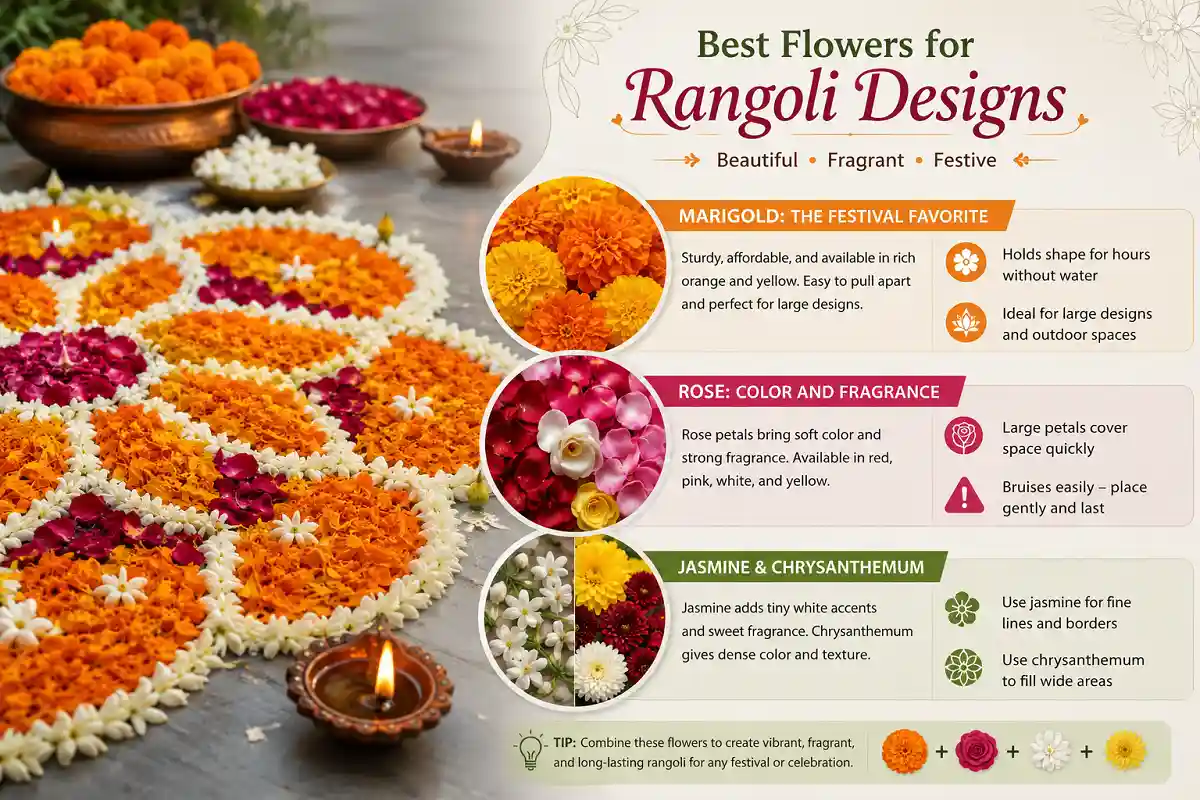
Marigold, rose, chrysanthemum, and jasmine are the top flowers for this art. Each brings a different color, size, and staying power. Choosing well is the difference between a design that lasts hours and one that wilts fast.
Marigold: The Festival Favorite
Marigold is the most popular flower for rangoli, and for good reason. The blooms are sturdy, cheap, and available in deep orange and yellow. You can pull a single marigold apart into dozens of small petals in seconds.
Marigold petals hold their shape for hours without water. That durability makes them ideal for large designs and outdoor spaces. My detailed marigold floor decoration ideas walk through color pairings that make the orange pop even more. During Diwali season, marigold is everywhere for exactly this reason.
Rose: Color and Fragrance
Rose petals bring soft color and strong perfume to any floral design. Red, pink, white, and yellow roses cover most palettes you will need. The petals are larger than marigold, so they fill space quickly.
Rose petals bruise easily, though. Handle them gently and place them last, since they wilt faster than marigold. For a full breakdown of petal-only patterns, see my rose petal design ideas for softer, romantic layouts.
Jasmine and Chrysanthemum
Jasmine adds tiny white accents and a heavy sweet scent to floral rangoli. The small size makes jasmine perfect for fine outlines and borders. Chrysanthemum, or shevanti, gives dense color in white, yellow, and maroon.
Both flowers pull apart into small, workable pieces. Use jasmine for detail lines and chrysanthemum to fill wide areas. Together they balance a design built mostly from marigold and rose.
What Materials Do You Need?
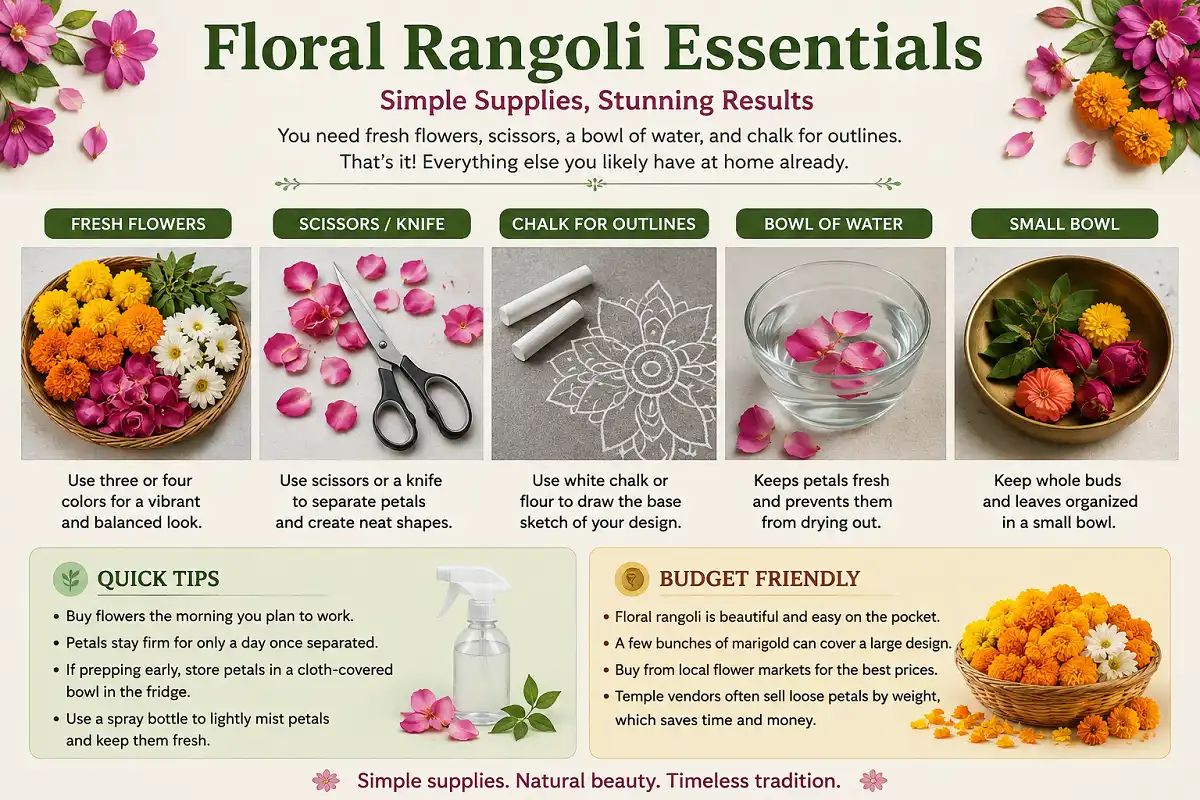
You need fresh flowers, scissors, a bowl of water, and chalk for outlines. The list is short because floral rangoli needs almost no special tools. Everything else you likely have at home already.
Gather these before you start:
- Fresh flowers in three or four colors
- Scissors or a knife to separate petals
- White chalk or a flour outline for the base sketch
- A spray bottle of water to keep petals fresh
- A small bowl for whole buds and leaves
Buy flowers the morning you plan to work. Petals stay firm for only a day once separated. If you must prep early, store loose petals in a cloth-covered bowl in the fridge.
Cost stays low too, which is part of why rangoli with real flowers suits any budget. A few bunches of marigold cover a large design for very little money. Buy from a local flower market rather than a florist for the best rates. Temple flower vendors often sell loose petals by weight, which saves prep time.
How to Make Rangoli With Real Flowers Step by Step
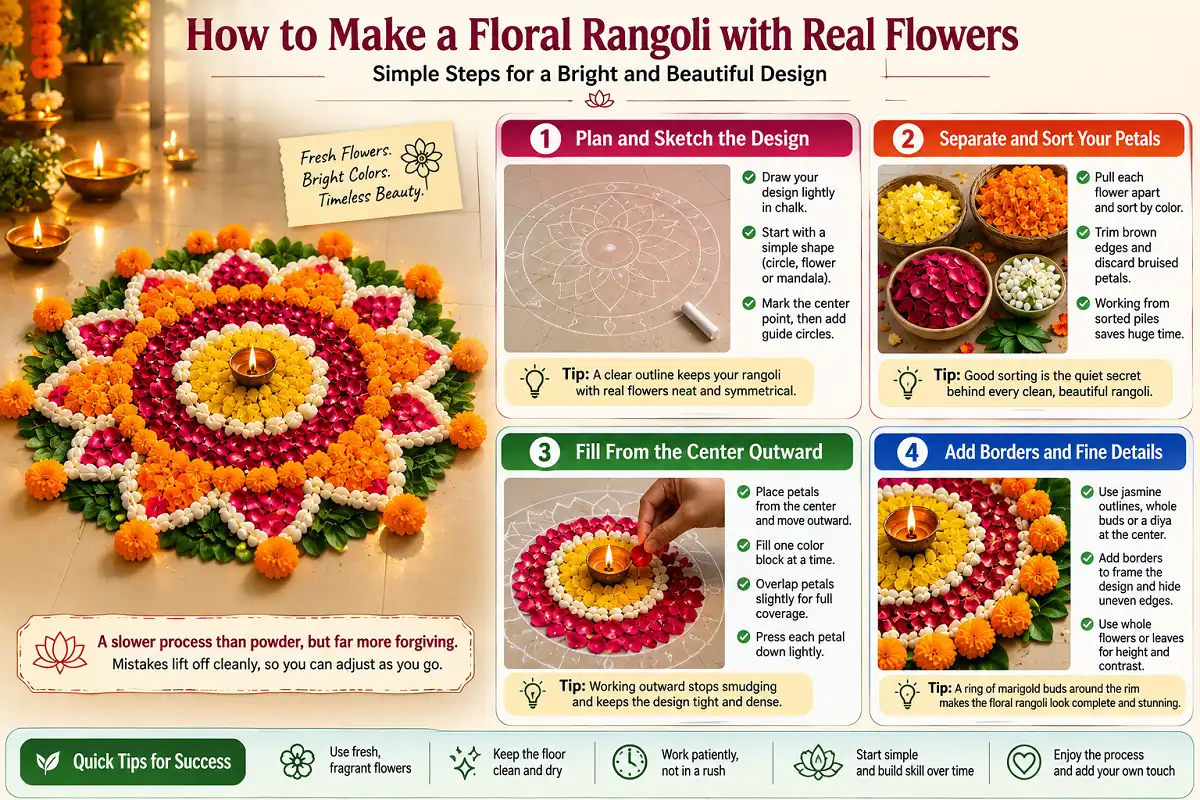
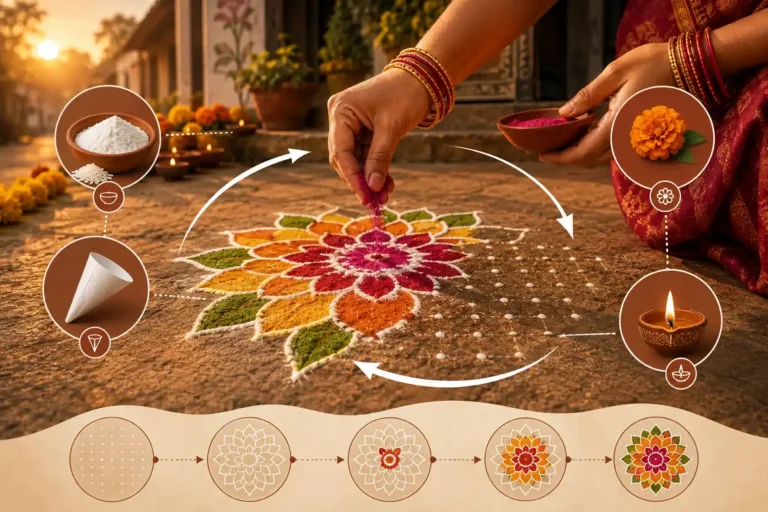
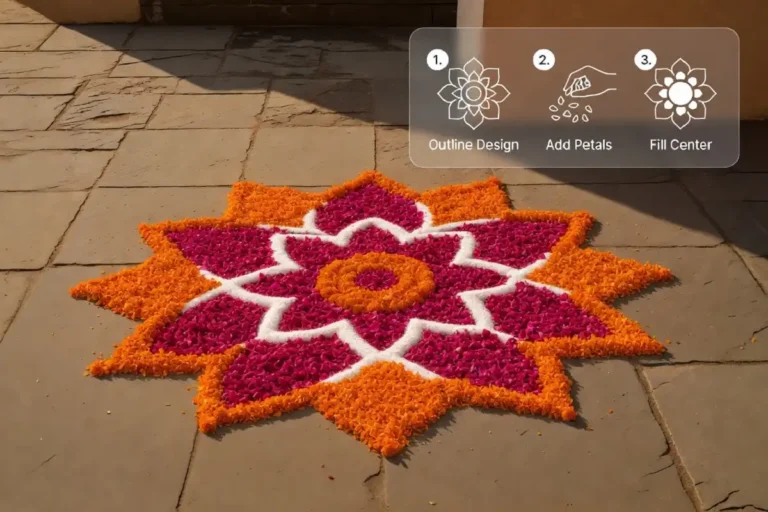
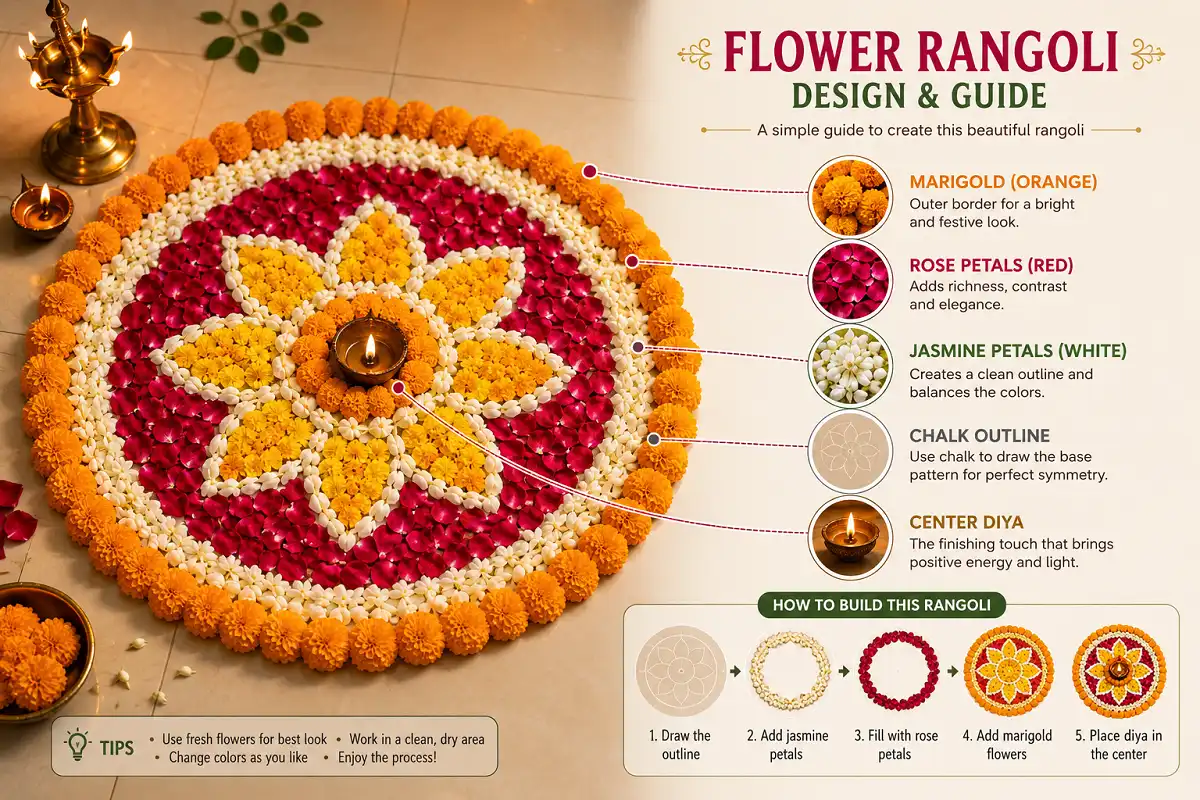
Start with a chalk outline, then fill sections with petals from the center outward. The process is slower than powder but far more forgiving. Mistakes lift off cleanly, so you can adjust as you go.
-
Plan and Sketch the Design
Draw your design lightly in chalk before touching any petals. A circle, flower, or mandala shape works best for beginners. Keep the first attempt simple, since detail takes practice.
Mark the center point first. Then draw guide circles or a grid around it. This skeleton keeps your rangoli with real flowers symmetrical as you fill it.
-
Separate and Sort Your Petals
Pull each flower apart and sort petals by color into bowls. This prep step saves huge time during the actual laying. Working from sorted piles keeps your hands clean and your design fast.
Trim any brown edges as you sort. Discard bruised petals now, not later. Good sorting is the quiet secret behind every clean rangoli with real flowers.
-
Fill From the Center Outward
Place petals starting at the center and move toward the edges. Working outward stops you from smudging finished areas with your hands. Press each petal down lightly so it stays put.
Fill one color block fully before moving to the next. Overlap petals slightly for full coverage with no floor showing through. Keep the design tight and dense for the richest look.
-
Add Borders and Fine Details
Finish with jasmine outlines, whole buds, or a diya at the center. Borders frame the whole design and hide any uneven edges. This final layer is what makes a floral rangoli look complete.
Add whole flowers or leaves for height and contrast. A ring of marigold buds around the rim looks stunning. For symmetry tips that apply to any floor art, my notes on symmetrical rangoli layouts explain how to keep both halves matched.
How Do You Keep Flower Rangoli Fresh Longer?
Mist the petals lightly with water and keep the design out of direct sun. Heat and dry air are the main enemies of fresh petals. A few small habits stretch the life of your work.
Spray a fine mist every two or three hours. Do not soak the petals, since too much water rots them. A light dusting is enough to keep a rangoli with real flowers bright.
Place your rangoli with real flowers in shade whenever possible. Indoor entrances and covered porches hold up best. If you work outdoors, build the design in the evening when the sun is low. In cooler months, a floral design can look fresh for a full day.
Where Should You Place Floral Rangoli?
Entrances, courtyards, and pooja rooms are the classic spots for floral floor art. The location shapes both the size and the shape you choose. Match the design to the space for the best effect.
Front doors call for a welcoming circular or semicircular design. Courtyards give room for large pookalam-style rings. Pooja rooms suit smaller, symmetrical patterns near the deity. Around a diya or lamp, keep petals a safe distance from the flame.
Surface matters as well. Smooth tile, marble, or polished cement holds petals best. Rough or dusty ground scatters loose petals and dulls the color. Sweep and lightly wipe the floor before you begin. A clean base makes every petal sit flat and bright.
Flower Rangoli Designs for Different Festivals
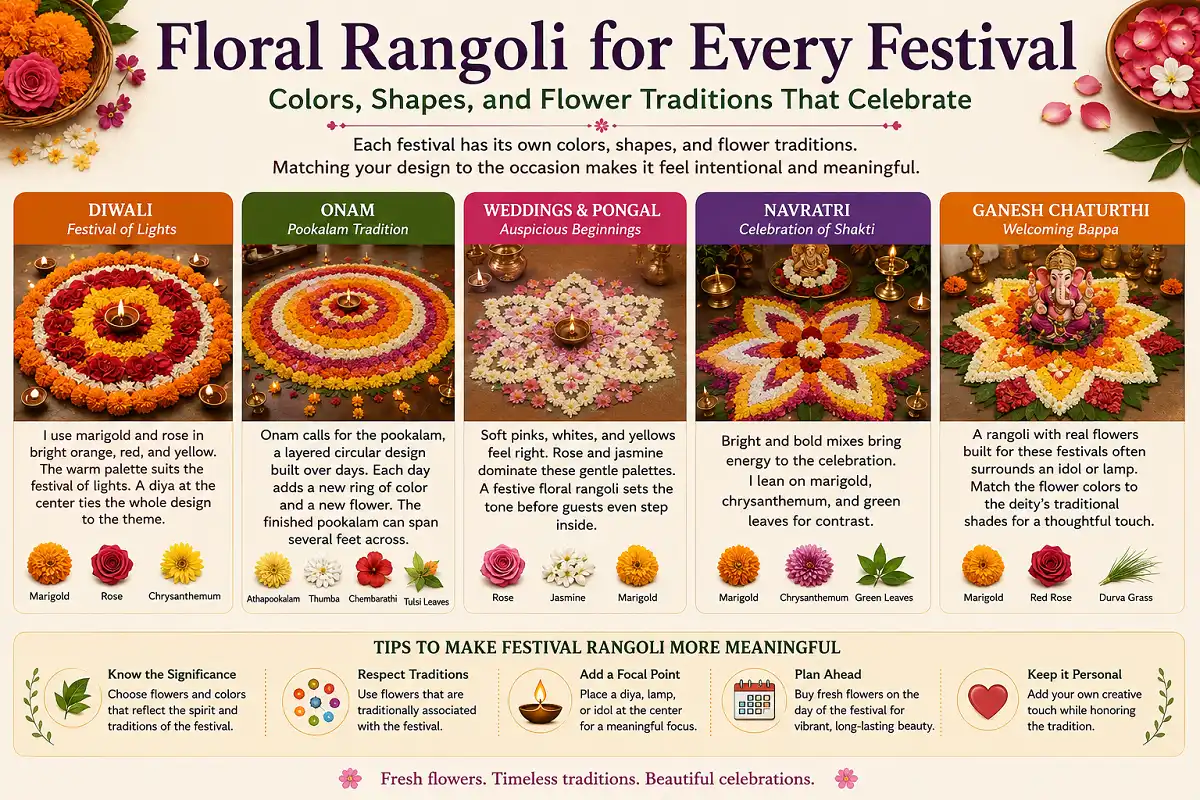
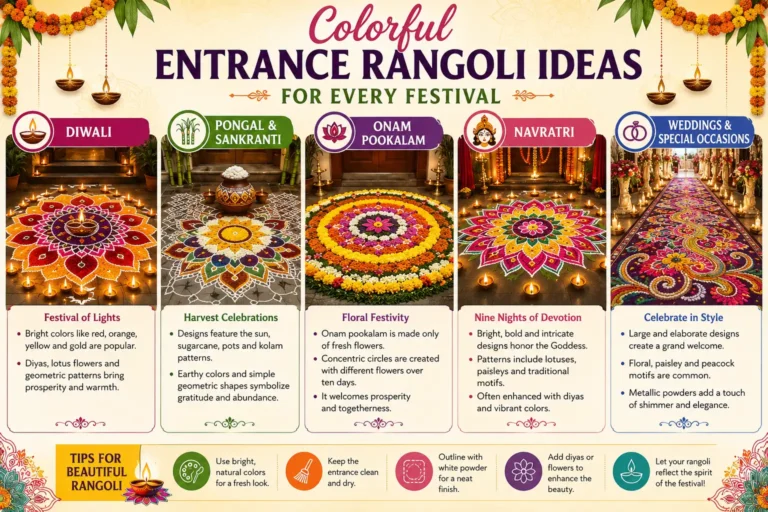
Each festival has its own colors, shapes, and flower traditions. Matching your design to the occasion makes it feel intentional. Here is how I adapt floral rangoli through the year.
For Diwali, I use marigold and rose in bright orange, red, and yellow. The warm palette suits the festival of lights. A diya at the center ties the whole design to the theme.
Onam calls for the pookalam, a layered circular design built over days. Each day adds a new ring of color and a new flower. The finished pookalam can span several feet across.
For weddings and Pongal, soft pinks, whites, and yellows feel right. Rose and jasmine dominate these gentler palettes. A festive floral rangoli sets the tone before guests even step inside.
Navratri and Ganesh Chaturthi suit brighter, bolder mixes. Here I lean on marigold, chrysanthemum, and green leaves for contrast. A rangoli with real flowers built for these festivals often surrounds an idol or lamp. Match the flower colors to the deity’s traditional shades for a thoughtful touch.
Common Mistakes to Avoid
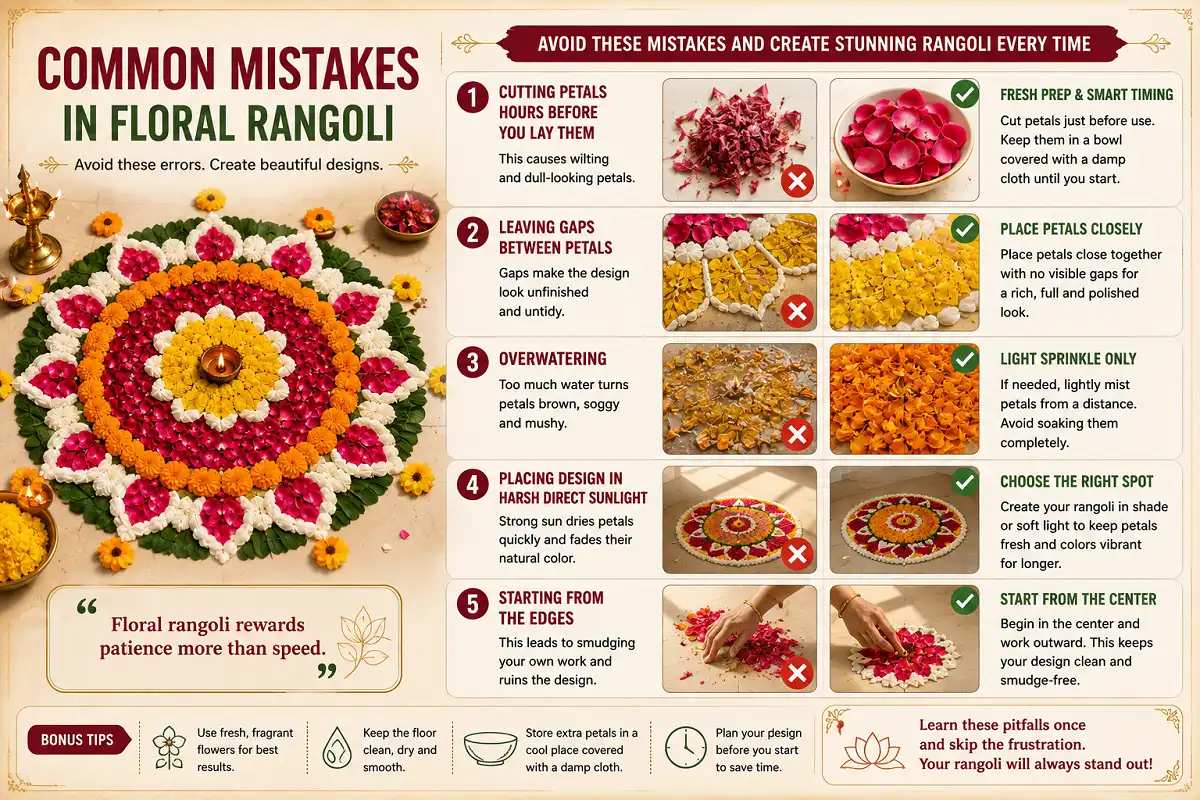
The biggest mistake is separating petals too early, so they dry out. Fresh prep and smart timing solve most beginner problems. Learn these pitfalls once and skip the frustration.
Avoid these errors:
- Cutting petals hours before you lay them, which causes wilting
- Leaving floor gaps between petals, which looks unfinished
- Overwatering, which turns petals brown and mushy
- Placing the design in harsh direct sunlight
- Starting from the edges and smudging your own work
Fix each of these and your design will hold up beautifully. Floral rangoli rewards patience more than speed.
Can Beginners Make Rangoli With Real Flowers?
Yes, beginners can make beautiful floral designs with a simple shape and basic flowers. This art is far more forgiving than powder rangoli. Petals lift off cleanly, so every mistake is fixable.
Start with a plain circle filled with marigold petals. Add a rose border once the center feels comfortable. Build complexity slowly across a few festivals. Your first rangoli with real flowers does not need to be perfect, only fresh and even. Marigold, being cheap and sturdy, is the perfect flower to learn on.
Final Words
Rangoli with real flowers is one of the most rewarding ways to decorate for any celebration. Fresh petals bring color, scent, and life that powder never will. Start simple with marigold, keep your petals fresh with a light mist, and build your skill one festival at a time. The tradition connects to a broader history of rangoli as a folk art across India, and every design you make adds to it.
FAQs
How long does a fresh flower rangoli last?
A floral rangoli stays fresh for four to eight hours in cool shade. In hot weather, expect closer to three hours. Light misting and shade push it toward a full day.
Do I need to glue the petals down?
No, petals stay in place by their own weight and careful placement. Gluing is only needed on vertical or hanging displays. For floor designs, loose petals work perfectly.
What can I do with the flowers afterward?
Compost the petals or offer them at your home shrine. Fresh flowers break down naturally and enrich soil. This makes floral rangoli a zero-waste decoration.
Is marigold or rose better for beginners?
Marigold is better for beginners because it is sturdy, cheap, and easy to pull apart. Rose is lovely but bruises fast and costs more. Start with marigold and add rose later.