Geometric Pattern Ideas for Art and Design Projects
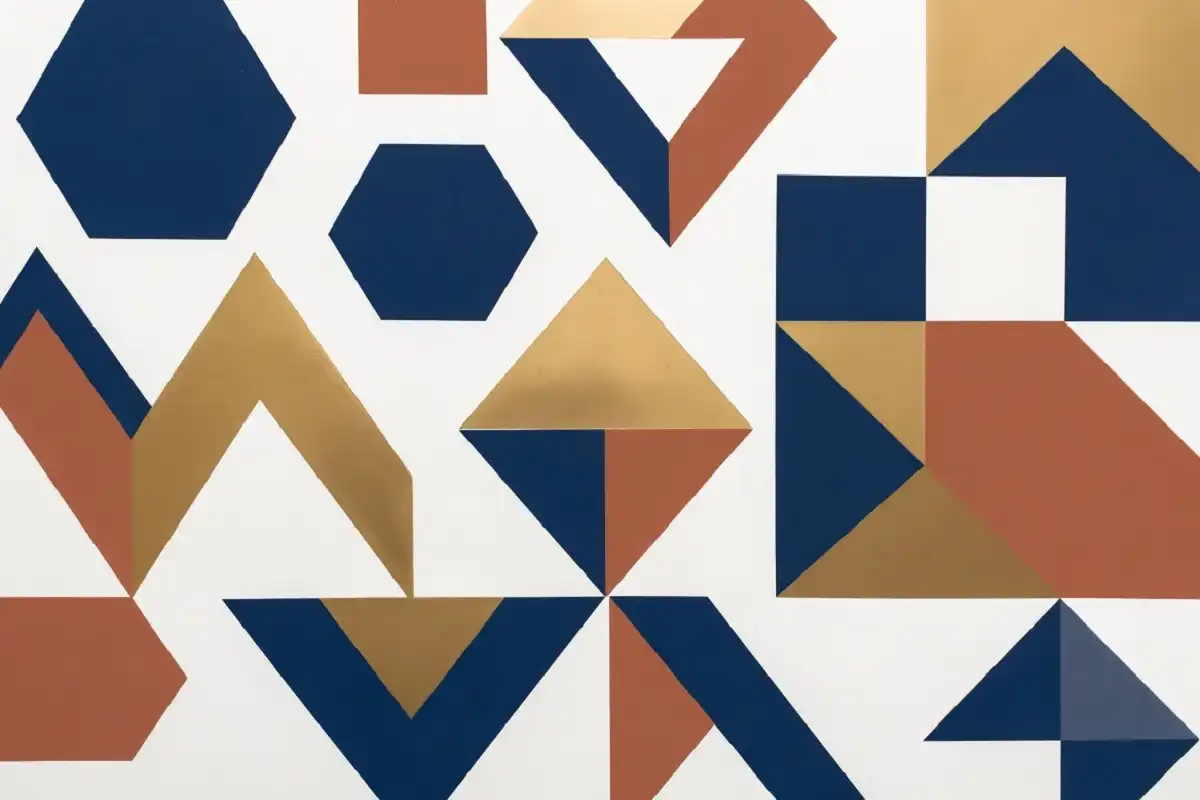
A geometric pattern is a design built from repeating shapes such as triangles, squares, hexagons, circles, and lines arranged in a structured, intentional way.
These patterns appear in art, architecture, fashion, textiles, and digital design across every culture and era. Their appeal comes from the balance between visual order and creative variety.
Whether you are decorating a room, designing a logo, or creating handmade art, understanding geometric patterns opens up a broad range of possibilities for making work that feels both purposeful and visually satisfying.
What Makes a Geometric Pattern
A geometric pattern relies on mathematical relationships between shapes. Repetition is the foundation, but the way shapes are arranged, rotated, scaled, and colored is what gives each pattern its character.
The key elements that define any geometric pattern are:
- Motif: The core shape or group of shapes that repeats throughout the design.
- Grid structure: The underlying layout, which can be a square grid, triangular grid, hexagonal grid, or radial arrangement.
- Symmetry: Most geometric patterns use at least one type of symmetry, such as reflection, rotation, or translation.
- Color: Even a simple two-color palette can make a geometric design look bold and intentional.
When these elements work together, the result is a pattern that feels cohesive and satisfying to look at, even when it is highly complex.
History and Cultural Roots of Geometric Patterns
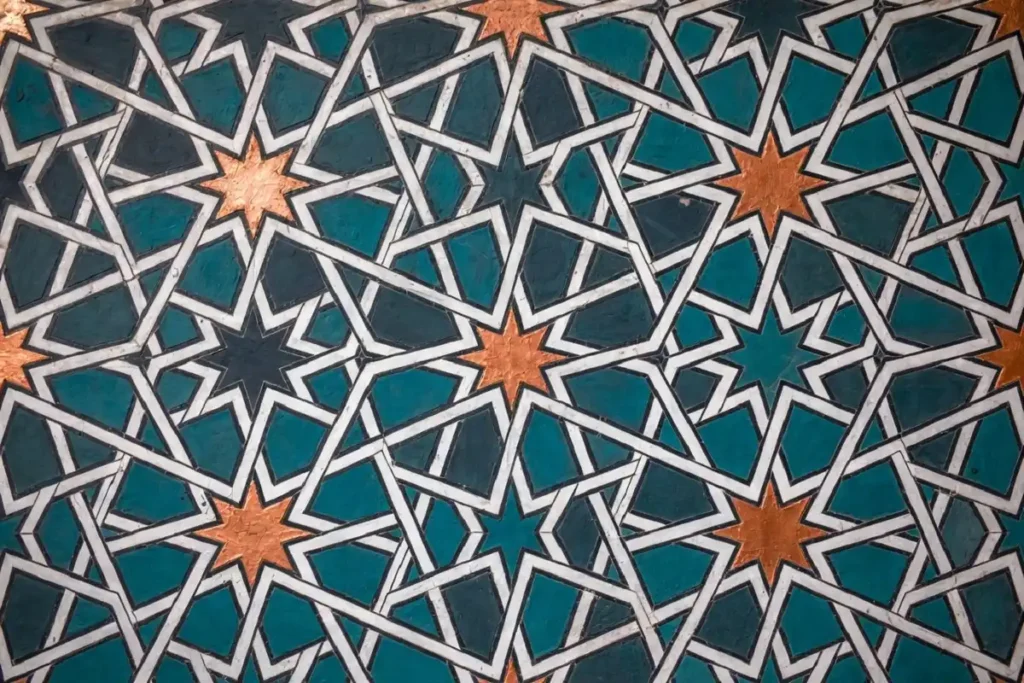
Geometric patterns are among the oldest forms of human decoration. Evidence of repeating geometric motifs appears in pottery, textiles, and stone carvings from ancient civilizations across the Middle East, Asia, Africa, and Europe.
Islamic Geometric Art
One of the most sophisticated traditions of geometric patterning developed in the Islamic world. Craftsmen created extraordinarily complex interlocking star and polygon designs to decorate mosques, palaces, and manuscripts using only a compass and straightedge, yet achieved a mathematical precision that still impresses designers today. The Metropolitan Museum of Art’s collection of Islamic art offers a detailed look at this tradition and its regional variations.
Greek and Roman Design
Classical Greek and Roman architecture made extensive use of geometric borders, friezes, and floor mosaics. The meander or Greek key pattern, made from a continuous line folding back on itself at right angles, is one of the most recognizable geometric motifs from this period and remains widely used today.
South Asian Traditions
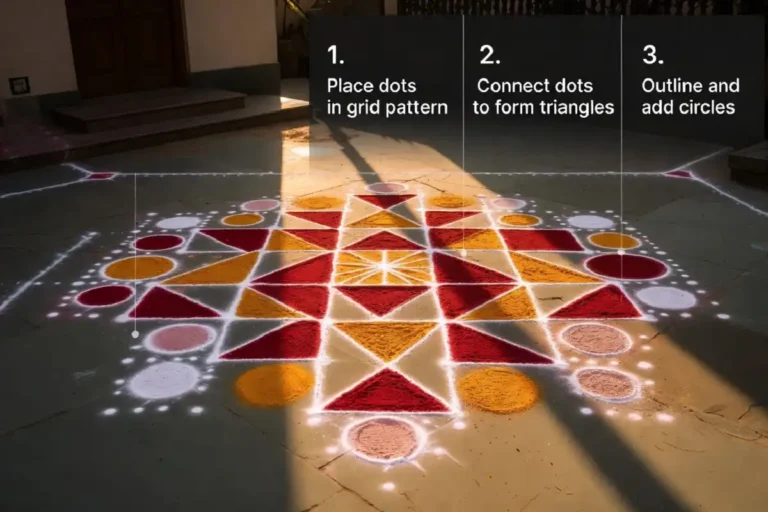
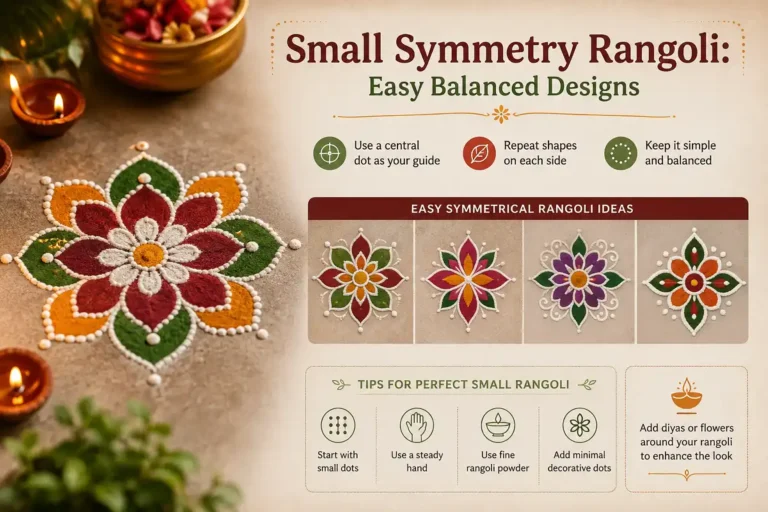
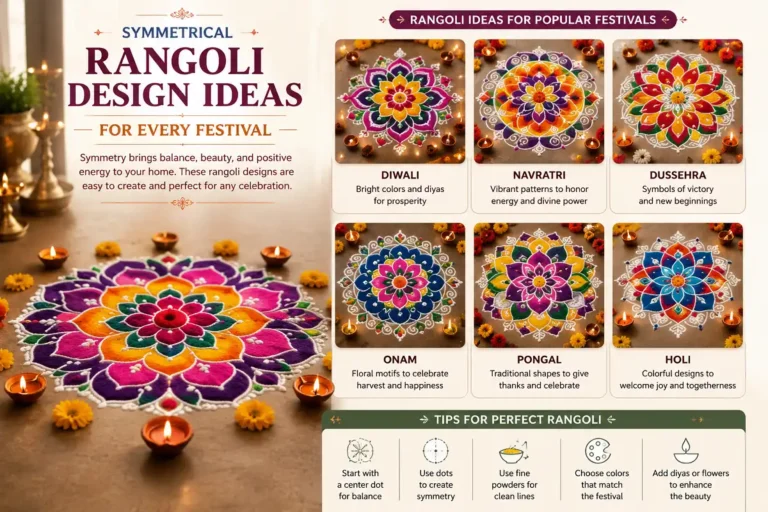
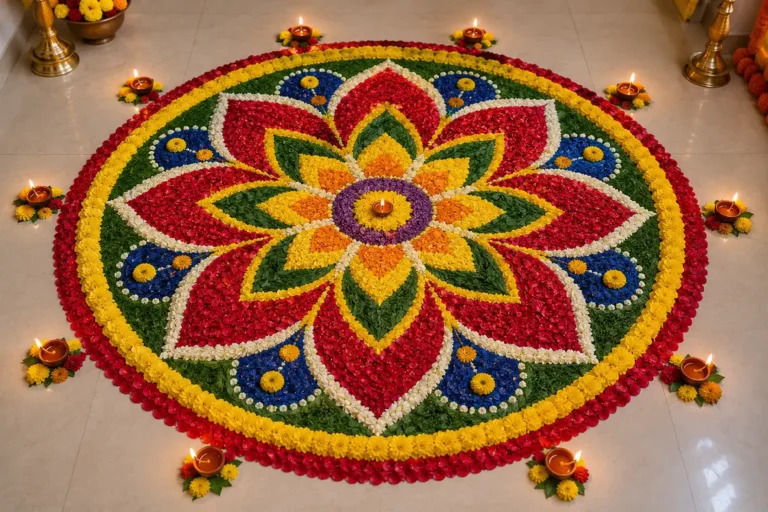
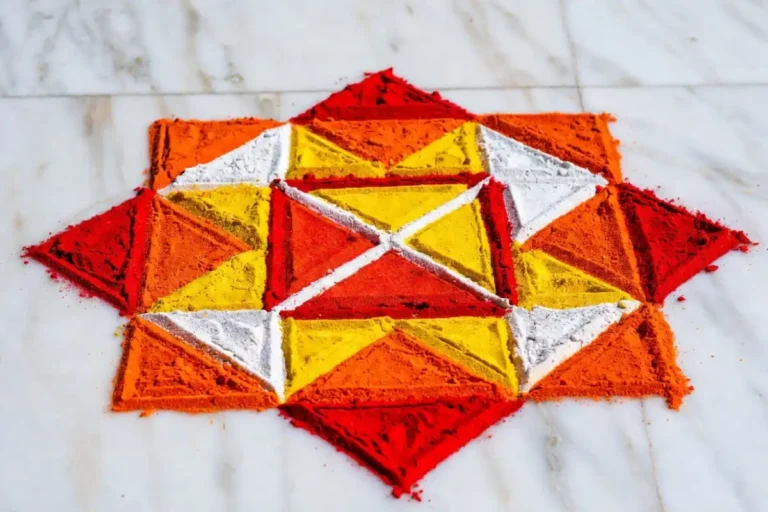
In South Asian art, geometric structure forms the backbone of rangoli, kolam, and mandala designs. These traditions combine spiritual meaning with mathematical precision. This guide to geometric shapes, their meaning, and design ideas explores how shape and symbolism work together in this cultural context.
Popular Types of Geometric Patterns
Not all geometric patterns work the same way. Each type has a distinct visual personality and works better in some contexts than others.
Tessellations
Identical shapes tile across a surface with no gaps or overlaps. Regular tessellations use just one shape, such as squares, equilateral triangles, or hexagons. More complex tessellations mix multiple shapes.
Herringbone
A V-shaped arrangement of rectangles that creates a zigzag effect. It is common in flooring, textiles, and architectural tiling.
Chevron
Looks similar to herringbone but uses continuous diagonal stripes rather than individual blocks, giving a dynamic, directional feel to a surface.
Checkerboard and Plaid
Grids of squares or intersecting stripes. These are among the most instantly recognizable geometric designs in the world.
Star and Medallion
Patterns that radiate outward from a central point, often with multiple levels of symmetry. These appear heavily in Islamic art and mandala-style designs.
Stripes and Grids
The simplest geometric patterns but remain endlessly flexible. Varying stripe widths, angles, or colors produces a huge range of visual effects.
Geometric Patterns in Interior Design
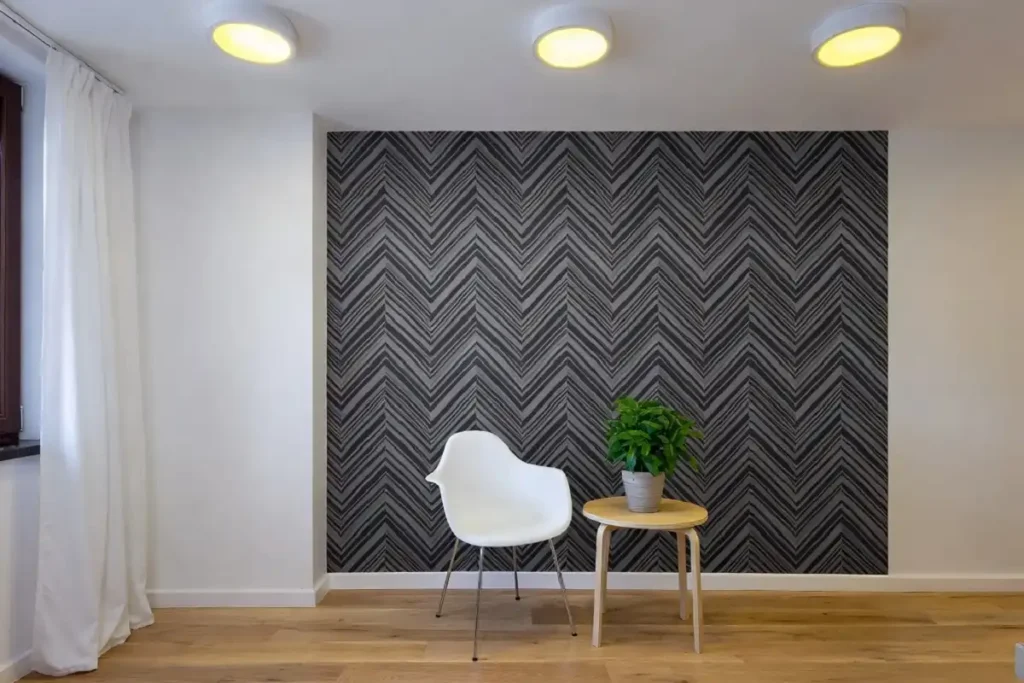
Interior design is one of the most popular contexts for geometric patterns today. They bring structure, depth, and personality to a space without requiring complex imagery.
Geometric patterns appear in wallpaper, floor tiles, rugs, cushions, curtains, and decorative objects. A single well-chosen geometric print can anchor an entire room’s visual identity.
For modern and minimalist interiors, black-and-white geometric patterns provide contrast and interest without adding color complexity. For warmer, eclectic spaces, geometric prints in terracotta, ochre, and forest green feel grounded and organic.
When mixing geometric patterns in one room, the key is to vary the scale. A large-scale herringbone floor tile pairs well with a small-scale geometric cushion print because they occupy different visual registers and do not compete.
The design resource library at Dezeen provides a wide range of interior and product design examples where geometric patterns are used effectively at different scales and color palettes.
For those looking to bring geometric ideas into decorative art and home crafts, this collection of geometric design ideas for art, decor, and craft offers practical inspiration across different styles and skill levels.
Geometric Patterns in Fashion and Textiles
Fashion has drawn on geometric patterns since ancient times. Woven, printed, or embroidered geometric designs appear in traditional dress from every continent.
In contemporary fashion, geometric prints are a recurring element in ready-to-wear collections. Bold color-blocked geometric shapes suit structured garments like blazers and trousers. Smaller, repeating geometric motifs work well in soft fabrics like silk and jersey where they add interest without overwhelming the drape.
Kente cloth from Ghana, ikat weaving from Central Asia, and tartan from Scotland are all examples of textile traditions built around geometric structure. Each uses color and shape to carry cultural identity and community meaning.
Geometric Patterns in Digital and Graphic Design
In digital design, geometric patterns are used as background textures, brand elements, illustration styles, and UI components. They are reproducible at any size without quality loss when created in vector format, making them highly practical for both screen and print applications.
Flat design and material design, two major visual styles in digital product design, both lean heavily on geometric shapes for icons, illustrations, and layout structure. Geometric patterns also work well as PNG overlays in layered compositions. If you work with pattern files in your design process, this guide on how to use pattern PNG in creative design work covers the technical and creative side of working with these files.
How to Create Your Own Geometric Pattern
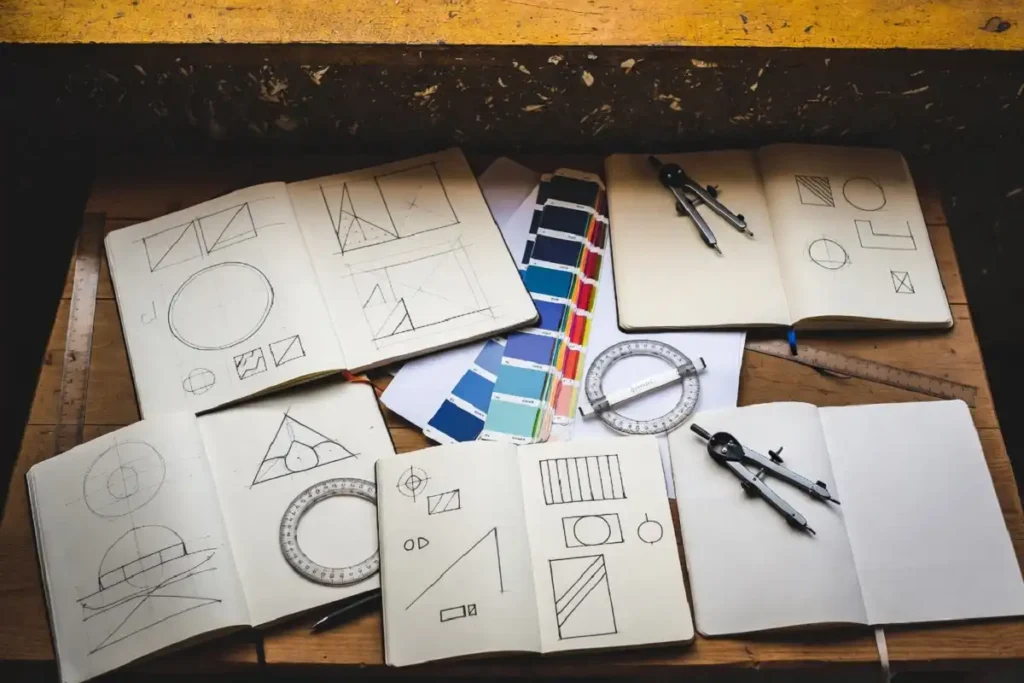
Creating an original geometric pattern does not require advanced software skills. The process starts with a single motif and a clear repeating structure. A simple workflow for beginners:
Choose one basic shape as your starting motif, such as a triangle, hexagon, or diamond.
Decide on a grid structure to guide repetition: square, triangular, or hexagonal.
Place your motif on the grid, then rotate, mirror, or offset it to create visual rhythm.
Choose a limited color palette of two to four colors to start.
Test the tile by repeating it side by side to check that edges connect cleanly.
Refine spacing and proportions until the pattern feels balanced.
Working on graph paper first is a practical way to plan proportions before moving to digital tools. Once the concept is clear, vector programs like Illustrator or Inkscape allow you to build clean, scalable versions of the pattern for any application.
For those interested in exploring geometric patterns within the context of rangoli and traditional art, these easy rangoli design ideas for every occasion show how geometric thinking can guide even freehand traditional art forms.
Conclusion
Geometric patterns are one of the most enduring and adaptable design traditions in human history. From ancient tilework to modern branding, their combination of mathematical structure and visual variety makes them useful in almost every creative field.
Whether you are drawn to the complexity of star-polygon tessellations or the simplicity of a clean stripe, learning to work with geometric patterns gives you a reliable foundation for creating designs that feel both intentional and visually engaging.
Explore different shapes, color palettes, and grid structures to find the geometric style that fits your work best.
FAQs
What is the difference between a geometric pattern and an abstract pattern?
A geometric pattern is built from defined mathematical shapes and structured repetition, while an abstract pattern uses freeform, organic, or non-representational elements that do not follow a strict geometric grid. Geometric patterns have an inherent order; abstract patterns are more open to irregular forms and unpredictable placement.
Why are geometric patterns so widely used across cultures?
Geometric patterns appear universally because they emerge naturally from the tools and materials humans have always used, such as weaving grids, tiling surfaces, and basic drawing instruments. Their mathematical structure also gives them a sense of harmony and balance that most people find visually pleasing, regardless of cultural background.
What shapes are most commonly used in geometric patterns?
Triangles, squares, rectangles, hexagons, diamonds, circles, and stars are the most frequently used shapes. Each has distinct properties that affect how it tiles and what visual energy it brings to a pattern. Hexagons tile perfectly and feel organic; triangles create sharp, dynamic movement; squares are neutral and versatile.
Can geometric patterns be used in traditional or cultural art?
Yes. Geometric patterns are central to many traditional art forms, including rangoli, Islamic tilework, Celtic knotwork, African kente weaving, and Native American beadwork. In many traditions, specific geometric motifs carry symbolic or spiritual meaning beyond their visual function.
What is a seamless geometric pattern?
A seamless geometric pattern is one where the edges of the tile connect perfectly when repeated, so there are no visible joins or breaks across the surface. Seamless patterns are essential for wallpaper, fabric printing, and digital backgrounds where the design must cover an unlimited area without interruption.