Design Rangoli: Beautiful Patterns, Easy Steps, and Timeless Ideas
Rangoli is one of the oldest and most beloved art forms in Indian culture. It brings color, positivity, and warmth to any space. Whether you are preparing for a festival or adding a creative touch to your home, knowing how to design rangoli gives you a skill that connects tradition with personal expression. This guide covers everything you need, from choosing the right materials to creating stunning patterns that suit every occasion and skill level.
What Is Rangoli and Why Does It Matter
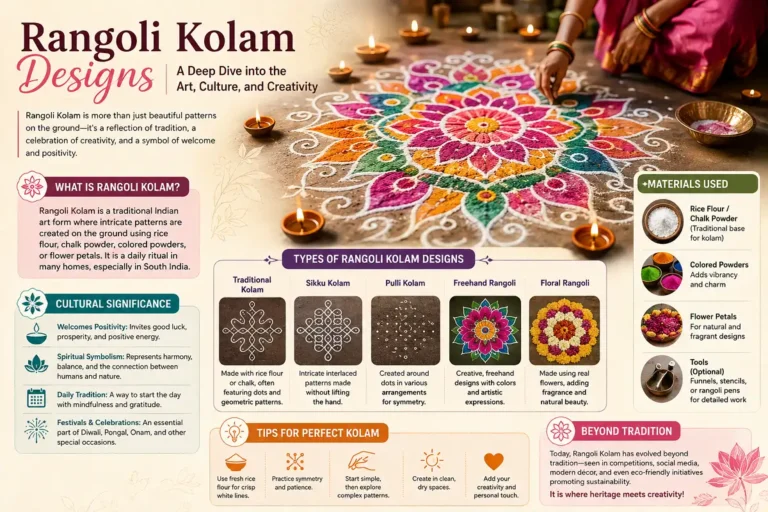
Rangoli is a form of floor art created using colored powders, flower petals, rice flour, or chalk. It is traditionally placed near the entrance of a home to welcome guests, invite good energy, and celebrate special moments. The word “rangoli” comes from Sanskrit, combining “rang” (color) and “aavalli” (row of colors).
Across India, rangoli goes by different names. In Tamil Nadu it is called “kolam,” in Gujarat it is known as “saathiya,” and in Maharashtra it is referred to as “rangoli.” Despite regional differences, the purpose is the same: to create something beautiful that carries meaning.
When people design rangoli, they are participating in a practice passed down through generations, often taught by mothers and grandmothers. Today, the art form has evolved far beyond tradition. People now experiment with themes, textures, and scales, making it relevant for modern home decor as well.
Getting Started with Rangoli Design
Choosing Your Materials
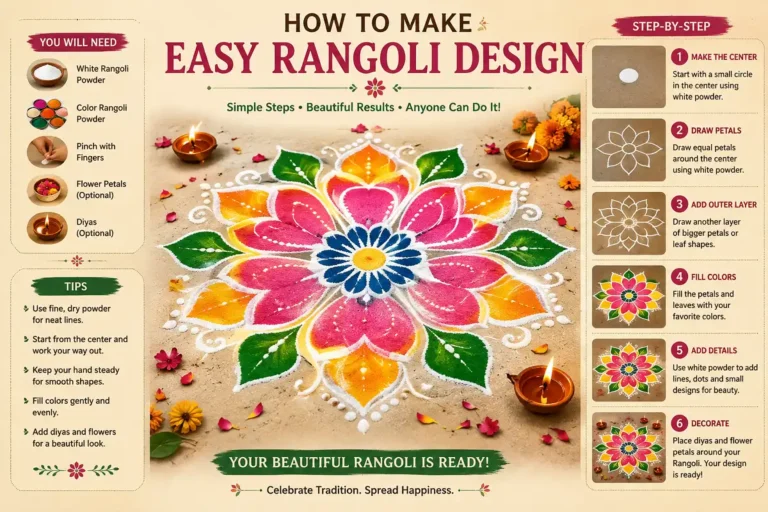
Before you begin to design rangoli, gather the right supplies. The materials you choose will affect the final look and how long the design lasts.
- Colored rangoli powder: The most common choice, available in many shades
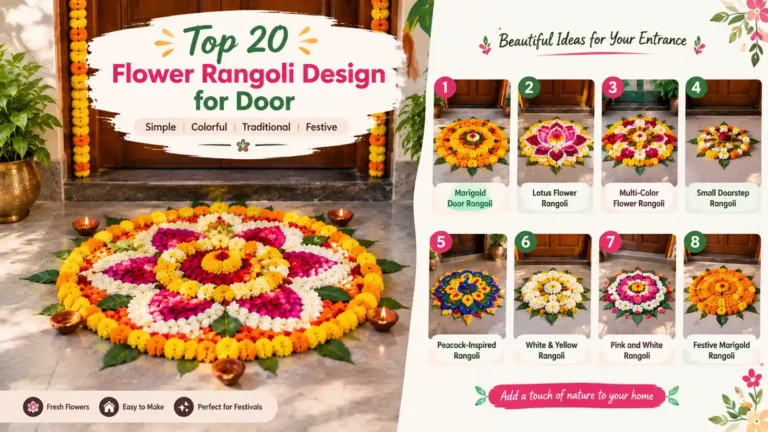
- Flower petals: Marigold, rose, and jasmine petals add a natural, fresh look
- Rice flour: Used in traditional kolam designs, usually white
- Chalk or white chalk powder: Great for outlining before filling in color
- Diyas and small candles: Used to frame or highlight the pattern
For beginners, sketching the outline in chalk first makes the process easier and reduces mistakes.
Setting Up Your Space
Choose a clean, flat surface. A stone or tile floor works best because it holds color well. Sweep and wipe the area before starting. Good lighting helps you see the symmetry of your pattern clearly.
If you are working outdoors near an entrance, consider the size of the space. A small, neat piece often looks more polished than a large rushed one.
Popular Styles to Design Rangoli
Floral Rangoli Designs
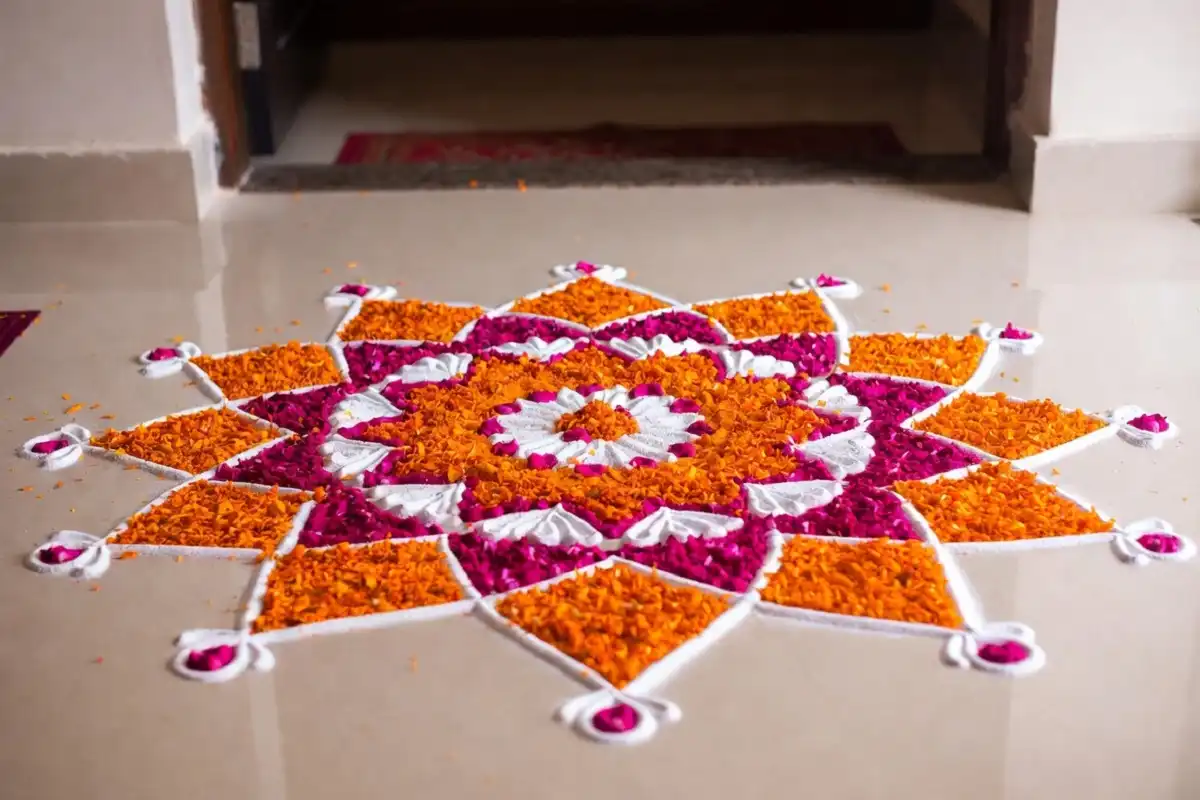
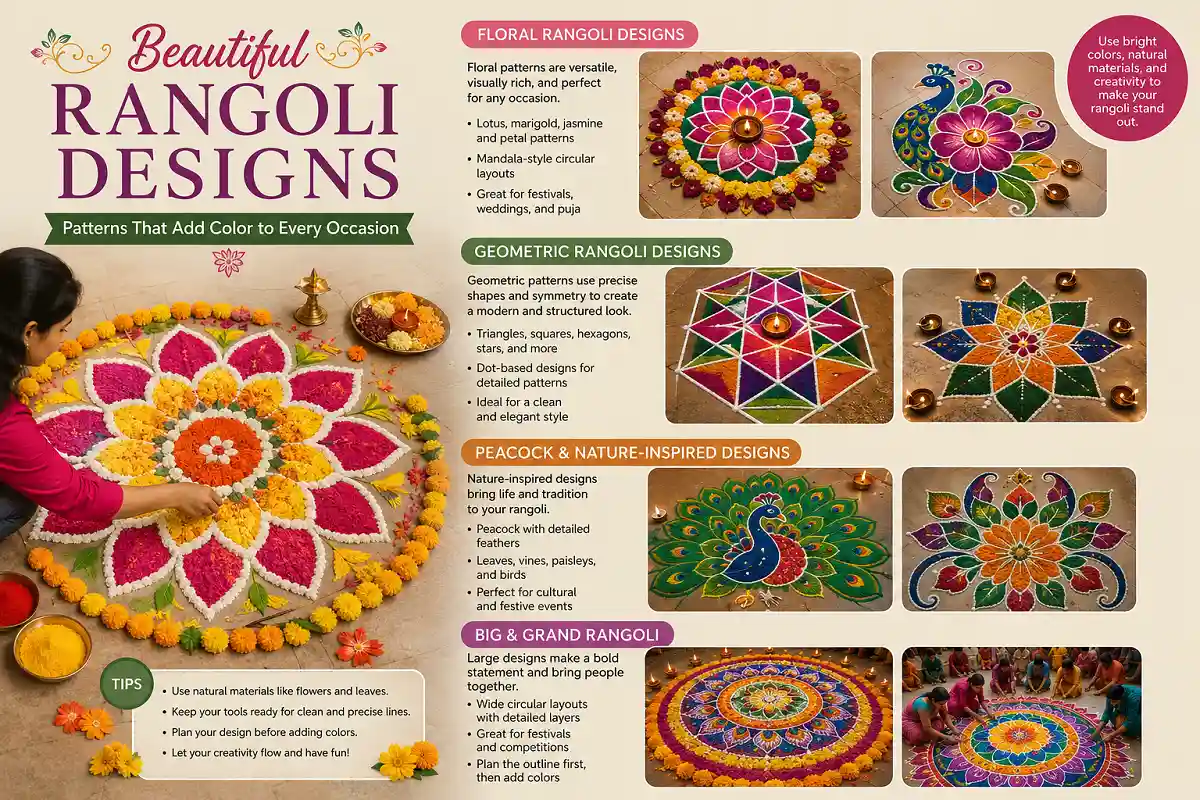
Floral patterns are the most popular way to design rangoli for a reason. They are versatile, visually rich, and work for any occasion. You can use lotus flowers, marigolds, jasmine clusters, or abstract petal arrangements. The peacock flower rangoli design combines floral and bird motifs beautifully, making it a favorite for weddings and festivals.
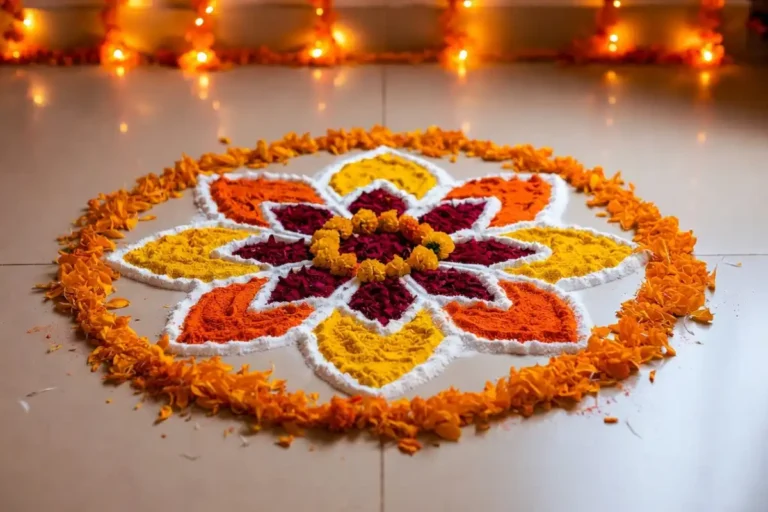
Floral rangoli works well in circular formats. Using a central flower and expanding outward with layers of petals creates a mandala-like effect that looks professional even with simple tools.
Geometric Rangoli Designs
Geometric patterns use shapes such as triangles, hexagons, squares, and stars. These designs depend on precision and symmetry. They are especially effective when you want a structured, modern look.
Dot-based geometric rangoli, common in South Indian tradition, starts with a grid of dots. Lines are then drawn around and between the dots to form continuous patterns. This style requires patience but produces highly detailed and striking results.
Peacock and Nature-Inspired Designs
Peacock designs are among the most iconic in Indian art. The flowing tail feathers give you space to incorporate multiple colors and fine details. You can explore peacock circle rangoli design ideas for patterns that blend circular symmetry with peacock motifs.
Birds, leaves, mango (paisley), and vine patterns also fall under nature-inspired designs. These are deeply rooted in traditional aesthetics and are ideal for cultural events.
Big and Grand Rangoli
For large celebrations or competitions, big rangoli designs make a strong visual impact. A wide circular base with detailed layers is the most common approach. To see how scale transforms the result, explore big circle rangoli design ideas for festivals.
Grand designs often involve teams working together, each person responsible for one section. Planning the outline carefully before adding color is essential for large pieces.
Rangoli Design for Festivals
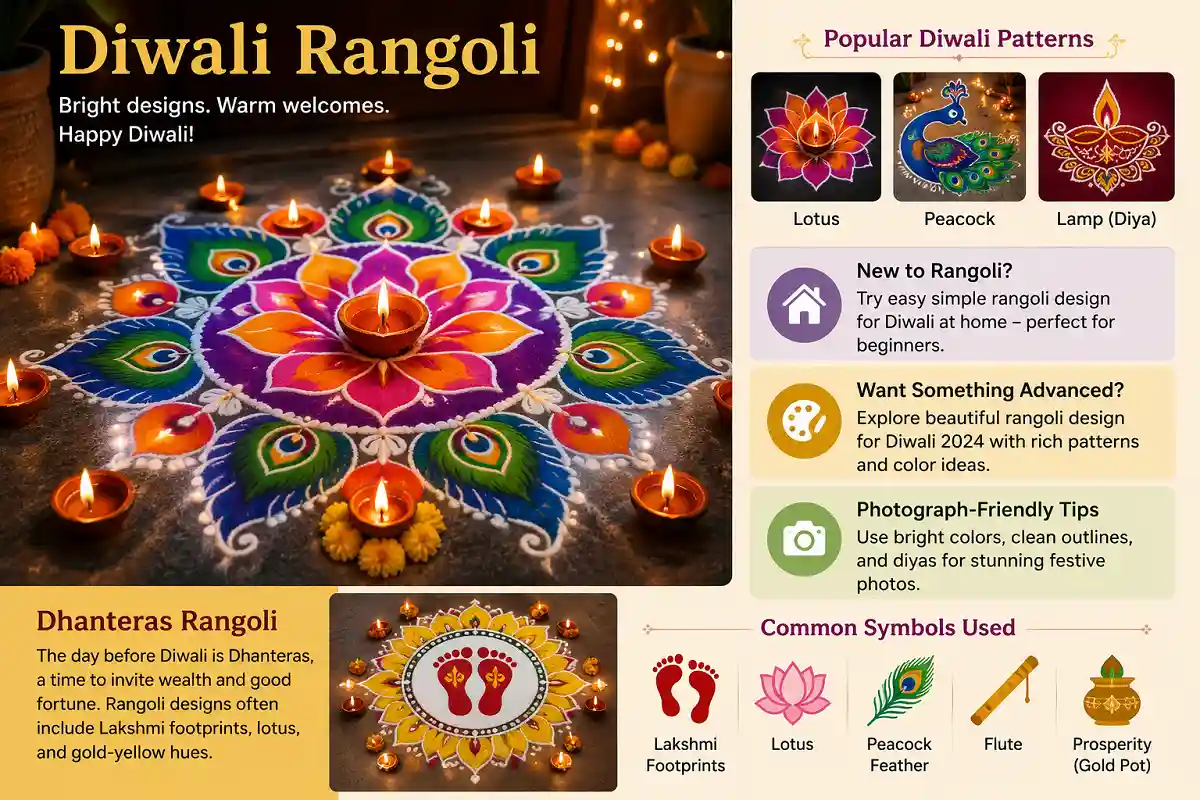
Diwali Rangoli
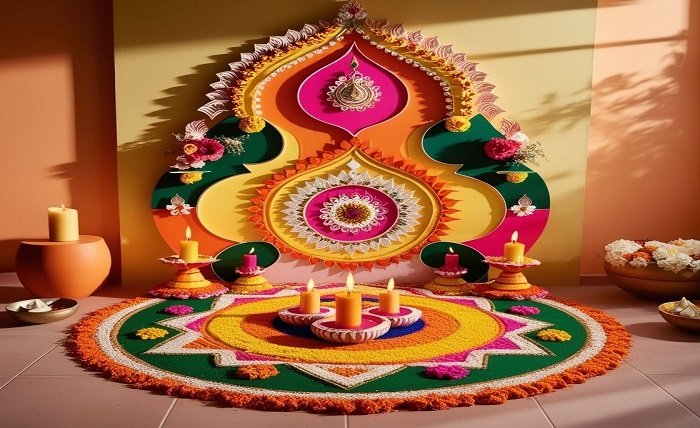
Diwali is the biggest occasion to design rangoli in most Indian households. The combination of diyas and rangoli at the entrance creates a warm, inviting atmosphere. Popular Diwali patterns include lotus flowers, peacocks, and lamps surrounded by petals.
If you are new to this, check out easy simple rangoli design for Diwali at home for step-by-step patterns that even first-timers can follow. For more advanced options, beautiful rangoli design for Diwali 2024 has elaborate ideas with color combinations that photograph well.
Dhanteras, the day before Diwali, also calls for special floor art. Rangoli design for Dhanteras often features footprints of Goddess Lakshmi, lotus flowers, and gold and yellow color schemes that symbolize prosperity.
Navratri and Other Festivals
During Navratri, people who design rangoli often reflect the nine colors associated with each day of the festival. Geometric and floral patterns work well, as do traditional motifs like kalash (pot), mango leaves, and peacocks.
Onam
Onam’s “pookalam” is made entirely from fresh flowers, arranged in concentric colorful rings.
Pongal
Pongal patterns tend to feature kolam-style white geometric work drawn with rice flour.
Traditional vs Modern Rangoli Styles
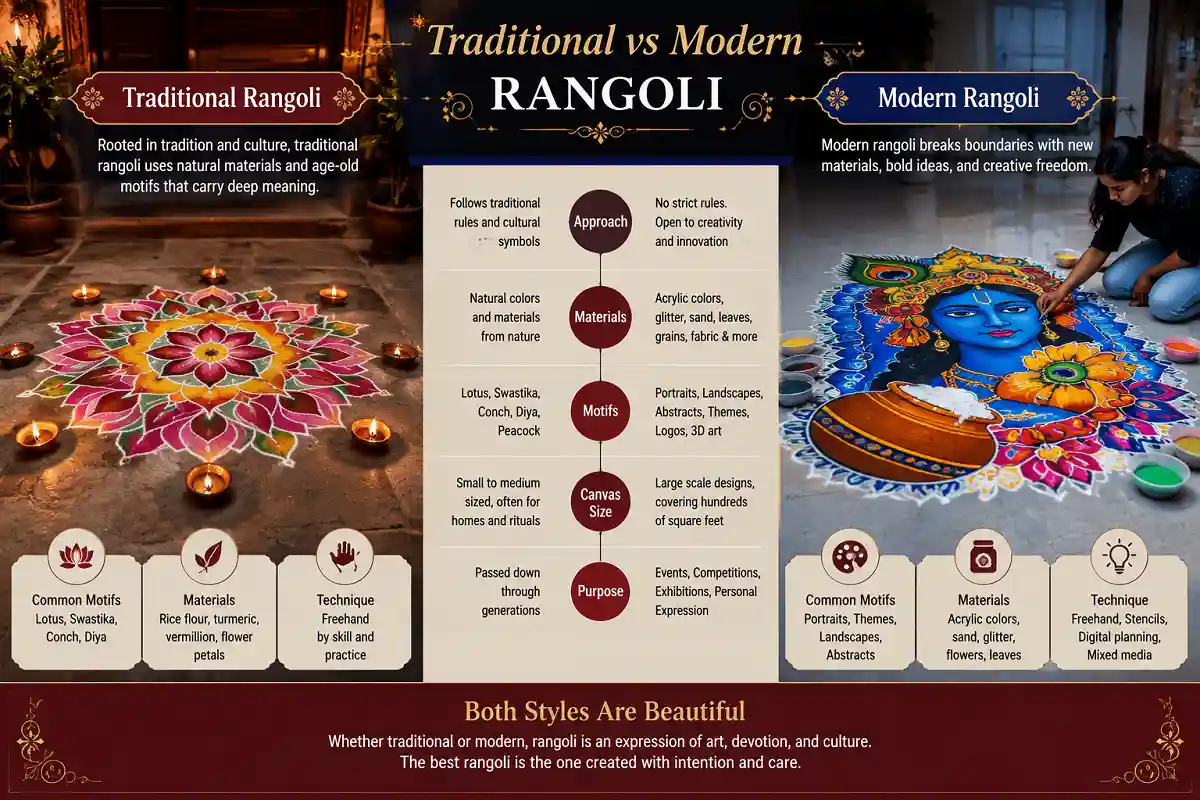
| Aspect | Traditional Rangoli | Modern Rangoli |
|---|---|---|
| Materials | Natural powders, rice flour, chalk | Acrylic colors, glitter, sand, fabric |
| Motifs | Lotus, swastika, conch shell | Portraits, maps, abstract art |
| Technique | Freehand, no stencils | Stencils, digital planning tools |
| Scale | Doorstep to hall-sized | Large installations, hundreds of sq. ft. |
Traditional Rangoli
Traditional rangoli follows rules passed down through generations. It uses natural materials, specific color palettes, and patterns with cultural significance. The lotus, swastika (a symbol of good fortune in Hindu tradition), and conch shell are common traditional motifs. According to UNESCO’s documentation of intangible cultural heritage, this art form has been recognized as a living cultural tradition in India.
Traditional designs are usually created freehand, without stencils. The skill lies in maintaining symmetry and proportion by eye.
Modern Rangoli
Artists who design rangoli in a modern style have no strict rules to follow. They use acrylic colors, glitter, sand, leaves, grains, and even fabric to create pieces that go beyond the floor. Theme-based designs such as portraits, maps, and abstract art have become popular at cultural events and competitions.
Modern rangoli also embraces larger canvases. Some artists create installations that cover hundreds of square feet. Digital tools are sometimes used for planning before execution.
Both styles are valid. The best rangoli is the one created with intention and care, whether traditional or experimental.
Tips for Designing Rangoli at Home
These practical tips will help you create cleaner, more confident work:
- Start with a simple shape like a circle or square as your base
- Use a compass or plate to draw perfect circles
- Work from the center outward to maintain symmetry
- Apply lighter colors first and darker shades on top for better contrast
- Use a small cone or squeeze bottle for precise powder placement
- Keep a damp cloth nearby to correct mistakes quickly
- Seal outdoor rangoli with a light spray of water mixed with glue to extend its life
If you are just beginning, rangoli design easy ideas for beginners with steps offers clear, visual guidance for first-timers.
Color combinations also make a big difference. High-contrast pairings such as yellow and blue, red and white, or orange and green tend to look most striking from a distance.
Color and Symmetry in Rangoli Design
Color is central to how a design rangoli communicates emotion and energy. Red and yellow bring festivity. Blue and white suggest calm and elegance. Green and gold feel traditional and rich.
Symmetry is what makes any piece look complete. Most designs follow radial symmetry, where the pattern repeats around a central point. You can also use bilateral symmetry, where the left and right sides mirror each other.
Practicing with simple symmetrical shapes before moving to complex patterns builds confidence and eye for proportion.
Conclusion
Learning to design rangoli is a rewarding experience that combines creativity, tradition, and personal expression. Whether you choose a simple floral pattern for a quiet morning or an elaborate festival piece for Diwali, every design you create carries meaning and beauty. Starting small, practicing consistently, and experimenting with color will help your skills grow naturally. The art you place on your floor does more than decorate a space. It carries forward a tradition that has brought warmth and color to Indian homes for centuries. Pick up your colors, find your center point, and let the art begin.
FAQs
What is the easiest way to design rangoli for beginners?
Simple dot-based or circular floral patterns are the best starting point. These require minimal freehand skill and can be guided with a stencil or plate. A five-petal flower drawn within a circle is one of the most approachable designs available.
What materials do I need to design rangoli at home?
You need colored rangoli powder, a clean flat surface, chalk for outlining, and optionally flower petals or diyas for decoration. A small funnel or paper cone helps with precision when placing color.
How long does rangoli last after it is made?
Indoor rangoli made with dry powder can last several days if left undisturbed. Outdoor work is affected by wind and foot traffic, so it may last only a few hours. A light fixative spray can extend its life considerably.
Can I design rangoli for occasions other than Diwali?
Yes, rangoli suits weddings, housewarmings, Navratri, Pongal, Onam, and even daily home entrance decoration. The pattern style and color palette are usually adapted to match the specific occasion.
Is it necessary to follow traditional patterns?
No, it is not necessary. While traditional patterns carry cultural meaning, modern rangoli gives full creative freedom. What matters most is the care and intention put into the work.
How do I keep rangoli from spreading or smudging?
Work slowly and use a small cone or squeeze bottle for controlled application. Avoid blowing on the powder. For outdoor settings, a thin border of chalk or sand helps keep colors within their intended areas.