15+ Rangoli Competition Designs: Creative Ideas to Stand Out
Rangoli Competition Designs have always been more than creative patterns to me they’re connected to some of my earliest memories growing up in Kolkata.
Every time I start a new rangoli, I still think about the mornings that made me fall in love with this art.
I grew up in Kolkata, where my mother and grandmother drew rangoli at our doorway every morning before sunrise. I would sit on the steps, still half asleep, watching simple dots slowly become flowers, circles, and flowing patterns. They never rushed. Every line had a rhythm, and every color seemed to find its place naturally.
Those quiet mornings taught me that rangoli is more than decoration it’s patience, tradition, and creativity coming together on the floor.
For the past 8 years, I’ve been drawing, documenting, and photographing rangoli designs, collecting ideas from festivals, family traditions, and my own experiments. Some of the designs in this guide are inspired by the patterns I learned at home, while others reflect the styles that consistently stand out in school, college, office, and community competitions.
Whether you’re preparing for a school contest, a college event, an office celebration, or a Diwali competition, these Rangoli Competition Designs will help you find creative ideas that look impressive while staying practical to create.
What Makes a Rangoli Competition Design Stand Out?
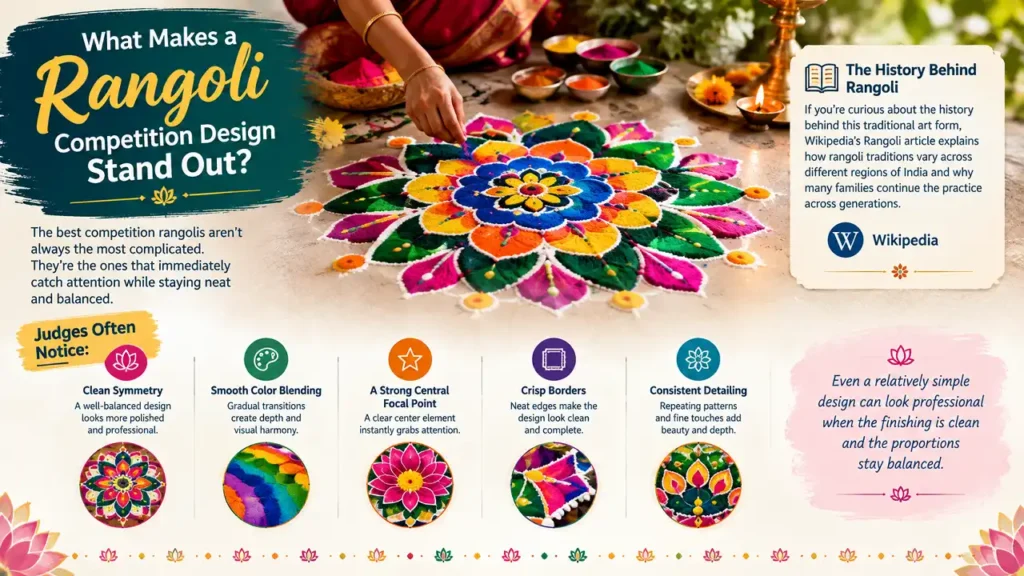
What makes a rangoli competition design stand out? Balanced proportions, clean finishing, vibrant colors, and carefully controlled details.
The best competition rangolis aren’t always the most complicated. They’re the ones that immediately catch attention while staying neat and balanced.
- Clean symmetry
- Smooth color blending
- A strong central focal point
- Crisp borders
- Consistent detailing
Even a relatively simple design can look professional when the finishing is clean and the proportions stay balanced. If you’re curious about the history behind this traditional art form, Wikipedia’s Rangoli article explains how rangoli traditions vary across different regions of India and why many families continue the practice across generations.
15+ Best Rangoli Competition Designs
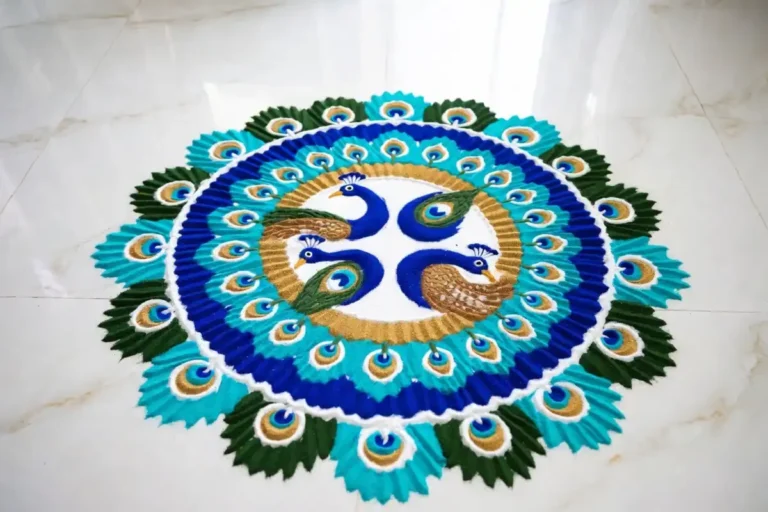
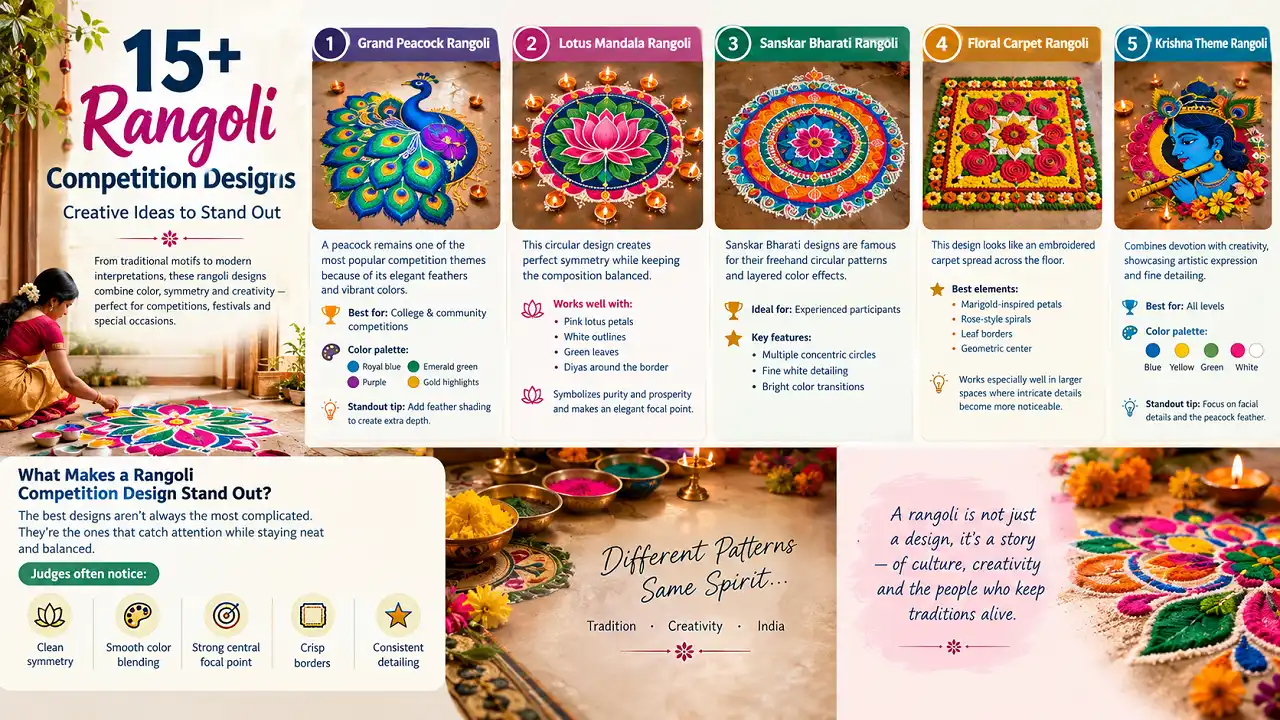
Grand Peacock Rangoli
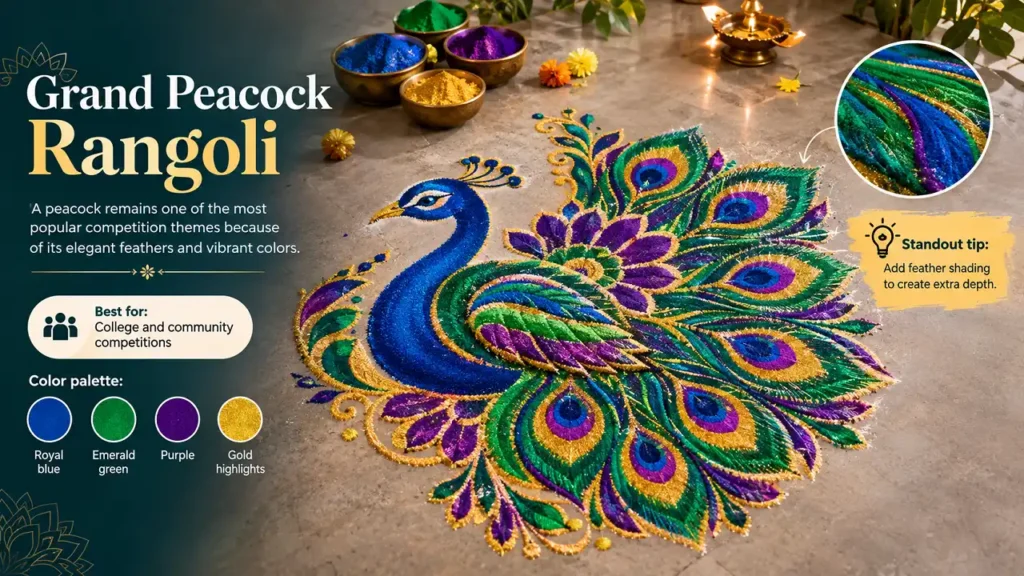
A peacock remains one of the most popular competition themes because of its elegant feathers and vibrant colors.
College and community competitions
Color palette:
- Royal blue
- Emerald green
- Purple
- Gold highlights
Standout tip: Add feather shading to create extra depth.
Lotus Mandala Rangoli
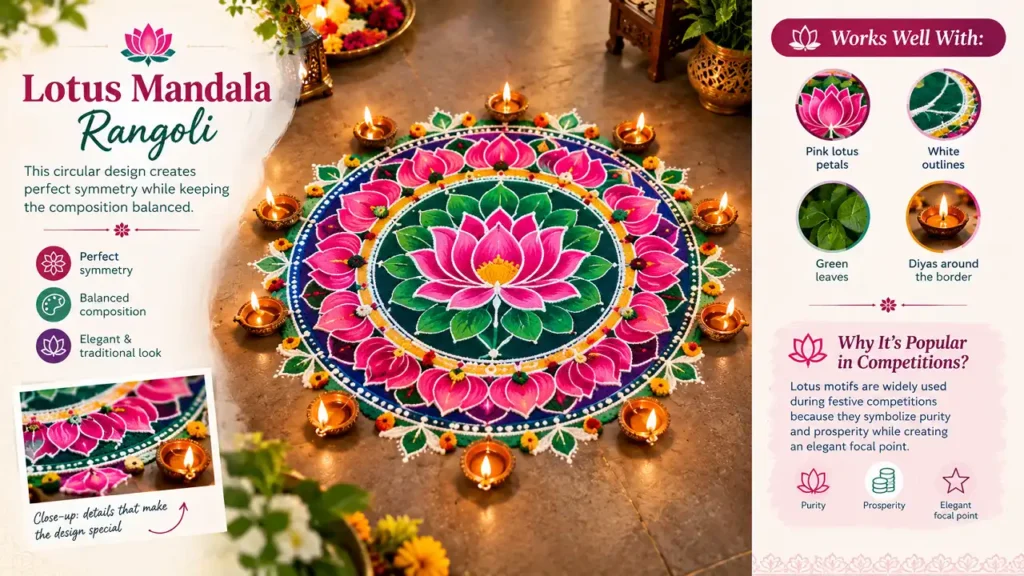
This circular design creates perfect symmetry while keeping the composition balanced.
Works well with:
- Pink lotus petals
- White outlines
- Green leaves
- Diyas around the border
Lotus motifs are widely used during festive competitions because they symbolize purity and prosperity while creating an elegant focal point.
Sanskar Bharati Rangoli
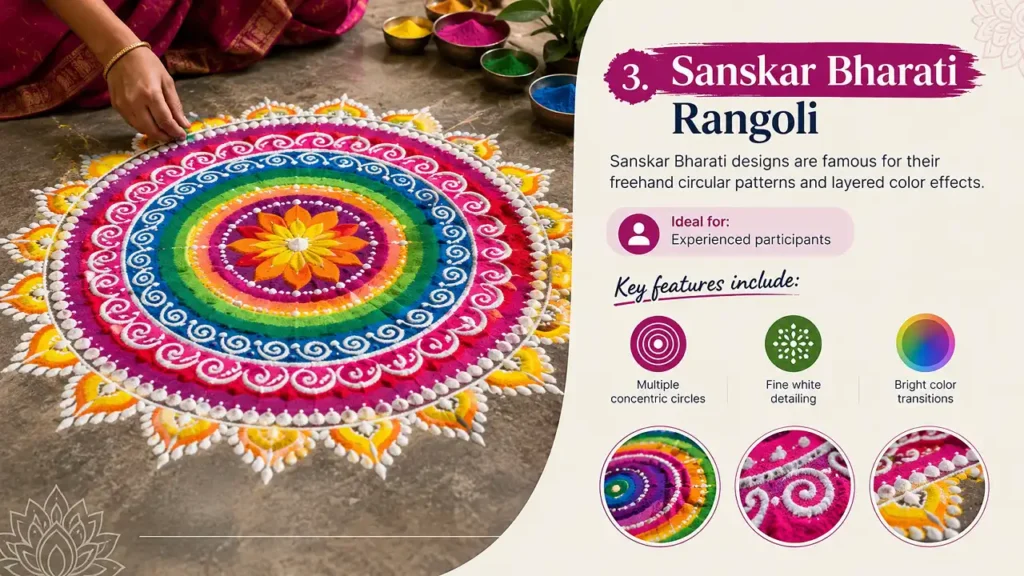
Sanskar Bharati designs are famous for their freehand circular patterns and layered color effects.
Experienced participants
Key features include:
- Multiple concentric circles
- Fine white detailing
- Bright color transitions
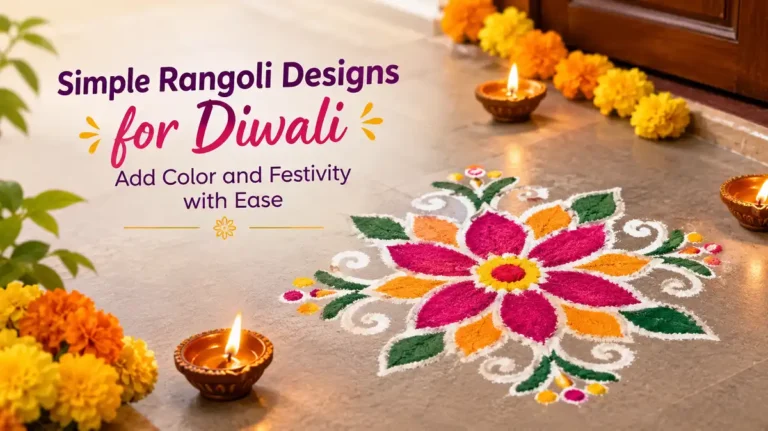
Floral Carpet Rangoli
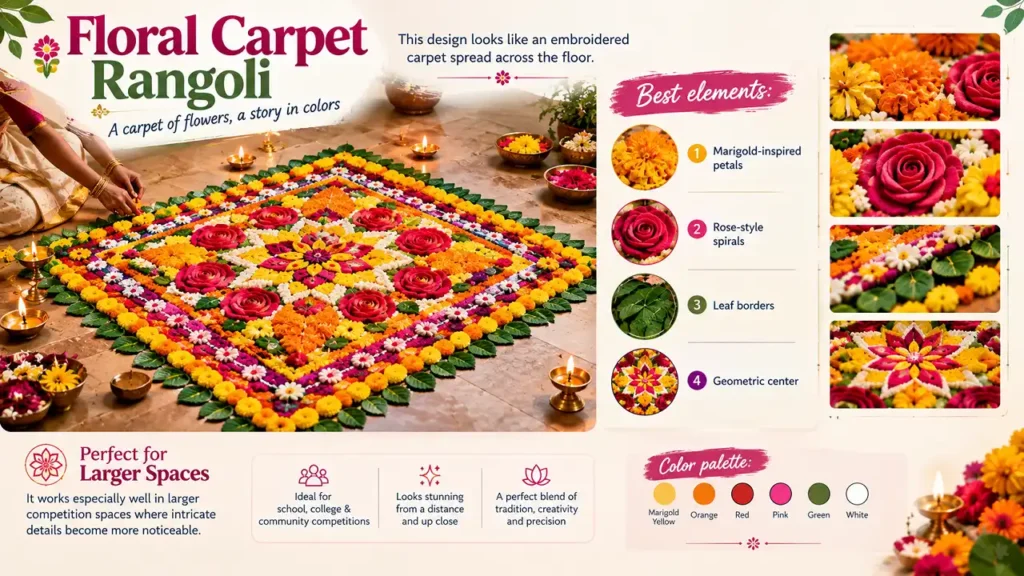
This design looks like an embroidered carpet spread across the floor.
Best elements:
- Marigold-inspired petals
- Rose-style spirals
- Leaf borders
- Geometric center
It works especially well in larger competition spaces where intricate details become more noticeable.
Krishna Theme Rangoli
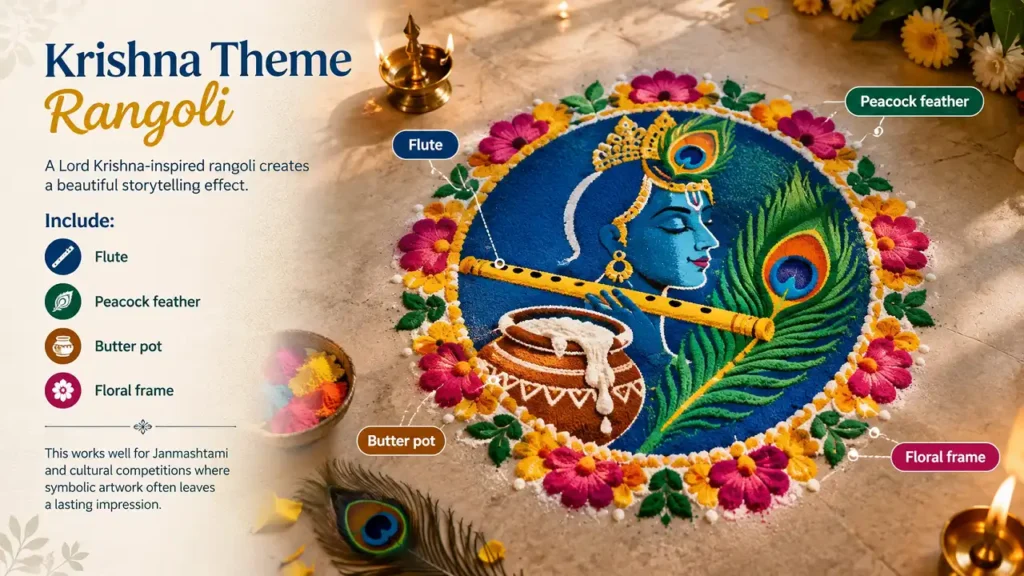
A Lord Krishna-inspired rangoli creates a beautiful storytelling effect.
Include:
- Flute
- Peacock feather
- Butter pot
- Floral frame
This works well for Janmashtami and cultural competitions where symbolic artwork often leaves a lasting impression.
Ganesha Competition Rangoli
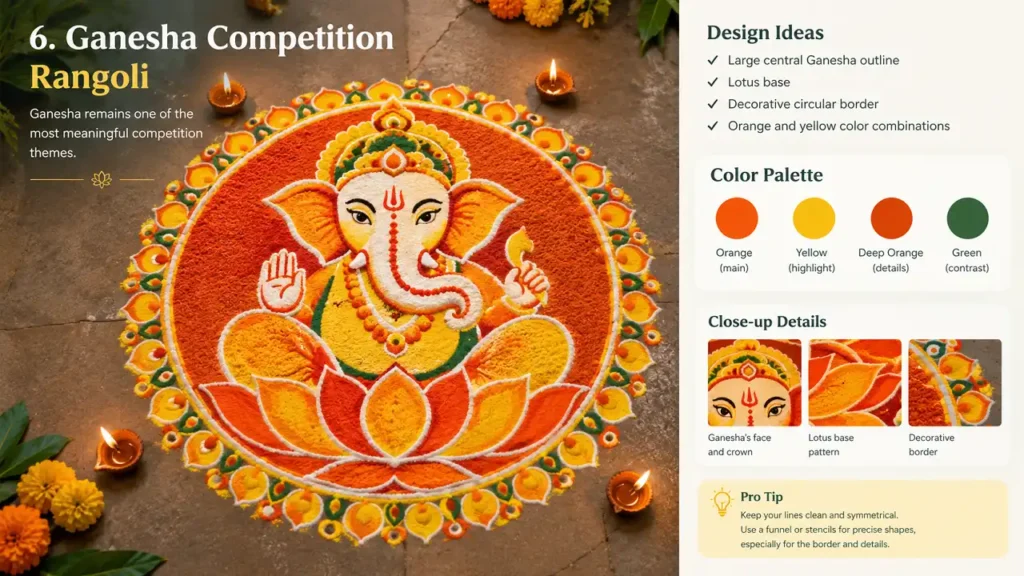
Ganesha remains one of the most meaningful competition themes.
Design ideas:
- Large central Ganesha outline
- Lotus base
- Decorative circular border
- Orange and yellow color combinations
3D Illusion Rangoli
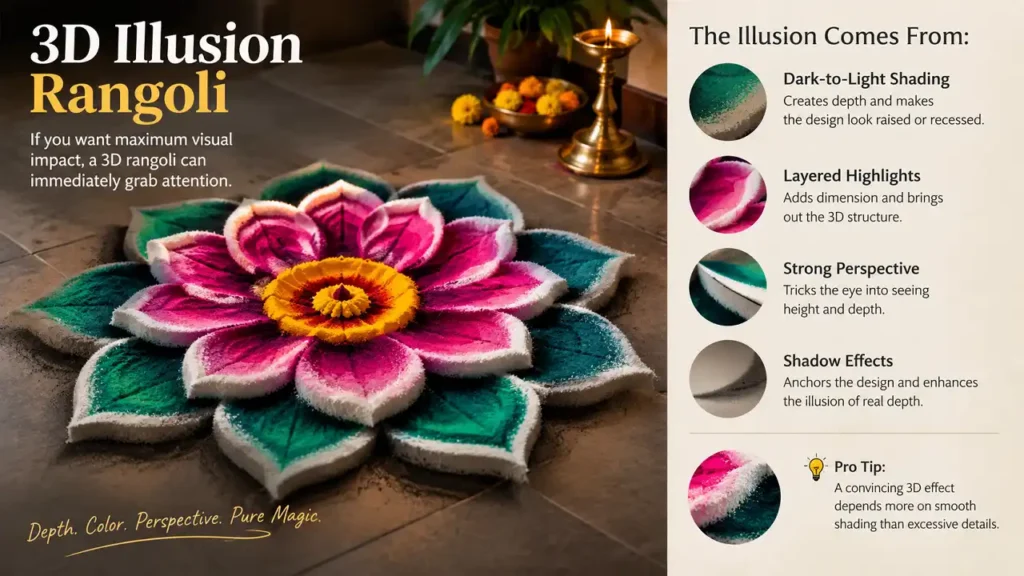
If you want maximum visual impact, a 3D rangoli can immediately grab attention.
- Dark-to-light shading
- Layered highlights
- Strong perspective
- Shadow effects
A convincing 3D effect depends more on smooth shading than excessive details.
Save Nature Message Rangoli
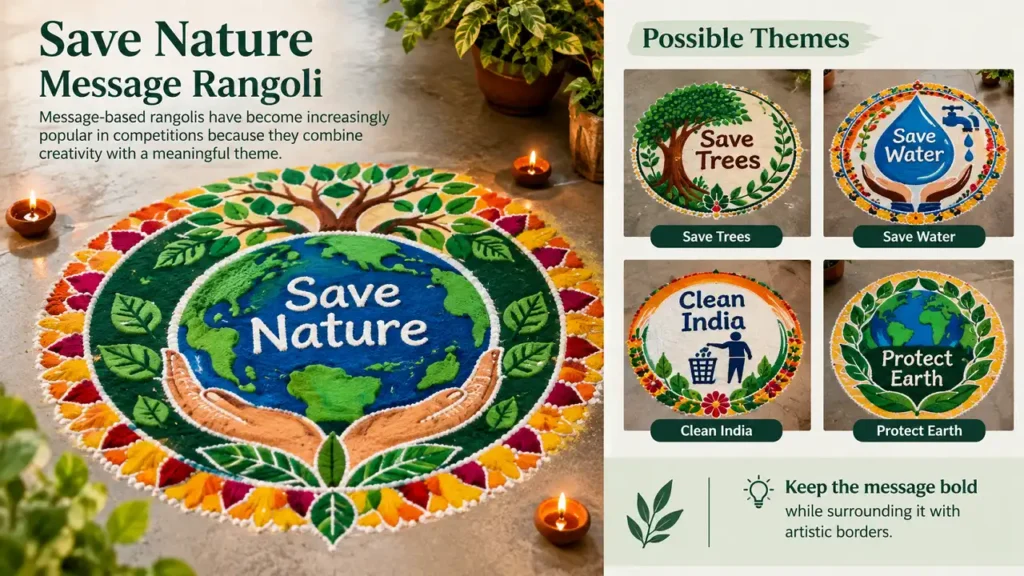
Message-based rangolis have become increasingly popular in competitions because they combine creativity with a meaningful theme.
Possible themes:
- Save Trees
- Save Water
- Clean India
- Protect Earth
Keep the message bold while surrounding it with artistic borders.
Floral Petal Rangoli
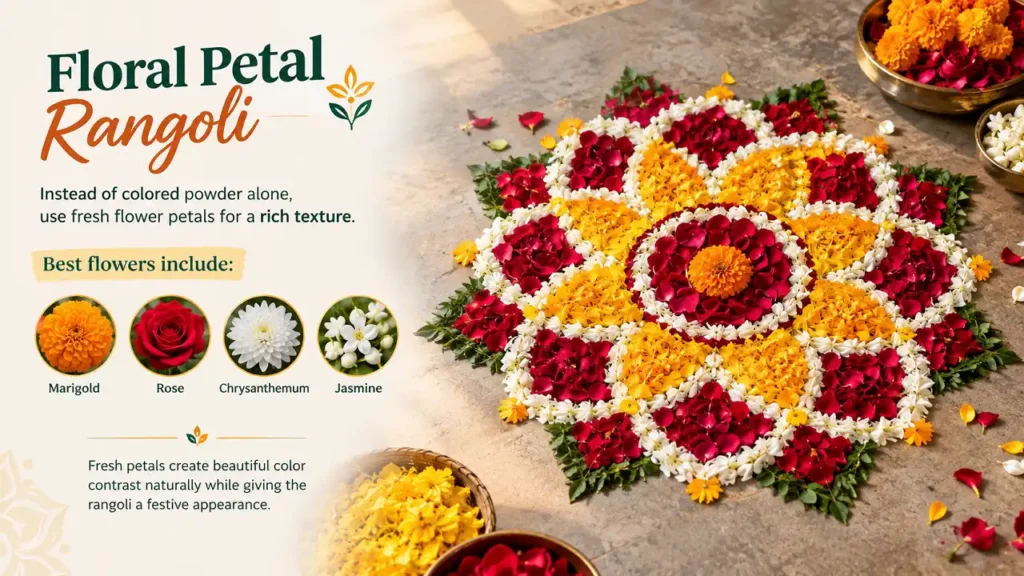
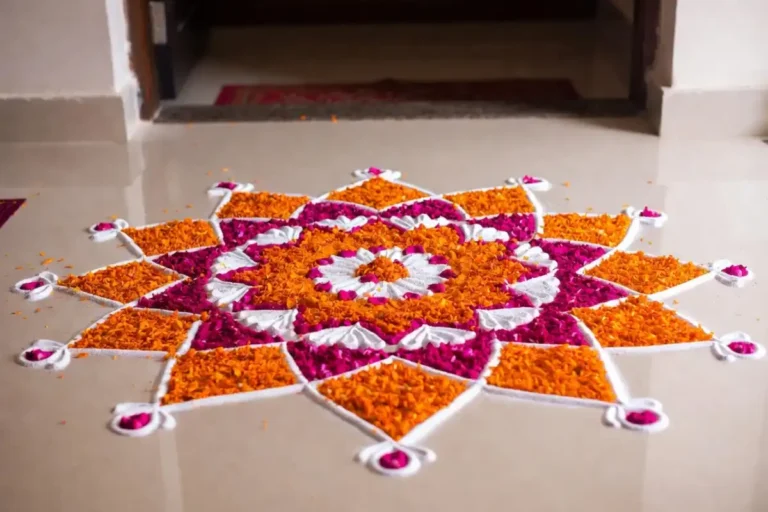
Instead of colored powder alone, use fresh flower petals for a rich texture.
Best flowers include:
- Marigold
- Rose
- Chrysanthemum
- Jasmine
Fresh petals create beautiful color contrast naturally while giving the rangoli a festive appearance.
Dot Grid (Pulli Kolam) Rangoli
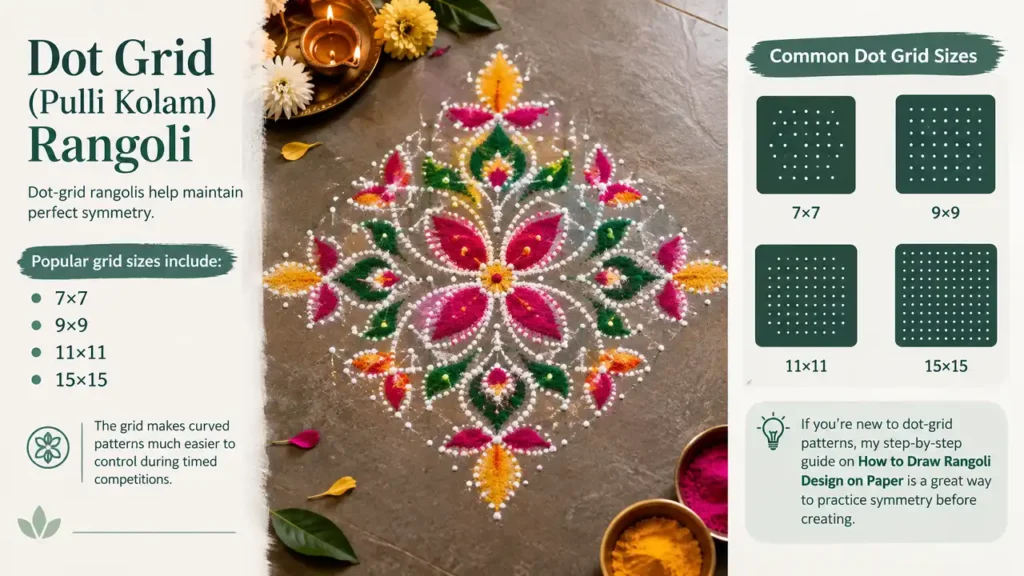
Dot-grid rangolis help maintain perfect symmetry.
Popular grid sizes include:
- 7×7
- 9×9
- 11×11
- 15×15
The grid makes curved patterns much easier to control during timed competitions.
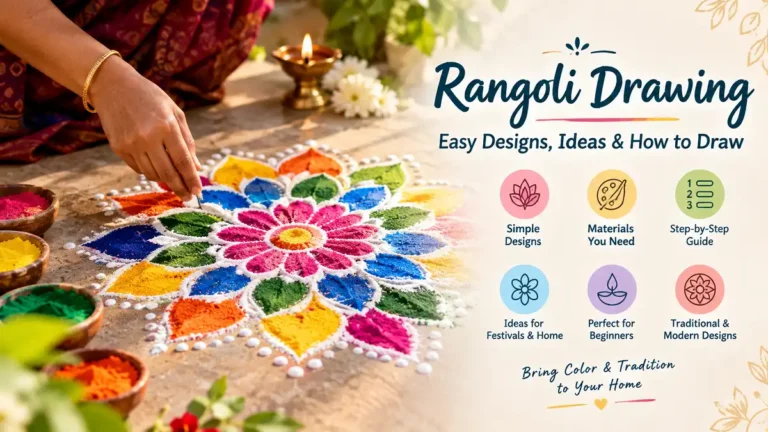
If you’re new to dot-grid patterns, my step-by-step guide on How to Draw Rangoli Design on Paper is a great way to practice symmetry before creating a floor rangoli.
Geometric Competition Rangoli
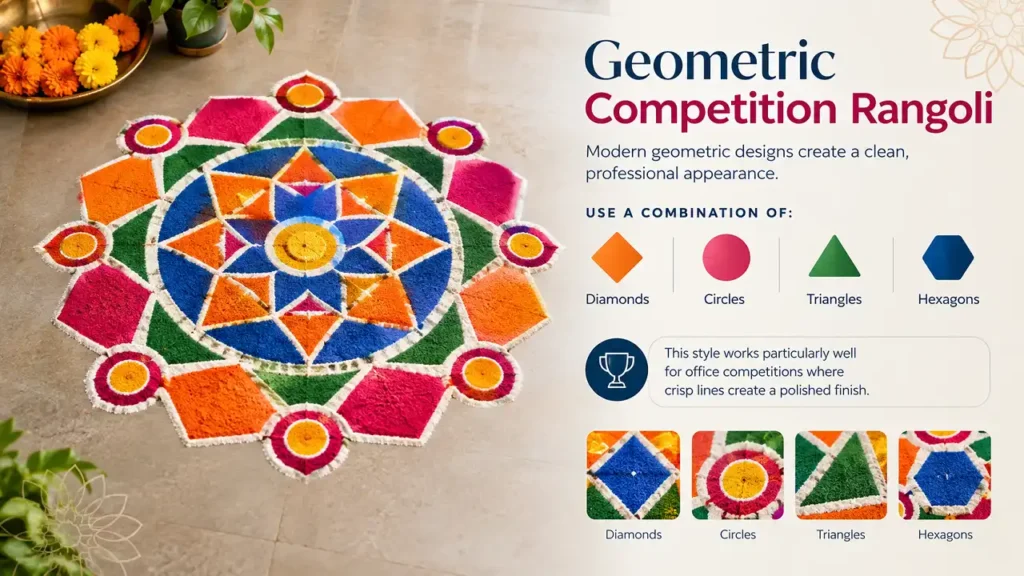
Modern geometric designs create a clean, professional appearance.
Use combinations of:
- Diamonds
- Circles
- Triangles
- Hexagons
This style works particularly well for office competitions where crisp lines create a polished finish.
Diya Spiral Rangoli
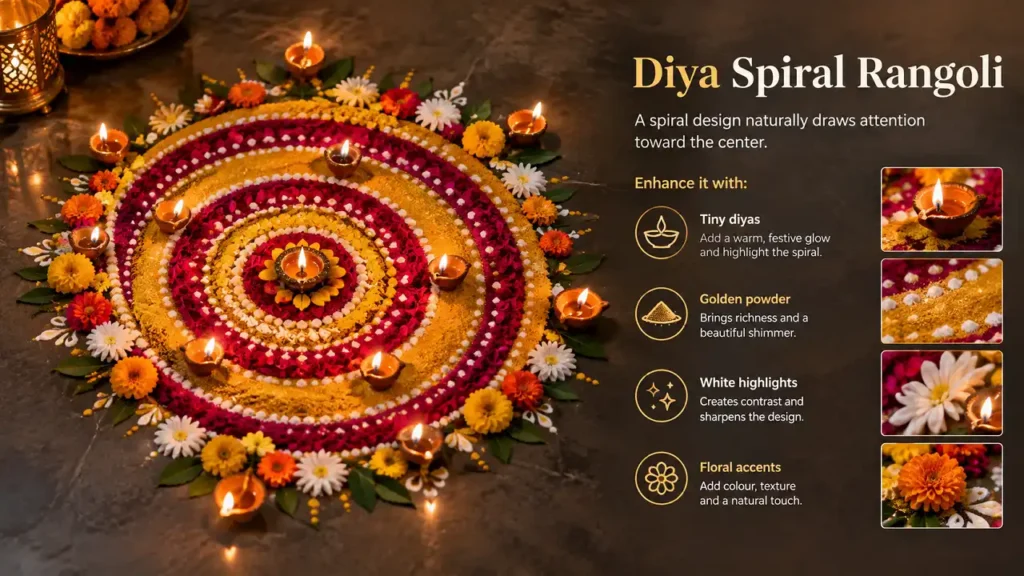
A spiral design naturally draws attention toward the center.
Enhance it with:
- Tiny diyas
- Golden powder
- White highlights
- Floral accents
Multi-Layer Mandala Rangoli
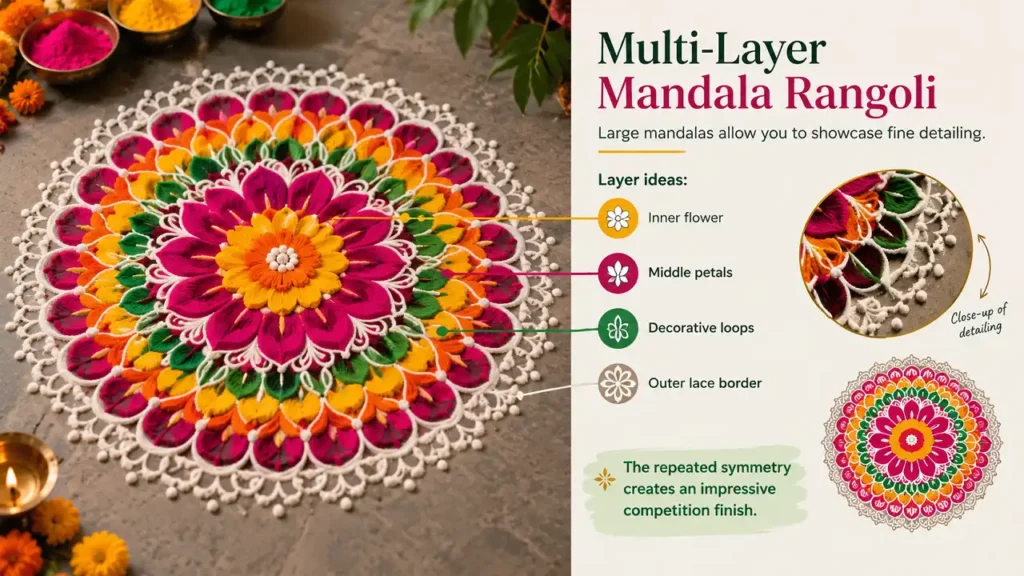
Large mandalas allow you to showcase fine detailing.
Layer ideas:
- Inner flower
- Middle petals
- Decorative loops
- Outer lace border
The repeated symmetry creates an impressive competition finish.
National Theme Rangoli
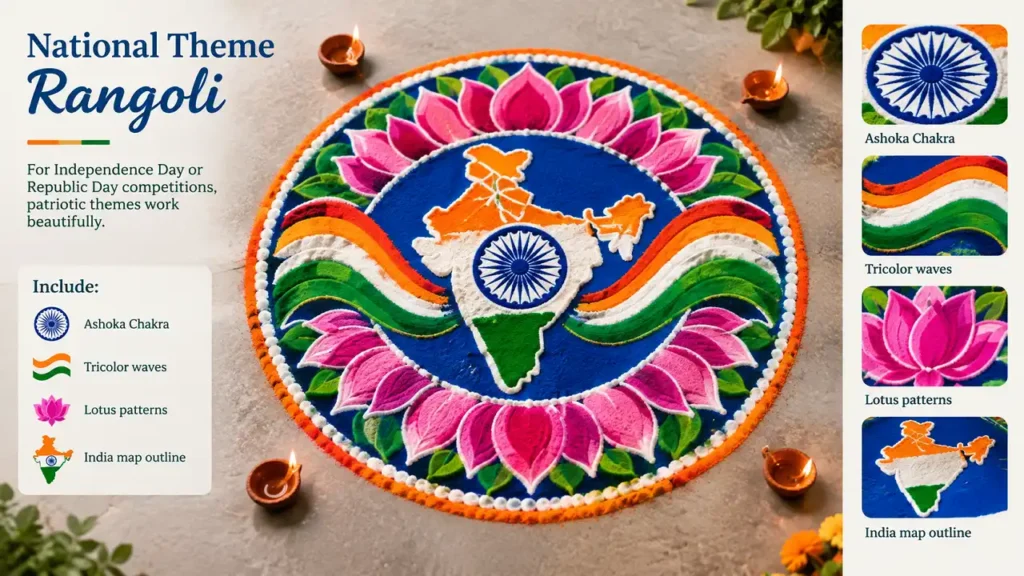
For Independence Day or Republic Day competitions, patriotic themes work beautifully.
Include:
- Ashoka Chakra
- Tricolor waves
- Lotus patterns
- India map outline
Royal Elephant Rangoli
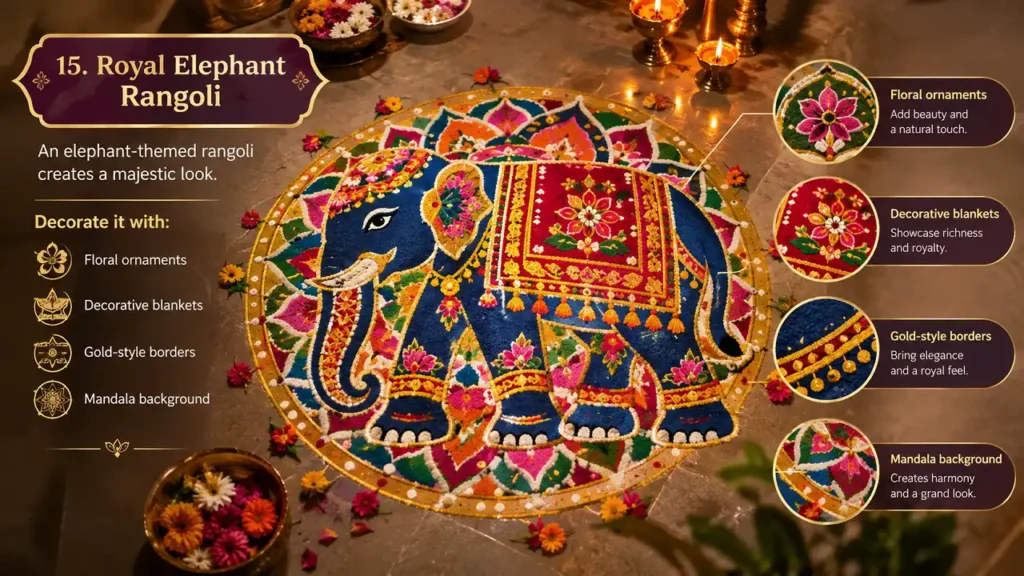
An elephant-themed rangoli creates a majestic look.
Decorate it with:
- Floral ornaments
- Decorative blankets
- Gold-style borders
- Mandala background
Full Courtyard Competition Rangoli
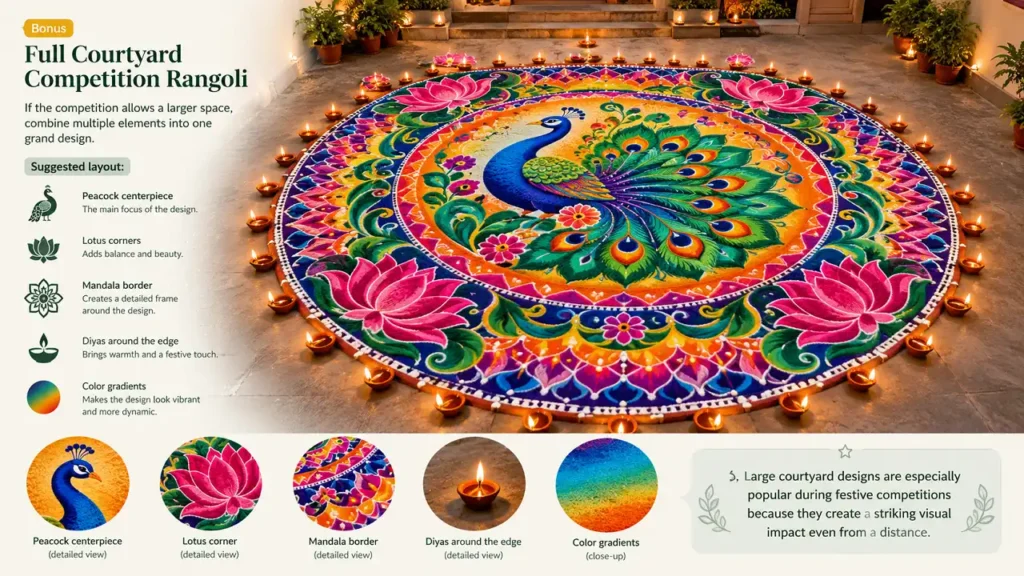
If the competition allows a larger space, combine multiple elements into one grand design.
Suggested layout:
- Peacock centerpiece
- Lotus corners
- Mandala border
- Diyas around the edge
- Color gradients throughout
Large courtyard designs are especially popular during festive competitions because they create a striking visual impact even from a distance.
Best Color Combinations for Competition Rangolis
Blue, Green, Purple
Pink, White, Green
Orange, Yellow, Red
Pink, Orange, White
Blue, Purple, Gold
Green, Blue, Brown
Choose one dominant color, one or two supporting colors, and use white mainly for outlines and highlights.
Materials You’ll Need
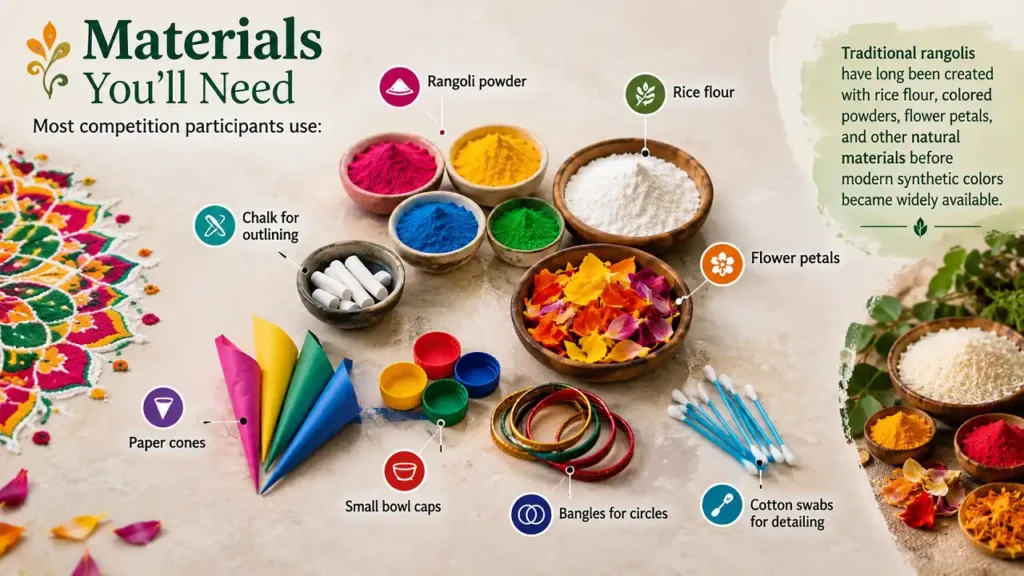
Most competition participants use:
For vibrant color sections.
Useful for traditional outlines.
For creating guide lines.
For natural texture and color.
For controlled detailing.
For creating clean circles.
For symmetrical circular outlines.
For small finishing details.
Traditional rangolis have long been created with rice flour, colored powders, flower petals, and other natural materials before modern synthetic colors became widely available.
Tips to Make Your Rangoli Look Competition-Ready
Over the years, I’ve learned that preparation matters just as much as creativity. Before starting a competition piece, I like to sketch the rough layout first, organize my colors, and leave enough space around the edges so I can work comfortably.
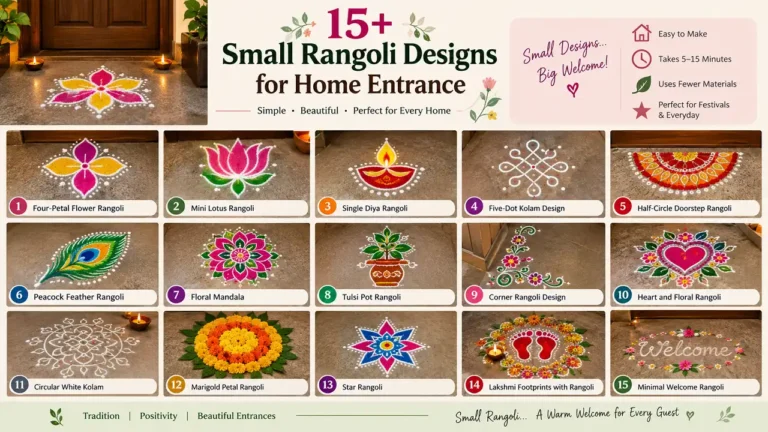
If you’re building confidence before a competition, practicing a few simple rangoli designs first can make outlining and color control much easier.
Start With the Outline
Create the main structure before adding colors.
Fill Larger Sections
Complete the main color areas before small details.
Add Shading
Use shading afterward to create depth and dimension.
Finish With Highlights
Use white highlights to sharpen important details.
Clean the Edges
Remove loose powder around the edges before presenting the final design.
That final cleanup takes only a few minutes, but it often makes the biggest difference.
Common Mistakes to Avoid
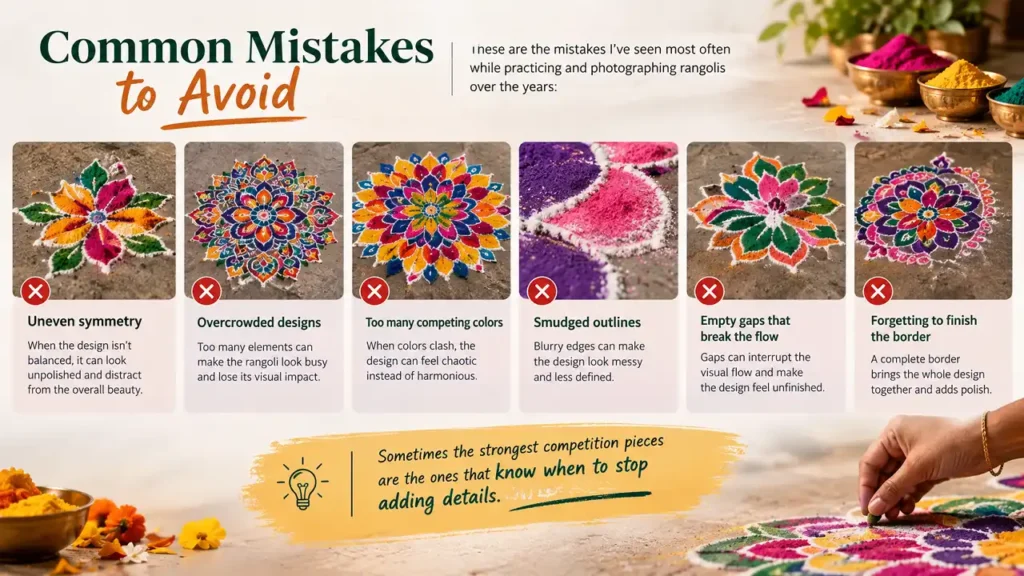
These are the mistakes I’ve seen most often while practicing and photographing rangolis over the years:
Uneven symmetry
Overcrowded designs
Too many competing colors
Smudged outlines
Empty gaps that break the flow
Forgetting to finish the border
Sometimes the strongest competition pieces are the ones that know when to stop adding details.
Keep the Tradition Alive, One Pattern at a Time
I hope these Rangoli Competition Designs inspire you to create something that feels uniquely yours. After all, the most memorable rangoli isn’t just the one that wins a prize—it’s the one that carries a story, a tradition, and a little piece of the hands that taught us to begin.
FAQs
Which rangoli design is best for competitions?
Peacock, lotus mandala, Sanskar Bharati, and 3D illusion rangolis are among the most popular competition choices because they combine strong visual impact with detailed finishing.
How can I make my rangoli stand out?
Focus on symmetry, clean outlines, smooth shading, and a clear central focal point. A neat border and balanced colors often make a bigger difference than adding excessive details.
Which colors work best for competition rangolis?
Blue, green, pink, orange, purple, and gold are commonly used for competition designs, while white works best for outlines and highlights.
Can beginners participate with simple designs?
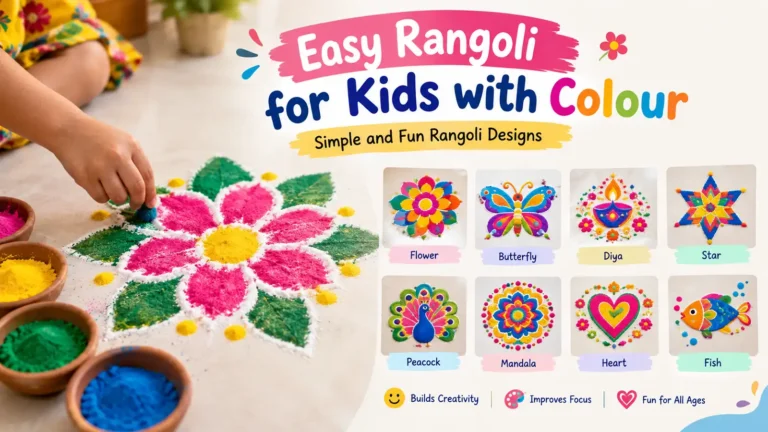
Yes. Dot-grid patterns, geometric designs, floral rangolis, and spiral layouts are beginner-friendly while still looking impressive when finished neatly.
What materials are commonly used?
Colored rangoli powder, rice flour, flower petals, chalk, paper cones, bangles, and small bowl caps are among the most commonly used materials for creating competition rangolis.
Create Something That Tells Your Story
Whether you’re preparing for your first competition or continuing a family tradition, let every dot, color, and pattern become part of your own rangoli story.